APPENDIX DEFINITION OF LEADING ARCHITECTURAL TERMS[482]
Reading edition
APPENDIX DEFINITION OF LEADING ARCHITECTURAL TERMS[482]
Abacus—the flat member at the top of a capital. Apse—the semicircular space at the end of a building. Arcade—a series of arches; is usually applied to the small ornamental arches only. Barrel vault—resembling the inside of a barrel. Bead—a small round moulding. Boss—a projecting ornament in a vault at the intersection of the ribs. Canopy—the head of a niche over an image; also the ornamental moulding over a door or window or tomb. Capital, cap—the head of a column, pilaster, etc. Chamfer—a sloping surface forming the bevelled edge of a square pier, moulding, or buttress, when the angle is said to be chamfered off. Chevron—an inflected moulding, also called zigzag, characteristic of Norman architecture. Clere-story or clear-story—the upper story of a church, as distinguished from the triforium or blind story below it, in which the openings, though resembling windows, are usually blank or blind, not glazed. Corbel—a projecting stone to carry a weight, usually carved. Crocket—an ornament usually resembling a leaf half opened, and projecting from the upper edge of a canopy or pyramidal covering. The term is supposed to be derived from the resemblance to a shepherd's crook. Crypt—a vault beneath a church, generally beneath the chancel only, and sometimes used for the exhibition of relics. Cusp—an ornament used in the tracery of windows, screens, etc., to form foliation. Dormer—an upright window placed on a sloping roof, giving light to the chambers next the roof. Fillet—a small square band used on the face of mouldings. Finial—the ornament which finishes the top of a pinnacle, a canopy, or a spire, usually carved into a bunch of foliage. Flying buttress—an arch carried over the roof of an aisle from the external buttress to the wall of the clerestory, to support the vault. Gargoyle—a projected water-spout, often ornamented with grotesque figures. Jambs—the sides of a window opening or doorway. Mullion—the vertical bar dividing the lights of a window. Ogee—a moulding formed by the combination of a round and hollow. Pier arches—the main arches of the nave or choir resting on piers. Pinnacle—a sort of small spire usually terminating a buttress. Piscina—a water-drain in a church placed on the right-hand side of an altar for the use of the priest. Plinth—the projecting member forming the lower part of a base or of a wall. Shaft—a small, slender pillar usually attached to a larger one, or in the sides of a doorway or window. Slype—a passage leading from the transept to the chapter-house. String-course—a horizontal moulding or course of masonry, usually applied to the one carried under the windows of the chancel, both externally and internally. Tooth ornament—an ornament resembling a row of teeth, sometimes called dog's tooth and shark's tooth. Transept—the portion of a building crossing the nave and producing a cruciform plan. Transition—the period of a change of style, during which there is frequently an overlapping of the styles. Transom—the transverse horizontal piece across the mullions of a window. Triforium or blind story—the middle story of a large church, over the pier arches and under the clerestory windows; it is usually ornamented by an arcade, and fills the space formed by the necessary slope of the aisle roofs. Tympanum—the space between the flat lintel of a doorway and the arch over it, usually filled with sculpture.
THE END.
Printed by R. & R. Clark, Limited, Edinburgh.
THE SCOTT COUNTRY
By W. S. CROCKETT
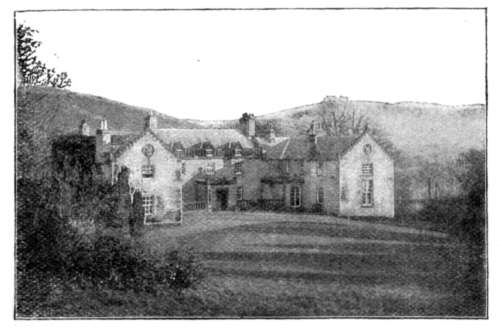
In One Volume. Large Crown 8vo, Cloth. Containing about 200 Illustrations. Probable price 3s. 6d. net.
Mr. W. S. Crockett's book on "The Scott Country" will tell the story of the famous Borderland and its undying associations with Sir Walter, its greatest son. His early years at Sandyknowe and Kelso will be sketched by one who is himself a native of that very district. Scott's first Border home at Ashestiel, and the making of Abbotsford, the Ettrick and Yarrow of Scott, the memories that cluster round Melrose, the district of Hawick, and the country of "Marmion," will all have a place in the work. Not a spot of historic and romantic interest but will be referred to all along the line of Tweedside and its tributaries from Berwick to the Beild. The Border country of Scotland has already been the subject of a very extensive literature, but the "Scott Country" being presented upon a more compact and comprehensive plan than has yet been attempted, will, we feel sure, be a source of satisfaction to every reader, whether Border-born or not. To the Scott abroad the volume will recall many a familiar memory, and at home it should take its place as a standard work of its kind, the author being, according to Dr. Robertson Nicoll and others, perhaps the most capable living student of the Border and its literature. The "Scott Country" will have close on 200 illustrations, many of them quite new; and the price is such as to bring it within the reach of all.
A. & C. BLACK, SOHO SQUARE, LONDON.
NEW POCKET EDITION.
HORÆ SUBSECIVÆ
By JOHN BROWN, M.D., LL.D., Etc.
CLOTH, GILT TOP, 2/- net EACH VOLUME.
LIMP LEATHER, 2/6 net EACH VOLUME.
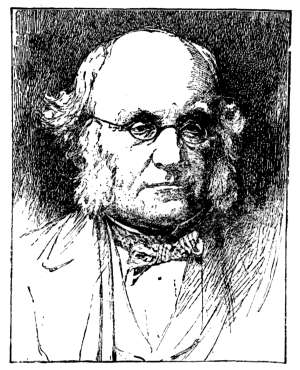
New Edition. In Three Volumes. 6¼ × 4¼ inches. Printed on thin Bible paper and bound uniform with Black's NEW POCKET EDITION WAVERLEY NOVELS. Volume I. contains a photogravure frontispiece of a portrait of Dr. John Brown, by Sir George Reid, P.R.S.A.
Some Appreciations of Dr. John Brown and his Books.
WILLIAM ARCHER.—"How came it that no one ever told me it was a thing unique in literature, the autobiography—yes, that is the word—of one of the most wonderful children, and quite the most adorable, that ever lived?... Never has so brief a piece of printed matter affected me so profoundly." (This refers to the story of "Pet Marjorie.")
W. E. GLADSTONE.—"My estimate of Dr. John Brown was particularly high. It is easy and obvious to say he was a clever man and a good man, but this is only part of the truth, and he stood, I think, both in the intellectual and the moral order, much higher than these words of themselves convey."
ANDREW LANG.—"Three volumes of essays are all that Dr. Brown has left us in the way of compositions; a light but imperishable literature.... No man of letters could be more widely regretted, for he was the friend of all who read his books, as even to people who only met him once or twice in life he seemed to become dear and familiar."
Professor DAVID MASSON.—"Yes, many long years hence, when all of us are gone, I can imagine that a little volume will be in circulation, containing 'Rab and his Friends,' etc.; and that then readers now unborn, thrilled by that peculiar touch which only things of heart and genius can give, will confess to the same charm that now fascinates us, and will think with interest of Dr. John Brown of Edinburgh."
ROBERT LOUIS STEVENSON.—"Marjorie Fleming I have known, as you surmise, for long. She was possibly—no, I take back possibly—she was one of the greatest works of God."
A. & C. BLACK, SOHO SQUARE, LONDON.