SCIENCE OF TRAPPING
Reading edition
DESCRIBES THE FUR BEARING ANIMALS, THEIR NATURE, HABITS AND DISTRIBUTION, WITH PRACTICAL METHODS FOR THEIR CAPTURE.
By E. KREPS.
REVISED EDITION.
Published by A. R. HARDING, Publisher 106 Walnut Street St. Louis, Mo. Copyright. 1909. By A. R. HARDING PUB. CO.
CONTENTS.
I. The Trapper's Art
II. The Skunk
III. The Mink
IV. The Weasel
V. The Marten
VI. The Fisher
VII. The Otter
VIII. The Beaver
IX. The Muskrat
X. The Fox
XI. The Wolf
XII. The Bear
XIII. The Raccoon
XIV. The Badger
XV. The Opossum
XVI. The Lynx
XVII. The Bay Lynx or Wild Cat
XVIII. The Cougar
XIX. The Wolverine
XX. The Pocket Gopher
XXI. The Rabbit
XXII. Tracks and Signs
XXIII. Handling Furs
XXIV. Steel Traps
LIST OF ILLUSTRATIONS.
The Author with a Catch of Furs
Trap Set in Correct Position at Den
The Balance Pole
The Skunk
The Mink
Mink Set under Log
The White Weasel
The Marten
A Marten Set
The Fisher
The Otter
Otter Trap Set under Ice
The Beaver
Trap, Set for Beaver
Beaver Trap Set under Ice
The Muskrat
The Red Fox
Water Set for Fox
Dry Land Set for Fox
The Coyote or Prairie Wolf
Scent Set for Wolf
Bank Set for Wolf and Coyote
The Grizzly Bear
The Raccoon
The Badger
The Opossum
The Lynx
The Wild Cat or Bay Lynx
The Cougar
The Wolverine
The Pocket Gopher
Burrow of Pocket Gopher
The Rabbit
Rabbit Snares
Tracks of Furbearing Animals
Tracks of Furbearing Animals
Tracks of Furbearing Animals
Tracks of Game Animals
Canadian Pattern Stretching Boards
Steel Traps
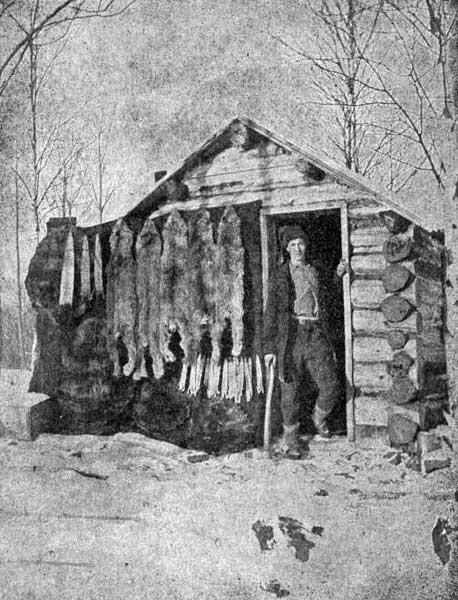
The Author with a Catch of Furs.
INTRODUCTION.
Among the many outdoor occupations, trapping the furbearing animals is perhaps the most pleasant and in many instances is also very profitable.
Although trapping was one of the earliest industries of this country, the occupation has not passed away, along with the vanishing wilderness, for there is more trapping done today than at any time during the past. Scattered all over North America, in both the thickly settled portions and the more remote districts are thousands of trappers who are each season deriving both pleasure and profit from this unique calling.
Trapping in itself is an art. Many of the wild creatures are exceedingly wary and the trapper must match his reason against the instinct, the natural wariness and the acquired knowledge of the animals. This wariness alone has saved some species of animals from extinction, and although man is superior to all brute life, such intelligent animals as the fox and the wolf frequently prove a match for the most expert of trappers.
In order to be successful, one must know the wild animals as a mother knows her child. He must also know and use the most practical methods of trapping, and it is my object to give in this work, the most successful trapping methods known.
These modes of trapping the furbearing animals have for the most part been learned from actual experience in various parts of the country, but I also give the methods of other successful trappers, knowing them to be as good as my own. I am personally acquainted with some of the most expert trappers in North America and have also followed the Indians over their trap lines and in this way have learned many things which to the white man are not generally known.
E. KREPS.