Part 3 — II.—The Stitchery of Samplers, with a Note on their Materials
Reading edition
“Sad sewers make sad samplers. We’ll be sorry Down to our fingers’-ends and ’broider emblems Native to desolation—cypress sprays, Yew-tufts and hectic leaves of various autumn And bitter tawny rue, and bent blackthorns.” The Soldier of Fortune.—Lord de Tabley.
Cut and Drawn-Work
The open-work stitchery, which is so important and pleasing a feature of the seventeenth-century sampler, is of two kinds; that is, double cut-work—the Italian punto tagliato—in which both warp and woof threads are removed, save for a few necessary connecting bars, and single cut-work—punto tirato—wherein but one set of threads is withdrawn. The first type (which is probably the “rare Italian cut-work” mentioned in “The Needle’s Excellency”) is the immediate ancestor of needle-point lace, and is the kind that is oftenest met with in the oldest and finest samplers; the second approaches more nearly to the drawn-thread embroidery worked both abroad and at home at the present day.
In executing real double cut-work, after the surplus material has been cut away, the supporting or connecting threads are overcast, the edges of the cut linen buttonholed, and the spaces within this framework filled in with lace-stitches, simple or elaborate. In the best specimens of samplers the effect is sometimes enhanced by portions of the pattern being detached from the ground, as in the upper part of the beautiful sampler illustrated in Fig. 72.[14] These loose pieces usually have as basis a row of buttonhole-stitches worked into the linen, but in some examples the lace has been worked quite separately and sewn on. The mode of working both double and single cut-work is shown plainly in the two enlargements (Figs. 73 and 74), which are of parts of samplers probably worked about 1660.
Larger Image
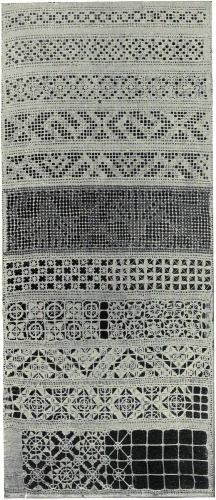
Fig. 72—Drawn-work Sampler. 17th Century.
There is a third and much simpler type of open-work occasionally found on seventeenth-century samplers, which is carried out by piercing the linen with a stiletto and overcasting the resulting holes so as to produce a series of bird’s-eye or eyelet stitches. All three varieties of open-stitch are frequently seen in combination with that short, flat satin-stitch, which, when worked in a diaper pattern with white thread or silk on a white ground, is sometimes called damask-stitch. This pretty combination of stitches appears in Plate VI., and also in the enlargement (Fig. 74) already referred to.
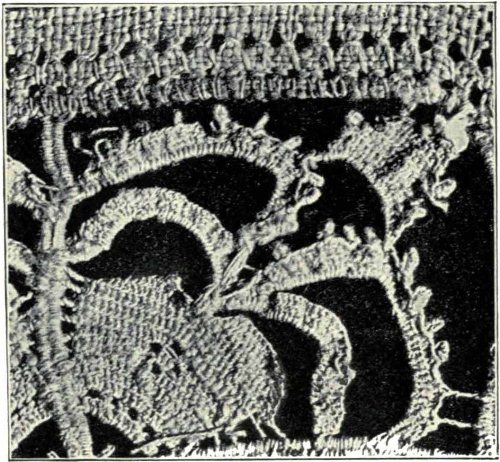
Fig. 73.—Cut and Drawn-work: Enlargement from 17th-Century Sampler.
Back-Stitch
This stitch was largely used in the seventeenth and early eighteenth centuries for the adornment of articles of personal clothing, as well as of quilts and hangings, hence it is natural that it is prominent in the samplers of the period. In the older specimens the bands of back-stitch patterns are worked with exquisite neatness, both sides being precisely alike; but in those of later date signs of carelessness are apparent, and the reverse side is somewhat untidy. In no sampler examined by the writer, however, has the back-stitch been produced by working a chain-stitch on the wrong side of the linen, as is the case in some of the embroidered garments of the period.
The samplers illustrated in Plates III. and VII. are noticeable for their good bands of back-stitching. A small section of Fig. 5 is shown on an enlarged scale in Fig. 75. In some modern text-books of embroidery, it may be added, the old reversible or two-sided back-stitch is distinguished as Holbein-stitch.
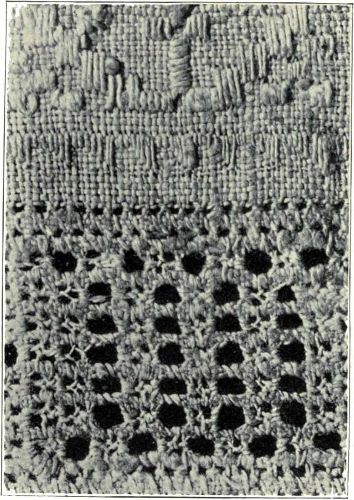
Fig. 74.—Satin-stitch and Combination of Types of Open-work: Enlarged from the Sampler reproduced in Fig. 4. 17th Century.
Alphabet-Stitches
The stitches used for the lettering on samplers are three in number, to wit, cross-stitch, bird’s-eye-stitch and satin-stitch. Of the first there are two varieties, the ordinary cross-stitch, known in later years as sampler-stitch, and the much neater kind, in which the crossed stitches form a perfect little square on the wrong side. This daintiest of marking stitches is rarely seen on samplers later than the eighteenth century.
The satin-stitch alphabets are worked in short flat stitches, not over padding, according to the modern method of initial embroidering, and the letters are generally square rather than curved in outline. The bird’s-eye-stitch, when used for alphabets, varies greatly in degree of fineness. In some instances the holes are very closely overcast with short, even stitches, but in others the latter are alternately long and short, so that each “eyelet” or “bird’s-eye” is the centre, as it were, of a star of ray-like stitches.
Larger Image
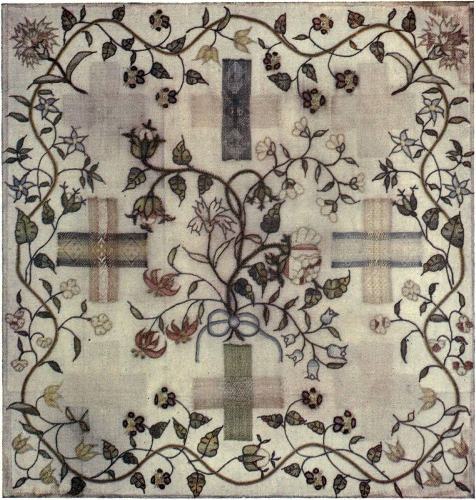
Plate XXIV.—Darning Sampler. 1788.
Darning Samplers of unpretentious form date back a long way, but those where they were conjoined to decoration, as in the specimens reproduced here, appeared to cluster round the end of the eighteenth century. Not only are a variety of stitches of a most intricate kind set out on them, but they are done in gay colours, and any monotony is averted by delicately conceived borderings. Whilst “Darning Samplers” cannot be considered as rare, they certainly are not often met with in fine condition. They are a standing testimony to the assiduity and dexterity of our grandparents in the reparation of their household napery.
Darning-Stitches
The stitches exemplifying the mode of darning damask, cambric, or linen had usually a sampler entirely devoted to them, and at one period—the end of the eighteenth century—it seems to have been a fairly general custom that a girl should work one as a companion to the ordinary sampler of lettering and patterns. The specimen darns on such a sampler are, as a rule, arranged in squares or crosses round some centre device, a bouquet or basket of flowers for instance, or it may be merely the initials of the worker in a shield. The two samplers (Fig. 76 and Plate XXIV.) are typical examples of their kind, although perhaps the ornamental parts of the designs are a little more fanciful than in the majority of those met with.
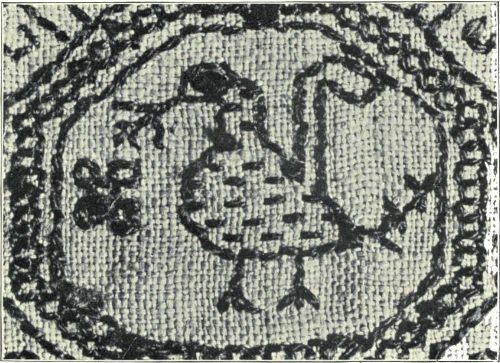
Fig. 75.—Back-stitch: Enlargement of Portion of Sampler in Fig. 5. 17th Century. Twice Actual Size.
The best worked—not necessarily the most elaborately embellished—of this particular class of sampler has small pieces of the material actually cut out and the holes filled up with darning, but in inferior ones the stuff is left untouched, and the darn is simply worked on the linen, tammy cloth, or tiffany itself. This is a very much easier method and the appearance is better; but the darns so made are, after all, but imitations of the real thing. For the damask darns fine silk of two colours is invariably used, and in the properly worked examples both sides are alike, save, of course, for the reversal of the damask effect, as in woven damask.
The centre designs in the two samplers illustrated are worked in fine darning-stitches of divers kinds, outlined with chain and stem stitches. Here and there a few other stitches are introduced, as in the stem of the rose in Fig. 76, where French knots are used to produce the mossy appearance. The centre basket in this sampler is worked in lines of chain-stitching crossing each other lattice fashion. Both the samplers have the initials of their workers, and in that shown in Fig. 76 the date (1802) also, neatly darned into one of the crosses formed by the damask patterns.
Darning-samplers are usually square, or nearly square, in shape, and are simply finished with a single line of hem-stitching at the edge, but some of the older ones are ornamented with a broader band of drawn-work as border; while a few have examples of drawn-work, alternating with squares and crosses of darning, in the body of the sampler. A small section of such a sampler, dated 1785, is illustrated on an enlarged scale in Fig. 77. It has a series of small conventional leaf patterns worked in single drawn-work, and edged with a scalloping worked in chain-stitch with green silk. The ground of this particular sampler is thin linen, but the muslin-like stuff known as tiffany is that used for the foundation of nine darning-samplers out of ten.
Tent and Cross Stitches
Neither tent-stitch nor tapestry-stitch appears to have been largely introduced in sampler-embroidery at any period; still, portions of a few specimens worked during the early and middle years of the eighteenth century are executed in one or other of these stitches. Tent-stitch, for instance, plays an important part in the wreath border of Fig. 8. The beautifully shaded leaves are all worked in this way, as are many of the flowers, other varieties of grounding or cushion-stitches being used for the rest of the border. The Commandments, which the wreath enframes, are worked in cross-stitch. This last-named stitch in its earliest form is worked over a single thread, and produces a close and solid effect when closely massed, or, as may be seen in many sampler maps, very fine lines when worked in single rows. Ordinary cross-stitch taken over two threads is, of course, the familiar stitch in which nineteenth-century samplers are entirely worked, whence arises its second name of sampler-stitch.
Larger Image
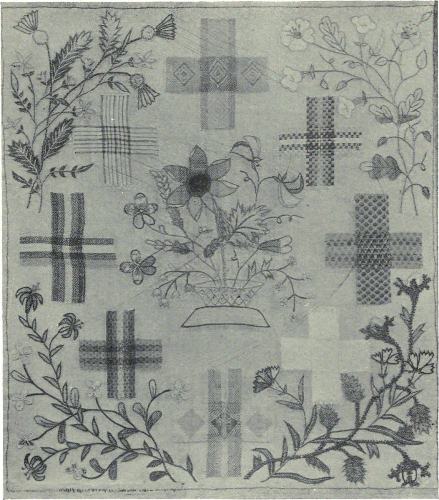
Fig. 76.—Darning Sampler. Signed M. M., T. B., J. F. Dated 1802. The late Mrs Head.
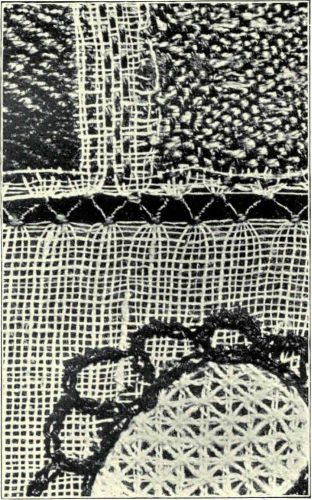
Fig. 77.—Enlarged Portion of a Darning Sampler. Dated 1785.
A pretty and—in sampler embroidery—uncommon stitch is that in which the crowned lions in the samplers of Mary and Lydia Johnson (Figs. 35 and 36) are worked. This stitch is formed of two cross-stitches superimposed diagonally, and since its revival in the Berlin wool era has been known by the names of star-stitch and leviathan-stitch.
Various Stitches
Besides the stitches already enumerated and described, sundry and divers others are found on samplers of various periods. Satin-stitch, for instance, is used for borders and other parts of designs, as well as for alphabets. Long-and-short stitch, frequently very irregularly executed, seems to have been popular for the embroidery of the wreaths and garlands that make gay many of the later eighteenth-century samplers. Stem-stitch, save for such minor details as flower-stalks and tendrils, is not often seen; but the wreath-borders of a limited number of eighteenth-century samplers are done entirely in this stitch, worked in lines round and round, or up and down, each leaf and petal until the whole is filled in. Stem-stitch, it should be explained, is, to all intents and purposes, the same as “outline” or “crewel” stitch. The latter name, however, is likewise applied to long-and-short or plumage stitch by some writers on embroidery.
Laid-stitches may also be included in the list of stitches occurring occasionally in samplers, although it is rarely met with in its more elaborate forms. A sampler dated 1808 has two baskets (of flowers) worked in long laid-stitches of brown silk couched with yellow silk, the effect of wicker-work being produced with some success by this plan, and similar unambitious examples appear in some samplers of rather earlier date.
The portion of a sampler shown in Fig. 2 is interesting by reason of the fact that it is worked in knots, a form of stitchery comparatively rare, save in those unclassifiable pieces of embroidery which are neither pictures nor samplers, but possess some of the features of both.
Materials
Linen, bleached or unbleached, but, of course, always hand-woven, is the foundation material of the early samplers. It varies greatly in texture, from a coarse, canvas-like kind to a fine and closely woven sort of about the same stoutness as good modern pillow-case linen. The stitchery of these oldest samplers is executed in linen thread or a somewhat loosely twisted silk, often scarcely coarser than our nineteenth-century “machine silk,” although, on the other hand, a very thick and irregularly spun type is occasionally seen.
About 1725 linen of a peculiar yellow colour and rather harsh texture came into vogue; but this went out of fashion in a few years, and towards the end of the eighteenth century the strong and durable linen was almost entirely superseded by an ugly and moth-attracting stuff called indifferently tammy, tammy cloth, bolting cloth, and, when woven in a specially narrow width, sampler canvas. The stitchery on samplers of this date is almost invariably executed with silk, although in a few of the coarser ones fine untwisted crewel is substituted. Tiffany, the thin, muslin-like material mentioned in connection with darning-samplers, was at this period used also for small delicately wrought samplers of the ordinary type.
Early in the nineteenth century very coarsely woven linen and linen canvas came into fashion again, and for some time were nearly as popular as the woollen tammy; while, about 1820, twisted crewels of the crudest dyes replaced in a great measure the soft toned silks. Next followed the introduction of cotton canvas and Berlin wool, and with them vanished the last remaining vestige of the exquisite stitchery and well-balanced designs of earlier generations, and the sampler, save in a most degraded form, ceased to exist.