Front matter (continued 2)
Reading edition
Thus provided, Professor Watson, so soon as totality began, searched on the eastern side of the sun, and there saw certain stars belonging to the constellation Cancer, where the sun was situate at the time. He then examined the western side of the sun, and having swept out to a star which he took to be Zeta Cancri (though he was rather surprised at its brightness,—but of that more anon) he returned towards the sun, encountering on his way a star of the fourth magnitude or rather less, about two degrees to the west of the sun. Close by was the star Theta Cancri; but Theta was much fainter, and was seen at the same time a little further west. It is not easy to understand why Watson did not make comparison between the position of the new star and Theta, instead of making comparison between the new star, the sun, and the star which he took to be Zeta. For a comparison with a known object so close as Theta would have given more satisfactory evidence than a comparison with objects farther away. However, as he distinctly states in a letter to Sir G. Airy that the new star was very much brighter than Theta Cancri, which was seen a little farther to the west, we cannot doubt that he had sufficient evidence to prove the new star and Theta Cancri to be distinct orbs.
He adds that there was no appearance of elongation, as might be expected if the new object were a comet. It had a perceptible disc, though the magnifying power was only forty five.
The accompanying figure will serve to give a fair idea of the position of the stranger.
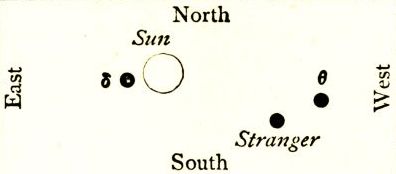
Fig. 1.—Watson's new Planet.
Now comes the evidence which was at first supposed to be strongly corroborative of Watson's observation,—the recognition of a star of about the fourth magnitude, near Theta Cancri, by Professor Louis Swift, who observed the eclipse from Pike's Peak, in Colorado.
Professor Swift also made some rather unusual arrangements with his telescope, but they were not altogether so well adapted to advance his purpose as were Professor Watson's. To prevent the instrument from swaying he tied what he calls a pole (but what in England I imagine would be called a stick), ten feet long, about a foot from the eye-end of the telescope, leaving the other end of this singular appendage to trail on the ground. (The telescope was set low, Professor Swift judging, it would seem, that the most comfortable way to observe was to lie on his back.) As a natural consequence, while he could move his telescope very readily one way, trailing the stick along, he could not move it the other way, because the stick's end immediately stuck into the ground. As the stick was on the west of the telescope, Professor Swift could move the eye-end eastwards, following the sun's westwardly motion. Of course the telescope was to have been released from the stick when totality began, but unfortunately Professor Swift omitted to do this, so that he had to work during totality with a hampered telescope.
The following is his account of what he saw:—
'My hampered telescope behaved badly, and no regularity in the sweeps could be maintained. Almost at once my eye caught two red stars about three degrees south-west of the sun, with large round and equally bright discs which I estimated as of the fifth magnitude, appearing (this was my thought at the time) about as bright in the telescope as the pole-star does to the naked eye. I then carefully noted their distance from the sun and from each other, and the direction in which they pointed, &c., and recorded them in my memory, where, to my mind's eye, they are still distinctly visible. I then swept southward, not daring to venture far to the west, for fear I should be unable to get back again, and soon came upon two stars resembling in every particular the former two I had found, and, sighting along the outside of the tube, was surprised to find I was viewing the same objects. Again I observed them with the utmost care, and then recommenced my sweeps in another direction; but I soon had them again, and for the third time, in the field. This was also the last, as a small cloud hindered a final leave-taking just before the end of totality, as I had intended. I saw no other star besides these two, not even Delta, so close to the eastern edge of the sun.'
He adds that the apparent distance between the two bodies was about one-fourth the sun's diameter. (These are not his words, but convey the same meaning.)
Again, he adds that, from three careful estimates, he found the two stars pointed exactly to the sun's centre. He knew one of the two bodies was Theta; but unfortunately he could not tell which was Theta and which the new star or planet. 'But,' he says, 'Professor Watson happily comes to the rescue, and with his means of measuring finds the planet nearest to the sun.'
Unhappily, however, Professor Watson does not come absolutely to the rescue here. On the contrary, to use Professor Swift's words in another part of his letter (and speaking of another matter), 'it is just here where the trouble begins.' If we construct a little map illustrating what Professor Swift describes, we get the accompanying arrangement (fig. 2). It is clearly quite impossible to reconcile this view of the supposed new planet with Professor Watson's. If three careful estimates showed Swift the stranger and Theta situated as in fig. 2, it is absolutely certain that either Watson's observation was very far from the truth, or else the strange orb he saw was not the same that Swift saw. On the other hand, if Watson's observation was trustworthy, it is certain that either Swift's three estimates were inexact or he saw a different new body. Again, their accounts of the relative brightness of Theta and the stranger could not possibly be reconciled if we supposed they were observing the same new planet, for Watson says distinctly that the stranger was very much brighter than Theta; while Swift says, with equal distinctness, that the two stars were equally bright.
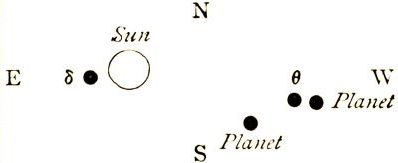
Fig. 2.—Swift's new Planet?
If we accept both observations, we must consider that the strange orb seen by Swift was not the nearer to the sun, but the other, for Watson, in his letter to Sir G. Airy, says that he saw both Theta and his own new planet, and he could not have overlooked Swift's new planet, if placed as in fig. 2, whereas if the star there marked as the stranger were really Theta, Watson might readily enough have overlooked the other star, as farther away from his newly-discovered planet. According to this view, the actual arrangement at the time of the eclipse was as shown in fig. 3.
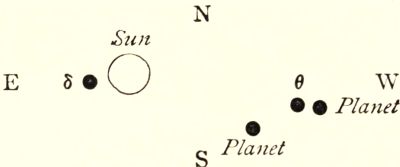
Fig. 3.—Suggested explanation of Watson's and Swift's observations.
But this is not quite all. Professor Watson saw another body, which in his opinion was a planet. I have already mentioned that he thought Zeta remarkably bright. It seemed to him a star of nearly the third magnitude, whereas Zeta Cancri is only of the fifth. Nay, speaking of the planet near Theta, and of this star which he took for Zeta, he says, 'they were probably really brighter [than the 4½ and 3½ magnitude respectively], because the illumination of the sky was not considered in the estimates.' Before he had thoroughly examined the pencil marks on his card circles, and made the necessary calculations, he supposed the brighter star to be Zeta, because he did not see the latter star. But when he examined his result carefully, he found that the bright star was set (according to his pencil marks) more than one degree east of Zeta. Writing on August 22, he says, 'The more I consider the case the more improbable it seems to me that the second star which I observed, and thought it might be Zeta, was that known star. I was not certain, in this case, whether the wind had disturbed the telescope or not. As it had not done so in the case of any other of six pointings which I recorded, it seems almost certain that the second was a new star.' It would be easy to understand why Professor Watson had not seen Zeta, for he only swept as far as the star he mistook for Zeta, and, as the accompanying figure shows, Zeta was beyond that star on the west.[6]
Fig. 4 represents the apparent result of the observations made by Professors Watson and Swift, if all the observations are regarded as trustworthy. The six stars shown in the figure were probably the six referred to in the preceding paragraph. The two unnamed ones are well-known red stars.
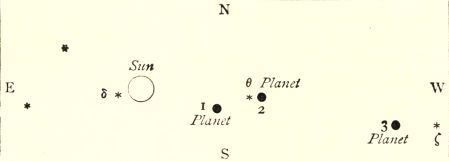
Fig. 4.—Showing all the stars observed by Watson and Swift.
Let it be noticed, that we cannot reject planet 1, without rejecting all Watson's observations. We cannot reject planet 2, without rejecting all Swift's observations. We cannot set this planet to the left of Theta without throwing doubt on Watson's observations. If Watson swept over Theta westward without seeing 2, Swift must have made some mistake as yet unexplained. As for planet 3, if we admit the possibility that this object really was Zeta, we must admit also the possibility that the object marked as planet 1 was really Theta, or rather we should have to do so, were it not that Watson saw Theta also, and (I suppose) in the same field of view, since he speaks confidently of the inferiority of Theta in brightness.
It should further be noticed, that though Swift's and Watson's observations by no means agree in details, they do in reality support each other (unless Watson should definitely assert that no star as bright as Theta existed either to the west or to the east of that star, at the distance indicated by Swift.) For they agree in indicating the existence of small planets near the sun, such as can only be seen with the telescope.
On the other hand, it is to be noted that other observers failed to see any of these bodies, though they looked specially for intra-Mercurial planets. Thus Professor Hall, of the Washington Observatory, searched over a larger space than is included in fig. 4, without seeing any unknown body. But as he also failed to see many known bodies which should have been seen, it is probable that the search was too hurried to be trustworthy.
It would be satisfactory to be able to say that any of the supposed planets might have been Lescarbault's Vulcan. But in reality, I fear, this cannot have been the case. In the Times, I expressed, in an article dated August 14, 1878, the opinion that the evidence obtained establishes the existence of the planet which had so long been regarded as a myth. That opinion was based on a very careful investigation of the evidence available at the time. But it does not accord with what has since been learned respecting Watson's observations.
We may dismiss planet 3 at once. If Watson is right about this body being distinct from Zeta (a point about which, I must confess, I feel grave doubts), then this must be a planet travelling in an orbit much wider than we can possibly assign to Vulcan. For even at the distance of some seven degrees from the sun it showed no sign of gibbosity. If it had then been at its greatest elongation it would have appeared only half-full. But with the power Watson was using, which enabled him to pronounce that the smaller body near Theta showed no elongation, he would at once have noticed any such peculiarity of shape. He could not have failed to observe any gibbosity approaching to that of the moon when three-quarters full. Moreover on July 29 a planet which has its points of crossing the ecliptic opposite the earth's place on April 3 and October 6, could not appear where Watson saw this body (fully two degrees from the ecliptic) unless either its orbit were far wider than that which Leverrier assigned to Vulcan, or else its inclination far greater. Neither supposition can be reconciled with Lescarbault's observation.
With regard to planets 1 and 2, the case is equally strong against the theory that Vulcan was observed. The same reasoning applies to both these bodies. When I speak therefore of planet 1, it will be understood that planet 2 also is dealt with. First, as this planet appeared with a disc appreciably round, it is clear that it must have been near the point of its orbit farthest from the earth, that is, the point directly beyond the sun. It was then nearly at its brightest. Yet it appeared as a fourth-magnitude star only. We have seen that Lescarbault's Vulcan, even when only half-full, would appear as bright as Mercury at his brightest, if Lescarbault's account can be accepted in all its details. Situated as planet 1 was, Vulcan would have shown much more brightly than an average first-magnitude star. At a very moderate computation it would have been twice as bright as such a star. But planet 1 appeared fainter than a fourth-magnitude star. Assume, however, that in reality it was shining as brightly as an average third-magnitude star. Then it shone with much less than a twentieth of the lustre Vulcan should have had, if Lescarbault's estimate were correct. Its diameter then cannot be greater than a quarter of that which Leverrier assigned to Vulcan on the strength of Lescarbault's observation. In fact, the apparent diameter of planet 1, when in transit over the sun's face, could not be more than a sixteenth of Mercury's in transit, or about two-fifths of a second,—roughly, about a 5000th part of the sun's apparent diameter. It is certain that Lescarbault could not have made so considerable a mistake as this. Nay, it is certain, that with the telescope he used he could not have seen a spot of this size at all on the sun's face.
It will be seen that Lescarbault's observation still remains unconfirmed, or rather, to speak more correctly, the doubts which have been raised respecting Lescarbault's Vulcan are now more than ever justified. If such a body as he supposed he saw really travels round the sun within the orbit of Mercury, it is certain that the observations made last July by those who were specially engaged in seeking for Vulcan must have been rewarded by a view of that planet. In July, Lescarbault's Vulcan could not have been invisible, no matter in what part of his orbit it might be, and the chances would have been greatly in favour of its appearing as a very bright star, without telescopic aid.
But on the other hand it seems extremely probable,—in fact, unless any one be disposed to question the veracity of the observers, it is certain,—that within the orbit of Mercury there are several small planets, of which certainly two, and probably three, were seen during the eclipse of July 29, 1878. All these bodies must be beyond the range of any except the most powerful telescopes, whether sought for as bright bodies outside the sun (not eclipsed) or as dark bodies in transit across the sun's face. The search for such bodies in transit would in fact be hopeless with any telescope which would not easily separate double stars one second of arc apart. It is with large telescopes, then, and under favourable conditions of atmosphere, locality, and so forth, that the search for intra-Mercurial planets in transit must in future be conducted. As the observed disturbance of Mercury's perihelion, and the absence of any corresponding disturbance of his nodes (the points where he crosses the plane of the earth's motion) show that the disturbing bodies must form a ring or disc whose central plane must nearly coincide with the plane of Mercury's path, the most favourable time for seeing these bodies in transit would be the first fortnights in May and November; for the earth crosses the plane of Mercury's orbit on or about May 8 and November 10. I believe that a search carried out in April, May, and June, and in October, November, and December, with the express object of discovering very small planets in transit, could not fail to be quickly rewarded,—unless the observations made by Watson and Swift are to be wholly rejected.
[Since this was written, Professor Swift has expressed the opinion that his planet cannot possibly have been the one seen near Theta Cancri by Professor Watson,—who it seems saw Theta in the centre of a large field of view, and must therefore have seen Swift's planet had that object been placed either as shown in fig. 2 or fig. 3. Hence Professor Swift considers that both the stars he himself saw were planets, and that he did not see Theta at all. The reasoning in the last five paragraphs of the above essay would not be in the least affected if we adopted Professor Swift's conclusion, that four and not three intra-Mercurial planets were detected during the eclipse of July last. Yet later Professor Peters of Clinton has indicated reasons for believing that while Watson simply mistook for planets the two fixed stars, Theta and Zeta Cancri, Professor Swift saw no planets at all. This interpretation would account fully, though not very satisfactorily, for all that is mysterious in the two narratives.]
FOOTNOTES:
RESULTS OF THE BRITISH TRANSIT EXPEDITIONS.
Another noteworthy attempt has been made to estimate the distance which separates our earth from the mighty central orb round which she travels with her fellow-worlds the planets. In other words, the solar system itself has been remeasured; for the measurement of any part of the system is in fact the measurement of the entire system, the proportions of which, as distinguished from its actual dimensions, have long been accurately known.
I propose briefly to describe the results which have been obtained (after some three years of careful examination) from the observations made by the British parties sent north, south, east, and west to observe the transit of Venus on December 9, 1874; and then to consider how these results compare with those which had before been obtained. First, however, it may be well to remind the reader of the unfavourable conditions under which the task of measuring our distance from the remote sun must of necessity be attacked.
Not unfrequently we hear the measurement of the sun's distance, and the various errors which astronomers have had to correct during the progress of their efforts to deal with the problem, referred to in terms which would imply that astronomy had some reason to be ashamed of labours which are in reality among the most noteworthy achievements of their science. Because, some twenty years ago, the estimate of 95 million miles, which had for half a century held its ground in our books of astronomy as the true distance of the sun, was replaced for a while by an estimate of about 91½ million miles, which has in turn been displaced for an estimate of about 92-1/3 million miles, it has been said that astronomy has very little claim to be called the exact science. It is even supposed by some that astronomy is altogether at sea respecting the sun's distance—which, if the estimates of astronomers thus vary in the course of three-quarters of a century, may in reality, it is thought, be very different from any of the values hitherto assigned. Others suppose that possibly the sun's distance may vary, and that the diminution of three or four million miles in the estimates adopted by astronomers may correspond to an approach of the earth towards the sun by that amount, an approach which, if continued at the same rate, would, before many centuries, bring the earth upon the surface of the sun, to be consumed as fuel perhaps for the warming of the outer planets, Mars, Jupiter, and the rest.
All these imaginings are mistaken, however. The exactness of astronomy, as a science, does not depend on the measurement of the sun's distance or size, any more than the accuracy of a clock as a timekeeper depends on the exactness with which the hands of the clock are limited to certain definite lengths. The skill with which astronomy has dealt with this particular problem of celestial surveying has been great indeed; and the results, when considered with due reference to the conditions of the problem, are excellent: but in reality, if astronomers had failed utterly to form any ideas whatever as to the sun's distance, if for aught they knew the sun might be less than one million, or more than a million millions of miles from us, the exactness of astronomy as a science would be no whit impaired. And, in the second place, no doubts whatever need be entertained as to the general inference from astronomical observations that the sun's distance is between 92 and 93 millions of miles. All the measurements made during the last quarter of a century lie between 90 and 95 millions of miles, and by far the greater number of those made by the best methods, and under the most favourable conditions, lie between 91 and 94 millions of miles. All the very best cluster closely around a distance of 92-1/3 millions of miles. We are not for the moment, however, concerned with the question of the exact distance, but with the question whether astronomy has obtained satisfactory evidence that the sun's distance lies in the neighbourhood of the distances deduced by the various methods lately employed. Putting the matter as one of probabilities, as all scientific statements must be, it may be said as confidently that the sun's distance lies between 85 millions and 100 millions of miles as that the sun will rise to-morrow; and the probability that the sun's distance is less than 90 millions, or greater than 95 millions of miles, is so small that it may in effect be counted almost as nothing. Thirdly, the possibility that the earth may be drawing nearer to the sun by three or four millions of miles in a century may be dismissed entirely from consideration. For, one of the inevitable consequences of such a change of distance would be a change in the length of the year by about three weeks; and so far from the year diminishing by twenty days or so in length during a century, it has not diminished ten seconds in length during the last two thousand years. If there has been any change year by year in the earth's distance from the sun, it is one to be measured by yards rather than by miles. Astronomers would be well content if their 'probable error' in estimating the sun's distance could be measured by thousands of miles; so that any possible approach of the earth towards the sun would go but a very little way towards accounting for the discrepancies between the different estimates of the distance, even if these estimates grew always smaller as time passed, which is assuredly not the case.
But in truth, if we consider the nature of the task undertaken by astronomers in this case, we can only too readily understand that their measurements should differ somewhat widely from each other. Let us picture to ourselves for a moment the central sun, the earth, and the earth's path, not as they really are, for the mind refuses altogether to picture the dimensions even of the earth, which is but an atom compared with the sun, whose own proportions, in turn, mighty though they are, sink into utter insignificance compared with the enormous scale of the orbit in which the earth travels around him. Let us reduce the scale of the entire system to one 500-millionth part of its real value: even then we have a tolerably large orbit to imagine. We must picture to ourselves a fiery globe 3 yards in diameter to represent the sun, and the earth as a one-inch ball circling round that globe at a distance of about 325 yards, or about 350 paces. The diameter of the earth's orbit would on this scale, therefore, be somewhat more than a third of a mile. If we imagine the one-inch ball moving round the fiery globe once in a year, while turning on its axis once in a day, we find ourselves under a difficulty arising from the slowness of the resulting motions. We should have found ourselves under a difficulty arising from the rapidity of the actual motions if we had considered them instead. The only resource is to reduce our time-scale, in the same way that we have reduced our space-scale: but not in the same degree; for if we did we should have the one-inch ball circling round its orbit, a third of a mile in diameter, sixteen times in a second, and turning on its axis five thousand times in a second. Say, instead, that for convenience we suppose days reduced to seconds. Then we have to picture a one-inch globe circling once in rather more than six minutes about a globe of fire 3 yards in diameter, one-sixth of a mile from it, and turning on its axis once in a second. We must further picture the one-inch globe as inhabited by some 1,500 millions of creatures far too small to be seen with the most powerful microscope—in fact, so small that the tallest would be in height but about the seven-millionth of an inch—and we must imagine that a few of these creatures undertake the task of determining from their tiny home swiftly rotating as it rushes in its orbit around a large globe of fire, 325 yards from them—the number of yards really intervening between that globe and their home. If we rightly picture these conditions, which fairly represent those under which the astronomer has to determine the distance of the sun from the earth, we shall perceive that the wonder rather is that any idea of the sun's distance should be obtained at all, than that the estimates obtained should differ from each other, and that the best of them should err in measurable degree from the true distance.
Anything like a full explanation of the way in which transits of Venus across the sun's face are utilised in the solution of the problem of determining the sun's distance would be out of place in these pages. But perhaps the following illustration may serve sufficiently, yet simply, to indicate the qualities of the two leading methods of using a transit. Imagine a bird flying in a circle round a distant globe in such a way that, as seen from a certain window (a circular window suppose), the bird will seem to cross the face of the globe once in each circuit. Suppose that though the distance of the globe is not known, the window is known to be exactly half as far again from the globe as the bird's path is, and that the window is exactly a yard in diameter. Now in the first place, suppose two observers watch the bird, one (A) from the extreme right side, and the other (B) from the extreme left side of the window, the bird flying across from right to left. A sees the bird begin to cross the face of the globe before B does,—say they find that A sees this exactly one second before B does. But A's eye and B's being 3 feet apart, and the bird two-thirds as far from the globe as the window is, the line traversed by the bird in this interval is of course only 2 feet in length. The bird then flies 2 feet in a second (this is rather slow for a bird, but the principle of the explanation is not affected on that account). Say it is further observed that he completes a circuit in exactly ten minutes or six hundred seconds. Thus the entire length of a circuit is 1,200 feet,—whence by the well-known relation between the circumference and the diameter of a circle, it follows that the diameter of the bird's path is about 382 feet, and his distance from the centre of the globe 191 feet. So that the distance of the globe from the window, known to be half as great again, is about 286½ feet.
If we regard the globe as representing the sun; the window of known size as representing our earth of known dimensions; the bird travelling round in a known period and at a distance whose proportion to the window's distance is known, as representing Venus travelling in a known period round the sun and at a distance bearing a known proportion to the earth's; this way of determining the distance of a remote globe illustrates what is called Delisle's method of determining the sun's distance. It requires that the two observers, A and B, should each make exact note of the moment when the bird seemed to begin to cross the disc of the remote globe; and in like manner Delisle's method requires that two observers, widely separated on the earth in a direction nearly parallel to that in which Venus is travelling, should make the most exact note of the moment when Venus begins to cross the sun's face. Also, as all I have said about the bird's beginning to cross the face of the distant globe would apply equally well if said about the end of his seeming passage across that disc, so two observers, widely separated on the earth, can determine the sun's distance by noting the end of her transit instead of the beginning, if they are suitably placed for the purpose. The window of our illustration remains unchanged during the bird's imagined flight, but as the face of the earth turned sunwards (which corresponds to that window) is all the time changing with the earth's rotation, a different pair of stations would have to be selected for observing the end of transit, than would be suitable for observing the beginning.
So much for the method called Delisle's. The other is in principle equally simple. In the imaginary experiment just described we supposed the two observers at the right and left sides of the circular window. Imagine them now to watch the bird from the top and bottom of the window, 3 feet apart. Suppose they note that the two tracks along which, as seen from these two points, the bird seems to cross the face of the distant globe, lie at a distance from each other equal to one-third of the globe's apparent diameter. Now, the bird being twice as far from the globe as from the window, the two tracks on the globe necessarily lie twice as far apart as the two points from which they are seen—or they lie 6 feet apart. The globe's diameter therefore is 18 feet. Knowing thus how large it is, and knowing also how large it looks, the observers know how far from them it lies. So, in the Halleyan method of determining the sun's distance by observing Venus in transit, astronomers are stationed far north and far south on the sunlit half of the earth, corresponding to the window of the imaginary experiment. Venus corresponds to the bird. The observers note along what track she travels across the sun's face. (That they partially determine this by noting how long she is in crossing, in no sense affects the principle of the method.) They thus learn that such and such a portion of the sun's diameter equals the distance separating them,—some six or seven thousand miles perhaps,—whence the sun's diameter is known. And as we know how large he looks, his distance from the earth is determined.
A peculiarity distinguishing this method from the former is that the observers must have a station whence the whole transit can be seen; for practically the place of Venus's track can only be ascertained satisfactorily by timing her passage across the sun's disc, so that the beginning and end must be observed and very carefully timed. This is to some degree a disadvantage; for during a transit lasting several hours the earth turns considerably on her axis, and the face turned sunwards at the beginning is thus very different from the face turned sunwards at the end of transit. It is often exceedingly difficult to find suitable northern and southern stations belonging to both these faces of the earth. On the other hand, the other method has its peculiar disadvantage. To apply it effectively, the observer must know the exact Greenwich time (or any other selected standard time) at his station,—or in other words he must know exactly how far east or west his station is from Greenwich (or some other standard observatory). For all the observations made by this method must be compared together by some absolute time standard. In the Halleyan method the duration of transit only is wanted, and this can be as readily determined by a clock showing local time (or indeed by a clock set going a few minutes before transit began and showing wrong time altogether, so only that it goes at the right rate) as by a clock showing Greenwich, Paris, or Washington time. The clock must not gain or lose in the interval. But a clock which would gain or lose appreciably in four or five hours, would be worthless to the astronomer; and any clock employed for scientific observation might safely be trusted for an interval of that length; whereas a clock which could be trusted to retain true time for several days, is not so readily to be obtained.
We need not consider here the origin of the misapprehension (under which our principal Government astronomer lay for some time), that the Delislean method was alone available during the transit of 1874, the Halleyan method, to use his words, 'failing totally.' The British stations were selected while this misapprehension remained as yet uncorrected. Fortunately the southern stations were suitable for both methods. The northern were not: for this reason, simply, that one set were so situated that night began soon after the beginning of transit, which alone could be observed; while the other set were so situated that night only came to an end a short time before the transit ended, so that the end of transit only could be observed. No doubt when the mistake just mentioned had been clearly recognised,—as it was early in 1873,—measures would have been taken to rectify its effect by occupying some suitable northern stations for observing the whole transit, if Great Britain had been the only nation taking part in the work. Fortunately, however, other nations might be trusted to occupy the northern region, which had so long been overlooked. England simply strengthened the southern observing corps: this could be done without any change by which the Government astronomers would have seemed to admit that 'some one had blundered.' Thus the matter was arranged—America, Russia, and Germany occupying a large number of stations admirably suited for applying the method which had been supposed to 'fail totally.' The British Official astronomers, on whom of course responsibility for adequately observing the transit (or at least for properly applying money granted by the nation for the purpose) alone rested, did in reality all, or nearly all, that was necessary in doubling some of the southern observing parties, and strengthening all of them; for unquestionably other nations occupied suitable northern stations in sufficiently strong force.
It is to be remembered, however, in estimating the probable value of the result which has been deduced from the British observations, that as yet only a portion of these observations has been effectively dealt with. The British observations of the beginning of transit at northern and southern stations give, when combined together, a value of the sun's distance. The British observations of the end of transit at other northern and southern stations give also, when combined together, a value of the sun's distance. And both sets combined give of course a mean value of the sun's distance, more likely on the whole to be correct than either value taken separately. But the British observations of the duration of transit as observed from southern stations do not of themselves give any means of determining the sun's distance. They must be combined with observations of the duration of transit as observed from northern stations; and no British party was stationed where such observations could be obtained. The value, then, of these particular British southern observations can only be educed when comparison is made between them and the northern observations by American, German, and Russian astronomers.
We must not, then, be disheartened if the results of the British operations alone should not seem to be altogether satisfactory. For it may still happen that that portion of the British operations which only has value when combined with the work of other countries may be found to possess extreme value. We had good reason for doubting beforehand whether results of any great value could be obtained by Delisle's method. It was only because Halley's was supposed to fail totally that the Government astronomers ever thought of employing that method, which the experience of former transits had taught us to regard as of very little value.
It may be asked, however, how we are to form an opinion from the result of calculations based on the Delislean operations during the last transit, whether the method in satisfactory or not. If as yet the sun's distance is not exactly determined, a result differing from former results may be better than any of them, many will think; and therefore the method employed to obtain it may be more satisfactory than others. If, they may reason, we place reliance on a certain method to measure for us a certain unknown distance, how can we possibly tell from the distance so determined whether the method is trustworthy or not?
Perhaps the readiest way of removing this difficulty, and also of illustrating generally the principles on which the determination of the most probable mean value of many different estimates depends, is by considering a familiar experience of many, a case in which the point to be determined is the most probable time of day. Suppose that we are walking along a route where there are several clocks, the time shown by our own watch being, for whatever reason, open to question. We find, say, that as compared with our watch time, one clock is two minutes fast, the next three minutes fast, the next one minute slow, and so on, two or three perhaps being as much as six or seven minutes fast, and two or three being as much as three or four minutes slow as compared with the watch. We note, however, that these wider ranges of difference occur only in the case of clocks presumably inferior—cheap clocks in small shops, old clocks in buildings where manifestly the flight of time is not much noted, and so forth. Rejecting these from consideration, we find other clocks ranging from one minute or so before our watch time to four minutes or so after it. Before striking a rough average, however, we consider that some among these clocks are placed where it is on the whole better to be a minute or two before the time than a second late,—as, for instance, at banks, where there may be occasion to send out clerks so as to make sure of reaching certain places (Clearing-House, General Post-office, and so forth) within specified time limits. On the other hand, we note that others of these clocks are placed where it is better to be a minute or two after time than a second before it,—as at railway stations, post-offices, and so on, where it is essential that the public should be allowed time fully up to a specified hour, for some particular service. Taking fair account of such considerations, we might find that most probably the true time lay between half a minute before and two minutes and a half after our watch time. And thus we might infer that in reality the true time was one minute or so later than that shown by our watch. But if we were well acquainted with the characteristics of different clocks along our route, we might infer the time (nay, we might to all intents and purposes know the time) far more accurately than this. We might, for instance, pass six or seven shop-windows where first-class specimens of horological work were shown,—in each window, perhaps, several excellent clocks, with compensated pendulums and other contrivances for securing perfect working. We might find at one of these shops all such clocks showing the same time within two or three seconds; at the next all such clocks also agreeing inter se within two or three seconds, but perhaps their mean differing from the mean at the last shop of the kind by seven or eight seconds; and all six or seven shops, while showing similar agreement as regards the clocks severally displayed at each, agreeing also with each other so closely that ten or twelve seconds would cover the entire range between their several mean times. If this were observed, we should not hesitate to place entire reliance on these special sets of clocks; and we should feel certain that if we took the mean of all their means as the true time (perhaps slightly modifying this mean in order to give due weight to the known superiority of one or other of these clock-shops), we should not be in error by more than five or six seconds, while most probably we should have the time true within two or three seconds.
So far the illustration corresponds well with what had been done during a quarter of a century or so before the last transit of Venus. Several different methods of determining the sun's distance had been applied to correct a value which for many reasons had come to be looked upon with suspicion. This value—95,365,000 miles—was known to be certainly too large. The methods used to test it gave results varying between about 90 million miles and about 96 million miles. But all the methods worthy of any real reliance gave results lying between 91 million miles and 94 million miles. Not to enter more fully into details than would here be suitable, we may pass on at once to say that those most experienced in the matter recognised seven methods of determining the distance, on which chief reliance must be placed. Of these seven methods, six—each applied, of course, by many different observers—were dealt with exhaustively by Professor Newcomb, of the Washington Observatory, a mathematician who has undoubtedly given closer attention to the general problem of determining the sun's distance than any living astronomer. The six methods give six several results ranging from about 92,250,000 miles to about 92,850,000 miles; but when due weight is given to those of the six methods which are undoubtedly the best, the most probable mean value is found to be about 92,350,000 miles. The seventh method, conceived by Leverrier, the astronomer to whom, with our own Adams, the discovery of Neptune was due, and applied by him as he only could have applied it (he alone possessing at once the necessary material and the necessary skill), gives the value, 92,250,000 miles. From this it may fairly be concluded that Newcomb's mean value, which has in fact been accented by all American and Continental astronomers, is certainly within 600,000 miles, and most probably within 300,000 miles of the true mean distance of the sun.
But now, to revert to our illustrative case, let us suppose that after passing the windows of six or seven horologists, from whose clocks we have obtained such satisfactory evidence as to the probable hour, we bethought ourselves of a place where, from what we had heard, a still more exact determination of the hour might be obtained. While still on the way, however, we learn from a friend certain circumstances suggesting the possibility that the clocks at the place in question may not be so correct as we had supposed. Persisting, however, in our purpose, we arrive at the place, and carefully compare the indications of the various clocks there with the time indicated by our watch, corrected (be it supposed) in accordance with the results of our former observations. Suppose now that the hour indicated by the various clocks at this place, instead of agreeing closely with that which we had thus inferred, differs from it by fully half a minute. Is it not clear that instead of being led by this result to correct our former estimate of the probable hour, we should at once infer that the doubts which had been suggested as to the correctness of the various clocks at this place were fully justified? The evidence of the other sets of clocks would certainly not be invalidated by the evidence given by the set last visited, even if the accuracy of these had not been called in question. But if, as supposed, some good reason had been given for doubt on this point,—as for instance, that of late the supervision of the clocks had been interrupted,—we should not hesitate for a moment to reject the evidence given by these clocks, or at least to regard it as only tending to demonstrate what before we had been led to surmise, namely, that these clocks could not be relied upon to show true time. If however, furthermore, we found, not only that the mean of the various times indicated by the clocks at this last-visited place differed thus widely from the time which we had every reason to consider very nearly exact, but that the different clocks here differed as widely from each other, it would be absurd to rely upon their evidence. The circumstance that there was a range of difference of fully half a minute in their indications would of itself suffice to show how untrustworthy they were, at least for the use of any one who wished to obtain the time with great accuracy. Combined with the observed difference between their mean time and that before obtained, this circumstance would prove the inaccuracy of the clocks beyond all possibility of doubt or question.
Now the case here imagined corresponds very closely with the circumstances of the recent attempt to correct our estimate of the sun's distance by Delisle's method. Our Government astronomers bethought themselves of this method as likely to give the best possible means for correcting, by observations of Venus in transit, the estimate of the sun's distance which had been deduced by Newcomb, and confirmed by Leverrier. While as yet their plans were not finally decided upon, reasons for questioning this conclusion were indicated to those officials by unofficial astronomers entertaining very friendly feelings towards them. Retaining, however, their reliance on the method thus called in question, they carried out their purpose, though fortunately making provision, very nearly sufficient, for the use of another method. Now, instead of the estimate of the sun's distance obtained from the observations by Delisle's method agreeing closely with Newcomb's mean value,—about 92,350,000 miles,—it exceeds this value by about a million miles. (See, however, note on the last page of this article.) According to various ways of considering the results sent in by his observers, the chief official astronomer obtains a mean value ranging from about 93,300,000 miles to about 93,375,000 miles. The last named estimate seems preferred on the whole; but if we take 93,350,000 miles, we shall probably give about the fairest final mean value. We have seen, however, that the results of observations by seven distinct methods give values ranging only between 92,250,000 miles and 92,850,000 miles,—the six best methods giving values ranging only between 92,250,000 miles and about 92,480,000 miles. The new value thus lies 500,000 miles above the largest and admittedly the least trustworthy of the seven results, 870,000 miles above the next largest, a million miles above the mean value, and 1,100,000 miles above the least value. It certainly ranges 500,000 miles above the largest admissible value from those seven trusted methods, dealt with most skilfully, cautiously, and laboriously, by such mathematicians as Newcomb and Leverrier.
Can we hesitate as to the inference we should deduce from this result? We need not for a moment call in question the skill or care with which the British observing parties carried out their operations. Nor need we doubt that the results obtained have been most skilfully and cautiously investigated by those to whom the work of supervision and of reduction has been entrusted. We need not even question the policy of devoting so large a share of labour and expense to the employment of a method held in little favour by most experienced Continental and American astronomers, and objected to by many in England, including some even among official astronomers. It was perhaps well that the method should have one fair and full trial. And it is certain that all who have taken part in the work have done their duty zealously and skilfully. Captain Tupman, to whom Sir George Airy, our chief official astronomer, entrusted the management of the calculations, has received, and justly, from his official superior, the highest commendation for his energy and discrimination. But beyond all manner of doubt the method employed has failed under the test thus applied to it. I do not say that hereafter the method may not succeed. Some of the conditions which at present render it untrustworthy are such as may be expected to be modified with the progress of improvement in the construction of scientific instruments. But as yet the method is certainly not trustworthy.
This might be safely concluded from the wide discrepancy between the new result and the mean of those before obtained. Yet if all the various observations made by the British observing parties agreed closely together, the circumstance, though it could hardly shake our inference on this point, would yet cause some degree of perplexity, since, of itself, it would seem to imply that the method was trustworthy. Fortunately we are not thus troubled by conflicting evidence. The indications of the untrustworthy nature of the method, derived from the discordance between the results obtained by it and those before inferred, are not a whit clearer, clear and convincing though they are, than are the indications afforded by their discordance inter se. The distance derived from northern and southern observations of the beginning of transit ought of course to be the same as that derived from northern and southern observations of the end of transit. If both sets of observations were exactly correct, the agreement between the results would be exact. The discordance between them could only be wide as a consequence of some serious imperfection in this method of observing a transit. But the discordance is very wide. The observations of the beginning of transit by the British parties give a distance of the sun exceeding by rather more than a million miles that deduced from the observations of the end of transit.
I am well assured that neither Continental nor American astronomers will accept the new estimate of the sun's distance, unless—which I venture to predict will not be the case—the entire series of transit observations should seem to point to the same value as the most probable mean. Even then most astronomers will, I believe, think rather that transits of Venus do not afford such satisfactory means of determining the sun's distance as had been supposed. This opinion, it is well known, was held by Leverrier, insomuch that he declined to support with the weight of his influence the proposals for heavy expenditure by France upon expeditions for observing the recent transit and the approaching transit of the year 1882.
I doubt whether many, even among British astronomers, will accept the new value. Already the Superintendent of the Nautical Almanac has given his opinion upon it in terms which cannot be regarded as favourable. 'It is well known,' he says (I quote at least from an article which has been attributed to him without contradiction on his part), 'that some astronomers have not expected our knowledge of the sun's distance to be greatly improved from the observations of the transit of Venus. Many, we can imagine, will regard with some suspicion' so great a value as 93,300,000 miles (I substitute these words for technical expressions identical in real meaning). 'Nevertheless, whatever degree of doubt might be entertained by competent authorities, it appears to have been felt by those immediately responsible for action, in different civilised nations where science is encouraged, that so rare a phenomenon as a transit of Venus could not be allowed to pass without every exertion being made to utilise it.'
Sir George Airy, very naturally, attaches more value to the result of the British expeditions, or at least of that part of the operations for which he was responsible, than others are disposed to do. In an address to the Astronomical Society, he expressed the opinion that 'the results now presented are well worthy of very great confidence.... Considering that the number of observers was eighteen, and that they made fifty-four observations, and considering also the degree of training they had, and their zeal, and the extreme care that was taken in the choice of stations, I think,' he said, 'that there will not be anything to compete with the value which has been deduced.' This is, as I have said, very naturally his opinion; and although ordinarily it is rather for the employers than for the employed to estimate the value of the results sent in, yet at least we cannot object to his just and generous praise of those who have worked under his orders.
Nevertheless, it must not be forgotten that on a former occasion when equal satisfaction was expressed with the result of a rather less costly but still a laborious and difficult experiment, the scientific world did not accept (and has since definitely rejected) the conclusion thus confidently advanced. I refer to the famous Harton Colliery experiment for determining the mass of the earth. The case is so closely analogous to that we are dealing with, that it will be instructive briefly to describe its leading features. Maskelyne, formerly the chief Government astronomer of this country, from observations of the effect of the mass of Mount Schehallien in deflecting a plumb-line, had inferred that the density of the earth is five times that of water. Bouguer from observations in Chimborazo, and Colonel James from observations on Arthur's Seat, had deduced very similar results. From pendulum observations on high mountains, Carlini and Plana made the earth's density very nearly the same. Cavendish, Reich, and our own Francis Baily, weighed the earth against two great globes of lead, by a method commonly known as the Cavendish experiment, but really invented by Michell. These experiments agreed closely together, making the earth's density about 5½ times that of water, or giving to the earth a mass equivalent to that which would be contained in 6,000 millions of millions of millions of tons. Now, from the Harton Colliery experiments, in 1854, in which the earth's weight was estimated by comparing the vibrations of a pendulum at the mouth of the mine with those of a similar pendulum at a depth of about 1,260 feet, it appeared that the earth's density is rather more than 6½ times that of water, corresponding to an increase in our estimate of the earth's mass by nearly 1,100 millions of millions of millions of tons, or by more than a sixth of the entire mass resulting from the most trustworthy former measurements. Sir G. Airy considered that 'this result will compete on at least equal terms with those obtained by other methods;' but nearly a quarter of a century has passed during which no competent astronomer has adopted this opinion, or even suggested any modification of the former mean estimate of the earth's mass on account of the unexpectedly large value deduced from the Harton experiment.
It appears to me probable that a similar fortune will attend the latest measurement of the sun's distance. But fortunately the matter will not rest merely on measurements already made. Many fresh measurements will be made during the next few years by methods already tried and not (like Delisle's transit method) found wanting. The recent close approach of the planet Mars was not allowed to pass without a series of observations specially directed to the determination of the sun's distance; and we know that observations of Mars are among the most advantageous means available for the solution of this difficult problem. It was indeed from such observations that the first really trustworthy measures of the sun's distance were obtained two centuries ago. The small planets which travel in hundreds between the paths of Mars and Jupiter have also been pressed into the service. And now so many of these are known that scarcely a month passes without one or other of them being favourably placed for the purpose of distance measurements. For this too their star-like discs make these bodies specially suitable.
The most probable inference respecting the results obtained by the British expedition is that their chief value resides in the evidence which they afford respecting the Delislean method of observation. They seem to demonstrate what had before been only surmised (though with considerable confidence by some astronomers), that this method cannot be relied upon to correct our estimate of the sun's distance. In the transit of 1882, which by the way will be visible in this country, we may be certain that other and more satisfactory methods of observation will be employed.
Before concluding, it may be well to make a few remarks upon some misapprehensions which seem to exist as to the propriety in the first place, and the desirability in the second, of comments upon the arrangements adopted by Government astronomers to utilize particular astronomical phenomena, and upon the value of the results which may be obtained by means of such arrangements. Many seem to suppose that astronomical matters are in some sense like military or naval (warlike) manœuvres, to be discussed effectively only by those who 'are under authority, having (also) soldiers under them,' in other words by Government astronomers. It would be very unfortunate for science were this so, seeing that in that case those chiefly responsible for the selection of methods and the supervision of operations would be perfectly free from all possibility of criticism. No one under their authority would be very likely to speak unfavourably of their plans. And no one possessing higher general authority would be likely to have any adequate knowledge of astronomy to form an opinion, either as to the efficiency of the arrangements adopted in any case, or as to the significance of the results obtained. In warlike matters, to some degree, the wisdom of the strategy employed is tested by results which all can appreciate, seeing that they affect directly the well-being of the nation. Moreover, there are special reasons in these cases why in the first place there should be a complete system of subordination, and why in the second few should undertake the study of the science unless they proposed to take their part in its practical application and therefore to submit to its disciplinary system. But it is quite otherwise with the science of astronomy. The nation requires, chiefly for the regulation of its commerce, a certain number of trained astronomers, to carry out systematically observations of a certain class,—observations having in the main scarcely any closer relation to the real living science of astronomy than land surveying has to such geology as Lyell taught, or the bone-trade to the science of anatomy. The stars by their diurnal motion form the most perfect time-measurers, therefore they must be constantly timed by trained observers. The sun and moon are the most effective time-indicators for seamen, and therefore their movements must be most carefully noted. Our Nautical Almanac in fact embodies the kind of astronomical materials which Government astronomers are employed to collect and arrange. Such work may rather be called celestial surveying than astronomy. But from the days of Flamsteed, the first of our Astronomers Royal (as the chief Government astronomer is technically called) whose contemporary, Newton, discovered the great law of the universe, to those of Maskelyne and Sir G. Airy, whose contemporaries, the elder and the younger Herschel, disclosed the structure of the universe, there have always been astronomers outside the ranks of official astronomy, in no way desirous of entering those ranks, and in fact so taking their course from the beginning of their study of the science as to preclude themselves from all possibility of undertaking any official duties in astronomy. 'Non sua se voluntas,' necessarily, 'sed suæ vitæ rationes, hoc aditu laudis, qui semper optimo cuique maxime patuit, prohibuerunt:' though, indeed, it may not untruly be said that to one who apprehends the true sublimity of astronomy as a science the routine of official astronomy is by no means inviting, and probably personal tastes have had very much to do with the choice, by such men, of the more attractive departments of astronomy. Be this as it may, it is certain that the astronomers who thus keep outside the official ranks are not only free, and may not only be fully competent, to express an opinion on the arrangements made by Government astronomers, or on the results obtained by them, but as the only members of the community who are at once free and able so to do, their right to speak may often involve, in some degree, the duty of speaking. If through some mistake wrong arrangements were proposed for instance,—and all men, even officials (Herbert Spencer says, especially officials), are apt to make mistakes,—then, unless non-official astronomers, who had carefully examined the subject, expressed their doubts, it is certain that there would be no means whatever of correcting the error, or even of detecting its consequence, until many years had elapsed. The leading official astronomers would in such a case be apt, in fact they are apt enough as it is, to stand by each other,—a chief in one department commending the zeal and energy of the chief in another department, this chief in turn commending the industry and ability of the other, and so forth,—while subordinates of all ranks might be apt either to maintain a judicious silence, or else at least to avoid any utterance which would endanger their position. It may, on the one hand, be to some degree questioned whether it would be fitting that discipline should be so far neglected in such a case that a subordinate should have eyes to see, or ears to hear, or thoughts to note, any error on the part of his superior in office. And on the other hand, those who know little or nothing of astronomy can of course form no opinion on astronomical matters, however high they may be in authority outside matters scientific. To assert, then, that it is either improper or undesirable for unofficial astronomers to comment on the plans or results of astronomers employed and paid by the nation is practically equivalent to asserting that it is improper or undesirable for the work of these paid astronomers to be examined at all,—a conclusion manifestly absurd.[7]
FOOTNOTES:
THE PAST HISTORY OF OUR MOON.
The moon, commonly regarded as a mere satellite of the earth, is in truth a planet, the least member of that family of five bodies circling within the asteroidal zone, to which astronomers have given the name of the terrestrial planets. There can be no question that this is the true position of the moon in the solar system. In fact, the fashion of regarding her as a mere attendant of our earth may be looked upon as the last relic of the old astronomy in which our earth figured as the fixed centre of the universe, and the body for whose sake all the celestial orbs were fashioned. In this aspect, also, the moon is a far more interesting object of research than when viewed as belonging to another and an inferior order. We are able to recognise, in her, appearances probably resulting from the relative smallness of her dimensions, and hence to derive probable information as to the condition of other orbs in the solar system which fall below the earth in point of size. Precisely as the study of the giant planets, Jupiter and Saturn, has led astronomers to infer that certain peculiarities must result from vastness of dimensions, so the study of the dwarf planets, Mars, our moon, and Mercury, may indicate the relations we are to associate with inferiority of size.
This thought immediately introduces us to another conception, which causes us to regard with even greater interest the evidence afforded by the moon's present condition. It can scarcely be questioned that the size of any member of the solar system, or rather the quantity of matter in its orb, assigns, so to speak, the duration of that orb's existence, or rather of the various stages of that existence. The smaller body must cool more rapidly than the larger, and hence the various periods during which the former is fit for this or that purpose of planetary life (I speak with purposed vagueness here) are shorter than the corresponding periods in the life of the latter. Thus the sun, viewed in this way, is the youngest member of the solar system, while the tiniest members of the asteroid family, if not the oldest in reality, are the oldest to which the telescope has introduced us. Jupiter and Saturn come next to the sun in youth; they are still passing through the earliest stages of planetary existence, even if we ought not rather to adopt that theory of their condition which regards them as subordinate suns, helping the central sun to support life on the satellites which circle around them. Uranus and Neptune are in a later stage, and perchance when telescopes have been constructed large enough to study these planets with advantage, we may learn something of that stage, interesting as being intermediate to the stages through which our earth and Venus on the one hand, and the giant brothers Jupiter and Saturn on the other, are at present passing. After our earth and Venus, which are probably at about the same stage of planetary development (though owing to the difference in their position they may not be equally adapted for the support of life), we come to Mars and Mercury, both of which must be regarded as in all probability much more advanced and in a sense more aged than the earth on which we live. In a similar sense,—even as an ephemeron is more aged after a few hours of existence than a man after as many years,—the small planet which we call 'our moon' may be described as in the very decrepitude of planetary existence, nay (some prefer to think), as even absolutely dead, though its lifeless body still continues to advance upon its accustomed orbit, and to obey the law of universal attraction.
Considerations such as these give singular interest to the discussion of the past history of our moon, though they add to the difficulty of interpreting the problems she presents to us. For we have manifestly to differentiate between the effects due to the moon's relative smallness on the one hand, and those due to her great age on the other. If we could believe the moon to be an orb which simply represents the condition to which our earth will one day attain, we could study her peculiarities of appearance with some hope of understanding how they had been brought about, as well as of learning from such study the future history of our own earth. But clearly the moon has had another history than our earth. Her relative smallness has led to relations such as the earth never has presented and never will present. If our earth is, as astronomers and physicists believe, to grow dead and cold, all life perishing from her surface, it is tolerably clear, from what we already know of her history, that the appearance she will present in her decrepitude will be utterly unlike that presented by the moon. Grant that after the lapse of enormous time-intervals the oceans now existing on the earth will be withdrawn beneath her solid crust, and even (which seems incredible) that at a more distant future the atmosphere now surrounding her will have become greatly reduced in quantity, either by similar withdrawal or in any other manner, yet the surface of the earth would present few features of resemblance to that of the moon. Viewed from the distance at which we view the moon, there would be few crateriform mountains indeed compared with those on the moon; those visible would be small by comparison with lunar craters even of medium dimensions; and the radiated regions seen on the moon's surface would have no discernible counterpart on the surface of the earth. The only features of resemblance, under the imagined conditions, would be probably the partially flat sea bottoms (though these would bear a different proportion to the more elevated regions) and the mountain ranges, the only terrestrial features of volcanic disturbance which would be relatively more important than their lunar counterparts.
I do not purpose, however, to discuss the probable future of the earth, having only indicated the differences just touched upon in order to remind the reader at the outset that we have not in 'the moon' a representation of the earth at any stage of her history. Other and different relations are presented for our consideration, although it may well be that by carefully discussing them we may learn somewhat respecting our earth, as also respecting the past history and future development of the solar system.
It appears reasonable to regard the moon, after her first formation as a distinct orb, as presenting the same general characteristics that we ascribe to our earth in its primary stage as a planet. In one respect the moon, even at that early stage, may have differed from the earth. I refer to its rotation, the correspondence between which and its revolution may probably have existed from the moon's first formation. But this would not materially have affected the relations with which we have to deal at present. We may apply, then, to the moon the arguments which have been applied to the discussion of the first stages of our earth's history.
Adopting this view, we see that at the first stage of its existence as an independent planet, the moon must have been an intensely heated gaseous globe, glowing with inherent light, and undergoing a process of condensation, 'going on at first at the surface only, until by cooling it must have reached the point where the gaseous centre was exchanged for one of combined and liquefied matter.' To apply now to the moon at this stage the description which Dr. Sterry Hunt gives of the earth. 'Here commences the chemistry of the moon. So long as the gaseous condition of the moon lasted, we may suppose the whole mass to have been homogeneous; but when the temperature became so reduced that the existence of chemical compounds at the centre became possible, those which were most stable at the elevated temperature then prevailing would be first formed. Thus, for example, while compounds of oxygen with mercury, or even with hydrogen, could not exist, oxides of silicon, aluminium, calcium, magnesium, and iron, might be formed and condensed in a liquid form at the centre of the globe. By progressive cooling still other elements would be removed from the gaseous mass, which would form the atmosphere of the non-gaseous nucleus.' 'The processes of condensation and cooling having gone on until those elements which are not volatile in the heat of our ordinary furnaces were condensed into a liquid form, we may here inquire what would be the result on the mass of a further reduction of temperature. It is generally assumed that in the cooling of a liquid globe of mineral matter congelation would commence at the surface, as in the case of water; but water offers an exception to most other liquids, inasmuch as it is denser in the liquid than in the solid form. Hence, ice floats on water, and freezing water becomes covered with a layer of ice which protects the liquid below. Some metals and alloys resemble water in this respect. With regard to most other earthy substances, and notably the various minerals and earthy compounds like those which may be supposed to have made up the mass of the molten globe, the case is entirely different. The numerous and detailed experiments of Charles Deville and those of Delesse, besides the earlier ones of Bischoff, unite in showing that the density of fused rocks is much less than that of the crystalline products resulting from their slow cooling, these being, according to Deville, from one-seventh to one-sixteenth heavier than the fused mass, so that if formed at the surface they would, in obedience to the laws of gravity, tend to sink as soon as formed.'
Here it has to be noted that possibly there existed a period (for our earth as well as for the moon) during which, notwithstanding the relations indicated by Dr. Hunt, the exterior portions of the moon were solid, while the interior remained liquid. A state of things corresponding to what we recognise as possible in the sun may have existed. For although undoubtedly any liquid matter forming in the sun sinks in obedience to the laws of gravity towards the centre, yet the greater heat which it encounters as it sinks must vapourise it, notwithstanding increasing pressure, so that it can only remain liquid near the region where rapid radiation allows of sufficient cooling to produce liquefaction. And in the same way we may conceive that the solidification taking place at any portion of the surface of the moon's or the earth's liquid globe, owing to rapid radiation of heat thence, although it might be followed immediately by the sinking of the solidified matter, would yet result in the continuance (rather than the existence) of a partially solid crust. For the sinking solid matter, though subjected to an increase of pressure (which, in the case of matter expanding on liquefaction, would favour solidification), would nevertheless, owing to the great increase of heat, become liquefied, and, expanding, would no longer be so much denser[8] than the liquid through which it was sinking as to continue to sink rapidly.
Nevertheless, it is clear that after a time the heat of the interior parts of the liquid mass would no longer suffice to liquefy the solid matter descending from the surface, and then would commence the process of aggregation at the centre described by Dr. Hunt. The matter forming the solid centre of the earth consists probably of metallic and metalloidal compounds of elements denser than those forming the known portions of the earth's crust.[9] In the case of the moon, whose mean density is very little greater than the mean density of the matter forming the earth's crust, we must assume that the matter forming the solid nucleus at that early stage was relatively less in amount, or else that we may attribute part of the difference to the comparatively small force with which lunar gravity operated during various stages of contraction and solidification.
In the case of the moon, as in that of the earth, before the last portions became solidified, there would exist a condition of imperfect liquidity, as conceived by Hopkins, 'preventing the sinking of the cooled and heavier particles, and giving rise to a superficial crust, from which solidification would proceed downwards. There would thus be enclosed between the inner and outer solid parts a portion of uncongealed matter,' which may be supposed to have retained its liquid condition to a late period, and to have been the principal seat of volcanic action, whether existing in isolated reservoirs or subterranean lakes, or whether, as suggested by Scrope, forming a continuous sheet surrounding the solid nucleus.
Thus far we have had to deal with relations more or less involved in doubt. We have few means of forming a satisfactory opinion as to the order of the various changes to which, in the first stages of her existence as a planet, our moon was subject. Nor can we clearly define the nature of those changes. In these matters, as with the corresponding processes in our earth's case, there is much room for variety of opinion.
But few can doubt that, by whatever processes such condition may have been attained, the moon, when her surface began to form itself into its present appearance, consisted of a globe partially molten surrounded by a crust at least partially solidified. Some portions of the actual surface may have remained liquid or viscous later than others but at length the time must have arrived when the radiating surface was almost wholly solid. It is from this stage that we have to trace the changes which have led to the present condition of the moon's surface.
It can scarcely be questioned that those seismologists are in the right who have maintained in recent times the theory that in the case of a cooling globe, such as the earth or moon at the stage just described, the crust would in the first place contract more quickly than the nucleus, while later the nucleus would contract more quickly than the crust. This amounts, in fact, to little more than the assertion that the process of heat radiation from the surface would be more rapid, and so last a shorter time than the process of conduction by which in the main the nucleus would part with its heat. The crust would part rapidly with its heat, contracting upon the nucleus; but the very rapidity (relative) of the process, by completing at an early stage the radiation of the greater portion of the heat originally belonging to the crust, would cause the subsequent radiation to be comparatively slow, while the conduction of heat from the nucleus to the crust would take place more rapidly, not only relatively but actually.
Now it is clear that the results accruing during the two stages into which we thus divide the cooling of the lunar globe would be markedly different. During the first stage forces of tension (tangential) would be called to play in the lunar crust; during the later stage the forces would be those of pressure.
Taking the earlier stage, during which the forces would be tensional, let us consider in what way these forces would operate.
At the beginning, when the crust would be comparatively thin, I conceive that the more general result of the rapid contraction of the crust would be the division of the crust into segments, by the formation of numerous fissures due to the lateral contraction of the thin crust. The molten matter in these fissures would film over rapidly, however, and all the time the crust would be growing thicker and thicker, until at length the formation of distinct segments would no longer be possible. The thickening crust, plastic in its lower strata, would now resist more effectively the tangential tensions, and when yielding would yield in a different manner. It was at this stage, in all probability, that processes such as those illustrated by Nasmyth's globe experiments took place, and that from time to time the crust yielded at particular points, which became the centres of systems of radiating fissures. Before proceeding, however, to consider the results of such processes, let it be noted that we have seen reason to believe that among the very earliest lunar formations would be rifts breaking the ancient surface of the lunar crust. I distinguish in this way the ancient surface from portions of surface whereof I shall presently have to speak as formed at a later time.
Now let us conceive the somewhat thickened crust contracting upon the partially fluid nucleus. If the crust were tolerably uniform in strength and thickness we should expect to find it yielding (when forced to yield) at many points, distributed somewhat uniformly over its extent. But this would not be the case if—as we might for many reasons expect—the crust were wanting in uniformity. There would be regions where the crust would be more plastic, and so readier to yield to the tangential tensions. Towards such portions of the crust the liquid matter within would tend, because there alone would room exist for it. The down-drawing, or rather in-drawing, crust elsewhere would force away the liquid matter beneath, towards such regions of less resistance, which would thus remain at (and be partly forced to) a higher level. At length, however, the increasing tensions thus resulting would have their natural effect; the crust would break open at the middle of the raised region, and in radiating rifts, and the molten matter would find vent through the rifts as well as at the central opening. The matter so extruded, being liquid, would spread, so that—though the radiating nature of the rifts would still be indicated by the position of the extruded matter—there would be no abrupt changes of level. It is clear, also, that so soon as the outlet had been formed the long and slowly sloping sides of the region of elevation would gradually sink, pressing the liquid matter below towards the centre of outlet, whence it would continue to pour out so long as this process of contraction continued. All round the borders of the aperture the crust would be melted, and would continue plastic long after the matter which had filled the fissures and flowed out through them had solidified. Thus there would be formed a wide circular orifice, which would from the beginning be considerably above the mean level of the moon's surface, because of the manner in which the liquid matter within had been gathered there by the pressure of the surrounding slopes.[10] Moreover, around the orifice, the matter outflowing as the crust continued to contract would form a raised wall. Until the time came when the liquid nucleus began to contract more rapidly than the crust, the large crateriform orifice would be full to the brim (or nearly so), at all times, with occasional overflows: and as a writer who has recently adopted this theory has remarked, 'We should ultimately have a large central lake of lava surrounded by a range of hills, terraced on the outside,—the lake filling up the space they enclosed.'
The crust might burst in the manner here considered, at several places at the same—or nearly the same—time, the range of the radiating fissures, depending on the extent of the underlying lakes of molten matter thus finding their outlet; or there might be a series of outbursts at widely separated intervals of time and at different regions, gradually diminishing in extent as the crust gradually thickened and the molten matter beneath gradually became reduced in relative amount. Probably the latter view should be accepted, since, if we consider the three systems of radiations from Copernicus, Aristarchus, and Kepler, which were manifestly not formed contemporaneously, but in the order in which their central craters have just been named, we see that their dimensions diminished as their date of formation was later. According to this view we should regard the radiating system from Tycho as the oldest of all these formations.
At this very early stage of the moon's history, then, we regard the moon as a somewhat deformed spheroid, the regions whence the radiations extended being the highest parts, and the regions farthest removed from the ray centres being the lowest.[11] To these lower regions whatever was liquid on the moon's surface would find its way. The down-flowing lava would not be included in this description, as being rather viscous than liquid; but if any water existed at that time it would occupy the depressed regions which at the present time are called Maria or Seas.
It is a question of some interest, and one on which different opinions have been entertained, whether the moon at any stage of its existence had oceans and an atmosphere corresponding in relative extent to those of the earth. It appears to me that, apart from all the other considerations which have been suggested in support of the view that the moon formerly had oceans and an atmosphere, it is exceedingly difficult to imagine how, under any circumstances, a globe so large as the moon could have been formed under conditions not altogether unlike, as we suppose, those under which the earth was formed (having a similar origin, and presumably constructed of the same elements), without having oceans and an atmosphere of considerable extent. The atmosphere would not consist of oxygen and nitrogen only or chiefly, any more than, in all probability, the primeval atmosphere of our own earth was so constituted. We may adopt some such view of the moon's atmosphere—mutatis mutandis—as Dr. Sterry Hunt has adopted respecting the ancient atmosphere of the earth. Hunt, it will be remembered, bases his opinion on the former condition of the earth by conceiving an intense heat applied to the earth as now existing, and inferring the chemical results. 'To the chemist,' he remarks, 'it is evident that from such a process applied to our globe would result the oxidation of all carbonaceous matter; the conversion of all carbonates, chlorides, and sulphates into silicates; and the separation of the carbon, chlorine, and sulphur in the form of acid gases; which, with nitrogen, watery vapour, and an excess of oxygen, would form an exceedingly dense atmosphere. The resulting fused mass would contain all the bases as silicates, and would probably nearly resemble in composition certain furnace-slags or basic volcanic glasses. Such we may conceive to have been the nature of the primitive igneous rock, and such the composition of the primeval atmosphere, which must have been one of very great density.' All this, with the single exception of the italicised remark, may be applied to the case of the moon. The lunar atmosphere would not probably be dense at that primeval time, even though constituted like the terrestrial atmosphere just described. It would perhaps have been as dense, or nearly so, as our present atmosphere. Accordingly condensation would take place at a temperature not far from the present boiling-point, and the lower levels of the half-cooled crust would be drenched with a heated solution of hydrochloric acid, whose decomposing action would be rapid, though not aided—as in the case of our primeval earth—by an excessively high temperature. 'The formation of the chlorides of the various bases and the separation of silica would go on until the affinities of the acid were satisfied.' 'At a later period the gradual combination of oxygen with sulphurous acid would eliminate this from the atmosphere in the form of sulphuric acid.' 'Carbonic acid would still be a large constituent of the atmosphere, but thenceforward (that is, after the separation of the compounds of sulphur and chlorine from the air) there would follow the conversion of the complex aluminous silicates, under the influence of carbonic acid and moisture, into a hydrated silicate of alumina or clay, while the separated lime, magnesia, and alkalies would be changed into bicarbonates, and conveyed to the sea in a state of solution.'
It seems to me that it is necessary to adopt some such theory as to the former existence of lunar oceans in order to explain some of the appearances presented by the so-called lunar seas. As regards the present absence of water we may adopt the theory of Frankland, that the lunar oceans have withdrawn beneath the crust as room was provided for them by the contraction of the nucleus. I think, indeed, that there are good grounds for looking with favour on the theory of Stanislas Meunier, according to which the oceans surrounding any planet—our own earth or Mars, for example—are gradually withdrawn from the surface to the interior. And in view of the enormous length of the time-intervals required for such a process, we must consider that while the process was going on the lunar atmosphere would not only part completely with the compounds of sulphur, chlorine, and carbon, but would be even still further reduced by chemical processes acting with exceeding slowness, yet effectively in periods so enormous. But without insisting on this consideration, it is manifest that—with very reasonable assumptions as to the density of the lunar atmosphere in its original complex condition—what would remain after the removal of the chief portion by chemical processes, and after the withdrawal of another considerable portion along with the seas beneath the lunar crust, would be so inconsiderable in quantity as to accord satisfactorily with the evidence which demonstrates the exceeding tenuity of any lunar atmosphere at present existing.
These considerations introduce us to the second part of the moon's history,—that corresponding to the period when the nucleus was contracting more rapidly than the crust.
One of the first and most obvious effects of this more rapid nuclear contraction would be the lowering of the level of the molten matter, which up to this period had been kept up to, or nearly up to, the lips of the great ringed craters. If the subsidence took place intermittently there would result a terracing of the interior of the ringed elevation, such as we see in many lunar craters. Nor would there be any uniformity of level in the several crater floors thus formed, since the fluid lava would not form parts of a single fluid mass (in which case, of course, the level of the fluid surface would be everywhere the same), but would belong to independent fluid masses. Indeed it may be noticed that the very nature of the case requires us to adopt this view, since no other will account for the variety of level observed in the different lunar crater-floors. If these ceased to be liquid at different times, the independence of the fluid masses is by that very fact established; and if they ceased to be liquid at the same time, they must have been independent, since, if communication had existed between them, they would have shown the uniformity of surface which the laws of hydrostatics require.[12]
The next effect which would follow from the gradual retreat of the nucleus from the crust (setting aside the withdrawal of lunar seas) would be the formation of corrugations,—in other words, of mountain-ranges. Mallet describes the formation of mountain-chains as belonging to the period when 'the continually increasing thickness of the crust remained such that it was still as a whole flexible enough, or opposed sufficient resistance of crushing to admit of the uprise of mountain-chains by resolved tangential pressures.' Applying this to the case of the moon, I think it is clear that—with her much smaller orb and comparatively rapid rate of cooling—the era of the formation of mountain-chains would be a short one, and that these would therefore form a less important characteristic of her surface than of the earth's. On the other hand, the period of volcanic activity which would follow that of chain-formation would be relatively long continued; for regarding this period as beginning when the thickness of the moon's crust had become too great to admit of adjustment by corrugation, the comparatively small pressure to which the whole mass of the moon had been subjected by lunar gravity, while it would on the one hand cause the period to have an earlier commencement (relatively), would on the other leave greater play to the effects of contraction. Thus we can understand why the signs of volcanic action, as distinguished from the action to which mountain-ranges are due, should be far more numerous and important on the moon than on the earth.
I do not, however, in this place enter specially into the consideration of the moon's stage of volcanic activity, because already, in the pages of my Treatise on the Moon (Chapter VI.), I have given a full account of that portion of my present subject. I may make a few remarks, however, on the theory respecting lunar craters touched on in my work on 'The Moon.' I have mentioned the possibility that some among the enormous number of ring-shaped depressions which are seen on the moon's surface may have been the result of meteoric downfalls in long past ages of the moon's history. One or two critics have spoken of this view as though it were too fantastic for serious consideration. Now, though I threw out the opinion merely as a suggestion, distinctly stating that I should not care to maintain it as a theory, and although my own opinion is unfavourable to the supposition that any of the more considerable lunar markings can be explained in the suggested way, yet it is necessary to notice that on the general question whether the moon's surface has been marked or not by meteoric downfalls scarcely any reasonable doubts can be entertained. For, first, we can scarcely question that the moon's surface was for long ages plastic, and though we may not assign to this period nearly so great a length (350 millions of years) as Tyndall—following Bischoff—assigns to the period when our earth's surface was cooling from a temperature of 2000° C. to 200°, yet still it must have lasted millions of years; and, secondly, we cannot doubt that the process of meteoric downfall now going on is not a new thing, but, on the contrary, is rather the final stage of a process which once took place far more actively. Now Prof. Newton has estimated, by a fair estimate of observed facts, that each day on the average 400 millions of meteors fall, of all sizes down to the minutest discernible in a telescope, upon the earth's atmosphere, so that on the moon's unprotected globe—with its surface one thirteenth of the earth's—about 30 millions fall each day, even at the present time. Of large meteoric masses only a few hundreds fall each year on the earth, and perhaps about a hundred on the moon; but still, even at the present rate of downfall, millions of large masses must have fallen on the moon during the time when her surface was plastic, while probably a much larger number—including many much larger masses—must have fallen during that period. Thus, not only without straining probabilities, but by taking only the most probable assumptions as to the past, we have arrived at a result which compels us to believe that the moon's surface has been very much marked by meteoric downfall, while it renders it by no means unlikely that a large proportion of the markings so left would be discernible under telescopic scrutiny.
I would, in conclusion, invite those who have the requisite leisure to a careful study of the distribution of various orders of lunar marking. It would be well if the moon's surface were isographically charted, and the distribution of the seas, mountain ranges, and craters of different dimensions and character, of rills, radiating streaks, bright and dark regions, and so on, carefully compared inter se, with the object of determining whether the different parts of the moon's surface were probably brought to their present condition during earlier or later periods, and of interpreting also the significance of the moon's characteristic peculiarities. In this department of astronomy, as in some others, the effectiveness of well-devised processes of charting has been hitherto overlooked.