INDEX.
Reading edition
Abrasion, 275
Accidents to children, 6
Adjusting mouthpiece, 74, 87
Administering ball, 265
Adonis (hunter), 42
Age at which to begin to ride, 10
Age of hunters, 214
Age symptoms, 321
Ailments, 271
Aloes, 263
Amateur blacksmiths, 322
Amateur jockeys, 321
Amateur tailors, 54
Anecdote of boy on pony, 168
Anti-rearing bit, 76
Appliances for young equestrians, 70
Apron (carriage), 326
Aspect of stables, 250
Attitude when driving, 331
Balance riding, 15, 101
Bales, 312
Balling-irons, 264
Ball mixture, 266
Balls, 263
Bandages, 270
Bandaging, 320
Bandaging eyes, 269
Bargains, 188
Bars of the mouth, 74
Baulking, 163
Beans, 246
Bearing-reins, 329
Bedding, 258
Bencraft hames, 327
Bit and bridoon, 71
Bitting, 63, 328, 329, 336, 337
Bleeding, 268
Blemishes, 41
Blinds, 255
Blinkers, 322, 329
Blistering, 267
Blood can, 268
Blood stock, 285
Bodices, 50
Boiled barley, 247
Boiler, 259
Boiling corn, 243
Boiling grain, 316
Bolts (carriage), 326
Boot for horse, 309
Boots (for riders), 47, 56, 182
Boring, 137
Box stalls, 252
Breakfast (hunting), 221
Breaking (alteration of pace), 128, 131
Breaking in, 293
Breaking intractable horse, 301
Breastplates (hunting), 308
Breeches, 55, 180
Breeding, 280
Breeding centres, 216
Bridle hand, 315
Bridles, 66
Bridling, 86
Broken knees, 277
Broken wind, 311
Bronchitis, 271
Brood Mares, 282
Brushing, 308
Buck jumping, 139
Bungling, 170
Buxton bit, 328
Calkins, 234
Cambridge bit, 71
Cantering, 101, 132, 135
Cantering in harness, 330
Carefulness, 198
Carriage covering, 326
Carrying shoe, 228
Cast under manger, 314
Cats, 260
Celluloid, 61, 199
Chaff, 247
Chifney bit, 71
Children mounting, 18
Children riding, 5
Chilled water, 248
Chloroform, 278
Clearing nostrils, 311
Clips (carriage), 326
Clover hay, 247
Cobs, 209
Colds, 271
Colic, 272
Collar shy, 325
Collars, 326
Confidence, 152
Congested lungs, 271
Consideration for servants, 124
Contrast in articles, 192
Cooked food, 241
Cooking apparatus, 259
Coolness in danger, 141
Cork girl, 65
Corns, 238, 273
Corn chest, 258
Corsets, 201
Costume for hunting, 180
Costume for road and park, 44
Costume for young learner, 18
Country riding suits, 307
Coupling reins, 330
Courtesy, 229
Covert coats, 185
Covert hack, 204
Cow kick, 132
Cracked heels, 274
Crib-biting, 319
Cupboard (stable), 259
Curb chain (adjusting), 87
Curry-comb, 313
Cutting out a single line, 227
Cutting out riding trousers, 195
Defective vision, 322
Demeanour at meet, 223
Destroying animals, 278
Diamond (racer), 35
Diarrhœa, 272
Diet for foal, 290
Dishing, 319
Dispensing with stirrup, 15, 103
Disquietude in mounting, 143
Ditch and drain falls, 172
Docking, 311
Doctoring, 262
Doors, 252
Down jumping, 149
Draught, 256
Drinks (physic), 266
Dropping, 40
Dumb jockey, 297
Dwyer curb, 71
Ear hairs, 313
Economics, 188
Educated smiths, 238
Elbows, 103
Empress in Cheshire, 70
Escaping falls, 166
Exercising youngsters, 311
Experience with mare in field, 119
Experiment with a mare, 78
Fallen trees, 147
Falling, 166
Falling on the flat, 175
False economies, 194
False quarter, 316
False refinement, 130
False teaching, 151
Farcy, 274
Fashionable coachmen, 329
Feeding, 217, 241
Feeding pail, 288
Fencing, 149
Filling feet, 314
Fire buckets, 257
Firing, 273
First class drivers, 332
Flap reins, 13
Fleam, 269
Flies, 311
Flooring, 251
Fluid physicking, 266
Foal bands, 53
Foal feeding, 288
Foot fever, 272
Foot “home,” 100, 325
Foaling, 286
Foaling-box, 287
Fomentations, 270
Ford crossing, 22
Fore-legs, 211
Fractured hoof, 239
Friction, 268
Gag-bits, 68, 69
Galloping, 136
Gaping, 75
Getting teams together, 334
Girthing, 90
Girths, 85
Glanders, 271
Glazing, 255
Gloves, 47, 258
Going at a leap, 148
Going fast at water, 152
Granary, 258
Grooming, 313
Groom’s excuses, 242
Groom’s bedroom, 260
Gruel, 247
Habit-cutting, 320
Hacks, 203
Half horned hunting snaffle, 72
Hames, 326
Hand galloping, 136
Hands, 108, 128
Hanoverian Pelham, 68
Hat fasteners, 60
Hats, 47, 186, 199
Harness rooms, 260
Haunches, 213
Hay, 246
Hayloft, 256
Heel horn (removing), 235
Heel opening, 233
Heels, 236
Height of hunter, 212
Helpers, 266
Hiring horses, 321
Hocks, 205
Holding the reins, 107
Hollow back, 35
Hoofs, 37
Horse balls, 264
Hot fitting, 323
Hunters, 203, 209
Hunters in harness, 208, 244
Hunting, 217
Hunting breastplate, 308
Hunting centres, 324
Hunting colts, 290
Hunting outfit, 179
Hunting scarlet, 323
Hustling, 308
Idle grooms, 313
Ignorant officer, 65
Immersion, 177
Impure air, 254
Incidents with Quorn hounds, 126
Indiarubber reins, 297
Indiarubber shoes, 237
Indiarubber soles, 273
Indigestion, 271
Inflamed gums, 272
Inquiring peculiarities, 125
Inspecting mounts, 123
Instructing youngsters, 296
Irish peasants, 4
Joe Anderson, 35
Jog trot, 232
Joint oil, 277
Judging hunters, 215
Jumping off a bungler, 170
Jumping youngsters, 300
Keeping hold of bridle when down, 176
Kemble Jackson mouthpiece, 337
Kickers in hunting-field, 228
Kicking, 137
Kicking-strap, 327
Knee injuries, 277
Laceration, 276
Ladies’ horses described, 35–42
Lampass, 272
Laxatives, 267
Leaders, 331, 334
Leaping, 146
Learners’ riding costume, 44
Leg-straps, 302
Leg-washing, 274
Level feeding, 257
Level-seated saddles, 17
Lever’s West-countryman, 249
Lice, 313
“Lifting” at fences, 150
Light hands, 128
Lighting (stables), 255
“Little tricks,” 125
Liverpool bit, 69
Lolling out the tongue, 75
Losing shoes, 228
Lungeing, 294
Maddened horse, 145
Mangers, 257, 314
Martingales, 77, 78
Mashes, 248
Matching horses, 335
Measurements of food, 244
Measurements of mouths, 73
Measuring boiled grain, 315
Megrim, 321
Melton mouthpiece, 68
“Mostly fools,” 169
Moths, 326
Mounting, 93–96
Mounting youngsters, 298
Mouthpieces, 307
Mouths, 307
Mud-fever, 274
Nagging, 330
Navicular disease, 272
Negligence in caring clothes, 197
Newfoundland feeding, 248
Newmarket coats, 185
Nicholl’s patent stirrup, 85, 317
Night lighting, 257
Nosebands, 77
Numbed legs, 321
Nursing stables, 288
Oats, 245
Obnoxious equestrians, 225
Oculist, 201
Offside riding, 90
Opening veins, 278
Operations, 278
Outfit for park and road riding, 47
Overdraw draw check, 336
Overlooking mount, 123
Over-reach, 275
Pad-pony, 13
Paces, 135
Pair, driving, 330
Pasturage for brood mares, 286
Patent bar, 317
Pecking, 176
Peculiarities, 125
Pelham bit, 68
Pendulous shoe, 240
Pests of the hunting-field, 168
Pets, 249
Physicking, 263
Pick-me-ups, 336
Pilots, 226
Pinning up, 269
Pistol, 318
Pleader (hunter), 22
Plugs (steel), 322
Points, 210
Poking the chin, 73
Ports, 71
Position on horseback, 97
Posts, 251
Poultices, 270
Preparation for hunting, 217
Pressing youngsters, 306
Price list, 187
Probing, 276
Projections, 252
Propellers, 161
Pullers, 137
Pulling up, 133
Purchasing horses, 33
Quartern, 323
Racehorse trotting, 206
Racing, 298
Railing hunters, 221
Rainproof garments, 61
Rarey bit, 295
Rasping hoofs, 234
Rearing, 140
Rearing bit, 76
Refusers, 158, 164
Reining back, 133
Reins, their uses, 107, 114
Restlessness, 311
Rick in the back, 316
Riding-habits, 48
Riding hats, etc., 199
Riding masters, 27
Riding to Courtown, 25
Riding to covert, 222
Ringbone, 271
Rising in saddle, 102
Road riding, 122
Roaring, 271
Roguery, 160
Rolling clear, 170
Roofing, 251
Ropebiting, 315
Rules of the field, 272
Rules of the road, 134
Running away, 143, 328
Saddle-bar (Born’s), 84
Saddle-cloths, 85
Saddle fitting, 84
Saddle-galls, 275
Saddle measurements, 84
Saddling, 80, 88
Saddling youngsters, 298
Safety pad, 13
Safety stirrups, 85
Salt in manger, 320
Sash windows, 254
Sawmouth bridoon, 309
Schooling, 151
School teaching, 147
Screw leaping head, 84
Seated shoe, 321
Secrets of leaping, 149
Segundo bit, 68
Self-teaching, 275
Selecting a mount, 29, 32
Sending by road, 221
Servants, teaching, 28, 99
Setting off, 127
Sewarrow, 56, 317
Shaft-tugs, 327
Sheep’s horn shoes, 237
Shifting saddle, 229
Shoeing, 231
Shoeing nervous horse, 309
Shoes (to last), 323
Shooting, 278
“Show” in driving, 332
Shying, 142
Silk under clothing, 199
Sires, 282
Situation (of stable), 250
Skirt without hem, 199
Slings, 269
Sluggish, 329
“Slummucking,” 150
Smiths, 238
Snaffles, 66, 67
Soft mashes, 264
Sole paring, 233
Sore throat, 271
Speed for team, 335
Splint, 273
Spurs, 317, 318
Spurs, their uses, 121, 140
Stable forks, 323
Stabling, 256
Staking, 276
Stall measurements, 252
Stalls, 252
Stanhope bit, 68
Starting youngsters, 244
Stirrups, 85
Stockings, 180
Stumbling, 142
Straw, 258
Suitability of hunting-field for ladies, 224
Supply of hay, 323
Surface drains, 251
Sutures, 269
Swollen legs, 273
Taking tired horses home, 128
Taming, 303
Tandem, 331
Team driving, 332, 335
Team practice, 334
Team standing, 334
Temperature of food, 243
Temperature of stables, 253, 323
Thorn-fencing, 156
Three-quarter shoe, 273
Throwing up the arm, 164
Thrush, 273
Tidiness, 198
Timber jumping, 153
Timidity, 160
Timidity in riding, 30
Tips (shoes), 236
Toepieces, 234
Tongue over the mouthpiece, 73
Training, 292
Training hunters to follow, 216
Trap-door, 256
Trappings for colt, 295
Trappy jumping, 154
Trappy obstacles, 153
Travelling saddle, 314
Treatment after hunting, 229
Treatment after physic, 266
Treatment of tired hunters, 229
Trotting, 129
Trousers, 54, 182
Turning corners, 120
Twitch, 264
Underclothing, 57
Unknowing ones, 324
Up-jumping, 154
Upland hay, 246
Upper jaw bit, 336
Uses of the whip, 119
Valise (to carry), 220
Variety in feeding, 248
Vegetable diet, 246
Veils, 59
Ventilation, 253
Veterinary quacks, 311
Vices, 137
Vicious horses, 115
Voice, 114
Walking paces, 127
Wall-licking, 321
Walls, 248, 251
Washing silk articles, 200
Waste in stables, 245
Water for hunters, 222
Water-jumping, 155
Water ponds, 260
Water pots, 258
Water stains, 326
Weaning, 289
Weighty shoes, 234
Wheelers, 330, 334
Whips, 59
Whistling, 271
Width of mouthpiece, 75
Wielding whip, 333
Windows, 254
Wisdom in riding, 227
Wisping, 274
Worms, 271
Wounds, 276
Yards, 257
Yearlings, 291
Youngsters in leading reins, 149
LONDON: PRINTED BY WILLIAM CLOWES AND SONS, LIMITED, STAMFORD STREET AND CHARING CROSS.
ADVERTISEMENTS.
WM. SCOTT & CO., LADIES’ TAILORS, 37, DUKE STREET, ST. JAMES’S, LONDON.
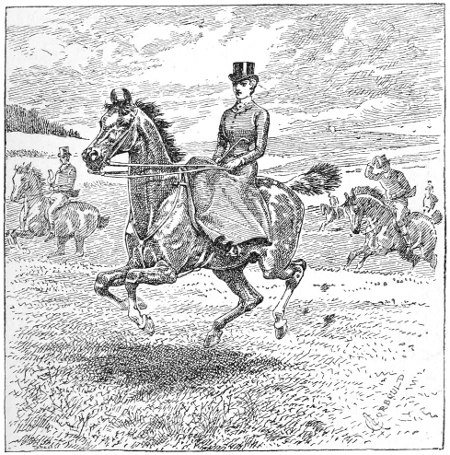
WM. SCOTT & CO., HABIT MAKERS TO THE AUTHORESS.
(For Specimen see Frontispiece.)
Sole Makers of the ROYAL MEATH HABIT.
37, DUKE STREET, St. JAMES’S, LONDON, And at SACKVILLE STREET, DUBLIN.
BEST QUALITY, HAND-SEWN BOOTS AND SHOES, At 30 per cent. less than West End prices.
ESTAB. 1839. N. THIERRY. ESTAB. 1839.
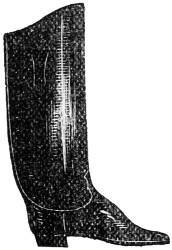
Ladies’ Riding-Boots, All Patent Leather, 52s.
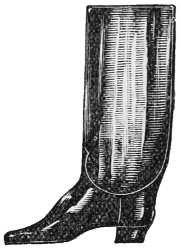
Ladies’ Riding-Boots, All Patent Leather, 50s.
The Largest Stock and Largest Sale in England of LADIES’ RIDING BOOTS.
EVERY DESCRIPTION OF BOOTS AND SHOES MADE TO ORDER IN A FEW DAYS.
SPECIAL LASTS KEPT FOR EVERY CUSTOMER.
London, 70, REGENT STREET, QUADRANT, W. 48, GRESHAM ST., & 131, FENCHURCH ST., E.C. MANCHESTER, 2, St. Ann’s Square. LIVERPOOL, 5, Bold Street.
ILLUSTRATED CATALOGUES POST FREE.
PRICES OF A FEW ARTICLES, LADIES’ DEPARTMENT.
BOOTS.
Button or Lace 16/6
Do. do. Polish, Louis XV. Heels, 21/-
Do. Alpine or Tourist, 23/- to 25/-
SHOES.
Oxford Tie Morocco, 10/6; Glacé, 12/6
Do. do. Glacé Kid, Louis XV. Heels, 17/6
Patent Dress Court Shoes 7/6
A LARGE STOCK of Children’s Boots and Shoes, very durable and comfortable, at Moderate Prices, and EVERY VARIETY OF GENTLEMEN’S RIDING, SHOOTING, WALKING, AND DRESS BOOTS AND SHOES.
AN OLD BOOT IS SUFFICIENT GUIDE FOR SIZE TO ENSURE A GOOD FIT.
PLEASE NOTE!—70, Quadrant, Regent Street, as there is another house same name in the street.
“The most noted firm of Ladies’ Tailors in the world, and be it said the most original.”—Court Journal.
By Special Appointments to Her Majesty the Queen. H.R.H. the Princess of Wales. H.R. and I.H. the Duchess of Edinburgh. H.R.H. the Princess Louise. H.R.H. the Princess Mary of Teck.
By Special Appointments to H.I.M. the Empress of Russia. H.M. the Queen of Denmark. H.M. the Queen of Portugal. H.R.H. the Duchess of Connaught. H.R.H. the Princess Beatrice.
REDFERN, LADIES’ TAILOR, 26, Conduit Street, London, W.
RIDING HABITS, WITH ALL THE LATEST IMPROVEMENTS.
For HUNTING.
For THE ROW.
Their new Safety Skirt, cut on an entirely new principle, combines with elegance the greatest comfort and security to the wearer.
“Habits are still worn short * * * Redfern has introduced a novelty which, while giving greater freedom to the pommel knee and rendering the risk of the habit catching much less than usual, fits to a nicety.”—Daily News, Nov. 23rd, 1882.
SPECIALITIES IN COVERT & DRIVING COATS.
Branches—COWES (I.W.), PARIS, and NEW YORK.
To Ladies living in the country and abroad, Messrs. Redfern forward Patterns of the newest materials for habits, &c. post free on application, and guarantee a perfect fit without a personal interview.
HENRY PEAT & CO., SADDLERS AND HARNESS MAKERS, By Appointment to H.R.H. the Prince of Wales, 173, PICCADILLY, LONDON.
SADDLERY OF EVERY DESCRIPTION FOR INDIA, AMERICA, AND THE COLONIES.
JAMES McMILLAN, HUNTING BOOT MAKER, 104, JERMYN STREET, PICCADILLY, S.W.
LADIES’ ‘ECONOMICAL,’ ‘PARK,’ ‘CROSS COUNTRY,’ ‘TROPICAL,’ ‘NEWMARKET,’ AND ALL KINDS OF RIDING BOOTS.
HOARE & SONS, Specialité 252 & 253, HIGH HOLBORN, LONDON.
ESTABLISHED 1847.
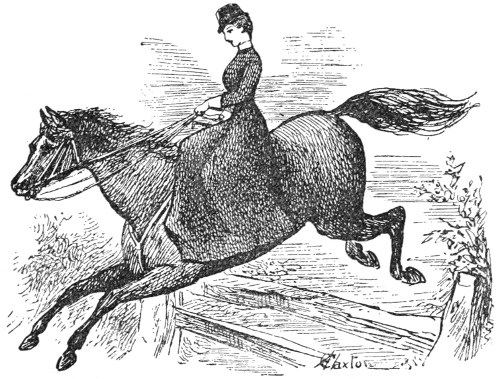
“Ladies looking for high-class Tailoring at reasonable charges for Cash payment would do well to give this old-established House a visit.”
“Evidently, only the most careful and experienced Foremen Tailors and best Workmanship obtainable are employed.”
Habits for Park or Country, from 5 to 8 Guineas.
Specialité “PRINCESS” Habit, as worn by H.I.M. the Empress of Austria.
HOARE & SONS’ own Registered Shape, from 6 to 9 Guineas.
Walking or Travelling Gowns, 4 to 8 Guineas.
Ulsters, from 3 Guineas. Covert Coats, from 2½ Guineas.
Specialité for Travelling—Lady’s Ocean Coat (regd.), with Removable Cape and Hood, from 4 Guineas.
COUNTRY ORDERS.
Ladies can now be fitted as perfectly as if in Town by the assistance of a Pattern Bodice (which can be sent by post), and a few measures taken by our Registered System, thereby avoiding trouble and delay. This department is under the personal supervision of a member of the Firm, and has proved most successful in every instance.
Patterns, Estimates, and Illustrations of the Newest Fashions Post Free.
IF YOU DESIRE REALLY WELL-POLISHED BOOTS, USE
E. BROWN & SON’S ROYAL MELTONIAN BLACKING. It renders them beautifully soft, durable, and waterproof, while its lustre equals the most brilliant patent leather.
E. BROWN & SON’S NONPAREIL DE GUICHE PARISIAN POLISH for Dress Boots and Shoes, is more elastic and less difficult in its use than any other.
E. BROWN & SON’S WATERPROOF VARNISH, for Hunting, Shooting, and Fishing Boots, is strongly recommended to all Sportsmen.
E. BROWN & SON’S BROWN TOP-BOOT FLUID, POLISH, and POWDERS of all Colours.
E. BROWN & SON’S MELTONIAN CREAM, for Renovating all kinds of Patent Leather, Furniture, &c.
E. BROWN & SON’S ROYAL KID REVIVER for all kinds of Black Kid, Leather, &c.
E. BROWN & SON’S WATERPROOF HARNESS POLISH is far superior to all others! it requires neither Oil nor Dye.
MANUFACTORY: 7, GARRICK STREET, COVENT GARDEN, LONDON, W.C. And at 26, Rue Bergere, Paris.

E. BROWN & SON, Purveyors to Her Majesty, WERE AWARDED THE PRIZE MEDAL, 1862.
Retail Everywhere. Telephone, 3765.
RICHARD T. MARTIN, Ladies’ Tailor and Costumier, TO THE Nobility and Gentry of Great Britain and Ireland, 85 & 86 GRAFTON STREET, DUBLIN.
CELEBRATED FOR TRAVELLING AND WALKING COSTUMES, GOWNS, COATS, DOLMANS, AND RIDING HABITS.
A large Assortment of all the leading Home and Foreign Materials always in Stock. An Inspection Solicited.
ALFRED MANNING, Robes, Modes, Nouveautés, TO HER ROYAL HIGHNESS THE PRINCESS OF WALES, AND THE IRISH COURT, 102 and 103, GRAFTON STREET, DUBLIN.
MR. JOHN FREEMAN, F.R.C.V.S., Veterinary Infirmary, 32, DAWSON STREET, DUBLIN, AND GEORGE’S STREET, KINGSTOWN.
T. H. FIELDER, 78, GRAFTON STREET, DUBLIN, Late of LONDON, PARIS and NEW YORK, LADIES’ TAILOR, NOTED FOR MANTLES, FURS, WALKING, TRAVELLING, TENNIS, AND YACHTING GOWNS, JACKETS, COATS, AND ULSTERS.
COSTUMES FROM STOCK AND TO ORDER.
LADIES TAILOR TO HER EXCELLENCY COUNTESS OF ABERDEEN, COUNTESS OF CARNARVON, AND THE NOBILITY AND GENTRY OF GREAT BRITAIN AND IRELAND.
Ladies living at a distance can rely on a PERFECT FIT by sending a Bodice for size.
THE BEST MATERIALS, THOROUGHLY SHRUNK.
Full Sets of Patterns and Designs Post Free.
RIDING HABITS TO ORDER, FITTED IN THE SADDLE.
Perfection of Cut and Style. Accurate Fit Guaranteed.
MODERATE PRICES. Discount 5 per Cent. for Cash.
All Garments produced under the Personal Supervision of T. H. FIELDER, 78, GRAFTON STREET, DUBLIN.
W. THACKER & CO., LONDON. THACKER, SPINK & CO., CALCUTTA.
“Splendidly Illustrated Record of Sport.”—Graphic.
In Demy 4to. Thirty Plates and Map, £2 2s.
LARGE GAME SHOOTING IN THIBET AND THE NORTH-WEST.
BY COLONEL ALEXANDER A. KINLOCH.
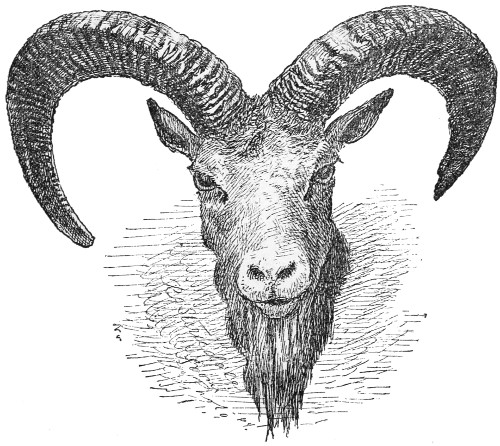
“Colonel Kinloch, who has killed most kinds of Indian game, small and great, relates incidents of his varied sporting experiences in chapters, which are each descriptive of a different animal. The photogravures of the heads of many of the animals, from the grand gauer, popularly miscalled the bison, downwards, are extremely clever and spirited.”—Times.
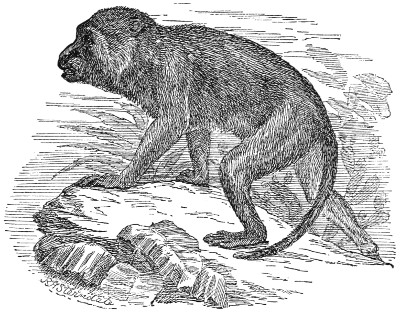
STERNDALE’S MAMMALIA OF INDIA.
One Hundred and Seventy Illustrations. 18s. 0d.
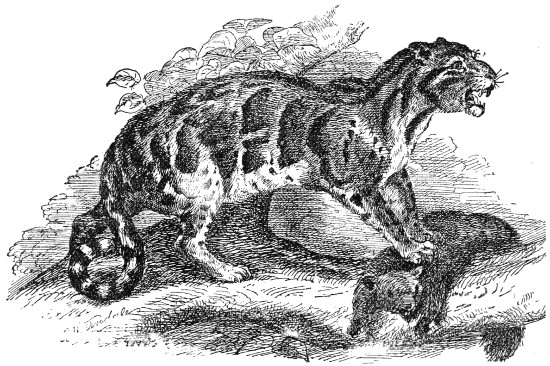
In Imperial 16mo. Uniform with “Riding,” “Hindu Mythology,” and “Riding for Ladies.” 18s. 0d.
A NATURAL HISTORY OF THE MAMMALIA OF INDIA.
By R. A. STERNDALE, F.R.G.S., F.Z.S., &c.
AUTHOR OF “SEONEE,” “THE DENIZENS OF THE JUNGLE,” “THE AFGHAN KNIFE,” ETC.
WITH 170 ILLUSTRATIONS BY THE AUTHOR AND OTHERS.
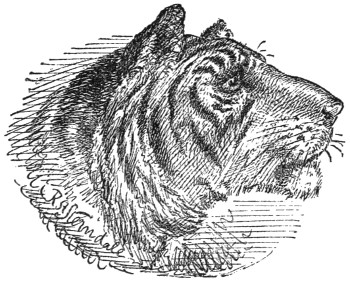
“The notices of each animal are, as a rule, short, though on some of the larger mammals—the lion, tiger, pard, boar, &c.—ample and interesting details are given, including occasional anecdotes of adventure.”—The Times.
“Has contrived to hit a happy mean between the stiff scientific treatise and the bosh of what maybe called anecdotal zoology.”—The Daily News.
“The very model of what a popular natural history should be.”—Knowledge.
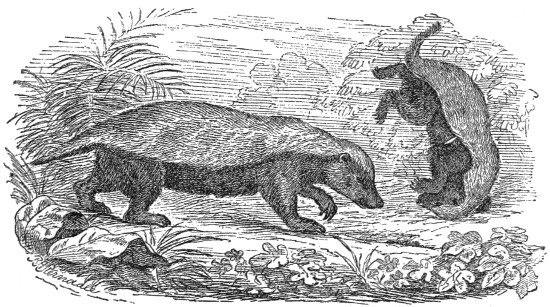
Denizens of the Jungles.
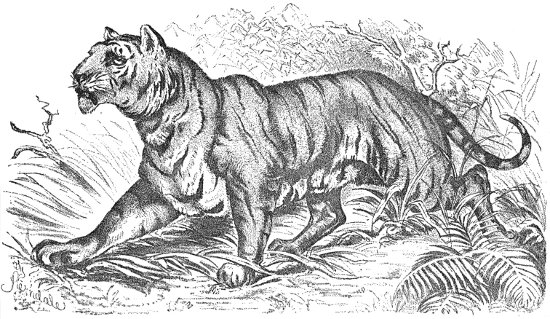
(Reduced from Original.)
By R. A. STERNDALE, F.R.G.S., F.Z.S., etc.
Oblong Imperial 4to. 16s.
DENIZENS OF THE JUNGLES: A Series of Sketches of Wild Animals,
ILLUSTRATING THEIR FORMS AND NATURAL ATTITUDES.
WITH LETTERPRESS DESCRIPTION OF EACH PLATE.
By R. A. STERNDALE, F.R.G.S., F.Z.S., AUTHOR OF “NATURAL HISTORY OF THE MAMMALIA OF INDIA,” “SEONEE,” ETC.
I.—Denizens of the Jungles. Aborigines—Deer—Monkeys.
II.—“On the Watch.” Tiger.
III.—“Not so Fast Asleep as he Looks.” Panther—Monkeys.
IV.—“Waiting for Father.” Black Bears of the Plains.
V.—“Rival Monarchs.” Tiger and Elephant.
VI.—“Hors de Combat.” Indian Wild Boar and Tiger.
VII.—“A Race for Life.” Blue Bull and Wild Dogs.
VIII.—“Meaning Mischief.” The Gaur—Indian Bison.
IX.—“More than His Match.” Buffalo and Rhinoceros.
X.—“A Critical Moment.” Spotted Deer and Leopard.
XI.—“Hard Hit.” The Sambur.
XII.—“Mountain Monarchs.” Marco Polo’s Sheep.
“The plates are admirably executed by photo-lithography from the author’s originals, every line and touch being faithfully preserved. It is a volume which will be eagerly studied on many a table. Mr. Sterndale has many an amusing and exciting anecdote to add to the general interest of the work.”—Broad Arrow.
“The Volume is well got up and the Drawings are spirited and natural.”—Illustrated London News.
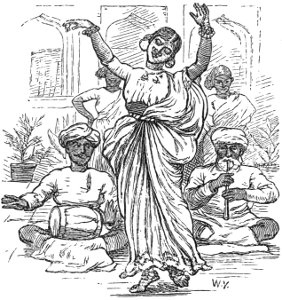
LAYS OF IND. By Aliph Cheem.
COMIC, SATIRICAL, AND DESCRIPTIVE.
Poems Illustrative of Anglo-Indian Life.
Seventh Edition. Enlarged. Cloth, gilt. 10s. 6d.
“This is a remarkably bright little book. ‘Aliph Cheem,’ supposed to be the nom-de-plume of an officer in the 18th Hussars, is, after his fashion, an Indian Bon Gaultier. In a few of the poems the jokes, turning on local names and customs, are somewhat esoteric; but, taken throughout, the verses are characterised by high animal spirits, great cleverness, and most excellent fooling.”—The World.
“Highly amusing ballads and songs, which have already in a former edition warmed the hearts and cheered the lonely hours of many an Anglo-Indian, the pictures being chiefly those of Indian life. There is no mistaking the humour, and at times, indeed, the fun is both ‘fast and furious.’ Many portions remind us of the ‘Bab Ballads.’ One can readily imagine the merriment created round the camp fire by the recitation of ‘The Two Thumpers,’ which is irresistibly droll.”—Liverpool Mercury.
“One of the most superb little presentation books we have ever seen.”—Indian Mail.
“The ‘Lays’ are not only Anglo-Indian in origin, but out-and-out Anglo-Indian in subject and colour. To one who knows something of life at an Indian ‘station’ they will be especially amusing. Their exuberant fun at the same time may well attract the attention of the ill-defined individual known as ‘the general reader.’”—Scotsman.
Uniform with “Lays of Ind,” “Riding,” &c. 10s. 6d.
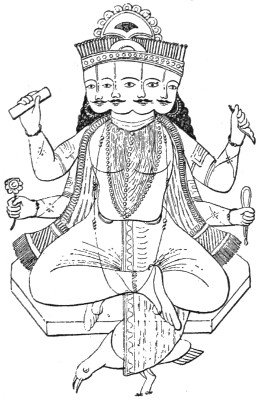
HINDU MYTHOLOGY: VEDIC AND PURANIC.
BY Rev. W. J. WILKINS, OF THE LONDON MISSIONARY SOCIETY, CALCUTTA.
Illustrated by very numerous Engravings from Drawings by Native Artists.
REVIEWS.
“His aim has been to give a faithful account of the Hindoo deities such as an intelligent native would himself give, and he has endeavoured, in order to achieve his purpose, to keep his mind free from prejudice or theological bias. To help to completeness he has included a number of drawings of the principal deities, executed by native artists. The author has attempted a work of no little ambition, and has succeeded in his attempt, the volume being one of great interest and usefulness; and not the less so because he has strictly refrained from diluting his facts with comments of his own. It has numerous illustrations.”—Home News.
“Mr. Wilkins has done his work well, with an honest desire to state facts apart from all theological prepossession, and his volume is likely to be a useful book of reference.”—Guardian.
“In Mr. Wilkins’ book we have an illustrated manual, the study of which will lay a solid foundation for more advanced knowledge, while it will furnish those who may have the desire, without having the time or opportunity to go further into the subject, with a really extensive stock of accurate information.”—Indian Daily News.
In Imperial 16mo., uniform with “Lays of Ind,” “Riding,” “Riding for Ladies,” &c. 8s. 6d.
THE TRIBES ON MY FRONTIER: An Indian Naturalist’s Foreign Policy.
By EHA.
With Fifty Illustrations by F. C. Macrae.

TIFFIN.
This remarkably clever work most graphically and humorously describes the surroundings of a Mofussil bungalow. The twenty chapters embrace a year’s experiences, and provide endless sources of amusement and suggestion. The numerous able illustrations add very greatly to the interest of the volume, which will find a place on every table.
THE CHAPTERS ARE—
I. A Durbar.
II. The Rats.
III. The Mosquitos.
IV. The Lizards.
V. The Ants.
VI. The Crows.
VII. The Bats.
VIII. Bees, Wasps, et hoc genus omne.
IX. The Spiders.
X. The Butterfly: Hunting Him.
XI. The Butterfly: Contemplating Him.
XII. The Frogs.
XIII. The Bugs.
XIV. The Birds of the Garden.
XV. The Birds at the Mango Tope.
XVI. The Birds at the Tank.
XVII. The Poultry Yard.
XVIII. The White Ants.
XIX. The Hypodermatikosyringophoroi.
XX. Etcetera.
“Always amusing and never dull.”—Field.
“Full of accurate and unfamiliar observation.”—Saturday Review.
“Has the advantage of needing no preliminary knowledge of Natural History for its enjoyment.”—Westminster Review.
Imperial 16mo. 18s. 0d.
Uniform with “Lays of Ind,” “Hindu Mythology,” “Riding,” “Natural History of the Mammalia of India,” &c.
A POPULAR HANDBOOK OF INDIAN FERNS.
By COLONEL R. H. BEDDOME, AUTHOR OF “THE FERNS OF BRITISH INDIA,” “THE FERNS OF SOUTHERN INDIA.”
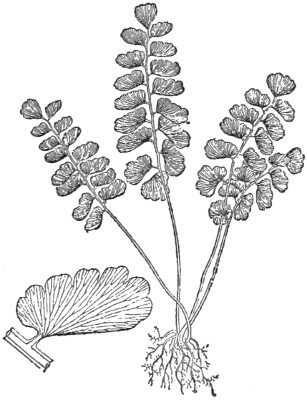
“It is the first special book of portable size and moderate price which has been devoted to Indian Ferns, and is in every way deserving of the extensive circulation it is sure to obtain.”—Nature, June 14th, 1883.
“I have just seen a new work on Indian Ferns which will prove vastly interesting, not only to the Indian people, but to the botanists of this country.”—Indian Daily News.
“‘The Ferns of India.’ This is a good book, being of a useful and trustworthy character. The species are familiarly described, and most of them illustrated by small figures.”—Gardeners’ Chronicle.
“Those interested in botany will do well to procure a new work on the ‘Ferns of British India.’ The work will prove a first-class text-book.”—Free Press.
THREE HUNDRED ILLUSTRATIONS BY THE AUTHOR.
Uniform with “Riding for Ladies.”
Second Edition. Revised and Enlarged. Imperial 16mo. 10s. 6d.
RIDING: ON THE FLAT AND ACROSS COUNTRY. A Guide to Practical Horsemanship.
By CAPT. M. H. HAYES.
PROFUSELY ILLUSTRATED BY STURGESS.
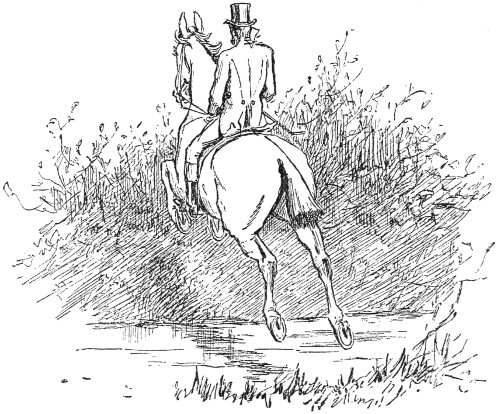
Illustrated Sporting and Dramatic News.—“The book is one that no man who has ever sat in a saddle can fail to read with interest.”
The Field.—“The general directions are in most cases in accordance with our own opinions; and Mr. Hayes has supplemented his own experience of race-riding by resorting to Tom Cannon, Fordham, and other well-known jockeys for illustration. ‘The Guide’ is, on the whole, thoroughly reliable; and both the illustrations and the printing do credit to the publishers.”
The Sporting Life.—“It has, however, been reserved for Captain Hayes to write what in our opinion will be generally accepted as the most comprehensive, enlightened, and ‘all round’ work on riding, bringing to bear as he does not only his own great experience, but the advice and practice of many of the best recognised horsemen of the period.”
In Imperial 16mo. Illustrated. 8s. 6d.
INDIAN RACING REMINISCENCES: BEING ENTERTAINING NARRATIVES AND ANECDOTES OF MEN, HORSES, AND SPORT. ILLUSTRATED WITH TWENTY-TWO PORTRAITS AND A NUMBER OF SMALLER ENGRAVINGS.
By CAPT. M. HORACE HAYES.
AUTHOR OF “RIDING ON THE FLAT AND ACROSS COUNTRY,” “VETERINARY NOTES FOR HORSE OWNERS,” “TRAINING AND HORSE MANAGEMENT IN INDIA,” ETC.
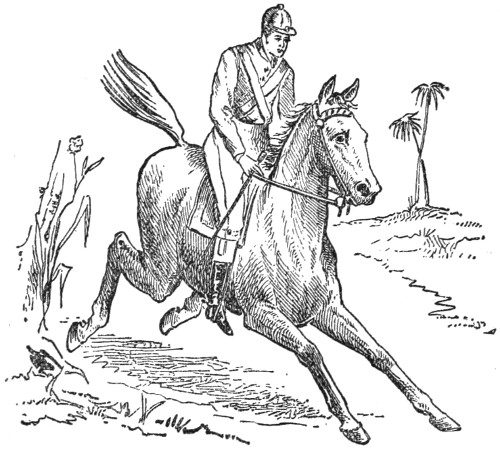
“The book is full of racy anecdote.... He is well known as an authority on everything connected with the horse and horse-racing.”—Bell’s Life.
“All sportsmen who can appreciate a book on racing, written in a chatty style and full of anecdote, will like Captain Hayes’ latest work.”—Field.
“The book is valuable from the fact that many hints on the treatment of horses are included.”—Illustrated Sporting and Dramatic News.
“Many a racing anecdote and many a curious character our readers will find in the book, which is very well got up, embellished with many portraits.”—Baily’s Magazine.
Second Edition, in Crown 8vo, Illustrated. 10s. 6d.
VETERINARY NOTES FOR HORSE-OWNERS. AN EVERY-DAY HORSE BOOK.
By CAPT. M. HORACE HAYES.
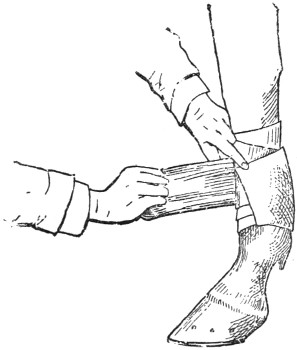
OPINIONS OF THE PRESS.
Saturday Review.—“The work is written in a clear and practical way.”
The Field.—“Of the many popular veterinary books which have come under our notice, this is certainly one of the most scientific and reliable. The author tells us, in the preface to the first edition, that any merit which the book may possess is to be ascribed to the teaching of the Principal and Professors of the New Veterinary College at Edinburgh, where he studied. It is much to be desired that every student would make so much use of his opportunities as Capt. Hayes has done.
“Some notice is accorded to nearly all the diseases which are common to horses in this country, and the writer takes advantage of his Indian experiences to touch upon several maladies of horses in that country, where veterinary surgeons are few and far between. The description of symptoms and the directions for the application of remedies are given in perfectly plain terms, which the tyro will find no difficulty in comprehending; and, for the purpose of further smoothing his path, a chapter is given on veterinary medicines, their actions, uses, and doses. This information will be most acceptable to the majority of horse-owners, and may be invaluable on an emergency when no advice better than that of the village cow doctor can be obtained.”
Crown 8vo. 7s. 6d.
A TEA PLANTER’S LIFE IN ASSAM
By GEORGE M. BARKER.
WITH SEVENTY-FIVE ILLUSTRATIONS BY THE AUTHOR.
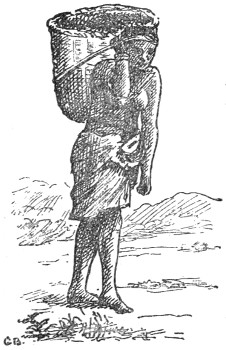
NAGA WOMAN.
This book aims at conveying to all interested in India and the Tea industry an entertaining and useful account of the topographical features of Assam; the strange surroundings—human and animal—of the European Resident; the trying Climate; the Daily Life of the planter; and general details of the formation and working of Tea Gardens.
The illustrations, by the Author, add greatly to the interest of the work.
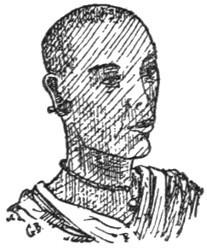
ASSAMESE.
“Mr. Barker has supplied us with a very good and readable description, accompanied by numerous illustrations drawn by himself. What may be called the business parts of the book are of most value.”—Contemporary Review.
“Cheery, well-written little book.”—Graphic.
“A very interesting and amusing book, artistically illustrated from sketches drawn by the Author.”—Mark Lane Express.
Fourth Edition, Crown 8vo. (in preparation).
A MANUAL OF GARDENING FOR BENGAL AND UPPER INDIA.
By THOMAS A. C. FIRMINGER, M.A.
THOROUGHLY REVISED AND BROUGHT DOWN TO THE PRESENT TIME BY J. H. JACKSON, Editor of “The Indian Agriculturist.”
PART I. Operations of Gardening.
Chap. I.—Climate—Soils—Manures.
Chap. II.—Laying-out a Garden—Lawns—Hedges—Hoeing and Digging—Drainage—Conservatories—Betel Houses—Decorations—Implements—Shades—Labels—Vermin—Weeds.
Chap. III.—Seeds—Seed Sowing—Pot Culture—Planting—Cuttings—Layers—Gootee—Grafting and Inarching—Budding—Pruning and Root Pruning—Conveyance.
Chap. IV.—Calendar of Operations.
PART II. Garden Plants.
1. Culinary Vegetables.
2. Dessert Fruits.
3. Edible Nuts.
4. Ornamental Annuals.
5. Ornamental Trees, Shrubs, and Herbaceous Perennials.
Crown 8vo. 7s. 6d.
MANUAL OF Agriculture for India.
By Lieut. F. POGSON.


1. Origin and Character of Soils.—2. Ploughing and Preparing for Seed.—3. Manures and Composts.—4. Wheat Cultivation.—5. Barley.—6. Oats.—7. Rye.—8. Rice.—9. Maize.—10. Sugar-producing Sorghums.—11. Common Sorghums.—12. Sugarcane.—13. Oil Seed.—14. Field Pea Crops.—15. Dall or Pulse.—16. Root Crops.—17. Cold Spice.—18. Fodder.—19. Water-Nut.—20. Ground-Nut.—21. Rush-Nut or Chufas.—22. Cotton.—23. Tobacco.—24. Mensuration.—Appendix.
REVIEWS.
“POGSON’S AGRICULTURE.
“The work seems to us both in thoroughness of execution and in clearness of arrangement entirely to fulfil all the hopes that have been formed of it. We cannot doubt that the Government will heartily take up this most valuable book, and circulate it both in the original and vernacular translations throughout the length and breadth of the land; nor should a moment be lost, for it represents one of the most important and most promising lines on which we can meet that terrible Malthusian difficulty.”—Allen’s Indian Mail.
“A work of extreme practical value.”—Home News.
“Mr. Pogson’s advice may be profitably followed by both native and European agriculturists, for it is eminently practical and devoid of empiricism. His little volume embodies the teaching of a large and varied experience, and deserves to be warmly supported.”—Madras Mail.
Complete in One Volume, 10s.; Interleaved, 11s.
A TEXT BOOK OF INDIAN BOTANY: MORPHOLOGICAL, PHYSIOLOGICAL, and SYSTEMATIC.
By W. H. GREGG, Lecturer on Botany, Hughli College.
With 240 Illustrations.
Crown 8vo. 4s. 6d.
The Indian Cookery Book.
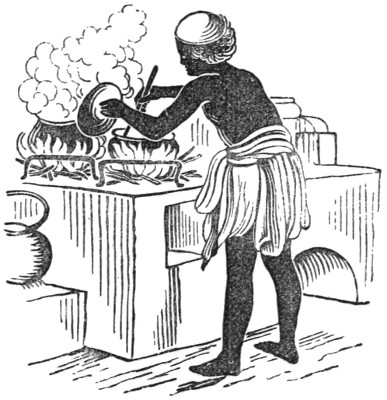
A PRACTICAL HANDBOOK TO THE KITCHEN IN INDIA: ADAPTED TO THE THREE PRESIDENCIES.
Containing Original and Approved Recipes in every department of Indian Cookery; Recipes for Summer Beverages and Home-made Liqueurs; Medicinal and other Recipes; together with a variety of things worth knowing.
By A THIRTY-FIVE YEARS’ RESIDENT.
Third Edition, Revised.
Training and Horse Management in India.
By Captain M. HORACE HAYES, Author of “Veterinary Notes for Horse Owners,” “Riding,” &c. Third Edition. Crown 8vo. 8s. 6d.
“No better guide could be placed in the hands of either amateur horseman or veterinary surgeon.”—The Veterinary Journal.
“A useful guide in regard to horses anywhere.... Concise, practical, and portable.”—Saturday Review.
Prepared for the use of the Survey Department of India, and published under the authority of the Government of India.
Royal 8vo. 30s. 0d.
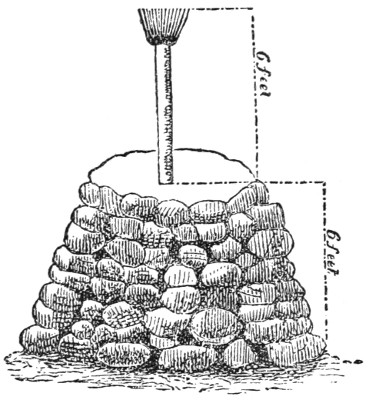
A Manual of Surveying for India:
DETAILING THE MODE OF OPERATIONS ON THE TRIGONOMETRICAL, TOPOGRAPHICAL, AND REVENUE
SURVEYS OF INDIA.
COMPILED BY Sir H. L. THUILLIER, K.C.S.I., Royal Artillery, AND Lieut.-Col. R. SMYTH, late Bengal Artillery.
One Vol. Small 8vo. 5s. 0d.
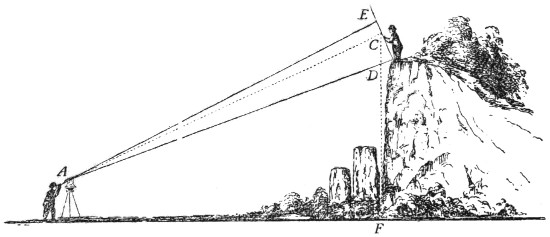
TALES FROM INDIAN HISTORY: BEING THE Annals of India retold in Narratives.
By J. TALBOYS WHEELER.
Forms a complete History of India from the earliest period to the present day, drawn up as a series of “Narratives” for general reading in schools and families. So far it will resemble the history of Scotland as told in Sir Walter Scott’s “Tales of a Grandfather,” omitting all details and disquisitions which are sufficiently given in the author’s larger histories of India, and seeking to tell the progress of events in the most simple and attractive manner.
Reviews of Wheeler’s ‘Tales from Indian History.’
“While the work has been written for them (natives), it has also been written for the people of England, who will find in the volume, perhaps for the first time, the history of our great dependency made extremely attractive reading. Mr. Wheeler’s narrative is written in a most graceful style; indeed, he is master of the English language. He does not confine himself to the mere dry details of history, but tells the adventures of Indian heroes and heroines in legends of love and war; describes the village communities of India, their organization and self-government; delineates the results of caste, infant marriage, and other Hindoo institutions and usages as seen in the family and social life of the people in villages and towns, as well as in courts and palaces.... The work also contains valuable observations on the foreign relations of the Indian Empire with Persia, Russia, Turkey, and China. Altogether this is a work of rare merit.”—Broad Arrow.
“In going through an interesting book, the reader will be furnished with a good general notion of Indian history, and learn besides something about Indian modes of life.”—Queen.
“Will absorb the attention of all who delight in thrilling records of adventure and daring. It is no mere compilation, but an earnest and brightly-written book.”—Daily Chronicle.
“This little volume contains a history of India in the form of tales and narratives, intended by the author for the people of India as well as for those of the British Isles.”—Army and Navy Gazette.
“No young reader who revolts at the ordinary history presented to him in his school books will hesitate to take up this. No one can read a volume such as this without being deeply interested.”—Scotsman.
Entirely Re-written. Eighth Edition. Crown 8vo. 10s. 6d.
THE MANAGEMENT AND MEDICAL TREATMENT OF CHILDREN IN INDIA.
By EDWARD A. BIRCH, M.D., Surgeon-Major Bengal Establishment.
Second Edition; being the Eighth Edition of Goodeve’s “Hints on the Management of Children in India.”
Dr. Goodeve.—“I have no hesitation in saying that the present edition is for many reasons superior to its predecessors. It is written very carefully, and with much knowledge and experience on the author’s part, whilst it possesses the great advantage of bringing up the subject to the present level of Medical Science.”
The Medical Times and Gazette, in an article upon this work and Moore’s “Family Medicine for India,” says:—“New editions of these two well-known works have recently appeared. They are both intended to supply in some measure the medical wants of our numerous countrymen in India, who may be either far from professional help in emergencies of sickness or of accident, or destitute of medical advice regarding the proper management of their own health, and especially that of their children, in the trying climate of Hindostan. Although we are, as a rule, very much opposed to popular medical instruction, believing that the result is most frequently a minimum of serviceable knowledge along with a vast preponderance of what is but partial, misleading, and dangerous, yet the peculiar circumstances of many of our countrymen in India, together with the special and insidious dangers of its varying climate, fully justify the publication of a few trustworthy popular works to warn the unwary new-comer, before it be too late, of the dangers he has to encounter, and to give judicious counsel to solitary individuals and families who cannot enjoy the advantages of personal professional advice. Moreover, the two works before us are in themselves probably about the best examples of medical works written for non-professional readers. The style of each is simple, and as free as possible from technical expressions. The modes of treatment recommended are generally those most likely to yield good results in the hands of laymen; and throughout each volume the important fact is kept constantly before the mind of the reader, that the volume he is using is but a poor substitute for personal professional advice, for which it must be discarded whenever there is the opportunity. Written with such objects, and in such a spirit, these volumes cannot fail to be of the greatest service; and that they are appreciated is shown by the rapid appearance of successive editions, the second mentioned and elder treatise having now reached the seventh edition. We would add, that although they are specially written for lay readers, there are few young medical officers proceeding to India who would not receive several useful hints from these unpretentious volumes. But it is to parents or to the guardians of European children in India that they must be of pre-eminent service.”
Published Annually, in Thick Royal 8vo., Price £1 16s.
THACKER’S INDIAN DIRECTORY EMBRACING The whole of India and Burmah.
THE “TIMES.”
“The fact that this work, originally known as the ‘Directory of Bengal,’ has now reached its 24th annual issue, is sufficient to recommend it to all those who are brought into contact, in a military, civil, or commercial sense, with the civilization and intelligence of our Eastern dependencies. No longer confined to the narrow limits of Bengal, Messrs. Thacker furnish us with complete and detailed information respecting not only Calcutta, but also the citizens of Bombay and Madras. The parts which relate to the yearly almanac, public holidays, stamps, telegraphs, and customs are pretty much one and the same; but in most other matters we have before us separate and distinct information as to the various departments of Government and the arrangements of commerce, education, charitable societies and hospitals, clubs, railways, and companies. There is also a separate Army list, we note, for each of the three Presidencies. The alphabetical list of residents, comprising as it does a full record of all those of our countrymen who have taken up their permanent abodes in any of the Indian Presidencies, will be found of the greatest use to those in England who have lost all clue to their relatives and friends in the far East and wish to discover their whereabouts.”—Aug. 28, 1886.
THE CALCUTTA “ENGLISHMAN.”
“Before everything, the volume before us is in reality what it professes to be—a Directory for India. Besides an enormous mass of information of the purely Directory kind, which must have taken a world of labour to collect and collate, the volume comprises complete Army Lists for Bengal, Madras, and Bombay, including the Volunteers; lists of officers in the various Government Departments; lists of the Tea, Indigo, Coffee, and other estates in the country; and much valuable information regarding the Telegraphs, Postal Rules, Law Courts, Charities, and a host of other subjects. Nothing more strikingly represents the change that has come over India in recent years than this great Directory.”
THE “MANCHESTER GUARDIAN.”
“The Directory now includes every district and principal town in British and Foreign India, every Native State, and in fact aims at being a directory to the whole of India. It contains separate classified and street directories of each of the cities of Calcutta, Bombay, and Madras, a remarkably comprehensive and detailed Mofussil Directory, and a vast amount of general information relating to India, its Government, commerce, postal arrangements, festivals, and official establishments.... The expansion of the work will be welcomed as a response to the growing requirements of commerce with India.”
ADVERTISEMENTS.
ALEXANDER SCOTT, RIDING-HABIT MAKER,
15, South Molton St., Grosvenor Square, W.
SPECIALITY—SAFETY SKIRTS.
NEW WORKS BY CAPTAIN HAYES; IN THE PRESS.
IN DEMY 8vo.
SOUNDNESS AND AGE OF HORSES.
With One Hundred and Seventy Illustrations.
A Complete Guide to all those features which require attention when purchasing Horses, distinguishing mere defects from the symptoms of unsoundness, with explicit instructions how to conduct an examination of the various parts.
CHAPTERS.
I.—Soundness.
II.—Defects which are Absolute Unsoundness.
III.—Defects which are not necessarily Unsoundness.
IV.—Method of Examination.
V.—How to Handle a Horse.
VI.—Examination of the Mouth.
VII.—Examination of the Eyes.
VIII.—Examination of the Head, Neck, and Trunk.
IX.—Examination of the Limbs.
X.—Lameness.
OBLONG 4to.
THE POINTS OF THE HORSE.
A FAMILIAR TREATISE ON EQUINE CONFORMATION.
ILLUSTRATED BY J. H. OSWALD BROWN.
Describing the Points in which the perfection of each class of Horses consists; illustrated by very numerous reproductions of Photographs of Living Typical Animals, forming an invaluable Guide to Owners of Horses.
HENRY HEATH,
105, 107, & 109, OXFORD ST., W.
ONLY ONE ADDRESS
“THE MANUFACTORY.” OVER AGAINST NEWMAN ST.
Established in the Reign of King George the Fourth.
“Henry Heath, of 105, 107, and 109, Oxford Street, has a very sensible invention in the shape of a soft-banded hat for riding. The painful sensation experienced from the pressure of the usual hard hat is quite obviated in the hat manufactured by Henry Heath.”—Vide The Queen.
“The Hunting Hats made by this Firm deserve commendation.”—Vide The Queen, Nov. 21, 1885.
Prices 10s. 6d., 12s. 6d., 16s., 18s. 6d., &c.
In all Colours, to match Habit.
NEW SHOW ROOMS FOR LADIES’ HATS.
“One of the chief features of Mr. Henry Heath’s manufactory, at 105-107-109, Oxford Street, is that hats are exactly fitted to the heads of the customer. This is ensured by a very ingenious patented invention in the shape of a soft metal band, which takes the form as well as the size of the head.”
Post-free upon application.
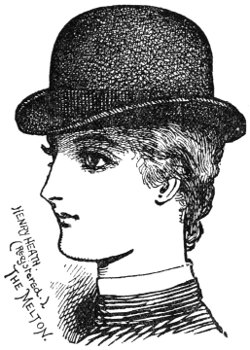
HENRY HEATH
(Registered.)
The Melton.
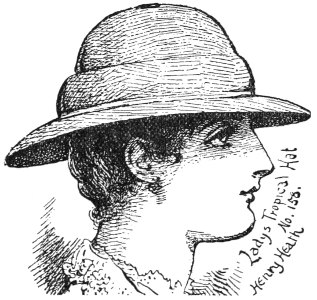
Lady’s Tropical Hat
No. 150.
Henry Heath
Prices 21s., 25s., &c.
THOMAS & SONS’ RIDING HABITS
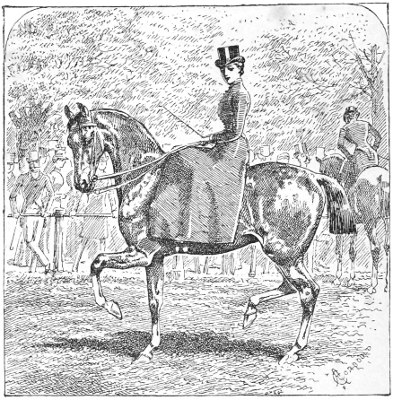
AS RECOMMENDED BY
Mrs. POWER O’DONOGHUE, the most modern authority on female equitation, are cut on the most improved Safety Principle, and are unsurpassed for Fit, Style, and Durability.
A List of their Reasonable Charges will be sent on application.
The Latest Novelties in Tailor-Made Costumes, Coats, and Jackets.
Thomas & Sons, Tailors and Habit Makers,
48, South Molton Street, New Bond St., W.