GARDEN SONGS.
Reading edition
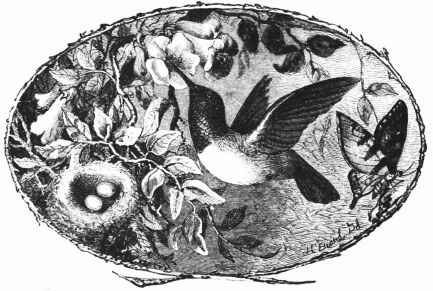
Little green Hummer Was born in the summer; His coat was as bright As the emerald's light. Short was his song, Though his bill it was long; His weight altogether Not more than a feather. From dipping his head In the sunset red, And gilding his side In its fiery tide, He gleamed like a jewel, And darted around, 'Twixt sunlight and starlight, Ne'er touching the ground. Now over a blossom, Now under, now in it; Here, there, and everywhere, All in a minute. Ah! never he cared Who wondered and stared,— His life was completeness Of pleasure and sweetness; He revelled in lightness, In fleetness and brightness, This sweet little Hummer That came with the summer.
————————
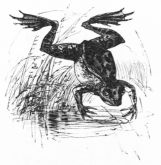
Gluck! gluck! From under a log, Squatting and leaping, comes Flucky the Frog. Wide is his mouth, and spreading his toes; Very elastic and shiny his clothes; Though lofty his jumpings and brazen his stare, He sees not the Hummer that flits in the air.
————————
A lad of Nansook A balsam-pod took, And he pressed the ends with a will; The sudden report Was capital sport, And the seeds they are flying still.
————————
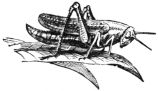
Oh, I'd search the world over For one four-leaved clover! Bend low, pretty grass, bend low! Jump, little crickets! and tumble, you bees! Green little grasshoppers, limber your knees! There's one hidden somewhere, I know.
————————
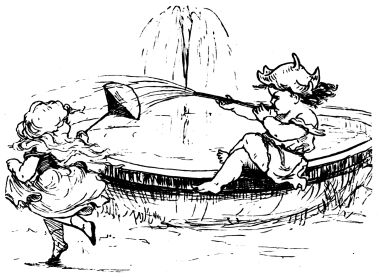
Sunlight or starlight, Tilly, my nilly, Find me a stem Of the tiger-lily; I'll fill it full From the fountain there And spirt the water Over your hair!
————————
"Good Mistress Sundial, what's the hour?" "Alack! to tell you I haven't power. It rains; and I only can work, you see, When the sun is casting his light upon me. I'm nothing at all but a senseless block Whenever his beautiful rays depart; But ask my neighbor, the Four-o'clock; She carries the time o' day in her heart."
————————
Some one in the garden murmurs all the day; Some one in the garden moans the night away; Deep in the pine-trees, hidden from our sight, He murmurs all day, and moans all the night.
————————
Wire-locks, Curly-pate, Tangle, and Floss, To make some fine curls they were quite at a loss, Till they found them a field of the bright dandelion, And made the green ringlets with only half trying.
————————
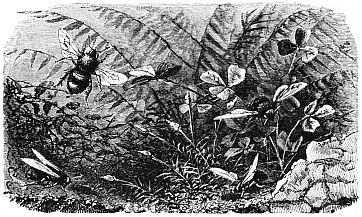
Old Bum of Bumbleby bumped his nose, Trying to light on a damask rose; He bumped his nose, but he didn't care As he pitched about in the dizzy air. Whenever he tried to his love to fly, He would shoot ahead and pass her by; So he tumbled at last on a larkspur near, And buzzed his business into her ear.
————————
Under the willow, out of the rain, We'll string us many a lilac chain, Shining and sweet, and fair to see, Some for my darling and some for me.
————————
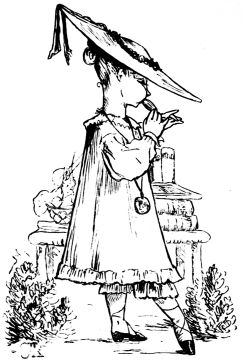
Little Polly, always clever, Takes a leaf of live-forever; Before you know it You see her blow it, A gossamer sack With a velvet back. How big it grows As she puffs and blows! But have a care, It is full of air. Ere Polly will stop It'll crack with a pop; And that's the end of the live-forever; But little Polly is very clever.
————————
"LIFT UP YOUR FACE, LITTLE DAISY."
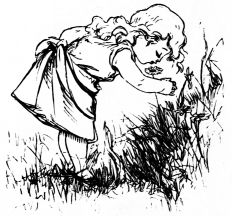
Lift up your face, little daisy, pray; I can't stand here in the grass all day. Jamie sent me, and Jamie is sick. He says you are far too sweet to pick, But he gave me something to give to you; So hold up your cheek, little daisy, do.
————————
I know where there's a beautiful shoe, Tiny and sweet, and ready for you; It hides away in the balsam-flower, But I'll find you a pair in less than an hour. "Thank you, my laddie; now this I'll do, I'll pluck a heart-flower just for you; The hearts hang close on a bending spray, And every heart hides a lyre away.
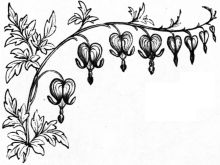
"How shall you find it? I'll tell you true: You gently sunder the heart in two, And under the color, as white as milk, You'll find the lyre with its strings of silk."
————————
HOBBLEDY HOPS.
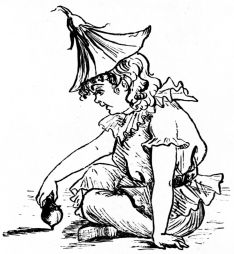
Hobbledy Hops He made some tops Out of the morning-glory; He used the seed,— He did indeed; And that's the end of my story.
————————
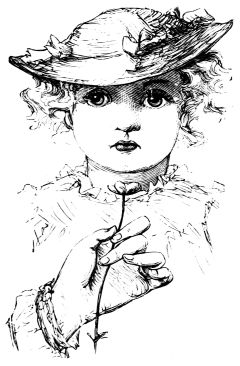
Bright little buttercup, now you will show Whether my darling likes butter or no. Buttercup, buttercup, will you begin? Shine me an answer under her chin.
————————
THE ANTS.
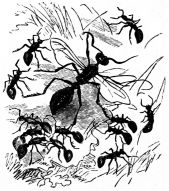
Good Mistress Ant, I pray, what is the matter? Why this commotion without any clatter? "Alack! alack! we're ruined, you see; I've lost my children, and they've lost me! Our houses have fallen, our city is gone, And thousands are murdered or running forlorn. Ah me! who would think that such power to destroy Could lurk in the heel of a bare-footed boy?"
————————
BURS.
Dear me! What shall it be? Such sticky affairs Did ever you see? Let's make a basket, Let's make a mat, Let's make a tea-board, Let's make a hat; Let's make a cottage, Windows and doors; You do the roof, And I'll do the floors. Let's make a pancake,— Stick 'em together; See how they fasten Close to each other! Tied to one's heel They would answer for spurs; Ah, how we love 'em, These comical burs!
————————
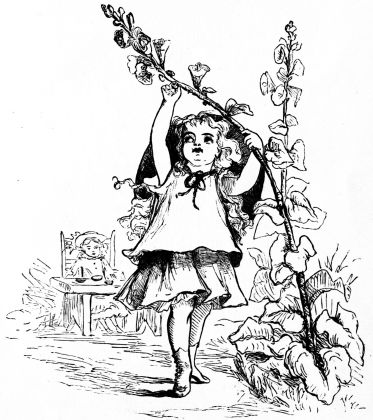
Hollyhock, hollyhock, bend for me; I want a cheese for my dolly's tea. I'll put it soon on an acorn plate, And dolly and I shall feast in state.
————————
When the sun is sinking low in the skies, The evening primrose opens her eyes. "Come back, dear Sun," she seems to say; "I've been dreaming of you the live-long day."
————————
Ho, Dandelion! my lightsome fellow! What's become of all your yellow? "My bonnie yellow it wouldn't stay, It turned about and it went away, Till nothing at all was left of me But the misty, feathery ball you see; Yet pluck me off, and blow me well, The time o' day I'll surely tell." Whiff! whiff! "Blow again,— Blow with all your might and main." Whiff! whiff! That is four. Now I've but two feathers more. Whiff! How tight the last one sticks! Whiff! It's gone; and that makes six. The sun is getting low, I see, And we must hurry home to tea.
————————
SONG OF SUMMER.
Up in the tree top, down in the ground, High in the blue sky, far, all around,— Near by and everywhere creatures are living, God in his bounty something is giving. Up in the tree top, down in the ground, High in the blue sky, far, all around,— Near by and everywhere creatures are striving, Labor is surely the price of their thriving. Up in the tree top, down in the ground, High in the blue sky, far, all around,— Near by and everywhere, singing and humming, Busily, joyfully, Summer is coming!
————————
LITTLE BEGINNINGS.
A little girl on a little bench By a little window stood, And a little trouble was in her heart— "Ah! if I were but good!" "Not very, very good," she thought, "Like dear cousin Jane who died; But only patient, true and kind, And free from wicked pride. "I'll pray for that at first," she said, "Our Father will help me try. And then, perhaps, He will show the way, To be very good by and by." Then upward rose the little prayer— So earnestly it went, That the little heart of the little maid Was filled with a sweet content. And standing there on the little bench, She looked up into the sky: "I'll try to be good right off," she said, "And better yet, by and by."
————————
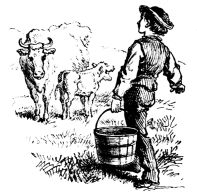
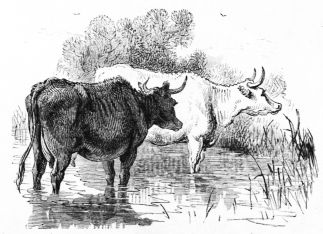
To Mooney and her baby, Shut in the corner lot, I'll carry a cooling pailful, For the day is close and hot. But Blacky and Snow can help themselves At the brook as well as not.
————————
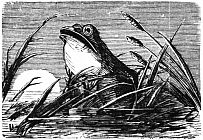
The Moon came late to a lonesome bog, And there sat Goggleky Gluck, the frog. "My stars!" she cried, and veiled her face, "What very grand people they have in this place!"
————————
JOHNNY THE STOUT.
"Ho, for a frolic!" Said Johnny the stout; "There's coasting and sledding,— I'm going out!" Scarcely had Johnny Plunged in the snow, When there came a complaint Up from his toe:— "We're cold," said the toe, "I and the rest; There are ten of us freezing Standing abreast." Then up spoke an ear: "My! but it's labor Playing in winter. Eh, Opposite neighbor?" "Pooh!" said his nose, Angry and red; "Who wants to tingle? Go home to bed!" Eight little fingers, Four to a thumb, All cried together, "Johnny, we're numb!" But Johnny the stout Wouldn't listen a minute; Never a snow-bank But Johnny was in it. Tumbling and jumping, Shouting with glee, Wading the snow-drifts Up to his knee. Soon he forgot them, Fingers and toes,— Never once thought of The ear and the nose. Ah, what a frolic! All in a glow, Johnny grew warmer Out in the snow. Often his breathing Came with a joke: "Blaze away, Johnny! I'll do the smoke." "And I'll do the fire," Said Johnny the bold; "Fun is the fuel For driving off cold."
————————
A farmer in Bungleton had a colt That couldn't be taught to moo; And he kept his cow under lock and bolt Till the smith could make her a shoe. His ducks wouldn't gobble, his geese wouldn't quack, His cat couldn't bark at all. "I'm clean discouraged!" he cried; "alack! I'll give up my farm in the fall."
————————
THE DRINKING-PAN.
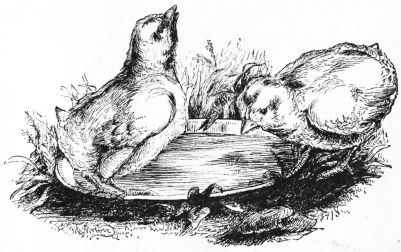
Kippy! Kippy! what a pleasure! Kippy! Kippy! such a treasure! Here's a lake of water clear; Little Polly put it here. See, the water has a sky Like the one that shines so high All the other birds are there, Playing in the sunny air. Shall we ever sing and play In the sky the livelong day? Oh, no, no! such silly tricks Would not do for downy chicks.
————————
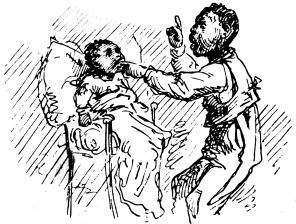
There was a shrewd lad of Cooloo Who thought baby's tooth wasn't through. Says he, "Though I doubt, I'se a-gwine to find out." And he did—that shrewd lad of Cooloo.
————————
There was a fine youth of Pike's Peak Who raised a moustache in a week. When they called it "like down," Ah, how he would frown!— This hairy young man of Pike's Peak.
————————
STOCKING SONG ON CHRISTMAS EVE.
Welcome, Christmas! heel and toe, Here we wait thee in a row. Come, good Santa Claus, we beg,— Fill us tightly, foot and leg. Fill us quickly ere you go,— Fill us till we overflow. That's the way! and leave us more Heaped in piles upon the floor. Little feet that ran all day Twitch in dreams of merry play; Little feet that jumped at will Lie all pink, and warm, and still. See us, how we lightly swing; Hear us, how we try to sing. Welcome, Christmas! heel and toe, Come and fill us ere you go. Here we hang till some one nimbly Jumps with treasure down the chimney. Bless us! how he'll tickle us! Funny old St. Nicholas!
————————
IN TRUST.
It's coming, boys, It's almost here; It's coming, girls, The grand New Year! A year to be glad in, Not to be bad in; A year to live in, To gain and give in; A year for trying, And not for sighing; A year for striving And hearty thriving; A bright new year. Oh! hold it dear; For God who sendeth He only lendeth.
————————
A SONG OF SAINT NICHOLAS.
Come, ho! sing, ho! ye chimney sprites, Come and a riddle unravel: Tell us true, by the dancing lights, Where does Saint Nicholas travel? In the twinkling of an eye, Hither, thither, doth he hie,— North and south and east and west; Not a moment doth he rest. Speeding here and speeding there, In an instant everywhere. Valleys, hills, and mountain passes, Sunny fields and drear morasses, Silent plains and busy towns, Yankee meadows, English downs,— Whether crowded, lone or wild, So it holds one little child,— Every spot, he knows by heart; What if half the world apart? In the twinkling of an eye Hither, thither, doth he hie. Prythee, this riddle unravel: How does Saint Nicholas travel? How does he travel? This is the way: Sun or storm or blue or gray, Soon as he gathers his stock of toys, Laughing and nodding, but never a noise, Laughing and nodding, shaking his sides, This is the way Saint Nicholas rides: Not over mountains, not over streams, But gliding swift through the children's dreams. Soon as their eyelids in slumber close, Hither and thither Saint Nicholas goes. But how do the little ones go to him? Sing, ho! When the winter waxeth dim, And, Christmas over, the children say, "Good Saint Nick! he has gone away," Oho! he strokes his jolly old nose, And lays him down for a quiet doze. "Ha, ha! the snow is a capital bed!" And he pulls his nightcap over his head. Asleep and resting, O good Saint Nick! Now do the children play him a trick; For, bright and rosy and lithe of limb, They travel quick in his dreams, to him. From every nook and possible place There peeps a beautiful baby-face. With joyous murmur and laughing hum, From every quarter the children come. Rosy, tender, and snow-flake soft, They throng about him or float aloft; Closer they nestle, a hundred thick, And whisper, "We thank you, dear Saint Nick; We've come to tell you we love you, dear." And Nicholas laughs in his sleep to hear. Oho! sing, ho! and now you know: As soon as the Christmas lights are dim, And the saint no more his rounds doth go, The children flock, in his dreams, to him.
————————
FLOWERS.
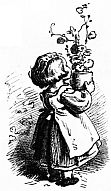
My little one came, and brought me a flower, Never a sweeter one grew; But it faded and faded in one short hour, And lost all its pretty blue. My little one stayed in the room and played; And so my flower bloomed bright,— My beautiful blossom that did not fade, But slept in my arms all night.
————————
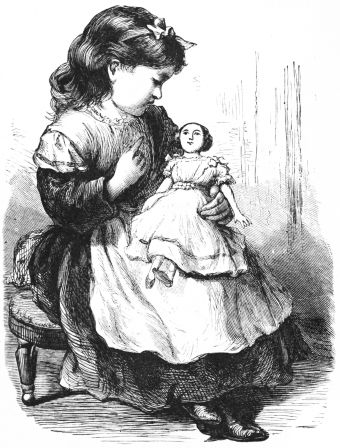
"NOW, DOLLY, DEAR, I'M GOING AWAY."
THE LITTLE MOTHER.
Now, Dolly, dear, I'm going away, And want you to be good all day. Don't lose your shoes nor soil your dress, Nor get your hair all in a mess; But lie quite still, and up I'll come To kiss you, soon as I get home. I'd take you, dear, but then, you know, It's wax Sabina's turn to go. She's sick, I'm 'fraid. Her eyes don't work; They open worse, the more I jerk; She used to be so straight and stout, But now her sawdust's running out. Her kid is out of order, dear. My papa says she's out of gear. That's dreadful, isn't it? But then The air may make her well again. So, Dolly, won't you stay alone, And be real good while I am gone? Good-by, my precious! Yes, I'll come And kiss you, soon as I get home.
————————
AMONG THE ANIMALS.
One rainy morning, Just for a lark, I jumped and stamped On my new Noah's Ark: I crushed an elephant, Smashed a gnu, And snapped a camel Clean in two; I finished the wolf Without half tryin', And wild hyena, And roaring lion; I knocked down Ham, And Japhet, too, And cracked the leg Of the kangaroo; I finished, beside, Two pigs and a donkey, A polar bear, Opossum, and monkey; Also the lions, Tigers, and cats, And dromedaries, And tiny rats— There wasn't a thing That didn't feel, Sooner or later, The weight o' my heel; I felt as grand As grand could be— But oh the whipping My mammy gave me!
————————
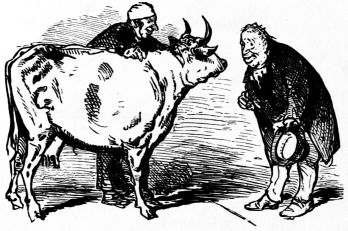
Old Doctor Paff, he used to laugh Whenever he saw the brindle calf. But Doctor Paff thought best to bow When at last he met the brindle cow.
————————
THE LITTLE GIRL WHO WOULDN'T EAT CRUSTS.
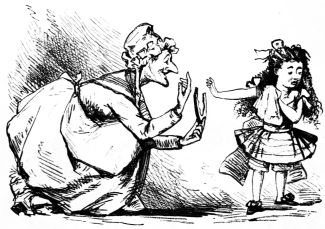
The awfulest times that ever could be They had with a bad little girl of Dundee, Who never would finish her crust. In vain they besought her, And patiently taught her, And told her she must. Her grandma would coax, And so would the folks, And tell her the sinning Of such a beginning. But no, she wouldn't, She couldn't, she shouldn't, She'd have them to know— So they might as well go. Now what do you think soon came to pass? This little girl of Dundee, alas! Who wouldn't take crusts in the regular way, Sat down to a feast one summer's day; And what did the people that little girl give, But a dish of bread pudding—as sure as I live!
————————
Poor little Toddlekins, All full o' sketer-bites— Bodder him awful, Baby can't sleep o' nights. Buzzing all over him, Singing and tickling, In and out, round about, Nipping and prickling. Poor little Toddlekins, All full o' sketer-bites— Bodder him awful, Can't even sleep o' nights!
————————
SONG OF THE DUCKS.
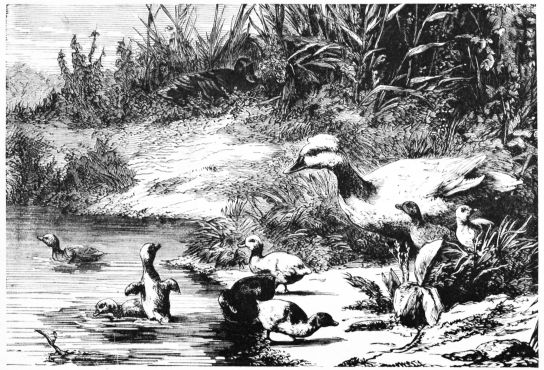
One little black duck, one little gray, Six little white ducks, running out to play; One white lady-duck, motherly and trim, Eight little baby ducks, bound for a swim! One little white duck, holding up its wings, One little bobbing duck, making water-rings, One little black duck, turning round its head, One big black duck—guess he's gone to bed. One little white duck, running from the water, One very fat duck—pretty little daughter! One very brave duck, swimming off alone, One little white duck, standing on a stone. One little white duck, walking by its mother; Look among the water-reeds, maybe there's another. Not another anywhere? surely you are blind. Push away the grass, dear; ducks are hard to find. Bright little brown eyes! o'er the picture linger; Point me all the ducks out, chubby little finger! Make the picture musical, merry little shout! Now, where's that other duck? What is he about? I think the other duck's the nicest duck of all; He hasn't any feathers, and his mouth is sweet and small; He runs with a light step, and jumps upon my knee, And though he cannot swim, he is very dear to me. One white lady-duck, motherly and trim; Eight little baby-ducks, bound for a swim; One lazy black duck, taking quite a nap; One little precious duck, here on mamma's lap!
————————
THAT'S WHAT WE'D DO.
If you were an owl, And I were an owl, And this were a tree, And the moon came out, I know what we'd do. We would stand, we two, On a bough of the tree; You'd wink at me, And I'd wink at you; That's what we'd do, Beyond a doubt. I'd give you a rose For your lovely nose, And you'd look at me Without turning about. I know what we'd do (That is, I and you); Why, you'd sing to me, And I'd sing to you; That's what we'd do, When the moon came out.
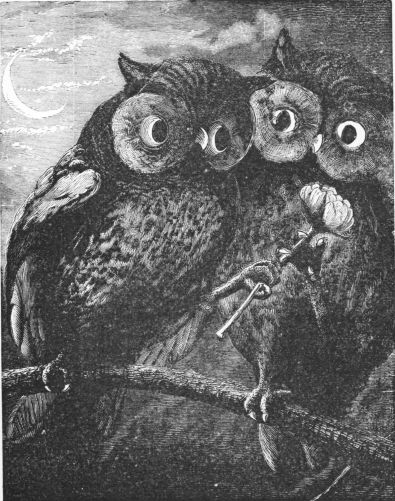
"I'D GIVE YOU A ROSE."
————————
Holloa! What's the matter? Why this bustle, Noise and clatter? Mercy on us! Don't you know Little Pipkin's Stubbed his toe! What's that? Some one knocks. How the wind Shakes the locks! Run, quick! How absurd— Only a beggar, Upon my word!
————————
AN APRIL MAIDEN.
Were you ever heavy-hearted, little May? She tossed her pretty head, As right merrily she said, "Heavy hearted? No, not I; Yet a little makes me cry, And a little less than half Makes me laugh— My mother often calls me 'April Day.'" Were you ever very happy, little May? Again she shook her head. "I do not know," she said. "Very happy? Who is so? Not a single soul, you know; Mother often tells me this, With a kiss; Our life, she says, is like an April day." Were you ever very naughty, little May? She flushed a rosy red, As, right saucily, she said, "Very naughty? Let me see: Why, I have been bad—for me; I have trod on, Pussy's toes, And I've torn my Sunday clo'es; And, oh!—now, don't you tell!— I mean to—well, Fool every one I know on April-day."
————————
There's a fragrance in the blossom, But the fruit is better still; And the river rushes farther Than ever could the rill.
————————
WAKE UP, BIRDIE!
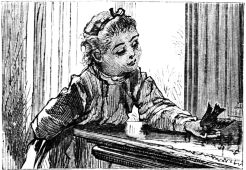
Birdie with the folded wing, Shall we never hear you sing? Sleepy birdie, wake up quick! Pretty birdie, are you sick? Birdie, birdie! are you dead? Birdie, birdie! lift your head! Lift your head, and show your beak. Naughty birdie! won't you speak? Here is water for your cup; Here is sugar—eat it up: Here is sunshine warm and bright— Now he sings with all his might!
————————
THE DIFFERENCE.
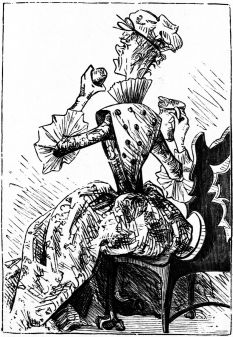
THE SOUR OLD LADY.
There was an old lady all dressed in silk, Who lived upon lemons and buttermilk; And, thinking this world was a sour old place, She carried its acid all over her face;
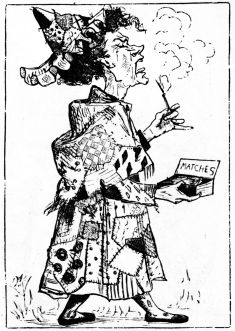
THE OLD LADY WHO LIVED ON MATCHES.
Another old lady, all dressed in patches, Lived upon nothing but Lucifer matches; So the world, it made her strangle and cough, And sure as you rubbed her you set her off. Another old lady, all sunny and neat, Who lived upon sugar, and every thing sweet; Declared, when she heard of their troubles, she "never!" For the world was so nice she could live on forever.
————
THE MORAL.
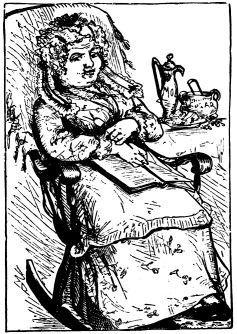
THE SUNNY OLD LADY
Now, children take your choice Of the food your hearts shall eat; There are sourish thoughts, and brimstone thoughts, And thoughts all good and sweet; And whatever the heart feeds on, Dear children, trust to me, Is precisely what this queer old world Will seem to you to be.
————————
BILLY BOY.
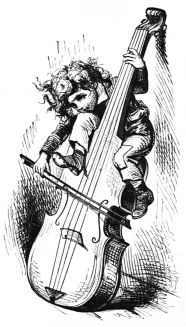
Poor Billy boy was music mad, Oh music mad was he; And yet he was as blithe a lad As any lad could be— With a hi-de-diddle, Bow and fiddle, Rig-a-my, ho! sang he— For Billy was as blithe a lad As any lad could be. "Nobody knows the joy I know, Or sees the sights I see, So play me high, or play me low, My fiddle's enough for me. It takes me here, it takes me there— So play me low or high— It finds me, binds me anywhere, And lifts me to the sky." With a hi-de-diddle, Bow and fiddle, Rig-a-my, ho! sang he— For Billy was as blithe a lad As any lad could be.

————————
SHEPHERD JOHN.
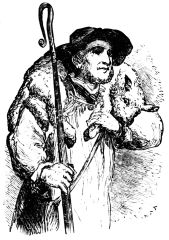
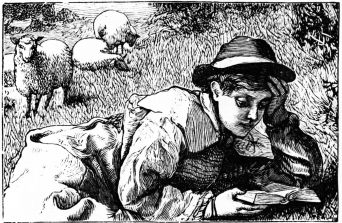
Oh! Shepherd John is good and kind, Oh! Shepherd John is brave; He loves the weakest of his flock, His arm is quick to save. But Shepherd John to little John Says: "Learn, my laddie, learn! In grassy nooks still read your books, And aye for knowledge burn. Read while you tend the grazing flock: Had I but loved my book, I'd not be still in shepherd's frock, Nor bearing shepherd's crook. The world is wide, the world is fair, There's muckle work to do. I'll rest content a shepherd still, But grander fields for you!"
————————
MY WEEK.
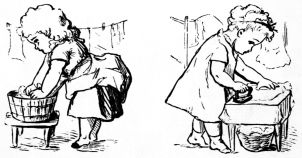
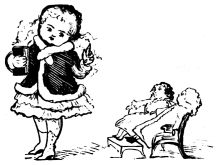
On Monday I wash my dollies' clothes, On Tuesday smoothly press 'em; On Wednesday mend their little hose, On Thursday neatly dress 'em.
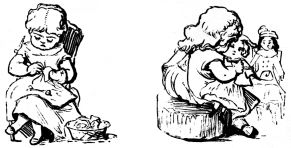
On Friday I play they're taken ill, On Saturday something or other;
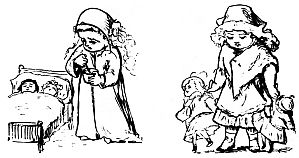
But when Sunday comes, I say, "Lie still: I'm going to church with mother."
————————
BABY IN DREAMLAND.
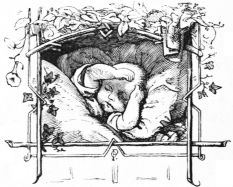
Baby's dreams are very bright, Though they come at dead of night, When the house is still; For a moonbeam comes to take her Where the sweetest sounds shall wake her, Where she'll play at will. In the dreamland, far away, There do sleeping babies play, There they laugh and walk. All the day their speech is gone— Not a foot to stand upon— There they leap and talk. There the pretty candle-blaze, When they clutch it, brightly stays; There the stars so grand Come to meet the outstretched arm, Leap all sparkling to the palm Of the little hand. But in all that wondrous place, Still is smiling, mother's face; Mother's touch is there; And like music sweet and low, Though the baby does not know, Breathes the mother's prayer. So the baby laughs and plays Through the happy dreamland ways (Close to heaven, maybe), Till the merry sunbeams take her To her bed, and gently wake her. —Now, come see to Baby!
————————
THANKSGIVING.
All their heads were bowed in prayer— Father's, mother's, boys' and girls', Grandma's, grandpa's—only Nelly, Little Nelly, shook her curls. Little Nelly shook her curls, Smiling, gazing all intent, Stared as ever at the sight— Wondered what on earth it meant. Busy firelight, flashing bright, Shot its frisky flamelets out; While the ship above the clock Gayly tossed and pitched about. Roasted turkey, on his back, And the chickens, side by side, Had a perky, jaunty air Full of jollity and pride; Tempting pies and puddings near, Held their faces to the light; While canary in his cage, Piped and sang with all his might. Flowery carpet under foot, Hanging basket all a-bloom, Pearly, picture-covered wall— Drew the sunlight to the room. Little Nelly felt it all, Felt how blithe it was and fair; Yet the moment seemed so long That the heads were bowed in prayer. If they only knew, she thought, How the room was full of play, They would never hide their faces In that sober, solemn way. Laughing, staring, puzzled Nell! How could such a baby know 'Twas the cheery, sunny gladness That had bowed their heads so low; That the blithesome, happy home-life, Birdie singing on the wall, And the laughing little mischief, Made them thank the God of all?

————————
LULU'S BIRTHDAY.
Lulu's Birthday—very queer! Comes to her but once a year; Comes when Winter snows are falling, Comes when Ocean winds are squalling, Comes when Nature's quite appalling,— Every thing so cold and drear. Lulu's Birthday—stranger still! Has to climb to her up hill; For the maiden is so knowing, That she spends her time in growing, Every year some change is showing,— Growing head, and heart, and will. Lulu's Birthday—it is clear— Likes to meet her every year; Likes to follow Lulu's scorning. So, with fairest flowers adorning All the home, we give it cheer. And with prayer and watchful loving, Though the little maid keep moving, And the time be cold and drear, Sure as comes the Birthday morning, We shall try to have her here.
————————
THE STAR FAMILY.
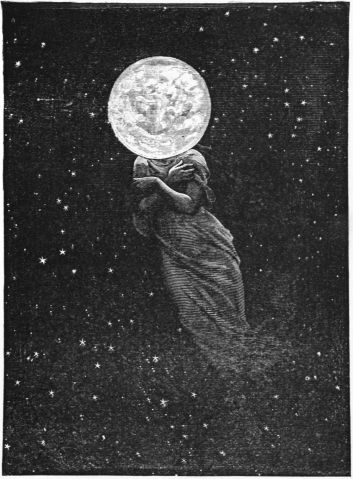
The Moon came late to the twinkling sky, To see what the stars were about: "Fair Night," quoth she, "are the family in?" "Oh! no, they are, every one, out."
————————
As I was a-going to market, I met a man with a goose. Says he: "Big boots with a boy! I guess you came from Toulouse." Says I: "Little goose with a man! How did you leave your mother? I guess you just came from home, For I see you've brought your brother."
————————
TWO LITTLE FROGGIES.
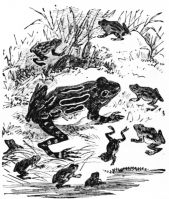
Two little froggies they sighed to one another: "Our puddle is all liquor and no meat.
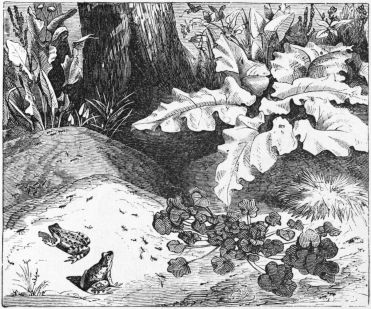
Let us sit upon the bank, where the lovely mud is shining, And maybe we'll see something good to eat." Forty little ants said gayly to their mother: "O mother! we are going to the bogs;" But the forty little ants never dreamed they were going Just to make a dainty dinner for the frogs.
————————
ONE AND ONE.
Two little girls are better than one Two little boys can double the fun, Two little birds can build a fine nest, Two little arms can love mother best. Two little ponies must go to a span; Two little pockets has my little man; Two little eyes to open and close, Two little ears and one little nose, Two little elbows, dimpled and sweet, Two little shoes on two little feet, Two little lips and one little chin, Two little cheeks with a rose shut in; Two little shoulders, chubby and strong, Two little legs running all day long. Two little prayers does my darling say, Twice does he kneel by my side each day,— Two little folded hands, soft and brown, Two little eyelids cast meekly down,— And two little angels guard him in bed, "One at the foot, and one at the head."
————————
BIRDIES AND BABIES.
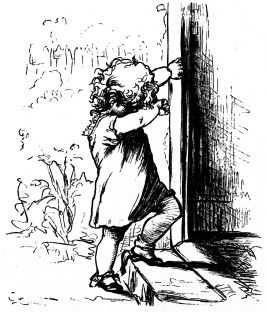
Birdies with broken wings, Hide from each other; But babies in trouble, Can run home to mother.
————————
WILLIE'S LODGER.
Two little boys, named Willie, Live in the house with me. One is as good a darling As ever I wish to see; His eyes are glad, his smile is sweet, His voice is kind, his dress is neat, And he is the boy for me. This Willie says, "Good morning!" Happy as any bird; A merrier laugh, a lighter step, No mortal ever heard. "Thank you," he says, and "If you please?" He will not pout, he will not tease— Oh! he is the boy for me! The other Willie, sad to say, Is very, very bad; I think he is as cross a child As ever a mother had. "Go 'way!" he shrieks. He squalls and cries, The angry tears oft fill his eyes— He is not the boy for me. He lingers round my Willie, And whispers evil things— Oh! how we dread him! for we know The sin and grief he brings! Who keeps him, then? Why, Willie's self; He keeps this wicked Willie-elf Who is not the boy for me. If I were you, my Willie, I'd make him stay away,— This boy who grieves your mother And spoils your brightest day,— For he lives in you where he doesn't belong; So oust him, Willie! Send him along! "Clear out!" I'd say, "old Fume and Fret! This heart of mine is not to let,— You're not the boy for me."
————————
Four little piggies, bound for a frolic, Ate green apples till one got the colic. One was so greedy he stuffed his maw; One munched so hard that he cracked his jaw. One had the toothache and couldn't chew a bit, So he swallowed them whole and died in a fit.
————————
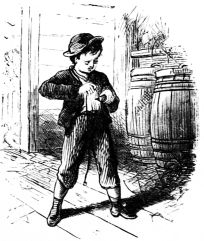
Spinning your top, Don't let it flop, boys;
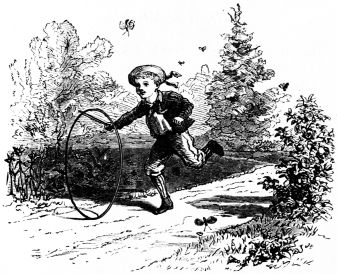
Flying your kite, Pull with your might, boys. Rolling your hoop, Never you stoop, boys; Either stand still, Or play with a will.
————————
GOOD-MORNING.
Good-morning, mamma! Good-morning, bright sun! Good-morning, papa! The day is begun. Good-morning to every one, pussy as well: Does he sleep like the rest, till he hears the first bell? Good-morning it is, for the sky is all blue, The grass is just shining and sparkling with dew; The birdies are singing their merriest song, And the air through the window comes sunny and strong. Good-morning it is, for dark was the night, And chilly and still; but the morning is bright. If God did not watch us and bring us the day, We'd never be able to get up and play. Good-morning, new day! I'm glad we're awake, Your work and your sunshine and frolic to take; And I'm glad we are able so gayly to call Good-morning! good-morning! Good-morning to all!
————————
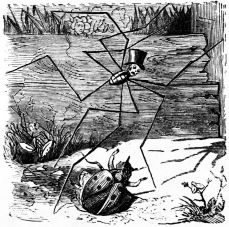
LADY-BIRD AND DADDY LONGLEGS.
Lady-Bird, in gown so gay, Came creeping from the clover; Daddy Longlegs went that way, And nearly knocked her over. "I'll tell my ant!" she cried out quick. "It beats the bugs!" said he. "A tad-pole for your walking stick Would suit you well," said she.
————————
WOULDN'T AND WOULD.
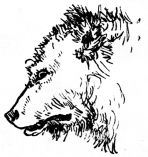
I wouldn't be a growler, I wouldn't be a bear; I wouldn't be an owlet, always on a stare;
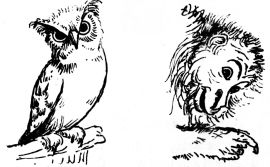
I wouldn't be a monkey, doing foolish tricks; I wouldn't be a donkey, full of sullen kicks.
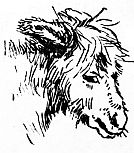
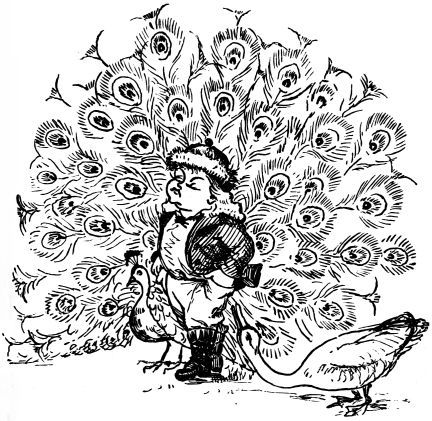
I wouldn't be a goose, Nor a peacock full of pride, But I would be a big boy, With a pocket on each side.
————————
NELL AND HER BIRD.
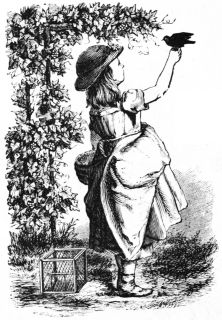
Good-by, little birdie! Fly to the sky, Singing and singing A merry good-by. Tell all the birdies, Flying above, Nell, in the garden, Sends them her love. Tell how I found you, Hurt, in a tree; Then, when they're wounded, They'll come right to me. I'd like to go with you If I could fly; It must be so beautiful Up in the sky! Why, little birdie! Why don't you go? You sit on my finger, And shake your head, "No!"— He's off! Oh! how quickly And gladly he rose! I know he will love me Wherever he goes. I know—for he really Seemed trying to say, "My dear little Nelly, I can't go away." But just then some birdies Came flying along, And sang as they neared us A chirruping song; And he felt just as I do When girls come and shout Right under the window, "Come, Nelly! come out!" It 's wrong to be sorry; I ought to be glad; But he's the best birdie That ever I had.
————————
There was an old weather-vane high on a shed, The wind came a courting and turned his head; And all it could utter for lack of mouth Was—East, and West, and North, and South.
————————
Dumpy Dicky said, "I can't;" Joe said, "By and by;" Grumpy Jacky said, "I shan't;" Tommy said, "I'll try."
————————
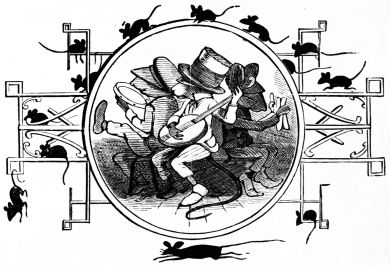
"Have you heard the news, good neighbor?" "No. What is the news, I pray?" "Why the cat went down to a concert And frightened the music away."
————————
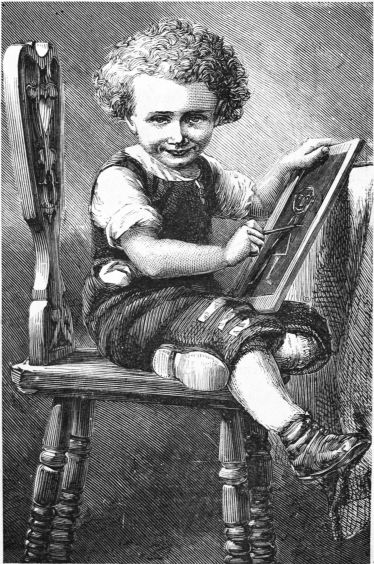
THE NEW SLATE.
See my slate! I dot it new, Tos I b'oke the other, Put my 'ittle foot right froo, Running after mother. I tan make you lots o' sings, Fass as you tan tell 'em, T's and B's and big O rings, Only I tan't spell 'em. I tan make a funny pig Wid a turly tail-y, 'Ittle eyes, and snout so big Pokin' in a pail-y. I tan make a elephant, Wid his trunk a-hangin'; An' a boy—who says I tan't?— Wid his dun a-bangin'. An' the smoke a-tummin' out (Wid my t'umb I do it, Rubbin' all the white about), Sparks a-flyin' froo it. I tan make a bu-ful house Wid a tree behind it, An' a 'ittle mousy-mouse Runnin' round to find it. I tan put my hand out flat On the slate, and draw it (Ticklin' is the worst of that)! Did you ever saw it? I tan do me runnin' 'bout— Mamma's 'ittle posset (Slate's so dusty, rubbin' out, Dess oo'd better wass it). Now, then, s'all I make a tree Wid a birdie in it? All my picsurs you s'all see If you'll wait a minute. No, I dess I'll make a man Juss like Uncle Rolly. See it tummin', fass's it tan? Bet my slate is jolly!
————————
LITTLE POT SOON HOT.
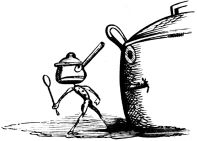
Fume and fury! I have cause To tear about and break the laws. But, on the whole, I'd better not; "Little pots are soon hot." Little souls slights discover; Big souls pass 'em over. Big souls bear their trouble; Little souls sizz and bubble. Little souls oft ferment; Big souls are content. Big souls tumble slowly; Little souls—roly poly! Big souls, like as not, When it's fitting, do get hot. But "little pots" all grandeur spoil. I'll think a bit before I boil!
————————
NELL'S NOTIONS.
Three-year-old Nell by the window-pane stood, A good little girl, and as pretty as good, Watching the snow come down— Falling so lightly, So swiftly and brightly, It whitened all the town. "See, Aunty!" she cried, in a joyous strain, "Oh, Aunty, look out! and see the popped rain! The air is as full as can be; And it never stops, But it jumps and hops, Like the corn that you pop for me." Winter passed on; and Spring-time was here— Spring with its flowers, its brightness and cheer, And the birds were wild with song. Ah, sweet was the note From each tiny throat! Nell listened the whole day long. "Tell me, dear Aunty, what do they eat, These dear little birds, that they sing so sweet?" Nell asked, in her wonder and glee. "Oh, Aunty, I think They have sky to drink, And flowers for their breakfast and tea." The quick, green-winged katydids filled her with awe, Such wonderful creatures she'd ne'er seen before; For hours she would question and tease, Till, "They're leaves!" she said, "With legs and a head, And they're huntin' about for their trees. "Why, Aunty, hold still! there's a girl in your eyes!" And queer little Nell fairly screamed with surprise. "Why, Aunty, it's Nell in there! I can see it as plain— There! I see it again! Why, you're full of me everywhere!"
————————
Never a night so dark and drear, Never a cruel wind so chill, But loving hearts can make it clear, And find some comfort in it still.
————————
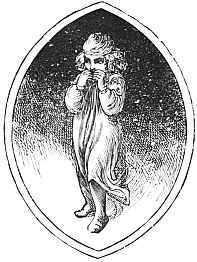
Snow, snow, everywhere! Snow on frozen mountain peak, Snow on Flippit's sunny hair, Snow flakes melting on his cheek. Snow, snow, wherever you go, Shifting, drifting, driving snow. But Flippit does not care a pin, It's Winter without and Summer within. So, tumble the flakes, or rattle the storm, He breathes on his fingers and keeps them warm.
————————
Some one we cannot hear, Some one we cannot see, Shakes the baby, Wakes the baby, Makes him laugh with glee.
————————
A STRANGER IN THE PEW.
Poor little Bessie! She tossed back her curls, And, though she is often the sweetest of girls, This was something she couldn't and wouldn't endure; 'Twas the meanest, most impolite act, she was sure, And a thing, she declared, that she never would do: To go to a church where one didn't belong, Then walk down the aisle like the best in the throng, And seat one's self plump in another one's pew. Humph! Didn't her father own his out and out, And didn't they fill it up full, just about, When Mamma and Papa, and herself and the boys, Were seated? And didn't their boots make a noise In moving along to make room for a stranger? And wasn't it cool, with the brazenest face, To expect at each hymn Pa would find out the place (If Ben didn't, or Bob, but there wasn't much danger)? With such feelings at heart, and their print on her face, Last Sunday our Bessie hitched out of her "place" To make room for a girl, very shabby and thin, Who had stood in the aisle till mamma asked her in. The poor little thing tried her best not to crowd And Bessie, forgetting, soon had the mishap To slip from her drowsiness into a nap, From which she soon wakened by crying aloud. Poor Bessie sat upright, with cheeks all a-flame At sleeping in church, and trembled with shame; But 'twas strange at the close of the service to see Our Bessie, now gentle as gentle could be, Take the hand of the shabby young girl in the pew, And walk with her out of the church with a smile That shone through the tears in her eyes all the while, And brightened her face with a radiance new. "Good-by," whispered Bessie at parting, "and mind Our pew's forty-five, with a pillar behind." Then she stole to her mother: "Oh, Mother, I dreamed Such a curious dream! 'Twas no wonder I screamed. I thought I was sitting in church in this dress, With a girl like a beggar-girl right in our pew— We were sitting alone on the seat, just we two— And I felt more ashamed than you ever could guess; "When, all in a moment, the music grew loud, And on it came floating a beautiful crowd; They were angels, I knew, for they joined in the song, And all of them seemed in the church to belong. Slowly and brightly they sailed through the air; The rays from the window streamed crimson and blue, And lit them in turn as their forms glided through;— I could feel their soft robes passing over my hair. "One came to my side. Very sadly she said, 'There's a stranger in here.' I lifted my head, And looked at the poor shabby girl with disdain. 'Tis not she,' said the angel; 'the haughty and vain Are the strangers at church. She is humble and true.' Then I cried out aloud, and the minister spoke, And just as they floated away I awoke, And there sat that dear little girl in our pew!"

————————
THE QUEEN O' MAY.
The Queen o' May Held court one day,— The fields had nought to give her; All in their best Her maids were drest, And they began to shiver. "Now, never sneeze, But warm your knees, And look for daisies growing; You'll find the air Quite soft and fair, Unless it fall a-snowing." "Quite soft!" they said, Each loyal maid. "So fair!" the boys went chaffing; But soon the May Came down that way, And set them all a-laughing.
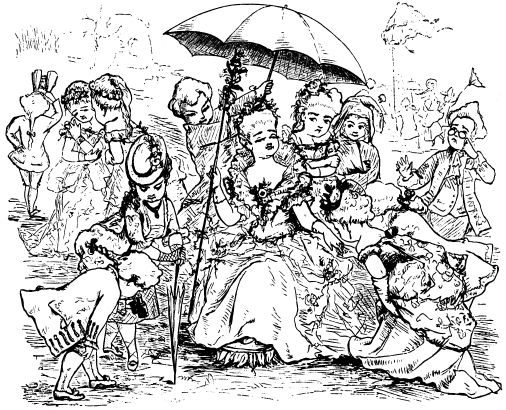
THE QUEEN O' MAY.
————————
PUSSY'S CLASS.
"Now children," said Puss, as she shook her head, "It is time your morning lesson was said:" So her kittens drew near with footsteps slow, And sat down before her, all in a row. "Attention, class!" said the cat-mamma, "And tell me quick where your noses are." At this all the kittens sniffed the air As though it were filled with a perfume rare. "Now what do you say when you want a drink?" The kittens waited a moment to think, And then the answer came clear and loud— You ought to have heard how those kittens meow'd! "Very well. 'Tis the same, with a sharper tone, When you want a fish or a bit of bone. Now what do you say when children are good?" And the kittens purred as soft as they could. "And what do you do when children are bad? When they tease and pull?" each kitty looked sad. "Pooh!" said their mother, "that isn't enough; You must use your claws when children are rough!" "And where are your claws? no, no, my dear, (As she took up a paw) see! they're hidden here:" Then all the kittens crowded about To see their sharp little claws brought out.
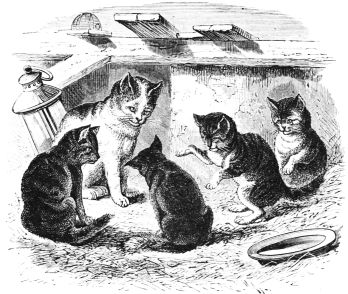
They felt quite sure they never should need To use such weapons—oh, no, indeed! But their wise mamma gave a pussy's "pshaw!" And boxed their ears with her softest paw. "Now 'Stpisss!' as hard as you can," she said— But every kitten hung down its head— "Stpisss! I say," cried the mother cat, But they said, "O mammy we can't do that!" "Then go and play," said the fond mamma; "What sweet little idiots kittens are! Ah well, I was once the same, I suppose"— And she looked very wise and rubbed her nose.
————————
Twistan Turnem, let me see, Which is the way to Tweedle-dee? Why, turn about the way you've come, And take the road to Tweedle-dum.
————————
WANDERING JOE.
Tell me, O wandering Joe! How many miles did you go? Why, one to my mother's, And three to my brother's, And just half a dozen To hunt up a cousin; And half a mile yonder A hen-roost to plunder; And three half miles back To cover the track. Then a half and a half To water the calf, And a half and a quarter Before I found water; Add a quarter to that, When I chased a black bat; Then two to town, To see Jim Brown; And two, and none, And one for fun, And one for luck, And one for pluck; And one for trouble, And two for double; And then 'twas best To sit and rest. And now, my friend, says Joe, How many miles did I go?
————————
Whether fair, whether foul, Be it wet or dry, Cloudy time or shiny time The sun's in the sky. Gloomy-night, sparkle-night, Be it glad or dread, Cloudy time or shiny time, Stars are overhead.
————————
THE RATS.
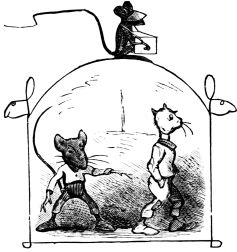
When I'm sitting At my knitting After tea— Deary me! Such commotion, Land o' Goshen! And it's all In the wall. Rumble, tumble, Flurry, scurry. Now a rushing, And a crushing; Now a rattle, And a battle; Now a squeak And a fall
So I sit And I knit; And I ponder And wonder, And scarcely know how, In the racket and row, My wits to recall. But the clatter, For that matter, And the rumble And tumble And scratching And catching Keep on Through it all. Rats in dozens, With their cousins, Or in droves, With their loves: Now it's raps, Now it's taps, Or it's crunching, Or munching; Or a creak, Or a shriek; If I knew What to do, Or you'd show Where to go, I'd be off Like a streak.

But no, I must stay While they clamor away. Traps, cats, Sticks or rats— Bane or gun, It's all one. No, it's fudge, They won't budge!
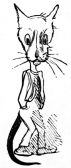
Rat are rats, Spite of cats And the rest. But—my star!— Beginning or end Or middle, depend The things are a pest; And they're all In the wall, So they are!
————————
IN THE WOOD.
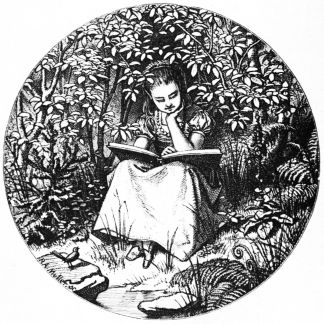
"What says the book, my lassie? What says the book to thee?" "It says the wood is beautiful, The blossoms fair to see; It says the brook tells merrily A little tale of glee, And birds, brimful of melody, Do sing their songs for me." "Then close the page, my lassie, And lift thy pretty head, And what the book would say to thee The wood shall say instead. The brook shall tell its merry tale, The flowers their brightness shed, And the birds shall sing—for life is life, And printed words are dead. "Hear what the bird sings, lassie: 'O little lady fair! The breath of flowers is over thee, The sunlight in thy hair; The heart of a little maiden Is free as birds in the air— And God is good to thee and me, O little lady fair!'"
————————
COMB MUSIC.
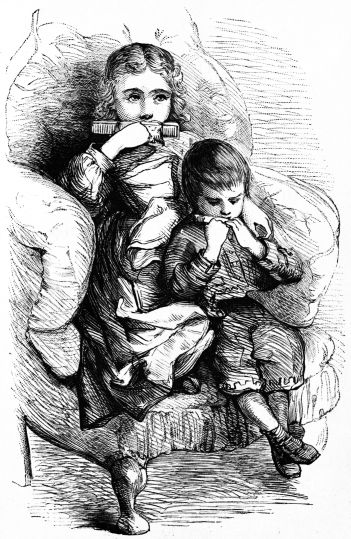
Two children once sat in the twilight gray Playing a tune in a comical way; They both pressed a comb to their rosy red lips, And little they cared for tickles and slips, For wheezings, and paper that always would fall, For oh! such loud music, or no note at all. 'Twas sweet to their ears, as fondly they heard This musical strain coming forth, word for word: "W-h-h-wome, w-h-h-wome, szzzeeet, zhhweet zome, Bheet wev zo hhumble, therzzz nho blazzze liew zhhome!" Now they are grown, and sing in the choir Of their own village church with the beautiful spire; So sweet are her notes, so perfect her skill, Not a bird of the air but might envy her trill, Not a wind of the night but right gladly would know How to make his rich music so plaintive and low. Together their voices in harmony blend, And steep all their days in a joy without end; And yet in their hearts they have always confessed That lovely duet long ago was the best, When they tingled their lips at the musical comb, And told all the world there was "zno blaizzz liew zhome."
————————
IN THE BASKET.
Say, do you hear my basket Go "kippy! kippy! pe-ek"? Maybe my funny basket Is learning how to speak. If you want to know the secret, Go ask the speckled hen, And tell her when I've warmed them I'll bring them back again.
————————
COMING.
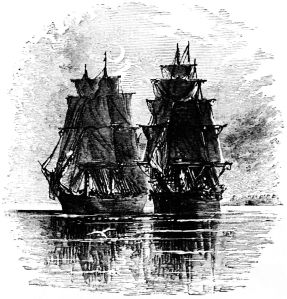
Two fair ships are sailing, Sailing over the sea,— Willie's ship and my ship— Full as full can be; Side by side, my Willie says, Like as pin to pin. Oh, the happy, happy days When our ships come in! While our ships are sailing, Sailing over the sea,— Willie's ship and my ship,— Full as full can be, Sailing on the sunny tide, Grieving would be sin: Soon or late, and side by side, Shall our ships come in.
————————
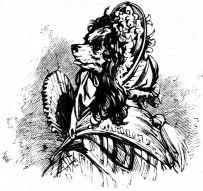
THE DAINTY MISS ROSE.
Oh, a perfect nose, And dainty toes, And woolen hose, Had Miss Rose! A dog was she of high degree, Born of an ancient family. From her mother's side Came her Spanish pride; She had royal ways, And her pedigree reckoned From the glorious days Of Charles the Second! Well, she needed an escort To a party of some sort, One evening in May. And to see her bother 'Twixt one dog and t'other, Was good as a play. Many pups came to say They would be at her service, But she sent them away With a manner quite nervous. In fact, I must own, Of dogs fully grown, She snubbed them by name As fast as they came: Sir Rover was coarse, And Ponto was cruel; Old Bounce was a horse, Young Pip lived on gruel; Spitz was a sneak, Fido was surly; Pomp was too sleek, Carlo too curly; Even elegant Pap, Who wore a gold collar, She said, with a snap, Wasn't worth a lead dollar. Then came a brave wight For a desperate pull; He had been in a fight, Old Major de Bull. He was cross as a bear, And scanty of hair. Also young Isle of Skye, Rather down at the heel; And the well-mannered Guy, Who was sour, but genteel.
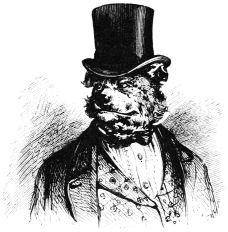
But dainty Miss Rose Still tossed up her nose— She oughtn't, she couldn't, She wouldn't, she shouldn't With one of them go, She'd thank 'em to know. By this time it was growing late, And dainty Rose bemoaned her fate; When, in the sky, there sprang in sight A throbbing, sparkling thing of light. "What's that," she cried, "I see afar?" And Guy replied, "The great Dog Star— Too Sirius, dear, for such as you, And very much above you, too." "Not so, indeed!" cried dainty Rose, No longer tossing up her nose. "Now, I am matched at last, you see, The Dog Star shall my escort be!" Then off she started, quite content, And gallantly the Dog Star went. For all the way he kept in sight, And held her in his tender light, Guiding her steps with steady rays, And blinking when he met her gaze.
————————
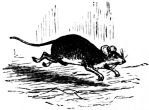
Poor little mousie, what a mishap! Why did you put your nose in the trap? Hold still, mousie, and trust to me— I'll touch the spring, and set you free!
————————
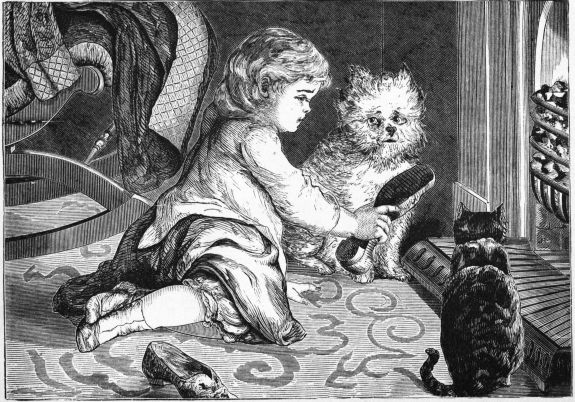
WAITING FOR FATHER.
In the gray of the twilight and glow of the fire, A little girl sat on the rug. She was warming a slipper; and pussy sat nigh her, And also her friend, Mr. Pug. And the song in the heart of the glad little girl, As the light of the fire played over each curl, Was, "Father is coming—hurrah! hurrah! Father is coming—hurrah!" She had spread out his soft woolen gown on the chair, With its facings of beautiful blue; Had picked up her playthings that lay here and there, And arranged things as well as she knew. "For the room must be tidy and pretty and bright," She said to herself, "when he comes, every night, And soon he is coming—hurrah! hurrah! Father is coming—hurrah!" How rosy her cheeks, and how sparkling her eyes! How dimpled her soft little hand! While Pussy and Pug look as solemn and wise As if the whole scene they had planned. But you never would think, so demure are the three, That the little maid's heart could be singing with glee, "Father is coming—hurrah! hurrah! Father is coming—hurrah!" The sunlight has vanished, and bleak is the street, And beggars are dreading the night. The pavement is noisy with home-speeding feet, And only the windows are bright; When quickly the little maid springs from the rug, Leaving Pussy half sleeping, but followed by Pug; "Father is coming—hurrah! hurrah! Father is coming—hurrah!"
————————
WHAT SHALL I BUY?[1]
I've got a penny, What shall I buy? I'll buy a—whistle, That's what I'll buy. I've got two pence, What shall I buy? I'll buy a—pop-gun, That's what I'll buy. I've got three pence, What shall I buy? I'll buy a—horsey, That's what I'll buy.
————————
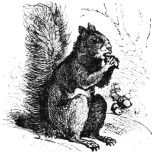
Rut-a-tut-tuts! Who can crack nuts? Squirrels, can you? "That we can, true— Rut-a-tut-tuts, We can crack nuts!" Chicketty-chack, Cracketty-crack. "Pooh!" said the hammer, "Silence your clamor, Rut-a-tut-tuts— Who can't crack nuts?"
————————
HALLOO, OLD SCUTTLE!
Halloo, old scuttle! good old soul, What's become of all your coal? "Why the tongs he came with a gobbledy-gun, And took my coals out, one by one; And the blaze ran in with a tricksy-spire And set the pretty things a-fire; And the blower came with a roaring-roar, And made them burn up more and more; And then the poker with koppitty-hop, He poked their ashes and made 'em drop— And that, O Gobbledy-Koppitty-dole! Is what's become of all my coal."
————————
OH, NO!
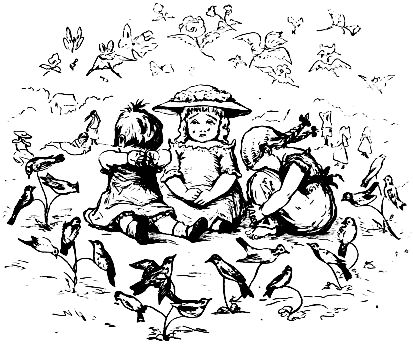
If blue-birds bloomed like flowers in a row, And never could make a sound, How would the daisies and violets know When to come out of the ground! They would wait and wait the seasons round; Never a flower could on earth be found. And what would birds and butterflies do If the flowers had wings to fly? Why, birds and blossoms, and butterflies too, Would stay far up in the sky; And then the people would droop and sigh, And all the children on earth would cry.
————————
THE SAND MAN.
Oho! but he travels the country over, The queer little, kind little, elfish rover! Lightly he bears in his tricksome hand A silvery horn full of sleepy sand, Shaking it here, and shaking it there, Till the blossoms nod in the drowsy air; Till the sunlight creeps up hill to bed, Or slips through the sky where clouds are red; Till the lambkins bleat a soft "good-night!" And birds grow still in the tree-tops bright, While sweet little eyelids, all over the land, Droop with the weight of the silvery sand. Oho! Oho! where the Sand Man goes Every one wonders and nobody knows; For just when the right time comes to peep, Little and big are falling asleep. He steals to the cradles, the cribs, the beds, And sprinkles his sand over children's heads, Till bright little faces lie warm and still, Smiling or grave, at the Sand Man's will. He catches them often at full midday, And bids them stop in their merry play— With a "Ho! my darling," "Hi! my dear," "I'll sing a dream-song into your ear."
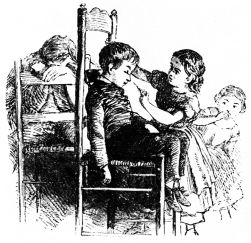
Some on the carpet, some on the chairs, Some curled up on the nursery stairs; Some in the grass where the shadows play, Some hidden deep in the fragrant hay, And some who, folded in mother's embrace, Float in a lullaby, pressing her face. Oho! but he travels the country over, The queer little, kind little, elfish rover! And whence he comes, and whither he goes, Every one wonders, and nobody knows; For just when the right time comes to peep, All the children are falling asleep.
————————
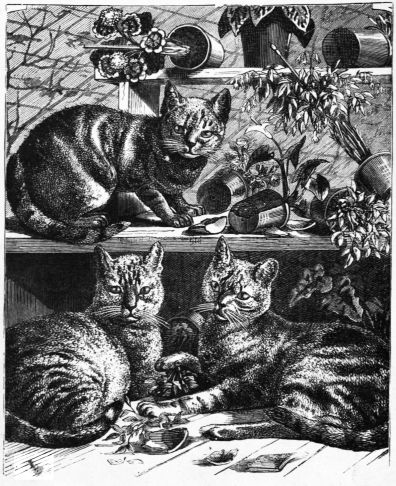
TROUBLE IN THE GREENHOUSE.
Three big cats in a greenhouse. Oh! they look so meek, So sage and sleek, That but for the clash And the sudden crash, And the broken pots Of forget-me-nots, And upset roses, And dingy noses, And draggled vines, And tangled twines, And broken pink, You'd never think What a fearful fuss And hopeless muss Could be made in a hurry And velvet flurry By three meek cats in a greenhouse.
————————
TEN KINDS.
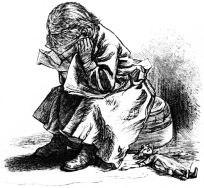
Winnie Whiney, all things grieve her; Fannie Fibber, who'd believe her? Lotty Loozem, late to school, sir; Albert Allplay, quite a fool, sir; Kitty Kissem, loved by many, Georgy Grump, not loved by any. Ralphy Ruff—beware his fist, sir! Tillie Tattle, like a blister, Gus Goodaction, bright and cheery, Sammy Selfish, sour and dreary. Do you know them, as I've sung them? Easy 'tis to choose among them.
————————
HAVE YOU APPLES?
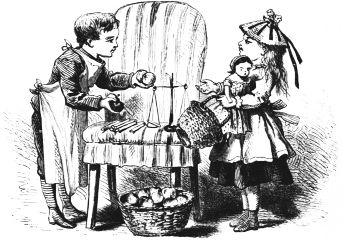
"Have you apples, good grocer?" "O yes, ma'am, how many?" "How do you sell them, Sir?" "Two for a penny." "I'll have two, Mr. Grocer, They're good for my baby; Send 'em home in an hour, Sir." "That I will, lady."
————————
There was an old woman of Wigg, Who fattened her favorite pig. "I'll eat him," she said, "From his tail to his head"— This greedy old woman of Wigg.
————————
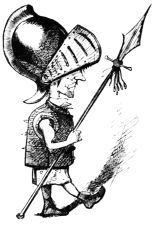
There was a brave knight of Lorraine, Who hated to give people pain. "I'll skeer them," he said, "But won't kill 'em dead"— This noble young knight of Lorraine.
————————
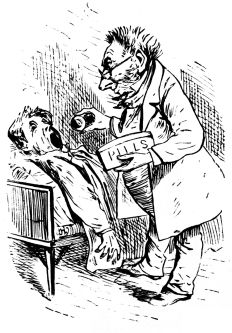
There was an old doctor of Brille, Who gave all his patients a pill. "It will cure 'em," he said, Or else kill 'em dead"— This skillful old doctor of Brille.
————————
FAIRY TALES.
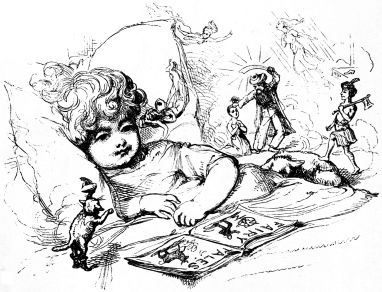
"'Et me see," thought little May, Waking from her slumber, "How many 'tories do I know? Oh, a mons'rous number! First Cin'rella with her shoe, All d'essed up so sp'ended; "'Es, an' naughty B'ue Beard too, Always gettin' 'fended; 'Fended with his wives he was, All account of keys, Then a-comin' back to say 'Die Ma'am! on your knees!' Oh my! if she hadn't had Her faithful sister Ann, No one ever would have come To kill that wicked man! Then the Bean-stalk—that was nice! Wis' I'd one this minute, Guess, though, I'd be most af'aid— Might be giants in it. Wonder if I was to be Jack the Giant-killer Nursey'd be af'aid o' me? Why, I wouldn't kill her! Not unless she combed too hard— Then I'd shake my axe Jus' a 'ittle—wis' I had A real one jus' like Jack's. Wis' I had a pair o' boots Like Puss, who went a-walkin'! Wis' I had a Pussy too, Sittin' up a-talkin'. I wouldn't like to go get lost Like 'ittle Hop my T'umb 'Way 'n the forest (don't I wish My mamma'd only come!) A'most makes me feel af'aid T'inkin' 'bout 'em now; Gettin' lef' that way I t'ink Was dreffle, any how;— But, oh, the chil'ren in the wood, They must have been so f'ightened
A-list'nin, to the t'under, or A-watchin' when it lighten'd. Don't see why they didn't go; Maybe, though, they couldn't— My Uncle wouldn't t'eat me so, Uncle Rodney wouldn't. Maybe in the mornin', too, They heard a lion roarin'— Here comes Nursey! now I'll play I'm fast as'eep, a-snorin'.
————————
Old Can-an'-must is a giant bold, But one thing scares him, I've been told; "I'm afraid when a youngster wastes his crust, He'll never be thrifty," says Can-an'-must. Old Can-an'-must is a giant bold, And only one thing makes him scold: "If I catch a youngster leaving a crust, I'll gobble him up!" says Can-an'-must.
————————
MOTHERLESS.
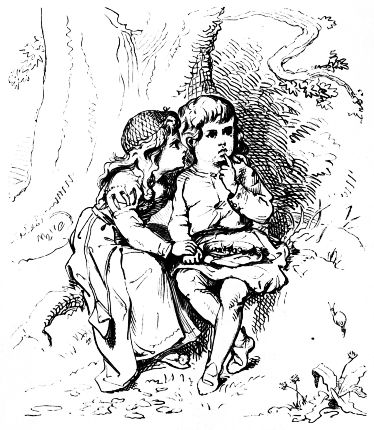
"I wish she had not died," she said, The words were soft and low; "Most little girls like me, papa, Have dear mammas, you know. "There's Lulu Hart, next door. I think It's nice to live that way; With some one sitting at the blinds To watch you while you play; "I often see her look up quick, And smile at some one there; And when she laughs and hides away, She knows some one will care. "Why didn't Doctor Bishop cure My mother, dear papa? That's what he did one time, you know, For Lulu Hart's mamma. "Say, papa, was God good to take My own mamma away? For I was just a baby then— Papa, why don't you say?" "Yes, always good," he sobbed. "Mamma Is very happy, dear." His little girl sprang up, nor cared Another word to hear. "Why, papa! crying? Please don't cry. Do you feel sorry, too? Now, papa, see; I never meant I didn't care for you. "If mamma's happy in the sky— You told me so before— We mustn't cry. I think it's wrong To want her any more. "Laugh, papa, quick! I'll pull your hair! I'll kiss your funny nose; Laugh, quick, for Minnie; else I'll try To jump right on your toes. "Poor eyes! all wet. I'll kiss them dry. What's in your pocket? See. Oh! where's your watch? Now, won't you please Just make it tick for me? "It's nice to have a dear papa. (How big it is, and bright. I hear it ticky, ticky, tick. It's very loud to-night.) "Ride me to Banbury Cross, papa! Now, don't you let me fall. When I was littler, how I slipped! I couldn't keep on at all. "Oh! there's the tea-bell. Now you've tossed My hair like everything! I'll toss yours too. Oho! Oho! You look just like a king— "For kings have crowns, you know, papa, And your hair's standing straight. I knew you'd laugh! There, now, you're good— Come quick, and show Aunt Kate." Aunt, at the table, glanced at one, And then glanced at the other; She could not guess what hidden thing Had happened to her brother. His shining hair stood like a crown, His smile was warm and bright; "Why, John," she said, "you really seem Like your old self to-night."
————————
OLD SIMON.
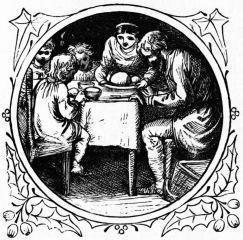
Old Simon and his boys were glad, To take the plainest fare; They brightened everything they had, With gratitude and prayer. "Give thanks," said Simon, "when ye rise, Give thanks when day is done." And none than Simon were more wise, Or happy, under the sun.
————————
THE LITTLE MOTE.
A little mote lived in a sunbeam, And danced in its light all day; But she jumped with surprise one morning, At hearing the housemaid say:— "Oh, the dust! How it keeps one a-working! It settles all over the room— And the air is so full, it is folly To labor with duster and broom!" "Poor thing!" sighed the mote, "well, I'm sorry. I think I'll go hide in her hair— I'm such a wee speck of a dustlet She never will know I am there."
————————
When I was little, Thought I was big; Now I'm a giant, Don't care a fig. When I was nobody, Felt quite a chap; Now that I'm somebody, Don't care a snap.
————————
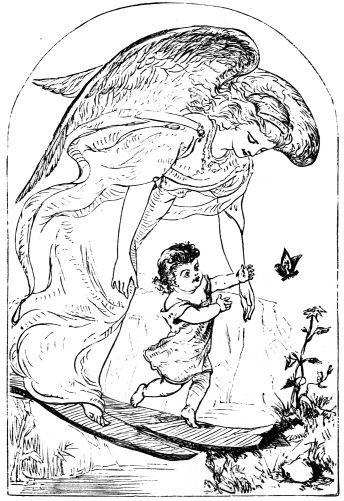
What makes baby brave and bright? Angels guard him day and night.
————————
THE ALPHABET.
Little boys with pockets, Little boys with none, Little bright-eyed lassies Gather, every one! Crowd around me closely. Would you master books? You must first discover How each letter looks. A has a bar Where a fairy might ride; B is a post With two loops at the side. C might be round If a piece you would lend; D is a buck-saw Standing on end. E has a peg In the middle, they say; F is an E With the bottom away. G is like C, With a block on one end; H has a seat That would hold you, depend. I is so straight It would do for a prop; J is a crook With a bar at the top. K is a stick With a crotch fastened to it. L is a roost, If the chickens but knew it. M has four parts, As you quickly may see; N, the poor fellow! Is made out of three. O is so round It would do for a hoop; P is a stick With a top like a loop. Q to be curly Is constantly trying; R is like B, With the bottom loop flying. S is a snake, All crooked and dread; T is a pole With a bar for a head. U it is plain, Would make a good swing; V is as sharp As a bumble-bee's sting. W ought To be called double-V; X is a cross, As you plainly can see; Y is just formed Like a V on a stand; Z is the crookedest Thing in the land!
————————
Early to bed and early to rise: If that would make me wealthy and wise I'd rise at daybreak, cold or hot, And go back to bed at once. Why not?
————————
THE COOK'S LITTLE BOY.
A real apple-pudding for Mammy and me! A-boiling as hard as I ever did see! O Mammy! I'm going to jump up and look, And tell the old pudding to hurry and cook. Is it looking in, Mammy, that hinders the boil? Well, I'd feel very bad for my pudding to spoil; So I'll cover it up, like a good little son, And play on the floor till you tell me it's done. There's the chil'ren up-stairs—they're dressed up so fine, But their pudding's no better than Mammy's and mine. Oh! isn't it nice when your Mammy's the cook, And whenever you want you can climb up and look!
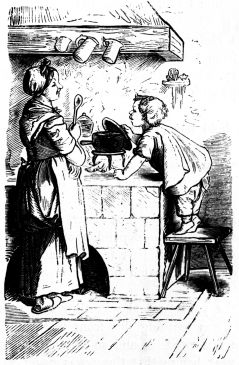
"OH! ISN'T IT NICE!"
————————
HARRY.
Hurrah for the bouncer, exactly fourteen; The blithest old schoolboy that ever was seen, Hurrah for the Harry who went by, this way, Last Valentine's eve, thirteen and a day! There was Harry, aged twelve, I remember him well A hawk from a hernshaw he always could tell; And Harry, eleven—ah! how he would fiddle And scrape with his bow from the end to the middle. Then the bold boy of ten that my Harry appeared, A few years ago, when the war-mists were cleared; A chubby young fellow he flourished at nine, A right chubby fellow, this Harry of mine. At eight he was slender; at seven, quite fat; At six he was saucy—depend upon that! At five he put on his first trowsers and jacket; At four who could match him for making a racket? At three the young rascal was always in trouble; At two he was teething (his front teeth, and double); At one he was precious and something to carry, And the year before that there was never a Harry!
————————
THREE WAYS.
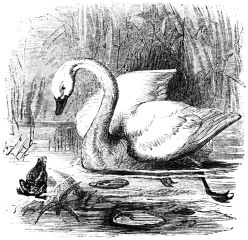
"How sweet," said the swan, "To glide and plash! And not, like a frog, To dive and dash." "How fine," said the frog, "To dive and dash! And not, like a swan, To glide and plash." "But better than either To float with grace," A pond lily whispered, "Yet keep your place."
————————
Tom of Clapham used to say He loved his mother dearly; Yet he vexed her sorely every day— Does that strike you queerly?
————————
WHAT THEY SAY.
What does the drum say? "Rub-a-dub-dub! Rub-a-dub, rub-a-dub! Pound away, bub! Make as much racket as ever you can. Rub-a-dub! rub-a-dub! Go it, my man!" What does the trumpet say? "Toot-a-toot-too! Toot-a-toot, toot-a-toot! Hurrah for you! Blow in this end, sir, and hold me out, so. Toot-a-toot! toot-a-toot! Why don't you blow?" What does the whip say? "Snaperty-snap! Call that a crack, sir—flipperty flap! Up with the handle, and down with the lash. Snaperty! snaperty! Done in a flash." What does the gun say? "Put in my stick, I'm a real pop-gun. Fire me quick! See that you fire in nobody's eye. Steady! my manikin. Now let it fly!" What does the sword say? "Swishy-an-swish! Flash in the sunlight, and give me a wish. Wish I was real, sir—cut 'em in bits! Wouldn't I scare all the world into fits!" What do they all say, trumpet and gun, Whip, sword, and drum-stick? "Hurrah for fun! Babies no longer, but stout little men, Racket forever! and racket again!"
————————
One step—two step, Three step—four. Who says my baby Can't travel the floor? Five step—six step— Seven step—eight! Now shall my baby Rest him in state!
————————
MELONS.
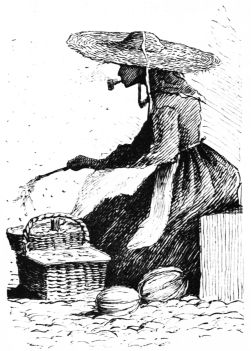
Melons! melons! All day long Joe's mother sits Selling melons. "Ho! ripe and rich!" Is her song, All day long Selling melons.
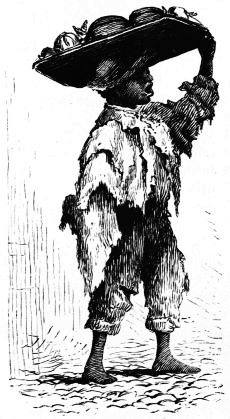
Melons! melons! All day long, Joe walks the street Selling melons. "Ho! ripe and sweet!" Is his song, All day long Selling melons.
————————
HOW MANY THINGS IN MY POCKET?
Tap at your brain and unlock it, Then count all the things in my pocket: A nail and a screw, A screw-driver, too; A cent and a dollar, A tumbled-up collar; A neck-tie and glove, A note from my love; Two peppermint-drops, A couple of tops; A buckle, a ball, The head of a doll; A top-snare, of course, A six-penny horse; Four pins, always handy, And three sticks of candy; Ten nuts and a pen, A squirt—and what then? Why, my knife, to be sure, And an old wooden skewer; That's all—oh! a string, A galvanized ring; A pistol (but no one could cock it), And that's all I had in my pocket.
————————
THE GALLANT OUTRIDERS.
"Where have you been, my children; Where have you been, I pray?" "Oh, but we've been a-riding, A-riding the live-long day." "And how did you ride, my darlings; And where did all of you go?" "We all of us went on horseback, A-galloping in a row.
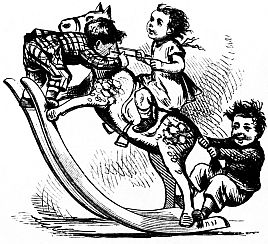
"Jack had the whole of the saddle; I held on to the tail; And Leslie, under the fore-feet, Managed to ride the rail; "Jackey galloped and cantered,— Played he galloped, I mean; For Les. and I did the rocking, And Jack just rode between. "Oh, didn't our animal caper As he hitched himself along! We might have kept on forever, If they'd only made him strong. "But when I pitched on the carpet, His tail so tight in my hand, And Les. from the rail fell kicking, Why, horsey came to a stand. "If Les. had only kept quiet, We might have played we were dead; I don't see the sense in yelling Because you have bumped your head. "Jackey held on like a good one, And looked as fine as a fiddle,— But it's nothing to ride a-horseback If a fellow is on the middle."
————————
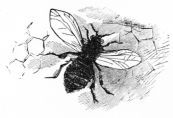
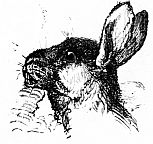
"Busy bee! busy bee! Where is your home?" "In truth, pretty maiden, I live in a comb." "And you, little Rabbit, Where do you rush?" "I rush to my home, dear, Under the brush!"
————————
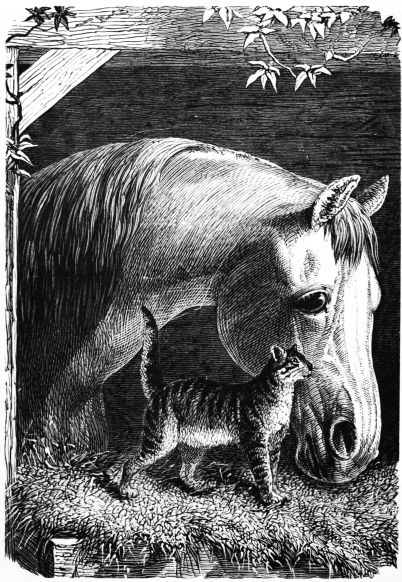
DOBBIN'S FRIEND.
Dobbin has a little friend, Spotted white and sable; Every day she goes to him, In his lonely stable. Not a might of dread has she, Not a thought of danger; Lightly runs between his hoofs, Jumps upon his manger; Lays her soft, warm cheek to his, Purrs her meek "Good morning!" Gives the flies that hover near, Such a look of warning! "Dobbin, dear," she sometimes says, "Feel my winter mittens; Nice and warm, you see, and made Purposely for kittens. "Dobbin, dear, such times at home! Mother has caught a rat! Brought it home to show to us— What do you think of that?" "Dobbin!" she whispers, purring still, "You often get so weary, Why don't you balk or run away, And get your freedom, dearie?" Then Dobbin gives his head a toss, And says, "For shame, Miss Kitty! If I could do so mean a thing, 'Twould be a monstrous pity. "No, no; my master's good and kind; I'll never vex him, never!" And pussy, pleased, still rubs his cheek, And likes him more than ever.
————————
THE WAY TO DO IT.
I'll tell you how I speak a piece: First, I make my bow; Then I bring my words out clear And plain as I know how. Next, I throw my hands up so! Then I lift my eyes— That's to let my hearers know Something doth surprise. Next, I grin and show my teeth, Nearly every one; Shake my shoulders, hold my sides: That's the sign of fun. Next I start and knit my brow, Hold my head erect: Something's wrong, you see, and I Decidedly object. Then I wabble at my knees, Clutch at shadows near, Tremble well from top to toe: That's the sign of fear. Now I start, and with a leap Seize an airy dagger. "Wretch!" I cry. That's tragedy, Every soul to stagger. Then I let my voice grow faint, Gasp and hold my breath; Tumble down and plunge about: That's a villain's death. Quickly then I come to life, Perfectly restored; With a bow my speech is done. Now you'll please applaud.
————————
WILLY AND HIS PIPE.
Willy lay by the dimpling brook, Where the sun had lain before; And, strange to say, when its place he took, The spot just brightened the more. The birds were singing in the blue, A song that was like a hymn; While the baby ducklings, two by two, Strayed into the water to swim. "Heigho!" sighed Willy, "I cannot fly, Nor even so much as float; And as for singing like robins, why, I never could raise a note. "But I can play on my pipe," said he; And soon the music came— So clear and sweet, so blithesome free, That it put the birds to shame. The baby ducklings softly splashed, The robins yet harder tried, The sprinkled grass in sunlight flashed, As it nodded by Willy's side. And, before he knew, he was floating free On a sparkling river of thought; While the birds in the air came down to see What wonder the pipe had wrought. And still the music softly rose, Still Willy was floating free; And the little ducks with their funny toes, Were happy as happy could be.
————————
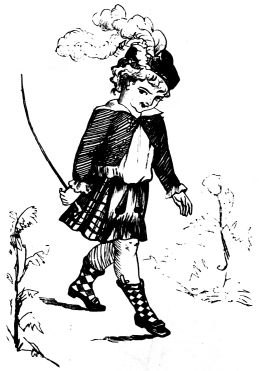
I had a little Scotchman, Who reached to my chin; He was swift as an arrow, And neat as a pin. He ran on my errands, And sang me a song; Oh, he was as happy As summer is long!
————————
Trottery, trottery, out of breath, Nurse trots the baby 'most to death: Sick or well, or cold or hot, It's trottery, trottery, trottery-trot!
————————
LAZY LOU.
Lazy Lou, Lazy Lou, What's the matter, child, with you? Can't you work? Can't you play? Can't you tuck your hair away? If I were you, my Lazy Lou, I'd change my ways. That's what I'd do.
————————
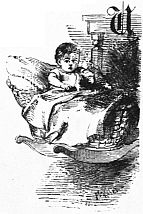
UP in the morning early— Hi for my baby sweet! Here's a gown for his body, Here are shoes for his feet. And here is his snowy tucker Tied with ribbons fair, And here is his little mammy To curl his bonny hair. Here is his little bath-tub, And here is his little sponge, Before the gown and the curling My baby shall have a plunge.
————————
Pins in the carpet, tacks in the floor, Needles in the drugget, wind through the door, Fire in the fender! Oh, it beats all! There isn't a place where our baby can crawl.
————————
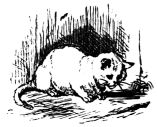
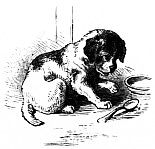
If Pussy were made of leather, And Doggie were made of lead, I'd tumble them both together, And hammer them on the head. But Pussy is warm and tender, And Doggie is good and true; So I'd rather far defend her, And Doggie, too, wouldn't you?
————————
BE CAREFUL.
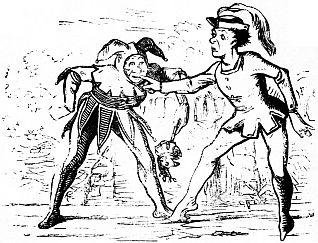
Never in a fool's mouth Thrust your careless finger; If you do, there's danger It may chance to linger. Never to the foolish Tell your dearest thought; Or you'll find your confidence, Like your finger, "caught." Never with the silly Banter, sport, or jest; Even for your frolics Wise friends are the best.
————————
FARM LESSONS.
"Ho! plowman Kelly! How does it feel To get in a wagon by climbing the wheel?" "Nay, nay, little master, don't try it, I beg, For that is the way that I broke my leg." "Kelly, Kelly! Come, show me the way They turn this machine when they cut the hay!" "No, no, little master, just let it be— That hay-cutter cut off my thumb for me." "Ho, Kelly! The well-curb is rimmed with moss. Now look at me while I jump across!" "Hold, hold, young master! 'T would be a sin! I tried it once, and I tumbled in." "Kelly, Kelly! Send me to jail, But I'll pluck a hair from yon pony's tail." "Oh, master, master! Come back! Don't try— That's the very way that I lost my eye." "Why, Kelly, man, how under the sun Can you be so frisky and full of fun?— With all your mishaps, you are never a spoon— You're as brave as a lion and wise as a coon." "Well, well, young master, maybe it's so, And maybe it isn't. But this I know: It just brings trouble and mischief and slaughter, To be fussin' around where one hadn't ought ter."
————————
OUT OF THE GROUND.
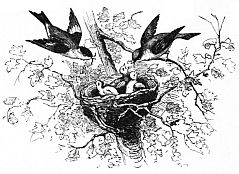
A glow in the sunshine, A pulse in the air, A something of gladness— We cannot tell where; Blue, born of heaven, Filling the sky; A laugh in the brooklet Hastening by; A stirring of insects Waking the wood; Prayer breathed in secret: "God, thou art good!" Little birds humming; Joy all around— The flowers must be coming Out of the ground! They're coming! They're coming! Daffodils sweet— Hear the grass whisper Under our feet! Telling of daisies, Telling of clover, Telling of beauty All the world over! Looking up brightly Where the sun shines, Sending a message Up to the vines: "Wake from your slumbers, Summon your powers, Put forth your tendrils: They're coming—the flowers!" They're coming! They're coming! 'Tis writ on the air, In incense and harmony Breathed everywhere! Winds murmur no longer Their woe to the pines— But spiders are spinning Their gossamer lines. Blue-birds are darting The branches among, Wild with a pleasure Only half sung. Herd-bells are tinkling— Moonie, the cow, Crops the young grasslets Emerald now. High on the roof-top Sparrows look forth, Watching for travellers Flying to north— Twittering sparrows! Blithesome and true, You never left us All winter through. Brave little sparrows! No tempest lowers— Blest is your waiting: They're coming—the flowers! They're coming! They're coming! The beautiful throng, To sooth us and cheer us The whole summer long. By brook and in meadow, Woodland and glade, Through moonlight and starlight, Sunshine and shade, They're creeping, they're springing, They're climbing the hill, They're twining and clinging— Though under ground still. The blue-birds have called them— (Praise God for it all!) They have heard, and already They answer the call! O Snow-white and Purple, Pink, Yellow, and Blue! Lie close to their hearts Till the day they come through. O spirit of Beauty! Spirit of Grace! Still bide ye above them Watching the place. Fragrance and Loveliness! Still hover near, Soon shall your hosts In their glory appear. Surely the Spring-time Is crowning its hours— They're coming! They're coming! The beautiful flowers!
————————
POOR CROW!
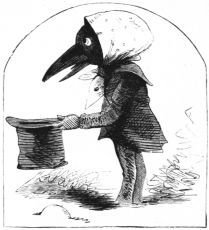
Give me something to eat, Good people, I pray; I have really not had One mouthful to-day! I am hungry and cold, And last night I dreamed A scarecrow had caught me— Good land, how I screamed! Of one little children And six ailing wives (No, one wife and six children), Not one of them thrives. So pity my case, Dear people, I pray; I'm honest, and really I've come a long way.
————————
THE WOODEN HORSE.
A real horse is good, But a horse made of wood Is a much better horsey for me; For he needn't be tied, And he's steady beside, And never gets lazy, you see. When pulled, he will go; And he stops when you "whoa!" For he always is willing to please; And though you may stay By the water all day, Not once for a drink will he tease. Not a handful of feed, All his life, does he need; And he never wants brushing or combing: And after a race All over the place, He never stands panting and foaming. He doesn't heed flies, Though they light on his eyes; Mosquitoes and gnats he won't mind: And he never will shy, Though a train whizzes by, But always is gentle and kind. A real horse, some day, Will be running away; A donkey is so apt to kick; A goat will upset you, A doggie will fret you— Your wooden horse hasn't a trick! No chance of a crash, Or a runaway smash, Though never so playful and free. Oh! I like when I drive To be brought home alive— So a fine wooden horsey for me!
————————
Tinker, come bring your solder, And mend this watch for me. Haymaker, get some fodder, And give my cat his tea. Cobbler, my horse is limping, He'll have to be shod anew; While the smith brings forge and hammer To make my daughter a shoe. Bestir yourselves, my lazies! I give you all fair warning: You must do your work 'twixt twelve at night, And an hour before one in the morning.
————————
There was a rare boy who fell ill, And begged them to give him a pill; "For my kind parents' sake, The dose I will take," Said this rare little boy who fell ill.
————————
TAKING TIME TO GROW.
"Mamma! mamma!" two eaglets cried, "To let us fly you've never tried. We want to go outside and play; We'll promise not to go away." The mother wisely shook her head: "No, no, my dears. Not yet," she said. "But, mother dear," they called again, "We want to see those things called men, And all the world so grand and gay, Papa described the other day. And—don't you know?—he told you then About a little tiny wren, That flew about so brave and bold, When it was scarcely four weeks old?" But still the mother shook her head; "No, no, my dears, not yet," she said. "Before you see the world below, Far bigger you will have to grow. There's time enough to look for men; And as for wrens—a wren's a wren. What if your freedom does come late? An eaglet can afford to wait."
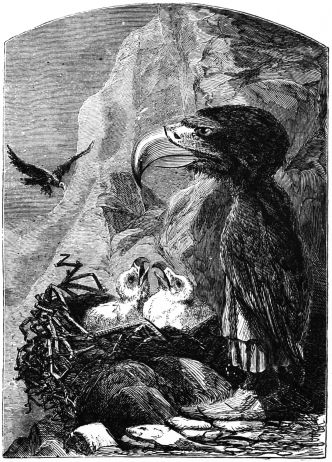
"NO, NO, MY DEARS, NOT YET," SHE SAID.
————————
THE NAUGHTY BOY.
"Och, save us!" cried Betty, "I'm 'most driven wild; Would you shtep here a moment, ma'am, please? For the sowl of me, ma'am, I can't ready the child While he keeps up such doin's as these. "I might better be curlin' a porkerpine quill, Or washin' the face of a eel, Than be dressin' of him—for he never keeps still 'Less I howld him by neck an' by heel. "It's three blissed times since I put on his clothes That he's wriggled stret off o' the chair; Not a moment ago he attack-ted me nose, And it's twice he's been into me hair. "If ye'll credit me, ma'am, wid his cryin' an' kickin', He's brought tears to my eyes, ma'am, like rain— If he wasn't so bad, ma'am, I wouldn't be speakin', For I niver was one to complain." Thus summoned, I went to the nursery-door, There sat master Johnny, a-pout. And I said, as I lifted him up from the floor, "Why, Johnny, what's all this about?" A scream was his answer. His flushed little face Looked angrily up into mine; "Oo hurt!" "Do I, Johnny? Where?—show me the place!" But his cry only changed to a whine. In a moment, I found out the cause of the trouble— 'Twas a pin, pricking deep in his side; And she, in her roughness, had bent the thing double— No wonder my darling had cried! Poor Johnny! He sobbed on my shoulder awhile, Then held up his face to be kissed; (If Betty went back to the Emerald Isle, I know where she wouldn't be missed.) Soon, meek as a lamb when the tempest is whirling, And the shepherd is deaf to his bleat, Our Johnny submitted to washing and curling, Till Betty proclaimed him "complete."
————
In "righting" each other, (As Betty would say), If we find there's a bother That stands in the way— Perhaps 'twould be well, Before crying, "Sin," And running to tell, To look for the pin!
————————
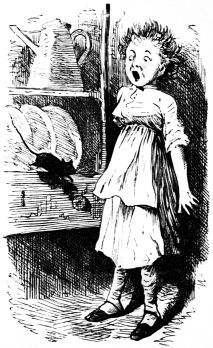
LITTLE MISS LIMBERKIN.
Little Miss Limberkin, Dreadful to say, Found a mouse in the cupboard Sleeping away. Little Miss Limberkin Gave such a scream, She frightened the little mouse Out of its dream.
————————
THE FROG WHO WOULDN'T A-WOOING GO.
Ye gentlemen far, and gentlemen near, And ladies fair, and children dear, Come, list to the mournful tale—heigho!— Of the frog who wouldn't a-wooing go.
I.
Once on a time, when nations were few, And whether the world stood still or flew, Nobody cared and nobody knew, A respectable pair, By name of Gluck, Lived in a pool On the Isle of Muck. Oh! very blest were this pair of frogs, Their lot was cast in the softest of bogs. Mrs. Gluck had an exquisite voice, Their sky was serenest, Their puddle the greenest That ever bade heart of a froggy rejoice.
II.
But of all the blessings that came to this pair, Most precious of all was a son and heir, With the widest of mouths and the loveliest stare— Their brisk little polliwog, Hearty and hale; Their own little frisky one, All head and tail! Ah! never were parents so happy as these, Though their child, to be sure, wouldn't sit on their knees. And this, let me say, was a very bad sign, Though they didn't perceive it And couldn't conceive it, For it proved that he didn't to duty incline.
III.
Well, the days flew along, and their child grew apace, Till at last a fine form came to balance his face; And his legs grew so fast they seemed running a race. Completed at last, With his garment of green, Just the handsomest froggy That ever was seen, He said to his mother: "Now, madam, I'm blown If—ahem! I should say, I am perfectly grown; So in future I'd wish my own master to be, Though I thank you most kindly For loving me blindly." (Such airs in a youngster were dreadful to see!)
IV.
"O son," quoth his mother, "you fill me with pain!" And she sobbed and she sighed with her whole might and main, And called to her husband in desperate strain. "Pooh, pooh!" said old Gluck, "The youngster is right, So let him alone, ma'am, Or you and I'll fight. And, hark ye, my son, I have noticed of late Yon puddle attracts you. Tis well. Find your mate. The Gungs, as a family, seem to adore you. Select your own waters, Take one of the daughters, And leap into life like your father before you."
V.
Alas for young puddledum! Proudly he scouted The sire's good advice. He sulked and he pouted, And the Gung girls, in turn, every one of them, flouted. "What, choose me a wife! Does he think I'm a fool? No, my motto for life Is: one frog to a pool. Shall I yield up my freedom—be tied to a log? Not I, by my jumps!" quoth this prig of a frog. "Miss Gung, sir, for all I'll prevent, gug-a-loo! May sing till they carry me, 'No one will marry me, Nobody, nobody's coming to woo!'"
VI.
I must tell you; old Gluck, with his puddle so fair, Was known by the banks as mud-millionaire. So, young Gluck (who you know, was his first son and heir),
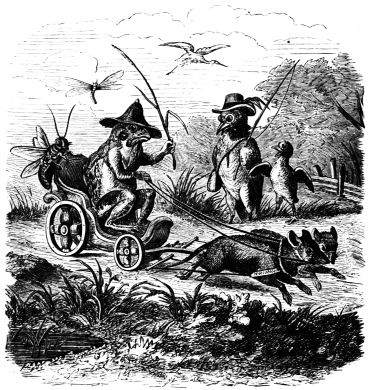
Soon set up a team Of sleek water-rats, And covered his head With the brightest of hats; Then, with a phaeton and footman or two, He drove forth to dazzle, to awe and subdue. Oh! glum was his face, his heart icy cold! And the seat of his car, Though too wide by far For one single frog, not another would hold.
VII.
But when did the heartless, disdainful, and flat Live on, unrebuked by this world's tit for tat? And why did our frog trust his fate to a rat? One day, as he drove, There came forth to stare— Kingfisher and Duck— A most comical pair. The first was the proudest that ever was seen, For the rod in his hand was the gift of his queen; But the other—ah! never did duck so expand; Yet strut as he could, And strain as he would, Poor Quack, for the life of him, couldn't look grand.
VIII.
Yet he took it amiss that his efforts were lost To thaw with his splendor that armor of frost (For our frog quite disdained any duck to accost), And loudly he shouted, "Come back, sir, come back! You're spoiling our road With your zig-zagging track, Come back, or yon man, with his cat-o'-nine tails, Will be after your team, till you whistle like quails— Great Neptune! If there ain't the mischief to pay! Just as sure as I waddle, Or swim, dive, or paddle, Those rats of young Gluck's are a-running away!"
IX.
Too true. They had heard the duck's dreadful appeal— A cat with nine tails! why, the thought made them squeal. And they ran for their holes, with poor Gluck, neck and heel. But whether he lived, Or whether he died, Or whether the rats Managed safely to hide, Or whether his parents e'er saw him again, Or whether Miss Gung always waited in vain, 'Neath her lily-pads green, for a lover, or no, Are things that belong To the rest of my song Of the frog who wouldn't a-wooing go.
PART SECOND.
I.
Oh! moan, ye winds, by the green pool's brink! And quickly, ye Glucks, in the deep mud sink; Prepare all the dregs of affliction to drink! The pride of the puddle, Breath of thy breath, Lies low in the marshes, Fainting to death. Oh! weep, poor Miss Gung! for there never shall be In thy home of the lilies a lover for thee. Thy sun goeth down with never a glow, He hath frowned on thy fate, On thy maiden estate, And the one whom thou lovest is lying all low!
II.
Ha! what is this coming? what wreck do they spy? What driverless rat-steeds are these rushing by? "Our child!" cried the mother; "oh! fly to him, fly!" These words to old Gluck, And that mother fell dead; She had burst with her grief, And the vital spark fled. Then madly in search leaped that father bereft, And wildly those goggle-eyes peered right and left; Till at last, where the bank lay a little aslant, He saw his son lying, Apparently dying, For all he could do was to quiver and pant.
III.
"Oh! leap, little Eng" (this, Gluck said to his latest, A froggy half-grown), "bring of doctors the greatest, And look to thy speed, that thou never abatest. Bring Tightskin, or Squatt, Or my cousin Paff-Puff; But don't bring them all— One doctor's enough. O horror! he fails! Be quick, Eng, be quick! His eye-balls are sinking! his breath's growing thick. Either Tightskin or Squatt will be better than Paff—" But Eng never heard, He had left at the word, Bound, of course, for the third of that medical staff.
IV.
"Oh! look at me, son! Oh! lift up your head! And don't lie so limp, for you fill me with dread For pity's sake, hear me. Your mother is dead!" "Dead!" gasped Master Gluck, "And I lying here? Oh! why will these mothers Step out of their sphere? If ever I needed good nursing 'tis now, And your masculine paw, sir, it scratches my brow. I need some one gentle—more gentle than air— O father! I fear I am injured in here." And our frog pressed his heart in the deepest despair.
V.
"Now, bear up, my son," cried the sorrowing Gluck. "See! the doctor is coming. He'll bring us good luck. By my croak! but it's Paff, the conceited old buck." Then, quick to the doctor, "My child! Is he killed? Oh! save me my son From the phaeton spilled. Haste! give me the lotion! I'll pour it on here." "No, no," moaned the patient, "I can't have him near, His rubbing is torture. I'd rather be hung. Dear doctor, he's rough— He's nursed me enough— Oh! send little Eng for that oldest Miss Gung."
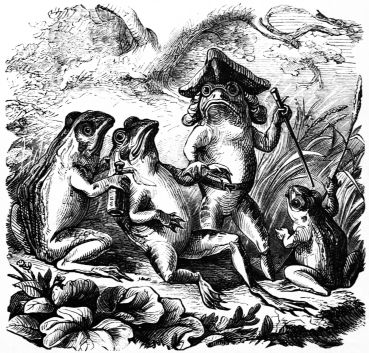
VI.
Then outspake the uncle, with wrath in his face, And a grunt of denial that filled all the place, "No, no, Master Gluck, I'll attend to your case, Humph! nursing indeed! You've called me too late. In less than an hour, sir, We'll lay you out straight. No Miss Gung shall you have. Her father's my friend. If you'd done as you ought—Never mind. I intend To have all my sons, cousin Gluck, marry early. Had my patient seen fit To wed, I'll admit He might have been saved," said this doctor so surly.
VII.
And then, while our hero lay moaning with pain, And his father kept rubbing and fussing in vain, The doctor continued, in furious strain, "This accident—humph! Cousin Gluck, on my word, With a family team, sir, Would not have occurred. This thinking and plotting for self all the while, And frisking about, sir, in bachelor style, With no one to nurse you when hurt, sir, don't pay." "Good doctor," moaned froggy, "It isn't too late, Even now she'd consent To soften my fate. Oh Eng! dear, run off for Miss Gung, right away."
VIII.
These words were his last. He never moved more, But lay through the starlight, all fainting and sore (And those weary night-watchers, how rasping their snore)! In the morning they found him Stretched out stiff and stark— He had died all alone In the cold and the dark. The chord of existence had snapt, they averred, In trying to utter one sweet little word. And, as over his body his weeping sire hung, 'Twas plain to be seen, From that mouth's very mien, That the last mournful sound of his life had been—Gung! Oh! gentlemen far, and gentlemen near, And striplings fair, and children dear, Be warned by the mournful tale, heigho! Of the frog who wouldn't a-wooing go.