Part 1 — THE SIRENS THREE DEDICATORY SONNET TO WILLIAM MORRIS
Reading edition
THE Mage of Naishapur in English tongue Beside the northern sea, I, wandering, read, With chaunt of breaking waves each verse was said, Till, storm-possessed, my heart in answer sung; And to the winds my ship of thoughts I flung, And drifted wide upon the ocean dread Of space and time, ere thought and life were bred, Till Hope did cast the anchor, and I clung. The Book of Omar saw I limned in gold, And decked with vine and rose and pictured pause, Enwrought by hands of one well skilled and bold In art and poesy and Freedom’s cause— Hope of humanity and equal laws— To him and to this hope be mine enscrolled.
I
LOST on a sleepless sea, without avail My soul’s ship drifted wide, with idle sail And slow pulsating oars, that night’s blue gulf Beat noiselessly to Time’s recurring tale.
II
The rolling hours like waves broke, one by one, Upon the tide of thought time’s sands outrun, And cloudy visions hovered o’er my bed, Piled to the stars, full soon like cloud undone:
III
As, like the wan moon through her fleecy sea, My spirit clove their rack unceasingly, And struck at last upon an unknown ground, More still than sleep, more strange than dreamlands be.
IV
The echoes of lost thoughts wild music made, Like Sirens, heard above the winds that played, Above the rhythmic waves’ tumultuous tone, Upon the hollows of that coast decayed.
V
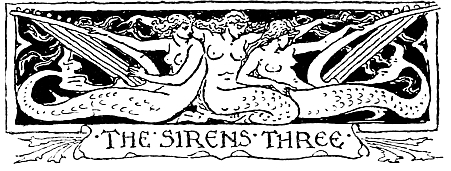
Yea, on the strand they stood, the Sirens three— No More, and golden Now, and dark To be, Whose vocal harps are love, and hope, and grief; To these they sang, and waved their hands to me.
VI
Who thence, unto the shore, escaping, clung, As from the dread insatiate ocean’s tongue That lapped the barren sand, and evermore, Above its vain recoil, the Sisters sung.
VII
Prone on that unknown land, outcast, forlorn, My soul lay; watching for the eyes of morn; As from a dying universe adrift, A naked life—to what dim world new born?
VIII
All former things had passed, the sea’s salt tears From Youths’ frail ship had washed false hopes and fears, And relics, treasured once, bestrewed the sand, Wrapped in the clinging weed the seamaid wears.
IX
The bodies of lost Faith and Love, outcast, Spurned by the waves, and clinging to the mast, Were flung upon the shore, mid drift and wreck,— Time’s fragile shells, which frailer lives outlast.
X
As at the world’s end left, the last of men, Or ere the first was sphered, beyond his ken, Was I, mid tumbled kosmic fragments cast— A babe at play within a mammoth’s den:
XI
Mid bones of power extinct, and its lost prey, With shreds and shards of unknown primal day— The formless Future, and the Past forgot, The broken statue, and the sculptor’s clay.
XII
The blue-breast bird of space his fan outspread, And shook the starry splendour o’er my head— A wood of eyes that wonder at the world, Glassed in the world’s eyes’ wonder, scanned and read:
XIII
Each burning orb that did the sky emblaze Upon my spirit lone cast piercing gaze; World beyond world enringed, and suns aflame Shot from night’s spangled cloud their storm of rays.
XIV
As doth the glass to one bright point intense Draw the sun’s fervour to our shrinking sense; So, on my soul, the concentrated fire Of countless suns that moment did condense.
XV
My brain, an instant’s Atlas, seemed to bear The Universe immense, and all its care; For thought’s frail arms intolerable weight, Since Nature’s triumph still is Man’s despair.
XVI
Untilled, unknown, the trackless regions spread Which Thought, belated wanderer, doth tread, Where, like river flashing through the night, The milky way its myriad star-foam shed.
XVII
Cast from what vital source—what teeming brain? By blind persistent force—from fiery rain? Suns, moons, and stars, transmuted, globed, and hung— The dew of Space upon its blue campaign:
XVIII
Trod by the feet of Time, as he doth go, A labourer night and morn to reap and sow— Who counts the glittering drops—the spheres that fall, Or marvels they should hold such weight of woe?
XIX
Each drop a desert, or a battle-ground Of life in its arena ringed around, Where without quarter wears the endless war, Till Death the hunter slips his famished hound.
XX
Here, circling with the horses of the sun, Man’s fateful race from day to day is run; Bound in this narrow ring—his crown, his grave Still as the world for each is lost or won.
XXI
Then, like a homeless one, my spirit turned For shelter ’neath the roofless void, and—spurned From the star-desert to the stony one— Scanned the dark waste where yet no hearth fire burned:
XXII
But through the veil of night, around me there, Rose towering shapes clothed in the voiceless air, Like kings enthroned amid their powers’ decay— Statue, and ruined shrine, and temple bare:
XXIII
Dolmen, and sphinx, and Greek or Gothic fane, The shattered caskets of man’s winged brain, Whose flight hath left them empty, desolate, Sublime in ruin on the crumbling plain.
XXIV
The perished bodies frail that once did house His restless soul, and heard his sacred vows To his own likeness, dressed in speech or stone, Ere he forswore them for some fairer spouse.
XXV
He sought for Truth, and cried, “Where dost thou dwell?” Ten thousand tongues replied, but none could tell: They held their peace, and then the stones did cry— “Lo! Truth sits naked by the wayside well.”
XXVI
She sitteth naked since they drove her out From Babel of the Creeds to wastes of Doubt; There hath she wandered long in dens and caves, Through Custom’s winter, and through Reason’s drought.
XXVII
They would have cloaked her as a shameful thing; Force brought her chains, and Fraud a marriage ring, But Truth, affrighted, fled the market place Where lies were coined in gold, and Craft was king.
XXVIII
And still she flies from sacred fount, and school, When man defiles, or doth his kind befool; And still they wait, the halt, the lame, the blind, Though Truth, the angel, troubleth not the pool.
XXIX
A wandering spirit in this street of tombs, I sought her yet who still to travel dooms, From hostel unto hostel o’er the waste, Her votaries the fitful lamp illumes.
XXX
But ere the dawn stood trembling at night’s gate, Dark as the night, I reached a portal great, Wide to the homeless wind, defaced and bare, While yet it spake of power, and antique state,
XXXI
Of pillared hall and chambers large and fair, Which Thought and Art had carven and made rare, As life by life was laid with stone on stone, Or flowed through marble veins the beams to bear;
XXXII
And flowered aloft in capital and frieze, As roof and wall high rose with years’ increase; Withal did slow decay still gild and stain, Or like a stealthy robber climbed to seize.
XXXIII
Strange lights from windows glared, and stranger sound Of mingled mourners’ grief and revel round— Sad discords from a world’s disorder wrung— With music broke upon the desert bound.
XXXIV
A fountain in the forecourt sullen slept, One wintry tree beside it, wind beswept, And shorn of its last leaves, which strewed the stone, Like one above the water, drooped and wept.
XXXV
And at the threshold, on the shattered stair, In raiment sad one sate as cloaked in care; There, too, her sister shape in vernal green, The lintel old did hang with garlands fair.
XXXVI
“Who,” then I would have cried, “art thou that weep? And why with mourning festal garlands heap? Why thus, though kindred, are your hearts in twain! O Sisters weird this magic house who keep?
XXXVII
“This magic house, so fair, so disarrayed, What god, what demon first its foundings laid? Who thus its treasure to Oblivion casts, Still hungering at the gate but never stayed?”
XXXVIII
And I was answered ere my thought found tongue, As pealing from the gate their voices rung, Like wailing harp and voice together heard; With ear intent upon their speech I hung.
XXXIX
“Let no man ask, but he who doth not shrink To stand at gaze upon thought’s giddy brink, Where breaks the endless sea, and ebbs and flows The tides of life and death that Time doth drink.
XL
“Time’s very house is this, his daughters we, Ruin and Renovation, thou dost see, That sweep or garnish, and its chambers fit For grief or joy, or whatso guests may be.
XLI
“Pillared and roofed it is with nights and days, And windows gemmed in gold, or azure space, Its table spread, with earth’s, for fast or feast, Between Birth’s gate and Death’s where all find place.
XLII
“Close curtained both with mystery and pain, O’erwrought with costly tears, and heart-hued stain, And Love the windows dim hath painted o’er With dreams of dear delight, that wax and wane
XLIII
“From morn to eve, as through the glowing glass His vital sun transfigures, as they pass, Those visionary joys, and hopes, and fears That mask Life’s face—a dream itself, alas!”
XLIV
But ere they ceased a fairer one forth came, With cup of welcome and with torch aflame, In floating raiment soft, and radiant hair, And thus she sang, each captive sense to claim:—
XLV
“Dream on, O soul, or sleep and take thy rest, The feast is spread however late the guest; Let passion drug the cup with secret fire, Till torturing thought be slain on pleasure’s breast.
XLVI
“Where all are masked thy mask shall be thy face, Call for the best life gives, and take thy place At Time’s long hostel board; cast off thy care, And rest you merry in dame Fortune’s grace.
XLVII
“Vex not thy soul until the reckoning day, Though life be but the least thou hast to pay; Stand not too late on pleasure’s foaming brink, Nor yet, with sightless eld, outsit the play.
XLVIII
“Time is thine host, and, ere the day grows old, To thee his story strange he shall unfold, Writ in a half-obliterated scroll, But pictured fair, and graven deep—behold!”
XLIX
As though a new Pandora raised the lid, And let life’s mystery escape unbid, Broke sudden on my sight a wonder show, As through the portal dark I gazed, close hid:
L
E’en like as one who sits expectant, dumb, At gaze before some world’s proscenium, When rolls the curtain from the painted stage, To see life’s play,—Past, Present, and To Come;
LI
The drama of the earth before me rolled, The war of good and evil, new and old, The fight for very life, for space, for air, The sum and cost of Being, still untold.
LII
Since when Time’s brooding bird did patient sit Upon her spherèd egg—the world, to wit, Potent with life, in ocean, earth, and air, Ere ever faun or flower did people it:
LIII
Since when from countless germs life’s tree did grow From writhing worms about its roots below, From dragon-shapes that clasp its fossil stem, To bear love’s fruit, and human flowers arow.
LIV
Where Thought’s winged kind among its branches dwell, Still fertilized by Beauty’s potent spell; Cast and re-cast in Nature’s supple mould, Through death and change, and birth’s transforming cell.
LV
’Twas pictured here—with boughs outspread thro’ space, Blossomed with stars upon the sky’s swart face, With globing worlds for fruit, that cool or glow As night and day, like leaves their shadows chase.
LVI
Out of the dream of ages, sleeping fast, Out of the dim and unrecorded past, Out of the caverns of uncounted time, In life’s dark house Man saw the sun at last.
LVII
Inhuman Man, late come unto the birth, Wrapped in the swathing bands of mother Earth, Long his descent, his pedigree obscure, To his inheritance of strife and dearth.
LVIII
As from the ground the earth worm crawls to light, Speechless and blind, from antenatal night Man rose on earth, the bitter strife began— Man rose on earth, and craft did conquer might:
LIX
Since cruel Nature, careless of her child, Left him an outcast on the worldly wild, Cradled in space, and serpent-swathed in time, And rocked to sleep by death, or dream-beguiled.
LX
I saw him in his cradle at the first, With beasts and savage passions, rudely nursed, To snatch uncertain life from Nature’s hand, Niggard or prodigal, through best and worst;
LXI
He blindly bore the burden of his day With his dumb kindred of the primal clay, Whence drew his blood brute instincts, fiery lusts, That waste his substance still, and tear and slay.
LXII
A babbling child he sits upon Time’s sand, To the mute sky he cries, he would command; Heedless he plays with serpents and with fire, With life—a toy in his unconscious hand.
LXIII
Yet hath he held it from that early day, Though Death did ever plot to snatch away, And snared his tottering steps with dangers thick, Prowling in countless shapes beside his way.
LXIV
Sore was the strife, and little was life’s boon Between the toiling sun and wasting moon, With lurid pleasures fierce, and horrid rite, Blind day outworn, the long long sleep won soon.
LXV
Still Nature, prodigal, did cast his seed O’er frozen sea, or burning zone, to breed— Where hand or foot could cling, or heart could beat— Man’s kind on earth, since sprung to flower, or weed.
LXVI
The rod of Want, the school of bitter Need, Taught him Life’s letters, still so hard to read: Use gave him skill, and skill new sense to use, He bent the bow, he bade the ploughshare speed.
LXVII
Bread for his body and his soul he sought, Raiment to cloak him from the cold he bought Of ruthless nature, toiling brain and hand; Past all the gates of death his race he brought.
LXVIII
Lo! infant Thought and Art, Man’s children fair, First tottering from the cave, his primal lair; Babes in the world’s wood wandering, to and fro, To touch man’s sordid heart, and lift his care.
LXIX
Since the first hunter graved his dirk and horn, Or in the shepherd state was music born— When Song lay dreaming in the whispering reed, Ere she discoursed unto the golden morn.
LXX
Born of life’s travail, Virtues, sweet, benign, Grew like fair daughters of a race divine— The pillars of Man’s house, before whose rod Evil and Good, as twisted snakes, untwine.
LXXI
But to his roof had fled pale palsied Fear, The child of Death and Night, but fathered there, And nursed by Ignorance beside the hearth To cloud his house with all her mystic gear.
LXXII
Demon and fetish painted she to scare, And veils against the light did weave and wear; Yea, Art and Thought, man’s firstlings, fain would bind From birth to serve her will, her yoke to bear.
LXXIII
So Man, held hand and foot, a slave behold Between the soldier-king and priest of old; By force and fraud bound fast as by two chains— How long, O Man, how long shall they thee hold?
LXXIV
“How long?” again I cried,—but Silence kept Her finger on the lips of Hope: still slept, Like clouds upon the mountains, dreams untold, And Freedom on the tomb of ages wept.
LXXV
Yet, like a watcher by a beacon fire, Amid the lurid gloom and shadows dire, Wrapped in the cloak of darkness, fold on fold, I marked through flames portentous shapes aspire.
LXXVI
Slow streamed the progress vast of human kind, Out of the primal dark I watched it wind, Like a full river gleaming towards the sun, Crested with light, but lost in mists behind.
LXXVII
I saw the towering crests of ancient state Arise and pass, and bow themselves to fate: Captors of men bound still to conquering Time, And in their triumph drawn to death’s dark gate.
LXXVIII
Colossal Egypt on her car rolled by, Dragged by her crowd of slaves, with lash and cry; Who now, a slave herself, is bought and sold, And buried in the sand her pride doth lie.
LXXIX
Athens, supreme, with burnished helm and spear, In art and arms and wisdom shining clear, To other hands hath passed the lamp of life, And weep the muses o’er her sculptured bier.
LXXX
There, clothed as with a robe with power and pride, Great Rome upon her triumph car did ride Over the necks of nations and of men, Unto whose broken wheel still souls are tied.
LXXXI
All these I saw, as on time’s painted page The figure of man’s life from age to age Was figured, like his life of years and hours, And glassed his face—an infant or a mage.
LXXXII
In boyhood bright beneath the Grecian sun, I saw him stand, intent his race to run— To touch the golden goal of thought and art, And daring all man since hath dared or done.
LXXXIII
The apple of his life to Beauty’s hand Freely he gave, and she so dowered his land, That still that fond world takes it for her glass, And gazes, leaving knowledge and command.
LXXXIV
In youth a mystic shadow o’er him fell: He touched the lover’s lute beneath the spell; He fought, a knight-at-arms, for lady’s grace; He prayed a monk austere in haunted cell;
LXXXV
Till Nature roused him from his dreams again, And Reason broke the chains which bound him then; New knowledge, power, and beauty filled life’s cup, And rolled the round world to his manhood’s ken.
LXXXVI
Yet old before his time he sits, out-worn With words and wars, upon the seat of scorn; Weary of life’s vain round, love’s fruitless chase, False fortune’s whirling wheel, fame’s empty horn.
LXXXVII
For here, in living shape and semblance, shone The passions and the powers man’s soul hath won Through all his ages, like the starry signs Where through life’s year revolves the sleepless sun.
LXXXVIII
The pattern and the form of thoughts untold; The book of being wrought in runes of gold; The twisted net that holds all gain and loss The birth-clothes cover, or the shroud doth fold.
LXXXIX
The moving tapestry of human date, Where lives for threads are crossed in love or hate, Between the narrow beams of dark and day— Time’s shifting loom, the toil of threefold fate.
XC
At their eternal task the sisters dread, Who spin and weave and shear the slender thread With all its dyes, that doth sustain and fill This tangled web from pole to pole outspread.
XCI
The arras that doth clothe the house of Time, Stained with the hues of all man’s bliss and crime:— The chequered pageant of the changing earth Still through its folds doth ever sink and climb:
XCII
Along the street of days and nights where rolls The world’s car onwards and its throng of souls, Like captives in a conqueror’s triumph chained— Compelled by fortune’s wheel that none controls.
XCIII
The glittering triumph of youth’s golden dreams, And ardent manhood in the zenith, beams Of love, and fame, and power that guides the car, And slow-pulsed eld still warmed in their last gleams.
XCIV
Masqued with the masquers in that endless race The hours go by at grief’s or passion’s pace, And cloaked alike in poverty or pride, Through all life’s masks death shows his ashen face.
XCV
The shadow clinging to the feet of life, As unto day doth cleave his silent wife— Sower and reaper in the self-same field— Twin spirits folded in immortal strife.
XCVI
There good and ill, brothers and bitter foes, Do strike the balance of man’s joys and woes; And in the traffic of the world’s exchange Oft ill as good, and good as evil goes:
XCVII
Two knights that battle for Truth’s painted targe, With flashing spears upon time’s river marge, Where, like the rushing waters, rise their steeds, And crash together in tremendous charge.
XCVIII
Their broken harness lies upon time’s plain, Their wars’ receding tide doth cast the slain, As shifts the battle ground from age to age, And earth its grim memorials retain.
XCIX
These things I marked, as in a moving show Before mine eyes life passed thro’ gloom and glow— The trappings and the garniture that decked This house of shadows still from room to room.
C
Man was; man is; but who shall count the gain, Or measure out the sum of all life’s pain? So to the play my thought made interlude, And still to fate’s sad music sang refrain.
CI
Man is, but who can count his being’s cost? Who metes the water from the pitcher lost? The squandered corn upon the sower’s path? Cast in time’s scale hath good or ill the most?
CII
Each out of Babel answers for himself, As justice he doth love, or gilded pelf: Who in the school of ignorance should read Truth’s tattered book on thriftless nature’s shelf?
CIII
Unlettered children, hopeless to the task, And dumb before life’s riddles, still we ask; But labour, sole, is answered—patient thought, And science still doth nature make unmask.
CIV
Ah! what is life?—A coin but stamped and cast Into time’s treasury, counted, weighed, and pass’d, Staked in the fateful race for weal or woe, And, gold or silver, changed for lead at last?
CV
While dread Necessity, great Nature’s nurse, Who rules man’s way for better or for worse, Still watching by death’s bed and birth’s doth sit To pour life’s blessing or to brand its curse.
CVI
Between the flickering lamps of day and night, Cloaked in her age-worn mantle care-bedight, Behold her shape, inexorable, vast— Blind arbitress o’er changeling wrong and right:
CVII
Who pain, and bliss, and passion, hope, despair, Casts in life’s cup, she, cunning, mixes fair, And gives, as to a babe, man’s helpless lips, Drawing delicious poison unaware.
CVIII
Then what is life? Well might we ask again— A spirit from the cup that fills the brain With teeming images of love and power, And high desires ’tis impotent to gain?
CIX
Protean life which man doth vain pursue From youth’s green meads to age’s mountains blue— The painted fly a breathless child doth chase— Through all its changing shapes to change but true:
CX
This quivering bubble, dyed with every stain Of splendour and of passion, why in vain— Ah! why?—It sails the summer air— An iridescent moment lost in rain?
CXI
But still the cup is passed swift as of yore, As life each new come guest doth pledge and pour The priceless wine into the fragile glass, Once to the brim filled up, and filled no more.
CXII
Some drink with eager thirst; some waste their store, Or drop by drop still watch it shrinking sore; Some, ere the vital juice hath passed their lips, The frail cup shatter on the marble floor.
CXIII
Yet high the feast-tide rolled, and those who fell Few missed, nor empty long their place did dwell, For great the press is at earth’s table round, And still new streams that company doth swell.
CXIV
Ah! bitter was the strife, and hot the breath, Of envy, hate, their smiling masks beneath, And baleful fires I saw in beauties’ eyes, And rosy ensigns veiled the cheek of death.
CXV
While grovelled for the crumbs a famished crew, As starvèd hounds for what man careless threw, On wastrel bread and refuse fain to feed, Or none, as deadlier their struggle grew.
CXVI
For very life at all too dear a cost As slaves these toiled, while those as counters tost Their lives for gold, or gold for lives exchanged, Indifferent, so they did win, who lost.
CXVII
For those the roses, and for these the rue, In man’s unequal measures paid undue: Some murmured loud, some patient bore their fate— The poor were many, and the rich were few.
CXVIII
Most weary of the sordid throng I grew, And thence a little space apart withdrew, Weary of life, that it this thing should be, Nor other lot for man that hope foreknew.
CXIX
So to the portal dark I turned again, And there, as at the first, the Sisters twain— She who the fruitless garland hung aloft, She on the shattered stone that wept in vain.
CXX
But in the forecourt flashed the fountain’s stream, The wintry tree beside its glittering beam Bore now a cloud of blossom, red and pale, As if bright spring had touched it in a dream.
CXXI
Alone I stood in that still house of Time, All swept and bare it was as at the prime, And but the sea-wind peopled it with sighs, And, heard afar, the slow waves’ measured chime.
CXXII
I saw Time’s shape colossal rising stark Against the endless waves, receding dark Beneath a rising dawn that never rose Upon the sea, where yet would Hope embark.
CXXIII
Yea! Hope arose and drew the painted veil Of things that are, and furled it like a sail, And on her gilded prow I stood at gaze On golden sands beyond the morning pale.
CXXIV
And from the face of Earth were drawn away, Like clinging mists that do obscure the day, The shadows and the fears which have oppressed Her children long beneath their baneful sway.
CXXV
As new created in her sculptured sphere, I saw her rise again translucent, clear, Robed in the kindling splendour of the sun, Renascent from the sea of crystal air,
CXXVI
That limpid broke on her rejoicing shore, Where life’s reviving stream welled evermore From Nature’s fount, through teeming veins that bred Man’s countless kin from one redundant core.
CXXVII
I saw the dragons slain of lust and greed, Of gold and power, that waste to serve their need Poor human lives; and till earth’s fruitful fields With fire and sword, and bloody vengeance breed.
CXXVIII
No more the nations armed did lie and wait, Like bandits fierce, to spoil and desolate What each did hold most dear—no dogs of war At tyrant’s beck, let loose to maim and bait.
CXXIX
No peoples blind by blinder leaders led Into the pit of shame, or daily fed Like swine on empty husks and sophistries, And frozen custom giving stones for bread.
CXXX
No selfish castes in internecine strife Fought like the beasts to win a worthless life; No ruthless commerce cheapened hope and health, Or held to slavish throats starvation’s knife.
CXXXI
No rights usurped, against the common good Breathed out defiance, and the claims withstood Of labour and of life, where all by labour lived: No bonds were there but bonds of brotherhood.
CXXXII
No temple-gloom obscured the lucent skies, Nor incense fume of faith’s dead sacrifice, No baneful toil made cities desolate With hellish smoke at morn and eve to rise.
CXXXIII
No morbid anchorite with famished creed Would man persuade to sell his nature’s need Of joy—no fevered dream of future fate Would snatch life’s brimming cup, his human meed.
CXXXIV
Not there blind dogma flung the bitter fruit Of discord, burning red, or hate uproot The flower of innocence, or fraud beguiled, Or force laid iron hands on man and brute.
CXXXV
I saw regenerate Man, as stainless, free— A child again on mother Nature’s knee; His wistful eyes did scan the starry spheres, His hand outstretched to life’s new-flowering tree.
CXXXVI
The Ages kneeling at his feet did bear The treasure of their thoughts in caskets rare— The fire-tried gold of science, and the lore Of wisdom, bought with costly toil and care.
CXXXVII
The thoughts each moment from the quivering brain That spring like flames, or, born with labour pain, Embodied there I saw—quick thronging spirits fair From whose inwoven wings light fell like summer rain.
CXXXVIII
And each in hand did bear the emblems bright Wherein do art and poesy delight, And mysteries of science, hid in time, Her wands of power and globes of knowledge-light
CXXXIX
For, more than men, lives Man, through death alive; Slow moves the progress vast, still cry and strive New hopes, new thoughts for utterance and for act, And Use, and Strength, and Beauty yet survive.
CXL
Yea, beauty’s image graven on the mind Beats with the pulse of life, in life enshrined; Irradiant she moves in love’s own flame, And joy with her, and the sweet graces kind.
CXLI
Like Venus flashing from the lucent sea, Or, from the earth, the flower Persephone; She that was buried, lo! is born again, And time her resurrection brings to be.
CXLII
Daughter of earth yet is not mortal she, Though time hath shook the blossoms from her tree, Her spring returns, her summer and her fruit, And Art by her hath Immortality.
CXLIII
I saw, I heard no more, for sleep, like rain Fell soft at last upon my restless brain; For Sleep in all the pageant made the last, And with her poppies swept mine eyes again:
CXLIV
Yea, far upon her wings then I was borne All dreamlessly till, like a dream, the morn Broke on my sense and sight, and swift and loud, Day, like a hunter, blew his golden horn.