Volume 99 — THE BRITISH LION AND THE GERMAN FOX; OR, A MISTAKE SOMEWHERE.
Reading edition
THE SEQUEL OF A FABLE.
(See "The German Fox and the British Lion," Punch, November 17, 1888.)
"When Fox with Lion hunts, one would be sorry To say who gains—until they've shared the quarry!" Such was the Moral Of the first chapter of our modern Fable. Is the co-partnership still strong and stable, Or are there signs of quarrel More than mere querulous quidnuncs invent To break companionship and mar content? Reynard has settled down into that latitude, Pilgrim, perhaps, but certainly a Trader. Does he not show a certain change of attitude, Suggestive rather less of the Crusader, Eager to earn the black-skinned bondsman's gratitude, Than of the Bagman with his sample-box? Ah, Master Fox! Somehow the scallop seems to slip aside, And that brave banner, which, with honest pride You waved, like some commercial Quixote—verily 'Tis not to-day so valorously flaunted, And scarce so cheerily. You boast the pure knight-errantry so vaunted, Some two years since, Eh? You unfeigned Crusading zeal evince? Whence, then, that rival banner Which you coquet with in so cautious manner? Hoisting it? Humph! Say, rather, just inspecting it. But whether with intention of rejecting it, Or temporising with the sly temptation And making Proclamation Of views a trifle modified, and ardour A little cooled by thoughts of purse and larder. Why, that's the question. Reynard will probably resent suggestion Of playing renegade, in the cause of Trade, To that same Holy, Noble, New Crusade. "Only," he pleads, "don't fume, and fuss, and worry, The New Crusade is not a thing to hurry; I never meant hot zealotry or haste— Things hardly to the solid Teuton taste!" And Leo? Well, he always had his doubts, Yet to indulge in fierce precipitate flouts Is not his fashion. The Anti-Slavery zeal, with him a passion, He knows less warmly shared by other traders; But soi-disant Crusaders Caught paltering with the Infidels, like traitors, And hot enthusiast Emancipators Who the grim Slavery-demon gently tackle, Wink at the scourge, and dally with the shackle, Such, though they vaunt their zeal and orthodoxy, Seem—for philanthropists—a trifle foxy!
Réclame (Gratis).—Where is the Lessee of the Haymarket? He ought to have been in India. He was wanted there. The Daily News, last week, told us in its Morning News Columns that "at a place called Beerbhoom"—clearly the Indian spelling of Beerbohm—"there was a desirable piece of land lying waste"—the very spot for a theatre—"because it was reputed to be haunted by a malignant goddess,"—that wouldn't matter as long as the "gods" were well provided for. Then it continues, "They" (who?) "did all they could to propitiate her, setting apart a tree—." Yes; but it wasn't the right tree: of course it ought to have been a BEERBHOOM TREE. His first drama might have shown how a Buddhist priest couldn't keep a secret. Thrilling!
Woman's Happiest Hour.
(By a Sour old Cynic.)
A Yankee Journal raises wordy strife About "the happiest hour of Woman's life." I'll answer in less compass than a sonnet:— "When she outshines her best friend's smartest bonnet!"
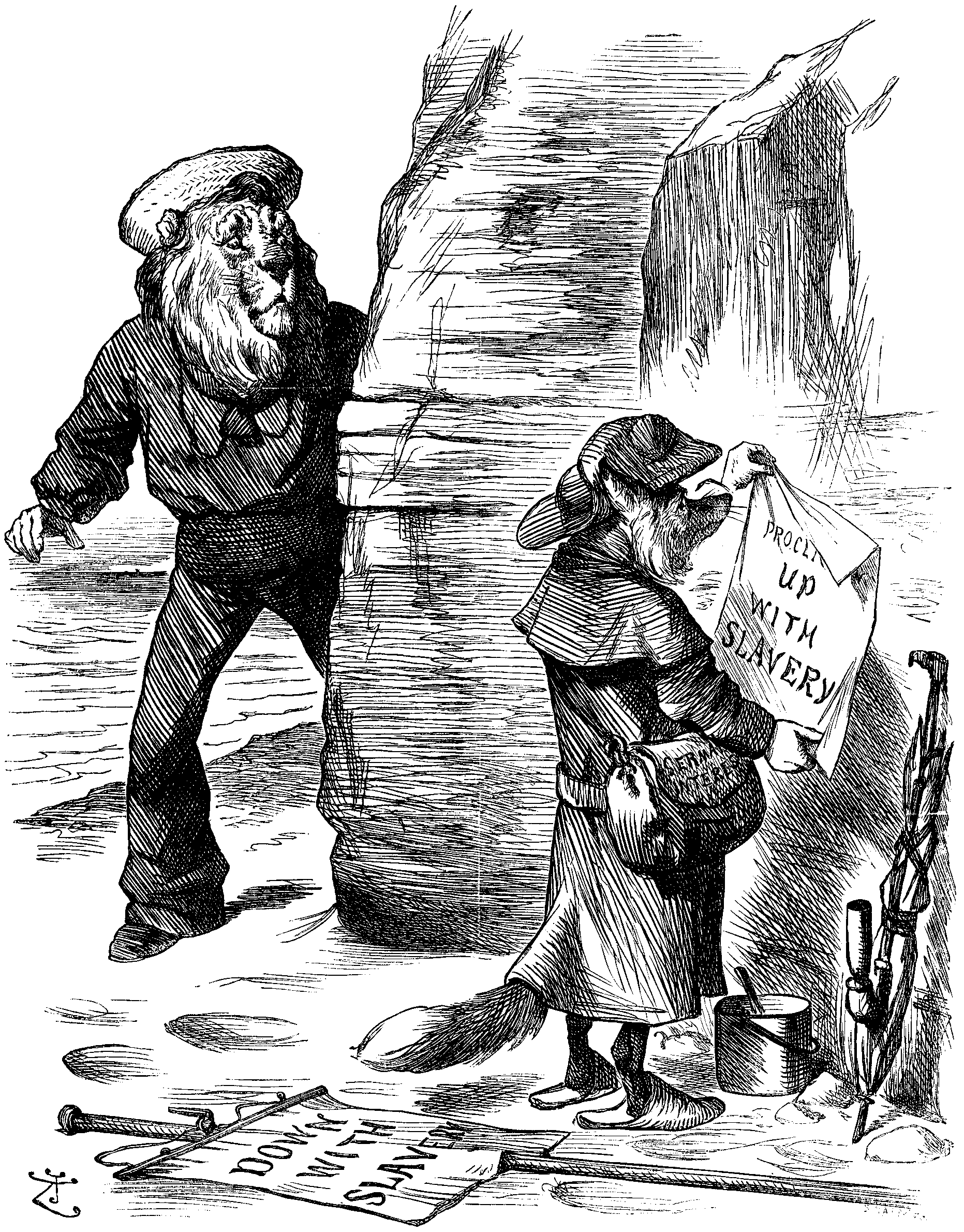
THE BRITISH LION AND THE GERMAN FOX; OR, A MISTAKE SOMEWHERE!
(
Vide Cartoon, Nov. 17, 1888.
)
THE PLEASURES OF GETTING UP EARLY TO GO "CUBBING."
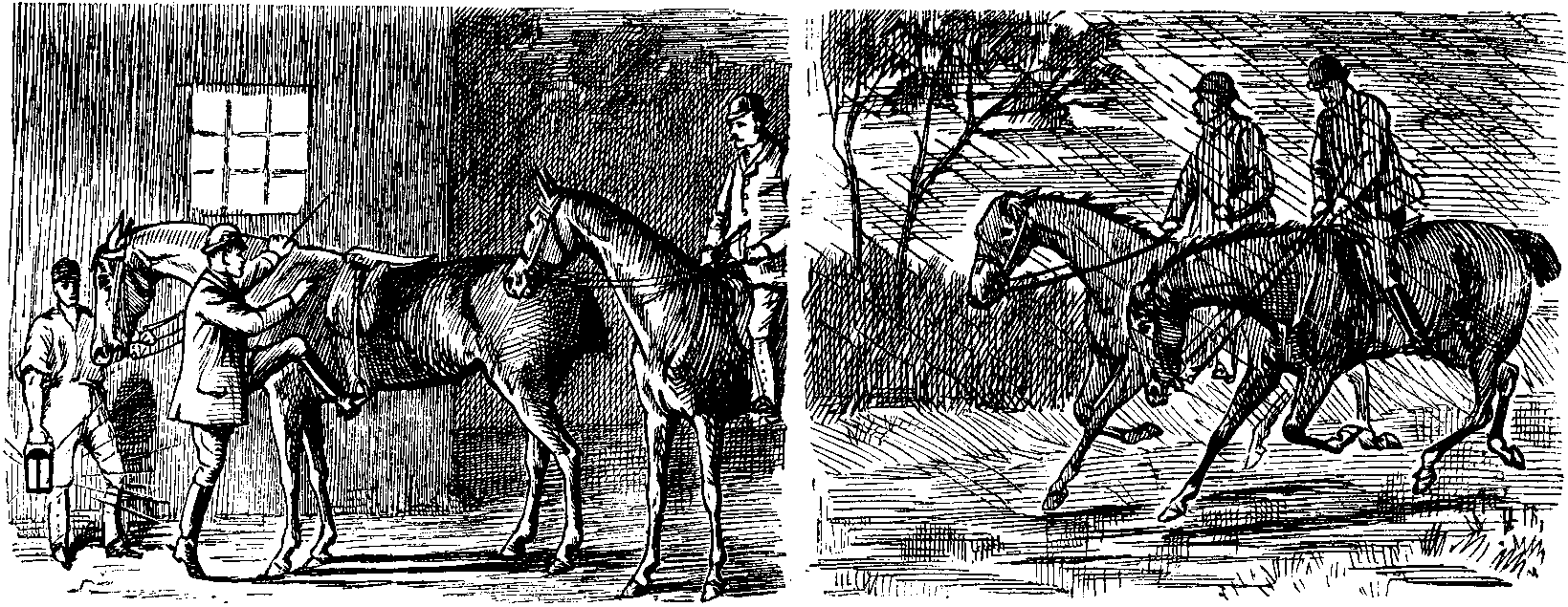
1. The Meet was to be at Cropper's Gorse, 5:30. At 4:30 Thompson called for me. He said he knew the way perfectly. 2. After we had gone a couple of miles, a steady rain came on. I didn't think much of the beauties of early morning.
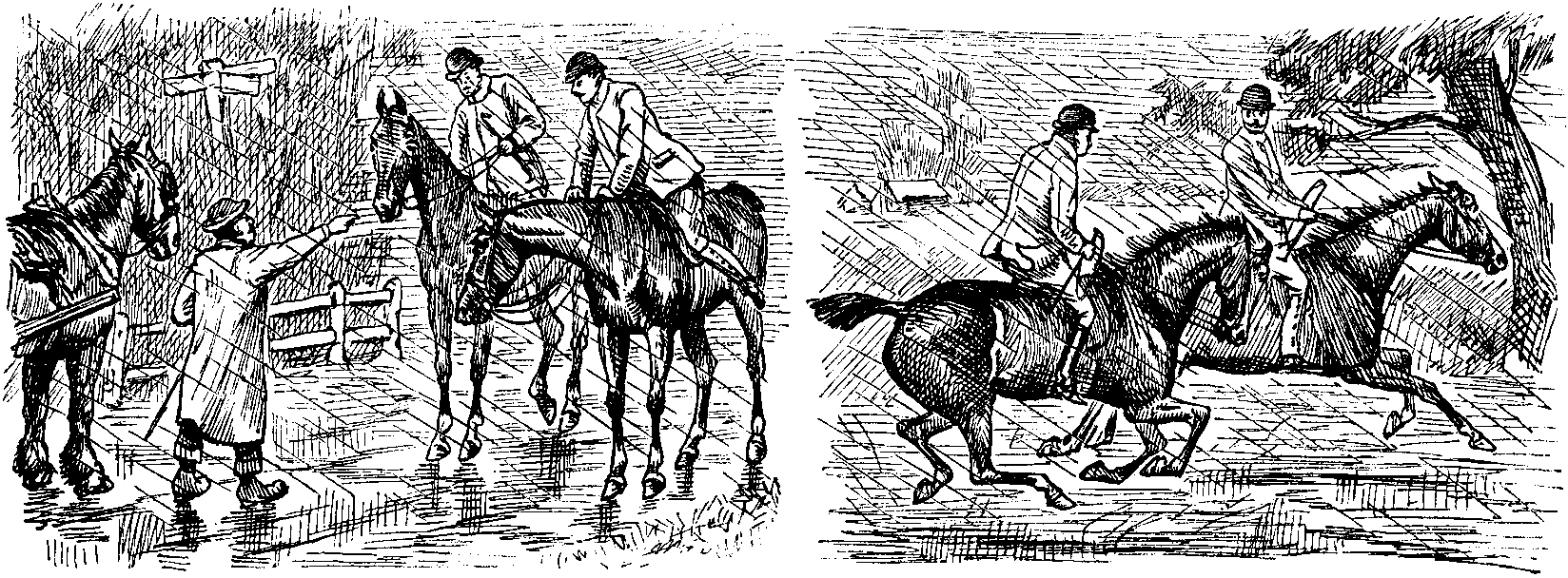
3. "Well, my man," said Thompson, "seen the hounds? This is Cropper's Gorse, I suppose?" "Noa, Sur; this be Cropper's Plantation. The Gorse be four miles over yonder!" 4. "Extraordinary thing I should have been mistaken," said Thompson. "Never mind. Let's canter on, and we'll see some fun yet."
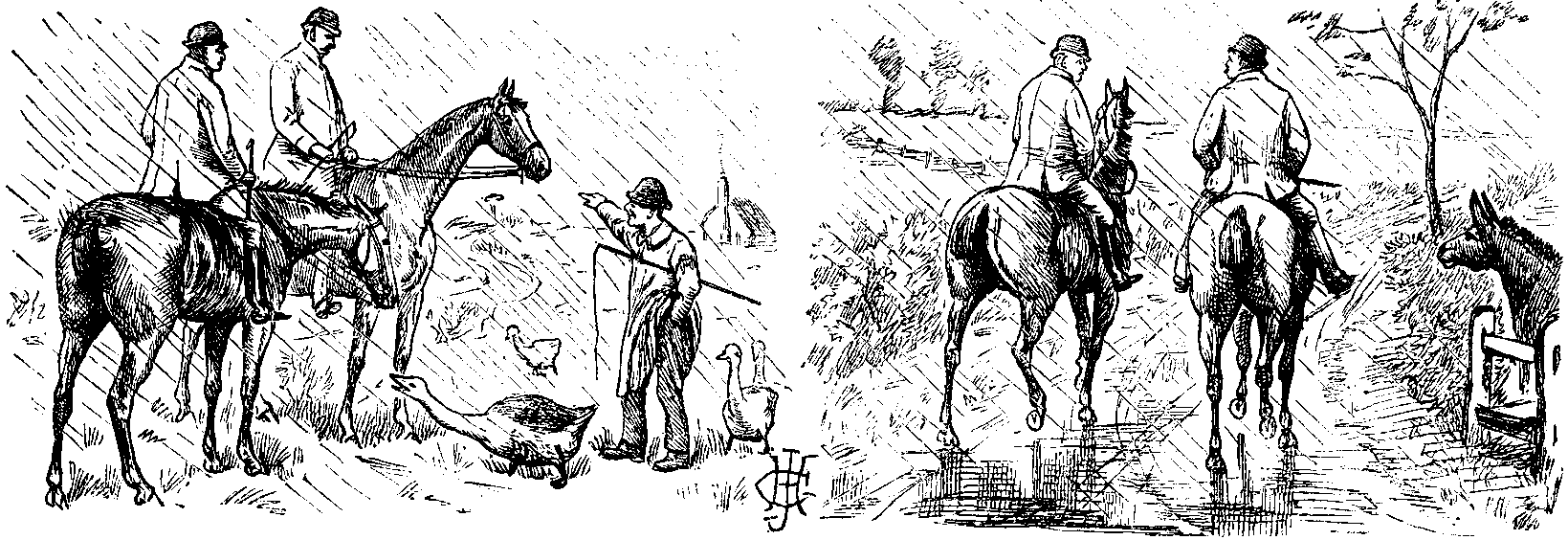
5. "Hi! my boy, is this Cropper's Gorse?" asked Thompson. "Noa, Sur. This be Cropper's Common. The Gorse be five miles over yonder!" 6. Then Thompson had the decency to say, "Let's go back and have breakfast."