Volume 93 — ESSENCE OF PARLIAMENT.
Reading edition
EXTRACTED FROM THE DIARY OF TOBY, M.P.
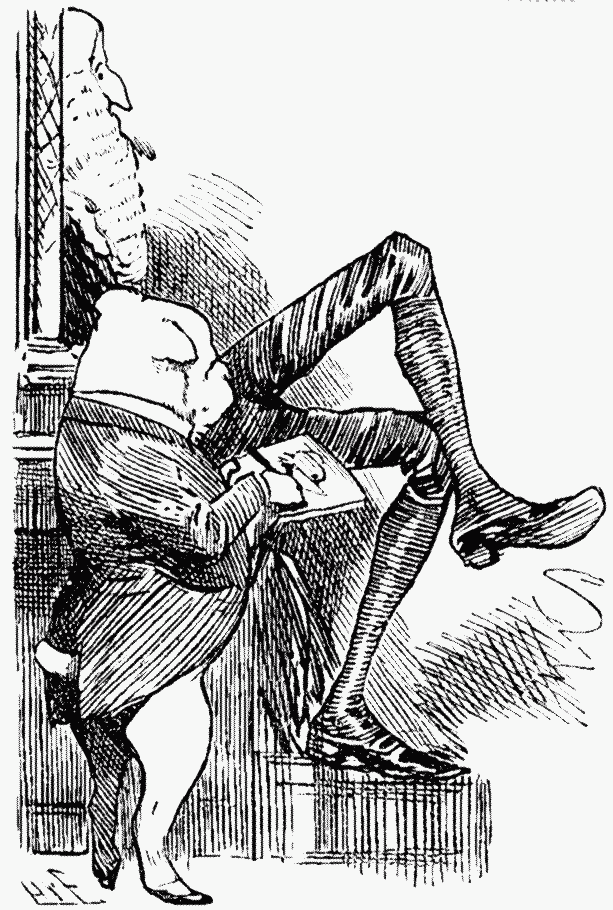
House of Lords, Monday, August 15.—Some ordinary business on Agenda, but importance dwarfed by imposing demonstration made by Wemyss. Session really coming to a close. Wemyss has done his share of speech-making. According to Denman has appropriated more than fair share. Nevertheless, he finds in Mid-August quite an accumulation of odds and ends omitted from speeches prepared during last two years. If he doesn't work them off this Session will be out of date by next. That no insuperable objection to delivering speech in House of Lords; still, freshness and appropriateness not altogether without weight. How shall he dispose of the accumulated treasure? Thought once of publishing it in single Volume, call it "Jubilee Thoughts, by Earl of Wemyss;" or "Peerless Wit and Wisdom, by a Peer." Found publishers not anxious to undertake proposal. Jubilee, they said, beginning to pall, too many books about of Wit and Wisdom. Happy thought! Why not throw the scraps into form of speech, and favour House of Lords with it? Some of the topics little ancient and continuity of thought difficult to simulate; but propose to "call attention to Socialistic legislation during the Sessions of 1886 and 1887." That will cover everything.
So arranged, and to-night, as soon as immaterial business disposed of, Wemyss rose, and began his speech. Audience of eighteen, to begin with. Gradually diminished, till there remained, for fifth and final peroration, only four. Was a tremendous speech—bloodcurdling, convincing, and delivered with much animation. Never was a nation in such peril. Before Great Britain lay only Black Night and Despair.
Might have been expected that, when Wemyss sat down, there would have been eager competition for precedence to take up the thread of debate so solemnly launched. But he'd overdone it. So terrified the few Peers present, that none could speak. Looked at each other with fitful, fearful glances. One by one they rose, and tremblingly tottered out. Wemyss left in solitary possession of House, filled only with echoes of his fearsome jeremiad. Thus closed this memorable one-speech debate. Lord Chancellor retaining presence of mind sufficient to adjourn the House, Wemyss picked up his notes, and went forth, probably to prepare for his own flight from the doomed country.
Business done.—In Commons, Mines Bill in Committee.
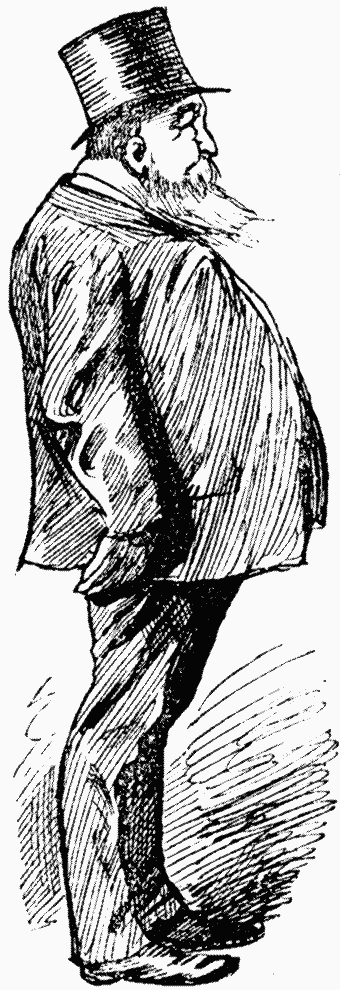
Columbus, M. P.
House of Commons, Tuesday.—John Manners in his place to-night. Everyone glad to see him back again; Liberals, Conservatives, Dissentients, Unionists, whatever we be, all unite in saying a friendly word to John on his convalescence.
Another arrival greeted with more mixed feelings. Brunner, flushed by his great victory in Northwich, comes up to be sworn in. Tremendous cheering on Liberal side. Dead silence among Ministerialists. Old Morality gazes up at glass roof with preoccupied air; thoughts far away from Westminster or Northwich either. Caine, looking on from Bar, turns his back, and marches forth.
"Another blessing in disguise," says he. "I think now I'll go off to Japan, and see how they're getting on with their projected Parliamentary Institutions. Might get some hints for forming our National Party."
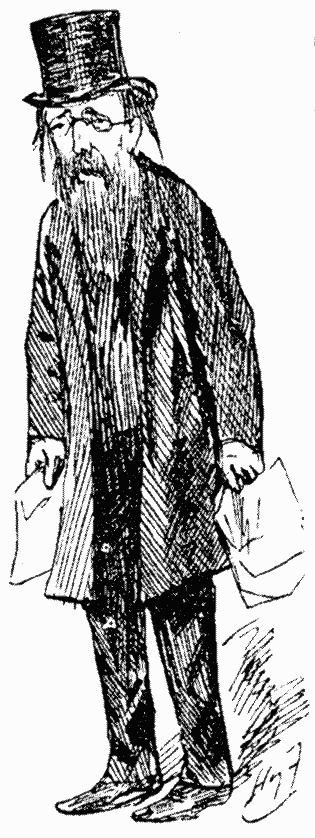
T. B-rt.
Crimes Bill on again. Committee pegging away far into tomorrow. A good business-like debate, but a little dull. Minority of between seventy and eighty industriously tried to carry Amendments moved by Burt and others. Majority, varying between 120 and 140, thinking matter over in privacy of smoke-room, news-room, and terrace, come up with minds fully made up on points of detail, and always vote with Ministers. Burt, beaten again and again, comes back to scratch, looking, towards half-past two in the morning, a little broken down, but still full of fight.
Business done.—Mines Bill.
Thursday.—House of Lords deserves well of its country. Is setting Commons example it will do well to follow. On Monday, as noted, Wemyss made long speech, and, no one rising to follow in debate, House forthwith adjourned. Same thing happened on Tuesday when Denman introduced beneficent proposals for limiting speeches. Met with success beyond his wildest expectations. Had asked that duration of speeches might be strictly limited. Lords with one accord forthwith accepted principle. Applied it so strictly that, as Lord Chancellor in his epigrammatic way put it, "speeches were limited to silence." In fact no one spoke at all. Denman had debate all to himself, and House adjourned. So pleased with this arrangement that it was carried a step further to-night. Only one speech was made. Was delivered from Woolsack. So brief may be quoted verbatim:—
"House will now adjourn," said Lord Chancellor.
That was all, and noble Lords dispersed.
"Most pleasant, informing and useful sitting we've had for many Sessions," said Buckingham to Chandos.
"Allons!" said Stratheden to Campbell, "let us go and visit those foolish Commons who waste their time in much speaking."
Commons crowded and animated. Evidently no prospect here of foregoing speech-making. Sixty-eight questions on paper to begin with. George Campbell, his mind athirst for information, wanted to know from President of Board of Trade what was the meaning of "allotment." Ritchie, with elbow leaning negligently on box, and legs crossed, mockingly referred the ingenuous Knight to Johnson's Dictionary. Curiously reminiscent of Mephistopheles bantering Faust, was Ritchie as he looked across at Campbell.
Old Morality announced abandonment of various Government measures, dropping tear over each. Emotion became monotonous towards tenth tear, and Opposition rudely laughed. But Old Morality had his revenge later. Quite a long time since he has "pounced." But as midnight drew on, and little progress made, began to grow desperate. Chamberlain suddenly turned upon his allies, attacked them in rattling speech. Even voted against them when Division called. Government majority went down from customary hundred to alarming forty-two. Then Old Morality, goaded to madness, "pounced" right and left. Harcourt stirred up Goschen with long pole; Balfour yawned ostentatiously when Dillon convicted him of ignorance of Irish affairs; Parnell pounded away; T. W. Russell withdrew from alliance with Government; Tim Healy chuckled; Joseph Gillis alternately jeered and groaned. But Old Morality came out victor. Whenever lull occurred he moved Closure, and so presently wound up sitting.
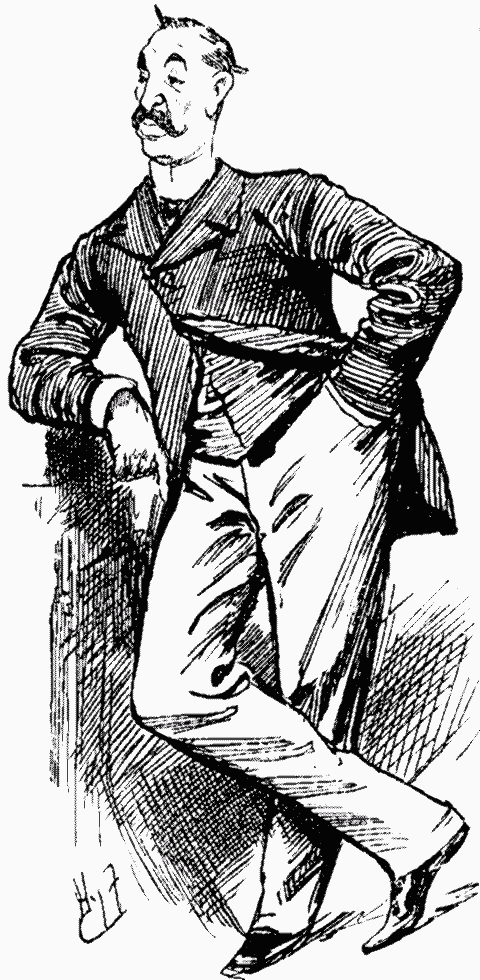
Mephistopheles, M. P.
Business done.—Split between "Dissentient Liberals" and Government.
Friday.—House not so full to-night. Rumour about that there was something to fore in Lords. Members migrated thither. Only a few Peers present. Markiss rose, and in matter-of-fact tone, as if offering observation on state of weather, announced Proclamation of National League. Fifteen Peers present successfully controlled emotion, and passed on to ordinary business. Commons, penned in Gallery above, and crowded at Bar below, rushed to own House, carrying news with them. Arrived just in time to hear Hanbury question Government on quite other subject. Hanbury's hawk eye had discovered in the Estimates vote for salary of Master of Hawks. Wanted to know who he was, what he did for a living, and how many hawks he might have to deal with in course of year. Frank and somewhat startling disclosure from Treasury Bench. The existence of Master of Hawks admitted; regular payment of his salary confessed. Only hitch was that there were no hawks. Still, there have been hawks in time of Stuarts. An impecunious nobleman had obtained office, with reversion to eldest son; and so, through the ages, unsuspecting taxpayer had subscribed salary. House so ashamed to discover its remissness as custodian of Public purse, that, by common consent, subject dropped. But silent resolution taken that noble Hawk-master shall have drawn his salary for last time.
Then Balfour confirmed statement made in other House about Proclamation of National League. Announcement received, on the whole, in grim silence, also not without its portent. House then took up Allotments Bill, with which it wrestled in business fashion for rest of sitting.
Business done.—National League Proclaimed.