Volume 152 — FRANCIS COWLEY BURNAND,
Reading edition
1836—1917.
EDITOR OF "PUNCH," 1880—1906.
Hail and Farewell, dear Brother of the Pen, Maker of sunshine for the minds of men, Lord of bright cheer and master of our hearts— What plaint is fit when such a friend departs? Not with mere ceremonial words of woe Come we to mourn—you would not have it so; But with our memories stored with joyous fun, Your constant largesse till your life was done, With quips, that flashed through frequent twists and bends, Caught from the common intercourse of friends; And gay allusions gayer for the zest Of one who hurt no friend and spared no jest. What arts were yours that taught you to indite What all men thought, but only you could write! That wrung from gloom itself a fleeting smile; Rippled with laughter but refrained from guile; Led you to prick some bladder of conceit Or trip intrusive folly's blundering feet, While wisdom at your call came down to earth, Unbent awhile and gave a hand to mirth! You too had pondered mid your jesting strife The deeper issues of our mortal life; Guided to God by faith no doubt could dim You fought your fight and left the rest to Him, Content to set your heart on things above And rule your days by laughter and by love. Rest in our memories! You are guarded there By those who knew you as you lived and were. There mid our Happy Thoughts you take your stand, A sun-girt shade, and light that shadow-land. R.C.L.
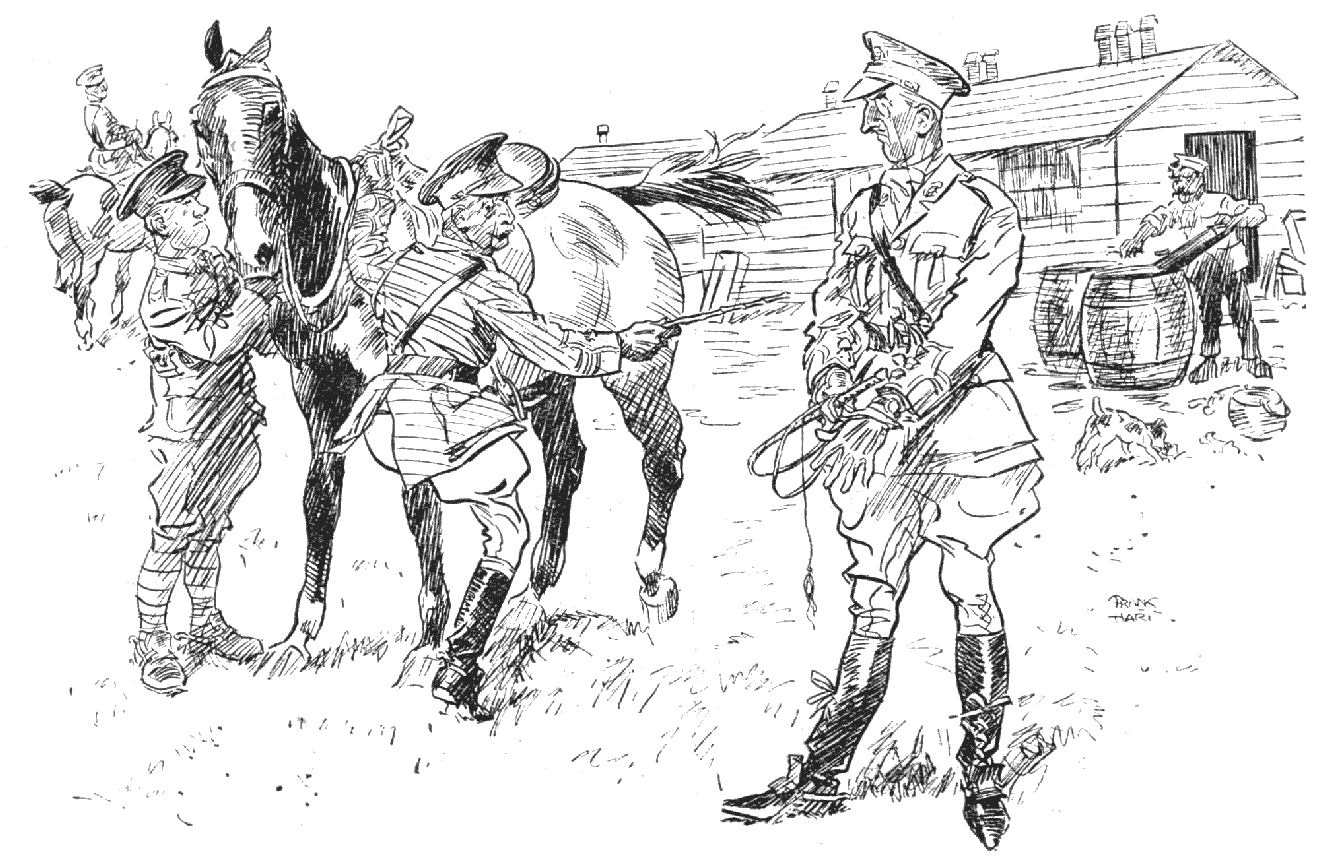
Captain (newly attached). "ER—IS THERE ANYTHING YOU'D LIKE ME TO GET ON TO, SIR?"
Major (regimental economist). "AH, YES! I WISH YOU'D JUST LOOK AFTER THE BONES AND DRIPPING."
CHILDREN'S TALES FOR GROWN-UPS.
VIII.
SOUR GRAPES.
"I have no doubt," said the fox, after a last futile attempt to reach them, "that the grapes are sour;" and he went off slowly down the hill.
At the bottom of the hill a barrel was lying, and the philosopher was filled with new hope. "The very thing," he said to himself.
He put his shoulder to the barrel and pushed and panted and panted and pushed till he got it nearly to the top. But it broke away at the last moment and rolled down the hill.
He rolled it up again and again perseveringly. He tried as often as Sisyphus. He tried indeed just once more, because at last he succeeded and the barrel was placed on end under the vine.
Joyfully he climbed on the barrel and bit at the fruit.
Then he jumped down with a bark of disgust.
The grapes were sour.
"Mutiny aboard a German U-boat, aided by the demolarizing effects of a submarine bomb, made the diver a prize of the British Admiralty and her crew the willing prisoners of a patrol boat."—Ottawa Evening Journal.
This kind of bomb—the demolariser—is just what we want to draw the enemy's teeth.
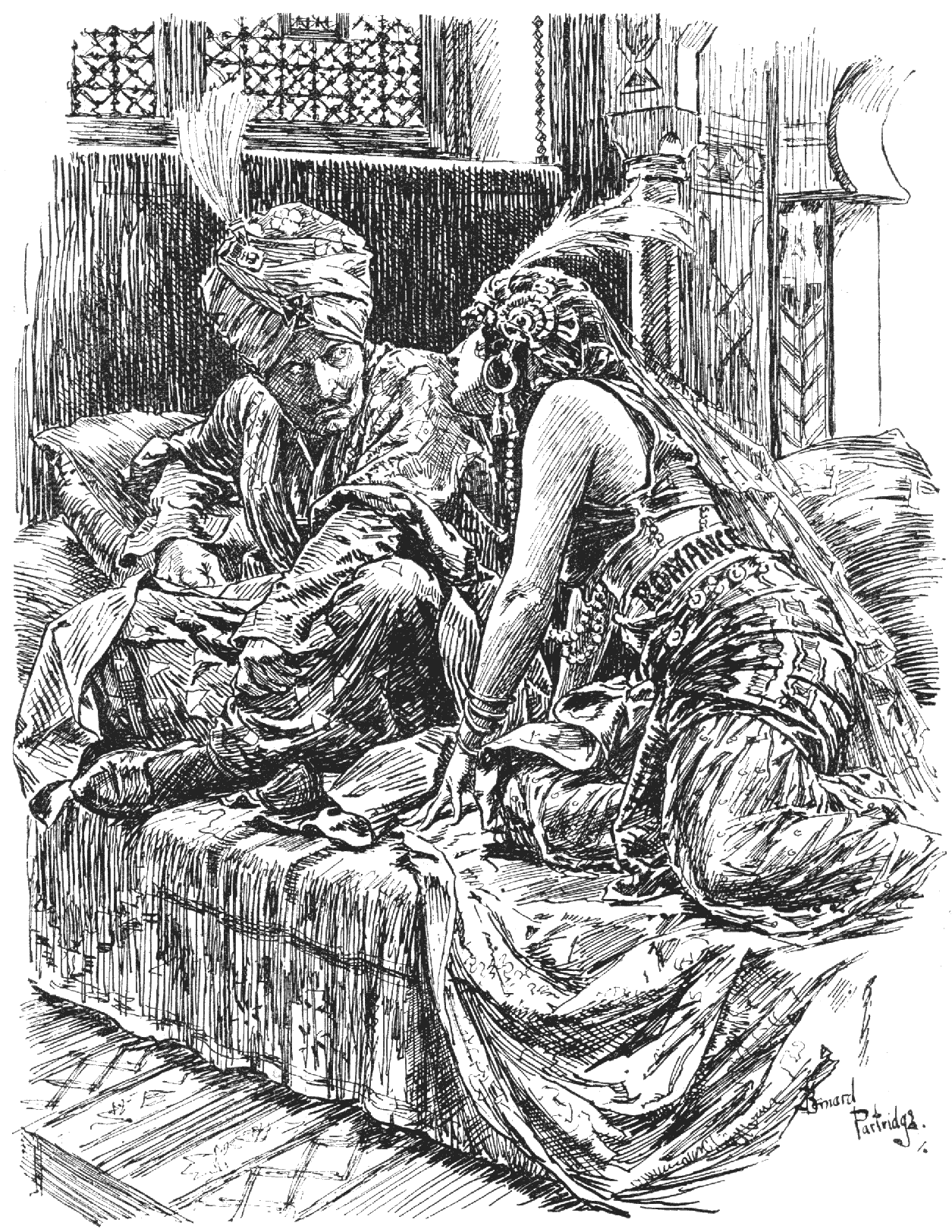
THE END OF THE THOUSAND-AND-ONE NIGHTS.
THE OFFICIAL STORY-TELLER (to Wilhelm-al-Raschid). "I CAN'T THINK OF ANY FRESH FAIRY TALES. WOULD YOU LIKE A TRUE ONE NOW?"
[April 30th was the thousand-and-first day of the War.]