Volume 101 — A LOVER'S COMPLAINT.
Reading edition
(Thoroughly New Style.)
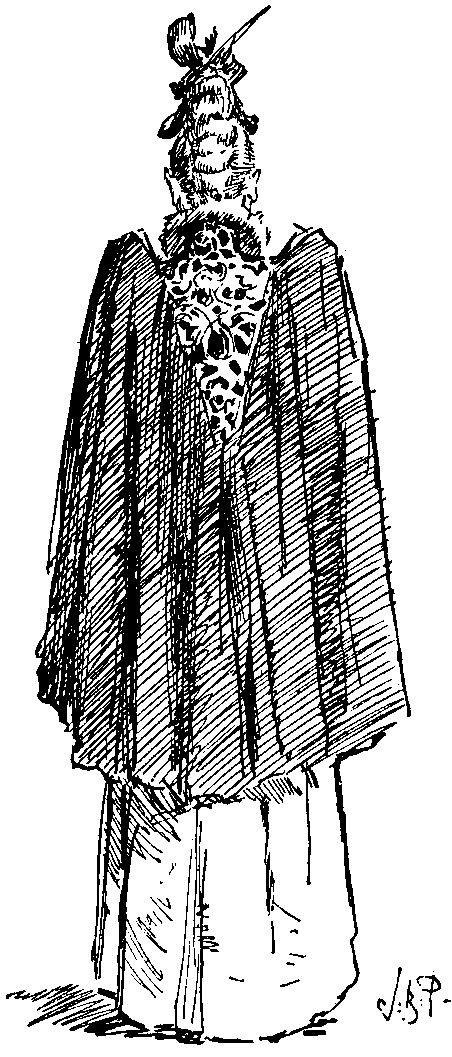
Belinda dear, once on a time I doted on your every feature, I wrote you billets doux in rhyme In which I called you "charming creature." No lover half so keen as I, Than mine no ardent passion stronger, So I should like to tell you why I cannot love you any longer. When I was yours and you were mine, Your hair, I thought, was most delightful, But now, through Fashion's last design, It looks, to my taste, simply frightful! Though why this should be I don't know, For I can think of nothing madder Than hair decked out in coils that go To make what seems to be a ladder. Unhappy day, when first you dressed Your tresses thus—how you must rue it! For you yourself, you know, confessed It took you several hours to do it. Oh, tell me, is it but a snare Designed to captivate another, Or do you merely bind your hair Because you're bidden by your mother? Again—you will not take it ill— You are, my dear, distinctly dumpy: A flowing cape it's certain will Well—not become one short and stumpy. Yet since, although you are not tall, You wear a cape, you may take my word That in the mouths of one and all You have become a very byword. So this is why my love has fled— If ever there should come a season When you shall show some sense instead Of such an utter lack of reason, If I should still be fancy free, Why then it's only right to mention That, if you care to write to me, I'll give your claims my best attention.
A NOTE.—In Black and White for August 8 there is a large picture representing a group of English Dramatists, amongst whom please specially notice a figure intended for Mr. W.S. GILBERT (it was thoughtful and kind of the artist to put the names below), who is apparently explaining to a select few why he has been compelled to come out in this strange old coat and these queer collars. All the Dramatists look as cheerful as mutes at a funeral, their troubled expression of countenance probably arising from the knowledge that somewhere hidden away is a certain eminently unbiassed Ibsenitish critic who has been engaged to do the lot in a lump. From this exhibition of collective wisdom turn to p. 203, and observe the single figure of a cabman, drawn by an artist who certainly has a Keene appreciation of the style of Mr. Punch's inimitable "C.K."
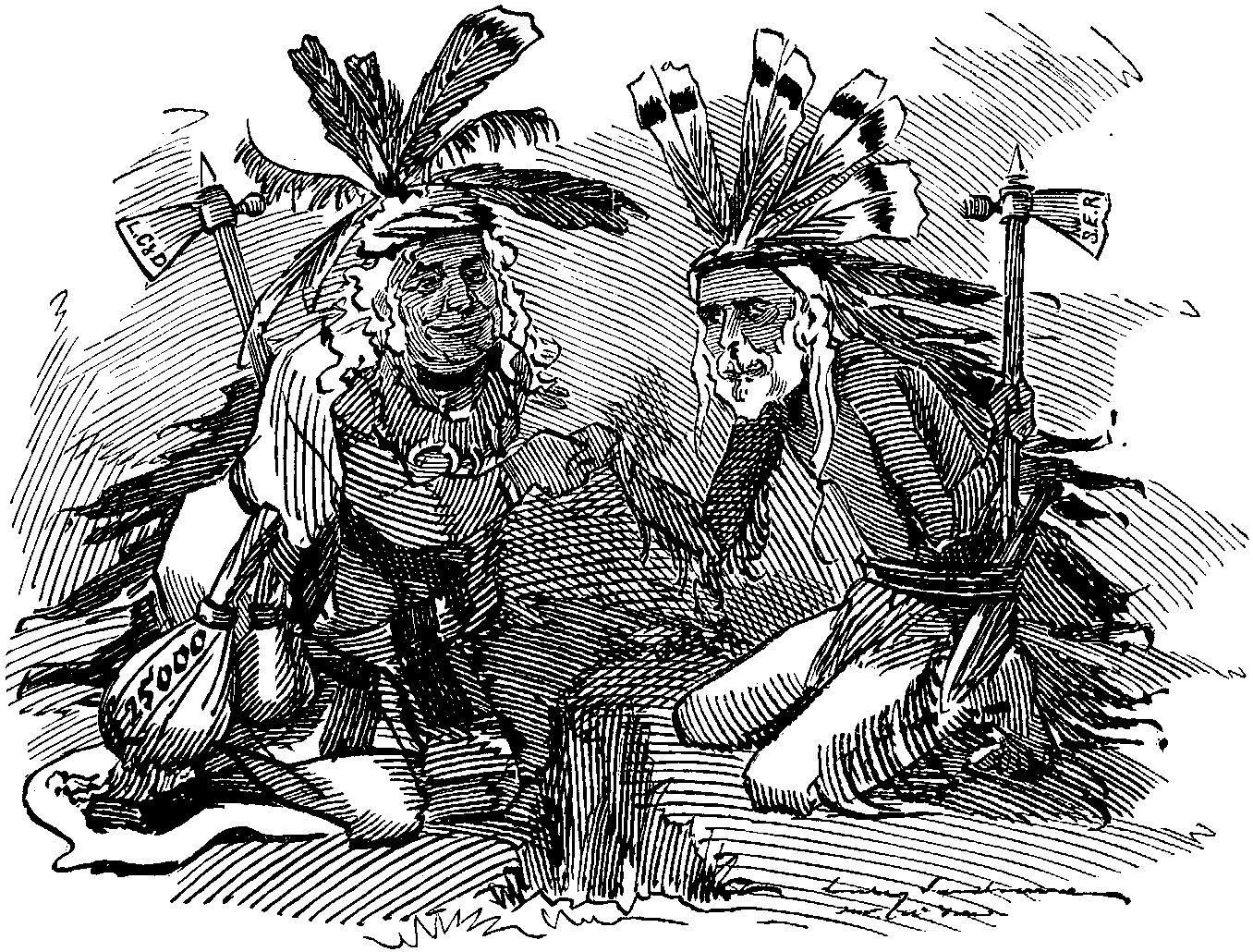
"BURYING THE HATCHET."
(
Vide Report of the L.C. & D. Chairman's Speech, "Times," August 6.
)