"SIR BAT-EARS."
Reading edition
Sir Bat-ears was a dog of birth And bred in Aberdeen, But he favoured not his noble kin And so his lot is mean, And Sir Bat-ears sits by the almshouses On the stones with grass between. Under the ancient archway His pleasure is to wait Between the two stone pineapples That flank the weathered gate; And old, old alms-persons go by, All rusty, bent and black, "Good day, good day, Sir Bat-ears!" They say and stroke his back. And old, old alms-persons go by, Shaking and well-nigh dead, "Good night, good night, Sir Bat-ears!" They say and pat his head. So courted and considered He sits out hour by hour, Benignant in the sunshine And prudent in the shower. (Nay, stoutly can he stand a storm And stiffly breast the rain, That rising when the cloud is gone He leaves a circle of dry stone Whereon to sit again.) A dozen little door-steps Under the arch are seen, A dozen aged alms-persons To keep them bright and clean; Two wrinkled hands to scour each step With a square of yellow stone— But print-marks of Sir Bat-ears' paws Bespeckle every one. And little eats an alms-person, But, though his board be bare, There never lacks a bone of the best To be Sir Bat-ears' share. Mendicant muzzle and shrewd nose, He quests from door to door; Their grace they say—his shadow gray Is instant on the floor, Humblest of all the dogs there be, A pensioner of the poor.
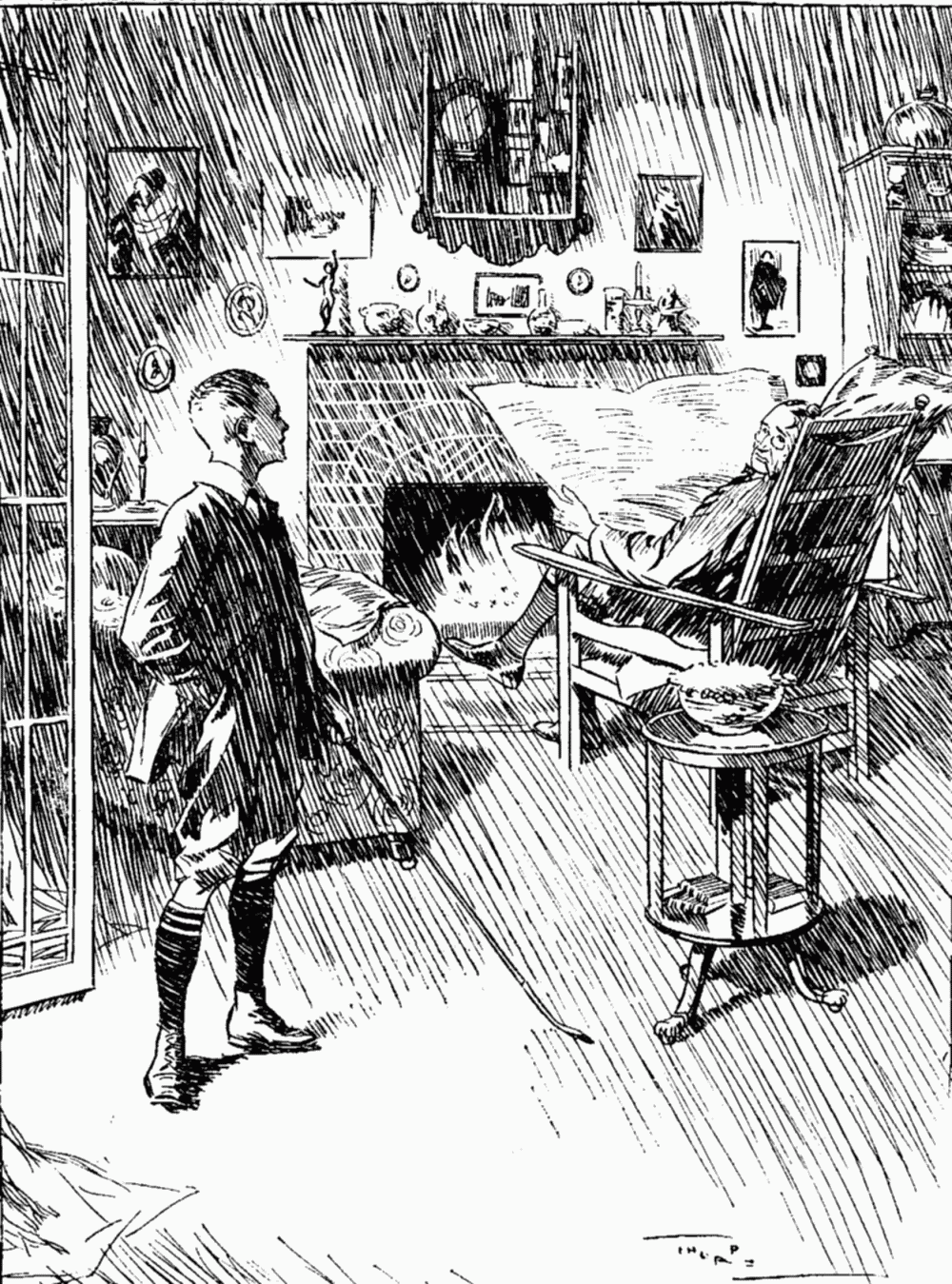
Harold (who has had the worst of an argument with his father). "All right, then, you don't get those six strokes I was going to give you this afternoon."