Volume 109 — PLAYING AT WORK.
Reading edition
A New Morality.
["The working woman of to-day, be she journalist, teacher, or what not, is suffering terribly from fierce competition, and this is largely due to the fact that women who are merely working for pleasure enter the labour market."—"An Old-Fashioned Woman" in the "Daily Chronicle."]
When the Curse of Labour was laid on Man, Toil's visage glowered grimly, Alleviations of Fate's stern plan, The softening spirits in rear and van Of Labour's march through our Life's brief span, If seen, were glimpsed but dimly. Weariness followed, and dulness gloomed, On the path of mortals to hunger doomed, And poverty the spirit entombed As in all too premature charnel; The ache of limb and the fret of brain, The slow weak pulse, and the long dull pain, Grew all familiar; the spirit-strain, And the sullen revolt again and again, Of the spiritual and carnal. But though men knew that work and woe Were all too closely neighbour; One curse of Labour they did not know; The black blight coming late and slow, Of the fools who play at Labour! Labour! Faith,'tis no passing play But the pack-horse burden day after day To be grimly gravely lifted. A leaden weight, and a mill-wheel round, By the player at labour but seldom found, Or the amateur—though gifted. Who has not seen a street-child run To turn an organ-handle—for fun— With gay, erratic vigour? But the grinder who turns at it day by day Finds Ah che la morte no pleasant play,— He works at it—-"like a nigger." So "well-to-do women who crowd the ranks" Of Labour are playing but childish pranks; They are butterfly despoilers Of the honeyed hives of the working bees; They lower the wage and lessen the ease Of the true fate-destined toilers. [A] "Work for mere love!" So the butterflies say, (Though they commonly stoop to the casual pay), Well, love is blind—this sort of it. To teach for pin-money possibly's fun To those who're but dabblers when all is done, But the workers, when wages go down with a run, Can hardly see the sport of it. To play at philanthropy's mischievous, much, For sciolists mar whatsoever they touch; What if some Flower Girl Mission Destroy a trade, which seeks other lands, Or throw out of work some thousands of hands? Philanthropy hath no vision Save of its pretty and picturesque fad; And the destitute drudges, angry and sad, Whom deft flower-mounting once fed and clad Shall find redress a rarity. Don't play at Reform, it you love your neighbour! But well-to-do women, your "playing at Labour" Works worse than playing at Charity! Work? Well doubtless 'tis pleasant and "funny" For well,—"just a little pocket-money," To ape the bees who must make the honey Day in, day out, for a living. But workers who labour for "bread and cheese," And not as a change from mere lady-like ease, Regard all such amateur, sham, busy-bees As needing, not praise, but forgiving. What if your work-dabbling, now quite the rage, Cut down the genuine workwoman's wage, Or pinch the poor ill-paid school teacher? "Every woman should work all she's able"? Maybe you need a new species of fable, A sager than copy-book preacher. "The Ant and the Grasshopper"? There lurketh Cant! If Grasshopper labour-spurts starve the poor Ant. If well-to-do woman work helps to spread want, This new-born blind zeal sense should bridle. There's fit work for all, some with spade, some with tabor; But Madam, if feminine "playing at Labour," Whilst needless to you, wrecks one workwoman neighbour, By Jove, you had better be idle!
"Alas, poor Yorick!"—Harry Payne, the last of the good old Joey-Grimaldi school of Pantomime Clowns, "joined the majority," Friday. Sept. 27. For many years past the Clown's Christmas welcome, "Here we are again!" has been omitted, and, in the future, we are not likely to hear the exclamation revived. Farewell, Harry Payne, "a fellow of infinite jest, and of excellent fancy!"
England and America.—Successful Marlborough Match, following upon unsatisfactory Dunraven race. Miss Vanderbilt decidedly winning. Entente cordiale restored.
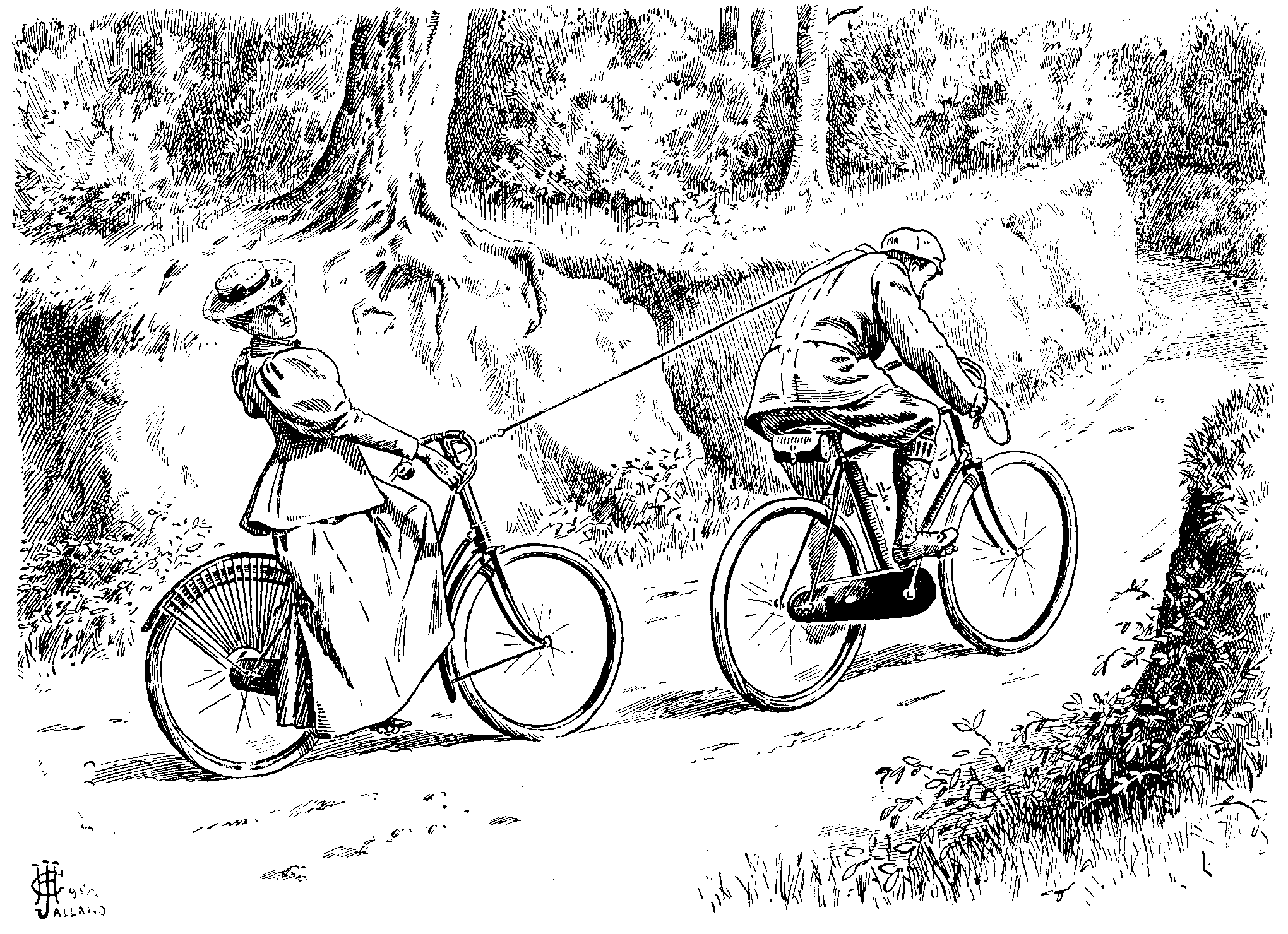
A MOOT POINT.
Mrs. Brown (on her honeymoon). "Oh, aren't you glad, Darling, we have come this delightful Tour, instead of going to one of those stupid Foreign Places?"
[Darling is not quite sure about it, as the hills are of terrible frequency, and, naturally, he tows his bride up every one.