Volume 107 — ESSENCE OF PARLIAMENT.
Reading edition
EXTRACTED FROM THE DIARY OF TOBY, M.P.
House of Commons, Monday, July 16.—The Blameless B. is translated into the Breathless Bartley. Of eleven pages of Amendments to Budget Bill standing for consideration when House met to-day, not less than three contributed by this particular B. Embodied readjusted scale of graduated taxation. Only objections to it presently stated by Squire of Malwood: (1) It would necessitate total reconstruction of Bill (2) resulting in loss of £643,000; (3) whole question had been thoroughly threshed out in Committee. To raise it again at eleventh hour seemed too much to ask even in connection with Budget Bill.
Nevertheless Bartley, not yet breathless, moved his multitudinous Amendment. Resumed his seat with consciousness of man who had done his duty. The Squire would get up to answer him; debate would follow; at least two hours would be pleasantly occupied. Instead of Squire, Attorney-General rose. "Well," said Blameless, throwing himself into attitude of attention, "let's hear what he has to say."
Turned out to be exceedingly little. "Government scale has been attacked and defended many times," said Attorney-General. "I do not think it necessary to defend it again; but," here he leaned on the table with engaging look at the now Breathless Bartley, "the hon. gentleman can take a division if he thinks fit."
Bartley sat and audibly gasped. Jokim gallantly protested against this treatment of his hon. friend; threatened to move adjournment of debate. Prince Arthur sent for; arrived almost as breathless as Bartley; thunder boomed, lightning flashed round head of Attorney-General, who is always finding himself astonished. "The hon. and learned gentleman," said Prince Arthur, with delightful assumption of anger, "has abused the situation. The Opposition have no means of compelling him to talk sense, but talk he must."
Squire of Malwood, who had fled before prospect of long speech from Bartley, hastily brought back. Don't know where incident would have ended had it not been for Kenyon-Slaney. Finding opening he slipped in. Threw himself into easy oratorical attitude; proposed to consider principle of graduation adopted in Bill. Would do so under three heads: injustice to the poor, injustice to the middle-class, injustice to the rich.
This too much even for Opposition. With groans of despair they rushed into Division Lobby; Bartley's scheme negatived by majority of 62.
Business done.—Budget Bill passed Report stage.
Wednesday.—St. John Brodrick sitting on front Opposition Bench through Committee of Supply on Army Estimates this afternoon, invested neighbourhood with unwonted air of fashion. Not that there is, as a rule, any lack of style on part of Leaders of Opposition regarded as a body. Only something, je ne sais quoi, about Brodrick that suggested profoundest depths of Poole. Couldn't help complimenting him on his turn out.
"Evidently you spare no expense," I said; "though why even a millionaire should wear an overcoat a day like this seems wicked waste of property. Hope you are not growing desperate in anticipation of Death Duties; spending your money recklessly so that Harcourt may be disappointed when, for taxing purposes, he comes to aggregate your property?"
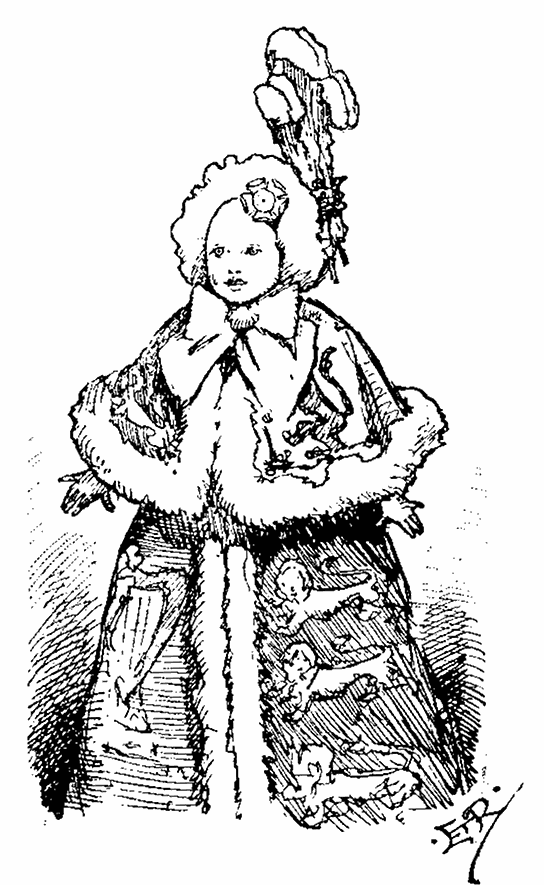
"The Young Wales Party."
"My dear boy," said Brodrick, giving the overcoat a dexterous lift by the lappels that added fresh grace to its fit at the back of the neck, "you're out of it altogether. This is the thirteen-and-sixpenny coat supplied to Tommy Atkins in which,—following the advice of Dr. Johnson, wasn't it?—I, as I told the House the other day, took a walk down Bond Street. The surtout underneath, which I will fully display when the House gets a little fuller, cost seventeen-and-six net. You will observe it is so made that you can button it across and so save a waistcoat. If you must have a waistcoat, we can do it at eight-and-ninepence. As for trousers, these cost me thirteen shillings." (Here he stretched out and fondly regarded a manly leg.) "If I had taken a couple of pair, cut at the same time you know, I could have had the two for 25s. I see your eyes fixed on the boots. As you say, the shape of the foot may have something to do with it. But apart from that, the article is equal to what you pay thirty-five shillings for in Regent Street or Piccadilly. Eleven-and-ninepence was the figure. Misfits, very popular with privates newly joined, knock off the odd ninepence. Of course I don't wear this suit every day. Can't afford that; put 'em on whenever House in Committee on Army Supply or debate going forward on Army matters. It encourages Cawmell—Bannerman, you know; helps Woodall in getting his clothing vote; and, I believe, is rather liked by Tommy Atkins."
Business done.—Squire of Malwood announces programme for remainder of Session. A mere nothing. Only, as Prince Arthur says, in view of number of Bills and their contentious character, more like what we are accustomed to at beginning of Session, than to have dumped down in what should be its last month.
Thursday.—"Joseph," said the Member for Sark, dropping into one of his tiresome didactic moods, "would do well in any circumstances. Whether in Upper Egypt or Lower, he was sure to come to the top of the well, however securely his brethren might have packed him in its lowest depths. But, regarding him just now as he criticised the Squire's arrangements for the Session, I could not help thinking what a loss the auction-room has only partially survived by his turn into the field of politics. If in early life, or even middle age, he had only taken to the rostrum, the shade of the much over-rated Robins would have been dimmed in glory. Observe how well he looks the part. See with what unconscious effect he produces a stumpy piece of lead pencil, and looks round for bids. Listen to the clear sharp notes of his voice. 'What shall we say, gentlemen, for the Equalisation of Rates Bill? How many days will you give for it? Name your own time, gentlemen. There is no reserve. Shall we say six days? Does the tall, somewhat stout gentleman with a white waistcoat, on the Treasury Bench, shake his head? Very well, we will say four days. Going at four days;' and the pencil, scratching out six, substitutes four. This may seem very easy when it's done; but it's art, Toby, even genius. If you think it's easy for a man discussing State business, suddenly but completely to invest the high court of Parliament with the tone and atmosphere of an auction-room, just reckon up how many other men of first rank in public life could do it. Not to go further afield, could Prince Arthur manage it, even after a week's training? Very well; then don't minimise a successful effort because, thanks to the commanding influence of native talent, its accomplishment seems easy to a particular person."
Business done.—Hicks-Beach, complaining that Ministers have dropped a large number of Bills for lack of time to pass them, and asserting that the time remaining at their disposal for passing the poor balance is too short, reduces it by three hours, in order that he and his friends may lament the fact.
Friday.—House heard with keen satisfaction that Szlumper is around again. Not having seen in the newspapers any telegrams from him lately, there was vague idea that he had succumbed to his exertions on occasion of the happy event at White Lodge. Perhaps he was a little fatigued, for Szlumper, in addition to being Mayor of Richmond, is almost human. No man born of woman could with impunity fire off such a succession of telegrams as on that memorable day Szlumper dealt out to his Sovereign, the Heir Apparent to the Throne, the Crowned Heads of Europe, and his ducal neighbours at the White Lodge. But on Royal Christening day Szlumper was around again, with a little Szlumper carrying a bouquet of flowers to be presented to the Queen, whilst Szlumper père, plumped on his knees, welcomed his Sovereign within the gateway of ancient Richmond.
"Ah, ce Szlumper!" said Sark, "he delights me more and more. He represents, if you think of it, the essence of our English social life. He is part of the foundation of the British Constitution, which everyone, especially those regarding it from a distance, regards as the perfection of good government."
Business done.—A dull night speechmaking on Irish Evicted Tenants Bill.