WHITE CHURCH BOARDS MAINTAINING COLORED SCHOOLS.
Reading edition
The extent and character of the educational work done by the white churches are emphatic evidence that these churches have recognized the 255great opportunity for service in behalf of a struggling people. They have given their money to build and maintain the schools, they have sent their sons and daughters to teach in them, and they have rendered a service to humanity that is destined to receive recognition.
The following table presents the more important facts concerning the schools under white denominational boards:
WHITE CHURCH BOARDS MAINTAINING SCHOOLS FOR COLORED PEOPLE.
Denominational Boards Number of Schools Counted Attendance Teachers Income for Current Expenses Value of Property
Total White Negr.
Total 354 51,529 2,562 1,069 1,493 $1,546,303 $13,822,451
Baptist:
American Home Missions Society 24 5,536 419 139 280 304,861 3,870,744
Women’s American Baptist Home Mission Society 1 125 14 11 3 7,746 16,500
Catholic Board of Missions 112 13,507 404 384 20 146,821 491,000
Christian Woman’s Board of Missions 5 440 37 15 22 29,910 184,602
Congregational American Missionary Association 29 6,922 383 212 171 235,764 1,733,589
Friends Society and other Friends Agencies 8 1,642 96 12 84 63,868 915,900
Lutheran Board for Colored Missions 9 1,147 26 13 13 18,319 72,000
Methodist:
Freedman’s Aid Society 18 5,059 266 65 201 230,160 2,605,687
Women’s Home Missionary Society 12 808 71 41 30 42,975 309,500
Presbyterian Board of Missions for Freedmen 85 8,915 423 84 339 200,124 628,743
Protestant Episcopal Boards, American Church Institute, and the Domestic and Foreign Missionary Society 24 2,988 176 12 164 118,526 2,151,321
United Presbyterian Church Boards of Freedman’s Missions 15 2,870 166 44 122 88,512 455,600
Nine small church boards 12 1,570 81 37 44 58,717 387,265
The total number of schools under the direction of white church boards is 354. The annual income for current expenses of these schools is one and a half million ($1,546,303). The value of property is almost fourteen millions ($13,822,421.)
256
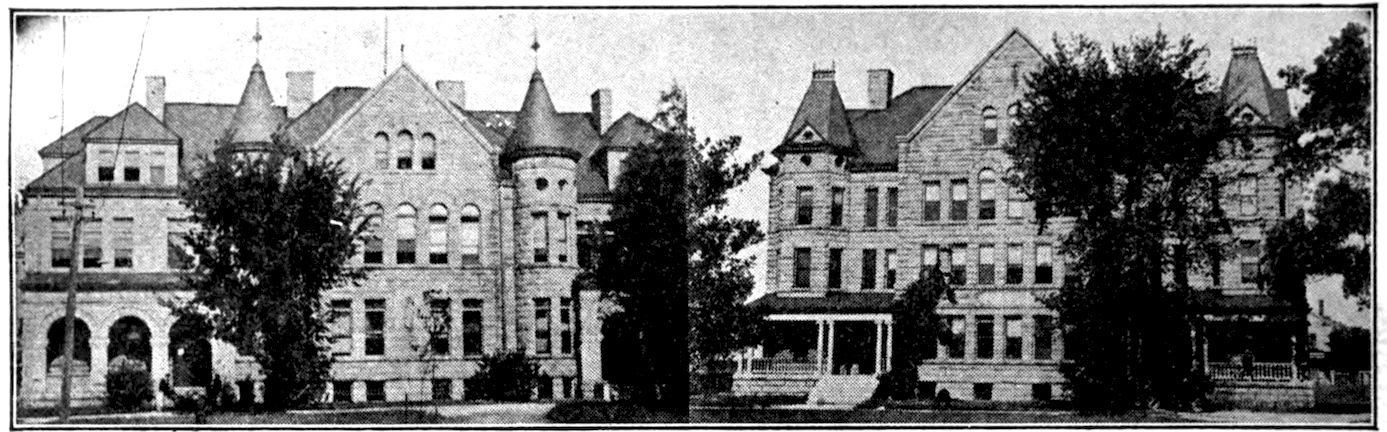
LECTURE HALL. KINGSLEY HALL DORMITORY.
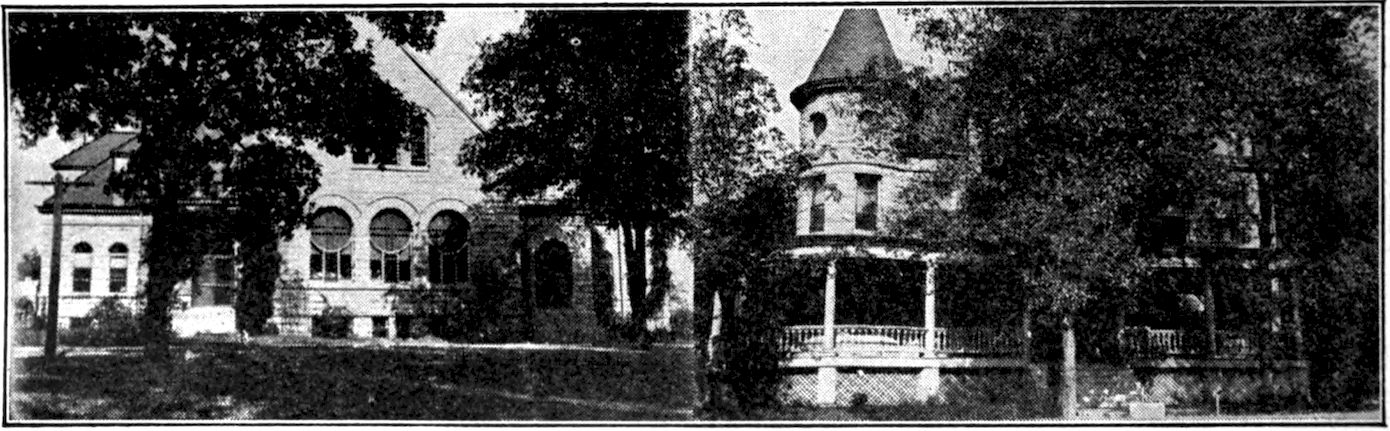
DINING HALL. PRESIDENT’S HOME. VIRGINIA UNION UNIVERSITY, RICHMOND, VIRGINIA. Some of the handsome buildings in colored schools. All of granite. Founded in 1899 through the union of Wayland Seminary and Richmond Theological School. It is owned by the American Baptist Home Mission Society. Teachers, 16; attendance, 275; value of property $500,000.
257The attendance on these institutions was 51,529, of whom 43,605 were elementary, 7,188 were secondary, and 736 were collegiate. The number of teachers and workers was 2,562, of whom 1,069 were white and 1,493, or 58 per cent. were colored. On the basis of sex, 714 are men and 1,848, or 70 per cent. are women. Classification according to character of work shows that 1,916, or 74 per cent. of the teachers are academic, 339 industrial, 31 agricultural, and 276 administrative. Comparison with other groups of schools indicates that those under white boards still retain a considerable fraction of white teachers, that the number of women teachers is rather larger than in other groups, and finally that the proportion of academic instructors is higher than in any group except those under the colored boards.
There are ten denominational groups which own and maintain a number of institutions for the education of colored people. Nine other denominations are supporting one or two schools each. Very few of the churches represented by either the larger or smaller of these boards have any considerable proportion of Negroes in their membership. There are other denominations, notably the Unitarians, who have contributed liberally to colored schools without any thought either of increasing their church membership or their control over these schools. The primary purpose of practically all of these organizations has been the education of the Negroes in America, and their preparation for life in a democracy.
In this connection, it is interesting to note the religious preference of the Negroes in the United States as compiled by the United States census of 1904. According to this census there were 3,685,097 Negroes in the various denominations. Of these 2,354,789 were enrolled by Baptists, 1,182,131 belonging to various branches of Methodism, and the remaining 148,177, hardly 4 per cent of the total, were distributed among the Catholic, Presbyterian, Christian, and Congregational denominations.
The larger denominations maintain central offices and one or more traveling secretaries whose duties include both the supervision of the schools and the appeal for funds to the supporting churches. This personal supervision, together with regular reports of both financial and educational activities, has developed economy and honesty in the use of funds and thoroughness in the school work.
258
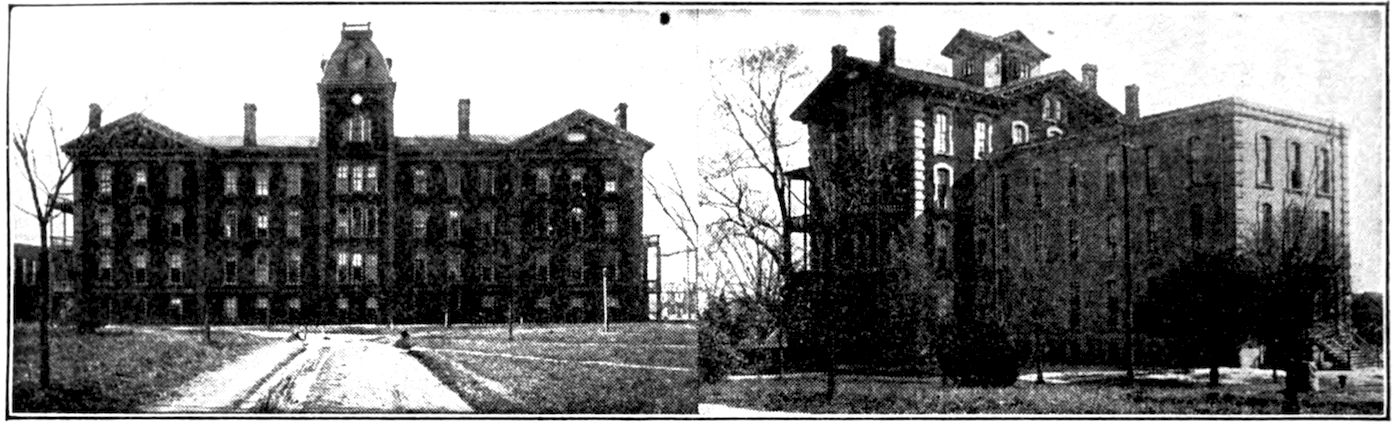
MAIN BUILDING. GIRLS DORMITORY.
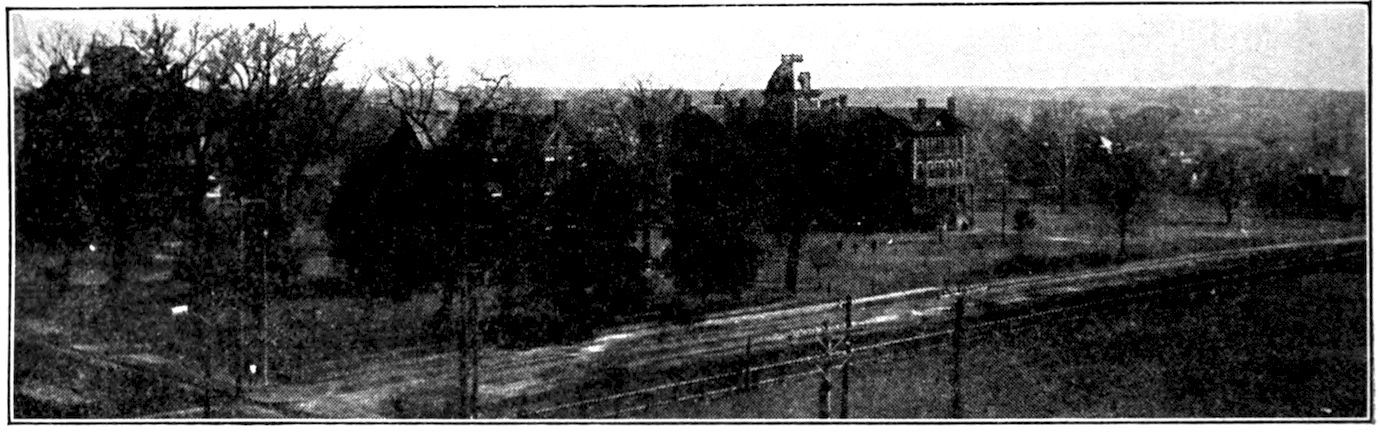
SHAW UNIVERSITY, RALEIGH, N. C. One of the leading schools for colored people. Founded in 1865 by the American Baptist Home Mission Society. It has 30 teachers, 250 students and property valued at nearly $400,000.
259The American Baptist Home Mission Society.—The American Baptist Home Mission Society owns or supervises 24 educational institutions. All of these are large and important schools. These schools are effectively managed, and their general average of educational efficiency is very high. The following table shows the distribution of these schools by States:
AMERICAN BAPTIST HOME MISSION SOCIETY.
States Number of Schools Counted Attendance Teachers Income for Current Expenses Value of Property
Total White Negr.
Total 24 5,536 419 139 280 $304,861 $3,870,744
Alabama 1 268 21 1 20 9,479 83,000
Arkansas 1 313 18 18 15,109 90,000
Florida 1 404 18 18 8,070 80,158
Georgia 5 1,287 106 50 56 81,573 621,624
Kentucky 1 130 15 1 14 11,308 60,000
Louisiana 2 572 26 10 16 16,356 462,000
Mississippi 1 310 16 16 1,591 100,000
Missouri 1 66 11 11 4,486 20,000
North Carolina 3 419 46 14 32 41,051 433,251
South Carolina 1 507 30 18 12 21,384 635,744
Tennessee 2 242 31 31 9,942 117,500
Texas 1 371 22 12 10 19,247 314,935
Virginia 3 537 36 21 15 37,684 630,354
West Virginia 1 110 23 12 11 17,581 222,178
The annual income for current expense of the 24 schools is $304,861, of which $150,637 is received from the board. On the basis of income five of the schools have incomes between $1,500 and $5,000; ten between $5,000 and $15,000; six between $15,000 and $30,000; and twenty have incomes of over $30,000. The total property is valued at $3,870,744, of which about three and a third millions are in plant and almost half a million is in endowment. According to property, only one school has a valuation under $10,000; three schools have valuations between $10,000 and $25,000; four between $25,000 and $50,000; seven between $50,000 and $150,000; three between $150,000 and $250,000, and six over $250,000.
The attendance of these schools was 5,504, of whom 3,186 were elementary, 2,068 secondary, and 250 collegiate. All the schools maintain elementary classes, and all but two have secondary pupils. Seven of the institutions are offering instruction in college subjects. Two of the seven, however, had neither the equipment nor teachers to maintain college work. The number of teachers is 419, of whom 139 are white and 280, or 66 per cent. are colored; 148 are men and 271, or 65 per cent., are women; and 295, or 70 per cent., are academic teachers.
260
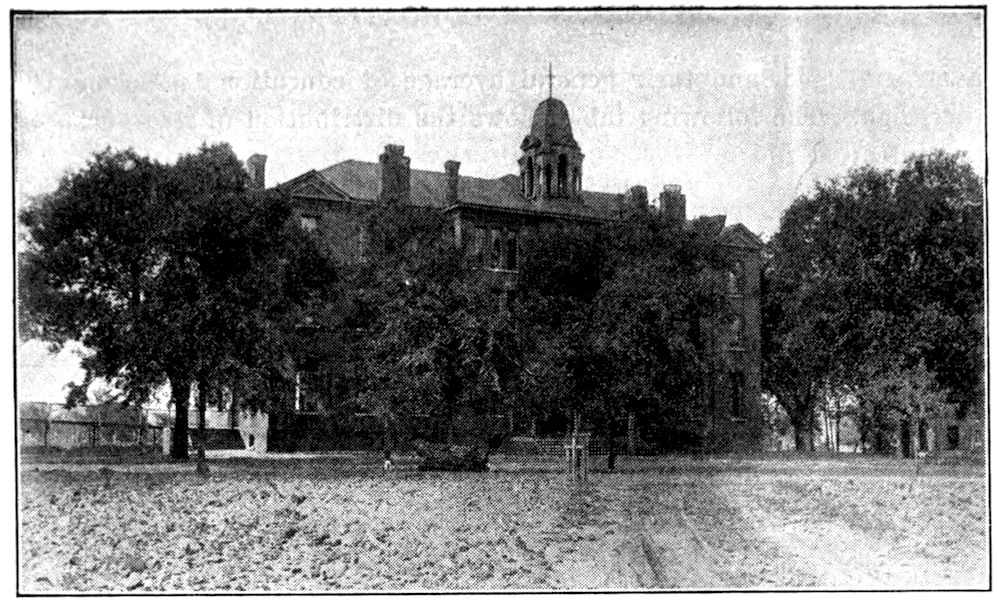
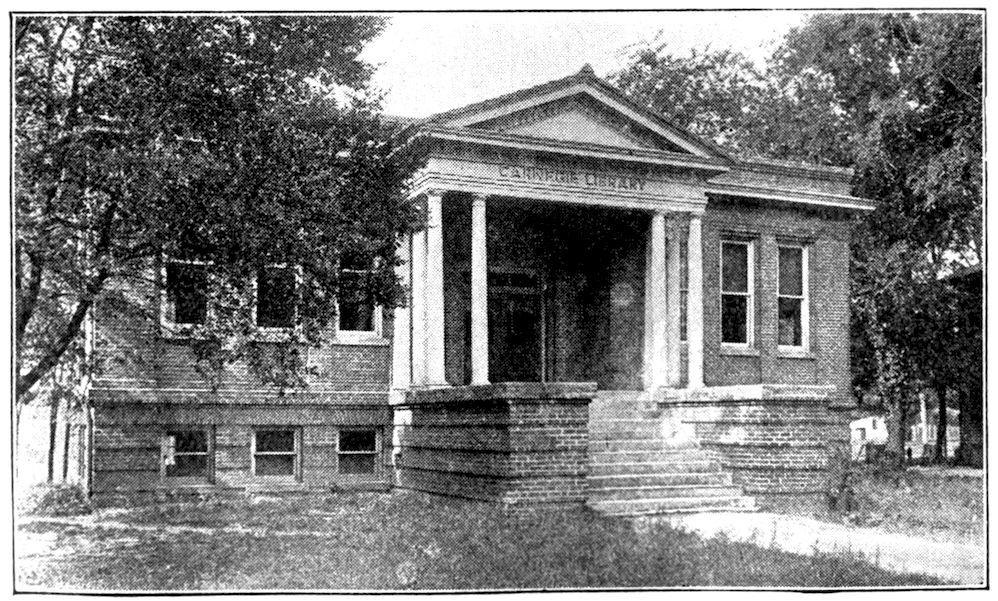
BENEDICT COLLEGE, COLUMBIA, SOUTH CAROLINA. One of the leading colleges for colored people in the South. It was founded in 1871, by the American Baptist Home Mission Society. It has 30 teachers, over 700 pupils, an endowment of $140,000.00, and property valued at $635,744.
261
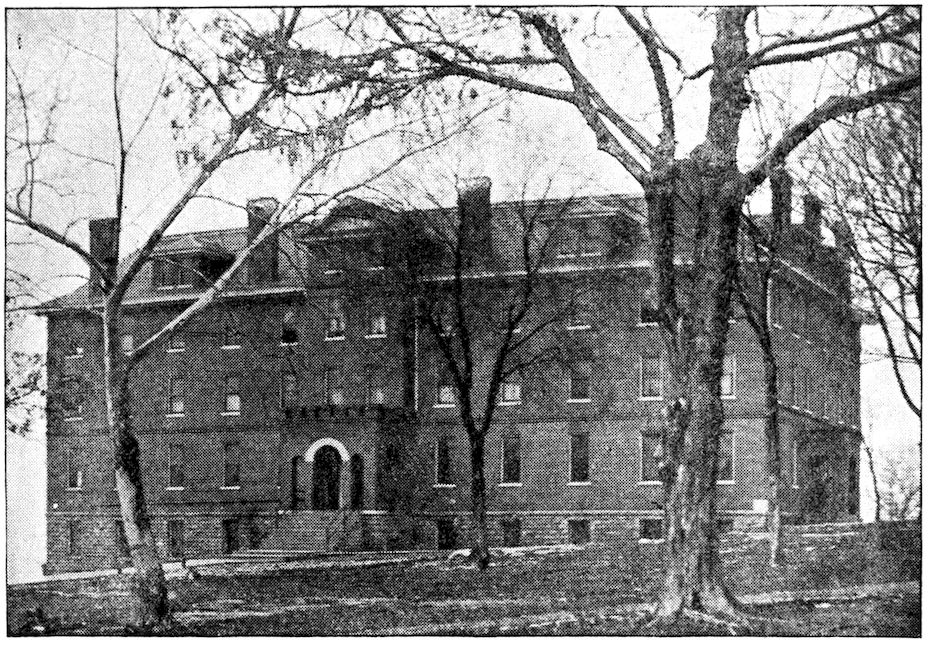
MAIN BUILDING, ROGER WILLIAMS UNIVERSITY, NASHVILLE, TENN. The school is located on a high bluff, overlooking the Tennessee River. It was founded in 1867, by the American Baptist Home Mission Society. It has twenty teachers, one hundred and fifty students and a property valuation of $100,000.
These percentages for the color, sex, and work of the teachers indicate that the Baptist Society is following an average course in the selection of its workers, and the arrangement of the school program. The high grade of colored officers and teachers now in charge of some of the Baptist Society schools indicates that the transfer from white to colored management has usually been made with considerable care. Of the 419 teachers and workers, only 42 are offering industrial courses and seven are teaching agriculture or gardening. For a people eighty per cent. rural, this proportion of agricultural teachers is evidently not adequate.
262
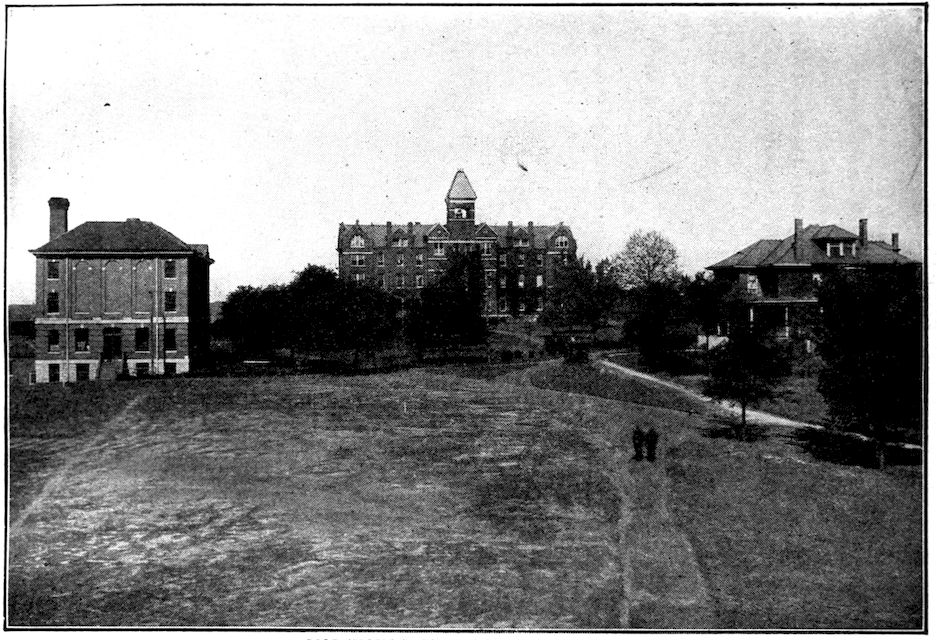
MOREHOUSE COLLEGE, ATLANTA, GA. One of the leading Baptist Colleges. It is owned and controlled by the American Baptist Home Mission Society. It was founded in 1867, and now has 20 teachers, about 300 students and property valued at $185,000.
263The history of the work of the American Baptist Home Mission Society in the south begins with the following resolution passed by its executive committee in 1862:
Resolved, That we recommend the society to take immediate steps to supply with Christian instruction by means of missionaries and teachers, the emancipated slaves—whether in the District of Columbia or in other places held by our forces—and also to inaugurate a system of operations for carrying the Gospel alike to free and bond throughout the whole southern section of our country, so fast and so far as the progress of our arms and the restoration of law and order shall open the way.
From that day to the present time the society has worked unceasingly for the education and religious development of the colored people. Some measure of the remarkable success achieved in these fifty years of service is given in the educational institutions described in this report. The efforts of the society have doubtless been strengthened by the consciousness of a certain responsibility for the colored Baptists, who constitute such a large proportion of the membership of all colored churches.
Most of the schools are well known. They number among their graduates some of the ablest leaders of the colored race. The most widely known schools are: Morehouse College and Spelman Seminary, Atlanta, Georgia; Shaw University, Raleigh, North Carolina; Virginia Union University, and Hartshorn Memorial College, Richmond, Virginia; Jackson College, Jackson, Mississippi; Arkansas Baptist College, Little Rock, Arkansas; Roger Williams University, Nashville, Tennessee; Storer College, Harper’s Ferry, West Virginia; and Selma University, Selma, Alabama.
The names of the men and women who gave many years of faithful service would constitute a list too long to be entered here. Two of those whose wisdom has directed the policies in recent years should be mentioned. Dr. H. L. Morehouse belongs to the past as well as to the present. He began as secretary of the society in 1879, and has continued until the present time. Dr. George Sale was superintendent of education for several years until his death in 1912. His influence on the educational methods of the institutions under his direction was a valuable contribution to the education of the colored people.
264
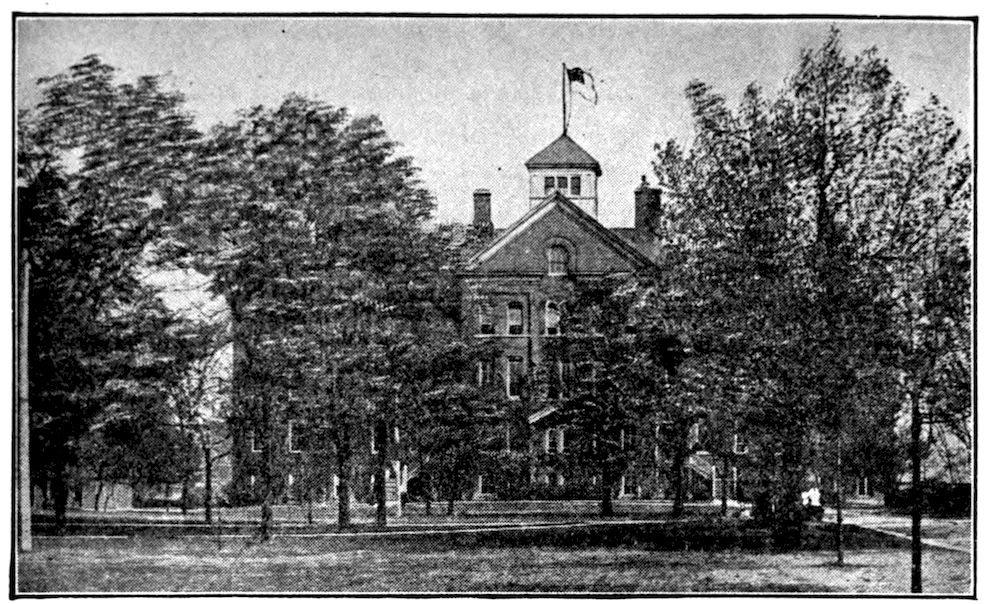
MOREHOUSE HALL, GIRLS DORMITORY.
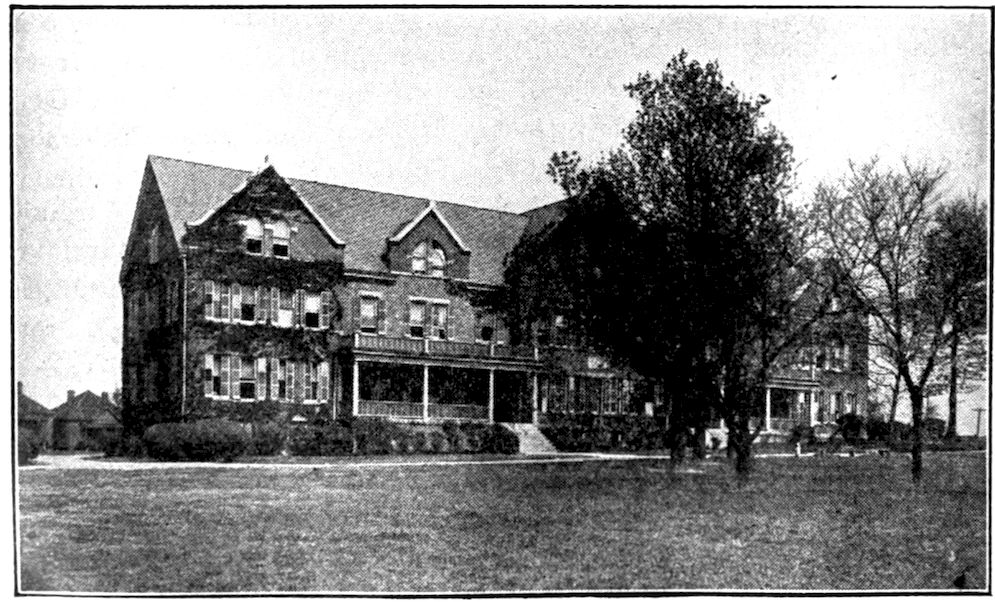
GIRLS HALL, MAIN BUILDING, SPELLMAN SEMINARY, ATLANTA, GA. A splendid girls school. The campus is among the most beautiful to be found anywhere. There are 51 teachers, about 600 students and the property is valued at $400,000.
265The Woman’s Baptist Home Mission Society.—The Woman’s Baptist Home Mission Society owns and maintains Mather Academy, contributes liberally to the support of Spelman Seminary and Hartshorn College, and provides some aid for other schools. So far as the facts could be ascertained, the officers of the society supervise its contributions with considerable thoroughness, and it is to be desired that their activities in Negro education could be increased, especially in the education of colored girls.
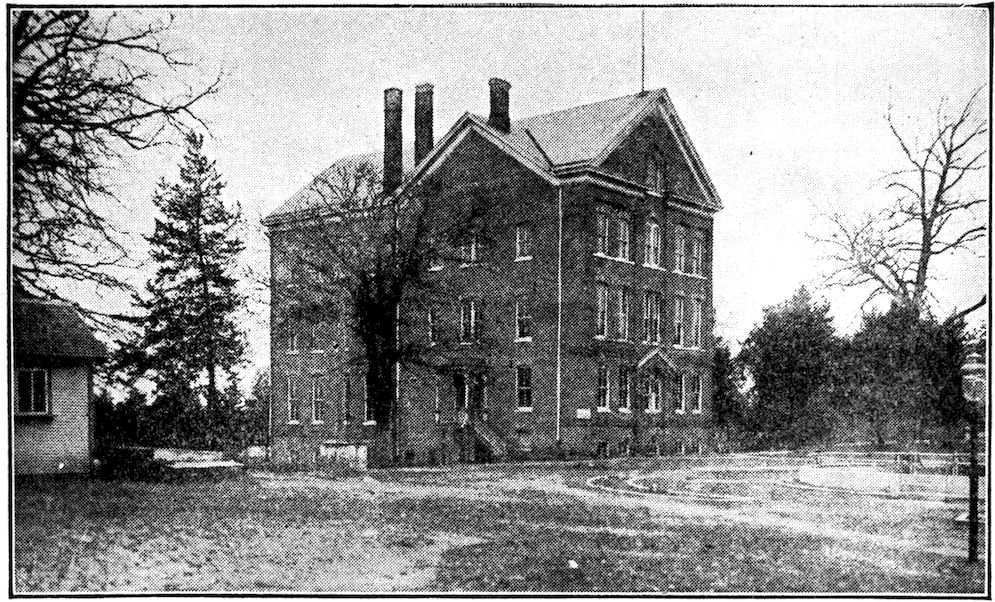
ADMINISTRATION BUILDING, BISHOP COLLEGE, MARSHALL, TEXAS. Founded in 1881 by the American Baptist Home Mission Society and now owned and supported by that body. It is the leading Baptist school of Texas. There are 22 teachers, 375 students and property valued at $315,000.
266
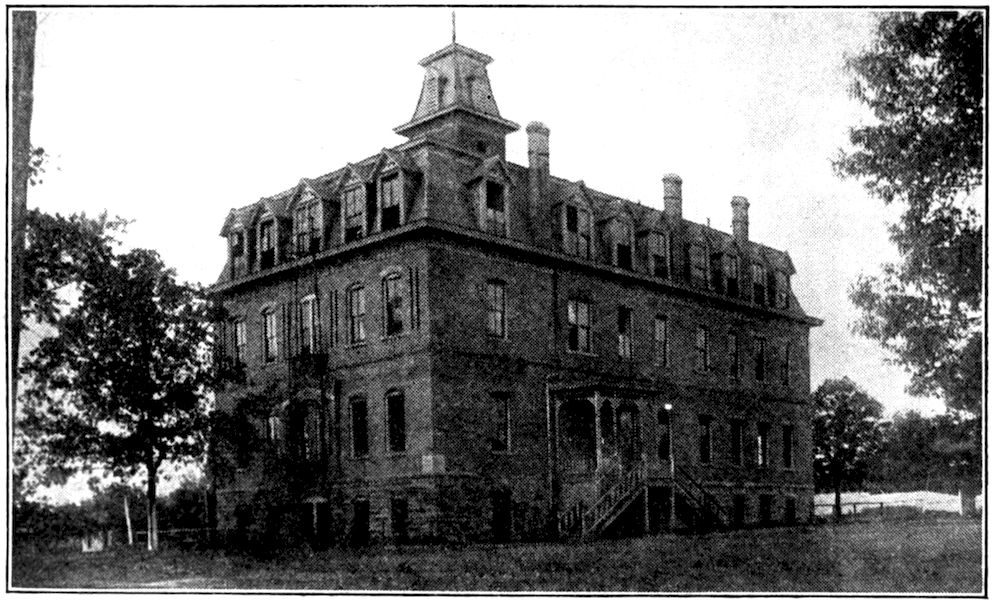
ARKANSAS BAPTIST COLLEGE, LITTLE ROCK, ARK. The leading Baptist school of Arkansas. It has 18 teachers, over 300 pupils, an annual income of approximately $15,000, and property valued at over $90,000.
267Roman Catholic Board.—In recent years the work of the Roman Catholic Church in developing schools and churches for colored people has been very marked. The various orders of the church now own 112 schools of which seven are rated by the Bureau of Education as large institutions. While most of the colored schools are small they are rendering a needed aid to the meagre public schools in the places in which they are located. The following table is a summary of these schools:
CATHOLIC BOARD OF MISSIONS.
States Number of Schools Counted Attendance Teachers Income for Current Expenses Value of Property
Total 112 13,507 404 $146,821 $491,000
Alabama 9 885 25 13,064 25,000
Arkansas 3 253 13 4,230
Delaware 1 80 18 23,000 75,000
Florida 7 663 17 3,330
Georgia 7 1,170 23 4,840
Kentucky 6 506 10 2,510
Louisiana 25 3,142 83 18,304
Maryland 4 888 20 5,650
Mississippi 13 1,440 42 8,952 56,000
North Carolina 6 407 12 2,700
Oklahoma 2 65 4 750
South Carolina 3 366 10 2,500
Tennessee 2 281 9 4,350
Texas 6 617 17 3,640
Virginia 7 847 52 31,075 335,000
Northern States 9 1,387 38 15,094
District of Columbia 2 510 11 2,882
So far as they could be determined, the annual income for current expenses is about $150,000. The value of the property of the seven larger schools is about $500,000, of which $335,000 is in the two schools at Belmeed, Va. The total attendance is 13,507, of whom 13,443 are elementary and only 64 secondary. The number of teachers is 404, of whom the majority are white sisters of various Catholic orders. The proportion of teachers of simple industry is small and the number teaching gardening and agriculture is negligible.
The two largest Catholic schools are located at Rock Castle, Virginia. Both of these schools receive the greater part of their support from Mother Catherine Drexel, of Philadelphia and her family. These schools are the St. Emma Industrial and Agricultural College and the St. Francis de Sales Institute. The literary works of these schools is low; but the industrial work is of high order. Other large Catholic schools are: St. Joseph’s Catholic School, Montgomery, Alabama; St. Joseph’s Industrial School, Newcastle, Delaware; Holy Ghost Catholic School, Jackson, 268Mississippi; St. Joseph’s Parish School, Meridian, Mississippi, and St. Mary’s Commercial College, Vicksburg, Mississippi.
BIRDSEYE VIEW OF SOUTHERN CHRISTIAN INSTITUTE, EDWARDS, MISS. The leading school of the Christian denomination. It was founded in 1875, and is owned and supported by the Christian Woman’s Board of Missions. It has 18 teachers, nearly 200 pupils, an annual income of $21,000, and property valued at $160,090.
The Christian Church.—The Christian Church began work among the colored people as soon as the Civil War was ended. The official body of the denomination is called The Christian Woman’s Board of Missions. The church had no organized plan until 1872, when a group of philanthropists formed a stock company to start a school in Mississippi. About 1890 the American Christian Missionary Society took over the property and work of the stock company. In 1900 all the property was finally transferred to the Woman’s Board. Through the efforts of this board the annual contributions have increased from $3,000 to $10,000, and four schools have been added to the one in Mississippi. A summary of the schools of this church is given herewith:
269
CHRISTIAN WOMAN’S BOARD OF MISSIONS.
States Number of Schools Counted Attendance Teachers Income for Current Expenses Value of Property
Total 5 440 37 $29,910 $184,602
Alabama 1 93 6 2,512 8,875
Mississippi 1 196 18 21,006 160,491
Tennessee 1 61 4 1,730 3,750
Texas 1 14 3 1,712 3,000
Virginia 1 76 6 2,950 8,485
The Christian Woman’s Board maintains five schools, of which two are rated as “larger or more important.” The total income for current expenses is $29,910, of which $21,000 is for the Southern Christian Institute in Mississippi. The value of property is $184,602, of which $160,492 is also in the plant of the Southern Institute. The total income for current expenses is $29,910, of which $21,000 is for the Southern Christian Institute in Mississippi. The value of property is $184,602, of which $160,492 is also in the plant of the Southern Institute. The total attendance is 440, of whom 409 are elementary and 31 secondary. The number of teachers is 37, of whom 15 are white and 22 colored; 14 are men and 23 are women.
The general management of these schools is economical and the educational work is effective. This simplicity of organization and the genuine interest of the teachers are noteworthy. The other important school of this denomination is The Alabama Christian Institute, Lowndes County, Alabama.
Congregational Board.—No church denomination has made a greater contribution of the Negro than the Congregational church through the American Missionary Association.
The American Missionary Association owns and supervises 29 schools for Negroes in the Southern States. The Association also owns property in other schools and makes contributions to their work. As the management of these affiliated institutions has been transferred to independent boards of trustees, they are classified under other groups. Credit must 270here be given to this association, however, not only for such splendid affiliated institutions as Fisk University and Atlanta University; but also for a number of others now maintained independently.
No denominational schools surpass those of this group in educational standards or administrative efficiency. It is probable that no church board has equaled this association in the thoroughness of its self-examination. The following quotation from the 1914 report outlines several policies to which every church board should give serious consideration:
In the realm of educational policy we record a most important change of tendency, which it is better to state positively, as a movement toward concentration in order to greater efficiency. This has involved the discontinuance or radical limitation of five of our smaller schools, including some of long history and rich service. * * * The time had come when the socialized Christian conscience demanded such improved methods in missionary service as it requires—often by law—of educators, landlords, employers of labor and congregations of men anywhere. It has cost $1,000 for instance, literally to stop rat holes in mission buildings, and thus to save New Orleans and Porto Rico from danger from bubonic plague. We had to do better what we did at all, and our resources were insufficient. We simply had to close institutions. * * *
While these peremptory conditions have closed some of the schools nearest to the masses of the people, we are glad to record as the chief technical gain of the year, that the colleges have been made more available and useful to the masses. Their curricula have been broadened, and the conditions of entrance made more democratic and in harmony with those of the great middle western State universities. This is immediately manifest in the increased number of high-school pupils, and will affect the colleges tomorrow.
As to educational plant, last year’s survey touched upon the demand of the socialized conscience for better housing conditions in missionary institutions. Our response is in the fact that no year has ever spent so much for sanitation, that more fire escapes have been erected, and more bathtubs installed than any previous year. * * * As a class, they are 271more nearly fire-proof, they have more steel in their structure, more scientifically determined allowance of light and air, and more beauty than any previous group. * * * If the Lord’s work is attempted at all it shall be done under somewhat decent conditions. Nor do we feel that it is a substitution of the physical for the spiritual. To live up to plumbing is itself a training of character, health is a prerequisite of thought, and beauty an inalienable right of the spirit.
A summary of the schools is given below:
AMERICAN MISSIONARY ASSOCIATION.
States Number of Schools Counted Attendance Teachers Income for Current Expenses Value of Property
Total White Negr.
Total 29 6,992 383 212 171 $235,764 $1,733,589
Alabama 6 1,714 89 57 32 63,553 546,769
Florida 1 225 12 12 3,343 49,300
Georgia 6 1,459 68 32 36 33,583 133,900
Kentucky 1 170 10 7 3 5,559 39,000
Louisiana 1 578 30 17 13 20,885 150,000
Mississippi 4 843 47 38 9 32,489 172,400
North Carolina 5 826 52 16 36 30,000 394,920
South Carolina 2 484 21 17 4 13,626 53,900
Tennessee 1 285 21 14 7 12,537 54,000
Texas 1 223 20 14 6 12,792 103,500
Virginia 1 115 13 13 788 35,900
The total income for the current expenses of these institutions is $235,461, of which $129,429 is from the association. This includes the income from the Daniel Hand Fund, which is administered by the association. On the basis of income 5 of the schools are under $2,500, 7 have incomes between $2,500 and $5,000, 13 between $5,000 and $15,000, 3 between $15,000 and $30,000, and one has an income of over $30,000. The total property is valued at $1,733,589, of which about one and a third million is in plant and a third of a million in endowment. With the Daniel Hand Fund of almost two million dollars, the property of the American Missionary Association for work among Negroes aggregates over three and a half millions. According to property, four schools have a valuation under $10,000, ten schools have valuations between $10,000 and $25,000, 272nine schools between $25,000 and $50,000, five schools between $50,000 and $250,000, and two have a valuation over $250,000.
The attendance on these schools was 6,922, of whom 5,448 were elementary, 1,380 secondary, and 94 collegiate. All the schools have elementary classes, all but three have secondary, and four offer instruction in college subjects. The number of teachers is 383, of whom 212 are white and 171, or 45 per cent. colored; 92 are men and 291, or 76 per cent. are women; and 270, or 70 per cent., are academic teachers.
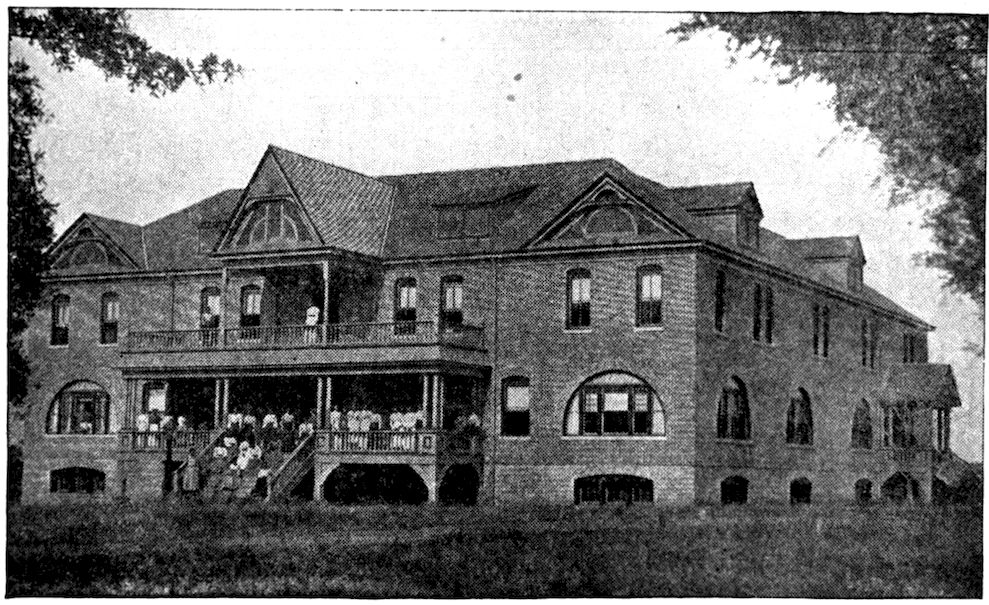
GIRLS’ DORMITORY, TOUGALOO COLLEGE, TOUGALOO, MISS. One of the most picturesque institutions in America, being located in a magnificent grove. It was founded by the American Missionary Association in 1869. There are thirty-one teachers and five hundred students. The property is valued at $150,000.
Though the colored membership of the Congregational Church is almost negligible as compared with that of the Baptist and Methodist Churches, the American Missionary Association was probably the first to undertake educational work in behalf of the Negroes. In 1861 Rev. L. I. Lockwood, commissioned by the Association, wrote from Fortress Monroe:
273“I ask especial interest in your prayers that I may be endowed with wisdom for these peculiar and momentous responsibilities. Parents and children are delighted with the idea of learning to read.”
The history of the American Missionary Association is a story of the patient and persevering efforts of hundreds of faithful men and women who have given themselves and their means for a people struggling upward from slavery.
The administration of the affairs of the association has always been in the care of strong men of broad education. Some of them were statesmen in power and vision. Dr. Beard, the honorary secretary, and secretaries Ryder and Douglass, are worthy successors of these able men.
The most far reaching work of the association was, perhaps, the founding of Fisk University, Atlanta University and Talladega College. The names of these institutions are inseparably connected with the higher education of the Negro. Fisk and Atlanta are now independent institutions; but the spirit of their founders still lives in them and the policies of the American Missionary Association are still maintained.
The names of the American Missionary Association schools and the States in which they are located are given below:
Alabama: Burrel Normal School; Cotton Valley School; Emerson Institute; Lincoln Normal School; Talladega College; Trinity College.
Florida: Fessenden Academy.
Georgia: Albany Normal School; Allen Normal School; Ballard Normal School; Beach Institute; Dorchester Academy; Knox Institute.
Kentucky: Chandler Normal School.
Louisiana: Straight University.
Mississippi: Girls’ Industrial School of Mississippi; Mount Bayou Institute; Mount Hermon Seminary; Tougaloo University.
North Carolina: Gregory Normal School; J. K. Brick Agricultural, Industrial and Normal School; Lincoln Academy; Peabody Academy; Washburn Academy.
South Carolina: Avery Institute; Brewer Normal Institute.
Tennessee: Le Moyne Institute.
274Texas: Tillotson College.
Virginia: Gloucester High and Industrial School.
Friends Educational Boards.—The various societies of Friends maintain six schools rated as “larger and more important” and two smaller schools. All of these schools are owned and managed by independent boards composed largely of Friends. The names and locations of the six more important schools are as follows: Schofield Normal and Industrial School and Laing School, in South Carolina; Cheyney Institute, in Pennsylvania; Christiansburg Industrial Institute, in Virginia; High Point Normal School, in North Carolina; and Southland College, in Arkansas. The educational work and administrative management of these institutions compare favorably with those of other church schools. In proportion to their numbers no religious group has surpassed the Friends either in financial contributions or personal endeavor for the education of the Negroes. While none of these schools are of college grade, all of them are doing excellent work. Cheyney Institute, Christiansburg Institute and High Point Normal are presided over by colored men who rank high in educational circles.
A summary of the schools maintained by Friends is given herewith:
FRIENDS SOCIETIES AND OTHER FRIENDS’ AGENCIES.
States Number of Schools Counted Attendance Teachers Income for Current Expenses Value of Property
Total White Negr.
Total 8 1,642 96 12 84 $63,868 $915,900
Arkansas 1 352 16 6 10 4,115 79,400
North Carolina 1 408 14 14 12,366 39,000
South Carolina 2 408 31 4 27 8,551 180,000
Virginia 1 225 13 13 8,798 157,500
Northern States 3 249 22 2 20 30,038 460,000
The total income for current expenses is $63,868, and the value of property is $915,000, of which $378,900 is in plants and $537,000 in endowment. The attendance is 1,642, of whom 1,444 are elementary and 198 secondary. The teachers are 96 in number; 9 are white and 84 are 275colored; 19 are men and 67 women; and 57 are academic teachers. Only two of the schools are managed by white officers. The proportion of industrial teachers is fairly adequate. Instruction in gardening and agriculture is, however, not sufficiently emphasized to meet the needs of a rural people.
Lutheran Board of Education.—The Lutheran Board of Colored Missions owns and maintains two large schools and seven smaller schools. Luther College is located at Greensboro, N. C. While the name would indicate college grade, full college courses have not yet been provided. Luther College at New Orleans is also to be developed as a training school for colored leaders of the Lutheran faith. All of the smaller schools are located in Louisiana.
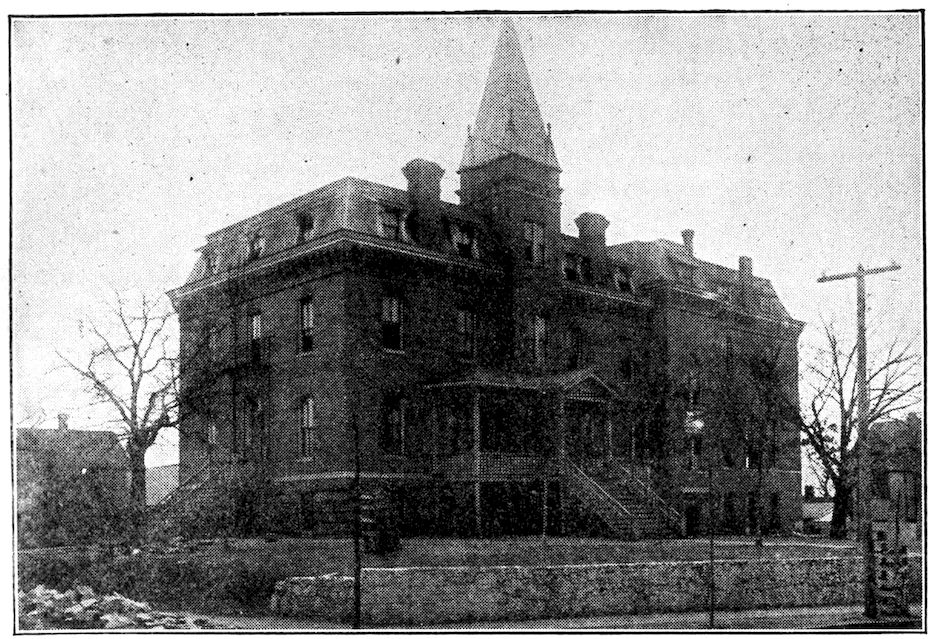
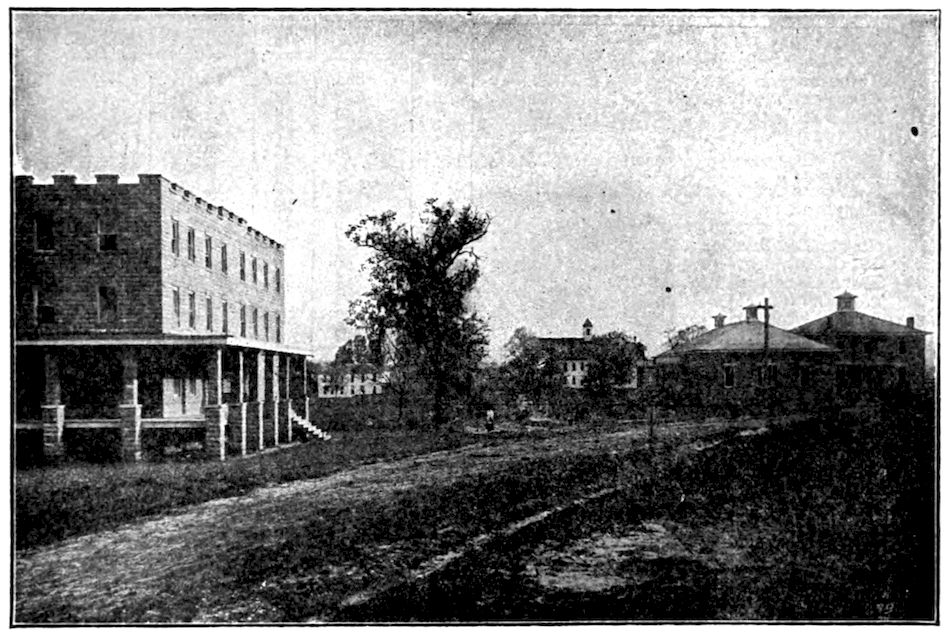
MAIN BUILDING, PHILANDER SMITH COLLEGE, LITTLE ROCK, ARK. Founded in 1883 by a donation from Philander Smith of Illinois. It is owned by the Freedmen’s Aid Society of the M. E. Church. It has 15 teachers, nearly 450 students and property valued at $75,000.
276
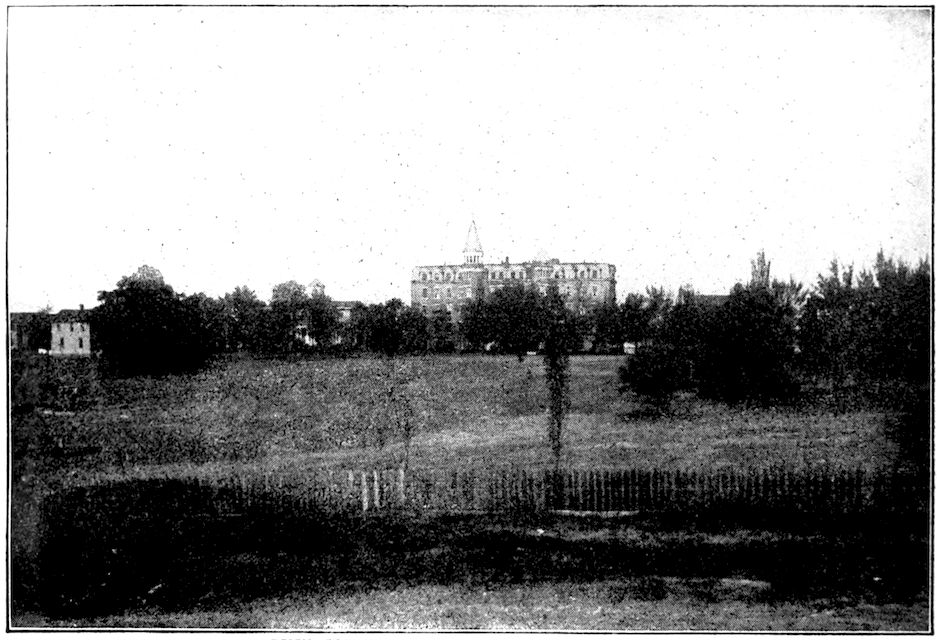
RUST COLLEGE, HOLLY SPRINGS, MISSISSIPPI. One of the leading Methodist schools. It was founded in 1866 by the Freedmen’s Aid Society of the M. E. Church. It has 19 teachers, 336 students and property valued at $115,000.
277The total income for current expenses of these schools is $72,000. The attendance is 1,147, practically all of elementary grade. The total number of teachers is 26, of whom 13 are white and 13 colored; 21 are men and 5 are women. Some effort is made to teach secondary and theological subjects at the Greensboro school. The teachers devote practically all their time to academic instruction. There seems to be little effort to give instruction in gardening or simple industry.
The Lutheran work for Negroes was begun as early as 1879, and the board has expended considerable money and effort in the development of the schools.
Methodist Episcopal Church.—The Freedmen’s Aid Society of the Methodist Episcopal Church owns and supervises 18 educational institutions for Negroes in the United States. All of these schools are rendering valuable educational service to their communities and all deserve the support and interest of the church. In addition to these institutions, credit must be given to this society for the organization of Meharry Medical College, now managed by an independent board of trustees and classified with that group.
A tabular view of the work of the Freedmen’s Aid Society of the Methodist Episcopal Church is given herewith:
FREEDMEN’S AID SOCIETY OF THE METHODIST EPISCOPAL CHURCH.
States Number of Schools Counted Attendance Teachers Income for Current Expenses Value of Property
Total White Negr.
Total 18 5,059 266 65 201 $230,160 $2,605,687
Alabama 1 190 11 11 5,657 42,500
Arkansas 1 439 15 15 9,226 72,300
Florida 1 408 14 3 11 9,387 101,578
Georgia 2 382 23 9 14 43,714 859,200
Louisiana 2 645 28 9 19 16,133 219,000
Maryland 1 81 11 7 4 16,419 96,874
Mississippi 2 504 23 5 18 21,850 146,200
Missouri 1 73 12 2 10 8,520 59,000
North Carolina 1 312 12 12 6,000 49,000
South Carolina 1 814 27 6 21 39,547 362,035
Tennessee 2 365 42 24 18 25,084 274,000
Texas 2 761 43 43 25,223 293,000
Virginia 1 85 5 5 3,400 35,500
278The annual income for current expenses of the 18 schools is $230,160, of which $105,835 is from the society. All of the schools have an annual income of $2,500 or over; two have incomes between $2,500 and $5,000; 12 between $5,000 and $15,000; three between $15,000 and $30,000; and one has an income of over $30,000. The total property valuation is $2,605,687, of which $1,824,778 is in the school plant and $742,874 in endowment. All of the schools have a property valuation in excess of $25,000, four have valuations between $25,000 and $50,000; five between $50,000 and $100,000; three between $100,000 and $150,000; three between $150,000 and $250,000; and three have valuations over $250,000.
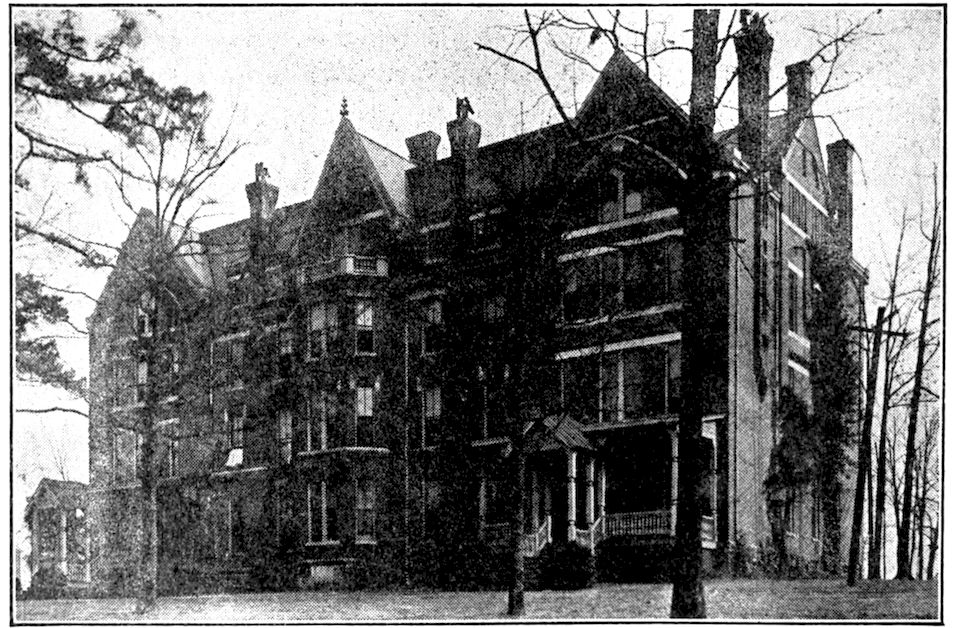
MAIN BUILDING, GAMMON THEOLOGICAL SEMINARY, ATLANTA, GA. The leading theological school for colored people. It is beautifully located and well endowed. It was founded in 1882, through a gift from Mr. Gammon, and is now under the Freedmen’s Aid Society of the M. E. Church. It has 6 teachers, 78 pupils and endowment of $420,000.
The attendance on these schools is 5,059, of whom 3,263 are elementary, 1,600 secondary, and 196 collegiate. All but 2 of the schools have elementary pupils, all are maintaining secondary classes, and 8 are offering 279instruction in college subjects. The number of teachers is 266, of whom 65 are white and 201, or 75 per cent. are colored; 109 are men and 157, or 59 per cent., are women; and 191, or 72 per cent., are academic teachers.
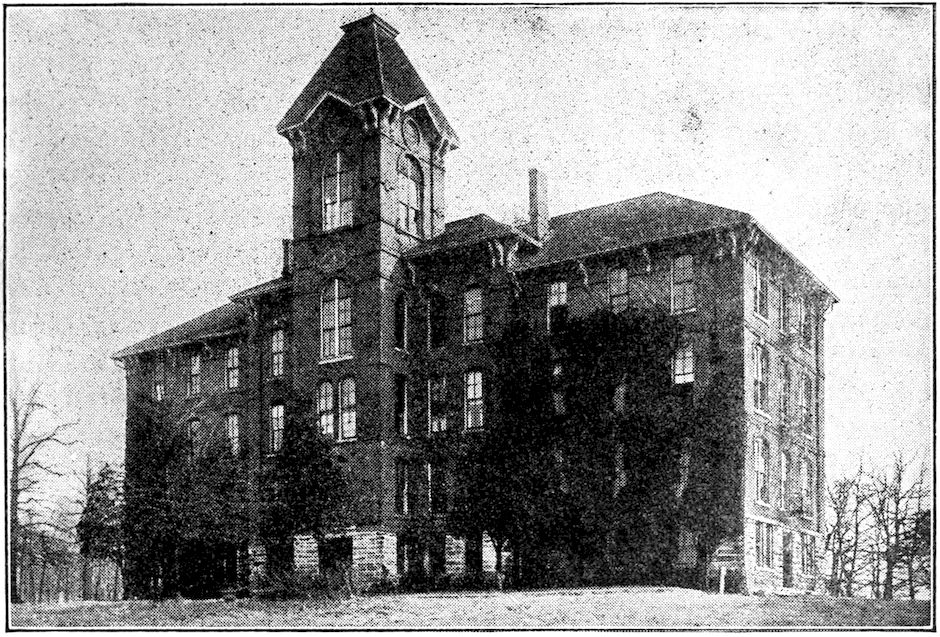
CHRISMAN HALL, CLARK UNIVERSITY, ATLANTA, GA. One of the leading schools of the Freedmen’s Aid Society of the Methodist Episcopal Church. It was founded in 1870. It has 17 teachers, 304 students, and property valued at nearly $300,000.
The schools of the Freedmen’s Aid Society rank high in educational efficiency. Some of them are well known colleges for colored people. Claflin University, Orangeburg, South Carolina; Wiley University, Marshall, Texas; Rust College, Holly Springs, Mississippi; Walden University, Nashville, Tennessee; Morgan College, Baltimore, Maryland; Morristown Normal and Industrial College, Morristown, Tennessee; Philander Smith College, Little Rock, Arkansas; Bennett College, Greensboro, North Carolina; Samuel Houston College, Austin, Texas, and New Orleans University, New Orleans, Louisiana. Of these Wiley University, Walden University, Philander Smith College, Samuel Houston College 280and Bennett College are ably managed by colored presidents. Other institutions under this board are: Central Alabama Institute, Mason City, Alabama; Cookman Institute, Jacksonville, Florida; Gilbert Industrial Institute, Baldwin, Louisiana; Haven Institute, Meridian, Mississippi; George R. Smith College, Sedalia, Missouri, and Virginia Collegiate and Industrial Institute, Lynchburg, Virginia. In addition to these credit must be given to this society for the organization of Meharry Medical College, now managed by an independent board of trustees; for the maintenance and support of Gammon Theological Seminary, the best training school for colored ministers, and of the Sarah Goodridge Nurse Training School and Hospital at New Orleans, Louisiana. Princess Anne Academy which receives a portion of land-grant funds through the Federal Government is also supervised by the society.
The proportion of academic teachers is about the same as that in most of the denominational schools. The emphasis on the literary courses is marked. It is evidently unfortunate that this large denomination with 18 educational institutions should provide only three gardening teachers for the education of a people so largely rural. The percentage of men in the teaching force is above the average of church schools. This is probably explained by the fact that the proportion of colored teachers in these institutions is also above the average. The substitution of colored for white teachers in these institutions in the Freedmen’s Aid schools has evidently proceeded with considerable rapidity. The indications are that the change has been too rapid for the good of the schools. While democracy in education requires the recognition of the colored teachers, it is equally true that these schools need not only the financial aid of white people; but also their personal influence.
The Freedmen’s Aid Society was organized in 1866 “for the purpose of aiding the recently emancipated slaves and their children in securing the benefits of a good common school education, and such other educational preparation as was necessary to provide Christian ministers, physicians, school teachers, and industrial leaders for the race.” The colored members of the various branches of Methodism are next to the colored Baptists in number. The number of colored members in the Northern Methodist Church represented by the Freedmen’s Aid Society and the Woman’s Missionary Society is about 350,000. These members contribute about a fourth of the total sums collected by the Freedmen’s Aid Society for the education of colored people.
281
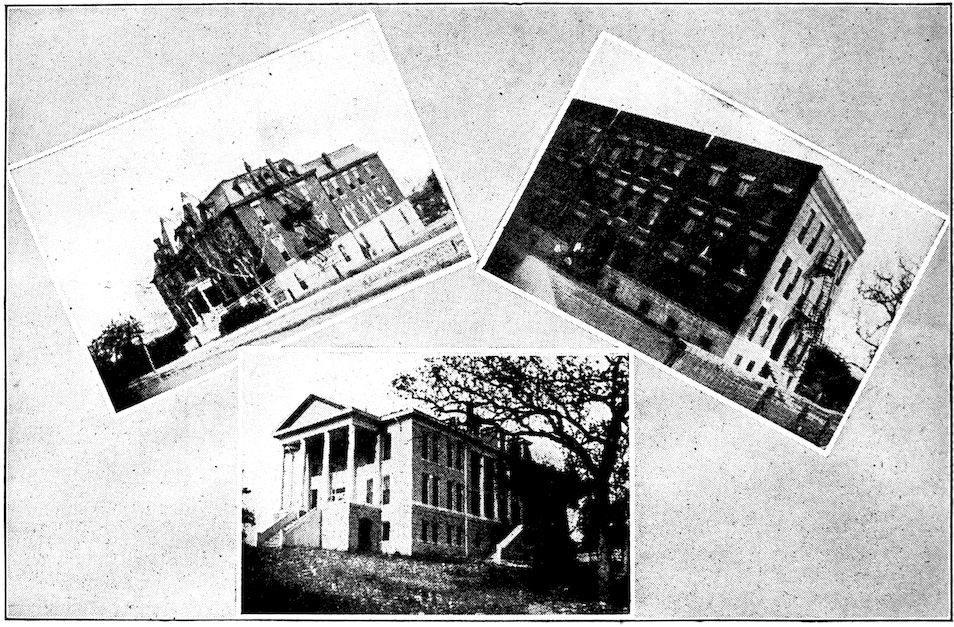
GIRLS’ DORMITORY. ELIZA DEE HOME. BOYS’ DORMITORY. SAMUEL HOUSTON COLLEGE, AUSTIN, TEXAS. Founded in 1900 by the late President, J. S. Lovinggood. Now under the Freedmen’s Aid Society of the M. E. Church. It has 17 teachers, about 400 pupils, an income of $15,000, and property valued at $100,000.
282
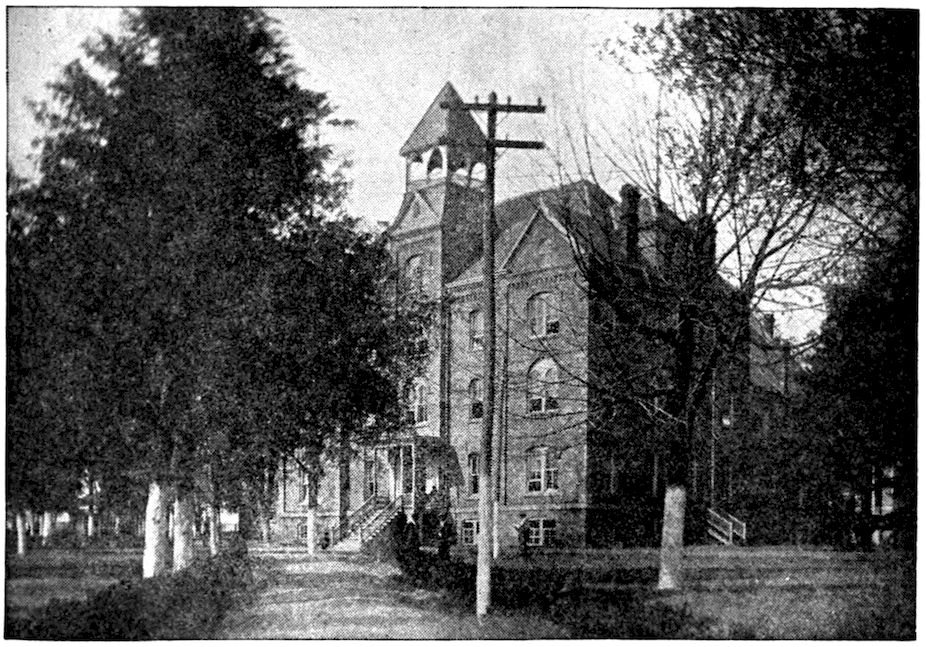
MAIN BUILDING, WILEY COLLEGE, MARSHALL, TEXAS. The institution was founded in 1873 by the Freedmen’s Aid Society of the Methodist Episcopal Church. It has thirty teachers, four hundred students and a property valuation of $200,000.
Of the many notable persons who have rendered valuable service to this society, only two or three of those who are now in the service can be mentioned here. Reference is made in the school sketches to the long years given by the presidents of Meharry Medical College, Claflin University, and Morristown Normal and Industrial College. To these should be added the name of Bishop W. P. Thirkield, whose wisdom and energy in the various important positions entrusted to him have contributed 283greatly not only to the work of this society, but also to the general welfare of the colored people.
The executive officers of the society at present, are two corresponding secretaries and a school inspector. These three officers supervise the schools and appeal to the white and colored churches for funds to support the institutions.
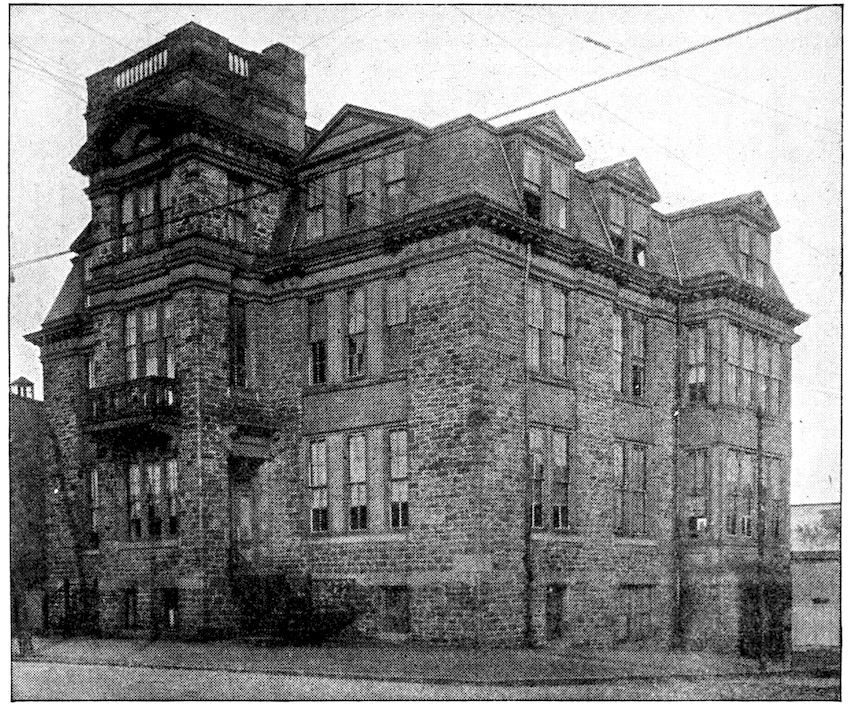
MORGAN COLLEGE, BALTIMORE, MD. Owned and supported by the Methodist Episcopal Church. It has eleven teachers and one hundred students. The total value of the college is $100,000.
The purpose of the Freedmen’s Aid Society to continue its splendid work of education is revealed in the report of the commission recently appointed by the Society to study the schools, which among other things, said:
284
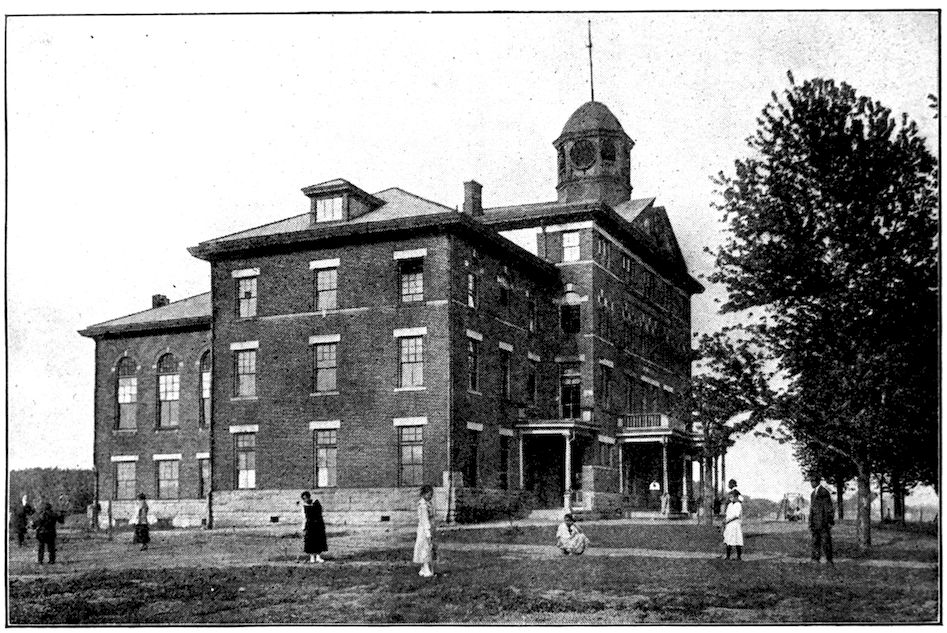
GEORGE R. SMITH COLLEGE, SEDALIA, MO.
285“We are persuaded that in spite of the better rural schools now being provided for the Negroes, in spite of some growth in normal school and high school accommodations, the work of the Freedmen’s Aid Society is still an urgent need of the South. So far from sounding any retreat, we of the church should make a great advance, provide a large endowment, give more adequate facilities, pay better salaries, and, in general, strengthen the institutions we have established. They are needed to train a Christian leadership for the colored race, and while they can touch but a few out of the negro millions, they can do, as they have already done, great things through these selected leaders.”
Woman’s Home Missionary Society of the Methodist Episcopal Church.—The Woman’s Home Missionary Society owns and maintains 12 home schools for girls. Eight of them are connected with the various educational institutions of the Freedmen’s Aid Society. These homes usually provide home training for the girls at the larger schools of the Freedmen’s Aid Society. All of these homes are well managed. They are in charge of the best type of northern women and colored women, who have manifested unusual devotion and efficiency in their work. The important facts for these schools by States, are given below:
WOMAN’S HOME MISSIONARY SOCIETY OF THE METHODIST EPISCOPAL CHURCH.
States Number of Schools Counted Attendance Teachers Income for Current Expenses Value of Property
Total White Negr.
Total 12 1,572 71 41 30 $42,975 $309,500
Arkansas 1 119 3 1 2 2,257 14,300
Florida 1 224 13 4 9 6,281 73,000
Georgia 2 259 11 7 4 7,220 15,000
Louisiana 1 175 6 4 2 3,171 45,000
Mississippi 1 55 4 3 1 4,895 32,000
North Carolina 2 380 13 10 3 7,488 33,000
South Carolina 1 279 12 7 5 5,373 75,500
Tennessee 1 31 2 2 2,595 8,700
Texas 2 50 7 3 4 3,695 13,000
286
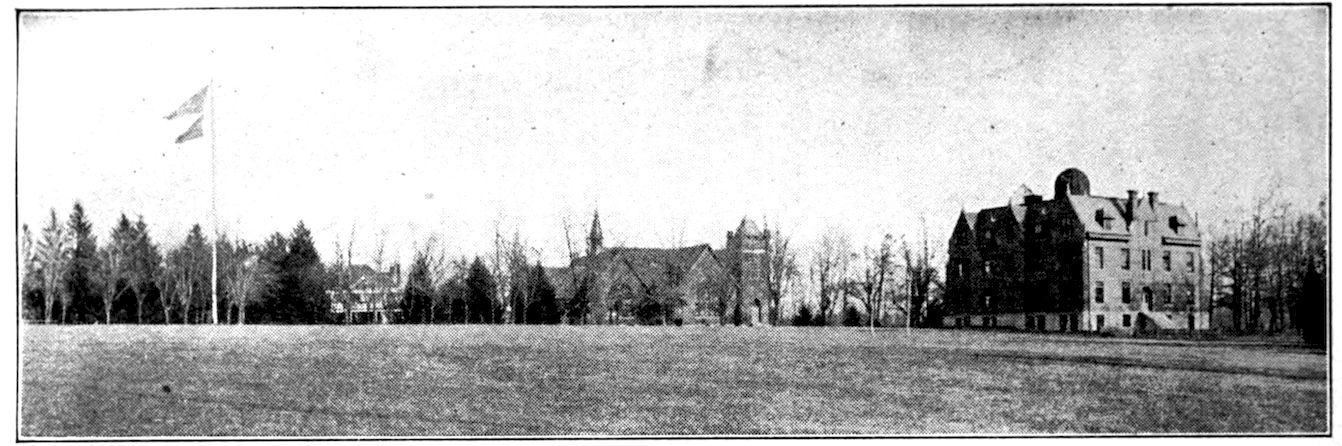
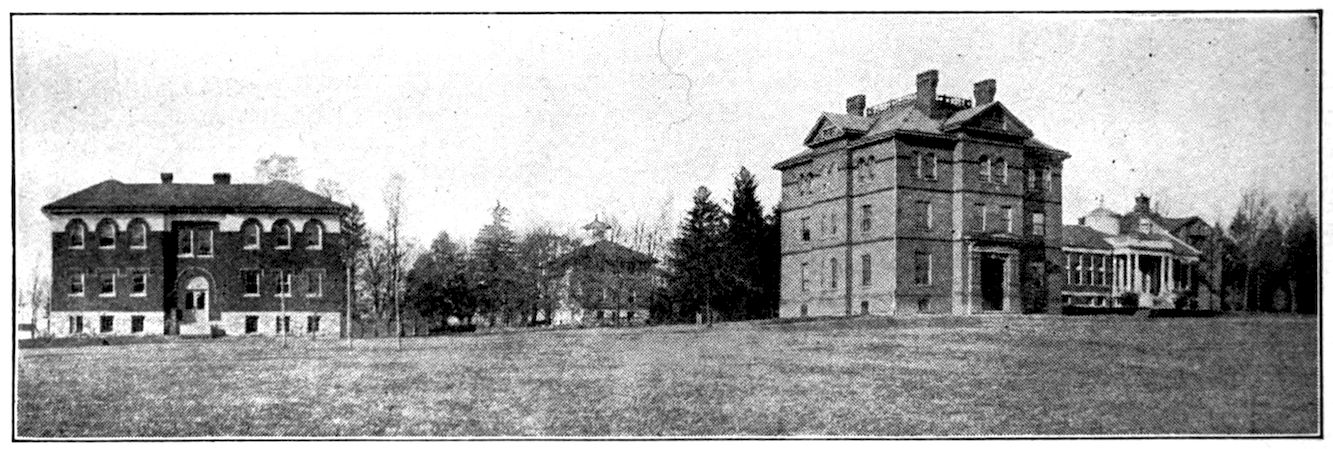
LINCOLN UNIVERSITY, LINCOLN, PENNSYLVANIA. One of the oldest colleges for colored people. Founded in 1854 by Rev. John Dickey, of Oxford, Pa. It is one of the most liberally endowed institutions, and has an able faculty. There are 14 teachers, about 225 students, and property valued at approximately $1,100,000.
287The total income for the current expenses of all the homes is $54,975, of which $38,502 is received from the Missionary Society. The value of all the property is $287,000. The total attendance is 1,572 girls, of whom 808 are in the homes not connected with the Freedmen’s Aid Society. The teachers and workers are 71 women, of whom 41 are white and 30 colored; 18 are academic and 42 are industrial teachers.
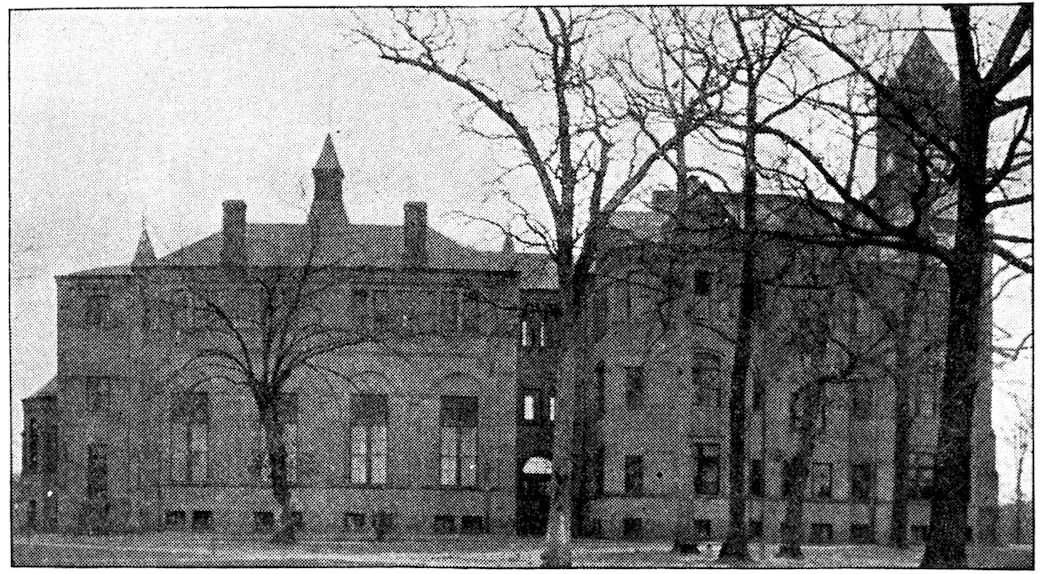
MAIN BUILDING, BIDDLE UNIVERSITY, CHARLOTTE, N. C. An institution maintained exclusively for colored young men. It was founded in 1867, by the Presbyterian Board of Missions for Freedmen. It has sixteen teachers, over two hundred students and property valued at nearly $300,000.
The names and locations of these homes are as follows: Adeline Smith Home, Little Rock, Alabama; Boylan Home, Jacksonville, Florida; Thayer Home, Atlanta, Georgia; Haven and Speedwell Home, Savannah, Georgia; Peck Home, New Orleans, Louisiana; Rust Home, Holly Springs, Mississippi; Kent Home, Greensboro, North Carolina; Allen Industrial Home and School, Asheville, North Carolina; Browning Industrial Home, Camden, South Carolina; New Jersey Home, Morristown, Tennessee; Eliza Dee Home, Austin, Texas, and King Industrial Home, Marshall, Texas.
The society began its work in 1881, when Thayer Home was built at Clark University, Atlanta, Georgia. The society is divided into 288“bureaus” consisting of a secretary and assistants who are white volunteer workers. “Each bureau has the responsibility in its own field of executing the plans and applying the funds as ordered by the general board of managers.” The central office is at Cincinnati, Ohio.
Presbyterian Board.—The Board of Missions for Freedmen of the Presbyterian Church owns and supervises 85 schools for colored people. Of these 32 are large important institutions. Through wise administration and fairly adequate equipment, they are meeting the needs of their communities or working successfully in that direction. Five of them are seminaries for colored girls. The educational work and general administration of these seminaries are excellent. They are among the best schools for colored people in the South. Two are boarding schools for young colored men, the others are boarding and day schools for boys and girls.
A summary table of these schools follows:
BOARD OF MISSIONS FOR FREEDMEN OF THE PRESBYTERIAN CHURCH.
States Number of Schools Counted Attendance Teachers Income for Current Expenses Value of Property
Total White Negr.
Total 85 8,915 423 84 339 $200,124 $2,151,321
Alabama 3 391 25 13 12 10,116 55,000
Arkansas 8 774 28 28 5,911 40,350
Florida 3 247 9 9 1,150 4,000
Georgia 11 1,787 67 67 20,192 91,444
Kentucky 2 98 9 9 3,000 11,050
Mississippi 1 199 14 14 6,517 71,000
North Carolina 15 1,879 93 15 78 47,346 478,665
Oklahoma 1 93 6 6 1,976 8,000
South Carolina 19 1,808 75 7 68 22,907 158,050
Tennessee 8 607 34 34 10,052 87,950
Texas 1 115 13 13 10,979 60,000
Virginia 12 701 36 10 26 11,915 44,400
Northern States 1 216 14 12 2 48,063 1,041,412
The total income for current expenses of the schools under the Freedmen’s Board, including Lincoln University, was $200,124. Of this $176,946 was spent in the 32 larger schools and $23,178 in the 53 smaller schools. According to income, 17 schools were under $2,500; 4 between $2,500 and $5,000; 9 between $5,000 and $15,000, and one between $15,000 and $30,000. Lincoln University has an income of $48,000.
289
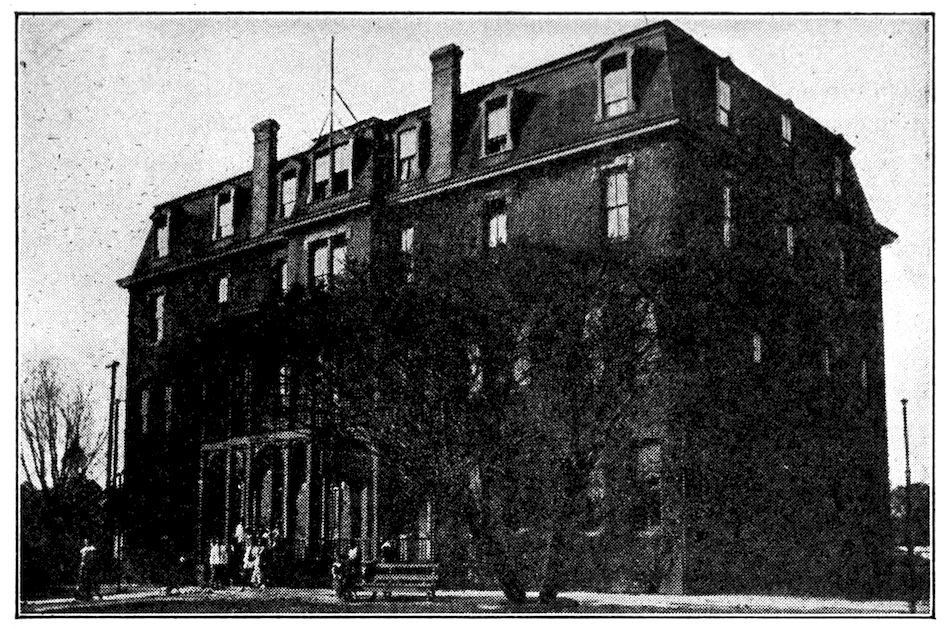
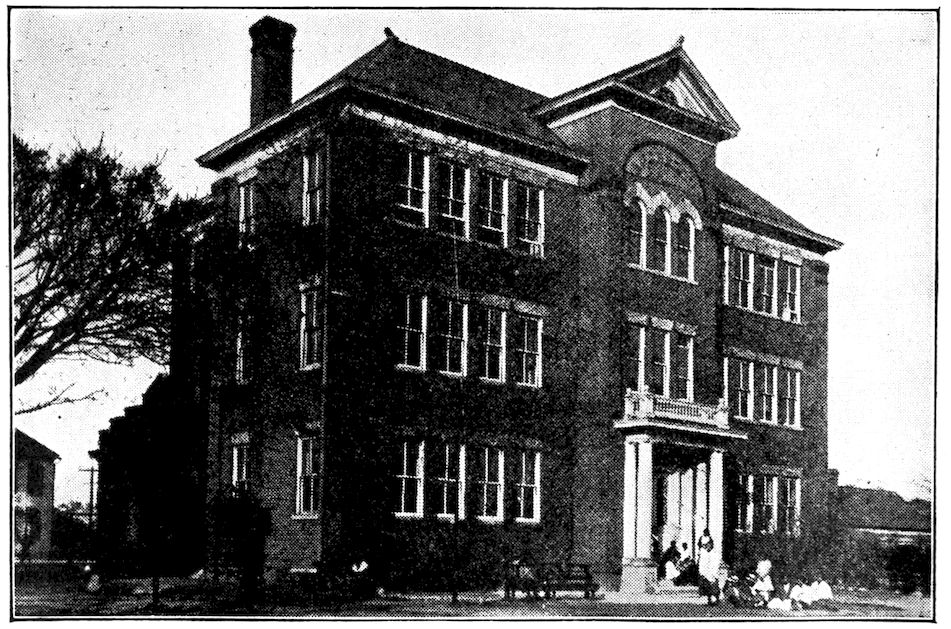
HAINES SCHOOL, AUGUSTA, GEORGIA. One of the best private High Schools in the South for Negroes. Founded in 1886, by Miss Lucy Laney, a young colored woman of marked ability. It has 25 teachers, about 900 pupils, an income of $9,000, and property valued at $75,000.
290The total value of property of the 31 schools directly under the board was $1,109,909, of which $1,038,729 was in the property of the larger schools and $71,180 in the property of the smaller schools. The inclusion of Lincoln University, would bring the property of the larger Presbyterian schools up to $2,151,321. On the basis of property valuation 14 schools were below $2,500; 5 between $10,000 and $25,000; 3 between $25,000 and $50,000; 8 between $50,000 and $100,000 and one over $30,000.
The attendance of all the schools under this board, including Lincoln University, was 8,915, of whom 7,833 were elementary pupils, 930 secondary, and 152 in college studies. Lincoln University had 130 students reported as of collegiate grade and Biddle University 22 in college subjects. The teachers and workers in these institutions are 423 in number of whom 84 are white and 339, or 80 per cent. are colored; 115 are men and 308, or 70 per cent., are women; and 373, or 88 per cent., are academic.
These percentages indicate that the schools under the Freedmen’s board have an usual proportion of colored teachers. As the secretary recently reported, “an overwhelming number of their workers belong to the colored race. There are only six white men in our employ.” White workers are now limited to the five girls’ seminaries and one other school. These comments do not refer to Lincoln University, whose teachers are with two exceptions white men.
The Presbyterian Church began work among Negroes as early as 1864. Two committees, with headquarters at Indianapolis and Philadelphia, were combined by the general assembly at Pittsburgh in 1865. In 1870 a committee doing similar work in New York was consolidated with the Pittsburgh committee. In 1882 this committee was incorporated under the present name of the board. The woman’s department of the board was organized in 1884. Through this department the women of the church rendered valuable aid to the schools.
The name and locations of the larger Presbyterian schools are given below:
291
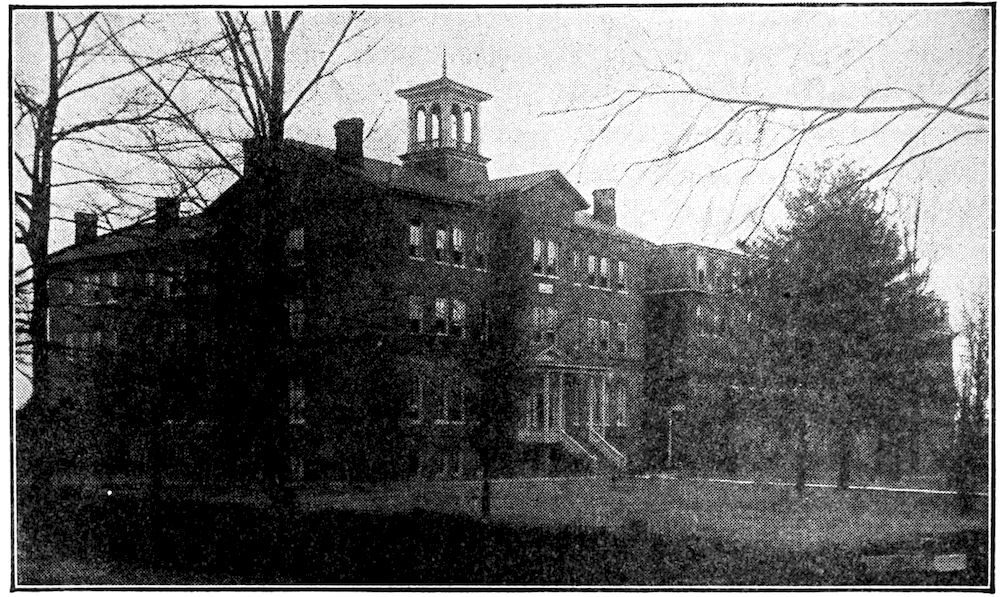
SCOTIA SEMINARY, CONCORD, N. C. A splendid girls’ school. Founded in 1866. Owned and supported by the Board of Missions for Freedmen of the Presbyterian Church. Teachers, 20; Attendance, 300; Property, $65,000.
Barber Memorial Seminary, Anniston, Alabama; Miller Memorial School, Birmingham, Alabama; Arkadelphia Academy, Arkadelphia, Arkansas; Cotton Plant Academy, Cotton Plant, Arkansas; Boggs Academy, Keyesville, Georgia; Gillespie Normal Academy, Cordele, Georgia; Haines Institute, Augusta, Georgia; Hodge Academy, Washington, Georgia; McClelland Academy, Newman, Georgia; Seldon Normal and Industrial School, Brunswick, Georgia; Union Point Normal and Industrial School, Union Point, Georgia; Bowling Green Academy, Bowling Green, Kentucky; Free Memorial Institute, Camp Nelson, Kentucky; Mary Holmes Seminary, West Point, Mississippi; Albion Academy, Franklinton, North Carolina; Biddle University, Charlotte, North Carolina; Mary Potter Memorial School, Oxford, North Carolina; Scotia Seminary, Concord, North Carolina; Alice Lee Elliott Memorial School, Valliant, Oklahoma; Andrew Robertson Institute, Aiken, South Carolina; Brainerd Institute, Chester, South Carolina; Coulter Memorial School, Cheram, 292South Carolina; Goodwill Parochial School, Mayeville, South Carolina; Harbison College, Irmo, South Carolina; Kendall Institute, Sumter, South Carolina; Mayers Industrial School, Knoxville, Tennessee; Newton Normal School, Chattanooga, Tennessee; Swift Memorial School; Mary Allen Seminary, Crockett, Texas; Danville High and Industrial School, Danville, Virginia; Ingleside Seminary, Burkville, Virginia; Lincoln University, Lincoln, Pennsylvania.
Protestant Episcopal Boards.—The Domestic and Foreign Missionary Society of the Protestant Episcopal Church has general supervision of all of the Episcopal schools. The American Church Institute for Negroes, a subordinate organization to the society, was incorporated in 1906, for the purpose of assisting in the religious education of Negroes. Its first secretary was the Rev. Samuel H. Bishop, whose faithful service was ended by death in 1914. The Rev. Robert W. Patton, the secretary of the Fourth Provincial Synod, now gives partial time to the raising of funds and the supervision of the eight schools receiving aid from the institute. These schools are as follows:
St. Augustine’s School, Raleigh, N. C.
St. Paul’s Industrial School, Lawrenceville, Va.
Bishop Payne Divinity School, Petersburg, Va.
St. Athanasius’ School, Brunswick, Ga.
Vicksburg School, Vicksburg, Miss.
St. Mark’s School, Birmingham, Ala.
St. Mary’s School, Columbia, S. C.
Fort Valley School, Fort Valley, Ga.
The church, through the Missionary Society, appropriates about $50,000 annually for the education of Negroes in the United States. These gifts are made on the suggestion and advice of the bishops of the various dioceses. Appropriations for the larger institutions are sent directly to their treasurers. The small parochial schools are aided through the bishops of their diocese. These are frequently only little groups of children taught in the church. A state summary of the Episcopal schools follows:
293
AMERICAN CHURCH INSTITUTE AND THE EPISCOPAL BOARD OF MISSIONS.
States Number of Schools Counted Attendance Teachers Income for Current Expenses Value of Property
Total 24 2,988 176 $118,526 $628,743
Alabama 1 192 7 4,485 22,000
Florida 3 193 8 1,835 3,500
Georgia 5 685 38 18,204 66,500
Mississippi 1 121 5 2,514 5,000
North Carolina 5 640 39 30,069 211,500
South Carolina 4 607 15 3,976 12,000
Tennessee 1 32 4 1,182 4,000
Texas 1 73 4 2,500 25,000
Virginia 2 445 56 53,761 279,243
The Episcopal Board of Missions and the American Church Institute give aid to 24 schools, of which 10 are large institutions. On the basis of income one of the large schools has an income under $2,500, five have incomes between $2,500 and $5,000, two between $5,000 and $15,000, and two over $15,000. These four are St. Augustine’s School in North Carolina; Fort Valley School, in Georgia; St. Paul’s School, and Bishop Payne Divinity School in Virginia.
The total income of these schools is $118,536, of which $109,181 is for the ten “larger” institutions and $9,345 is for the fourteen “less important” schools. The total value of property is $628,734, of which $604,543 is the property of the larger institutions, and $24,200 is the property of the smaller schools. The larger institutions have an endowment of $106,835.
The total attendance comprises 2,988 pupils, of which 2,720 are elementary and 268 secondary. The fifteen students at Bishop Payne Divinity School are preparing for the Episcopal ministry. About a thousand of the pupils reported were in attendance at the “smaller” schools. The total number of teachers and workers is 176, of whom 12 are white and 164 are colored; 58 are men and 118, or 67 per cent., are women; and 118, or 68 per cent., are teachers of academic subjects.
294
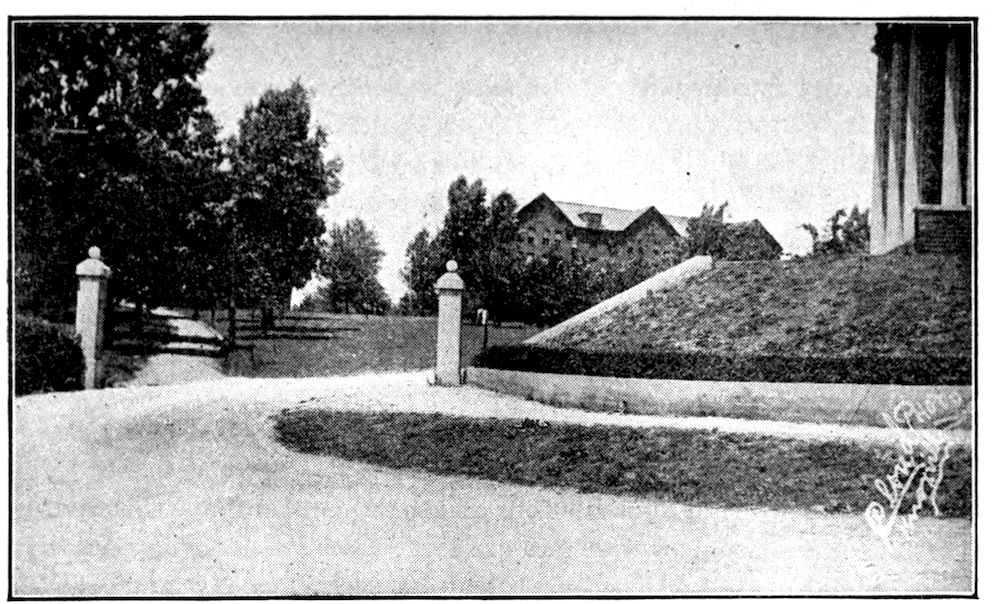
VIEW OF ENTRANCE.
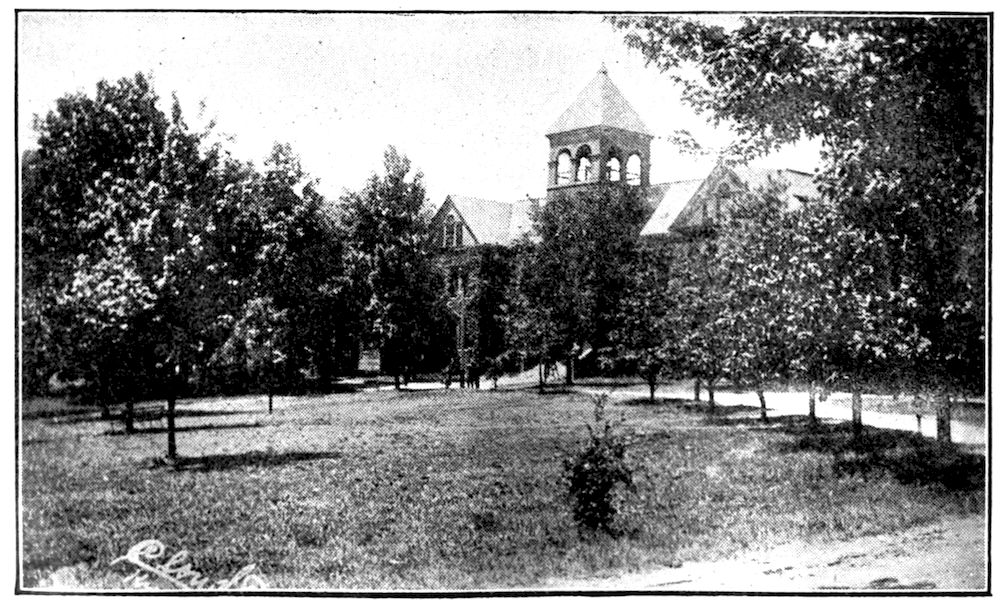
CAMPUS AND RECITATION HALL, KNOXVILLE COLLEGE, KNOXVILLE, TENN. The leading school of the United Presbyterian Church. It was founded in 1875, by the Board of Freedmen’s Missions of that church. It has 30 teachers, 350 students and property valued at $175,000.
295The proportion of colored workers is very large. Only St. Augustine’s and Bishop Payne Divinity School have any white officers or teachers. In addition to the scholars under the American Church Institute, the St. Michael’s School at Charlotte, North Carolina and the St. Phillip’s School, San Antonio, Texas, are among the important schools.
United Presbyterian Church.—The Board of Freedmen’s Missions of the United Presbyterian Church owns and maintains 15 schools for Negroes in the United States, of these eleven are rated as “more important,” and four as “less important.” While eleven schools are regarded as “important,” or essential parts of the educational activities of their community, the average income per school is only about six or seven thousand dollars a year. Knoxville College, with an income of $25,470, is the central institution of the system. The colored teachers of all these schools are largely prepared at Knoxville. The good work of this institution is seen in the high type of graduates who are employed in the smaller schools.
BOARD OF MISSIONS OF THE UNITED PRESBYTERIAN CHURCH.
States Number of Schools Counted Attendance Teachers Income for Current Expenses Value of Property
Total White Negr.
Total 15 2,870 166 44 122 $88,512 $455,600
Alabama 6 1,022 58 58 20,648 753,650
North Carolina 1 375 18 18 8,500 50,400
Tennessee 5 635 50 24 26 33,820 196,950
Virginia 3 838 40 20 20 25,544 134,600
The total annual income for current expenses is $88,512, and the value of property is $455,600. The attendance is 2,870, of whom 2,470 are elementary, 370 secondary, and 30 collegiate. All the schools have elementary pupils, and seven schools maintain secondary classes. Only Knoxville College offers instruction of college grade. The total number of teachers is 166, of whom 44 are white and 122, or 73 per cent., are colored; 46 are men, and 120, or 72 per cent., women; and 108, or 65 per cent., are teachers of academic subjects.
296The proportion of colored teachers is large; but, in view of the location and type of these schools, it is probable that the present division is necessary. Any increase in the proportion of colored teachers should be seriously questioned. It is suggested that the experience of other church boards should be consulted on this problem. The percentage of women teachers is above the average. The emphasis on industrial courses is somewhat more marked than in other church schools. The provision for instruction in gardening and agriculture is by no means sufficient, however, for the rural masses of the communities in which those schools are located.
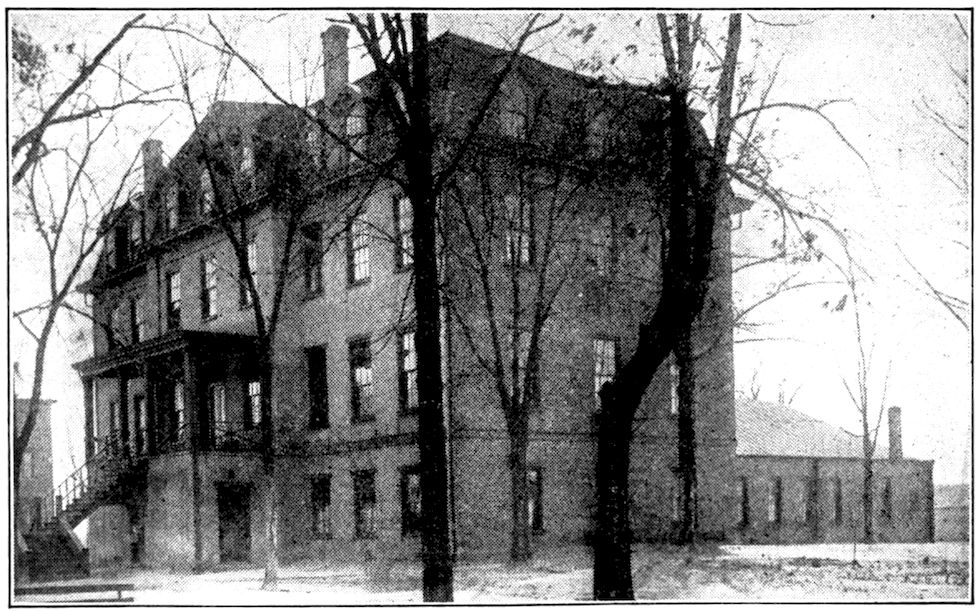
BENNETT COLLEGE, GREENSBORO, NORTH CAROLINA. The leading Methodist school of the State. It was founded in 1889 by the Freedmen’s Aid Society of the Methodist Church. It has 12 teachers, 312 pupils, an annual income of $6,000, and property valued at approximately $45,000.
Much of the success of the colored schools of the United Presbyterian Church is due to the ability and faithfulness of Dr. Witherspoon, whose 297long service forms a notable contribution to religious and educational work. In 1915 the Board of Freedmen’s Missions published the Fifty-fifth Annual Report of its activities. The time and consideration which this board of conscientious business men and ministers devote to the management of the affairs of the school under their care are....
In educational work and administration the United Presbyterian institutions compare favorably with the best church schools. While the majority of them are not large, they are managed with economy and their activities are conducted with considerable regard for thoroughness. With the exception of two or three in eastern Tennessee, they are all well located. The six schools in Alabama are all in Wilcox County, forming a county system of private schools. The influence of these schools has transformed the conditions in the county. The unusual development of these schools in this one county is probably due to the interest and ability of a Scotchman, member of the United Presbyterian Church, who settled in the county soon after the Civil War.
Miscellaneous Denominational Schools under White Boards.—There are a number of miscellaneous denominational schools maintained by white boards. These boards are not discussed separately, because there are so few schools under each board as is indicated in the table below.
Many of the schools of this group represent churches with considerable wealth. Of special interest are the two institutions maintained by white church boards of the South. Paine College of Augusta, is maintained by the Methodist Episcopal Church South. This institution is the largest of the group. The other school owned by the South is Stillman Institute, maintained by the Presbyterian Church South. Both of these schools are taught by Southern white people who are genuinely interested in the colored. It is especially significant in this connection to mention the fact that it is the announced purpose of the Methodist Church to make Paine College an institution of higher education in every sense of that term. Stillman Institute, at Tuscaloosa, Alabama, is also of importance as it touches of point of most vital concern to the development of the race, the development of trained ministers. While the institution has not reached its highest point of development, there is every hope that it too will eventually be a higher institution for the training of ministers.
298
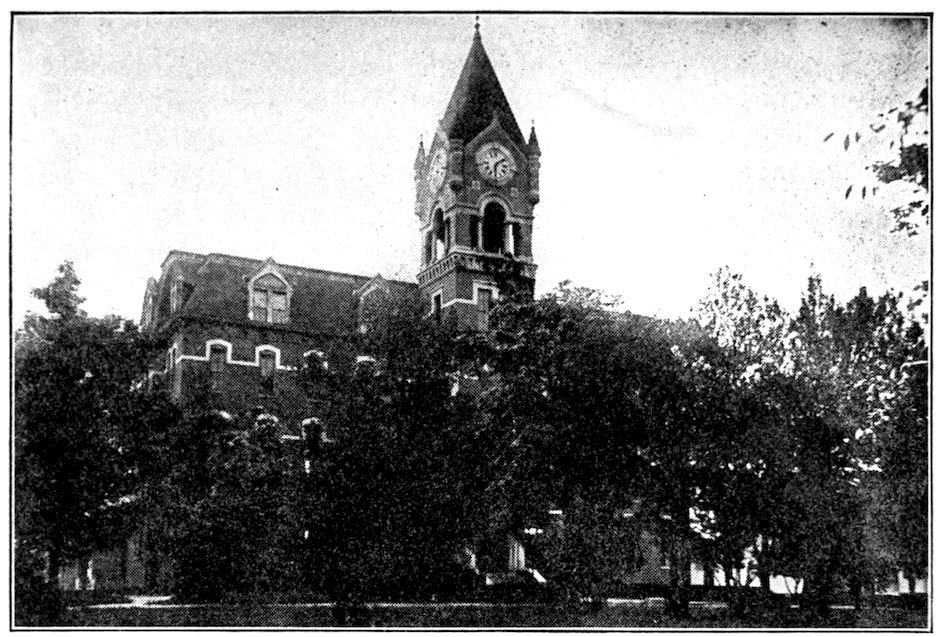
ADMINISTRATION BUILDING.
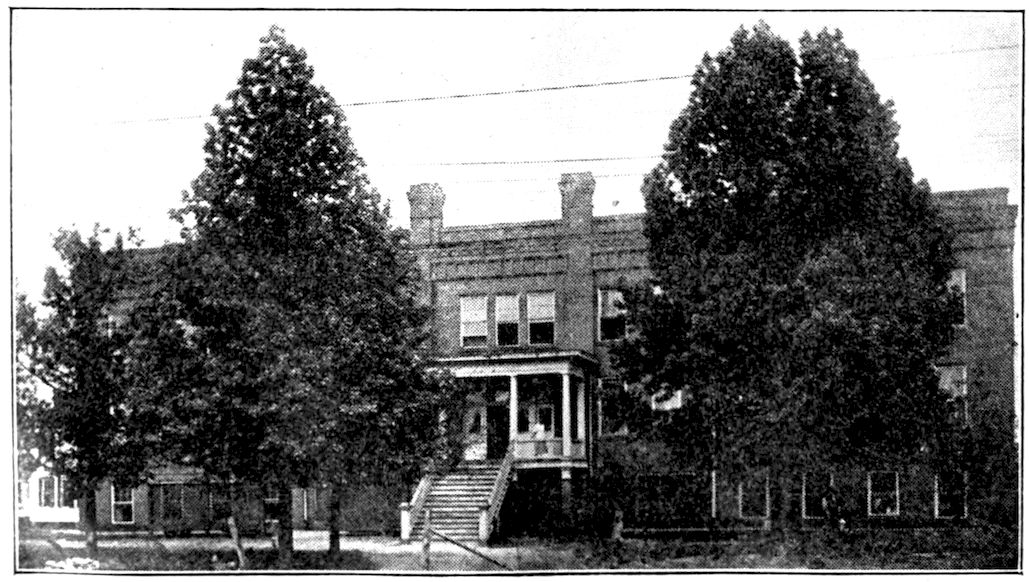
PAINE COLLEGE, AUGUSTA, GEORGIA. Founded in 1884 by the Methodist Episcopal Church South. One of the few private institutions for Negroes owned and taught by Southern white people. It has 20 teachers, over 200 pupils, an income of about $25,000, and property valued at $125,000.
299The figures for schools under these miscellaneous boards are herewith presented:
MISCELLANEOUS DENOMINATIONAL SCHOOLS—WHITE BOARDS.
States Number of Schools Counted Attendance Teachers Income for Current Expenses Value of Property
Total White Negr.
Total 12 1,570 81 37 44 $58,717 $387,265
Christian Advent Church 1 60 3 3 1,500 2,500
Christian Alliance 1 71 9 9 1,476 33,900
Christian Convention (miscellaneous) 3 194 12 12 4,187 75,000
Methodist Episcopal Church South 1 202 19 6 13 23,050 125,000
Presbyterian Church South 1 51 5 5 7,300 51,000
Reformed Episcopal Church 1 95 2 2 300 2,000
Reformed Presbyterian Church 1 705 17 7 10 7,300 52,500
7th Day Adventist Church 2 136 11 10 1 12,404 42,765
Universalist Church 1 56 3 3 1,200 3,500
The total number of schools under these boards is twelve. Of these, six are rated by the United States Bureau of Education as large or important institutions. The total income of the 12 schools is $58,717, of which the largest sum provided by any one denomination is $23,050, the income of Paine College, Augusta, Georgia, supported by the Methodist Episcopal Church South; the total number of teachers is 81, of whom 37 are white, and 44 are colored; the value of property is $387,265, of which $125,000 is for Paine College.
Of the six large schools under these boards Paine College and Stillman Institute have been mentioned, Stillman being maintained by the Presbyterian Church South. The other four are: Boydton Institute, Boydton, Virginia, maintained by the Christian Alliance; Franklinton Christian College, Franklinton, North Carolina, maintained by the Christian Church; Knox Institute, Selma, Alabama, maintained by the Reformed 300Presbyterian Church, and Oakwood Manual Training School, Huntsville, Alabama, maintained by the Seventh Day Adventist Church.