Front matter
Reading edition
ADDRESSES AND PROCEEDINGS
OF THE
Second National Conservation Congress
HELD AT
SAINT PAUL, MINNESOTA SEPTEMBER 5-8 1910
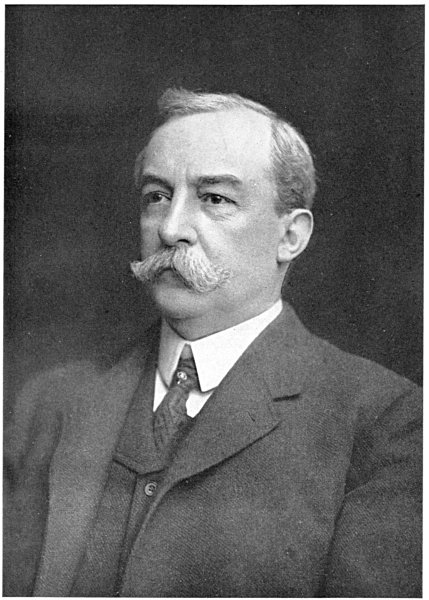
BERNARD N. BAKER Baltimore, Md. President, Second National Conservation Congress
PROCEEDINGS
OF THE
Second National Conservation Congress
AT
Saint Paul SEPTEMBER 5-8, 1910
"Let us conserve the foundations of our prosperity" (Declaration of the Governors, 1908)
WASHINGTON NATIONAL CONSERVATION CONGRESS 1911
W. F. ROBERTS COMPANY PRINTERS WASHINGTON, D. C.
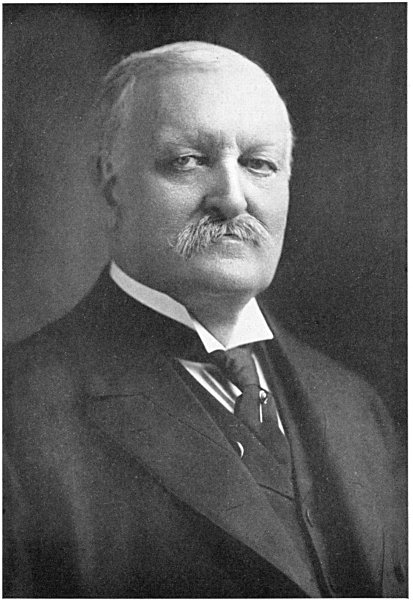
HON. J. B. WHITE Kansas City, Mo. Chairman, Executive Committee, Second National Conservation Congress and Third National Conservation Congress
OFFICERS AND COMMITTEES FOR 1909-10
President B. N. Baker, Baltimore
Executive Secretary Thomas R. Shipp, Washington, D. C.
Secretary L. Frank Brown, Seattle
Vice-Presidents John Barrett, Washington, D. C. James S. Whipple, Albany E. J. Wickson, Berkeley Alfred C. Ackerman, Athens, Ga. Henry A. Barker, Providence
Executive Committee J. B. White, Kansas City, Mo., Chairman B. N. Baker, Baltimore J. N. Teal, Portland, Ore. A. B. Farquhar, York, Pa. L. H. Bailey, Ithaca Thomas Burke, Seattle Henry E. Hardtner, Urania, La. W. A. Fleming Jones, Las Cruces Mrs Philip N. Moore, Saint Louis Mrs J. Ellen Foster, Washington, D. C.
Local Board of Managers for the Saint Paul Congress Hon. A. O. Eberhart, Chairman Frank B. Kellogg, Vice-Chairman J. S. Bell, Minneapolis H. A. Tuttle, Minneapolis George M. Gillette, Minneapolis B. F. Nelson, Minneapolis L. S. Donaldson, Minneapolis Joseph H. Beek, Saint Paul George H. Prince, Saint Paul Reuben Warner, Saint Paul Paul W. Doty, Saint Paul Theodore W. Griggs, Saint Paul W. C. Handy, Secretary
OFFICERS AND COMMITTEES FOR 1910-11
President Henry Wallace, Des Moines
Executive Secretary Thomas R. Shipp, Washington, D. C.
Treasurer D. Austin Latchaw, Kansas City, Mo.
Recording Secretary James C. Gipe, Clarks, La.
Executive Committee J. B. White, Kansas City, Mo., Chairman B. N. Baker, Baltimore L. H. Bailey, Ithaca James R. Garfield, Cleveland Frank C. Goudy, Denver W. A. Fleming Jones, Las Cruces Mrs Philip N. Moore, Saint Louis Walter H. Page, New York George C. Pardee, Oakland, Cal. Gifford Pinchot, Washington, D. C. J. N. Teal, Portland, Ore. E. L. Worsham, Atlanta
Vice-Presidents
Alabama, Hon. Albert P. Bush, Mobile; Alaska, Hon. James Wickersham, Fairbanks; Arizona, B. A. Fowler, Phenix; Arkansas, A. H. Purdue, Fayetteville; California, E. H. Cox, San Francisco; Colorado, Murdo Mackenzie, Trinidad; Columbia (District of), W J McGee, Washington; Connecticut, Rollin S. Woodruff, Hartford; Delaware, Hon. George Gray, Wilmington; Florida, Cromwell Gibbons, Jacksonville; Georgia, Hon. Jno. C. Hart, Union Point; Hawaii, Mrs Margaret R. Knudsen, Kanai; Idaho, James A. MacLean, University of Idaho; Illinois, Julius Rosenwald, Chicago; Indiana, F. J. Breeze, Lafayette; Iowa, Carl Leopold, Burlington; Kansas, W. R. Stubbs, Topeka; Kentucky, James K. Patterson, Lexington; Louisiana, Newton C. Blanchard, Shreveport; Maine, Bert M. Fernald, Augusta; Maryland, William Bullock Clark, Baltimore; Massachusetts, Frank W. Rane, Boston; Michigan, J. L. Snyder, Lansing; Minnesota, Ambrose Tighe, Saint Paul; Mississippi, A. W. Shands, Sardis; Missouri, Hermann Von Schrenk, Saint Louis; Montana, E. L. Norris, Helena; Nebraska, Dr F. A. Long, Madison; Nevada, Senator Francis G. Newlands, Reno; New Hampshire, George B. Leighton, Monadnock; New Jersey, Charles Lathrop Pack, Lakewood; New Mexico, W. A. Fleming Jones, Las Cruces; New York, R. A. Pearson, Albany; North Carolina, T. Gilbert Pearson, Greensboro; North Dakota, U. G. Larimore, Larimore; Ohio, James R. Garfield, Cleveland; Oklahoma, Benj. Martin, Jr., Muskogee; Oregon, J. N. Teal, Portland; Pennsylvania, William S. Harvey, Philadelphia; Philippine Islands, Maj. George P. Ahern, Manila; Porto Rico, Hon. Walter K. Landis, San Juan; Rhode Island, Henry A. Barker, Providence; South Carolina, E. J. Watson, Columbia; South Dakota, Ellwood C. Perisho, Vermillion; Tennessee, Herman Suter, Nashville; Texas, W. Goodrich Jones, Temple; Utah, Harden Bennion, Salt Lake City; Vermont, Fletcher D. Proctor, Proctor; Virginia, A. R. Turnbull, Norfolk; Washington, M. E. Hay, Olympia; West Virginia, A. B. Fleming, Fairmont; Wisconsin, Charles R. Van Hise, Madison; Wyoming, Bryant B. Brooks, Cheyenne; National Conservation Association, Gifford Pinchot, Washington.
Standing Committees
Forests—H. S. Graves, U. S. Forester, Washington, D. C., Chairman; E. M. Griffith, Madison, Wis.; E. T. Allen, Portland, Ore.; J. Lewis Thompson, Houston.
Lands—Governor W. R. Stubbs, Topeka, Chairman; Dwight B. Heard, Phenix; J. L. Snyder, Lansing; Murdo Mackenzie, Trinidad; Charles S. Barrett, Union City, Ga.
Waters—W J McGee, Washington, D. C., Chairman; E. A. Smith, Spokane; Henry A. Barker, Providence; J. N. Teal, Portland, Ore.; Herbert Knox Smith, Washington, D. C.
Minerals—Charles R. Van Hise, Madison, Chairman; Joseph A. Holmes, Washington, D. C.; D. W. Brunton, Denver; John Mitchell, New York; I. C. White, Morgantown, W. Va.
Vital Resources—Dr William H. Welch, Baltimore, Chairman; Professor Irving Fisher, New Haven; Dr H. W. Wiley, Washington, D. C.; Dr J. H. Kellogg, Battle Creek, Mich.; Walter H. Page, New York.
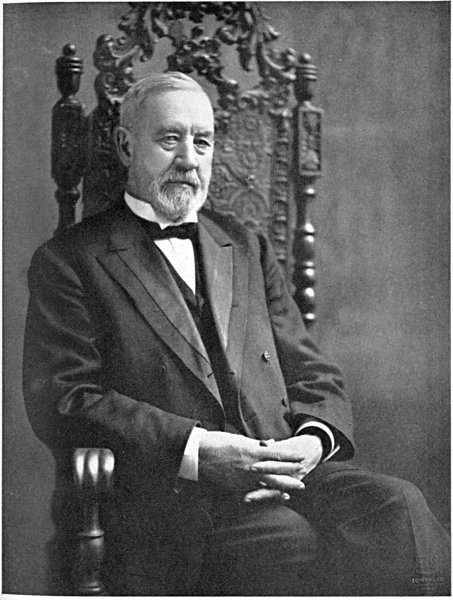
HENRY WALLACE Des Moines, Iowa President, Third National Conservation Congress
CONTENTS
page
CONSTITUTIONix
OPENING SESSION1
Invocation by Archbishop Ireland1
Greeting from Cardinal Gibbons3
Address by Governor Eberhart3
Welcome by Mayor Keller13
Address by President Taft14
SECOND SESSION34
Induction of Governor Stubbs as Chairman34
Address by Senator Nelson35
Address by Governor Noel48
Address by Governor Norris52
Address by Governor Deneen59
Address by Governor Hay64
Announcement by Professor Condra71
Address by Governor Brooks72
Remarks by Governor Stubbs75
Address by Governor Vessey77
THIRD SESSION79
Appointment of Credentials Committee79
Action on Constitution of the National Conservation Congress79
Remarks by Director-General Barrett80
Remarks by Governor Stubbs81
Invocation by Reverend Doctor Montgomery81
Address by Ex-President Roosevelt82
FOURTH SESSION93
Address by Miss Boardman94
Address by Commissioner Herbert Knox Smith101
Modification of Credentials Committee106
Address by Honorable James R. Garfield106
Address by Ex-Governor Pardee115
Remarks by Delegate Horr, of Washington120
Address by Ex-Governor Blanchard121
Address by William E. Smythe127
Address by Walter L. Fisher129
Address by Colonel James H. Davidson132
FIFTH SESSION134
Invocation by Bishop Edsall134
Address by President Finley135
Report of Credentials Committee145
Address by Senator Beveridge146
Response by Gifford Pinchot152
Address by President McVey152
Discussion by Chairman White158
Address by Mrs Welch, of the General Federation of Women's Clubs160
Address by Mrs Hoyle Tomkies, of the Women's National Rivers and Harbors Congress163
Address by Mrs Sneath, of the General Federation of Women's Clubs166
Report by Mrs Howard, of the Daughters of the American Revolution167
SIXTH SESSION168
Induction of Senator Clapp as Chairman168
Address by President Craighead168
Postponement of Call of States171
Address by D. Austin Latchaw171
Address by James J. Hill177
Discussion by Henry Wallace188
Address by Secretary Wilson194
Discussion by Representative Stevens201
Address by Professor Bailey203
SEVENTH SESSION213
Address by Professor Graves214
Address by Alfred L. Baker222
Address by Frank H. Short226
Address by Director-General Barrett237
Address by Honorable Esmond Ovey243
Action on time for election and report of Resolutions Committee246
EIGHTH SESSION246
Appointment of Nominating Committee246
Induction of Governor Eberhart as Chairman246
Address by Dean Wesbrook247
Address by Wallace D. Simmons257
Address by Commissioner Elmer E. Brown264
Address by Mrs Scott, President of the Daughters of the American Revolution270
Action in memory of Mrs J. Ellen Foster276
Presentation by Mrs Howard to Gifford Pinchot276
Response by Mr Pinchot277
Address by Francis J. Heney278
Address by Gifford Pinchot292
Expression by Governor Eberhart298
Statement by Professor Condra298
CLOSING SESSION299
Commencement of Call of States299
Response by Delegate Harvey, of Pennsylvania299
Interlude by E. W. Ross, of Washington302
Report of Nominating Committee303
Nomination by Chairman White303
Second by Gifford Pinchot304
Election of and response by Henry Wallace as President305
Election of other Officers306
Resolution of thanks to retiring President Baker308
Response by Mr Baker308
Report of Resolutions Committee308
Adoption of Resolutions312
Interlude by E. W. Ross, of Washington312
Remarks by Delegate Horr, of Washington313
Ratification of Vice-Presidents313
Resolution in memory of Professor Green313
Resumption of Call of States314
Response by Delegate Purdue, of Arkansas314
Response by Delegate Bannister, of Indiana314
Response by Delegate Miller, of Iowa314
Response by Delegate Young, of Kansas314
Response by Delegate Baker, of Maryland314
Response by Delegate Thorp, of Minnesota315
Response by State Geologist Lowe, of Mississippi315
Response by General Noble, of Missouri315
Response by Chairman White316
Response by Professor Condra, of Nebraska317
Response by a Delegate from New York318
Response by Delegate Nestos, of North Dakota318
Response by Delegate Krueger, of South Dakota319
Remarks by Delegate Johns, of Washington320
Privileged statement by Land Commissioner Ross, of Washington322
Response by Delegate Fowler, of Arizona324
Response by Delegate Hunt, of District of Columbia324
Response by Delegate Barker, of Rhode Island324
Response by Professor White, of West Virginia325
Response by Delegate Worsham, of Georgia325
Motion for adjournment by Delegate Martin, of Oklahoma326
SUPPLEMENTARY PROCEEDINGS327
Laws that should be Passed, by Senator Francis G. Newlands327
Conservation of the Nation's Resources, by Chairman J. B. White328
Practical Aspects of Conservation, by A. B. Farquhar331
Report from Arkansas, by Sid B. Redding333
Report from Colorado, by Frank C. Goudy334
Report from Florida, by Cromwell Gibbons335
Report from Idaho, by Jerome J. Day336
Report from Indiana, by A. E. Metzger336
Report from Iowa, by A. C. Miller337
Report from Louisiana, by Henry E. Hardtner339
Report from Maine, by Cyrus C. Babb341
Report from Massachusetts, by Frank William Rane and Henry H. Sprague343
Report from Missouri, by Hermann von Schrenk344
Report from Montana, by Rudolph von Tobel345
Report from New Mexico, by Colonel W. A. Fleming Jones347
Report from New York, by J. S. Whipple347
Special report from New York, by Henry H. Persons352
Report from North Dakota, by Professor Waldron362
Report from Ohio, by Professor Lazenby364
Report from Oklahoma, by Benj. Martin, Jr.365
Report from Oregon, by E. T. Allen367
Report from Rhode Island, by Henry A. Barker368
Report from South Carolina, by E. J. Watson369
Report from South Dakota, by Doane Robinson369
Report from Texas, by Will L. Sargent370
Report from Utah, by O. J. Salisbury372
Supplementary report from Utah, by E. T. Merritt372
Report from Vermont, by George Aitkin373
Report from Washington, by E. G. Griggs375
Report from West Virginia, by Hu Maxwell376
Report from Wisconsin, by E. M. Griffith377
Report of the American Academy of Political and Social Science379
Report of the American Automobile Association380
Report of the American Civic Association383
Report of the American Forestry Association384
Report of the American Humane Association385
Report of the American Institute of Architects386
Report of the American Paper and Pulp Association388
Report of the American Medical Association389
Report of the American Railway Engineering and Maintenance of Way Association392
Report of the American Railway Master Mechanics' Association393
Report of the American Scenic and Historic Preservation Society394
Report of the Association for the Protection of the Adirondacks397
Report of the Carriage Builders' National Association410
Report of the Delaware State Federation of Women's Clubs411
Report of the Farmers' Union of America411
Report of the General Federation of Women's Clubs412
Report of the Lakes-to-Gulf Deep Waterway Association413
Report of the League of American Sportsmen415
Report of the National Board of Fire Underwriters416
Report of the National Board of Trade419
Report of the National Business League of America420
Report of the Missouri Valley River Improvement Association420
Report of the Upper Mississippi River Improvement Association421
Report of the Washington State Federation of Labor422
Report of the Western Forestry and Conservation Association423
Report of the United Mine Workers424
Timber Conservation, by George H. Emerson424
Forests and Stream-Flow, by William S. Harvey428
The Conservation of Minerals and Subterranean Waters, by George F. Kunz, Ph.D.429
The Question of Land Titles, by Franklin McCray430
INDEX431
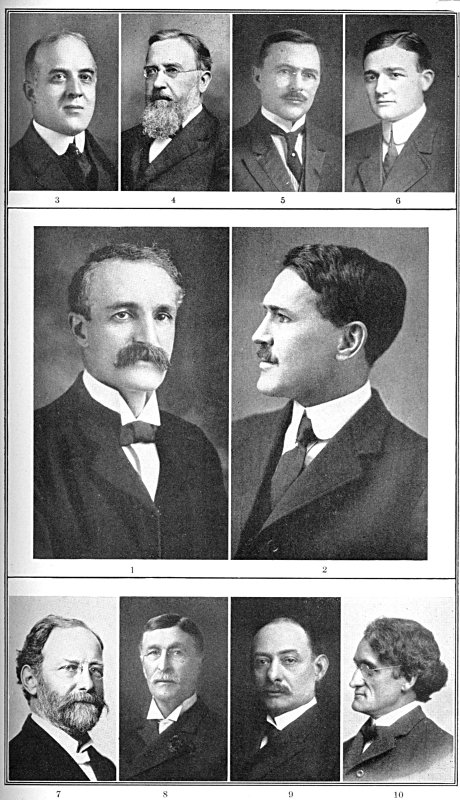
1. Gifford Pinchot, Vice-President (1910). 2. James R. Garfield, Vice-President (1910). 3. Henry A. Barker, Vice-President (1909-10). 4. A. B. Farquhar, Executive Committee (1909). 5. W. A. Fleming Jones, Vice-president (1910). 6. E. L. Worsham, Executive Committee (1910). 7. George C. Pardee, Executive Committee (1910). 8. J. N. Teal, Executive Committee (1909-10). 9. Walter H. Page, Executive Committee (1910). 10. L. H. Bailey, Executive Committee (1909-10).
CONSTITUTION
Article 1—Name
This organization shall be known as the National Conservation Congress.
Article 2—Object
The object of the National Conservation Congress shall be: (1) to provide a forum for discussion of the resources of the United States as the foundation for the prosperity of the people, (2) to furnish definite information concerning the resources and their utilization, and (3) to afford an agency through which the people of the country may frame policies and principles affecting the wise and practical development, conservation, and utilization of the resources, to be put into effect by their representatives in State and Federal Governments.
Article 3—Meetings
Section 1. Regular annual meetings shall be held at such time and place as may be determined by the Executive Committee.
Section 2. Special meetings of the Congress, or its officers, committees, or boards, may be held subject to the call of the President of the Congress or the Chairman of the Executive Committee.
Article 4—Officers
Section 1. The officers of the Congress shall consist of a President, to be elected by the Congress; a Vice-President from each State, to be chosen by the respective State delegations, and from the National Conservation Association; an Executive Secretary; a Recording Secretary; and a Treasurer.
Section 2. The duties of these officers may at any time be prescribed by formal action of the Congress or Executive Committee. In the absence of such action their duties shall be those implied by their designations and established by custom. In addition, it shall be the duty of the Vice-Presidents to receive, from the State Conservation Commissions and other organizations concerned in Conservation, suggestions and recommendations, and report them to the Executive Committee of the Congress.
Section 3. The officers shall serve for one year, or until their successors are elected and qualify.
Article 5—Committees and Boards
Section 1. An Executive Committee of seven, in addition to which the President of the National Conservation Association and all ex-Presidents of the Congress shall be members ex-officio, shall be appointed by the President during each regular annual session to act for the ensuing year; its membership shall be drawn from different States, and not more than one of the appointed members shall be from any one State. The Executive Committee shall act for the Congress and shall be empowered to initiate action and meet emergencies. It shall report to each regular annual session.
Section 2. A Board of Managers shall be created in each city in which the next ensuing session of the Congress is to be held, preferably by leading organizations of citizens. The Board of Managers shall have power to raise and expend funds, to incur obligations on its own responsibility, and to appoint subordinate boards and committees, all with the approval of the Executive Committee of the Congress. It shall report to the Executive Committee at least two days before the opening of the ensuing session, and at such other times as the Congress or the Executive Committee may direct.
Section 3. A Committee on Credentials shall be appointed, consisting of five (5) members, by the President of the Congress not later than on the second day of each session of the Congress. It shall determine all questions raised by delegates as to representation, and shall report to the Congress from time to time as required by the President of the Congress.
Section 4. A Committee on Resolutions shall be created for each annual meeting of the Congress. A Chairman shall be appointed by the President. One member of the Committee shall be selected by each State represented in the Congress. The Committee shall report to the Congress not later than the morning of the last day of each annual meeting.
Section 5. Permanent Committees, consisting of five (5) members each, shall be appointed by the President of the Congress on each of the following five divisions of Conservation: Forests, Waters, Lands, Minerals, and Vital Resources. These committees shall, during the intervals between the annual meetings of the Congress, inquire into these respective subjects and prepare reports to be submitted on the request of the Executive Committee, and render such other assistance to the Congress as the Executive Committee may direct.
Section 6. By direction of the Congress, standing and special committees may be appointed by the President.
Section 7. The President shall be a member, ex-officio, of every committee of the Congress.
Article 6—Arrangements for Sessions
Section 1. The program for the session of each annual meeting of the Congress, including a list of speakers, shall be arranged by the Executive Committee. The entire program, including allotments of time to speakers and hours for daily sessions and all other arrangements concerning the program, shall be made by the Executive Committee.
Section 2. Unless otherwise ordered, the rules adopted for the guidance of the preceding Congress shall continue in force.
Article 7—Membership
Section 1. The personnel of the National Conservation Congress shall be as follows:
Officers and Delegates
Officers of the National Conservation Congress.
Fifteen Delegates appointed by the Governor of each State and Territory.
Five Delegates appointed by the Mayor of each city with a population of 25,000, or more.
Two Delegates appointed by the Mayor of each city with a population of less than 25,000.
Two Delegates appointed by each Board of County Commissioners.
Five Delegates appointed by each National Organization concerned in the work of Conservation.
Five Delegates appointed by each State or Interstate Organization concerned in the work of Conservation.
Three Delegates appointed by each Chamber of Commerce, Board of Trade, Commercial Club, or other local organization concerned in the work of Conservation.
Two Delegates appointed by each State or other University or College, and by each Agricultural College or Experiment Station.
Honorary Members
The President of the United States.
The Vice-President of the United States.
The Speaker of the House of Representatives.
The Cabinet.
The United States Senate and House of Representatives.
The Supreme Court of the United States.
The Representatives of Foreign Governments.
The Governors of the States and Territories.
The Lieutenant-Governors of the States and Territories.
The Speakers of State Houses of Representatives.
The State Officers.
The Mayors of Cities.
The County Commissioners.
The Presidents of State and other Universities and Colleges.
The Officers and Members of the National Conservation Association.
The Officers and Members of the National Conservation Commission.
The Officers and Members of the State Conservation Commissions and Associations.
Article 8—Delegations and State Officers
Section 1. The several Delegates from each State in attendance at any Congress shall assemble at the earliest practicable time and organize by choosing a Chairman and a Secretary. These Delegates, when approved by the Committee on Credentials, shall constitute the Delegation from that State.
Article 9—Voting
Section 1. Each member of the Congress shall be entitled to one vote on all actions taken viva voce.
Section 2. A division or call of States may be demanded on any action by a State delegation. On division, each Delegate shall be entitled to one vote; provided (1) that no State shall have more than twenty votes; and provided (2) that when a State is represented by less than ten Delegates, said Delegates may cast ten votes for such State.
Section 3. The term "State" as used herein is to be construed to mean either State, Territory, or Insular Possession.
Article 10—Amendments
This Constitution may be amended by a two-thirds vote of the Congress during any regular session, provided notice of the proposed amendment has been given from the Chair not less than one day or more than two days preceding; or by unanimous vote without such notice.
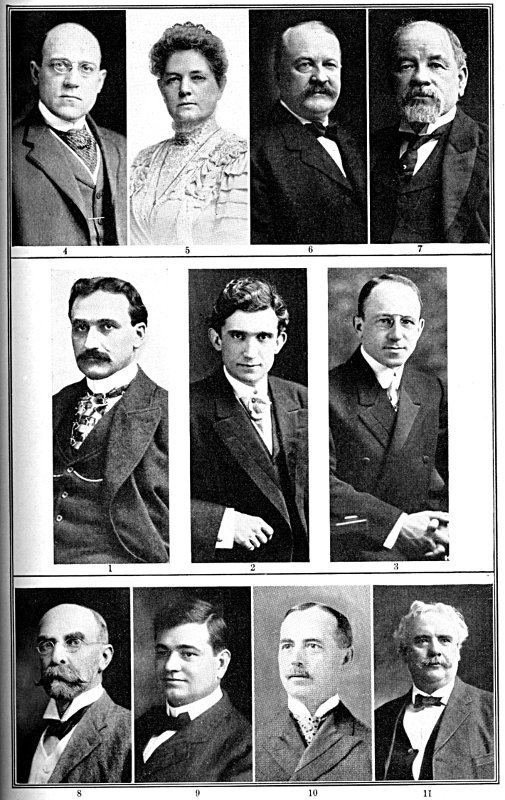
1. D. Austin Latchaw, Treasurer (1910). 2. Thomas R. Shipp, Executive Secretary (1909-10). 3. James C. Gipe, Recording Secretary (1910). 4. John Barrett, Vice-President (1909). 5. Mrs Philip N. Moore, Executive Committee (1909-10). 6. Frank C. Goudy, Executive Committee (1910). 7. Thomas Burke, Executive Committee (1909). 8. E. J. Wickson, Vice-President (1909). 9. Henry D. Hardtner, Vice-President (1909). 10. James S. Whipple, Vice-President (1909). 11. W J McGee, Vice-President (Editor of Proceedings).