Front matter
Reading edition
PREHISTORIC MAN
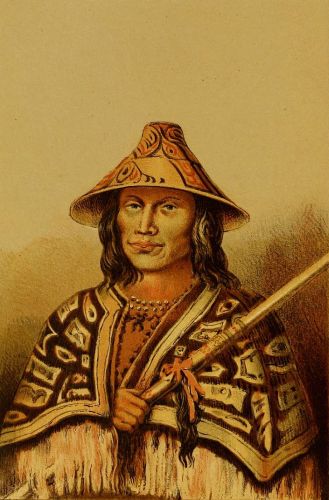
KASKATACHYUH. A CHIMPSEYAN CHIEF. Drawn by D. Wilson LL.D. from sketches by Paul Kane. Cooper & Hodson Lith. 188, Strand, London, W.C.
PREHISTORIC MAN
Researches into the Origin of Civilisation
in the Old and the New World.
BY
DANIEL WILSON, LL.D., F.R.S.E.
PROFESSOR OF HISTORY & ENGLISH LITERATURE IN UNIVERSITY COLLEGE, TORONTO;
AUTHOR OF THE ‘PREHISTORIC ANNALS OF SCOTLAND,’ ETC.
THIRD EDITION, REVISED AND ENLARGED,
WITH ILLUSTRATIONS.
London:
MACMILLAN AND CO.
1876.
[The right of translation is reserved.]
Edinburgh University Press:
THOMAS AND ARCHIBALD CONSTABLE, PRINTERS TO HER MAJESTY.
IN FOND MEMORIAL
OF A BROTHER’S LIFE-LONG SYMPATHY
IN MANY FAVOURITE RESEARCHES
These Volumes
DEPRIVED BY DEATH OF THEIR PURPOSED DEDICATION
ARE INSCRIBED WITH THE LOVED NAME OF
GEORGE WILSON, M.D. F.R.S.E.
LATE REGIUS PROFESSOR OF TECHNOLOGY IN THE UNIVERSITY OF EDINBURGH
AND DIRECTOR OF THE INDUSTRIAL MUSEUM OF SCOTLAND.
PREFACE.
The subject primarily treated of in the following pages is the man of that new hemisphere which was revealed to Europe in 1492. There through all historic centuries he had lived apart, absolutely uninfluenced by any reflex of the civilisation of the Ancient World; and yet, as it appears, pursuing a course in many respects strikingly analogous to that by means of which the civilisation of Europe originated. The recognition of this is not only of value as an aid to the realisation of the necessary conditions through which man passed in reaching the stage at which he is found at the dawn of history; but it seems to point to the significant conclusion that civilisation is the development of capacities inherent in man.
The term used in the title was first employed, in 1851, in my Prehistoric Annals of Scotland, where evidence was adduced in proof of man’s presence in Britain “long anterior to the earliest indications of the Aryan nations passing into Europe.” It was purposely coined to express the whole period disclosed to us by means of archæological evidence, as distinguished from what is known through written records; and in this sense the term was speedily adopted by the Archæologists of Europe. But the subject thus defined is a comprehensive one; and in its rapid growth, distinctive subdivisions have been introduced which tend to narrow the application of the term. Nevertheless it is still a legitimate definition of man, wherever his history is recoverable solely by means of primitive arts.
The first edition of Prehistoric Man, published in 1862, was followed in 1865 by another, carefully revised in accordance with later disclosures. Since then I have availed myself of further opportunities for study and research in reference both to existing races, and to the arts and monumental remains of extinct nations of the New World. Within the same period important additions have been contributed to our knowledge not only of the arts, but of the physical characteristics of primeval man in Europe. In the present edition, accordingly, much of the original work has been rewritten. Several chapters have been replaced by new matter. Others have been condensed, or recast, with considerable modifications and a new arrangement of the whole.
The illustrations have been correspondingly augmented; and some of them engraved anew from more accurate drawings. In the first edition they numbered seventy-one. They now amount to one hundred and thirty-four, including several for which I am indebted to the courtesy of Mr. John Evans, F.R.S., to the publishers of Nature, and to the Council of the Society of Antiquaries of Scotland.
D. W.
University College, Toronto,
18th November 1875.
CONTENTS
CHAPTER I.
INTRODUCTION.
The Influence of the Discovery of America—The Old World and the New—American Phases of Life—The Term Prehistoric—Influence of Migrations—What is Civilisation?—Domestication—Indian Philosophy—Aborigines—The Tartar; The Arab—Languages of America—Wanderings of the Nations—Fossil Man—Occupation of the New World,1
CHAPTER II.
THE PRIMEVAL TRANSITION.
The Latest Migrations—Founding a Capital—Beginnings of History—Prehistoric Phases—Non-Metallurgic Eras—Oscillations of the Land—The Glacial Period—Conditions of Climate—Fossil Mammalia—The Flint-Folk of the Drift—Advent of European Man—The Drift Implements—Scottish Alluvium—Preceltic Races—Their Imitative Arts—Man Primeval—His Intellectual Condition—Instinct—Accumulated Knowledge—Primeval Britain—Its Fossil Fauna—Ossiferous Caves—Brixham Cave—Food—Scottish Reindeer—American Drift—Relics of Ancient Life—Extinct Fauna—Man and the Mastodon—Indian Traditions—Giants—Drift Disclosures—Large Ovoid Discs—Cave Disclosures—American Cranial Type—Antiquity of the American Man,17
CHAPTER III.
THE QUARRY.
The Quarry—Brixham Cave—Brixham Flint Implement—Flint Ridge, Ohio—Flint Pits—Drift Quarry Deposits—Traces of Palæolithic Art—Lanceolate Flints—Almond-shaped Flints—The Shawnees—The Colorado Indians—Caches of Worked Flints—Sepulchral Deposits—Cave Drift Disclosures—Illustrative Analogies—Cincinnati Collections—Hornstone Spear-heads—American Neolithic Art—Flint Drills—Modes of Perforation—Flint-Knives—Razors and Scrapers—Arrow-head Forms—Discoidal Stones—Sinkers and Lasso Stones—Cupped Stones—Archæological Theories—Georgia Boulders—Hand Cup-stones—Neolithic Grindstones—Archæological Enigmas—Ancient Analogies,64
CHAPTER IV.
BONE AND SHELL WORKERS.
Bone and Ivory Workers—Substitutes for Flint—Proofs of Relative Age—Domestic Bone Implements—Rude Palæolithic Art—Whalebone Workers—Primitive Working Tools—Fish-spears and Harpoons—Artistic Ingenuity—Drawing of the Mammoth—The Madelaine Etchings—Righthanded Workers—Deer-horn Quarry Picks—Bonebracer or Guard—Birthtime of the Fine Arts—Innuit Carvers of Alaska—Troglodytes of Central France—Post-Glacial Man—Symmetrical Head-Form—Intellectual Vigour—Evidence of Latent Powers—Tawatin Ivory Carving—Lake-Dwellers’ Implements—Cave Implements—Arts of the Pacific Islanders—Carib Shell-Knives—Aborigines of the Antilles—Caribs of St. Domingo—Cave Pictures and Carvings—Prized Tropical Shells—Ancient Graves of Tennessee—Shell Manufactures—Huron and Petun Graves—Sacred Shell-Vessels—Primitive Shell Ornaments—American Shell Mounds—A Shell Currency—Ioqua Standard of Value,96
CHAPTER V.
FIRE.
The Fire-using Animal—Esquimaux use of Fire—Fuegian Fire-making—Modes of producing Fire—Australian Fire-myth—Men of the Mammoth Age—Hearths of the Cave-Men—Pacific Root-Word for Fire—Great Cycle of the Aztecs—Rekindling the Sacred Fire—Peruvian Sun-Worshippers—Sacrifice of the White Dog—Sacred Fires of the Mound-Builders—Indian Fire-making—Sanctity of Fire—Tierra del Fuego,135
CHAPTER VI.
THE CANOE.
The use of Tools—Tool-using Instinct—Rudimentary stage of Art—Primitive River-Craft—The Guanahanè Canoe—Ocean Navigation—African Canoe-making—Oregon Cedar Canoes—Native Whalers of the Pacific—Prehistoric Boat-Builders—Mawai’s Canoes—The Polynesian Archipelago—The Terra Australis Incognita—Canoe-Fleets of the Pacific—Primitive Navigation—Portable Boats—The Coracle and Kaiak—The Peruvian Balsa—Ocean Navigators,151
CHAPTER VII.
TOOLS.
Man the Artificer—The Law of Reason—Indigenous Races—Man’s Capacity for Deterioration—What is a Stone Period?—Materials of Primitive Art—Succession of Races—Indications of Ancient Trade—The Shoshone Indian—Texas Implements—Modes of Hafting—Deer’s-horn Sockets—Stone Knives—Thlinkets of Alaska—Metals of a Stone Period—Arts of the South Pacific—Malayan Influence—Fijian Constructive Skill—Fijian Pottery—Slow Maturity of Races—The Flint-edged Sword—The League of the Five Nations—Iroquois Predominance—Work in Obsidian and Flint—Honduras Flint Implements—Sources of the Material—Collision of Races—Fate of Inferior Races,170
CHAPTER VIII.
THE METALS.
Dawn of a Metallurgic Era—Primitive Copper-Working—Copper Region of Lake Superior—The Pictured Rocks—Jackson Iron Mountain—The Cliff Mine—Copper Tools—Ancient Mining Trenches—Great extent of Works—Mines of Isle Royale—Their estimated Age—Ancient Mining Implements—Stone Mauls and Axes—Ontonagon Mining Relics—Sites of Copper Manufactories—Native Copper and Silver—Brockville Copper Implements—Lost Metallurgic Arts—Chemical Analyses—Native Terra-Cottas—Ancient British Mining Tools—The Race of the Copper Mines—Chippewa Superstitions—Earliest notices of the Copper Region—Ontonagon Mass of Copper—Ancient Native Traffic—Native use of Metals—Condition of the Mound-Builders—Mineral Resources—Antiquity of Copper Workings—Desertion of the Mines,198
CHAPTER IX.
ALLOYS.
The Age of Bronze—An intermediate Copper Age—European Copper Implements—Native Silver and Copper—Tin and Copper Ores—The Cassiterides—Ancient Sources of Tin—Arts of Yucatan—Alloyed Copper Axe-Blades—Bronze Silver-Mining Tool—Peruvian Bronzes—Primitive Mining Tools—Native Metallurgic Processes—Metallic Treasures of the Incas—Traces of an Older Race—Peruvian History—The Toltecs and Mexicans—Adjustment of Calendar—Barbarian Excesses—Native Goldsmith’s Work—Panama Gold Relics—Mexican Metallic Currency—Experimental Processes—Ancient European Bronzes—Tests of Civilisation—Ancient American Bronzes—The Native Metallurgist,229
CHAPTER X.
THE MOUND-BUILDERS.
Earth Pyramids—Monuments of the Mound-Builders—Seats of Ancient Population—Different Classes of Works—Ancient Strongholds—Natural Sites—Fort Hill, Ohio—Iroquois Strongholds—Analogous Strongholds—Fortified Civic Sites—Sacred Enclosures—Newark Eagle Mound—Geometrical Earthworks—Plan of Newark Earthworks, Ohio—A Standard of Measurement—Diversity of Works—Evidence of Skill—The Cincinnati Tablet—Scales of Measurement—Traces of Extinct Rites,256
CHAPTER XI.
SEPULCHRAL MOUNDS.
Sources of Information—Hill Mounds—The Scioto Mound—The Taylor Mound—The Issaquina Mound—The Elliot Mound—The Lockport Mound—Black Bird’s Grave—Scioto Valley Mounds—Symbolical Rites—Human Sacrifices—The Grave Creek Mound—Common Sepulchres—Cremation—Scioto Mound Cranium—Sacred Festivals,277
CHAPTER XII.
SACRIFICIAL MOUNDS.
Mound Altars—Altar Deposits—Quenching the Altar Fires—Mound Hearths—Mound City—Military Altar Mounds—Their Structure and Contents—Significance of their Deposits—Analogous Indian Rites—Transitional Civilisation,293
CHAPTER XIII.
SYMBOLIC MOUNDS.
The Wisconsin Region—Animal Mounds—Symbolic Mounds—Big Elephant Mound—Dade County Mounds—Magnitude of Earthworks—Enclosed Works of Art—Rock River Works—The Northern Aztalan—Ancient Garden Beds—The Wisconsin Plains—A Sacred Neutral Land—The Alligator Mound—The Great Serpent, Ohio—Serpent Symbols—Intaglio Earthworks—Suggestive Inferences—The Ancient Race—A Sacerdotal Caste—Antiquity of the Race—Inferiority of the Indian Tribes,303
CHAPTER XIV.
NATIVE AMERICAN CIVILISATION.
The Toltecs—Ixtlilxochitl—The Aztecs—American Architecture—Aztalan—The Valley of Mexico—Montezuma’s Capital—Its Vanished Splendour—Mexican Calendar—The Calendar Stone—Mexican Deities—Toltec Civilisation—Race Elements—The Toltec Capital—Tezcucan Palaces—Their Modern Vestiges—Quetzalcoatl—The Pyramid of Cholula—The Sacred City—The Moqui Indians—The Holy City of Peru—Worship of the Sun—Astronomical Knowledge—Agriculture—The Llama—Woven Textures—Science and Art—Native Institutions—Metallurgy—Origin of the Mexicans—Mingling of Races,324
CHAPTER XV.
ART CHRONICLINGS.
Imitative Skill—Archaic European Art—Conventional Ornamentation—Imitative Design—Analogies in Rites and Customs—Altar Records—Smelting the Ores—Wisconsin Prairie Lands—The Race of the Mounds—Mound Carvings—Portrait Sculptures—American Iconography—Deductions—Non-Indian Type—Other Examples—Antique Iconographic Art—Peculiar Imitative Skill—Animals represented—Extensive Geographical Relations—Knowledge of Tropical Fauna—Deductions—The Toucan and Manatee—Traces of Migration—Assumed Indications—Analogous Sculptures—Peruvian Imitative Skill—Carved Stone Mortars—Nicotian Religious Rites—Indian Legends—The Red Pipe-stone Quarry—The Leaping Rock—Mandan Traditions—Sioux Legend of the Peace Pipe—The Sacred Coca Plant—Knisteneaux Legend of the Deluge—Indications of Former Migrations—Favourite Material—Pwahguneka—Chimpseyan Customs—Chimpseyan Art—Babcen Carving—The Medicine Pipe-stem—Indian Expiatory Sacrifices—Nicotian Rites of Divination,355
ILLUSTRATIONS
FIG.
Portrait of Kaskatachyuh, a Chimpseyah Chief.
1.Flint-Knife, Grinell Leads,
2.Lewiston Flint Implement,
3.Flint Disc, Kent’s Cavern,
4.Brixham Cave Flint Implement,
5.Lanceolate Flint, Flint Ridge, Ohio,
6.Almond-shaped Flint, Flint Ridge, Ohio,
7.Leaf-shaped Flint, Sharon Valley, Ohio,
8.Flint Implement, Licking County, Ohio,
9.Flint Hoe, Kentucky,
10.Flint Spear-head, Indiana,
11.Flint Awl, Mayville, Kentucky,
12.Flint Drill, Cincinnati,
13.Stone Drill, Cincinnati,
14.Flint-Knife, Cincinnati,
15.Flint Razor, Kentucky,
16.17.Flint Scrapers, Ohio,
18.Foliated Arrow-head,
19.Lasso Stone, Kentucky,
20.Cupped-stone, Ohio,
21.Cupped Boulder, Tronton, Ohio,
22.Bone Spatula, Keiss,
23.Bone Comb, Burghar,
24.Bone Comb, Burghar,
25.Whale’s Vertebra Cup,
26.to 30. Fish-spears and Harpoons,
31.Harpoon, Kent’s Cavern,
32.Bone Spear-head, Dordogne Caves,
33.Fuegian Harpoon,
34.Fish-spear, Kent’s Cavern,
35.Fish-spear with bilateral barbs, La Madelaine,
36.Fish-spear with unilateral barbs, La Madelaine,
37.Carved Baton, or Mace, Dordogne Caves,
38.The Mammoth, engraved on ivory, La Madelaine,
39.Scottish Stone Bracer,
40.Hunter’s Tally, Deer’s-horn, Cro-Magnon,
41.Skull of Old Man of Cro-Magnon—Profile,
42.Skull of Old Man of Cro-Magnon—Front View,
43.Skull of Old Man of Cro-Magnon—Vertical View,
44.Tawatin Ivory Carving of Whale,
45.Tawatin Ivory Carving,
46.Hog’s Tooth Chisel, Concise,
47.British Bone Implements,
48.Carib Shell-Knives,
49.Tennessee Idol,
50.Clyde Stone Axe,
51.Clalam Stone Adze,
52.Grangemouth Skull,
53.Texas Stone Axe, hafted,
54.Texas Flint Implement,
55.Chisel and deer’s-horn socket, Concise,
56.Stone Knife, Concise,
57.South Pacific Stone Implements,
58.Stone Adze, New Caledonia,
59.Fijian Pottery,
60.Honduras serrated Flint Implement,
61.Honduras State Halberd, flint,
62.Honduras Flint Implement,
63.Miners’ Shovels, Lake Superior,
64.Miners’ Stone Mauls,
65.Ontonagon Copper Implement,
66.67. Brockville Copper Dagger and Gouge,
68.Brockville Copper Spear,
69.Terra-cotta Mask,
70.Newark Earthworks, Ohio,
71.Cincinnati Tablet,
72.Stone Pipe, Elliot Mound, Ohio,
73.Lake Washington Disk,
74.Mask, Mexican Calendar Stone,
75.Ticul Hieroglyphic Vase,
76.Peruvian Web,
77.Portrait Mound Pipe, full face,
78.Portrait Mound Pipe, profile,
79.Portrait Mound Pipe,
80.Manatee, Pipe-Sculpture,
81.Toucan, Pipe-Sculpture,
82.Peruvian Black Ware,
83.Peruvian Stone Mortars,
84.Chippewa Pipe,
85.Babeen Pipe,
86.Babeen Pipe-Sculpture.