Chapter XII · What Was Found Out
Reading edition
CHAPTER XII What Was Found Out
That winter had really come was made apparent the next morning when a light fall of snow covered the ground. Jessie looked out of her window and saw that Playmate Polly wore a white hood and that a scarf of snow hung down on one side of her. “I think it looks rather well,” said Jessie to herself. “I wonder if mother will let me go where I can see closer. I have never been to Polly’s in winter time. I wish it were Saturday.”
She was so excited over the new snow that she could scarcely wait till breakfast was over to go down the hill toward the brook. Mrs. Loomis consented to her making a short call upon Playmate Polly. “For I do so want to see her white hood,” said Jessie, “and I will wear my rubbers so I shall not get my feet wet. If Adele comes tell her I will be back in five minutes, or may I stay ten minutes, mother?”
“Not longer,” her mother told her.
She set off over the untrodden snow that lay between the house and the fence, but beyond this she discovered that some one had been before her, for there were footprints in the snow, queer little footprints that went on for a short distance and then stopped beginning again further on.
“Eb has been down to see Polly,” said Jessie to herself. She ran on leaving her own footprints by the side of Eb’s and when she was within a little distance of the row of willows, she saw that Eb was sitting on Polly’s head, and was, as Adele said, whispering in her ear. Jessie stood still for a moment to watch him, and while she was looking suddenly he disappeared. Jessie was astonished. “Where in the world has he gone?” she exclaimed. “I saw him and then I didn’t see him. I must go right there and ask Polly about it.” She went on toward the tree and presently discovered that which had the appearance of a hood when she saw it from her window had now changed into a wreath upon Polly’s head. “I think that is very funny,” said Jessie.
She went close to the tree and looked up, and while she was looking, out popped Eb’s black head from the centre of the wreath of snow. At sight of Jessie he began to scold and repeat his “Hallo” a great many times. “I do believe there is a hole there,” said Jessie. “I never knew that before, but then I am not tall enough to see over the top of your head, Polly. That is why you have a wreath instead of a hood. I wish I could see in.” She looked at Eb who was strutting uneasily about, and an idea came to her. “I do believe, Ebony Loomis,” she exclaimed, “that is where you hide things!”
Full of this discovery, she ran up to the barn where she saw Sam. “I wish you would bring a ladder, Sam,” she said. “I want to see if there is a hole in that little tree. I believe it is where Eb hides his treasures.”
“You don’t say so,” said Sam. “What makes you think that?”
“I saw his tracks on the way down. First he would walk a little and then he would fly, for there were spaces between the tracks. When I got down there I saw him sitting on the tree, and I believe he had something in his beak, though I couldn’t see exactly. All of a sudden he wasn’t there, but in a minute I saw his head pop up from the top of the tree.” Not for the world would she have divulged to Sam that Playmate Polly was really a person. He would never understand how such a thing could be.
“I shouldn’t wonder if you was right,” said Sam. “I can’t go down just this minute, but after a while I will go and look.”
“I wish you could go now,” said Jessie, “for I have got to go to school.”
“Wish I could,” Sam answered, “but I will go before you get back. I reckon if there is anything there it will stay. He ain’t likely to move it.” Jessie was obliged to be satisfied with this, and knowing it was high time she was off to her lessons, she went up to the house for her books, stopping to tell her mother of what she suspected Eb. But there was not much time to discuss it then, for it was getting late and she must hurry away.
She found Adele in a high state of excitement over the arrival of the big dog her father had promised her. He was a beautiful collie, and already had attached himself to his little mistress. It is safe to say that lessons did not receive the attention they should that morning. Moreover even Eb’s tricks were lost sight of in the presence of the new pet. So Adele was not told of what Jessie had seen that morning.
Indeed it was not till after dinner that Jessie remembered that Sam was going to investigate the top of Playmate Polly’s snow-wreathed head; and she hunted him up to find out what he had discovered. He was not at the barn where she first looked for him, but as she turned from there she heard a chop-chopping from the direction of the brook. What was Sam doing? She hurried toward the spot, and saw him with axe uplifted. She uttered one cry of dismay and the next minute Polly toppled over and lay prostrate on the ground. She ran toward the fallen figure of her late companion. “Oh, poor Polly,” she whispered under her breath, her eyes full of tears.
When she reached the place where Playmate Polly had stood Sam was bending over a hollow stump. He looked up with a laugh. “You was right,” he said. “Here’s that little black thief’s treasure.” He put his hand into the stump and drew forth the three spoons, a brass thimble, some shining bits of glass, several bright buttons, and, last of all, Adele’s lost Peter Pan. “Well, I never!” exclaimed Sam.
Jessie drew a long sigh. “Oh, Sam,” she said tremulously, “why did you have to cut it down?”
“It wasn’t no good,” said Sam. “Hollow all through. Your father said it had best come down, and then we could see what that rascal had hid there.”
“But I liked her,” said Jessie sadly, feeling that she had been the cause of Playmate Polly’s downfall.
Sam looked at her curiously. “First time I ever heard a tree called her,” he said.
Jessie looked at the chips scattered around, at Polly’s head from which her wreath had fallen. “Oh, dear! oh, dear!” she sighed.
“What’s the matter?” asked Sam. “Ain’t you glad to get your doll baby back?”
“It isn’t mine; it’s Adele’s,” said Jessie. “Yes, I am very glad to get that. Oh, Sam!” she cried in alarm as she saw him with axe again uplifted, “you’re not going to chop her to pieces!”
Sam lowered the axe. “I thought I might as well,” he said. “Make a little fire-wood.”
“Please don’t! Please don’t!” she cried.
“Well, you’re a funny one all right,” said Sam shouldering his axe. “Settle it with your father; ’tain’t no odds to me.”
Jessie stood for a moment looking at the prostrate Polly and then she turned and walked slowly to the house, carrying with her the three spoons and the little scarlet-coated Peter Pan. She went into the sitting-room and laid the things on the table. “Mother,” she said solemnly, “Playmate Polly is dead.”
Mrs. Loomis looked up from her sewing. “What on earth do you mean, daughter?” she said.
Jessie picked up the things she had laid on the table. “Sam has felled her to the earth,” she said, “and he found these.”
Mrs. Loomis tried to hide a smile at Jessie’s tragic manner. “What did he find?” she asked.
Jessie handed her the spoons and the doll.
“Then the crow did hide them, and it was you who found him out.”
“Yes, I did it,” returned Jessie. “Poor Polly! I did it.”
“My dear little girl,” said Mrs. Loomis, “you mustn’t feel badly about an old hollow tree. I suppose Sam had to cut it down in order to get at the things.”
“Yes, I suppose so,” returned Jessie, “but I did like her so much. Will she have to be chopped up for fire-wood, mother? Sam was going to do it, but I stopped him, and he said I must settle it with father. Do you suppose he will care if she isn’t?”
“I don’t imagine he will care at all, for a little old tree like that would be small loss.”
“Will you ask him not to?”
“Why, yes, if you like; but why not ask him yourself?”
“I don’t like to talk to any one but you about Polly,” said Jessie after a pause. “Even Adele never could understand.”
Mrs. Loomis kissed the rather woe-be-gone little face. “Then, my darling,” she said, “I am very sorry you have lost your Polly, and you may rest assured that she shall stay just as she lies as long as you wish. I am very glad to get back the spoons, though I am sorry they could not have been discovered in another place.”
“I am glad to get back Adele’s doll, too. Here she comes now, mother, and she has her lovely dog with her.”
Adele came in with a rush, her dog, which she had named Rob, frisking after her. “Go out, Rob,” cried Adele. “Aunt Betty said I could bring him if I promised he shouldn’t come in the house. His feet are all wet.” She closed the door after Rob, shutting him out on the porch, where he lay down to wait for her. “Why, where did you find my Peter Pan?” asked Adele whose quick eyes spied the doll first thing.
“Sam found it and the spoons in a hollow tree. It was Eb who took it and the spoons, too. He hid them with some other things.”
“I knew it was Polly,” said Adele with a laugh. “I always said she had them.”
“Oh, Adele, don’t talk that way,” returned Jessie in a distressed voice. “Polly is dead.”
Adele looked at her for a minute to see if she really were in earnest. “What do you mean?” she said.
“Sam had to chop her down to get at the things. They were down so deep he couldn’t reach them.”
“Oh,” said Adele, “I am sorry, Jessie, I truly am, and I wish I had never said mean things about her. I shall never, never, never, be so horrid again.”
Playmate Polly was allowed to lie where she had fallen, and in time the green grass and flowering weeds grew up all around her and quite hid her from view. And the next year there was no thievish crow to hide away his spoils in hollow trees. For with the spring came visitors of his own kind, among them such a charming young lady crow as caused Eb to forsake his old friends, and he flew away with the flock to live a wild life. Once Jessie passing along through the orchard heard something above her head cry out: “Hallo!” and she believed the black wings which she saw among the branches must belong to her old pet, and the next winter a pair of crows came often, when the snow was on the ground, to feed with the chickens. Minerva never drove them away, for she believed it was Eb and his mate who had returned to his familiar haunts, counting upon receiving hospitality.
Thus Jessie lost two of her companions, but as time went on she and Adele became closer friends, who were happy with Rob, Cloudy and the dolls. Before it was time to open the grotto again, Adele had renamed her doll of the scarlet coat. “I shall call him Reddy,” she said to Jessie, who understood that on account of Playmate Polly and the old quarrel, Adele wanted to be generous.
So Peter Pan had it all his own way, though he often went to see Reddy in a fine cave that Jessie helped Adele make for him.
Early in June Miss Eloise left the yellow house to be married, and one day, a couple of weeks after, there was a great stir and bustle at “The Beeches.” Mrs. Loomis, Miss Betty, Dr. and Mrs. Sadtler were all on hand to welcome home the bride and groom. Jessie and Adele were on the watch for the carriage as it drove from the station. Adele was the first to spy it coming up the road. “There they are!” she cried.
“There they are,” echoed Jessie. “Let’s run and get the dears.”
The two stood on the porch as Mr. and Mrs. Davis alighted. Adele was the first to rush forward and thrust something into Mr. Davis’s arms. “This is for you,” she cried.
“And this is for you.” Jessie turned to Mrs. Davis and deposited in her arms a small black kitten.
Mr. Davis accepted the roly-poly puppy that Adele had given him and turning to his wife, he said, “You know all along, Eloise, I have declared we must have a dog.”
“And I said no home could be complete without a cat,” returned his wife laughing. “You are two dear children to supply our wants so soon,” she said to the little girls.
“We think it is going to be lovely here,” said Adele eagerly.
“Max and Walter are coming here to school,” Jessie announced. “Are you glad to be our neighbors, Miss Eloise?”
“My dear, I am delighted. I didn’t realize what a charming old place this really was. What have you all been doing to it?” She looked around upon a well ordered garden, upon a smoothly cut lawn, upon a freshly painted porch where boxes of flowers stood, and then she caught sight of the group within doors who were standing to welcome her. “You dear people,” she said holding out her hands. “How good you are to us, and how the whole place is changed. What fairy work is this?”
“You must ask these little girls,” said Mrs. Loomis, smiling down at Jessie and Adele. “They put it into our heads, and said it was a shame for you to come home to a dingy old house, to a neglected lawn and a flowerless garden, and so we thought, too. Therefore we have all taken turns in seeing that things were done as they should be. And now come in to supper.”
“Supper?” Mrs. Davis looked at her husband. “And we looked forward to an empty house with a still emptier larder. We said we should have to picnic for days till we could get the house in running order.” Still holding the kitten, she put her free arm around both little girls, and they wondered why her eyes should be full of tears. “We shall never feel like strangers here, Fred,” she said to Mr. Davis.
“Indeed, I should say not,” he replied. “This is a true home-coming.”
All summer long work went on in the big white house till fall found it ready with classrooms, with a new gymnasium, with pretty sleeping rooms for the boarding pupils. And every room was filled, while the day scholars were not a few.
Jessie and Adele started off together. Max and Walter had already gone on ahead. Adele was unusually thoughtful on the way. “What are you thinking of?” Jessie asked her. “You are so quiet.”
“I was thinking about a lot of things,” was the reply. “I was thinking suppose papa had not found the yellow house for us to live in, then I should never have known you, Miss Eloise would never have found ‘The Beeches,’ and I might have been far away somewhere, just as lonely as I was before.”
“But you did come to the yellow house, you see,” said Jessie, “and now we are friends and are always going to the same school.”
“And after we grow up we shall still be friends. Say we shall, Jessie.”
“Of course,” returned Jessie.
Max ahead of them called over his shoulder, “You two had better hurry up. We don’t want to be late the first day.”
The two girls increased their lagging pace. “We’re coming,” Jessie called.
HURST & COMPANY’S BOOKS FOR YOUNG PEOPLE
A Volume of Cheerfulness in Rhyme and Picture
KINDERGARTEN LIMERICKS
By FLORENCE E. SCOTT
Pictures by Arthur O. Scott with a Foreword by Lucy Wheelock

The book contains a rhyme for every letter of the alphabet, each illustrated by a full page picture in colors. The verses appeal to the child’s sense of humor without being foolish or sensational, and will be welcomed by kindergartners for teaching rhythm in a most entertaining manner.
Beautifully printed and bound. In attractive box. Price, Postpaid One Dollar.
NEW BOOKS FOR GIRLS
TUCKER TWINS BOOKS
By NELL SPEED
Author of the Molly Brown Books.
Cloth Bound. Illustrated. Price 60c. per volume.
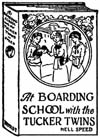
At Boarding School with the Tucker Twins
There are no jollier girls in boarding-school fiction than Dum and Dee Tucker. The room-mate of such a lively pair has an endless variety of surprising experiences—as Page Allison will tell you.
Vacation with the Tucker Twins
This volume is alive with experiences of these fascinating girls. Girls who enjoyed the Molly Brown Books by the same author will be eager for this volume.
The scene of these charming stories is laid in the State of Virginia and has the true Southern flavor. Girls will like them.
We will send any title upon receipt of 60 cents per volume, or both of them for $1.10.
NEW BOOKS FOR YOUNG PEOPLE AND OLD PEOPLE WHO FEEL YOUNG
PAUL AND PEGGY BOOKS
By FLORENCE E. SCOTT
Illustrated by ARTHUR O. SCOTT
Cloth Bound. Price 60c. per vol., postpaid
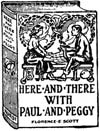
Here and There with Paul and Peggy
Across the Continent with Paul and Peggy
Through the Yellowstone with Paul and Peggy
These are delightfully written stories of a vivacious pair of twins whose dearest ambition is to travel. How they find the opportunity, where they go, what their eager eyes discover is told in such an enthusiastic way that the reader is carried with the travellers into many charming places and situations.
Written primarily for girls, her brothers can read these charming stories of School Life and Travel with equal admiration and interest.
We will mail promptly any book for 60 cents, or all three for $1.60.
STORIES OF COLLEGE LIFE FOR GIRLS
MOLLY BROWN SERIES
By NELL SPEED
Cloth. Illustrated. Price, 60c. per volume
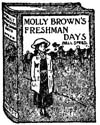
Molly Brown’s Freshman Days
Would you like to admit to your circle of friends the most charming of college girls? Then seek an introduction to Molly Brown. You will find the baggagemaster, the cook, the Professor of English Literature and the College President in the same company.
Molly Brown’s Sophomore Days
What is more delightful than a reunion of college girls after the summer vacation? Certainly nothing that precedes it in their experience—at least, if all class-mates are as happy together as the Wellington girls of this story. Among Molly’s interesting friends of the second year is a young Japanese girl, who ingratiates her “humbly” self into everybody’s affections.
Molly Brown’s Junior Days
Financial stumbling-blocks are not the only thing that hinder the ease and increase the strength of college girls. Their troubles and their triumphs are their own, often peculiar to their environment. How Wellington students meet the experiences outside the classrooms is worth the doing, the telling and the reading.
Molly Brown’s Senior Days
This book tells of another year of glad college life, bringing the girls to the days of diplomas and farewells, and introducing new friends to complicate old friendships.
Molly Brown’s Post Graduate Days
“Book I” of this volume is devoted to incidents that happen in Molly’s Kentucky home, and “Book II” is filled with the interests pertaining to Wellington College and the reunions of a post graduate year.
Molly Brown’s Orchard Home
Molly’s romance culminates in Paris—the Paris of art, of music, of light-hearted gaiety—after a glad, sad, mad year for Molly and her friends.
If you do not know Molly Brown of Kentucky, you are missing an opportunity to become acquainted with the most enchanting girl in college fiction.
Any book sent prepaid for 60 cents, or the six for $3.50.
Latest Books by Mrs. L T. Meade
NEW COPYRIGHT EDITIONS PUBLISHED EXCLUSIVELY BY US
Cloth. Illustrated. Price, 60c. per volume.
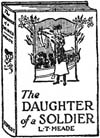
These beautiful volumes represent Mrs. Meade’s latest writings. They are juvenile in character, especially written for young folks. By arrangement with her English publishers, we have obtained the exclusive American rights, and these books cannot be procured in any other edition. Each volume handsomely bound with individual designs; each containing four original drawings. Those familiar with Mrs. Meade know her reputation for clean, wholesome stories, and these books should be in every home library. The titles named below comprise her latest Juveniles.
Oceana’s Girlhood A Wild Irish Girl The Girls of Merton College For Dear Dad Kitty O’Donovan Peggy from Kerry The Queen of Joy The Chesterton Girl Graduates The Girls of King’s Royal The Lady of Jerry Boy’s Dreams A Plucky Girl The Daughter of a Soldier A Girl of High Adventure Jill, the Irresistible
Mrs. Meade requires no introduction to her many admirers and readers, and these volumes will be a welcome addition to the book-shelves in any home.
We will send any title selected upon receipt of 60 cents, or any six books for $3.50.
MOTOR MAIDS SERIES
By KATHARINE STOKES
Cloth Bound. Illustrated. Price, 50c per vol., postpaid
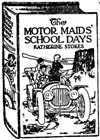
THE MOTOR MAIDS’ SCHOOL DAYS
Billie Campbell was just the type of straightforward, athletic girl to be successful as a practical Motor Maid. She took her car, as she did her class-mates, to her heart, and many a grand good time did they have all together. The road over which she ran her red machine had many an unexpected turning.
THE MOTOR MAIDS BY PALM AND PINE
Wherever the Motor Maids went there were lively times, for these were companionable girls who looked upon the world as a vastly interesting place full of unique adventures.
THE MOTOR MAIDS ACROSS THE CONTINENT
It is always interesting to travel, and it is wonderfully entertaining to see old scenes through fresh eyes. It is that privilege, therefore, that makes it worth while to join the Motor Maids in their first ’cross-country run.
THE MOTOR MAIDS BY ROSE, SHAMROCK AND THISTLE
South and West had the Motor Maids motored, nor could their education by travel have been more wisely begun. But now a speaking acquaintance with their own country enriched their anticipation of an introduction to the British Isles. How they made their polite American how and how they were received on the other side is a tale of interest and inspiration.
THE MOTOR MAIDS IN FAIR JAPAN
In a picturesque villa among picturesque surroundings the Motor Maids spend a happy vacation. The charm of Japan,—her cherry blossoms, her temples, her quaint customs, her polite people,—is reflected in all their delightful experiences.
THE MOTOR MAIDS AT SUNRISE CAMP
Most interesting of all interesting events recorded about the Motor Maids are these relating to their summer in a mountain camp. The new friends introduced in this book add the final touch of romance.
Charmingly written books which will delight all girls who are fond of outdoor life—and most girls are. The trips taken by these Motor Maids would envy any girl, yet you can have all pleasant experiences by reading the stories.
We will send any book upon receipt of 50 cents, or all six for $2.50.
GIRL AVIATORS SERIES
By MARGARET BURNHAM
Cloth. Illustrated. 50c. Each
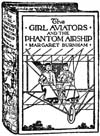
The Girl Aviators and the Phantom Airship
Roy Prescott was fortunate in having a sister so clever and devoted to him and his interests that they would share work and play with mutual pleasure and to mutual advantage. This proved especially true in relation to the manufacture and manipulation of their aeroplane, and Peggy won well deserved fame for her skill and good sense as an aviator. There were many stumbling-blocks in their terrestrial path, but they soared above them all to ultimate success.
The Girl Aviators on Golden Wings
That there is a peculiar fascination about aviation that wins and holds girls enthusiasts as well as boys is proved by this tale. On golden wings the girl aviators rose for many an exciting flight, and met strange and unexpected experiences.
The Girl Aviators’ Sky Cruise
To most girls a coaching or yachting trip is an adventure. How much more perilous an adventure a “sky cruise” might be is suggested by the title and proved by the story itself.
The Girl Aviators’ Motor Butterfly
The delicacy of flight suggested by the word “butterfly,” the mechanical power implied by “motor,” the ability to control assured in the title “aviator,” all combined with the personality and enthusiasm of girls themselves, make this story one for any girl or other reader “to go crazy over.”
Aviation is not confined to the sterner sex as has been shown by the flights made by Harriet Quimby and other daring young women. Girls who are fond of adventure will thoroughly enjoy reading these books, which are wholesome and free from sensationalism.
Price, postpaid, 50 cents per copy or the four books for $1.75.
HURST & COMPANY, Publishers, NEW YORK