Note 34 — Chapter XXXVIII · TIMÆUS AND KRITIAS.
Reading edition
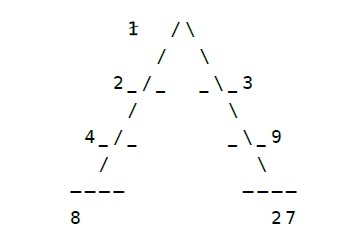
Plato, Timæus, pp. 35-36. The pains which were taken by commentators in antiquity to expound and interpret this numerical scale may be seen especially illustrated in Plutarch’s Treatise, De Animæ Procreatione in Timæo, pp. 1012-1030, and the Epitome which follows it. There were two fundamental τετρακτύες or quaternions, one on a binary, the other on a ternary scale of progression, which were arranged by Krantor (Plutarch, p. 1027 E) in the form of the letter Λ, as given in Macrobius (Somn. Scip. i. 6, p. 35). The intervals between these figures, are described by Plato as filled up by intervening harmonic fractions, so as to constitute an harmonic or musical diagram or scale of four octaves and a major sixth. (Boeckh’s Untersuch. p. 19.) M. Boeckh has expounded this at length in his Dissertation, Ueber die Bildung der Welt-Seele im Timäos. Other expositors after him.