TABLE OF EVENTS
Reading edition
I. Events in 1864 Preceding the Campaign
Mar. 9. U. S. Grant made commander in chief of the Union armies.
May 4. Butler and the Army of the James capture City Point, Virginia.
May 5-7. Battle of the Wilderness.
May 8-19. Battle of Spotsylvania Court House.
May 23. Battle of North Anna River.
May 29. Battle of Totopotomoy Creek.
June 3. Battle of Cold Harbor.
June 9. Raid by Union cavalry on Petersburg lines.
II. Events in 1864 During the Campaign
June 15-18. Opening Battle of Petersburg.
June 22-23. Union attack on Weldon Railroad repulsed.
July 30. Battle of the Crater.
Aug. 18-21. Union forces capture the Weldon Railroad.
Aug. 25. Battle of Reams Station.
Sept. 14-17. Hampton’s cavalry raid on Union beef supply.
Sept. 29-Oct. 1. Battle of Peebles’ Farm and Capture of Fort Harrison.
Oct. 19. Battle of Cedar Creek.
Oct. 27. Battle of Burgess’ Mill.
III. Events in 1865 During the Campaign
Feb. 5-7. Battle of the Boydton Plank Road.
Mar. 25. Battle of Fort Stedman.
Apr. 1. Battle of Five Forks.
Apr. 2. General Union attacks on Confederate lines outside Petersburg.
Apr. 3. Union troops enter Richmond and Petersburg.
Apr. 9. Lee and the Army of Northern Virginia surrender at Appomattox Court House.
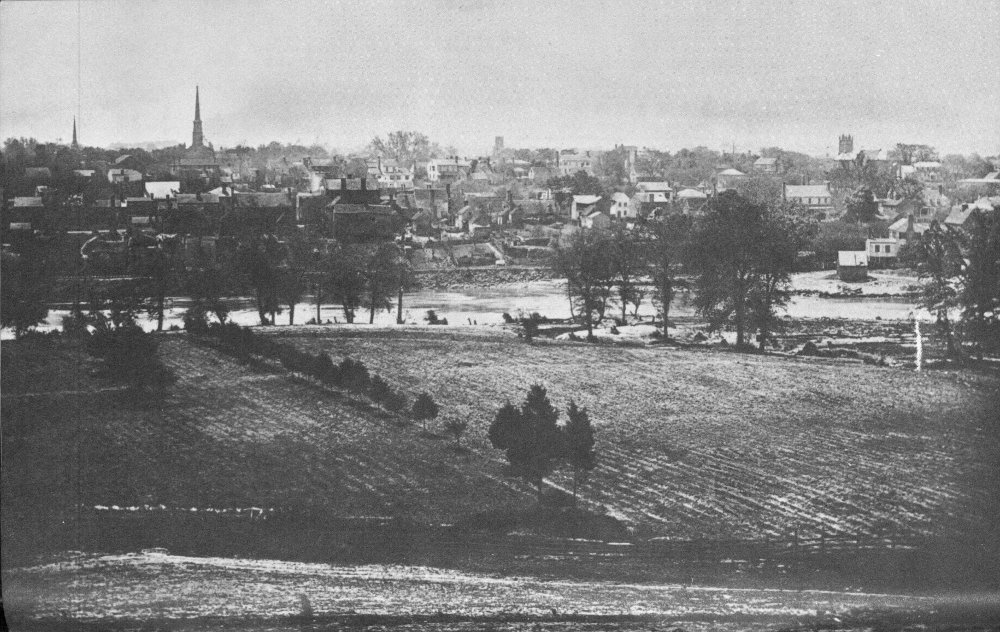
Frontispiece: View of Petersburg in 1865 looking south across the Appomattox River. Courtesy, National Archives.
1
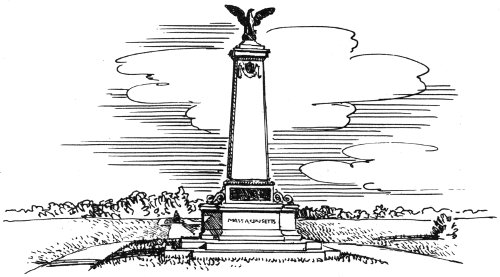
In the final year of the Civil war in the East, the fighting centered upon Petersburg, an important supply depot for the Richmond area. After 10 months of combat, both from behind prepared positions and along the main routes of supply, the Confederates were forced to give up Petersburg and Richmond on April 2, 1865. One week later Lee surrendered the Army of Northern Virginia at Appomattox Court House.
By June of 1864, the Civil War lay heavily on both the North and the South. For more than 3 years the two antagonists—the Blue and the Gray—had struggled to determine the fate of the Union.
The capitals of the embattled forces stood only 110 miles apart. But these miles of rolling Virginia countryside which separated Richmond from Washington had proven exceedingly difficult for the Union forces to cross. Various Northern generals had been placed in command of the Army of the Potomac and had faced Lee’s Army of Northern Virginia. So far not one had been successful in destroying Lee’s army or in capturing Richmond.
Perhaps Gen. George B. McClellan had come the closest to success when in the late spring and early summer of 1862 the Northern troops had threatened the Confederate capital, only to be repulsed on the outskirts. The other Northern commanders who followed McClellan, such as Pope, Burnside, and Hooker, were less successful. Their drives had been met and turned aside by Lee, the able Southern guardian of Richmond.
After 36 months of bitter conflict the war in the East seemed, to many observers, to be far from a final settlement. The failure of Union forces to deliver a decisive blow against the Army of Northern Virginia was a source of growing concern in Washington. The Confederacy, for its part, was no more successful in settling the issue. Attempted invasions of the Northern States by Lee were turned back at Antietam in September 1862 and at Gettysburg in July 1863.
2
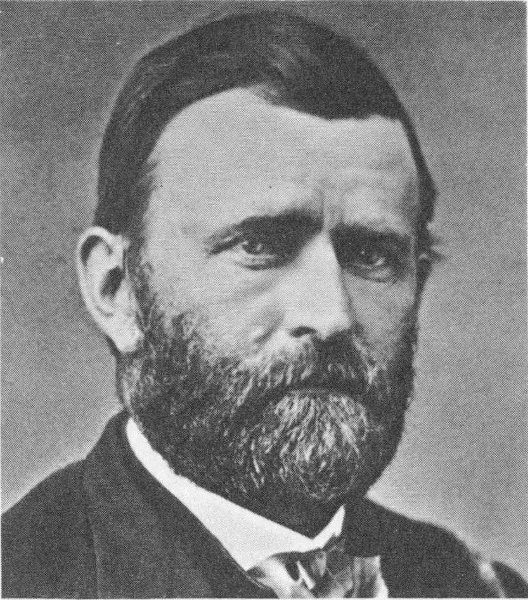
Lt. Gen. Ulysses S. Grant, Union commander at Petersburg. Courtesy, National Archives.
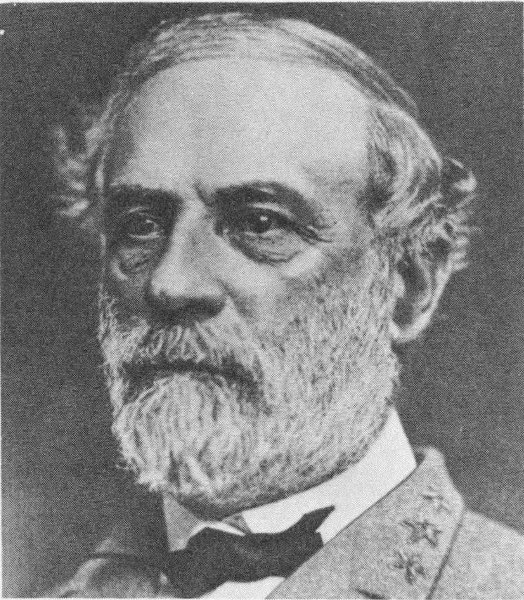
Gen. Robert E. Lee, Confederate commander at Petersburg. Courtesy, National Archives.
Farther west the picture was brighter for Northern hopes. In the same month as the Battle of Gettysburg, the town of Vicksburg, Miss., fell into Union hands. A few days later, July 9, 1863, Port Hudson, the last remaining stronghold of the Confederacy on the banks of the Mississippi River, surrendered. Later in 1863, the Union capture of Chattanooga, Tenn., threw open the gateway to Georgia and South Carolina.
Strategically, despite the stalemate in Virginia, the beginning of 1864 found the Northern armies in a stronger position than the Confederate military forces. Not only was there a distinct possibility that the South could be split into two parts, but the greater resources at the command of the Lincoln administration were beginning to count more heavily with each passing day. All that seemed to be needed to end the war was an able Union commander who could marshal the mighty resources of his country for a last tremendous blow at the South. Such a man was found in Gen. Ulysses S. Grant, the victor at Vicksburg and Chattanooga, who was made commander in chief of all the Union armies on March 9, 1864.