WALTER HAMILTON, (continued 9)
Reading edition
161
Dame Tiller discovered washing; she takes out of her tub a veil, and a pair of small socks, which she hangs on the line, sighs, and regards them sorrowfully.
Dame. Tubby or not tubby—there’s the rub, Whether I shall get anything to scrub, Or, overcome by all my numerous troubles, Dive headlong down into that sea of bubbles; As to my bus’ness it is something shockin’, Of stockings I’ve got but that small stock in. People won’t send their things, complaining (bosh) That, like King John, they’d lost them in the Wash. I used to do for schools, and so it follers I used to have a lot of scholars’ collars; Now I have none, no collars smooth, nor ruffs, I’ve got to make the best of fortune’s cuffs. To emigrate the best thing now would be— Yes! Washington would be the place for me.
From “Poll and Partner Joe”; a Nautical Burlesque by F. C. Burnand. First produced at St. James’s Theatre, May 6th, 1871.
——:o:——
The Bachelor’s Soliloquy. To wed, or not to wed? That is the question Whether ’tis nobler in the mind to suffer The pangs and arrows of outrageous love Or to take arms against the powerful flame And by opposing quench it. To wed—to marry— And by a marriage say we end The heartache and the thousand painful shocks Love makes us heir to—’tis a consummation. Devoutly to be wished! to wed—to marry Perchance a scold! aye, there’s the rub For in that wedded life what ills may come When we have shuffled off our single state Must give us serious pause. There’s the respect That makes us Bachelors a numerous race. For who would bear the dull unsocial hours Spent by unmarried men, cheered by no smile To sit like hermit at a lonely board In silence? Who would bear the cruel gibes With which the Bachelor is daily teased When he himself might end such heart-felt griefs By wedding some fair maid? O who would live Yawning and staring sadly in the fire Till celibacy becomes a weary life But that the dread of something after wedlock (That undiscovered state from whose strong chains No captive can get free) puzzles the will And makes us rather choose those ills we have Than fly to others which a wife may bring. Thus caution doth make Bachelors of us all And thus our natural taste for matrimony Is sicklied o’er with the pale cast of thought And love adventures of great pith and moment With this regard their currents turn awry And lose the name of Wedlock. [Copied from an Album—Author unknown.]
——:o:——
Cremation. (By a Burning admirer of Sir Henry Thompson.) To Urn, or not to Urn? that is the question: Whether ’tis nobler for our frames to suffer The shows and follies of outrageous custom, Or to take fire—against a sea of zealots— And by consuming end them? To Urn—to keep— No more: and while we keep, to say we end Contagion and the thousand graveyard ills That flesh is heir to—’tis a consume-ation Devoutly to be wished! To burn—to keep— To keep! Perchance to lose—aye, there’s the rub: For in the course of things what duns may come, Or who may shuffle off our Dresden urn, Must give us pause. There’s the respect That makes inter-i-ment of so long use. For who would have the pall and plumes of hire, The tradesman’s prize—a proud man’s obsequies, The chaffering for graves, the legal fee, The cemetery beadle and the rest, When he himself might his few ashes make With a mere furnace? Who would tombstones bear, And lie beneath a lying epitaph, But that the dread of simmering after death— That uncongenial furnace from whose burn No incremate returns—weakens the will, And makes us rather bear the graves we have Than fly to ovens that we know not of? This, Thompson, does make cowards of us all. And thus the wisdom of incineration Is thick-laid o’er with the pale ghost of nought, And incremators of great pith and courage With this regard their faces turn awry, And shudder at cremation. William Sawyer.
In April, 1884, there was a discussion in the House of Commons on a Bill, brought in by Dr. Cameron, for regulating Cremation.
——:o:——
There are numbers of other Parodies of this Soliloquy scattered about. William Hone, when on his trial for publishing a Parody entitled “The Political Litany,” mentioned one which had appeared in the Morning Herald in 1808, commencing thus:—
“To stand, or not to stand—that is the question Whether ’tis nobler for us to lose th’ Election, And all the honours that attend upon it, Or to demand a poll, and risk th’ expense.”
Unfortunately the file of the above named journal in the British Museum Library is incomplete, so that the remainder of the parody cannot here be given.
One of the best burlesques of Shakespeare ever written was the “Hamlet Travestie, in three Acts, with annotations after the manner of Dr. Johnson and George Steevens, Esq., and other Commentators,” 1810. This was written by John Poole, the author of Paul Pry; the notes at the end are amusing burlesques of the word-splitting, and quibbling over trifles, to be found in the writings of many authors who have done their best to obscure some of the clearest, and noblest utterances of Shakespeare.
162
In this burlesque first appeared the well-known lines, (spoken by Ophelia in the Mad Scene,)
Three children sliding on the ice, All on a summer’s day; The ice it broke—they all fell in— The rest they ran away. Now had these children staid at home, And slid upon dry ground; They broken necks had had, perchance, But never had been drown’d.
However the whole burlesque is so good that it will be republished complete in this collection; for the present it will be sufficient to quote the parody of the Soliloquy, which is in rhyme:—
Song, Hamlet.—Tune, “Here we go up, up, up.” When a man becomes tired of his life, The question is, “to be, or not to be?” For before he dare finish the strife, His reflections most serious ought to be. When his troubles too numerous grow, And he knows of no method to mend them, Had he best bear them tamely, or no?— Or by stoutly opposing them end them? Ri-tol-de-rol, etc. To die is to sleep—nothing more— And by sleeping to say we end sorrow, And pain, and ten thousand things more— O, I wish it were my turn to-morrow! But, perchance, in that sleep we may dream, For we dream in our beds very often— Now, however capricious ’t may seem, I’ve no notion of dreams in a coffin. Ri-tol-de-rol, etc. ’Tis the doubt of our ending all snugly, That makes us with life thus dispute, For who’d bear with a wife old and ugly, Or the length of a chancery suit? Or who would bear fardels, and take Kicks, cuffs, frowns, and many an odd thing, When he might his own quietus make, And end all his cares with a bodkin? Ri-tol-de-rol, etc. Truly, death is a fine thing to talk of, But I’ll leave to men of more learning; For my own part, I’ve no wish to walk off, For I find there’s no chance of returning.— After all ’tis the pleasantest way, To bear up as we can ’gainst our sorrow, And if things go not easy to-day, Let us hope they’ll go better to-morrow.— Ri-tol-de-rol, etc.
——:o:——
O. P. Q. Philander Smiff, of The Figaro, (London,) once suggested that the play of Hamlet might be made use of as an advertising medium, with a few minor alterations, as, to take the Soliloquy for example:—
“To sleep, or not to sleep—that is the question, Whether ’tis well to suffer indigestion; Or bear the burden of a dozen ills, Whilst Mr. Cockle offers me his pills. To have a headache, and a tongue that shocks, Whilst they are sold at thirteen-pence a box.”
or, on another evening we might have:—
“To be in debt or not, that is the question, Whether ’tis nobler in the mind to suffer The slings and arrows of outrageous fortune, Or to go to Mr. Howse, in Staples Inn, And thus take arms against a sea of trouble.”
——:o:——
On Blowing your Brains out.
I would put the question to any sensible man, whether he does or does not consider it nobler in the mind to suffer many inconveniences, to which slings and arrows are mere flea-bites by comparison—and especially I might indicate blighted affections, the procrastination of your family solicitor when there is property to be distributed, in which you have a share, losses on the Derby, tightness of the money-market, the impertinence of the fellow who keeps on calling for the Queen’s taxes, and, generally, the spurns that patient merit is obliged to put up with from all kinds of cads and humbugs, and stuck-up little beasts, who give themselves no end of airs, and try to ride rough-shod over everybody who has not had the same luck that they have—than to terminate one’s existence by an act of felo-de-se? Well, you know, the fact is that nobody would be fool enough to go on day after day standing this sort of thing, if it wasn’t for a deuced strong objection to becoming a body, and being sat upon by a dozen tradesmen, some of whom perhaps have been confoundedly rude to one in one’s life, when one has not happened to be able to pay one’s bills the moment one has been called upon in a sudden and peremptory, not to say insolent, manner to do so. There’s the rub! On consideration, most people will rather bear the ills they have than do anything desperate to get rid of them. (I have but this moment met with a passage in a shocking tragedy, by the well-known Shakespeare, that bears a decided family likeness to my philosophic proposition. It will scarcely be expected that I should expunge the foregoing observations, because of their likeness to what was written at a distant period of English literature.)—Punch.
——:o:——
The libretto to Ambroise Thomas’s opera of Hamlet was by M.M. Barbier and Carré, and their rendering of the Soliloquy shows the difficulty of translating Shakespeare’s blank verse, and metaphysical reasoning, into the orthodox French rhymed measure:—
Être ou ne pas être—O mystère! Mourir—dormir—rêver. Ah! s’il m’était permis pour t’aller retrouver, De briser le lien qui m’attache à la terre! Mais après? Quel est-il ce pays inconnu, D’où pas un voyageur n’est encore revenu? Être ou ne pas être—O mystère! Mourir-dormir! rêver peut-être!
——:o:——
Shakespeare Amended.
Punch for 30 April, 1881, contained the following—
“Mr. Furnivall is of opinion that the text of Hamlet known to commentators as ‘The First Quarto,’ furnishes a far better and more compact acting play than the 163 modern stage-version. He, and ‘a strong body of amateurs,’ essayed, on the afternoon of Saturday, the 16th April, at St. George’s Hall, to convert the public and the critics to their view of the case—apparently with indifferent success. Mr. Furnivall has sent to the Daily News, what he calls ‘a hasty try to set right’ the celebrated soliloquy, ‘To be or not to be,’ in the Quarto No. 1. Mr. Furnivall’s version is, of course, a thing of beauty; yet is it hardly so jerky, creaky, spasmodic, incoherent, scansion-proof,—in short, so Utter, as in the interests of the Bard might be desired. Here, therefore, is ‘a hasty try to set right’ Mr. Furnivall himself.”
To be or not to be? There you are, don’tcherknow! To die, to sleep! is that all? Forty winks? To sleep, to dream! Ah, that’s about the size of it! For from that forty winks when we awake In the undiscovered cotton-nightcap country From which no passenger ever took a return-ticket—— Why—ah, yes—humph!—exactly—very much so! Who, but for what the vulgar call “blue funk,” Would bear the rough and tumble of the world, Be down’d on by the rich, plagued by the poor, Married by widows, and by orphans worried? Who’d bear April’s east wind or June’s perpetual rain, The Income-tax, Lord Randolph Churchill’s questions, Middlesex Magistrates, Mud-Salad Market, Crass commentaries on Shakespearian quartos. And all earth’s ills, from Furnivall to toothache, When that himself he might his gruel give In half a jiffy? Who’d put up with it, But for the thought of worse things turning up In the Micawber Limbo—By-and-by? Quite so! ’Tis bother, doubt, hope, fear, cant, gush. The fads of noodles and of nincompoops, Fogging the brain and flooring common sense, Which make us grin and bear the ills we have Rather than, à la Furnivall, to make “A hasty try to set ’em right.” Ah, yes, ’Tis noodledom makes cowards of us all!!!
Mr. F. J. Furnivall’s fussy and hasty “tries to set everybody right” about all that relates to Shakespeare are well-known, as is also his objection to any contradiction of his favorite theories.
The “New Shakspere Society” was apparently founded by Mr. F. J. Furnivall for two purposes, firstly, for the glorification of Mr. Furnivall, and secondly, to instruct the British public to spell the name of Shakespeare in a different manner to that commonly adopted, and which was generally used by his contemporaries. If the Society has partially succeeded in its first object, it has totally failed in the second; when the press does condescend to notice its proceedings it is almost invariably styled the New Shakespeare Society, notwithstanding the anger, and the constant protests of Mr. F. J. Furnivall. A pretty controversy was raised on the question of Shakespeare or Shakspere between J. O. Halliwell-Phillipps—who is an authority, and Mr. Furnivall, who is—simply Mr. Furnivall. The latter gentleman’s arguments, expressed in peculiar diction, and still more peculiar orthography, consisted principally of personalities, and Mr. A. C. Swinburne (who happened to disagree with him) was styled a minor poet, and his name translated into pigs-brook (from swine—a pig, and burne—a brook) by the courteous founder of the “New Shakspere Society.”[34]
A very humorous account of the origin of this Society was given in a little pamphlet entitled Furnivallos Furioso! and “The Newest Shakespeare Society;” a Dram-Attic Squib of the Period. (T. Richards, 37, Great Queen Street, London, 1876). The Dramatis Personæ are thus described:—
Furnivallos, surnamed Furioso, a great Critic, and Founder of the “Newest Shakespeare Society.”
Tupperius, his Friend and A-bettor, Poet-Critic, and “Proverbial” Philosopher (in his own estimation).
Dixonus, Reviewer and Author in general. A great admirer of Himself, “with scarce time to steal from Spiritual.”
Carlylus, an aged Philosopher of the Anglo-Saxon-and-Water School.
General Members and Ass-ociates of the Society.
The first scene opens thus—
A Library.—Furnivallos, (in his shirt sleeves) sitting at a table.
Furnivallos. A year or two ago, and I Had hardly read a line of Shakespeare’s works— Or so-call’d works. For why? Have I not found them, in such transient time, A nest of fledgings, and of mixèd rhyme Without much reason—Heav’n save the mark!— Cribb’d from Boccaccio’s self, or Chaucer’s pages dark? In later days, the hands, Or rather quills, of Jonson, Beaumont too, Have serv’d to make a hash of what this William Shakespeare drew! And I alone of all the wits can show it; For am I not the Critic of our Poet? A thought occurs—it is not always so Since my poor brains are like my means, too low; And when I want them sharp, alas! they’re slow! I’ll found a fresh Society, call’d “New,” And try if I can’t, by much reading hard, Impart “new readings” to th’ “Immortal Bard,” Shifting the false lights from the dazzling true— Though I for one, find them but very few!— And thus prove Shakespeare’s after all a myth, And muff!—akin to Jones, or Brown, or Smith.”
Furnivallos having with the aid of Tupperius founded the Society, a meeting is held, at which Furnivallos takes the chair, and makes a speech, in which he asserts—
“Nothing that Shakespeare wrote, came from his head, Which was a Warehouse stored with stolen goods,— 164 And thus he warbled of the hills and woods In Cuckoo notes. * * * * * So now to work, and bring before your Eyes, The fact that Shakespeare’s Plays are only Lies!”
Dixonus (jumping up indignantly, thus speaks)—
This “bosh” your Chairman talks of Shakespeare’s Plays is But hideous Nonsense, and my Anger raises; For though to some extent he may be right, His Tests are wrong, and here I take a sight At his Foot-rule, his Measures, Pauses, Endings. Since Shakespeare, in despite such Tinker’s mendings, Must e’er remain—whatever Dolts may say— “The Wonder of all Time.” And now, good-day Furnivallos, and your slavish, fawning Crew, With whom again I’ll nothing have to do; Though, ere I go, or quit this “New Society,” Let me advise all, and with strict sobriety, To change its Name, and so coin heaps of guineas, And call it Shakespeare’s “Newest Nest of Ninnies!”
(Great confusion as Dixonus quits the room.)
Tableau.
——:o:——
When Mr. Wilson Barrett announced that he was about to produce “Hamlet” at the Princess’s Theatre, someone wrote the following, not very profound, criticisms upon the tragedy:—
Hamlet from a new point of view.
“Seeing an announcement to the effect that ‘Hamlet’ is in preparation at the Princess’s Theatre, set me thinking a bit about the matter; and I give in a free and unstudied manner the fruits of my thoughts. First, I wondered if one out of ten who’d read the bills would know anything really about either the play or the poet? Of the difference between the Hamlet of the first edition, of 1623, and that, say of Knight’s, of 1843.
Open the two at random, and Ophelia says in the first, in Actus Secundus, Scena Secunda:—
‘O, what a noble minde is here o’re-throwne? The Courtiers, Soldiers, Schollers, Eye, tongue, sword.’
In Knight’s the like words occur, only slightly altered in spelling; and in the ordinary acting edition the lines run:—
‘O, what a noble mind is here o’erthrown! The expectancy and rose of the fair state.’
Let us look at this Prince, almost a fairy one, thirty years of age, too good for the earth, not good enough for Heaven. You know what he says: ‘What should such fellows as I do crawling between earth and heaven?’
Well, instead of being thin as in the picture, and fancy he is; by his mother’s, the queen’s, words, ‘He’s fat, and scant of breath. Heere’s a napkin, rub thy browes, the Queen carowses to thy fortune, Hamlet.’ Of course it’s very well to wriggle and say oh, that, like the ‘beard,’ was put in to suit Burbage. Even letting this be the case, Shakespeare studied an actor more than the reputation of his first work. Then he is so poetical and wanting in action, so unable to grapple with the wicked things of this world.
Oh! is he. When the king ships him to Britain, he puts the names of his false friends where his own stood, so that the British king has them beheaded and not Hamlet.
Now for the Queen, and Laertes, and the King. Of a sudden, like acted upon by a magician’s wand, they turn bad all at once. It even worries and bothers Hamlet. He can’t understand why his mother should have taken so queer a fancy as to prefer his uncle to his far handsomer father. And Laertes who gives such nice advice to his sister, and for his cad-like conduct receives a very proper rebuke from her, turns from a seemingly-virtuous young gentleman to a mean and despicable assassin. And Ophelia, that beauteous and correct damsel, is easily made to act as a spy upon her lover. And this without one word of caution to him, or the least expression of regret for such, at the mildest, unlady-like, unwoman-like, and altogether unchristian-like conduct.
Other minor faults and absurdities occur, as Hamlet’s remark after he had seen his father’s spirit:—
‘The undiscovered country from whose bourn no traveller returns.’
This Hamlet may in some shadowy way or other forecast our life here and what the majority of us do in it—nothing. Leave all to the crack of doom and then down we go all together. Our talking as angels, some of us, and acting like fools, most of us, may be all here parabled out.”
As Mr. Wilson Barrett’s revival of Hamlet was a success, it was quite in the order of things that it should be burlesqued, and that he and the members of his company should be caricatured.
“Very Little Hamlet,” by W. Yardley, was produced at the Gaiety Theatre, London, in November, 1884, and Mr. Wilson Barrett’s absurd speech about his early ambition to play Hamlet was made the leading idea in the prologue, the scene representing the exterior of the Princess’s twenty-five years ago, with costumes, &c., archæologically correct. The future proprietor appears as a ragged street boy, and takes his solemn oath, to mysterious music, that he will, one day, play Hamlet in that theatre, while his companions of the gutter, being called upon to swear, exclaim in a hoarse whisper, “D——n!” and a ghostly actor undertakes to see the scheme carried out. Miss Nelly Farren appeared as the hero, and Miss Phyllis Broughton as Ophelia, with a tow-like wig. The treatment of the play scene was novel and amusing. It was announced that the principal player was ill and could not perform, whereupon King Claudius kindly volunteered to go on and read the part, which he did, until he discovered the meaning of the show.
——:o:——
Quotations have already been made from The Hamlet Travestie, in three acts, by John Poole (London, Samuel French); Hamlet Travestie, by Mr. F. Talfourd (Oxford, J. Vincent, 1849); and from Hamlet; or not such a Fool as he looks (Cambridge, W. Metcalfe and Son, 1882); in addition to these there are many parodies of detached passages from Hamlet.
The following is founded upon the advice given by Polonius to his son, Laertes:—
A Parent’s Counsel. You are about to go away my son, So take away with you the wise advice of one Who knows the world, boy, and don’t think much of it, 165 “Neither a borrower, nor a lender be,” Of course from choice, the former certainlee. If in a scrape and in the wrong, declare it, Never attempt to justify it; square it. Learn to say “No” to most things—seldom “yes.” If you should see a female in distress, Remember the advice of your sage sire, Call the police and gracefully retire. As the apparel oft proclaims the man, Why, do as many tailors as you can. In short, if you attend to all I tell, You’ll find that you will get on very well. Henry J. Byron.
——:o:——
In the Burlesque of Norma by W. S. Gilbert, entitled The Pretty Druidess, which was produced at the Charing Cross Theatre on the 19th June, 1869, Norma announces her intention to have a Fancy Fair with a view of raising the funds necessary to fight the Romans, and drive them out of the country. This scene contains a parody of Hamlet’s instructions to the players:—
Norma.—Now this sound code of business we’ll arrange, We’ll only take bank notes, and give no change, And won’t sell anything to any buyer That any one could possibly require. Now, priestesses, be good enough to tell The articles that you’ve prepared to sell. Adalgisa.—(producing cap) a smoking cap— Norma.—Ah, there, at least, he’s thwarted, For (hush) tobacco isn’t yet imported! Adalgisa.—Some scented soap. Norma.—They’re certain to refuse it— Italians, generally, do not use it! Adalgisa.—A razor-case, completely stocked. Norma.—That’s brave! For warriors are not allowed to shave! Adalgisa.—Braces, embroidered with initial letter. Norma.—Embroidered braces? Nothing could be better! No Roman wears, in all the martial train, The garments they’re intended to sustain! Adalgisa.—How shall we bear ourselves to-morrow, pray? Norma.—Attention, and I’ll point you out the way. With pretty speech accost both old and young, And speak it trippingly upon the tongue. But if you mouth it with a hoyden laugh, With clumsy ogling, and uncomely chaff, As I have oft seen done at fancy fairs, I had as lief a huckster sold my wares. Avoid all so-called “beautifying,” dear. Oh, it offends me to the soul to hear, The things that men among themselves will say Of some soi-disant beauty of the day, Whose face, when with cosmetics she has cloyed it, Out-Rachel’s Rachel! Pray you, girls, avoid it! Neither be ye too tame, but, ere you go, Provide yourselves with sprigs of mistletoe, Offer them coyly to the Roman herd, But don’t you “suit the action to the word,” For in the very torrent of your passion, Remember modesty is still in fashion. Oh, there be ladies whom I’ve seen hold stalls— Ladies of rank, my dears, to whom befalls Neither the accent nor the gait of ladies; So clumsily “made up” with Bloom of Cadiz, Powder, rouge, lip-salve—that I’ve fancied then They were the work of Nature’s journeymen! Let her, whose hair is black with lustre mellow, Not dream of using dye to turn it yellow— She’ll find it argues (when at length she loses it) A sad ambition in the fool that uses it! Now get you ready. Exit Norma.
——:o:——
Hamlet’s meditation on the new station of the Midland Railway at St. Pancras:—
See what an incubus sits on our city? Pentonville’s gloom, the front of a huge workhouse A draught like ice to palsy and to pierce; A station like a leaden Limbo-waste, Dim-lighted as a fog-bound Ludgate Hill. A combination and a form indeed, Where every hideousness doth set its seal To give the world assurance of—a Horror! Such is our Terminus! Punch, December 1882.
——:o:——
The enterprising proprietors of a celebrated brand of Cigarettes have recently advertised their wares, by a picture representing two smokers, under which appeared the lines:—
Look here upon this picture, and on this, The counterfeit presentment of two smokers; See what a grace is seated on this brow; Luxuriant smile, the type of joy itself! An eye all beams, so pleasant and upturned, Expressing pleasure at the dainty ‘Cig.’ New lighted; mark the heaven-kissing curl: ’Tis fascination to that precious weed; Wherefore men doth feverishly break the seal That gives the world assurance ’tis the GEM. This is one smoker; look you now what follows: Here is the other, like a sickly child Taking its nauseous powder; hath he taste, That he can suck at such a weed, That scatters out its dust? Ha! has he eyes? You cannot say he has; for he would sure Seek out a better brand; the weed is humble, And palls upon the palate; and what palate Would take such stuff as his? Oh, man! for modest cash ‘The Richmond Gem.’ Is sweet and fragrant to the smoker’s mouth; To youth its virtues are as plain— To smoke is to admire. (Vide Hamlet, Act iii., Scene iv.) St. Stephens’ Saturnalia, December 1884.
——:o:——
The following Scene is taken from the Hamlet Travestie, a Burlesque in Two Acts, written by Mr. Francis Talfourd, and published by J. Vincent, Oxford, in 1849:—
Act II. Scene I.—Room in Polonius’ House.
Enter Polonius and Ophelia.
Oph.— O, dear Papa, I’ve been in such a fright! Sewing just now a button on your night— Pol. [interrupting],—166 My love, I blush! Oph.— (Well you know what I mean) In came Lord Hamlet, anything but clean! Pale as his hose, or Hosier’s Ghost the rather; His stockings were so very dirty, Father His old and seedy neckerchief awry! Pol.— My daughter, reverence an ancient tie. Oph.— Unbrac’d his doublet! And O, such a hat! Pol.— I know it well: the Prince invented that![35] Oph.— Uncomely, and uncombed about the head, I don’t believe he’d really been in bed; Or, if he had been, why he’d been and slept In that bin where the Palace flour is kept. And then his boots! At those I up and spoke:— “Is then the Warren stopp’d and has Day broke? Go to the scraper! to the door-mat run! Our Turkey’s getting rather overdone.” Pol.— And did the scraper clear him from his scrape? Oph.— By no means—with a look, black as the crape Upon his four and ninepenny, he came And took my hand; and then he press’d the same Which seem’d to do him good—for then he smil’d— And came it strong, and wouldn’t draw it mild— In fact he kiss’d me! Pol.— O, the man is mad! Oph.— For kissing me! I can’t see that, my dad! Pol.— Well, on reflection, ’tis not strange my puss! Being in a hurry, why he took the Bus. Oph.— A stage box on that bus he might have ta’en. But since to be his debtor I disdain, I would not keep his kiss but gave it back! Pol.— Bestowed, in short, another kind of smack. Oph.— His was a blunder-bus, and so my sire, A small salute I from my smack did fire. Pol.— What did he say? Oph.— He never told his love, But look’d it most uncommon! Pol.— Like a dove With a sore throat; What then? Oph.— O such a sigh! Pol.— You prick’d him with your needle. Oph.— No, not I! O, such a sigh, my Father, as would fill The great Nassau Balloon, or turn a mill. Pol.— Few men can raise the wind like that, my duckey! And then what next? Oph.— The Prince, Pa, cut his lucky. Pol.— He’s mad, and mad for love of you. Oph.— O la! How very nice! can madmen marry, Pa? Pol.— Doubtless, my daughter. Nay, it has been said None are quite compos when about to wed. I do remember much confusion here [pointing to forehead] When first I called your future mother “dear,” Saw Hymen’s torch-light in her glowing e’e, And caught her eyes a cauterising me, And O, the pride, when first in joyous vein, “Mrs. Polonius!” I said—“Champagne?” To which she answered (every word I treasure) “Aaron Polonius, I will with pleasure.” Polonius sings. Air—“The light of other days.” But all that sort of thing has faded, The honeymoon’s o’ercast! The horse, you know, is soonest jaded, Who goes at first too fast! The very deuce no long time after She play’d upon my life; And all our mirthsome love and laughter, She turn’d to weary strife. Pol.— Yes! Love is like some grand new Railway Line Which (the Prospectus tells us) must combine All the advantages to railways known, With much peculiar merit of its own: How easy, then the gradients to our sight, Surveyed thro’ Cupid’s false Theodolite. Trivial the outlay, small the risks appear (For then our telescope’s invert). But near, And huge the profits to our eye, for Hope Lends us her Hydrogen Gas Microscope. Mammas, as managing directors, sit;— Hear our petition, and the Act permit;— Our Scrip, the License, then we proudly claim; And Hymen’s Company enrols our name! Oph.— What then, Papa? Pol.— The newly-married pair Pay their first calls—a somewhat triste affair! Awhile the shareholders in peace repose; Dream Love’s young Dream—and all’s couleur de rose Till, on the waking ear (and purse) shall fall, Fearful and frequent the loud railway call! Oph.— What does that typify? Pol.— In married life, The shrill accostals of a scolding wife! Who, like an engine, when she’s on the rail At every obstacle must shriek and wail; Who like an engine (do not sneer my daughter) Cannot get on unless she’s in hot water; Who like an engine— Oph.— O, I do beseech This train of thought some Terminus may reach! Rake out your fire! or damp it: shall I ring For liquors? Pol.— No! If you would sooth me, sing! Cut out the Lind! for Denmark loves indeed To have a little turn-up with the Swede! Ophelia mia, beat that “Figli-a Del Reggimento!” Oph.— I’ve sore throat, Papa! Pol.— These singer’s ailment all lie in their throats! Stick some “Pulmonic Wafers” on your notes. Now to the Palace, for the king must know This news of Hamlet. Oph.— Yet, before you go— For dear Mama, myself, and sex combin’d, I’ll quote some verses just recall’d to mind: “When you were that unpleasant thing, A baby, who would smile and sing, ‘The like o’ this hath never bin’”? Pol.—[abruptly] My Mother! Oph.— Who thought that nothing would suffice But costly lace on frocks so nice,— And dare not tell Papa the price? Pol.—[less abruptly] My Mother! 167 Oph.— Who told the tale, in twilight gloom? Who read of witch astride her broom, And poor Cock Robin’s early tomb? Pol.—[somewhat affected] My Mother! Oph.— Who lov’d you, a mischievous boy? Who spread the jam? who bought the toy? Rejoicing in your every joy? Pol.—[much affected] My Mother! Oph.— If aught went wrong who bore the blame? Who wept, when first the “half-year” came? Who sent those hampers, fruit and game? Pol.—[with epicurean empressement] My Mother! Oph.— Who when you wrote some doggrel verse, Crimson with pride assured old nurse, ‘That parts of Milton were much worse?’ Pol.—[as conscious of genius] My Mother! Oph.— Who when the loutish age began, And boyhood’s thoughts on razors ran, Call’d you ‘the gentlemanly man?’ Pol.—[pulling up his collar, as though the maternity had well spoken] My Mother! Oph.— Who when they “pluck’d” you in the schools At “Little Go” ’bout Grammar Rules, Stoutly maintained “the Dons” were fools? Pol.—(approvingly) My Mother! Oph.— Who, in your youth’s hot giddy day, Revealed a better brighter way And kindled first-love’s glorious ray? Pol.—[fondly] Your Mother! Oph.— Who upon earth, who only, knows Th’ exact location of your clothes? Who marks your linen? darns your hose! Pol.—[gratefully] Your Mother! Oph.— Who best your pipe and glass can fill? Whose taper fingers light the spill? Who, if you’re poorly, knows Pa’s pill? Pol.—[ruefully.] Your Mother! Oph.— Who, when in sulky mood you fret— P’raps kick your corn, or lose a bet— Sings still, “We may be happy yet!” Pol.—[cheerfully.] Your Mother! Oph.— What tho’ sometimes o’er married life A cloud may come, a moment strife. Who makes the sunshine? Pol.—[enthusiastically.] O my wife! Your Mother! Who checks her Daddy in his spleen? Who makes his brow once more serene? And bids him say, “I’ve hasty been?” Pol.—[embracing.] My Daughter! Pol.— Woman for ever! Scold they as they will, Marriage! with all thy faults, I love thee still!
Exeunt to Music.
Air—“Here’s a health to all good lasses.”
——:o:——
In 1839 Messrs. Whittaker & Co., of Ave Maria Lane, London, published a quarto volume entitled “The Barrow Diggers, a Dialogue in imitation of the Grave Diggers in Hamlet.” The work, which was published anonymously, had numerous illustrations of Barrows found in various parts of the country, and of the Antiquities, Arms, Pottery, and human remains found in them. The parody relates entirely to the excavations in the Barrows, carried on by antiquaries in search of curiosities, and the notes explanatory of the parody, form the chief and most interesting portion of the work.
Scene. A Barrow on a Common.
Enter three Barrow Diggers with spades, shovels, &c.
1st B. D.—Is this a Roman, or a British Barrow?
2nd B. D.—I tell thee ’tis a British Barrow, therefore straightways open it; Antiquarius hath set on it, and finds it British Burial.
1st B. D.—How can that be, if Roman Ornaments and arms should here be found?
2nd B. D.—They may be found.
1st B. D.—It must be Roman, it cannot be British Burial. For here lies the point; if Roman arms and ornaments are found in it, it argues a Roman Act; and a Barrow Act hath three Branches, to Act, to Dig, to Shovel; we go to work willingly.
3rd B. D.—Nay; but hear you good friend!
1st B. D.—Give me leave. Here is a Common; good; here is the Barrow; good; if the Barrow contains Roman Arms, or urns, it must be a Roman Barrow; mark you that; but if spear heads made of flints, and British Arms are here, it must be a British Barrow; if nought but an empty cist, tumulus inanis, (or an empty tomb raised by the Romans in memory of a friend whose body could not be found.) He that is not inclined to dig, shortens not our work.
2nd B. D.—But is this Barrow Law?
1st B. D.—Ay, marry is’t Antiquarius’s Barrow Law.
2nd B. D.—Will you ha’ the truth on’t? If this had been a Roman relic of funeral pomp, it would have been a very different sort of Burial. The Romans raised not Barrows o’er their Dead.
1st B. D.—Why there thou say’st: and the more pity that great folks shall countenance the grandeur of gaudy funerals, more than their poorer neighbours. To my mind they are mighty like representations of Death carrying off his wealthy victims in Triumph. Come my spade, There are no antient gentlemen, but Gardeners Geologists, and Barrow Diggers; they hold up Adam’s profession.
3rd B. D.—Was he a Gentleman?
1st B. D.—He was the first that ever bore Arms, a mattoc shovel, and a spade.
2nd B. D.—Why he had none.
1st B. D.—What, art a heathen? How dost thou understand the Scripture? The scripture says, Adam digged. Could he dig without arms? I’ll put another question to thee; if thou answerest me not to the purpose, confess thyself.
1683rd B. D.—Go to work.
After having taken an observation with a Compass, and marked out a section, they commence opening the Barrow.
1st B. D.—What is that earthly form all skin and bone, which eludes the Sexton, the Mason, and the Carpenter?
2nd B. D.—The Living Skeleton, for that fragile frame outlives a thousand Harry’s.
1st B. D.—Now where is he?
2nd B. D.—Eating soup maigre!
1st B. D.—Eating soup maigre! Where?
2nd B. D.—Not where fat King’s are eaten: a certain convocation of politic worms are e’en at them. Your worm is your only Emperor for diet: we fat all creatures else to fat us; and we fat ourselves for maggots. Your fat King and your lean skeleton is but variable service; two dishes, but to one table that’s the end.
1st B. D.—Alas! alas! shall I feed worms when I am dead?
2nd B. D.—Ay, and a living skeleton may fish with the worm that hath eat of a King; and eat of the fish that hath fed of that worm.
1st B. D.—What dost thou mean by this?
2nd B. D.—Nothing but to show you how a King may go a progress through the carcase of a living skeleton.
1st B. D.—I like thy wit well in good faith. To’t again; come, what is this Barrow?
2nd B. D.—Cudgel thy brains no more about it; when you are asked this question next say ’tis a British Barrow, a house that will last till doomsday. Go get thee to Shapwicke, and fetch me a stoup of liquor.
1st Bar. Dig. continues Digging and Sings
Britons rais’d an earthy mound, When e’re their Chieftains died, And I am digging under ground, Where delvers have not tried.
Antiquarius and Discipulus enter.
Ant.—Has this fellow no feeling of his business, he sings at Barrow opening?
Dis.—He knows not that he treads on hallow’d Mould!
Ant.—’Tis e’en so, the hand of Antiquaries only hath the Barrow Sense.
1st Bar. Dig. continues Digging and Sings;
Clasps, Celts, and Arrowheads, I’ll try To claw within my Clutch, And if a Shield I should espy, I’ll vow there ne’er was such. With Popish Tricks, and Relics rare, The Priests their Flocks do gull In casting out the earth take care, Huzza! I’ve found a skull!
Ant.—That skull had a tongue in it and could sing once. How the knave jowls it to the ground, as if it were a slave’s jaw-bone, or that of the first Murderer! That might be the pate of a Druid which this ass now o’erreaches: one that would gorge his Deities with human blood; might it not?
Dis.—It might.
Ant.—Or of a Warrior, who could say kill and burn Captives to appease the Dead.
Dis.—Ay, Antiquarius! or it might be a Slave’s!
Ant.—Why even so; and now my lady Worm’s chapless and knocked about the mazzard with a Sexton’s shovel. Here’s fine revolution an’ we had our spectacles to see’t, Prodigious to think on’t.
1st Bar. Dig. continues digging and sings
A Mattoc, Shovel, and a Spade, Will dig up human bones; To play at Marbles Britons made, Some small round Portland Stones. If Casques we find, or iron arms, Of curious form and make, Why surely they’re Roman charms, Your British creed to shake.
Ant.—Cease prattler cease! Why should they not be the Casques, arms, or Bosses of British Chieftains in Roman service? No golden filagree work nor carved ivory; No amethystine Beads, nor Crystal Balls, no Coins, no Medals, no well-formed urns, nor colour’d stones from Rome will here be found; but Tin, Glass, or Amber Beads, the Tusks of Boars, or unbaked Urns of rudely shape with limpet shells will denote ’tis a British Barrow.
1st B. D. continues Digging, and comes to a Cist, and sings
This Cist of Chalk just like a grave For such a guest is meet, As if asleep here rests the brave, Below the turf three feet.
Ant.—How independent the knave is! How long hast thou been a Barrow Digger?
1st B. D.—Of all the Ages of the World I came not to’t in that Age when the whole Earth was in a state of Fusion.
Ant.—How long’s that since?
1st B. D.—Cannot you tell that? Every mechanic can tell that. It was that very day that young Pluto was born: he that was a Geologist. He that gave a New System by Posting through the bowels of the Earth in his chariot drawn by four Horses.
Ant.—Ay, marry! how did he do that?
1st B. D.—With Lucifer Matches.
Ant.—Why?
1st B. D.—Because he was mad after Proserpine.
Ant.—Peace I pray you! How long will the jaws of a Leviathan, or the bones of a Megatherium, lie in the earth e’er they crumble into dust?
1st B. D.—Faith if they be not fused in Pluto’s crucible for many thousand years.
[The remainder of the conversation relates to a controversy, now well-nigh forgotten, as to the identification of a skull said to have been that of Eugene Aram, who was executed at Tyburn, in 1759 for the murder of Daniel Clark. At the Newcastle Meeting of the British Association in 1838, a skull was produced as that of Eugene Aram, but as it had passed through many hands during the eighty years that had elapsed since his death, its authenticity was much questioned, especially as one eminent anatomist declared it to be the skull of a female.
In quoting this imitation of a scene from Hamlet, justice can hardly be done to the scarce volume from which it is taken, without quoting the instructive explanatory notes which accompany it.
Since 1839 great strides have been made in the general knowledge of the subjects this book deals with, yet considering the date at which it was produced it is remarkable not only for the facts it records, but for the theories it advances.
169
Barrows are artificial heaps of earth, sometimes surrounded by a narrow trench. They were reared by the early inhabitants of these isles, and their contents afford almost the only insight we have into the history of the Ancient Britons. Antiquaries are generally agreed that they were raised for sepulchral interments, as in them are usually found cists, with urns, human bones, spear and arrowheads of flint, hammers, and celts of stone, beads, buckles, pins, etc.
The Cists, which vary in size and shape from two to eight feet deep by three and four feet in diameter, are usually cut in chalk, and contain the urns, skeletons, etc.]
——:o:——
Shakespearian Readings.
Oh, but to fade, and live we know not where, To be a cold obstruction and to groan! This sensible, warm woman, to become A prudish clod, and the delighted spirit To live and die alone, or to reside With married sisters, and to have the care Of half a dozen children, not your own; And driven, for no one wants you, Round about the pendant world; or worse than worst, Of those that disappointment and pure spite Have driven to madness: ’Tis too horrible! The weariest and most troubled married life That age, ache, penury, or jealousy Can lay on nature, is a paradise To being an old maid.
That very time I saw, (but thou couldst not,) Walking between the garden and the barn, Reuben, all armed; a certain aim he took At a young chicken, standing by a post, And loosed his bullet smartly from his gun, As he would kill a hundred thousand hens. But I might see young Reuben’s fiery shot Lodged in the chaste board of the garden fence, And the domesticated fowl passed on, In henly meditation, bullet free.
My father had a daughter got a man, As it might be, perhaps, were I good looking, I should, your lordship. And what’s her residence? A hut, my lord, she never owned a house, But let her husband, like a graceless scamp, Spend all her little means,—she thought she ought,— And in a wretched chamber, on an alley, She worked like masons on a monument, Earning their bread. Was not this love indeed? From Poems and Parodies, by Phœbe Carey, Boston, U.S., 1854.
——:o:——
Benjamin Cæsar Redivivus. (On the recovery of Lord Beaconsfield from an attack of gout). Ben Dizzy patch’d and mended for to-day, Not like old Cæsar, dead and turned to clay, Will still go on in his corrupting play, Nor “stop a hole to keep the wind away.” Fiz, January 18, 1879.
——:o:——
An Irish Playbill.
Kilkenny Theatre Royal.
By His Majesty’s Company of Comedians.
The last night, because the Company go to-morrow to Waterford.
On Saturday, May 14, 1793, will be performed, by command of several respectable people in this learned metropolish for the benefit of Mr. Kearns, the tragedy of
Hamlet.
Originally written and composed by the celebrated Dan Hayes, of Limerick, and insarted in Shakespeare’s works.
Hamlet, by Mr. Kearns (being his first appearance in this character), who, between the acts, will perform several solos on the patent bagpipes, which play two tunes at the same time.
Ophelia, by Mrs. Prior, who will introduce several favourite airs in character, particularly “The Lass of Richmond Hill” and “We’ll all be unhappy together,” from the Reverend Mr. Dibdin’s oddities.
Polonius, the comical politician, by a young gentleman, being his first appearance in public.
The Ghost, the Gravedigger, and Laertes by Mr. Sampson, the great London comedian.
The parts of the King and Queen, by directions of the Rev. Father O’Callaghan, will be omitted, as too immoral for any stage.
The characters to be dressed in Roman shapes.
To which will be added an Interlude, in which will be introduced several sleight-of-hand tricks by the celebrated surveyor, Hunt.
The whole to conclude with the Farce, by Mr. Kearns, of
Mahomet.
Tickets to be had of Mr. Kearns, at the sign of the Goat’s Beard, in Castle-street.
AS YOU LIKE IT.
The Seven Ages of Man.
Jaques.——All the world’s a stage, And all the men and women merely players: They have their exits and their entrances; And one man in his time plays many parts, His acts being seven ages. At first the infant, Mewling and puking in the nurse’s arms. And then the whining school-boy, with his satchel And shining morning face, creeping like snail Unwillingly to school. And then the lover, Sighing like furnace, with a woeful ballad Made to his mistress’ eyebrow. Then a soldier, Full of strange oaths and bearded like the pard, Jealous in honour, sudden and quick in quarrel, Seeking the bubble reputation Even in the cannon’s mouth. And then the justice, In fair round belly with good capon lined, With eyes severe and beard of formal cut, Full of wise saws and modern instances; And so he plays his part. The sixth age shifts Into the lean and slipper’d pantaloon, With spectacles on nose and pouch on side, 170 His youthful hose, well saved, a world too wide For his shrunk shank; and his big manly voice, Turning again toward childish treble, pipes And whistles in his sound. Last scene of all, That ends this strange eventful history, Is second childishness and mere oblivion, Sans teeth, sans eyes, sans taste, sans everything. As you Like it.—Act II.—Scene III.
——:o:——
The Stage Coach Company. ——Motley is a Stage; Where men and women all are passengers.— They have their middle and their corner seats; Which no one on the road presumes to change, Altho’ close-wedg’d with seven! And first the Lap-child, Mewling and pewking o’er your shoes and boots. And next the down-cast School-Boy, with his boxes, And pockets shilling-fill’d—and large plum cake, Which somewhat sweetens school! And next the Ensign, Cramming hot-rolls, and eyeing, at each cup, Molly, who serves the breakfast.—Next a Slumberer; Full of sour wine, with ill-look’d, unshav’d beard, Rolling his noddle, sudden in naps and wakings, Seeking the banish’d, chaste sobriety, Ev’n in the jolting coach!—And then the Vicar, In sloping belly, with fat tithe pig lin’d; With grizzled wig, and silken scarf-form’d vest, Strew’d with rappee; his elbows lifted high, ’Tis so he digs your ribs!—The sixth niche shows A meagre, mortified, warm-wrapp’d Old Maid; With morning cap snug-drawn, and muff up-held, Her curving nose and chin, seeking approach, The sole good points she shews, and her shrill voice Pour’d forth against the boldness of the age, Full oft repeats the theme!—Last plac’d of all, Which ends this “Worshipful Society,” Sits a young Nymph, in ev’ry thing reverse, Sans sleeves, sans coats, sans cap, sans everything! From Fugitive Verse and Prose, by John Peter Roberdeau. Chichester, 1803.
——:o:——
The Patriot’s Progress. ——St. Stephens is a stage, And half the opposition are but players: For clap-traps, and deceptions, and effects, Fill up their thoughts throughout their many parts, Their acts being sev’n. At first the Demagogue, Railing and mouthing at the hustings’ front: And then the cogging Candidate, with beer, Fibs, cringes, and cockades, giving to voters Unwillingly a pledge. And then the Member, Crackling like furnace, with a flaming story Made on the country’s fall. Then he turns Courtier, Full of smooth words, and secret as a midwife, Pleas’d with all rulers, zealous for the church, Seeking the useful fame of orthodoxy, Ev’n from the Canon’s mouth. And then a Secretary, In fair white waistcoat, with boil’d chicken lin’d With placid smile, and speech of ready answer, Lib’ral of promises and army contracts, And so he rules the state. The sixth act brings him To be a snug retired old baronet, With ribband red on breast, and star on side: His early zeal for change a world too hot For his cool age: and his big eloquence, Turning to gentler sounds, obedient pipes— And we must pay the piper. Scene the last, That ends this comfortable history, Is a fat pension and a pompous peerage, With cash, with coronet—with all but conscience. From Posthumous Parodies, published by John Miller, Bow Street, London, 1814.
——:o:——
The Seven Ages of Woman. ——“The world’s a stage,” And Man has seven ages,”— So Shakespeare writes (king of dramatic sages!) But he forgot to tell you, in his plan, That Woman plays her part, as well as Man. First, how the Infant heart with triumph swells, When the red coral shakes its silver bells; She, like young statesmen, when the rattle rings, Leaps at the sound, and struts in leading strings. Next, little Miss, in pinafore so trim, With nurse so noisy, and mamma so prim; Eager to tell you all she has learned to utter, Lisps as she grasps the allotted bread and butter; Type of her sex, who, though no longer young, Holds everything with ease—except her tongue! A Schoolgirl then, she curls her hair in papers, And mimics father’s gout, and mother’s vapours; Tramples alike on customs and on toes, And whispers all she hears to all she knows: “Betty” (she cries), “it comes into my head, Old maids grow cross, because their cats are dead; My governess has been in such a fuss About the death of her old tabby puss; She wears black stockings! Ha! ha! what a pother ’Cause one old cat’s in mourning for another!” —The child of Nature, free from pride and pomp, And sure to please, though nothing but a romp. Next, riper Miss, who, nature more disclosing, Now finds some traits of art are interposing; And, with blue laughing eyes behind her fan, First acts her part with that great actor—Man! Behold her now—an ogling vain Coquette, Catching male gudgeons in her silver net; Whilst the fair forehead tresses, frizzled full, Rival the tufted locks that grace the bull! Then comes that sober character—the Wife, With all the dear distracting cares of life; A thousand cards a thousand joys extend, For what may not upon a card depend? Now she’ll snatch half a glance at opera, ball, A meteor traced by none, though seen by all; ’Till “spousy” finds, while anxious to immure her, A patent coffin only can secure her. At last the Dowager, in ancient flounces, With snuff and spectacles, she folly trounces, And, moralising, thus the age denounces: “How bold and forward each young flirt appears! Courtship, in my time, lasted seven years; Now seven little months suffice, of course, For courting, marrying, scolding, and divorce; They say we have no souls; but what more odd is— Nor men nor women now have any bodies! 171 When I was young, my heart was always tender, And would, to every spouse I had, surrender; Their wishes to refuse, I never durst, And my fourth died as happy as my first!” Truce to such splenetic and rash designs, And let us mingle candour with our lines: In all the stages of domestic life— As child or sister, parent, friend, or wife— Woman, the source of every fond employ, Softens affliction, and enlivens joy. What is your boast, male rulers of the land? How cold and cheerless all you can command! Vain your ambition, vain your wealth and power, Unless kind woman share the raptured hour; Unless ’midst all the glare of pageant art, She adds her smile, and triumphs in your heart! Anonymous.
——:o:——
The Seven Stages of Æstheticism. ——All the world’s Æsthetic, And all the men and women merely æsthetes; They have their yearnings and their ecstasies; And each man in his time plays many parts, His acts being seven stages. First, the Philistine, Sneering at Art’s high transcendental charms; And next the clinging Pupil, with his lily And elongated chin, gliding like snake To study in the school. Then, the Acolyte, Sighing like furnace, with a woeful sonnet Made to a dado. Then, the full-fledged Poet, Full of strange whims, long-haired as Absalom, Jealous of fame, profuse of attitude, Seeking the bubble reputation E’en at the tea-pot’s spout. Then, the Professor, With bilious mien and clothes not wisely cut, His monologues quite too idealised, Bursting with Culture and the Infinite; And so he plays his part. The sixth stage shifts Into the lank and velvet-suited Humbug, With nippers on his nose and tuft on chin; His mystic style, well saved, a world too wide For his shrunk audience; while his croaky voice, Striving again to rouse to rapture, seems But senseless in its sound. Last scene of all, That ends this strange eventful history, Is utter idiotcy and mere oblivion, Sans mind, sans taste, sans Art, sans everything.
[This parody was quoted in “The Æsthetic Movement in England” by Walter Hamilton (Third Edition, Reeves and Turner, London 1882), in which work will be found full particulars of the peculiar form of Art revival here satirised. Though the cant of Æstheticism is fashionable no longer, the good that was effected by the serious devotees of the worship of Beauty and Culture is very visible in our domestic architecture, our house decorations, furniture, and china, as compared with the styles in vogue thirty years since.]
——:o:——
The Seven Ages of Intemperance. ——All the world’s a bar room And all the men and women merely tipplers: They have their bottles and their glasses; And one man in his time takes many quarts, His drink being seven kinds.—At first the infant, Taking cordial in the nurse’s arms; And then, the whining school-boy with his drop Or two of porter, just to make him creep More willingly to school.—And then the lover, Sighing like furnace, o’er his lemonade Brewed into whisky-punch.—Then a soldier, Full of strange oaths, and reeling mad with brandy. Brutal and beastly, sudden and quick in quarrel, Seeking the fiend Intemperance E’en in the gallon’s mouth.—And then the justice In fair round belly, with Madeira lined, Most elegantly drunk, superbly corned, Full of wise saws against the use of gin, And so he swallows wine.—The sixth drink Shifts into the lean and bloated dram-drinker, A spectacle his nose, he’s scorched inside; The wretch’s ragged hose, a world too wide For his shrunk shank: and his once manly hand, Shaking the cup of tea, well lined with rum, Seems now five palsied bones. Last drink of all, That ends intoxication’s history, Is laudanum, self murder’s long oblivion Sans Faith, sans Hope, sans Life, sans everything. The Comic Magazine. Fourth series 1834.
——:o:——
Jaques in Capel Court. ——All the world are stags! Yea, all the men and women merely jobbers! They have their brokers and their share-accounts, And one man in his time tries many lines, The end being total ruin. First, the greenhorn, Dabbling and dealing in a lucky spec; And then the prosperous seller, with his profits And joyous winning face, buying like mad, Unwilling to sell out; and then, the loser, Sighing like furnace, with a woful prospect Of the next settling day! Then the director, Full of strange schemes, and lodged at the west-end, Keeping a cab, and sudden growing rich,— Getting a bubble reputation Even in Capel Court. And then the bankrupt, With his debts’ schedule large, and no assets: By all his decent friends entirely cut,— Full of bad scrip, and fertile of fresh schemes; And so he plays his game. The sixth step sinks Into the low and herring-gutted stag, With spectacles on nose and list in hand; His youthful gains all spent, the world too wide— —Awake to be ta’en in, and his long line Of hapless creditors that idly wait And whistle for their cash. Last scene of all, That ends this sad but common history, Is—Union pauperism, and oakum picking; Sans beer, sans beef, sans tea, sans everything. Punch. November 1, 1845.
[This was published during the period of the Railway Mania, when speculation in the new Railroad stock was at its height. One of the entrances to the London Stock Exchange is in Capel Court, and it is a favourite rendezvous for Stockbrokers, and their clients. Stags, in Stock-Exchange phraseology, are persons who apply for shares in a newly formed Company, not because they wish to hold the shares, but because they hope to sell the allotment at a premium.]
——:o:——
172
The Poetry of Steam. ——The world’s ruled by Steam, And all the men and women are its subjects: It guides their movements and their whereabouts; And this steam, in its time, plays many parts, Its acts being Seven Ages. At first, the kettle, Hissing and sputtering on a kitchen hob, And then Newcomen’s Engine, to its piston, By atmospheric pressure, giving force Imperfectly to pump; Then Watt’s condenser; More economic, with its stuffing box And double acting movement: Then a steam-boat, Full of strange smells, and cramm’d like Noah’s ark, (It, on high pressure, sudden and quick to explode) Raising up Fulton’s reputation In every body’s mouth: Then the steam horse, By Stephenson devised, on Wall’s End fed, With boiler grimed and—wheels of clumsy cut, Spurning brass knobs, and copper ornaments— And so he plays his part. The Sixth age shifts Into the war of broad and narrow gauge; Brunel on one, Hudson on t’ other side— Their several lines stretching a world too wide For the Committees, and Steam’s manly voice, That, in the kettle’s childish treble piped, Now whistles o’er the world. Last scene of all, That ends this strange eventful history, Is general brotherhood, and mere oblivion Of troops, of wars, of blood, and all such things. Punch, July 25, 1846.
——:o:——
The Seven Ages of the Republic. ——France is a stage, And all her heroes little more than players. Her Kings their exits have, and entrances; And the Republic runs its round of parts, Its acts being seven ages. First, Young France, Emeuting and plotting, e’en in the nurse’s arms; Then ouvrier out of work, casquette on head, And frowning hairy face, going, in faith, To Louis Blanc to school. Then Lamartine, Spouting away, writing a score of sonnets Unto Dame Liberty’s eyebrow; then Mobile, Clapped in strange clothes, and bearding barricades, Zealous against old friends in sudden quarrel, Taking a sight at death and devastation E’en in the cannon’s mouth; then Cavaignac, In power despotic and a state of siege, With frown severe, and beard of Algiers cut, O’er-riding Law with a soldier’s insolence— And so he plays his part. The sixth age shows Poor Liberty, with Constitution weak, Halting ’twixt Anarchy and Despotism, Her youthful bonnet rouge a world too wide For her shrunk brains, and the big boastful voice, Turning again to the old treble, pipes Louis Napoleon in. Last scene of all That ends this strange, eventful history, Is second childishness, and mere oblivion, Sans trade, sans tin, sans press, sans everything.
[This Parody appeared in Punch, November 25, 1848, at which time the form of government in France was nominally Republican, though very unsettled. King Louis Philippe had been forced to abdicate in February, 1848, and a republic was proclaimed, of which Louis Napoleon (afterwards Emperor) was elected President. Around the Parody were seven illustrations, drawn by the celebrated Richard Doyle, representing “Young France mewling and puking in the Nurse’s arms;” “The Ouvrier creeping like snail unwillingly to school;” “Lamartine inditing a sonnet to Liberty’s Eyebrow;” “The Garde Mobile seeking the Bubble reputation in the Cannon’s mouth;” “The Justice with eyes severe,” a portrait of General Cavaignac; and, last scene of all, poor France with her feet in Hot Water, and Louis Napoleon in the back ground carrying the fatal Idées Napoliennes, which finally brought him, and his country, to defeat and ruin.]
——:o:——
All the Town’s a Slide. (A Parody for the Frost.) ——All the town’s a slide, And all the men and women merely skaters. They have their slippings and their flounderings, And one man in his life has many falls: His fate having seven stages. At first, the infant, Shivering and shaking in his nurse’s arms; And then the shuffling school-boy, with his highlows And hobnailed sole and heel, cutting-out slides Instead of going to school. And then the lover, Sighing like furnace, till with woeful tumble He and his mistress lie low. Then a soldier, Wearing odd skates, and bearding all the park; Jealous of others, sudden and quick in turning, Seeking the bubble reputation Even in the deepest holes. And then the iceman In fair round hat, with a good cape on, lined With oilskin clear, and coat of formal cut, Full of ice-saws and modern instruments; And so he plays his part. The sixth stage slips Into the lean and slippery pantaloon, With icicle on nose, and stick in hand, His India-rubber shoes a world too large For his shrunk feet; and his poor trembling knees Straggling apart like childish helplessness, He tumbles on the ground! Last scene of all That ends this cold and frosty history Is a sharp wind—upsetting everyone, Sans stick, sans cloak, sans hat, sans everything. Punch 1850.
——:o:——
The Seven Ages of a Public Man. ——Public Life’s a stage, And all the men in office merely players: They have their characters and salaries And one man in his course plays many parts, And acts through seven ages. First the infant, High born, inheriting a coat of arms, And then the Public School-boy, with his satchel, And shining lot of fag, going by rail, Uncaringly to school; then the Collegian Boating and driving, with a comic ballad, And supercilious eyebrow. Then the Patriot Full of strong oaths, and moustached like the pard, Anxious for honour, not disposed to quarrel With any decent situation, Suffice that can one’s mouth. And then the Member, Quoting old saws and modern instances, In fair round paunch, with public dinners lined; And so he plays his part. The sixth age shifts Into the lean and slippered Minister; With spectacles, and prose, and votes on side, His youthful views renounced, a world too wide For his shrunk wits and his once manly voice, 173 Trying in vain to hoax the people, pipes A miserable sound. Last scene of all, That ends this sad disgraceful history, Is childish Red-tapism, and mere routine: Sans heart, sans brains, sans pluck, sans everything. Punch, May, 1855.
——:o:——
Catalogue of the British Museum. ——All the thing’s a farce, And all the time and labour merely wasted. It has its entries and its indexes, And one man with his time plays but the fool In poring o’er the pages. First the Volume, Bulky and ponderous in the porter’s arms, And then the heavy binding, with its edges And greasy leather backs, letting it slide Gradually to the ground. And then the titles, Mixed up like hodge-podge—here a book of ballads Publish’d by Beale or Boosey. Then a quarto, Full of strange types, and letter’d all in black, Printed on vellum—ancient in type and paper, Cramming the author’s reputation Right down the student’s mouth. And then the law-book In pale brown calfskin, with gross humbug lined, With rules severe, and forms of rigid cut, Full of strange laws and musty precedents: And so this forms a part. The volume shifts Like change to clown or slipper’d pantaloon, To subjects no one knows—from side to side The eye may roll—the topics are too wide To be embraced—and the loud public voice, Turning again to childish treble, pipes And whistles for its wants. Last scene of all, That ends this strange mysterious catalogue, Is perfect uselessness and mere oblivion, Sans head—sans tail—in fact, sans everything.
[In these lines, which appeared a good many years ago, Mr. Punch was unduly severe on the Catalogue of the British Museum, which is a marvel of industry, and accuracy. By the system adopted it is only necessary to know the name of an author to be able to procure any of his works, and should any difficulty arise the courteous Librarians and attendants are ever ready to render the most valuable assistance.]
——:o:——
The Seven Ages. By Mincing Lane Esq., ——Mincing-lane’s a stage, And all the workers there are merely players: Each plays the part his manager may choose, And in his part must mind his P.’s and Q.’s— His acts being seven ages. At first the boy, Untimely breeched in galling corduroy; His eyes wide opened, and his lower jaw Meekly depressed in reverential awe— Bound for three miserable years to do A shopboy’s drudgery without his screw, Then the meek junior, with a moonlike face, Creeping like snail unwilling to his place, Sleepy from last night’s going to the play And youthful soakings of convivial clay. And then the lover, in resplendent scarf And gorgeous pin, and boots too tight by half, Spending with her he loves in lanes—away From town—his one brief blissful holiday, Seated in cosy arbour with his lass, Pledging his love in cups of sparkling Bass. And then the Volunteer, with gun in hand, Scaring invaders from his native land, Seeking, good man, the bubble reputation In hebdomadal perambulation In quiet spots—his partner by his side Taking his youthful progeny for a ride. And then the market clerk—rotund is he; A man of substance; knowing to a T What shares are discount, premium, or par— What “mule twist” was, and what “grey shirtings” are: And so he plays his part. The next age shifts Into the book-keeper who seldom lifts His eyes from off his book—who measures time Not by the grass covered with glist’ning rime, Nor song of blackbirds, nor the budding May, Nor scent of meadows filled with new-mown hay, Nor falling dew of autumn time—yet stay, He notes the falling due of quarter-day. Last scene of all that ends this strange career Is utter friendlessness. Not one kind tear On his account philanthropists can wring; He dies sans home, sans friends, sans everything. The Hornet, January 1, 1868.
——:o:——
The Politician’s Seven Ages.
[The seven ages of a politician might be enumerated somewhat as follows. It may be necessary to premise that Cranbourne Alley was the name given by the profane to the followers of Lord Salisbury, then Lord Cranbourne, when he voted against the Ministerial Reform Bill.]
——At first the Tory, Pompous and prosing in his elbow chair; And then the doubtful Dizzyite, with suffrage, And firm belief in rates,—sneaking, like lamb, Quite patiently, to “school.” Then Cranbourne Alley, Sighing for novelty, with woeful back-glance Made at the Tory benches. Then the Liberal Full of strange whims, and reckless as a Rad; Jealous for office, sudden at wrong conclusions; Seeking the bubble alteration, E’en gainst his country’s welfare. Then the Brightite, With fair round periods, with bad logic lined; With ayes and noes aye in minority; Full of wise schemes, and wild philosophy: And so he plays his game. The sixth age shifts Into the Beales and Potter Demagogue, With banner overhead, and pole in hand; His common sense all gone,—the world too small For his bold flight;—his once persuasive voice, Turning tow’rds pot-house politicians, rants and vapours to a mob. Last scene of all, That generally ends this history, Is second Toryism, or utter lassitude;— Sans hope, sans care, sans mind, sans everything. Once a Week, June 27, 1868.
——:o:——
174
The Seven Ages of Acting.
1. First the Infant mewling and puling in the dresser’s arms—waiting to go on at eighteenpence a night.
2. Then the Pantomime Imp, with his whistle and dirty morning face, crawling like snail unwillingly to rehearsal.
3. And then the Jeune Premier, smoking like a furnace, with woeful bad legs. “Made-up,” too, in moustache and eyebrows.
4. Then the Melodramatic Artist, full of strange oaths, bearded, and wearing pads, jealous in liquor, sudden and quick in quarrel, seeking bubble reputation, even at an East-end theatre.
5. And then the Low Comedian, in big ulster, with good flannel lined.
6. Sixth age, scene shifts, and at Christmas plays the lean and slippered pantaloon. The wardrobe hose, a world too wide for his shrunk shank.
7. Last scene of all in this strange, eventful history in second-sightedness, sans teeth, sans eyes, sans taste, sans everything—but hot gin toddy.
Wallis Mackay.
St. Stephens’ Saturnalia, December, 1884.
——:o:——
The Seven Ages of Love. Man in his day loves many times and oft, For Nature’s made him uncontent with one; He breathes a hundred vows in accents soft Ere on the earth his pilgrimage is run. First comes the baby, in his nurse’s arms, With button mouth stretched wide for pap-filled spoon; Or else with clutching fingers, eager palms, Waiting and weeping for his love—the moon. The schoolboy next, with hungry, longing gaze Fixed on the face of one of thirty years; Unversed, as yet, in guileful worldly ways, Bemoaning youth with bitter sobs and tears. Later the man, all furious in Love’s pains, Yet humbly sighing soft on bended knee; Swearing his heart out that the globe contains But one adorable and perfect she. And then the soldier, fierce in love as fight, With twirled moustache and rugged, sun-browned cheek, Claiming young Beauty as the warrior’s right, Then scorning conquest as a passing freak. The Justice next, with pockets golden lined, With money bags to lure and satyr leer; Resolved at fifty years a maid to find, As wife for two and nurse for twenty years. Sixth stage, the pantaloon, wan, shrunk, and thin, With limbs half paralysed and senses numb, Chucking the nurs’ry maid beneath the chin And mumbling nonsense with a toothless gum. Last scene of all. Blear-eyed, with shrivelled neck, Laid by, for Death to claim, upon the shelf; A fretful, peevish, crabbed, and cross-grained wreck, Loving but one thing, and that one thing—self. So wags the world! From life’s first blush of light, Through happy morning to bright afternoon, Till falling shades of evening lead to night— And love?—The last is self, the first the moon! Judy, January 19, 1881.
——:o:——
The Seven Ages of Woman. By a Cantankerous Old Curmudgeon. ——All the world’s a Wardrobe, And all the girls and women merely wearers: They have their fashions and their fantasies, And one she in her time wears many garments Throughout her Seven Stages. First, the baby, Befrilled and broidered, in her nurse’s arms. And then the trim-hosed schoolgirl, with her flounces And small-boy scorning face, tripping skirt-waggling, Coquettishly to school. And then the flirt, Ogling like Circe, with a business œillade Kept on her low-cut corset. Then a bride Full of strange finery, vestured like an angel, Veiled vaporously, yet vigilant of glance, Seeking the Woman’s heaven, Admiration, Even at the Altar’s steps. And then the matron, In fair rich velvet with suave satin lined, With eyes severe, and skirts of youthful cut Full of dress-saws and modish instances, To teach her girls their part. The sixth age shifts Into the grey yet gorgeous grandmamma, With gold pince-nez on nose and fan at side, Her youthful tastes still strong, and worldly wise In sumptuary law, her quavering voice Prosing of Fashion and Le Follet, pipes Of robes and bargains rare. Last scene of all, That ends the Sex’s Mode-swayed history, Is second childishness and sheer oblivion Of youth, taste, passion, all—save love of Dress! Punch, May 20, 1882.
——:o:——
There are many other parodies of this speech. One was contained in a burlesque operatic tragedy performed at the Lyceum Theatre in July, 1812, entitled “Highgate Tunnel, or the Secret Arch,” of which the argument was that “All the world’s a stable.” Unfortunately this play is not to be found in the Library of the British Museum, consequently the parody cannot be reproduced, but the following, on the subject of Carriages, is of a somewhat kindred nature. It is taken from The Sporting Times of April 18, 1885, but is here given without the illustrations which embellished it, when it first appeared, in that sportive, and very facetious journal:
The Seven Carriages of Man.
“All the world’s a stage, &c., &c., And one man in his time tries many traps.”
First, the baby in his carriage. Observe the animal’s expression, he is mewling and puking.
Next comes the schoolboy on his tricycle. Special attention has been bestowed on his “shining morning face.”
And then the whining school-boy, with his satchel And shining morning face, creeping like snail On tricycle to school.
Then the lover, in spite of proctors and bulldogs, tries to drive a very scratch tandem with the idea of impressing the lady of his heart for the time being.
175
And then the lover. Who in scratch tandem drives a Tottie With golden hair and jet black eyebrows.
The soldier, full of strange oaths as in Willy Shakespeare’s time, but not now bearded like a pard—vide Queen’s Regulations, sec. vii., par. 20—drives the regimental coach.
The justice stows “his fair round belly” into a brougham. A view of the said lower portion of his bosom is obtained through the window.
The lean and slippered pantaloon hides his infirmities in a bath chair.
And, last carriage of all, the hearse, in which we all take our final drive.
An economic funeral ends the list Sans plumes, sans mutes, sans pall, sans everything.
——:o:——
A fortnight later the same paper contained another parody, on the same speech, entitled The Seven Drinks of Man, and fortunately for the readers of “Parodies” the Editor of “The Sporting Times” has kindly lent the wood engravings which accompanied it. These distantly remind one, in their effects of light and shade, of some of the best works of Rembrandt, and whilst it may perhaps be said that they lack in execution, in conception they are immense.
The Seven Drinks of Man.
——“All the world’s a bar, And all the men and women merely drinkers.”
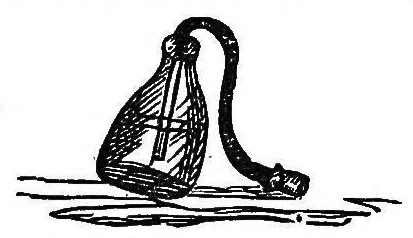
“First the infant, mewling and pewking in his nurse’s arms, and for his bottle crying.”
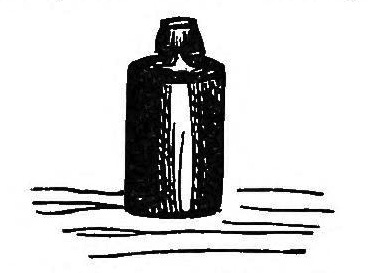
Then the schoolboy, quaffing his ginger-beer, Until “he well nigh bursts.”
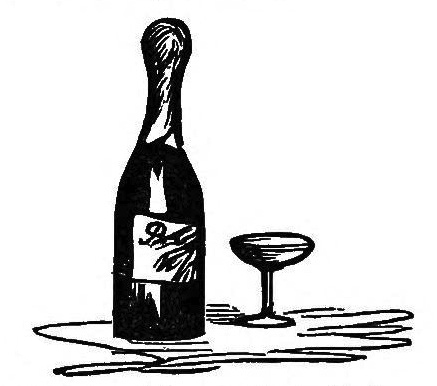
“Then the lover, with a woful ballad, Made to his mistress’ eye-brow ’neath the subtle inspiration of the Boy.”
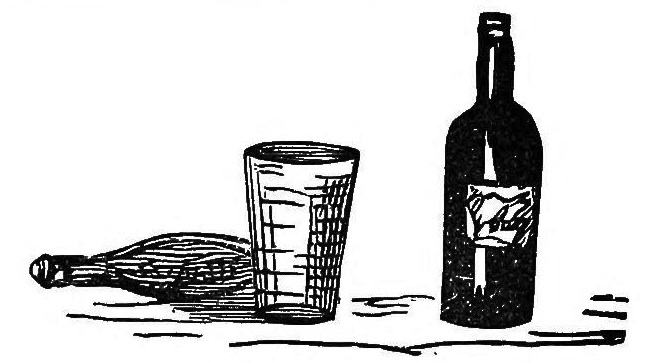
“Then the soldier, slaking his parched throat, Made dry by last night’s mess, with many a brandy and soda.”
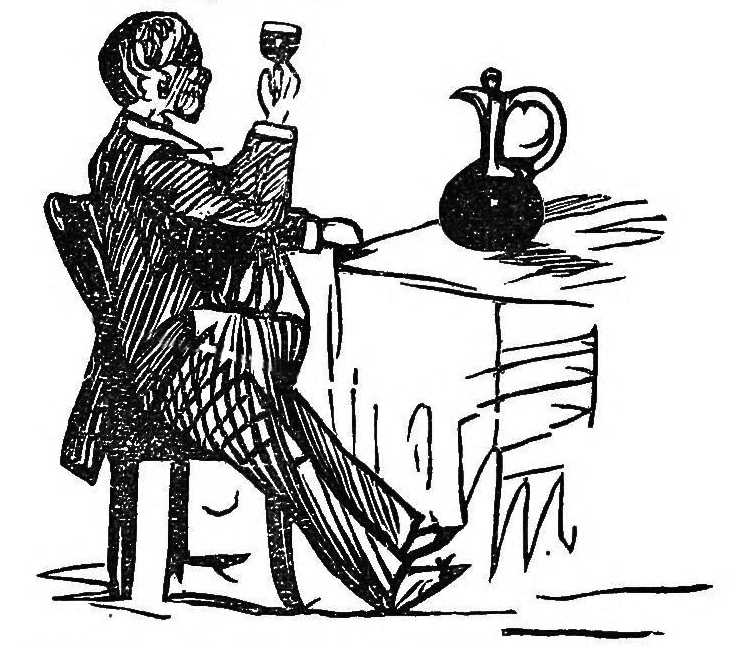
“Then the justice, with fair, round belly, With good claret lined.”
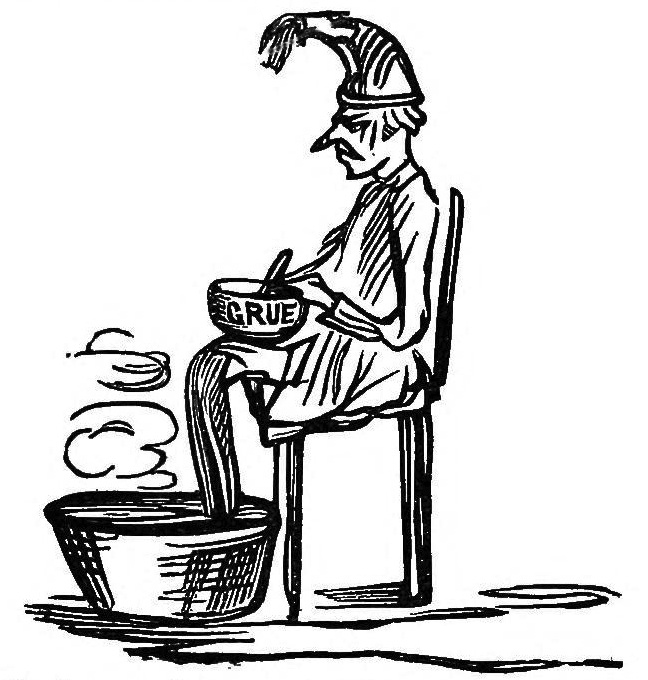
“The lean and slippered pantaloon, Who, with his feet in foot-bath, sits and drinks his gruel.”
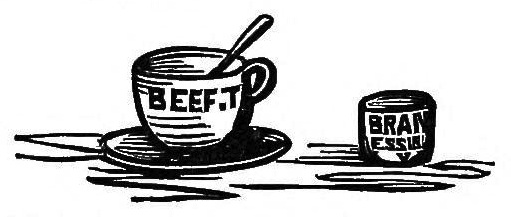
“Last drink of all, beef-tea.” I feel quite mixed after the variety.—Yours, P.M.T. The Sporting Times, May 2, 1885.
——:o:——
176
“Rosalind Mrs. Langtry.”—Playbill.
Crutch, in cosy box enshrin’d, Showers bouquets on Rosalind; Gallery is not behind In its praise of Rosalind; Common “pro’s” for years may grind, Not so gentle Rosalind. Beauty and high birth combin’d Must produce a Rosalind! Where can we an equal find To our latest Rosalind? Critics sour and critics kind Battle over Rosalind. To the charms who can be blind Of this pretty Rosalind? Streets with carriages are lined, Audiences for Rosalind, Braving chill September’s wind For the sake of Rosalind; Rank and fashion, lately dined, Flock to feast on Rosalind. But I can’t make up my mind, To accept this Rosalind! Judy, October 4, 1882.
——:o:——
Poetry and snow do not blend well. Sleet extinguishes all feu sacré in the bard. Early one morning last week, when a few gentle flakes were falling, I thought of the song of my friend Amiens in “As you Like It,” and laughing at the elements, attempted a rough parody of the first verse. It was as follows:—
Blow, blow thou Winter wind; Snow, too, if so inclined: I cannot change your mood. I’ll order Toddy hot And drink of it a lot— The strongest can be brewed. Heigh ho! Sing heigh ho! Away with melancholy. To grumble at the weather is nought but folly. Then heigh ho! The holly! This life is most jolly. (An interval of six hours is supposed to elapse.) Freeze! Freeze! The wind does blow! I’m “Boycotted” by the snow, I search and search in vain For cab, or bus, or train. Miles off is home—and worse, I’ve no coin in my purse! In the snow, sing heigh ho! to the green folly Of a fellow feigning to be happy or jolly. Heigh ho! ’Tis folly, by golly! To hope to be jolly! Anonymous.
ROMEO AND JULIET.
——:o:——
A Bachelor. (After Romeo’s description of an apothecary. Act v. Scene i.) I do remember an old BACHELOR, And hereabouts he dwells—whom late I noted In suit of sables, with care worn brow, Conning his books—and meagre were his looks: Celibacy had worn him to the bone; And in his silent parlour hung a coat, The which the moth had used not less than he. Four chairs, one table, and an old hair trunk, Made up its furniture; and on his shelves A grease-clad candlestick, a broken mug, Two tablets, and a box of old cigars; Remnants of volumes, once in some repute, Were thinly scattered round, to tell the eye Of prying stranger—this man had no wife. His tatter’d elbow gap’d most piteously; And ever as he turned him round, his skin Did through his stockings peep upon the day. Noting his gloom, unto myself I said, “And if a man did covet single life, Reckless of joys that matrimony gives, Here lives a gloomy wretch would show it him In such most dismal colours, that the shrew, Or slut, or idiot, or the gossip spouse, Were each a heaven compared with such a life.” The Maids, Wives, and Widows Penny Magazine, October 27, 1832.
I do remember a cook’s shop— And here about it stands—him late I noted In tuck’d up sleeves, with night cap o’er his brows, Cutting up joints—pleas’d were his looks, The fatt’ning trade had cover’d well his bones, And in his reeky shop a sirloin hung, A buttock stuff’d; nice tripe, and other strings Of well spic’d sausages—and upon his board A sovereign remedy for empty stomachs, Green peas and ducks, pork, steaks, and mutton chops, Remnant of goose, pigeon-pye and plates of ham, Were amply set out to make up a show, Noting this plenty to myself I said; An’ if a man did need a dinner now, Whose dainty smell is present appetite, Here lives a greasy rogue would cater one. If I may trust the flattering truth of nose, This should be Porridge Island— Being twelve o’th’clock—the knives and forks are laid.
I do remember a young pleader, And hereabouts he dwells; whom late I noted In coat once black, with overwhelming brow, Pondering o’er cases—sallow were his looks, And midnight thought had worn him to the bone; And in his sombre chambers lay confused, Black dusty papers, “general issues” here, “Demurrers special” there—matter apt to teach That, to our noble law, justice and form Alike are dear—and o’er his shelves A beggarly account of dusty volumes— Wentworth, and Coke, and Saunders—old editions all, With a few numbers of the late reports, 177 Were thinly scattered to make up a show. Noting his little practice, thus I said: “An’ if a man would patch a rotten case, Give to transaction dark a face of snow, Here lives the lawyer that might draw the pleas, Oh! this same thought doth but forerun my need— I have a cause, and will retain him quickly, As I remember, this should be the chamber; But it not being term the door is closed.” What, ho! From The Poetical Note Book and Epigrammatic Museum; by George Wentworth, London, 1824.
——:o:——
The following parody was written by Robert Surtees, Esq., M.A. F.S.A., author of a history of the County Palatine of Durham:—
I do remember a strange man, a herald— And hereabouts he dwells—whom late I noted In parti-colour’d coat like a fool’s jacket, Or morrice-dancer’s dress—musty his looks, Like to a piece of ancient shrivell’d parchment, Or an old pair of leather brogues twice turn’d; And round the dusky room he did inhabit, Whose wainscot seem’d as old as Noah’s ark, Were divers shapes of ugly, ill-formed monsters, Hung up on scutcheons like an old church aisle— A blue boar rampant, and a griffin gules, A gaping tyger, and a cat-o’-mountain, What nature never form’d, nor madman dream’d, Gorgons and hydras and chimæras dire; And straight before him lay a dusty heap Of ancient legers, books of evidence, Old blazon’d pedigrees and antique rolls, (Which made full oft the son beget the father, And give to maiden ladies fruitful issue.) Torn parish registers, probates, and testaments— From which, with cunning art and sage contrivance, He fairly culled divers pedigrees; And next, by act of transmutation rare, Did change his musty vellum into gold— For straight comes in a gaudy city youth, (Whose father, for oppression and vile cunning, Lies roaring low in Limbo lake the while,) And straight depositeth some forty guineas, And after some few words of mystic import, Of Mowbray, Howard, Vere, Plantagenet, And other necromantic terms of art, Most gravely utter’d by the smoke-dried sage, He takes, in lieu of gold, the vellum roll, With arms emblazon’d and Earl Marshal’s signet, And struts away, a well-born gentleman. Observing this, I to myself did say, “And if a man did need a coat of arms, Here lives a caitiff that would sell him one.”
——:o:——
The Shakespeare of the Period.
Shakespeare pur et simple will soon be beyond the comprehension of audiences accustomed to burlesque, sensation drama, and the cancan. An enterprising manager (we believe he thinks of turning Somerset House into a theatre, with hotel accommodation, so that visitors from the country can take a ticket, including entrance, supper, bed, and breakfast) has offered a prize for the best modern version of Shakespeare’s plays. We have been favoured with a perusal of the M.S.S. sent in, and give the following versions of the balcony scene in Romeo and Juliet, without the kind permission of the authors:—
ROMEO.
by William Shakespeare and T. W. Robertson.
ACT THE SECOND.—ASSIGNATION!
SCENE.—CAPULET’S Garden.
Enter ROMEO.
Rom.—That board says “Trespassers will be prosecuted.” I am a trespasser; but what matters prosecution so that I can stand beneath the window of the girl I love? What is love? Men live for it, die for it, and lose caste for it; but—
Juliet appears on balcony, with watering-pot.
Jul.—I have been thinking so much about that young man I met at the ball that I nearly forgot my poor flowers. There’s somebody in the garden. Who can it be?
Rom.—Have you forgotten me so soon, then?
Jul.—I have not forgotten you. But you have done wrong to come here; if my father saw you he would give you in charge.
Rom.—I have been thinking of you for the last two hours.
Jul.—And I have been thinking of you. How strange that we should think of one another!
Rom.—We must be in love.
Jul.—What is love?
Rom.—The very question I asked myself five minutes ago.
Jul.—What a lovely night! And look at the stars! Are they far off?
Rom.—Ah! hundreds and thousands of million miles.
Jul.—They seem about a mile-and-a-half from the earth.
Rom.—But they are not so far from the earth as you are from me.
Jul. (leaning over)—We are nearer now.
Rom. (holding spout of water-pot)—And the waterpot join us. For how long?
Jul.—Until I am tired of holding it, I suppose.
Rom.—Will you be out to-morrow morning?
Jul.—I always go to the village to get an egg for papa’s breakfast.
Rom.—Meet me at the Friar’s.
Jul.—What for?
Rom.—To be married, of course.
Jul.—How nice! And I can take back the egg as if nothing had happened.
Rom.—Then you think more of the egg than you do of me! Good night!
Jul.—Good night! Be careful of the wall. And beware of the dog.
Rom.—After all, what is a wall?
Jul.—And what is a dog?
[Juliet waters flowers. Romeo retreats a few steps and watches her. Curtain falls—should it be raised Juliet has dropped the water-pot, and is lost in reverie; Romeo is halfway over the wall.]
——:o:——
178
ROMEO AND HIS JULIET.
By William Shakespeare and T. Maddison Morton.
Scene.—A garden.
Romeo discovered on wall.
Rom.—If there’s one thing damps a fellow’s ardour it’s broken bottles. Now then for a jump.
(Romeo slides off wall, and falls into cucumber frame.)
I always disliked cucumbers, and now they have had their revenge. Now then to reach my charmer’s window.
Climbs up water-butt and falls in. Juliet appears on balcony.
Jul.—I heard something. It must have been the cats.
Romeo’s head appears from water-butt.
O, Romeo, Romeo, what a cold you will get!
Rom.—Suppose you help us out, and pity us afterwards. (She pulls him out.) My lovely Julio—I mean Romlet—bother it, Capulo—no, no, Montaget. I shall forget my own name next.
Jul.—What’s in a name?
Rom.—A great deal—especially when you can’t remember it. Will you quit the domicile of your paternal parent, and slope off with your’s truly?
Jul.—But how can we marry? I haven’t a copper of my own.
Rom.—And seven-and-sixpence is all I possess. Have you no jewels?
Jul.—Only a coral necklace, and a silver spoon given to me by my godfather and godmothers at my baptism.
Rom.—With such treasures and our love kings might envy us.
Dog enters.
I’m off. Down, Ponto! Good night, Jupulet. Good dog?
Jul.—Come here, Ponto!
[Dog chases Romeo; he climbs the wall; dog seizes his coat tails, tears them off, and runs about with them in his mouth.]
ROW ME O TO JULIA YET!
OR,
THE COVE! THE LOVE!! AND THE TURTLE DOVE!!!
By William Shakespeare and H. J. Byron.
Scene.—Capulet’s Back Garden.
[Music, “Come into the Garden, Maud.”—Enter Romeo, dressed as a young man of the day, smoking cigar.]
Rom.— For walls and gates I do not care a farden, And so I make my way into the garden; My conduct may seem like that of a rash’un, But on this plot I’ll give vent to my passion. I met her at the ball. We danced together, ’Tis true we only talked about the weather; But then our idle eyes spoke volumes nearly; And now I know I idolize her dearly, And come what will I never can forget Earth’s brightest jewel, lovely Jewelet. Enter Juliet on balcony. Jul.— Bother the cats! They quite disturb my rest. Rom.— Now is my time. Jul.— They are getting quite a pest. Rom.— The creature basking in your beauty’s glow Is not a Thomas Cat, but Romeo. Jul.— A Montague! Rom.— Who’s aim’s your hand to claim; But as no doubt you’ll say, “What’s in an aim?” Jul.— Aimey-vous me? Rom.— My very little game. I Adore you more than Leicester did his Aimey. Wilt fly with me? My love you cannot doubt it. Jul.— Well, Romeo, I must romeonate about it. What is to-day? Rom.— Days, months, I quite forget, It may be June—I know but Julyet. I’ll take you to the Friar. Jul.— Let me see— Rom.— Why, surely you are not afraid of me? Jul.— I’ll meet you at the cell. Rom.— And cell I bring A marriage license. Jul.— Yes; also a ring. Duet,—Air, “Burlesque Galop.” Both.— The Montagues and Capulets will be in such a way, When they hear that Romeo and Juliet one fine day, Ran off and got married both together on the sly, Regardless of the hatred of each other’s family. O toodlee um, te oodleum, &c. (Juliet plays tambourine—Romeo dances a breakdown.)
JULIET AND ROMEO.
(An Original Drama)
By Dion Boucicault.
Act 2.—Scene 2.—Terrace and grounds of Capulet Castle Balcony, L., with flowers on stand, and vine trees climbing up sides. Wall, R., on which grows real stone fruit. Italian view at back (to be painted on the spot.) Enter Retainers.
GRAND DANCE OF THE PERIOD BY A HUNDRED REAL VERONESE.
(Exeunt Retainers.
Enter Romeo, dropping from wall by aid of a branch. Presently Juliet appears. They talk (but never mind the dialogue.) Enter Watchmen. They struggle with Romeo. Juliet throws flower-pots at watchmen. Exeunt Watchmen, with broken heads. Here the lovers might speak; but perhaps words will only delay the action. Capulet enters with Retainers. Romeo is bound to a tree. During struggle Juliet descends from balcony by aid of vine, and fills Retainers’ muskets with water from a patent garden tube. Capulet and Retainers retire. They point their muskets at Romeo, Capulet gives the word, but the muskets are harmless. Juliet picks up pruning knife and releases Romeo. They are discovered. 179 Romeo is again a prisoner, when he tells Capulet that amongst the papers to be opened at his death is the last will of Capulet’s father, leaving all to charity. The old man blesses his children, and for a time, at least, the lovers are happy. But there are more sensations to come.
The Grasshopper, July 1, 1869.
——:o:——
Mercutio’s Description of Queen Mab.
Mercutio.— Here comes Romeo—poor fellow he’s mooney Sweet on Rosaline! Oh, regular spooney,— Found him this morning at the lady’s door, Waving up kisses to the second floor— Radiant with joy, as Phœbus or Aurora, Wooing with warm smiles a second Flora! And then unto his lady love he played Upon the Jewish harp a serenade; While ever and anon there came a flow Of voice with “Sweep!” and then of “Milk below!” Romeo enters in a melancholy mood. Mercu.— His bosom swells, the heavy sighs rise on it; The man’s in love—that’s about the size on it. Romeo. (taking out photograph and kissing it)— Sweet Rosaline! Nor yet as sweet by half As represented in this photograph. The sun was envious of those dainty hands— So fist-like has he drawn them—and he brands The sweetest smile that ever heart did win, In likeness of a silly sort of grin! Mercu. (looking over his shoulder)— Sixpence in frame complete, that’s about it. Romeo.— Now there you’re wrong, my friend; perhaps you doubt it? But fourpence is the figure now-a-days— The walks of art are now but common ways. (Kisses photograph and sighs.) Mercu.— Good Romeo, are you ill? Romeo.— Yes, I’m queer. Mercu.— Where do you feel it? Romeo. (laying hand on heart) Oh! I feel it here. Mercu.— Oh! you are in love—over head and ears— But why so sad? Your eyes are set with tears, When you should smile. Romeo.— Rosy! Mercu.— Pooh! forget her. You’ll see some other girl you’ll like much better. Romeo.— I’ve dreamt a dream—Oh! ’twas a horrid dream! Mercu.— Queen Mab’s been with your worship, it would seem. She is the very deuce, and goes to work By aid of pickled salmon and roast pork; Sits on the stomach of an Alderman; O’er every drowsy sense does hold her ban. Her waggon-spokes of grill’d and devilled bones, Her wheels give out a constant sound of groans; Her whip, a knotted lash of champagne wires; Her chariot, a stew-pan wrapped in fires; Her shouts are pepper, and her oaths are spice; She’s something nasty, after something nice. In fact, my buck, to speak out plain and fair, What you’ve been suffering from is the nightmare!
This extract is taken from “Romeo and Juliet Travestie, or the Cup of Cold Pison,” by Andrew Halliday.
The burlesque was produced at the Strand Theatre, on Thursday, November 3rd, 1859, when the part of Romeo was taken by Miss C. Saunders, whilst Miss Marie Wilton (now Mrs. Bancroft) performed Juliet, “a belle whom all the young fellows in Verona are anxious to ring.”
At the end of the burlesque the ghost of Shakespeare rises, frowning, and holding up his finger menacingly.
Mercutio.— I see it’s Shakespeare. He’s angry with us. All.— Pray what have we done? Romeo.— His noble tragedy we’ve turned to fun; And he don’t like it. All.— Oh, what shall we do? Apothecary.— Some of you speak to him. Romeo, you Are the hero here, face it out—dare him, Soften him over a bit.—you know—square him! Romeo. (going up to him)— I’ll try. Immortal bard—illustrious Swan of Avon, Towards you, we own, we have not been behavin’, With that respect which we should like to pay, But the fact is, if we essayed your play, As you did write it—the boxes and the pit Would say we could not act the play a bit. And so that with us, not at us they may laugh, We’ve winnowed your fine corn into chaff. (Shakespeare bows.) Nurse. (going up)— Another thing you must remember, Poet, You wrote burlesques yourself, and well you know it. In “The Midsummer Night’s Dream.” (Shakespeare disappears.)