BOOK II. (continued 2)
Reading edition
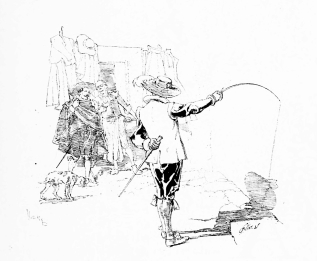
I perceived that all her discourse and long speech ended in a dun; for though that was her text, she did not begin with it as others do, but made it her conclusion; when I found that I was not at all to seek for the occasion of her loving visit, which was the first she made me whilst I lodged in her house, excepting only one day, when she came to answer for herself, because she heard I had been told some story about her witchcraft, and that when the officers came to seize her, she had cast such a mist before their eyes, that they could neither find the house nor the street. She came then to tell me it was all a mistake, for they meant another of her name; and no wonder, for there were more of the name and profession. I paid her down the money, and as I was telling it out, ill fortune, which always attends me, and the devil, who never forgets to plague me, so ordered it, that the officers came to seize her for a scandalous liver, and had information that her gallant was in the house. They came directly into my room, and seeing me in bed and her by me, they laid hold of us both, gave me half a score good blows, and dragged me out of bed. Two others held her fast, saluting her with the titles of bawd and witch. Who would have thought it of a woman that lived as I have said? The noise the constables made, and my cries, gave the alarm to her gallant, who was a fruiterer, and lay in the next room within. He set off a-running. They observing it, and being informed by another lodger in the house that I was not the man, scoured after, and laid hold of him, leaving me well beaten and my hair torn off; yet for all I had endured, I could not forbear laughing to hear how the dogs complimented the old woman. One cried, “How gracefully you will look in a cart, mother; by my troth, it will be a great satisfaction to me to see a thousand or two of rotten oranges and turnip tops fly after you.” Another said, “We have taken care that you shall make a good show, and be well attended.” At last they caught her bully, bound them both, begged my pardon, and left me to myself.

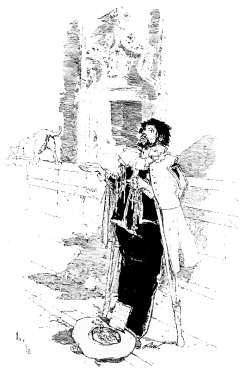
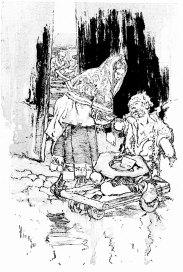
It was some comfort to me to see my good landlady in the way to preferment, so that all my care was to be in a readiness that I might throw one rotten orange at her; though considering what a maid of hers, who was left behind, told me, I much doubted whether ever they could secure her in prison, for she talked of flying, and some other matters I did not at all like. I lay eight days in the house under the surgeon’s hands, and was scarce able to go abroad at the end of them, for they were fain to stitch up my face, and I could not go without crutches. By this time my money was spent, for the hundred reals all went in lodging, diet, and cure; so that to avoid further expenses, when my treasure was gone, I resolved to go abroad upon crutches, and sell my linen and clothes, which were very good. I did so and with part of the money bought an old leather jerkin, a canvas waistcoat, a patched beggar’s great coat down to my ankles, spatter-dashes on my legs, and great clouted shoes, the hood of the great coat on my head, a large brass crucifix about my neck, and a pair of beads in my hand. A mumper, who was a master at his trade, taught me the doleful tone and proper phrases for begging, so I began immediately to practise it about the streets. Sixty reals I had left I sewed up in my doublet, and so set up for a beggar, much confiding in my cant. I went about the streets for a whole week, howling in a dismal tone, and repeating my lesson after this manner: “Good Christian servants of the Lord, take pity on a poor distressed, miserable, wounded, and maimed creature, that has no comfort of his life.” This was my working day note, but on Sundays and holidays I altered my voice, and said, “Good charitable people, for the exalted Princess, Queen of the Angels, Mother of God, give an alms to the poor cripple whom the Lord has visited.” Then I stopped a little, which does good service, and went on again: “See my poor limbs were blasted, unhappy wretch that I am, as I was working in a vineyard; I lost the use of all my precious limbs; for I was as strong and as sound as any of you are, the Lord be for ever praised, and preserve your health and limbs.” Thus the farthings came tumbling in by shoals; I got abundance of money, and was in a way of getting much more, had I not been thwarted by an ill-looking lusty young fellow, lame of both arms and with but one leg, who plied my own walks in a wheelbarrow, and picked up more pence than I did, though he begged not half so genteelly; for he had a hoarse voice, which ended in a squeak, and said, “Faithful servants of Jesus Christ, behold how the Lord hath afflicted me for my sins; give one farthing to the poor, God will reward you,” and then he added, “for the sweet Jesu’s sake.” This brought him a mighty revenue, and I observed it, and for the future I cut off the s, and said only Jesu, because I perceived it moved to greater devotion. In short, I altered my phrases as occasion served, and there was no end of my gettings. I had both my legs bound up in a leather bag, and lay in a surgeon’s porch, with a beggar that plied at the corner of a street, one of the arrantest knaves that ever God put life into. He was very rich, and as it were our superior, and earned as much as all of us. His belly hung out in a bunch; besides, he bound one arm tight with a rope above the shoulder, which made his hand look as if it were lame, swoln, and had an inflammation. He lay flat on his back, with all the rupture naked, which was as big as his head, and cried, “Behold my misery, see how the Lord chastises his servants.” If a woman happened to pass by, “Sweet, beautiful lady, the Lord bless your dear soul.” Most of them would give him an alms for calling them handsome, and would make that their way to their visits, though it were not their road. If any ragged soldier came by, he called him “Noble Captain;” if any other sort of man, “Good worthy gentleman;” if he saw anybody in a coach, “Right Honourable Lord;” and if a clergyman on a mule, “Most Reverend Archdeacon.” In short, he was a most intolerable flatterer, and had particular ways of begging on holidays. I contracted such intimacy with him that he acquainted me with a secret, which in a few days made us rich; and it was, that he kept three little boys, who begged about the streets, stole everything that came in their way, which they brought to him, and he was the receiver; besides, he had two small children that learned to pick pockets, and he went halves with them. Being so well instructed by such an able master, I took to the same courses, and he provided me with fit instruments for my purpose. In less than a month’s time I had got above forty crowns clear of expenses, and at last, designing that we should go away together, he disclosed to me the greatest secret and cunningest design that ever beggar had in his head, which we both joined in; and it was, that between us we every day stole four or five children, which being cried, we presently appeared, inquired what marks they had to be known by, and said, “Good God, Sir, I found this child at such a time, and had I not come as I did, a cart had run over it, but I have taken care of it.” They readily paid us the reward, and it throve so well, that I got above fifty crowns more, and by this time my legs were well, though I still wore them wrapped in clouts. I resolved to leave Madrid and go away to Toledo, where I knew nobody and nobody knew me. Having taken this resolution, I bought an old suit of grey clothes, a sword and bands, took leave of Valcazar, the beggar I last mentioned, and went about the inns to find some way to go to Toledo.
CHAP. IX. In which I turn Player, Poet, and Gallant of Nuns; which Characters are Daintily Painted.
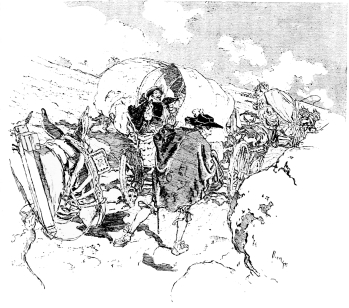
AT a certain inn I met with a company of strolling players, who were going to Toledo, and had three carts with them. It pleased God that among the gang I found one who had been my fellow-student at Alcalá, who had played the wag, and was turned actor. I told him what a mind I had to go to Toledo, and he scarce knew me for the scar across my face, and he could not forbear crossing himself at the sign of my cross.[21] In conclusion, for a small spill of money, he was so much my friend as to prevail with the rest to let me go with them. We were a scratch lot, men and women together, and I was mightily taken with one of the crew, who was the chief dancer, and acted the queen and other great parts in plays, for she was a notable jilt. Her husband happened to sit next to me, and not thinking to whom I spoke, but following my inclination, I asked him, “How could a man do to have a little talk with this woman, that I might spend twenty crowns upon her, for I have a great liking to her?” “It does not become me to answer your question, as I am her husband,” replied the man, “nor is it fit I should talk of any such thing; but to speak without feeling, for I have none, she deserves to have any money spent upon her, for there is not a more dainty bit of flesh upon the earth, nor such a playsome wench.” This said, he leaped out of the cart, and got into another, in all likelihood that I might have an opportunity of making my addresses to her. I was pleased with the man’s answer, and perceived it may be said of such men, that they had wives as if they had none. I laid hold of the opportunity; she asked me whither I was going, and some questions concerning my life and circumstances; and in conclusion, after much talk, postponed the affair to Toledo.
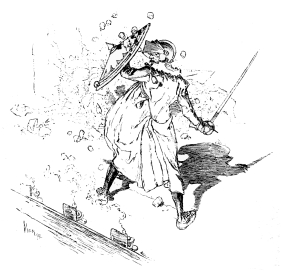
We diverted ourselves by the way as best we could, and I happened to act a piece out of a play of San Alejo that I had borne a part in when I was a boy, which I did so well, that they took a liking to me, and learning of my friend, who was in the company, of all my misfortunes and hard circumstances which I had made him acquainted with, she asked me whether I would make one among them? They so highly extolled their strolling course of life, and I was then in such want of some support, and so fond of the wench, that I agreed with the manager for two years. Writings were signed between us to oblige me to stay with them, so they gave me my allowance, and allotted my parts, and thus we came to Toledo. They gave me two or three prologues to get by heart, and some other grave parts, which suited well with my voice. I applied myself to it, and spoke the first prologue in the town, which was about a ship in distress, as they all are, and wanting provisions, which put into that port. I called the folks a “Senate,” begging their attentions, pardon for all faults, and so went off. There was great clapping of hands, and in fine I was liked on the stage. We acted a play, written by one of our actors, and I wondered how they should come to be poets, for I thought it belonged only to very learned and ingenious men, and not to persons so extremely ignorant. But it is now come to such a pass that every head of them writes plays, and every actor makes drolls and farces; though formerly I remember no plays would go down but such as were written by the good Lope de Vega and Doctor Ramon. In short, the play was acted the first day, and no soul could make anything of it. The second day we began it again, and as God would have it, there was some warlike exploit to begin with; and I came upon the stage in armour, and with a target on my arm, which was a great mercy, or else I had infallibly been pelted to death with cabbage-stalks and pumpkins, and all things that came to hand. Such a storm of hail was never seen, and the play deserved it, for it represented a king of Normandy in a hermit’s habit, without any sense or reason, had two scoundrel footmen to make sport, and when they came to unravel the plot, there was nothing but marrying of all the company, and there was an end; so that, to say the truth, we got but what we deserved. We all fell foul of our companion, the pretended poet, and I bade him consider what a danger we had escaped, and take warning by it; he answered, he had not made one word of the play, but only picked up bits and scraps, some from one and some from another, as they came in his way, which he had jumbled together, like a beggar’s cloak made of all sorts of rags; and the ill luck was, that it had not been neatly joined. He owned, that all the players who wrote plays, were obliged to make restitution, because they only stole from all the parts they acted, which was easily done, and they were willing to run all hazards in hopes of getting ten or twenty crowns. Besides that, going about all the country, and being shown plays by several persons, they borrowed them to read, and then stole them, to which, when they had done, they only added some scurvy part, and left out another better, and so they called it their own; protesting that no player ever knew how to write a scene any other way.
I liked the contrivance and took a great fancy to try it myself, as having some small turn for poetry, and being somewhat versed in poets, for I had read Garcilaso, and others, and so I resolved to fall into that trade; so that with this, and my actress, and my own playing, I made a shift to live. By that time we had been a month at Toledo, acting several new plays, and endeavouring to retrieve our first failure, and they had come to call me little Alonso, for I had given out that my name was Alonso, to which the generality added the title of the Cruel, because I had acted a part of that nature, to the great liking of the pit and upper galleries. I had now got several new suits of clothes, and there were some heads of other strollers who endeavoured to inveigle me away from my company. I set up for a critic of comedy, commented on the famous actors, reprehended the attitudes of Pinedo, gave my vote for Sanchez’s natural sedateness, called Morales pretty good, so that my advice was always taken in contriving the scenes and adorning the stage; and if any play came to be offered, it was left to me to examine it. Being encouraged by this applause, I made my maiden effort as a poet in a little ballad, and then wrote a small farce, which was well approved of. Next I ventured a play, and that it might not escape being a thing divine, made it all of devotion, and full of the Blessed Virgin. It began with music, had fine shows of souls in purgatory, and devils appearing, as was the fashion then, with old gibberish when they appeared, and strange shrieks when they vanished. The mob was mightily pleased with my rhymes about Satan, and my long discourses about his falling from Heaven, and such like. In short the play was acted, and well liked. I had more business than I could turn my hands to, for all sorts of lovers flocked to me, some would have songs on their mistress’s eyes, others on their foreheads, others on their white hands, and others on their golden locks. There was a set price for everything; but I sold cheap to draw the more custom, because there were other shops besides mine. As for godly ballads, I supplied all the country clerks and runners of monasteries; and the blind men were my best friends, for they never allowed less than eighty reals, and I always took care they should be bombastic, and stuffed with cramp words, which neither they nor I understood. I brought up many new fashions in verse, as tailors do in clothes, and was the first that concluded my songs like sermons, praying for grace in this world and glory in the next.
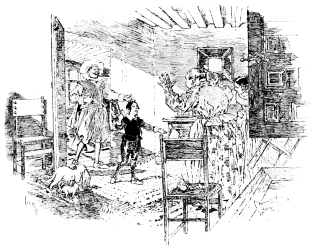
Thus was I happy, with the wind blowing fair as I could wish, my pockets full of money, highly in vogue, and in such a prosperous condition that I aimed at being chief of a company of strollers. My house was handsomely furnished, for the devil put into my head to buy the old mouldy tapestry of taverns to hang my rooms at a cheap rate, all which cost me about five or six crowns; for they afforded a better prospect than any the king has, for being so ragged you might see through any part of them, which you cannot do through any of his. The oddest thing happened to me one day that ever was heard of, which I will not forbear to make known, though it be to my shame. When I was writing a play, I used to shut myself up at home in the garret, where I kept close and dined. The maid used to bring up my dinner, and leave it there; and it was my way to act all I wrote, and talk aloud, as if I had been upon the stage. As the devil would have it, when the maid was coming up the stairs, which were dark and steep, with the dish of meat and plates in her hand, I was composing a scene of hunting a bear, and, being wholly intent upon my play, cried out as loud as I could:
“Fly, fly, the bloody bear; take heed, I say, Alas, I’m killed, and you’ll become its prey.”
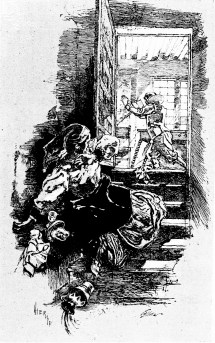
The poor wench, who was a silly Galician, hearing me roar that I was killed, and she in danger to become a prey to the bear, thought it had been real matter of fact, and that I called to her to save herself. Upon this conceit she took to her heels, and treading on her coats in the confusion, tumbled down all the stairs. The soup was spilt, the plates were broken, and she run out roaring into the street, “that a bear was killing a man.” I could not be so nimble but that all the neighbours were about me, asking where the bear was? and I could scarce make them believe me, though I told them it was the maid’s foolish mistake, for I was only acting a part of a play. I lost my dinner that day; my companions were told of it, and all the town made sport with it. Many such accidents befel me whilst I followed the trade of poetising, and would not forsake that wicked course of life.
It happened, as frequently does to that sort of people, that the chief of our company, being known to have done very well at Toledo, was arrested for some old debts and thrown into gaol, which broke up our gang, and everyone went his own way. As for my part, though my comrades would have introduced me into other companies, having no great inclination to that calling, for I had followed it out of mere necessity; I thought of nothing but taking my pleasure, being then well dressed and in no want of money. I took my leave of them all, they went their ways; and I, who had proposed to quit an ill course of life, by desisting from being a stroller, to mend the matter, dropped out of the frying-pan into the fire, for I fell into much worse. I became a candidate for Antichrist; to speak plainly, I became a gallant of nuns. The encouragement I had to commit this madness, was, that I understood there was a nun, the goddess Venus herself, at whose request I had written abundance of little devout pastorals; and she had taken some liking to me on that account, and seeing me act Saint John the Evangelist in a Sacramental play. The good lady made very much of me, and told me there was nothing troubled her so much as my being a player; for I had pretended to her that I was the son of a gentleman of quality, and therefore she pitied me, and I at last resolved to send her the following lines:
“I have quitted the company of players, rather to comply with your desires, than because it was otherwise convenient for me so to do; but to me all the company in the world, without yours, is solitude. I shall now have the more opportunity of being yours, as being absolutely my own master. Let me know when I may have speech with you, and when I shall know when I may be happy, &c.”
The runner carried the note, the good nun was wonderfully pleased to hear of my change of life, and answered me as follows:—
“I rather expect to be congratulated than to congratulate you on your good fortune; for my wishes and your prosperity are inseparable. You may be looked upon as recovered out of a desperate estate; it only remains that you persevere, as I shall do. I question whether there will be any liberty at the grate to-day; but do not fail to come at even-song, for there at least we shall see one another, and perhaps I may find means to put some trick upon the lady abbess.
Farewell.”
I liked the note, for the woman was really witty, and very handsome. After dinner I put on the best suit I used to act the gallant in on the stage, went to church, pretended to pray, and then began to examine every inch of the grating and veil before the choir, to see if I could discover her. At length it pleased God I had the good fortune, or rather the devil contrived me the ill luck, that I heard the old sign; I began to cough, she answered—it was a cough of Barabbas. We followed each other in the catarrh, and it seemed as if they had strewn pepper in the church. At last, when I was quite weary of coughing, a wheezy old woman appeared at the grate, and I discovered my mistake; for this is a very uncertain sign in a convent, because, as it serves for a sign among young ones, it is habitual with old ones, and when a man thinks it a call to catch a nightingale, he finds nothing but an owl. I stayed a long time in the church, till even-song began, which I heard out, for the admirers of nuns have this madness, besides all the rest, that they must play the hypocrite and pray against their will; besides that, they never go beyond the eve, being ever in expectation, but the day of enjoyment never comes. I never failed being at even-song, and stretched out my neck a handful longer than it was, to endeavour to see into the choir. The sacristan and clerk were my constant companions, and I was well received by the vicar, who was a pleasant man, and walked as stiff and upright as if a spit had been run through him. I went by times to take my place in a court the nuns’ windows looked into, where it was comical to see the strange postures of others, as mad pretenders as myself. One gazed without ever so much as winking; another stood with one hand on his sword, and his beads on the other, like a statue upon a tomb; another with his arms stretched out as if he were flying; some gaping, as if they would have had their hearts fly out at their mouths; some leaning against the walls, as if they had come to support them; some walking as if to be bought for their pacing, like horses; and others with billets doux in their hands, like falconers, to bring the hawk to the lure. The jealous lovers were in another band; some smiling, and gazing up at their mistresses; others reading verses, and showing them; one, pacing the terrace with a damsel in hand out of pique; another, talking to a suborned servant-maid, who was giving him a letter. All this was below where we were, but above the place for the nuns was a little old tower, all full of cracks, chinks, and peeping holes, where appeared nothing but a confusion—here a hand, there a foot, in another place a head, in another a handkerchief, a glove, or the like; some walked, others coughed, and so everyone had her particular way. In summer it is pleasant enough to see the men so parched and the women so cool. In winter some of us stay so long in the wet that we are mouldy, and the moss grows upon us; neither snow nor rain can drive us away; and all this is only to see a woman through a grate and a glass, like some holy relic, or curious piece of workmanship, for that is all we can ever expect. It is just like falling in love with a blackbird in a cage, if ever she talks; or with a fine picture, if she does not. The greatest favour ever to be attained is to touch the ends of the fingers. They lean their heads against the double grates, and shoot volleys of fine conceits through those loopholes. ’Tis perfect love at hide and seek, and yet for this we study to talk fine and whisper, must endure every old woman that chides, every doorkeeper that commands, and every one at the wheel that gives what answer she pleases.
I had followed this cursed employment so long that I was well looked upon by the lady abbess, civilly treated by the good priest, and a familiar with the clerk, for we hid our folly from them; and this is all the happiness such madmen can aspire to. I began to be weary of the doorkeeper’s turning me away, and of the nuns begging, and methought how dear I endeavoured to purchase a place in hell, which others have at so easy a rate, and that I even anticipated to take share of it in this world by such extravagant means. It was plain that I rode post to perdition, and threw away my soul only for a few looks. When I talked to her, for fear of being overheard by the rest, I used to thrust my head so close to the grate, that the print of it would not come out in two days, and at the same time spoke so low that she could not understand one word without a trumpet at her ear. Everybody that saw me, cried, “A curse on thee, thou wicked, nun-hunting dog!” besides many other worse compliments. All these things brought me to my senses, and I resolved to quit my nun, even though it cost me my living; and this I determined to do on St. John’s Day. I had come to know what nuns were. I need not tell you, Sir, how the she-votaries of St. John get themselves hoarse of spite, so that, instead of chanting the mass, they groan it; nor do they wash their faces, but don their old garments. I got off her the value of fifty crowns of her work, in silk stockings, rich purses, and sweetmeats, pretending to have them raffled for; but as soon as I had them in possession, I set out for Seville to try my fortune there, as the greater city. The pious reader may guess how much the nun was concerned, not for me, but what I cheated her of.
CHAP. X. Of what happened to me at Seville, till I took Ship for the Indies.
I HAD a good journey from Toledo to Seville, for I was sharp at play, had loaded dice, both high and low, and could palm a dice, hold four, and throw out three; besides, I had false cards, and knew how to pack any, and turn up what I pleased, and abundance of other fine arts and sleights of hand, which I pass by as tedious, and for fear they might rather serve to teach others evil practices, than for warnings of what they are to shun; but perhaps some few words of advice may be of use to such as are not skilled in those practices; and they who read my book, if they are cheated, may thank themselves. Never think yourself safe because you find the cards, for they will change them upon you whilst a candle is snuffing. Take care they make no scratches or other marks on the cards; and if my reader is a poor vagabond, he must observe, that, among that gang of rake-hells, they prick the cards they would know with a pin, or handle them so as to leave a crease. If you happen to play among a better sort of people, take heed of cards which are originally falsified, and have private marks on the pasteboard. Never trust to a clean card, nor think yourself safe with a foul one, for the cheat is equal in both. Take heed the dealer never bends any cards more than others, which is a certain way to pick your pocket; and observe that no motions be made with the fingers, or no hints given by the first letters of words. I will not let you farther into this secret; this is enough to make you always stand upon your guard, for you may be assured I do not tell the hundredth part of the cheats.
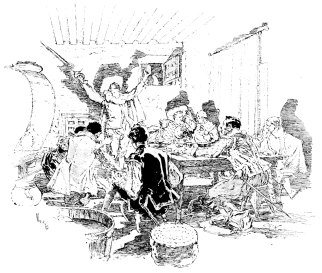
Being master of these arts, I got to Seville at my fellow-travellers’ expense, winning all the hire of the mules, my other charges, and money to boot, of them and my landlords at the inns. I alighted at that they call The Moor, where I was found out by one of my schoolfellows at Alcalá, whose name was Mata, but he, thinking it did not make noise enough, had changed it to Matorral. He dealt in men’s lives, and sold cuts and slashes, a trade which throve well with him; he carried the sign of it on his face, where he had received his share. He always made his bargain to a nicety for length and depth, when he was to bestow any, and said, “No man is so absolute a master, as he who has been well hacked and hewn himself.” And he was in the right, for his face was one seam, and himself all slashes. He told me, I must go sup with him and his comrades, and they would bring me back to the inn. I went with him, and when we were in his lodging, he said, “Come, spark, lay by your cloak and look like a man, for this night you shall see all the brave fellows in Seville; and that they may not look upon you as a cully, tumble your band, thrust out your back, and let your cloak hang loose, as if it were dropping off, for we hate to see any man’s cloak set fast upon his back. Screw your chops about, and make faces with both sides of your mouth, then talk big, using the rough words of us gentry.” I learned his lesson, and he lent me a dagger, broad enough to have been a scimitar, and for length it wanted nothing of a sword but the name. Now drink off this quart of wine,” said he, “for without you vapour you will not look like a true bully.” We had gone so far in my instructions, and I was half seas over with what I had drank, when in came four of the gang, with faces like old gout-shoes, bound about the middle like monkeys with their cloaks instead of ropes, their hats standing a tiptoe on their heads, and cocked up, as if the brims were nailed to the crowns; a whole armourer’s shop about them in swords and daggers, and the points of them beating against their right heels; their eyes staring, their whiskers turned up, and their beards like brushes. They made their compliment with their mouths, and then, in a hoarse tone, and clipping their words, saluted my companion in a gibberish, who answered in like manner. They sat down, and spoke not one word to ask who I was, but one of them looking at Matorral, and opening his mouth, thrust out his under lip, by way of pointing at me. My introducer answered in the same language, laying hold of his beard, and looking down; after which they all got up, embraced, and expressed a great deal of kindness for me. I returned the same compliments, which were like smelling to so many hogsheads of wine. When it was supper time, in came a parcel of strapping scoundrels to wait at table, whom the topping bullies call under-spur-leathers. We all sat down together at table, and the first thing they served up was a dish of pickles, which as soon as they had tasted, they all fell to drinking to my honour, by way of welcome; and till I saw them drink to it, I must confess I never knew I had any. Next came fish and flesh, all of it high seasoned to promote drinking. There was a great bowl full of wine, like a half tub, on the ground, and he that was to pledge, lay all along to drink by wholesale. I was taken with the contrivance, but by the time a few healths had gone about we none of us knew one another. They fell to talk of warlike affairs, and oaths flew as thick as hail. A matter of twenty or thirty persons were cut out for destruction. The Mayor of the city was adjudged to be cut in pieces; then they talked of the glorious memory of Domingo Tirynado and Gayon, and poured out wine in quantity for the soul of Escamilla.[22] Some that were maudlin wept bitterly, calling to mind the untimely end of Alonzo Alvarez, one of their brethren, whose body was exposed on a gibbet for the crows to feast on. By this time my companion’s brains were turned topsy-turvy, and laying hold of a loaf, and looking earnestly on the candle, he said with a hoarse voice, “By this, which is the face of God, and by that light which came out of the angel’s mouth, if you think fit, gentlemen, we will this very night maul the sergeant’s man that pursued our poor one-eyed friend.” They all set up a dismal cry, ratifying the proposal made by an oath after this manner: They drew their daggers, laid their hands on the edge of the bowl, and lying along with their chops to it, said, “As we drink this wine, so will we suck the blood of every informing catchpole.” “Who was this Alonzo Alvarez,” said I, whose death is so much regretted?” “He was,” answered one of them, “a brave fighting lad, a man of spirit, full of mettle, and a good companion. Let us go, for the devil begins to be strong in me.” This said, we all went out a catchpole-hunting. Being quite overcome with wine, and all my reason drowned, I never reflected on the danger I was running myself into. We came to the Strand, where we met the round, which no sooner appeared, but our swords were drawn and we attacked them. I did like the rest, and at the first charge we made way for the filthy souls of two catchpoles to fly out of their bodies. The constable took to his heels, and ran up the street, crying out for help. We could not pursue, because he had too much the start, but took sanctuary in the cathedral, where we were sheltered against justice, and slept as much as was requisite to discharge the fumes of the wine we had drank. When we came to our senses, I could not but wonder that two catchpoles should be killed by, and a constable fly from, a parcel of mere hogsheads of wine, for we were no better at that time. We fared well in our sanctuary, for the gay nymphs of the town flocked to us, and spent all they had upon us. A strapping jade, called La Grajales, took a fancy to me, and clothed me from head to foot in her own colours. I liked this sort of living better than any I had yet tried, and therefore resolved to stick to my trusty Grajales till death. I learnt all the cant, and in a short time was an absolute master among the ruffians. The officers of justice took all possible care to search for us, and kept rounds about the sanctuary; yet for all that we took our rambles after midnight in disguise.
Perceiving that this was like to be a tedious business, and that ill fate pursued me everywhere, though it made me never the wiser to take warning for the future, tiring me out like a true obstinate sinner, I therefore, with the advice of my doxy Grajales, resolved to go to the Indies, taking her along with me, to try whether I could meet with better fortune in another country. But it proved worse, for they never mend their condition who only change places without mending life and manners.