BREAD UPON THE WATERS From Los Angeles to Nicaragua, C. A.
Reading edition
We sailed from Los Angeles, on the S. S. Curacao, January 12th, 1920. After five days we arrived at the port of Matzalan, Mexico. The first sight of the city was the large cathedral on the hill. Our boat came to anchor, and as it was to stay a whole day, we took a launch and went ashore.
The city was very beautiful, nestling in the valley, surrounded by mountains and sea. The beach was thronged with bathers. The streets and courts were lined with tropical flowers, palm and cocoanut trees. The sun was so warm that we were soon persuaded to remove our coats and sweaters, and we stepped into a hotel court to rest.
We noticed one beggar after another coming in and asking alms. Going out into the streets again we noticed they seemed to be filled with poor, ragged, barefoot people begging. On inquiry we were told this was “Beggars’ Day,” when the poor came out and received help.
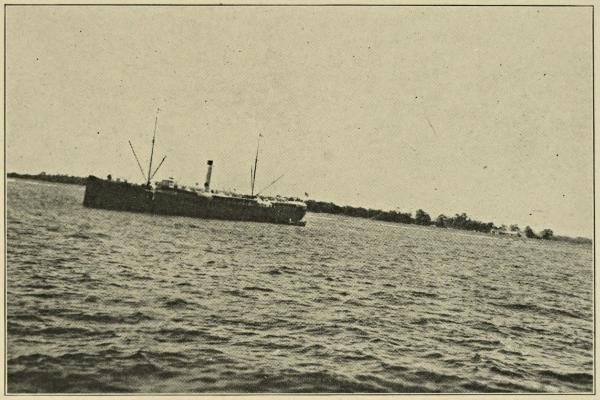
S. S. Curacao on which we sailed to the Mission field
As we sat in the plaza and saw all the sin and wickedness around us, we were reminded of Paul’s experience at Athens. His spirit was stirred when he saw the city wholly given to idolatry, and found the altar with the inscription, “To the unknown God.” Truly our spirits were stirred when we saw the high spires on the cathedral, and the altar within, and realized that God was not known to the people. The many beggars were a striking picture of the great need of the whole city. The beggars’ dirty rags told of their need of the robes of righteousness. Their bare feet showed the need of being shod with the preparation of the Gospel of Peace, for truly they had no peace. Many of them were blind, and surely they were blind to the truth. Beggars would come and touch us, and ask alms. Like Peter and John, silver and gold we did not have, but we could tell them of Jesus, and we did so. But they were so blind and deaf they did not seem to know what we were talking about.
We were taken by a gentleman in a carriage to see the places of interest in the city, which were many. Then we returned to the ship, but found it would not be ready to sail for some time yet. We seated ourselves on the deck and watched the many boats and launches that covered the waters. The wind was strong and the waves ran high. We saw a small row-boat with two men in it, rowing hard for the shore. It made me think of the great mass of people here who were being tossed by the waves of sin.
“Captain, Lower the Gang-Plank for I am Coming.”
Then the Spirit gave me a picture of the sinner as the small boat tossed to and fro by the high waves of sin. The large steamer, with all her passengers, very peaceful, and with no toiling to keep afloat, represented the children of God with all His cargo of love and grace in their souls. They did not have to work to keep saved, but He saved them and they were at home on the waters of His love. I seemed to hear the Lord say that as the waters of this mighty ocean could come in on that little boat, and sink it beneath its waves, never again to be found, even so His great love for the sinner could come in on his frail bark of sin, swallow it up, and sink it in the sea of forgetfulness, never again to be found.
Darkness began to settle over the waters. The whistle had blown, the gang plank been pulled in, and the vessel was slowly moving away. Suddenly we heard a cry coming over the waves, “Captain, lower the gang plank, for I am coming.” In the dim evening light we could see a man standing in the launch that was coming as fast as it could. Again the cry came, “Captain, lower the gang plank, for I am coming.” It was our freight clerk, who had been ashore, drinking and indulging in sin, until he had almost missed his opportunity to get on board. But at the captain’s command they lowered the gang plank, the clerk jumped on it and came on board.
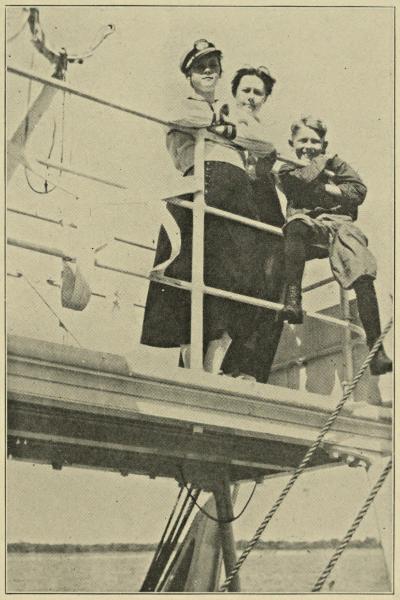
On Board Ship
To me this taught a lesson. The big ship Salvation has pulled into the harbor of the needy, the needy one comes in his little row-boat of trouble and cries for help, and the gang plank, the Gospel of love, is let down to him, and he jumps on and is saved. So, as we go among these needy people, in their little old row-boats toiling on the angry waters of sin, we hope to see the dear old Gospel ship of Zion pull into many a harbor, and lower the gang plank of love and mercy, and see people jumping on and coming aboard for the glory-land. For truly, Jesus is coming soon, and what we do we must do quickly, ere they perish.
At another port we had to wait a day for the unloading of cargo. Many natives came to the ship to sell birds and different things, and we had a wonderful opportunity to give out the Word of God to them. How eager they were to hear of the love of God to save them. One old man came up out of his little boat and said. “Are there many people in your country who know about this great God, and how He sent His Son to die for us?” We told him there were many who knew about it. Then he said, “Why don’t they come and tell us about it and help us to find Him.” We were speechless, for we knew there were few who would leave all to tell them of Jesus and His power to save.
“I’ll Be Waiting for You When Your Ship Returns.”
Several little boys came on board from the many boats and lighters, and played with Carl. He brought out his little train, that ran on a track. They had never seen anything like that before, so they spent the day with him. We gave each one tracts and a Testament to carry home. How their little dark faces did shine with delight when we told them of the love of Jesus for every one of them, and how God had sent us to tell the people to get ready, for He was soon coming back to earth. One little fellow was very much interested, asking many questions about the Bible and the tracts we had given him.
Just then the bell rang, and orders were given for every visitor to get off, for the ship was ready to go. As this dear little fellow took Carl’s hand and shook it he said, “I will be waiting for you when you come back. I will wait every day till I see this ship return, and then you can tell me more about Jesus and how to find this peace you have.”
He rowed away in a small boat, and, as far as we could see, we saw his little hand waving, and heard him saying, “I will be waiting for you when you come back.”
How we wept, for we knew we would not come that way again, and realized that the little fellow might never again hear the Gospel. Shall we fail to go to them with the bread of life?
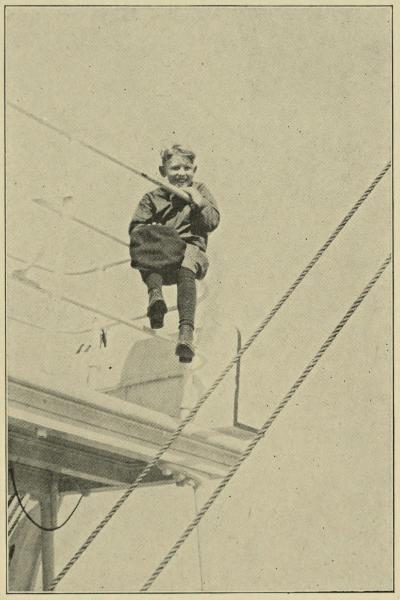
Carl on bridge of ship at sea