RUBBINGS
Reading edition
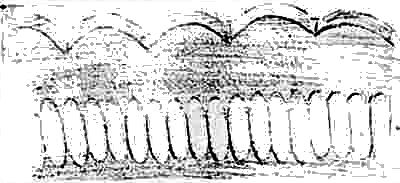
The only cutting on a rare canoe-shaped Waterford bowl in the Author's collection. "Flutes" also a very early idea, but became deeper and smaller and sharper as time went on.
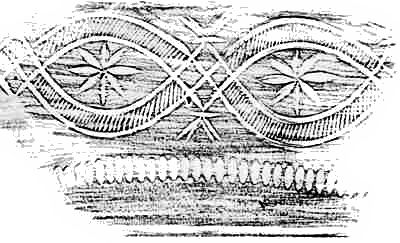
A wonderful special cutting on a "pinched" Waterford boat-shaped bowl a little deeper than engraving.
In the Author's collection.
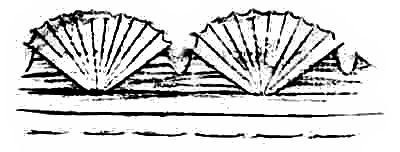
A very beautiful fan edge from a fine Waterford bowl of circa 1815.
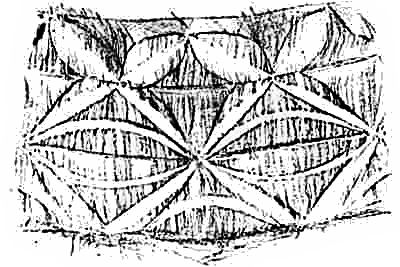
Vandyke cutting, more commonly known as "bull's-eye." A cutting very much done between 1770 and 1800, and probably more copied both abroad and in England than any other. Sometimes referred to as "Geometrical design."
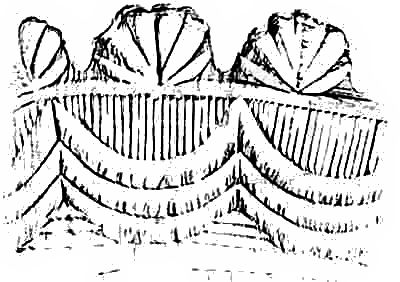
Beautiful swag and line cutting with fan edge. This is an early effort, probably 1765; but there is a fine example on a Waterford dessert service in the possession of Colonel Wike.
Plate LV.
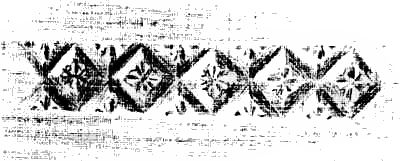
Hobnail cutting, late 1830, so often confused with diamond cutting.
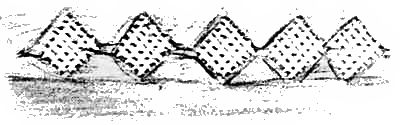
Strawberry cutting, so often confused with hobnail cutting; much used from 1780. This is an early example. Note the unevenness of the lines.
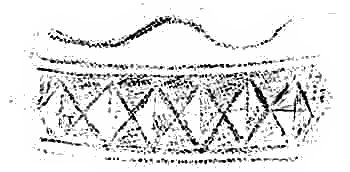
Flat diamond. This was a shallow cutting from circa 1768 onwards; after 1790 it became much deeper and sharper, the centre coming out to a sharp point.
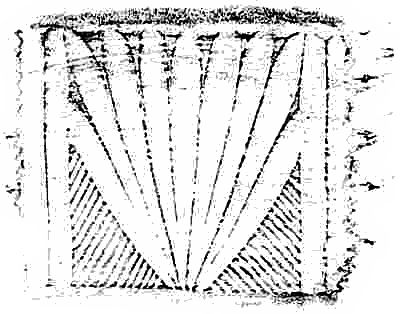
Fine "fan" cutting from an old Waterford decanter.
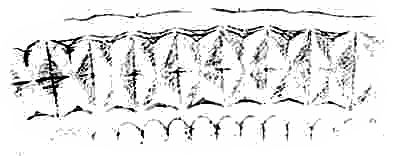
"Double," or "long" diamond, so often called in England "lozenge." It was a very soft shallow cutting till after 1780, when it became bolder and deeper.
Plate LVI.
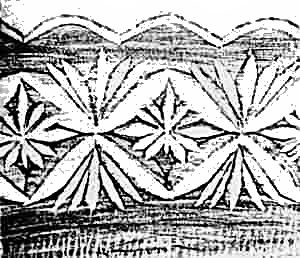
One of many adaptations of cutting on Irish glass from 1790 to 1835.
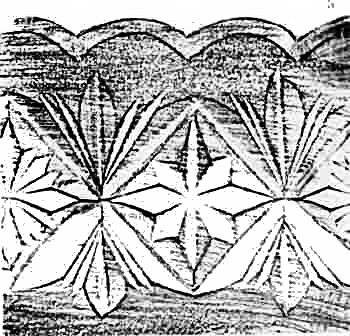
One of many adaptations of cutting on Irish glass from 1790 to 1835.
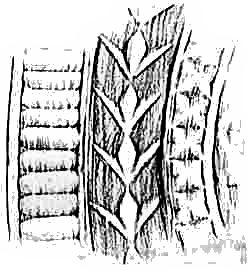
Cutting from a rare Waterford bowl. "Leaf," "shallow diamond," and "flute." This early cutting was very irregular, and so shallow that it is little deeper than heavy engraving.
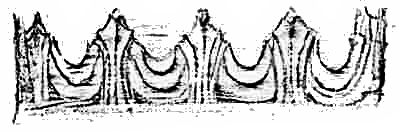
A fine "castellated" edge from a Waterford fruit dish.
Plate LVII.
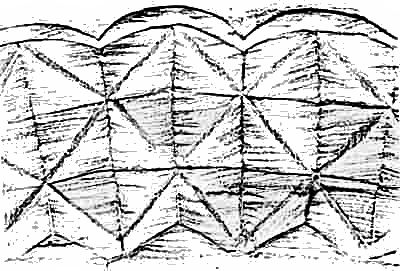
A most rare and very shallow adaptation of diamond cutting from an old Irish chalice, circa 1770.
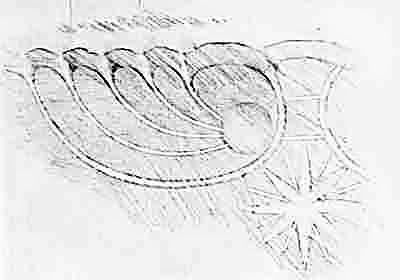
A most beautiful bit of cutting on a rare early Waterford mirror in Commander Swithinbank's collection.
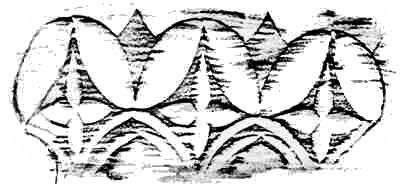
Curious shallow cutting from a set of Cork plates and finger-bowls in the Author's collection.
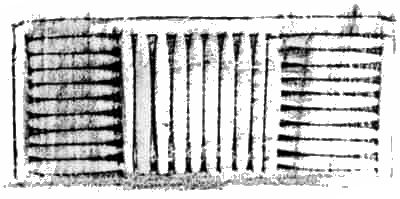
An example of step cutting, horizontal and vertical, from a late Waterford bowl.
Plate LVIII.
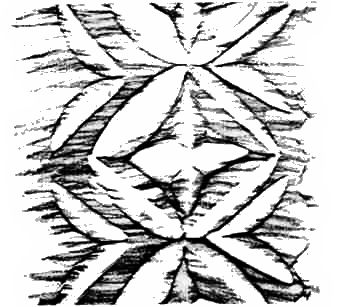
Cutting from an early Waterford canoe-shaped bowl.
In the Author's collection.
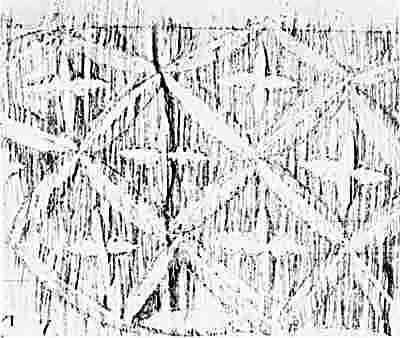
Very early cutting from Mr. Weguelin's Waterford urns, showing the remarkable inaccuracy of the cutting.
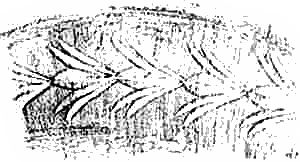
A variation of the early leaf cutting, somewhat later, therefore a little sharper and more symmetrical.
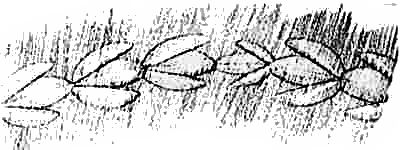
Flat "leaf," one of the first ideas of cutting. It is so soft that to the touch it is almost like moulding.
Plate LIX.
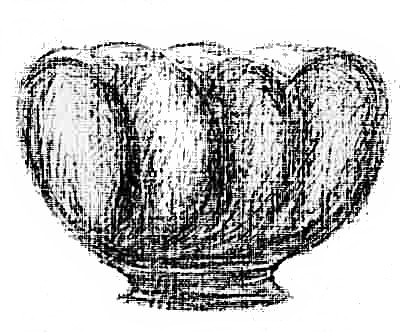
A wonderful example of "lustre" cutting. Dublin, circa 1785.
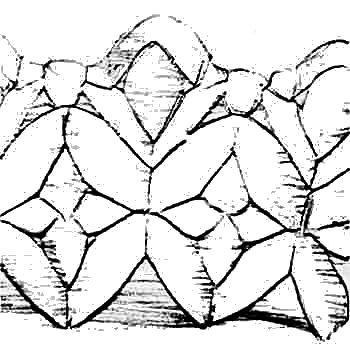
Cutting, soft and shallow, from a Cork bowl, late eighteenth century.
In the Author's collection.
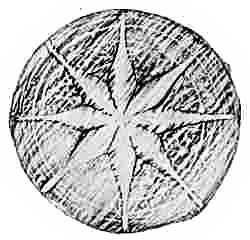
A soft early star found on the bottoms of finger-bowls and decanters, circa 1750. Note the remarkable variation from the given centre.
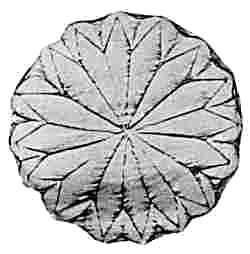
A very beautiful shallow-cut star, from a Waterford dish, about 1790.
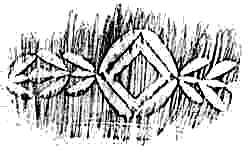
A very early husk or leaf cutting from an early Irish wine-glass, circa 1760. This is one of the earliest cuttings.
Plate LX.
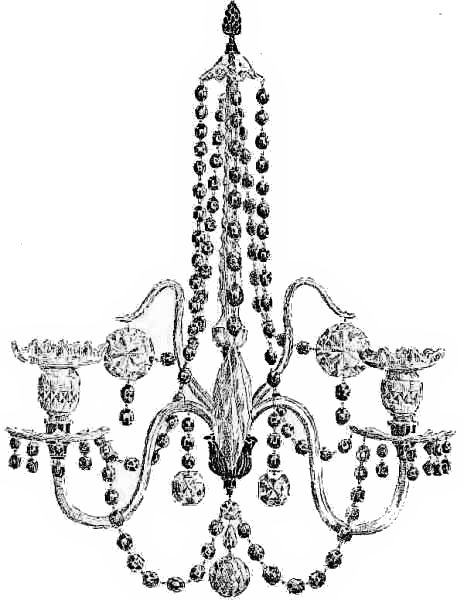
ONE OF A PAIR OF DUBLIN WALL LIGHTS.
In the Author's collection. From a drawing in the Author's possession.