FRAUDULENT AND UNINFORMED PROMOTERS
Reading edition
T. P. Littlepage, Washington, D. C.
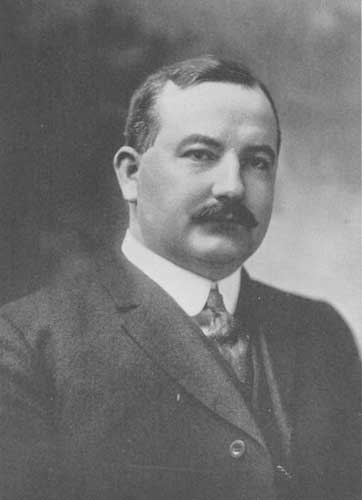
MR. T. P. LITTLEPAGE OF INDIANA President of the Association
In the beginning, let me assert my confidence and interest in agriculture in general. This is one of the basic industries, upon the proper understanding and growth of which depends the food supply of the nation. It is admitted by scientists that, other conditions being equal, an adequacy or inadequacy in the supply of proper food makes the difference between great people and undesirable people. This being true, the various operations of agriculture must always be of the greatest concern to those who are interested in the nation's welfare.
The "back-to-the-farm" movement is being discussed today in various periodicals, but back of the "back-to-the-farm" movement is a philosophy that has not been generally understood. It is not proper here to take time to discuss the reasons why the man in the "steenth" story of some magnificent office building, with telephones, electric lights, elevators, and all modern conveniences, longs for the time when he can roam again amidst the green fields in the sunshine and fresh air, but suffice it to say that in my judgment a majority of the professional men, and men in other walks of life, would, if they could, abandon their various employments and turn again to the soil. The boy on the farm dreams of the days when he can be the president of a bank, have a home in the city, own an automobile, smoke good cigars and go to the show every night. The bank president dreams of the day when he can turn again to the farm and walk in the green fields, where he can shun the various artificial activities of life, drink buttermilk and retire with the chickens.
It may be asked what connection these statements have with the subject, and the answer is this—that in the minds of many thousands of people there is this supreme desire to some day own a portion of God's footstool to which they can retire from artificial and vainglorious environments to those under which they can be their real selves and follow pursuits to their liking. It is this that makes it possible for the promoter of various horticultural enterprises to succeed in interesting in his schemes the clerk, the merchant, the doctor, the lawyer, the school teacher, the preacher, and all others whose occupations confine them within the limits of the great cities.
In the beginning, let us distinguish between the fraudulent promoter and the uninformed promoter. The fraudulent promoter is he who recognizes this great and worthy ambition of many people to buy a spot to which they can some day retire and work and rest and dream and enjoy the coming and going of the seasons, and the sunshine and the shadows, and who capitalizes this ambition, with that industry as his stock in trade which, at the particular moment, happens to offer the most attractive inducements. Those familiar with the industry he is exploiting, can tell him by his actions, by his words, by his nods and winks. It is hard for the crook to disguise himself to the informed.
Distinguished from the fraudulent promoter is the uninformed promoter, but, so far as results are concerned, there is not much difference between them for the innocent investor. They both lead him to failure. They are unlike only in this, that the pathway of the one is lined with deception, crookedness and chicanery; of the other, with blasted hopes based upon good intentions but bad information. Both lead to the self-same sepulcher which in the distance looks white and beautiful but when reached is filled with the bones of dead men.
There is not much difference after all, when one comes right down to the facts, between the crook who starts out deliberately to get one's money and the fellow who starts out in ignorance and makes great promises of returns that he knows nothing about. Both succeed in getting one's money and both succeed in misleading those who have a desire to lay aside something for their old days. We naturally feel more charity for him who has good intentions, but who fails, than for him who starts out with bad intentions. But, after all, only results count.
Did you ever receive the literature of one of these various concerns that has pecan or apple orchards to sell? How beautiful their schemes look on paper! With what exquisite care they have worked out the pictures and the language and the columns of figures showing the profits! While writing this article I have before me a prospectus of a certain pecan company that prints columns of attractive figures. Fearful, however, that the figures would not convince, it has resorted to all the various schemes of the printers' art in its portrayal of the prospective profits from a grove set to pecans and Satsuma oranges, and it tells you in conclusion that it guarantees by a bond, underwritten by a responsible trust company, the fulfillment of all its representations. Yet what are the facts? Their lands are located in a section where the thermometer falls to a point that makes highly improbable the profitable growing of Satsuma oranges. And all their figures are merely estimates of the wildest character, printed in attractive columns, based upon nothing.
As a member of the National Nut Growers Association I was this year chairman of the committee on orchard records. I sent out blanks, with lists of questions, to many prominent nut growers to see if I could secure data upon which to base a report to the association. The replies I received showed the existence of some very promising young orchards of small size, well cared for, but they also showed that there was no such thing as an intelligent report upon which reliable data as to the bearing records of orchards could be based for any future calculations. There are two reasons for this. First, most of the figures we have are based upon the records of a few pet trees around the dooryard or garden, grown under favorable conditions. Second, the young groves are not yet old enough for anyone to say, with any degree of accuracy, what the results will be. Therefore, the alluring figures printed in these pamphlets are only guesses.
Furthermore, what of the contract of these concerns? What does it specify? You would be surprised to know the legal construction of one of these contracts, together with their guaranty bond. In most cases they advertise to plant, and properly cultivate for a period of five to seven years, orchards of the finest varieties of budded or grafted pecan trees, with Satsuma oranges or figs set between. But the guaranty company is usually wise enough to have lawyers who are able to advise them of their liabilities, and about all they actually guarantee is that, after a period of five years, provided all payments have been promptly met, there will be turned over to the purchaser five acres of ground with trees upon it. Five years old? No, they may not be one year old. Budded or grafted? No, they may be mere seedlings. Oranges set between them? No, the orange has passed out of the proposition before the bond stage. The companies generally print a copy of the bond, but usually in such small type that the victim does not read it, though the heading is always prominent. It thunders in the index and fizzles in the context.
Moreover, suppose suit is brought on one of these contracts and bonds? What is the measure of damages? What basis has any court or jury for fixing damages? And be it remembered that courts do not exist for the protection of fools against their folly. The principle "caveat emptor" is as old as the common law itself, and it means that the buyer must beware, or in other words, that he should inform himself, and that he cannot expect the courts to protect him where he has failed to exercise due caution and diligence. Therefore, as a lawyer, I should very much hesitate to take on a contingent fee the suit of one of these various victims against a promoting orchard corporation.
However, in any jurisdiction where there is a criminal statute against fraudulent representation and obtaining money under false pretenses, I should not hesitate, if I were the prosecuting attorney, to indict every member of such a corporation, and, to sustain the case, I would simply present to a jury of honest men the representations in their advertising literature, and then have the court instruct the same jury as to the validity and limitations of their contract. Their advertising is brilliant enough to dazzle the sun. Their contract is as dull as a mud pie.
In addition to all of this comes the question of orcharding by proxy, and the success of the unit or acreage system, and many other similar questions; and let me say that I doubt if there is today in the United States one large development scheme, either in pecan or apple orchards, that will prove of ultimate financial profit and success to the purchaser. The promoter may get rich—he has nothing at stake. In most instances he has the price of the land in his pocket before there is a lick of work done on it, and the payments come in regularly and promptly to take care of his salary and the meager and unscientific development.
Of course I would not be understood as saying that pecan or apple orchards cannot be made profitable. I am of the opinion that reasonable sized orchards in proper locations and proper soil, of proper varieties, with proper care in handling, are good investments, and, as proof of my confidence, I am planting orchards both in the north and south. The adjective "proper" which I have used here may seem insignificant at the start but, believe me, before you have begun to clip the coupons off your orchard bonds this adjective will loom up as important as Webster's Unabridged Dictionary. In fact you will wonder how it has been possible for anyone to forecast in one word such comprehensive knowledge. Think of a man a thousand miles away putting money into the hands of some unknown concern, for five acres of unknown land, to be set in unknown varieties of trees, to be cared for by unknown individuals. Can he not see that, in keeping with all the other unknown factors, his profits must also be unknown?
We look at a great industrial enterprise, such as the steel trust, and marvel at its success. But it must be remembered that this industry started many years ago, and step by step built furnace after furnace and mill after mill, after the owners had tried out and become familiar with all the factors of that industry, and after great corps of trained experts had been developed, and after science had given to this industry many of the most marvelous mechanical inventions of the age. These facts are overlooked, however, when some fellow steps up and proposes to put a steel-trust-orchard on the market in twelve months. In most industrial enterprises there are well-known and established factors to be considered. In horticultural enterprises, however, no man knows what twelve months hence will bring. I read the other day with great interest the prospectus of a great pecan orchard started several years ago by a very honorable and high-minded man, and the promises of success were most alluring. What are the facts? The boll weevil came along and wiped out his intermediate cotton crops. The floods came later and destroyed acres of his orchards, and, if he were to write a prospectus today, it would no doubt be a statement of hope rather than a statement of facts. He would no doubt turn from the Book of Revelations, where at that time he saw "a new heaven and a new earth," and write from the Book of Genesis, where "the earth was without form and void."
How many people have been defrauded by these various schemes, no one knows. How many clerks, barbers, bookkeepers, stenographers, students, preachers, doctors, lawyers, have contributed funds for farms and future homes in sections where they would not live if they owned half of the county. How many people have been separated from their cash by literature advertising rich, fertile lands in sections where the alligator will bask unmolested in miasma for the next fifty years, and where projects should be sold by the gallon instead of by the acre.
Some time ago it was reported that inquiries in reference to the feasibility and profits of various orchard schemes had come in to the Bureau of Plant Industry of the Agricultural Department, at Washington, in such numbers that the officials of that Bureau had considered the advisability of printing a general circular, which they could send to the inquirers, advising them to make due investigation, and giving a few general suggestions about proxy farming and orchard schemes. I was advised by a friend in the middle west that the contemplated issuance of this circular by the Bureau of Plant Industry had aroused a number of protests throughout the country, and that various Senators and Members of the House of Representatives had entered strong protests with the Secretary of Agriculture against it. A number of these protests have come to my notice, and they take various forms of opposition, but are all unanimous against the Department of Agriculture offering to the prospective purchaser any information. Various reasons for their stand were given by the protestants, but how flimsy and ridiculous they are when analyzed. Congress for a number of years has been appropriating money and authorizing certain work by the Department of Agriculture. It is the people's money, and the people's Department, and the information gathered by the experts in this Department ought to be the people's information, and it ought to be possible for any citizen to write the Department a letter about any proposition that he has received from any of these various promoters, and have the advice of those who know most about it.
I suppose the Department of Agriculture has entirely too many duties to perform to undertake a work of this kind, but what an inconsistent position it is for a Member of Congress, who has been voting for appropriations to carry on this work, to appeal to the Secretary of Agriculture to suppress such information in order that some exploiter may get somebody's money under false representations. I think if it were possible today to know the list of concerns and companies who registered, directly or through agents, their opposition to this proposed warning circular, you would have a correct index of the concerns good to let alone. For no honest, reputable individual or company need be afraid of the work or suggestions of that great Department. I have the pleasure of knowing many of the officials in the Bureau of Plant Industry, and never anywhere have I seen a body of men so conscientiously engaged in the work of promoting legitimate horticultural and agricultural knowledge. It is the very life of that great Department, and its officers and employees above everyone else are most interested in seeing the land produce the most and best that it can be made to produce, and they are best qualified to pass upon these matters.
Most of the questions in these various schemes are questions of soil and horticulture. One letter in opposition to the Agricultural Department's attitude, that was brought to my attention, stated that crops varied under different conditions, and that no one was able to tell what a certain soil would or would not produce throughout a period of years, and intimated that the Department of Agriculture might mislead the public; and yet the concern that sent it printed columns of figures guaranteeing returns from pecans and Satsuma oranges in a section where orange growing is of very doubtful possibility. Boiling down these objections by the promoters, they come to simply this: That the Agricultural Department, with no motive but to tell the truth, and with its corps of trained experts, might mislead the public, but they (the promoters) could not possibly be mistaken in their fabulous figures compiled for the purpose of getting money from some misinformed victim.
Proxy farming never was a success and I do not think it ever will be. One of my friends told me a short time ago of a very successful young pecan orchard on the gulf coast. Upon inquiry I found that it was of reasonable size, nine years old, and that the owner had lived in it nine years. It was not 500 acres in extent, or 1,000 acres, or 2,000 acres, but about 20 acres. Last summer I went into a beautiful apple orchard in Southern Indiana and saw about forty acres of trees bending to the ground with delicious Grimes Golden apples. On that particular day there were great crowds of people walking among the trees and admiring the fruit. I too walked among the trees a short time, but of greater interest to me than the trees was the old, gray-haired man who had made the orchard. The trees could not talk, but he could, and he told the story of the years of care, and diligence, and work, and thought, and patience, that showed why it is not possible to cover the mountains of a state with orchards bringing almost immediate and fabulous incomes.
Some time ago I stood talking to the old superintendent of the Botanical Garden in Washington—William R. Smith, now deceased—and while discussing with him the requisites for tree culture, he said "Young man, you have left out the most important one of them all," When I asked him what I had left out, he said "above all things it takes the eye of the master." So it does, and the master is he whose vigilance is continual, who watches each tree as if it were a growing child—as indeed it is, a child of the forests—who has the care and the patience, and who is not dazzled by the glitter of the dollar, but who loves trees because they are trees.
Theoretically, one can figure great successes in big horticultural development propositions, but these figures rest upon theory and not fact. It would be difficult to state all the reasons why I have a firm conviction that such big schemes of every kind will fall, but I believe this conviction is shared by the foremost thinkers in the horticultural world. A four-year-old boy was once taken to see the animals in a circus. He was very much interested, but, when shown the tremendous elephant, shook his head and said "he is too big."
A small grove properly handled ought to be an excellent investment. The various uncertainties and vicissitudes involved can, in a degree, be compensated for by great care; and I suppose it would be possible even with some of these big schemes—by placing enough money behind them—to insure a fair degree of success. It must be borne in mind, however, that these promoters, of whom we have been speaking, are not so much concerned in the successful orchard as they are in big salaries and profits, and, if one has money enough to pay big salaries and profits, and still pay for the proper care of the orchard, then he does not need an orchard. Most of these promoters charge too much for a proper and honest development alone, and too little for the proper development plus the profits and salaries of the promoters. I wish it were not so. I wish the old earth could be made to smile bountiful crops without such expensive tickling, but this is one of the checks and balances that nature places upon her great storehouse of wealth.
The Chairman: This is a matter of very great importance and I hope we shall have a good discussion, from a practical point of view, by men who know about fraudulent promotions and their effect. We ought to go on record in this matter right now. I know of numbers of teachers, doctors and other poor people who have put money into nut promotion schemes without knowing anything about the ultimate prospect of profit.
Mr. Hutt: One noticeable thing about the promoter's literature is that he never knows anything about crop failure, and in the agricultural and horticultural world that is a thing that is painfully evident to a man who has been in business a great length of time. In the promoter's literature it is just a matter of multiplication; if one tree will produce so much in a year, a hundred trees will produce a hundred times as much. I got a letter the other day from Mr. S. H. James, of Beaumont, Louisiana, and he said, "I have been very fortunate, I have actually had two good crops in succession," and when you come to compare that with the promoter's literature—why he knows no such thing as crop failure. Anybody who knows anything about agricultural or horticultural work knows that we have winter and floods and everything else to contend with.
The Chairman: Someone might tell us about failures they happen to know of in promotion schemes.
Mr. Smith: I would like to ask if Mr. Littlepage isn't going to open up that barrel of actual facts that he has about yields?
Mr. Littlepage: Mr. President, I didn't know that I had a whole barrel of actual facts. When I started in several years ago a barrel wouldn't have held all of them, but I think that now I could put the actual facts in a thimble. I've got several barrels of good pecans, however, I'd like to open up and let Mr. Smith sample if he wants to.
The Chairman: Let's hear about frauds from someone who knows how the land was managed and how the trees were managed and how it actually occurred.
Mr. Van Duzee: Mr. President, I feel that I ought to say something, first in commendation of the paper itself. It is a question how far we, as an Association, are responsible for the care of our fellowmen, but at this period when the industry is new, I feel that it is a very legitimate thing for us to do a little work to try and prevent these people from preying upon our fellowmen. The president remarked this morning that something was an evidence of the tremendous waste in Nature. It is true, Nature, in building a forest, wastes a vast amount of time and energy. These people who are preying upon the nut industry today find as their victims the weaklings which Nature buries in the forest. Those things are incidental and we must expect them, but I feel that a paper of this kind, at this time, is a very valuable thing and I hope it will receive wide publication. We cannot say too much to discourage this sort of thing. Now, to respond, in a measure, to the President's request for actual facts, I am confronted with this proposition, that some of the men who have made the greatest failures are men who have done so through ignorance. They are honest men, they are personal friends of mine. I don't care to go too much into details, because they are just as sorry today as I am, but I have seen this done. I have seen hundreds of acres of nut orchards in the South planted with the culls from nurseries bought at a very low figure. I have seen these trees neglected absolutely, not in one case but in many cases. I have seen the weeds as high as the trees at the time when a telegram was received by the the local agent that a carload of the purchasers of these tracts was about to leave to look over their property. I have seen the local manager hustle out, when he got that telegram, and hire every mule in the community to come in and, with a plow, throw a furrow or two to the rows of trees so that they could be distinguished from the weeds they were growing among. As Mr. Littlepage has said, there can be no success in such operations; and I feel, looking at it in a very broad way, that this is a very good time to emphasize the point that those of us who have the greatest experience in the growing of nut trees do not feel that these enterprises are legitimate, or that they promise very much success. (Applause.)
Mr. Pomeroy: I live just a short distance from Buffalo. A few months ago—I got it on the very best authority—there was some salesman in Buffalo who didn't have time to call on all those who wanted to give him money for pecan propositions. He didn't have time, Doctor, he just had to skip hundreds of them, he said; he was just going from one place to another, making his collections. Buffalo is a city of only about 450,000 people and there must be some money being collected and sent in to somebody.
The Chairman: Very glad to hear of that instance; let's hear of others.
Mr. Littlepage: I would like, if possible, to answer Mr. Smith's question. I didn't know that he referred to facts about these promotions, I thought perhaps he meant facts about nut growing.
Mr. Smith: You said you had made inquiries as to nuts, harvest yields, orchard yields; it was those, particularly, that I had in mind.
Mr. Littlepage: Oh well, I could give those to you readily. There are some very promising orchards, making a good showing under investigation, handled under proper conditions and of proper size. I would not want to say that those things are not possible. Talking specifically of these overgrown schemes, one of them is recalled to my mind, a development company in southern Georgia, that advertises very alluringly. It set out one year a lot of culls; they all died. I am told that they went out the second year and, without any further preparation, dug holes and set out another lot of culls. They too died; and then they went out the third year and planted nuts, and those trees, at the end of a year's growth, were perhaps six or seven inches high, and the salesman from that company, I understood, took one of the prospective purchasers over into a fine grove owned by another man on the opposite side of the road, and let him pick out his five acres from the orchard across the road. That's one type I could multiply indefinitely.
Mr. W. C. Reed: I think this is a very important matter. As a nursery man who has sold a great many trees to promoting companies, I want to say that I have never, with one exception, seen an orchard that has been a success, but I have seen hundreds of failures, some of them where they have set out orchards of 150,000 trees and sold them off in one and ten acre tracts, and in only one case have I seen a success. I think these promotions should be avoided by the nut growers of the North.
The Chairman: This is very valuable information, coming from a dealer.
Mr. Van Duzee: I have found this in the yields of my orchards. Six or seven or eight years ago, I discounted every source of information that I could have access to, as to yields, brought them to a conservative point, submitted them to the best informed men in the United States, and then divided those figures by five as my estimate of what I might hope to accomplish as my orchards came into bearing. I have since been obliged to find some excuses for failing to even approximate those conservative figures. I had this year in our orchard, a 35 acre plot of Frotscher trees which is one of the most promising varieties, six years of age, and there were not five pounds of nuts in the whole plot. I have had an orchard of 36 acres, mostly Frotscher and Stewart, go through its sixth year with less than 200 pounds of nuts to the entire orchard. I have another orchard of 30 acres which in its sixth year has produced less than 100 pounds of nuts. Now many of these promoters guarantee to take care of these orchards, which they are selling, for 10 per cent or 20 per cent, or even half the proceeds of those orchards, from the fifth year. You can see readily that the entire crop of such orchards as I have been able to produce, would not begin to pay their running expenses the sixth and seventh year.
The Chairman: You took good care of yours?
Mr. Van Duzee: I think so. I think there are many gentlemen in the audience who have been through them, and it is conceded that my orchards are at least fairly good representatives of what can be done under normal conditions.
Mr. Corsan: Are yours southern orchards?
Mr. Van Duzee: These pecan orchards are in south-western Georgia.
Mr. Corsan: The Northern Nut Growers Association, as I understand, is a collection of men who are interested in finding out what we can do in the way of growing nuts for the North. We go to the markets and see baskets of cocoanuts, Brazil nuts, California walnuts, but no nuts growing for the market around our neighborhood. In my own city, Toronto, I can see some nut trees because I look very closely at everything, but the average person cannot see them because they are very few. I have a number of experiments on hand. If I succeed in even one of these experiments, I am satisfied to spend my whole life at it. I am not nervous, I can watch a hickory tree grow. (Laughter.) I want to grow some nuts for the next generation. I haven't the slightest thought of making a copper of money out of it but I am going to enjoy the thing, and that's the idea of the Northern Nut Growers Association, or else I have made a mistake.
The Chairman: Is there any further discussion on the matter of frauds? Does anyone else wish to speak on this subject?
Mr. Littlepage: It is indeed very gratifying to hear the President of the National Nut Growers' Association, Col. Van Duzee, speak on this subject and to have the honor of having him with us as a member of our Association. It is gratifying to have him come out in such strong terms on this question. It has always been his policy and his reputation, so far as I have heard, to stand for what is best and squarest in nut culture.
The Chairman: The paper of Mr. Littlepage is one of very great importance, because the number of frauds associated with an enterprise is an indication of the fundamental value of the cause. These fraudulent nut promoters capitalize the enthusiasm of people who want to get back to the land, just as porters at the hotels capitalize the joy of a newly married couple. (Laughter.) We have in this "back-to-the-land" movement, a bit of philosophy of fundamental character which includes the idea of preservation of the race. Preservation of the race!—why so? Nature made man a gregarious species and, being gregarious, he has a tendency to develop the urban habit. Developing the urban habit, he fails to oxidize his proteins and toxins. Failing to oxidize his proteins and toxins, he degenerates. Recognizing the degenerating influence of urban life, by means of his intelligence he has placed within his consciousness that automatic arrangement, as good as the automatic arrangement which turns water on to a boiler, which says to him, "go out and oxidize your proteins and toxins." That is what "back-to-the-land" means. You've got to begin from this fundamental point. Now then, if this represents a fundamental trait in the character of our species and we are acting in response to a natural law, then must we be doubly careful about having our good intentions, our good methods, halted by unwisdom. That brings to mind the point made about our present Secretary of Agriculture. I am very glad this has been made a matter of record here, for I am sorry to say that in connection with another subject—(health matters)—wherever there has been opportunity for the Secretary to act, he has decided as a matter of policy on the side of capital and against the side of public interest. Almost every time, so far as we have a record of the action of the present Secretary of Agriculture and of Dunlap and McCabe, his assistants. We ought to state here, in connection with fraudulent nut promotions, that he has acted in favor of capital and against the public interest if it is true. It ought to go as a matter of record from this Association. We may be bold in this matter, but we should be righteously bold because we are speaking for the public interest ourselves. We have nothing to gain; there is nothing selfish about this organization. We may be kindly and say that the Secretary is at the mercy of shrewder men.
Mr. Corsan says that we are interested in scientific work only. That is true at the present time, because all progress must be from a scientific basis. If our care in managing experiments is such that we cannot avoid getting rich, we will accept the result. (Laughter.) I am glad that in connection with this discussion Mr. Corsan made one epigrammatic remark,—that he was not nervous and could watch a hickory tree grow. I tell you there's a lot of wit in that.
Mr. Littlepage: He has good eyesight, Mr. President.
The Chairman: The reason why we have so many fraudulent promotions is largely because of our American temperament; we are so nervous that we can't watch a hickory tree grow. In matters of public health, our Secretary of Agriculture has prevented actual criminals from being brought to justice—he made that his policy.
I think those are the points that I wish to make in commenting upon Mr. Littlepage's paper and if he will make any concluding remarks we will be very glad to hear them. In regard to Mr. Hutt's suggestion that we cannot count on crop success or crop failure mathematically—now, there are fortunes to be made from the proper management of good nut orchards. We know of orchards where very large incomes are at present being made, and I am very glad that the sense and sentiment of this meeting is against quotation of that feature. I have not heard here one word in quotation of orchards which bring incomes of $10,000 a year or more from various kinds of nuts, and we know there are many such orchards. It is the failures upon which we should concentrate our attentions right now, and the reason for failure is not that nut growing is not going to make progress but that we cannot count on our nuts from a mathematical basis. One of my friends, an old Frenchman, became very enthusiastic about raising poultry. He sent out requests for circulars to every poultry fancier who published circulars, and I will wager that he got 50 per cent of answers to his requests for circulars about fancy poultry. He began to raise chickens, and my father-in-law met him on the street one day and asked how he was getting on with his pullets that were going to lay so many eggs. "Oh," he said, "Ze trouble is with ze pullet; she no understand mathematique like ze fancier. If I have one pullet, she lay one egg every day; if I have two pullet, perhaps she lay two egg every day, and if I have three pullet, she nevaire lay three egg every day." (Laughter.) Now I think that the remaining time this morning we had better devote to the executive session, then we had better meet at two o'clock for the election of our committee. The meeting then is at present adjourned, with the exception of those who will take part in the executive session, and we will meet again at two P. M. There is one point I wanted to make in connection with Col. Van Duzee's remarks that a certain number of really honest men have allowed their names to be used in connection with promotion propositions. Men who are quite skillful at learning the use of names, have gotten men of good intentions and kindly interest, I know, to lend their names as even officials of nut promotion companies. Besides that, a good deal of garbled literature of recommendation has gone out in their circulars. I have had a number of circulars sent to me quoting abstract remarks that I had made relative to nut culture in general, and this has been applied concretely in circulars; the context did not go with it. I asked a lawyer what I could do about it, and after going over the question he said that I probably was powerless.
After announcements by the Secretary, the convention took a recess until 2 P. M., at which time it was called to order by President Morris and the regular program was resumed as follows:
The Chairman: The executive session will be held after the meeting, as many are here to hear the paper on the chestnut blight, so we will proceed at once to the order of business and listen to the first paper by Mr. Rockey.
Mr. Rockey: This paper deals more particularly with the work that has been done in Pennsylvania. But what has been done here may be considered to be typical of what has been done elsewhere.