DISEASE RESISTANCE IN THE AMERICAN CHESTNUT[1]
Reading edition
DISEASE RESISTANCE IN THE AMERICAN CHESTNUT[1]
Arthur H. Graves
(Read by the Secretary)
Your secretary, Mr. Bixby, has asked me to tell you about the native chestnut trees in the vicinity of New York City which I have found to be resistant to the destructive bark disease. I commenced the search for such trees in the summer of 1918, at the suggestion of Dr. Haven Metcalf, of the laboratory of Forest Pathology, Bureau of Plant Industry. During the campaign in Pennsylvania against the bark disease, scouts had been on the lookout for immune or resistant trees, but without result. As far as I am aware, no systematic organized search had been made for such individuals.
It was our plan to commence the search in the region of New York City, because this area is probably the oldest center of infection in the United States. Apparently this is the port of entry where the undesirable immigrants (Japanese or Chinese chestnuts) passed through quarantine and were allowed to disembark carrying their terrible scourge with them unnoticed. According to Metcalf and Collins,[2] this was probably as early as 1893. This was why we selected this area to begin on, for here the disease has had a longer opportunity to run its course than anywhere else, and, consequently, has had ample time (more than a quarter of a century) to call out the non-resistant trees. Those remaining, if any could be found, might be suspected, a priori, of being resistant.
As the work progressed, I soon realized that it would be most difficult, or perhaps impossible, to locate resistant or immune trees in a region not so long exposed to infection; for, in such a region, one would have to inoculate all individuals suspected of possessing resistant qualities, in order to ascertain whether their healthy condition was actually due to resistant qualities or simply the result of a chance escape of infection. We therefore decided to restrict the work, for the present at least, entirely to a definite area about New York City. This area includes all of the territory within a radius of about 16 miles from New York City Hall, and therefore comprised in a general way, Greater New York and the adjacent parts of New Jersey.
Results of the Survey
First I made a thorough canvas of Staten Island, doing the work on foot, aided by the trolley and the Staten Island R. R., and often guided by that genial naturalist and lover of Staten Island, Dr. Arthur Hollick of the Staten Island Institute of Arts and Sciences, I made a careful survey of the whole 64 square miles of which the island is composed. After two weeks of this kind of work, I began to get fairly well discouraged, not so much because of lack of results which, it is true, were entirely negative, but more on account of the appearance of the dead chestnuts. For where it was not entirely cut out, the bare, weathered poles showed that they had been dead for many years. The only encouraging feature was the finding of large quantities of healthy seedlings, from 7 years of age upward, to which I will refer later.
The Palisade region along the Hudson has been notable in the past for its chestnut forests. I next attacked this, making as thorough a search as possible from Hoboken to a little north of Alpine, N. J., which is a small place on the Hudson opposite Yonkers. Here also the vast forests of dead poles weathered gray with time, bore silent witness to the completeness of the destruction.
About the middle of July while ferrying across the Hudson, I noticed north of the landing at Dyckman St., what appeared to be chestnut trees in bloom. On investigation, I found these to be living native chestnuts, of the peculiar strip type I shall describe later, and proceeding further north from this, where the Harlem enters the Hudson. I was led into a forest where I found at least 40 living chestnuts, some of which were in good condition, and one particularly was leafy nearly to the top. (Fig. 1) Naturally, one would immediately suspect that somehow these trees had escaped infection, but this could not possibly be the case, for mixed in with them on all sides were bare, weathered trunks showing signs of old worn cankers, proving incontestibly that the fungus had been present here also for a long period. Shortly afterward, Dr. Olive, of the Brooklyn Botanic Garden, informed me that he had seen living chestnuts near Hollis, L. I., and at Valley Stream, L. I., and at each of these places I found a group similar to that near the Harlem.
These, in brief, are the high spots of the survey from the point of view of the scientist. In addition, I covered adjacent region of New Jersey to the west, including the Watchung Mt. range about Plainfield and the Oranges; the Bronx and Van Cortland Park and the country to Yonkers and the north, and to the northeast of New Rochelle. Long Island, as far as Hempstead, was also included. Altogether I travelled about 1200 miles on foot, not counting the distance traversed on trolleys and railroads. Always armed with opera glasses, I was careful not to use them when anyone was looking, for on the second day of the survey I had been arrested on the charge of being a German spy! I was also arrested on board a train in New Jersey for looking earnestly at a topographic map, then sharply out of the car window and noting what I had seen (dead chestnut trees) on said map. The carrying of a botanist's tin can (containing fungi, not bombs) was also an additional implicating circumstance on the latter occasion.
What then were the results of the survey? They may be stated briefly as follows:
1. No immune trees were found.
2. For the most part the older trees (from 20 years upward) were entirely dead, and had been so for a long period, as attested by the bare trunks, weathered a characteristic gray color which only time can produce.
3. However, large numbers of seedlings and young saplings were located, both healthy and diseased.
4. The most important result was the finding of three well defined colonies of living mature trees; all of which, by virtue of characters to be presently described, are offering more or less resistance to the disease.
Seedling Trees
It is well known that seedlings and young saplings are naturally immune for a certain period, which varies in extent from 8 to 15 years beyond germination of the seed beginning, of course with the first formation of the seedling. Such immunity depends, however, not on any inherent characteristic, but on the fact that at this period the bark is usually smooth, sound, and free from wounds of any sort where Endothia spores and mycelium might enter. Of course, when wounded from any cause whatever during this period of youth, this immunity ends, so that the condition might perhaps be termed physical, in contrast to physiological immunity.
As I have already said, large numbers of seedlings, for the most part still unattacked, were found in many places in the area surveyed. There are of course no grounds for believing that such seedlings, descended as they are from non-resistant trees, are physiologically immune. Where they are free from disease, this exemption is due merely to the physical immunity I have just mentioned. Since they therefore represent non-resistant stock, they were used for comparative inoculation work, which will be referred to later.
I may as well say here as anywhere, that by resistance, I do not mean total resistance, for that would be immunity. There are, of course, degrees of resistance, in the plant world just as in the animal world. One person may resist a cold germ or the influenza bacillus better than another, that is, it will cause him only a little discomfort. Another person may not be affected at all, that is, he is totally resistant or immune. I say this because I have misunderstood when I have used the term resistance. The trees in the New York region show all grades of resistance, from individuals where the fungus makes very little headway in the bark, to cases where it grows almost as fast as in the average non-resistant tree.
Characteristics of the Resistant Trees
What now are the characteristics of these resistant trees? How are we going to know one when we see it? I have outlined the leading features as follows:
1. Bark. In the case of this particular disease, it is obvious that the character of the bark is the most important feature since this fungus is primarily parasitic in the living cortex. In other words, the character of resistance must necessarily depend on the living cells of the cortex. Now, careful observation of the resistant trees reveals a most striking feature of the bark, namely its tendency to heal, by means of a callus growth around the margins of the lesions, whether large or small; and it is very apparent that this callus growth wards off the advance of the fungus for a time at least. When the callus growth is once formed, the fungus of the original canker encroaches on it very slowly, or often not at all. Inoculations in the callused margins of cankers showed usually only slight growth of the fungus after two months' time in the summer, or in some cases no growth at all. Several layers of wood could be counted underneath these callused margins—often 6 or 7—before reaching the annual ring exposed at the surface of the canker. This of course, shows unquestionably that the callus had remained healthy at that location for that period of time.
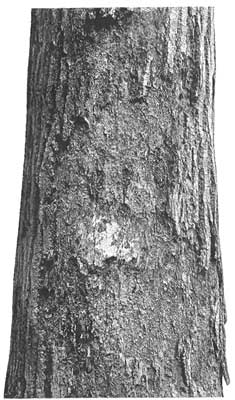
2. Extension of the Callus Tissue.—In many cases the callus tissue is of considerably greater extent than the normal area one would expect around a wound. It may even occur that the whole inner bark around the trunk is of a callused nature, without any open cankers showing at all. For example in a tree of which I have a photograph here (Figs. 2 and 4), the outer bark is sloughing off, revealing callused bark underneath of entirely different appearance, which no one would recognize as chestnut bark. This particular tree photographed represents an extreme in this respect. It seemed as if the whole tree was getting a new kind of bark, and yet this same character appears in all of the highly resistant trees. On cutting into this new callused inner bark it was found plentifully dotted with tiny Endothia lesions, which however, never penetrated deeply. (Fig 4). Close to the cambium the white inner bark is quite healthy, generally for a thickness of 5-7 mm. That the mycelium in the small lesions was unquestionably the Endothia mycelium, was shown by the appearance of the mycelium, and the presence of the Endothia pustules in many of the spots. That these were not late infections, but only slowly growing small lesions, was shown by inoculations in such bark, which revealed scarcely any growth after two months.
FIG. 1 One of the most resistant trees, the smaller tree near the center of the photograph, near the Harlem River, Boro of Manhattan, New York City.
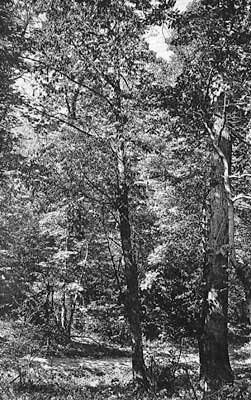
FIG. 2 A very strikingly resistant tree at Valley Stream, Long Island, showing peculiar inner bark. The outer bark is sloughing off.
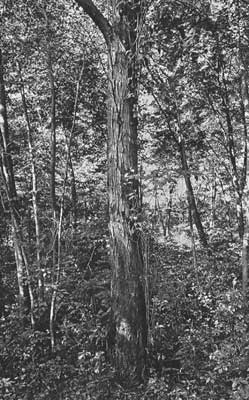
FIG. 3 One of the "strip" trees in the forest in the Boro of Manhattan, New York City.
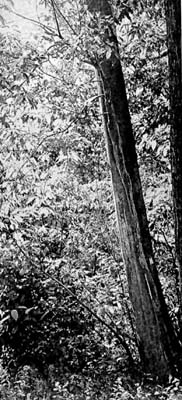
FIG. 4 Showing the character of the inner bark of the Valley Stream tree (Fig. 2). At one place, near the center of the photograph, the bark has been shaved showing the small lesions caused by the fungus.
3. The White Secretion.—The most striking peculiarity of the callus tissue, is its abundant content of a thickish, milky, white substance. This came to light immediately when I cut into the callus, and it showed up very clearly when I shaved off the outer layers of dead cork tissue. The white material is not evenly distributed through the irregular grain of the wound tissue, but is particularly abundant in small spots or pockets which are especially conspicuous in the callused margin of the lesion. Soon after exposure to the air the cut bark, and particularly the white substance, redden rapidly, indicating oxidation. This peculiarity is of course true of all chestnut bark, yet here the reddening seems to be deeper and more rapid than the normal. No chemical analysis has yet been made of this substance, but there is sufficient other evidence at hand to warrant a tentative statement that it is very rich in tannin or tannin compounds, and that possibly the quality of resistance is bound up with the nature of this material.
4. The Strip Condition.—Some of the trees showed the living bark restricted to a narrow, flattened, rope-like strip running up the trunk to one or a very few branches (Plate 1, Fig. 3). In these cases all of the bark was of the callus nature, rich in the resistant substance, and plentifully besprinkled with small Endothia lesions, while underneath were a number of layers of functioning wood. The rest of the trunk was bare, weathered gray, with traces on its surface of old cankers, and evidently dead for a long period. This type of tree was so commonly found that I have called it the strip tree.
Inoculations
The very fact that these trees are now alive in this New York region is pretty good proof of their resistance. But of course the most conclusive test is by inoculation with the fungus in question. If the fungus grows slowly in these trees as compared with its growth on non-resistant stock, then no one can deny that they are resistant. I will not bore you with figures of tables, I will only give you the results. The average growth of the fungus in 289 inoculations on the resistant trees was about ⅓ as fast as on non-resistant stock, and taking the rate of growth on those trees which are especially resistant it is about ¼ as fast as on the non-resistant stock. For non-resistant stock the seedlings on Staten Island were inoculated, and the growth on these tallied very closely with growth in non-resistant trees inoculated by Anderson and Rankin.[3]
Another very striking result brought out by the inoculation work was that of the 158 inoculations on branches and basal shoots of the resistant trees, only nine had been girdled after one month's growth, while in the same time 16 out of the 32 non-resistant Staten Island trees were girdled. At the end of the second month, the results were still more striking. Then, in the Staten Island trees, 22 out of 32 were girdled, while in the inoculations on the basal shoots and branches of resistant stock only 22 out of the 153 resulted in girdling. This striking difference was not due to smaller diameters of the Staten Island trees, for particular pains were taken to have them approximately equal to the branches and shoots inoculated in the resistant trees.
Summary of Evidences of Resistance
We may summarize the evidences of resistance as follows:
1. The results of the inoculation tests show that the fungus grows in these trees on the average from ¼ to ⅓ as fast as in ordinary chestnut.
2. The occurrence of the trees in a neighborhood long subjected to the disease, and their presence among the trees of individuals long since dead.
3. Indications of the long period the disease has been present in the trees themselves; such as bare weathered tops, and healed cankers.
4. Peculiarities of the bark; such as extensive development of the callus tissue, and the presence of a peculiar substance or white secretion which is particularly conspicuous in cases of marked resistance.
Is the Disease Resistance Here an Hereditary Character?
As to whether this disease resistance is an inherent character and will be transmitted from generation to generation, or is only the result of particularly favorable environmental conditions such as soil, light or moisture, is a point of great practical importance. I believe that further work will prove that the resistance is heritable, for the following reasons:
1. The resistance is not due to a particularly favorable environment of the trees, for the three groups grow in very different soils and under varying conditions of light and moisture.
2. The finding of the trees in colonies points to a genetic variation. At first I was unable to account for the grouping of the trees, for I had expected to find immune or resistant trees singly, here and there. But if we adopt the hypothesis of a heritable protoplasmic variation—something in their "blood," so to speak, the explanation is easy. We know that chestnut fruits or nuts do not travel far, like the seeds of willow, poplar, maple or ash, and therefore, in any given stand of chestnut, if we could go back from generation to generation into earlier time, most probably the majority of the trees would be found to have arisen from a common ancestor, although of course a few outsiders would have found their way into the group, carried by squirrels or other animals.
3. In a considerable number of cases all the members of the same group of coppice trunks from an old stump show a similar degree of resistance. To attribute such a condition as due merely to chance, occurring as often as it does, would be placing a pretty large burden on chance; and since the coppice trunks are all off-shoots of the same plant, the condition is what one would expect were the resistant quality in inherent character. A correspondence of degree of resistance was also noted, in the inoculations made on branches, trunk, and basal shoots of the same individual tree.
Experimental work is being carried on at Washington to test out the truth of this hypothesis, i. e. to see whether or not the disease resistance is really heritable. The work is being carried on in connection with the propagation of other resistant stock, Chinese, Japanese, etc.; and, as soon as the department is sure of the product, the results will be distributed to nut growers and others who are interested.
In the meantime we can all help by being on the lookout for resistant native trees. I believe they will be found in many places besides the New York region.