Front matter
Reading edition
THE CHILDREN’S LIBRARY
NATURAL WONDERS
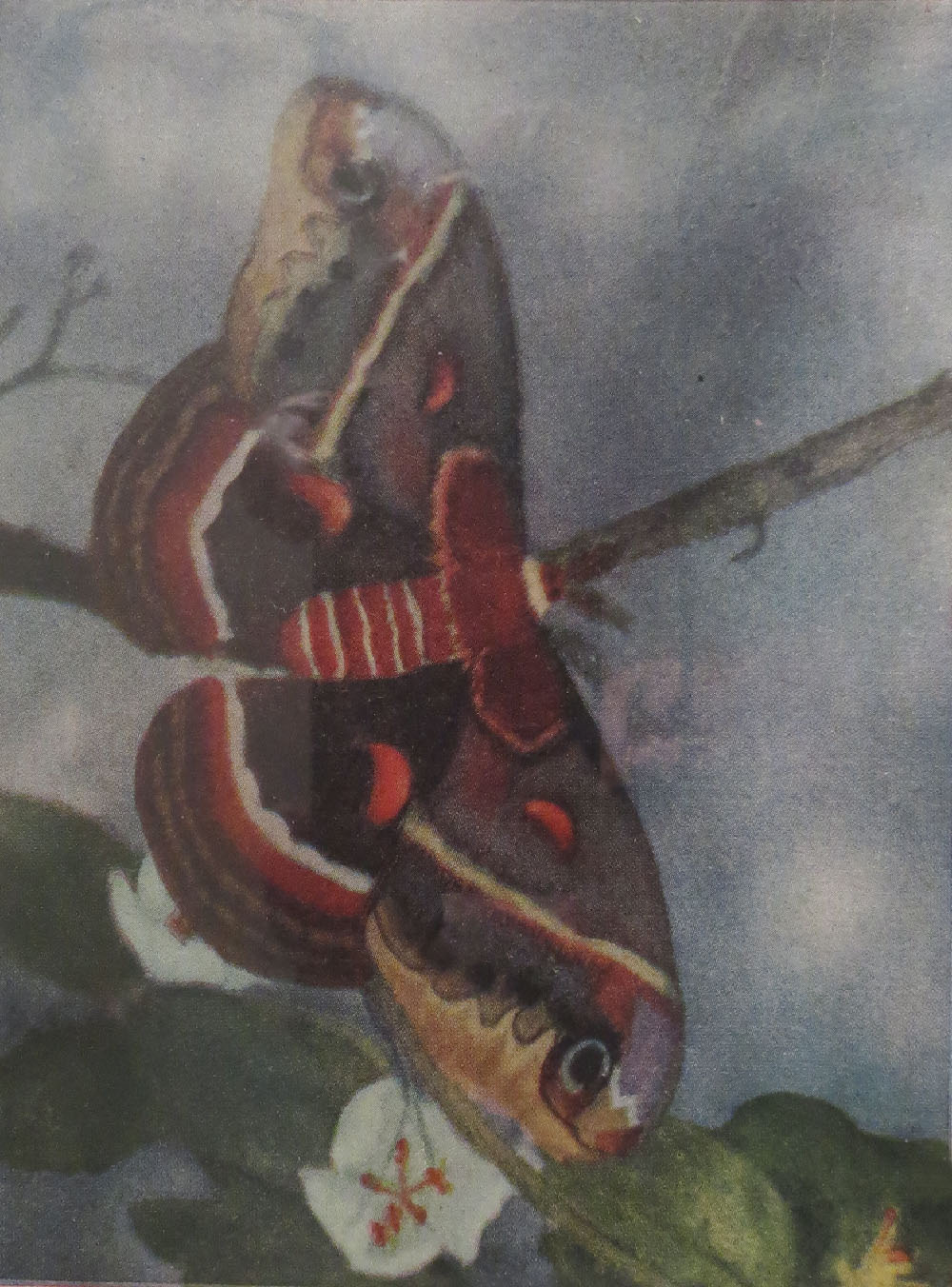
The Robin Moth
THE CHILDREN’S LIBRARY
NATURAL WONDERS
By EDWIN TENNEY BREWSTER
Garden City — New York DOUBLEDAY, DORAN & COMPANY, INC. 1928
COPYRIGHT, 1912 BY DOUBLEDAY, PAGE & COMPANY. ALL RIGHTS RESERVED. PRINTED IN THE UNITED STATES AT THE COUNTRY LIFE PRESS, GARDEN CITY, N. Y.
PREFACE
No small part of our fundamental knowledge concerning the world of nature has been put into shape for comprehension by children, time out of mind. “The Swiss Family Robinson” is half natural history, even if not always of an especially convincing kind; and science of all sorts, good and bad together, makes up no small portion of Jules Verne’s uncounted tales. “Cousin Cramchild’s Conversations,” if there had been such a book, would have embodied the Victorian idea of what every child should know about his universe; while of actual books, we elders recall at once Abbott’s “Science for the Young,” and the half dozen contributions to juvenile knowledge of John Trowbridge and “Arabella Buckley.” Even the great Ostwald, within the decade, has made a child’s book on chemistry after the old conversational form.
In school, moreover, between his geography and his nature study, the modern child becomes acquainted with not a little modern science, while in most of our states a detailed acquaintance, by no means always scientific, with his own physiology is required by law of every public school pupil. One thing with another, today’s child of eight or ten is supposed to know a little of physics and of biology, together with a good deal in a general way of earth science and the elements of human physiology.
Naturally, there are excellent texts and reading books in all these fields. So far as I am aware, however, the present work is the first attempt to set before young readers some knowledge of certain loosely related but very modern topics, commonly grouped together under the name, General Physiology. It is, in short, an attempt to lead children of eight or ten, first to ask and then to answer, the question: What have I in common with other living things, and how do I differ from them? Incidentally, in addition, I have attempted to provide a foundation on which a perplexed but serious-minded parent can himself base an answer to several puzzling questions which all children ask—most especially to that most difficult of them all: By what process of becoming did I myself finally appear in this world?
How far I have succeeded with either task, I leave to the mothers who shall read this book aloud.
E. T. B.
Andover, Massachusetts
NATURAL WONDERS
CONTENTS
Chap. IHow The Chicken Gets Inside The Egg
Chap. IISome Other Sorts of Eggs
Chap. IIILittle Fishes in The Brook
Chap. IVOf Plants’ Eggs
Chap. VWhat Little Boys And Girls Are Made Of
Chap. VIMore About Living Bricks
Chap. VIIHow Much Of Us Is Alive
Chap. VIIIHow We Grow
Chap. IXHow We Grow Up
Chap. XHow We Grow Old
Chap. XIWhy We Grow At All
Chap. XIIThings That Do Not Have To Be Learned
Chap. XIIIWhy We Like Certain Things
Chap. XIVAnimals’ Games
Chap. XVSome Instincts Of Chicks And Kittens
Chap. XVICertain Stupidities Of Animals
Chap. XVIIHow We Differ From The Animals
Chap. XVIIISomething More About Speech And Thinking
Chap. XIXWhy Most Of Us Are Right-Handed
Chap. XXWhere We Do Our Thinking
Chap. XXIWhere Some Of The Animals Do Their Thinking
Chap. XXIIWhat Plants Know
Chap. XXIIIWhat Plants Can Do
Chap. XXIVSome Plant-Like Doings Of Animals
Chap. XXVThe Five Senses And The Other Five
Chap. XXVIEyes
Chap. XXVIISeeing And Believing
Chap. XXVIIISome Other Senses
Chap. XXIXThe Sight And Hearing Of Ants
Chap. XXXAnts’ Noses
Chap. XXXISome Other Eyes And Ears
Chap. XXXIIHaving Senses And Using Them
Chap. XXXIIISeeing In The Mind’s Eye
Chap. XXXIVEar Minds And Others
Chap. XXXVLiving Automobiles
Chap. XXXVIAir And Fuel
Chap. XXXVIIMen In Glass Boxes
Chap. XXXVIIIOf Sugar And Other Poisons
Chap. XXXIXSnake Venoms And Others
Chap. XLOf Measles And Rusty Nails
Chap. XLIThe Great War
Chap. XLIIMore About The Great War
Chap. XLIIILiving Apothecary Shops
Chap. XLIVWhat Becomes Of The Tadpoles
Chap. XLVNature’s Repair Shop
Chap. XLVILittle Monsters
Chap. XLVIIHow The Animals Keep Their Tools Sharp
Chap. XLVIIIWhy The Blood Is Salt
Chap. XLIXHorses’ Fingers
Chap. LHow The Elephant Got His Trunk
Chap. LISomething Nobody Understands
ILLUSTRATIONS
Frontispiece
The Robin Moth
Full Page Illustrations
How the Chicken Gets Inside the Egg
Seeds That Have Plumes and Wings
The Star-fish Has Eyes on His Arms; The Slug Also Has Eyes on His Horns; The Snail Has Eyes on His Two Longer Horns
Lymph Cells or White Blood Corpuscles
Extinct Reptiles Which Look Like a Mixture of Alligator, Rhinoceros and Kangaroo but Their Bones Were More Like the Bones of Birds
In the Text
A Sea-Urchin
Eggs of Perch After Egg Laying
Salmon with Yolk Sac
The Bean Egg Changes to a Bean Plant
Living Bricks Which Make the Skin of a Leaf
Cells of the Inner Tree Pulp
Cells of the Outer Skin of a Leaf
Cells of a Pond Scum Much Enlarged
Three Sorts of Infusoria Much Enlarged
Some Jelly-fish Grown on Stalks and Some Swim About in the Sea
The Cob Is the Mother of the Corn
Pollen Grains Much Enlarged
A Right-handed Person Has All His Thinking Spots on the Left Side of His Brain
A Sea-anemone
More Common Infusorians, Much Enlarged
The Leaf Has a Spiral Joint on Which to Turn
Optical Illusions
Optical Illusions
Optical Illusions
Optical Illusions
Optical Illusions
Ear of a Mole Cricket on the Front Leg
Back of the Frog’s Eyes Are the Ear Drums
A Newt
The Leaves Take in Air Through Breathing Holes
In Place of Lungs, Insects Have Breathing Holes
The Minute Animal Which Causes the “Sleeping Sickness”
The Caterpillar Changes into a Moth
Accidents to Growing Fish Eggs
A Two-headed Turtle, a Crab with an Eye on One Side and a Feeler on the Other, and a Child With Two Great Toes on Each Foot
The Fangs of a Rattlesnake
Early Man Scratched Pictures of the Mammoth on Pieces of Its Own Bones
The Elephant Has Lost the Front of His Face
Our Single-toed Horse Has Been Made Over from a Four-toed One