XV. (continued 2)
Reading edition
At those performances which are given in public, the multitude is admitted gratis, and of this privilege they avail themselves to the utmost. Each man selects the best seat for himself, on the street, in a tree, or on a roof. Mandarins, however, and rich private individuals have their own little stage scenes in the interior of their usually spacious mansions, in which from time to time they have theatrical representations for the amusement of a small circle of friends. Some Mandarins even go the length of having their own players, who receive regular annual pay, and form part of the household.
Notwithstanding the very extensive collections of Chinese plays, with several of which the learned classes of Europe have been made acquainted by the valuable labours of Julien, Bazin, Remusat, and others, there are but a very few of true literary value. The plot of most of them is exceedingly simple, the actors themselves specify the characters they are to play; between each scene there is usually a lack of connection, and frequently the most telling scenes and situations are marred by the most arrant trash, or the coarsest jests. Only a very small number of these rise above the level of the buffoonery of former ages, and judging by the accounts given by travellers, who have been present at such entertainments in even the large cities, including Pekin itself, the dramatic art would as yet seem to be in its infancy in China.[156] The company which was assembled in the hospitable mansion of Ta-ki, to do honour to the members of the Novara Expedition, was not calculated to impress them favourably with the scope of the Chinese drama. The piece appointed consisted of events in the ancient history of China, for which Chinese dramatic poets have a special predilection, owing to the abundance of material from which to choose, although the multitude seem to have but little sympathy with it. Even our host, who spoke the Canton-English, as it is called, could give us but little explanation or enlightenment as to the plot, and contented himself with repeatedly remarking that the piece related to "old, old times!"
Notwithstanding the universal custom, according to which women are not permitted to enter a theatre, so that even the female characters have to be played by men dressed to represent the part, the majority of the present troupe were girls of from 14 to 20 years of age, who, stained red or white, and elegantly arrayed, appeared mostly in Mandarin dresses on the stage. The most outrageously absurd of the scenes were those most in favour with the numerous domestics who, besides the invited guests, formed the audience. Thus, there was a roar of laughter when a nurse entered with a child in her arms, which had the face of an old soldier, with grey beard, whiskers, and moustachios. They sang a long, rather melancholious ditty, and then retired, without there appearing to be the slightest connection between this and the following scene. We noted the evident predilection of the Chinese actors for a high-pitched falsetto tone of voice when speaking, which, by the way, must render their assumption of female parts much more easy, and on the present occasion they probably were desirous of giving us a specimen of their skill in this accomplishment. The music on such occasions is, if possible, even more discordant and monotonous than the delivery, and is not confined to merely accompanying the couplets, but continues to play during the intervals till the ear is utterly wearied.
At the close of each act a large board covered with a red cloth was brought on the stage and placed beneath the feet of the actors; on this the steward of the house placed a present for the troupe about four dollars' worth of copper cash, which was forthwith carried away. This was apparently the only intimation to most of the spectators that a piece was ended, and a fresh one about to begin.
After these theatrical representations had lasted about an hour and a half a long pause ensued. One longed to escape outside into the fresh air, to get rid of the wearying sensation of the performances, and the stifling heat which prevailed in the room. The guests were at liberty to walk without obstruction through the various apartments of the extensive residence, and accordingly stumbled upon rooms which are usually, as it were, hermetically sealed to a foreigner, viz. the apartments of the women. Ta-ki carried his hospitality even this length, and presented us to his wives, as also to his grey-haired mother, seventy years old, for whom he showed the utmost love and respect. Ta-ki's wives, four or five in number, had "assisted" at the theatrical performances, each seated on elevated seats expressly prepared for them, and behaved with the greatest courtesy and ease of manner. They seemed not to have the slightest thought of showing off, or of tittering or joking with the strangers. All were attired in silk, and most tastefully decorated with jewels; all had the usual painfully distorted small feet, which greatly interfered with their powers of locomotion. They did not attend at the banquet, but had their food served in the private apartments.
For supper the quondam theatre was converted into a banqueting-hall. But there was no long wide table set out as in Europe, only small four-cornered tables covered with red cloth, at each of which three Europeans and one Chinese took their seats; the duty of the latter being to do the honours to his companions in the name of the host, who took his seat beside the Commodore, and to minister to their comfort.
As it was the object to give us the most accurate idea possible of a genuine Chinese repast, everything was eliminated which could in any way interfere with the design, and we had accordingly to begin with dessert and conclude with the soup, as also to convey the various descriptions of food to our mouths with thin strips of ivory ("chop-sticks"), instead of knives and forks.
The peculiarity of Chinese usages, so directly opposed to those of Europe, became likewise strikingly apparent in the course of the meal. And as in China the mark of courtesy is to keep the head covered instead of removing the hat, so the place of honour is on the left hand; the ancestors are ennobled instead of the descendants (which is at once more sensible and more economical); the characters in writing run from right to left instead of the reverse; the mourning colour is white instead of black; the natives carefully extirpate every sign of a beard, instead of cherishing it as a symbol of mature, dignified manhood; thus also meals begin with the food with which we terminate ours, confectionery and fruit. When we were all seated, each table was forthwith covered with a profusion of the most varied dishes on beautiful plates of stained porcelain, and while we were still engaged in attempting to discover the mysterious ingredients of these, the Chinese who was doing the honours at our table was exerting himself to select and lay before us the most dainty morsels of each dish. In performing this part of his functions he thought only to act with more care and attention, in drawing each of the twain chop-sticks between his own lips and withdrawing them before he fished up a fresh piece and laid it on our plate! The dexterity with which all Chinese use these chop-sticks, which are usually made of ivory, ebony, or bamboo, borders on the marvellous. In their hands, held between their fingers, they become like a pair of pincers, with which they can pick up the smallest objects, and can eat rice-grains, beans, or peas as easily as they can separate the flakes of a fish from its skin, or remove the shell of a hard-boiled egg.
As to the ingredients of the dishes presented, we must frankly avow that by far the greater number were utterly unknown to us, for the Chinese cuisine, oddly enough, sets great store on making the materials unrecognizable, and altering their natural flavour by various recipes and culinary mysteries. According to the inquiries which we made of our carver, our host seemed so anxious to fulfil to the letter his promise to give us a real Chinese repast, that he had resolved on not sparing us a single one of the rarer dainties of Chinese epicures. Thus we not only had swallows' nests, lapwings' eggs, and steamed frogs, but also roasted silk-worms, shark-fins, stag and buffalo tendons, biche-de-mar, bamboo roots, sea-weed, half-fledged chickens, and various other natural delicacies. The table was supplied at least three times with fresh delicacies, and we believe we do not exaggerate when we estimate the number of different dishes at not less than half a hundred. Meat of all sorts was at a discount, and was served up in small morsels ready carved;[157] on the other hand, rice and vegetables were presented in every imaginable form. During the meal one young girl, who had played a part in the dramas, was incessantly occupied with filling for each guest a very small cup with a warm beverage distilled from millet, thus carrying out the code of Chinese civility, that the cup should never be suffered to be empty, and therefore, that however little has once been drunk it must forthwith be replenished. Of the juice of the grape the Chinese make no use, although there are many districts in the country which are eminently adapted to the growth of the vine. All the native drinks consist of nothing but poor-flavoured, highly-perfumed drinks, chiefly distilled from millet and rice, and known by the general name of Samshoo, although this name is solely applicable to that obtained from rice, which somewhat resembles arrack. After the meal is over there are no spirits presented, but only tea, usually the common green tea, or else a tea prepared from almonds. The Chinese are, on the whole, a very temperate people, and even their passion for smoking opium is rather a vice among the masses of the coast provinces and the large towns, than of the interior of the kingdom. During the banquet, as well as after it, there were further theatrical exhibitions, but the guests, who had been sufficiently wearied with the first of these, preferred to retire quietly to their own residences, and, seated in a rocking-chair on the delicious verandah, to recall all the peculiarities of the entertainment at which they had been present.
The rites of hospitality to strangers were not, however, limited in fulfilment to Ta-ki, since the various consuls settled at Shanghai, as well as several of the English, American, and German merchants, invited the members of the Expedition to dinner-parties given in their honour, each vying with the rest in refined courtesy. An especially pleasant memory attaches to one indication of this feeling, the spontaneous offering of a number of Germans to our commander and his associates. We were sitting in the house of Mr. James Hogg, the Hanseatic Consul, when from the garden there suddenly arose a serenade of men's voices, singing German melodies. Surprised and deeply affected, the entire company rose from table and strolled into the garden, but the serenaders were concealed behind a group of trees, and as they withdrew, singing, the last cadence of a thrilling patriotic song was heard melting in the distance!
The Germans already constitute a by no means inconsiderable portion of the foreign community of China, and it is painful to observe what slender encouragement and support their energy and industry have as yet met with from the various governments of Germany. The number of Bremen ships which visited the harbour of Shanghai has of late years equalled that of the United States, and would be very greatly increased if the German mercantile community and the home-shippers to the Chinese market could depend upon protection such as the English and French can rely upon. The German States, such, for instance, as the Hanseatic Towns, Prussia, Oldenburg, have indeed unsalaried Consuls here, but the shrewd, material Chinese people require something more than an empty intercession—they require to be convinced by an unmistakeable physical ability to back these representatives. Many a crying injustice, which the helpless German merchants and ship captains have to put up with without hope of redress in the various ports of China, would not and dare not occur if but a single German ship-of-war were stationed in Chinese waters. What the effect is, under similar circumstances, of even one single small boat was well illustrated by Mr. Alcock, formerly the English Consul at Shanghai,[158] who with a small English brig blocked the mouth of the Yang-tse-kiang, and did not suffer one single "junk" of the many hundreds stationed in the river to put to sea under threat of firing into them until the Chinese Government had paid attention to his demands, and surrendered for trial by an English tribunal the murderers of an English missionary. The bare menace of closing the river sufficed to secure the Consul in his rights, and he speedily saw his various demands complied with. Only a month or two later a Bremen captain sustained such severe losses through the wilful act of the Chinese Government that he had to sell his ship, the energetic protest of his Consul to the native authorities meeting no other attention than an insulting chuckle over the powerlessness of the German empire.
In consequence of the Treaty of Pekin securing to Europeans the unobstructed navigation of all canals and rivers throughout the Celestial Empire, the trade with China is becoming so rapidly developed, that some remedy of this sort is imperatively needed,—if German commerce and industry would avoid receiving a serious check, if she would not be supplanted by other and more fortunate nations, in the endeavour to avail herself of the great alteration for the better in the facilities for trade in China.
The activity and energy of the English in opening up new outlets for their native manufactures were here astonishingly visible. Hardly are the ratifications of peace exchanged, opening the most important rivers and harbours of the Empire to free commerce with the subjects of England, ere the country has been surveyed and explored in every direction. A number of English merchants ascended the Yang-tse-kiang as far as Hang-kow[159] (mouth of trade), a city containing several millions of inhabitants, which, in consequence of its extraordinarily advantageous site, has already been described by Huc as the chief emporium of the 18 Provinces, and whence all the foreign trade radiates into the interior. Others undertook a land journey from Canton to Hang-kow; a third company ascended the Pei-ho and visited Tien-Tsin, while yet a fourth were contemplating the formidable undertaking of boating it up the Yang-tse-kiang from Shanghai to Hang-kow, whence they thought of penetrating viâ Thibet into British India.[160] Already information has been obtained from a variety of these excursions, which were undertaken specially in the interests of commerce, such as justify the most glowing expectations as to the trade with the Yang-tse-kiang and the Pei-ho.[161] Hang-kow promises to be a most important depôt for the exportation of tea, while Tien-Tsin promises to be not less important as an entrepôt for the importation of manufactures of every description. By the opening of these two additional harbours, Shanghai and Canton will fall off in their ratio of increase hitherto, but general commerce will on the whole receive a new impulse.
To the merchant and shipper, the latest intelligence from China as to the enormous development of commerce and trade at numerous spots of the Central Empire, hitherto undisturbed by European civilization, must be positively astounding. It is a rich mine of the most valuable material, which the China Overland Trade Report and the North China Herald presents to its readers, rendered doubly valuable through the influence of that Freedom of Speech, which makes every mercantile nation participate in the very latest information as to these experiments and their results. For, so far as concerns our present direct intercourse with China, a time must come, when more accurate notions will penetrate into even Austrian commercial circles as to the wants of a population, and the natural wealth of an empire, which embraces a superficial area of 3,000,000 square miles, with a population of 400,000,000 souls, and whose entire foreign commerce already amounts to £36,000,000, apart from the impulse which recent events must lend it.
Notwithstanding the immense variety of natural products of the Chinese Empire, the chief articles of export hitherto have been tea and silk, and we shall therefore confine our attention to a few important particulars as to those two articles.
The introduction of silk cultivation into China, one of the most ancient industrial pursuits of the Empire, is due, if we are to believe a native legend, to the consort of the Emperor Hwang-té, who reigned B.C. 2640. The first mention of the mulberry tree and of silk occurs in the Schoo-kiu,[162] "the Book of exalted solid learning—the Book of Books," as it were, a collection of the most ancient historical annals of the Chinese Empire, which was compiled B.C. 484, by Confucius, from the memoranda of former writers of history, as well as from the information furnished by ancient monuments. Even empresses in those halcyon times did not deem it beneath their dignity to collect mulberry-leaves and feed the silk-worms, while various treatises were composed by imperial pens, respecting the cultivation of that most useful plant. The interest taken in silk-rearing by these the highest personages in the Empire, has remained unbroken to our own day, and quite recently a Chinese governor enriched the already copious literature upon this subject with a comprehensive work, written with the laudable object of stimulating the inhabitants of the silk-producing districts to a more extensive and improved system of silk cultivating.
The two best species of mulberry, those which are best adapted for the consumption of the worm, are: "Loo" (Morus alba), with long leaves, little fruit, and firm roots, which flourishes chiefly in North China, and "King" (Morus nigra), with narrow leaves, more abundant fruit, and altogether a hardier plant, which grows chiefly in the South.
According to old Chinese notions, there are eight different species of silk-worm, which spin their cocoons at various periods[163] of the year between April and November.
The chief silk districts lie in the northern part of the province of Tsche-Kiang, and the principal silk marts are the following cities: Hoo-chow-foo, Hang-chow-foo, Keahing-fu, Nantsin, and Shoo-hing, which lie in a sort of semi-circle about 150 miles from Shanghai.
The silk is not grown in China by wealthy landed proprietors, and "thrown" in huge establishments, but by millions of husbandmen, each of whom calls but a small patch of land his own, and plants it with mulberry trees, thus, like the bee, contributing his own share towards increasing the universal stock. During the season specially devoted to the silk-worm, old and young, lofty and lowly, throughout the silk districts, are busily and earnestly engaged night and day in tending the worms and winding off the silk. When the crop is being gathered in, the chief merchants send their agents to all parts of the chief silk districts, in order to collect and buy up these small quantities (varying greatly in value, as may be readily imagined), and depositing them in regularly assigned warehouses, where they can be sorted according to quality. This done, the silk is packed in bales of 80 catties, or about 106 lbs. weight, and conveyed to Shanghai for sale, where it is once more subjected in each mercantile house to the examination of the special "silk Inspectors," or "Testers," after passing through whose hands, it is sorted according to quality for shipment to Europe.
Three distinct qualities of raw silk are known in commerce, viz. Tsatli , Taysam (the big worm), and Yuen-whá, or Yuen-fa (the flower of the garden). These three leading descriptions are again subdivided into a great number of sorts, which are usually known by the name of the trader, or his "hong" (business).

The annual production of silk in China is estimated to amount to from 200,000 to 250,000 bales, or from 20,000,000 to 25,000,000 pounds' weight. This, however, is a very superficial estimate; that silk cultivation, however, must be enormously developed in China is obvious, not alone from the immense home consumption of the article, but also from the circumstance that, notwithstanding the immense increase in exports during the last ten years, the price of silk has not merely remained stationary, but is on an average absolutely less than at a period when barely one-fourth of the quantity now exported found its way to England and France. The price of silk is usually reckoned in Taels,[164] on the estimate of a bale averaging 100 lbs. English. Between Shanghai and London the bale loses on the average three per cent. in weight. There is also usually an allowance made of 15 per cent. for cost of transport and incidental charges from Shanghai to any English port.
On the average only one-fourth of the entire quantity of silk produced in China, or about 6,000,000 lbs., is exported annually, of which by far the largest quantity, perhaps as much as nine-tenths, goes to England and France. In 1843-44, the total export from all China was only 5100 bales. In 1859, the export of raw silk from Shanghai alone was 75,652 bales!
Besides the raw silk there are annually exported from China a large quantity of silk-stuffs manufactured in China, crape shawls, &c. &c., to the value of from £400,000 to £500,000, the majority of which find a market in the United States.
The social condition of the Chinese silk-spinner is not less deplorable and poverty-stricken than that of the workmen of Europe, who are similarly engaged in the preparation of this costly article of luxury. As in Lyons, in Spitalfields, or among the Silesian Mountains, the Chinese silk-weaver lives and dies in the most abject misery, and the delicate and beautiful fabrics of his loom are produced in a wretched hut of such mean dimensions, that he is sometimes compelled to dig a hole in the soil in order to find room for the treadle. However, the Chinese weaver appears in so far better off than the same handicraftsman in Europe, that he has less to dread from the severity of the climate, and can purchase more food, even though his remuneration be smaller, than the weaver can possibly do in Europe, owing to the much higher price of even the commonest necessities of life.
The recent revolution in Chinese foreign relations will exercise a permanent influence on the silk culture of China, and, considering the exceedingly low rate of wages in that country, the time cannot be far distant, when one may purchase Chinese silk in Europe more cheaply than home-grown silk, when manufacturers will find it more profitable to purchase this most important raw material in China, than in Italy or the South of France. Acute business men in Hong-kong and Shanghai assured us that it only needed an impulse from without to increase the silk manufacture of China tenfold, and supply the annual demand for silk of the entire globe, which, if we are to believe encyclopedias and such like authorities, amounts to from 12,000,000 to 15,000,000 lbs. What makes Chinese silk especially suitable for the European market is its possessing in great perfection the two chief qualities of substance and colour, while, on the other hand, it is inferior to that of Europe in the fineness and glossy feel of its fibre. In Europe the silk is wound off from a limited number of cocoons, whereas in China it is left to the discretion of the workman to spin it from few or many cocoons as he pleases. Hence results that inequality and unevenness in the texture of the thread, a defect which cannot possibly be remedied by after-manipulation, and which accordingly completely prevents its employment in the manufacture of the more costly fabrics. This drawback, which is the main reason why Chinese silk does not rule the European market, will however admit of being remedied without any difficulty, so soon as the silk districts become more easily accessible, by the introduction of European labour and machinery, when this valuable and costly product will gain materially both in fineness and suitability.
Only a few years since German and Austrian merchants attached but a small value to Chinese silk as suited to our market, and it seemed to them a positive absurdity, when any one spoke, as we ourselves repeatedly have done from a profound conviction of its truth, of the future influence exercised over the silk markets of the world by the influence of this Chinese raw material. Now-a-days we hear that there is scarcely one single silk factory which can hold its ground, unless, in addition to French and Italian silk, it imports Chinese silk, while the demand for that material increases from year to year, and has very probably not yet attained the one-hundredth part of the development of which it is susceptible.
Tea (Châ[165]) ranks next to silk among the articles which have raised the trade with China to such an importance. The cultivation of the tea plant is of far later date than that of the mulberry tree, and its leaves, although used by the Chinese as a curative from the third century of our era, only came into general use, as providing a universal drink, towards the end of the sixth century.[166] Statesmen and poets sounded the praises of the new beverage, and while the one employed this excellent and beneficial gift of nature to fill the treasury by the imposition of a tax, the others chanted the praise of the plant in their hymns and songs, and thus, probably without intending it, contributed to increase the revenue of the Government.
"Tea," writes one of the older Chinese authors, "soothes the spirit, softens the heart, dispels languor, restores from fatigue, stimulates the intellect, and arouses from indolence; it makes the body lighter and more brisk, and quickens the faculty of observation."
The tea plant first attracted the attention of Chinese naturalists in Wu-yi, or, as the English term it, the Bohea[167] district, which enjoys to this day a great reputation for the exquisite quality which grows on its hills.
At present the cultivation of the tea plant extends northward as far as Tang-tschao, in the province of Shantung, southward as far as Canton and Kuang-si, and westward as far as the province of Yun-nán. As, moreover, the tea plant likewise abounds in Japan, the Corea, and the Loo-Choo Islands, as also in Chusan, Tonquin, and Cochin China, we may assume that it flourishes over about 28° of latitude and 30° of longitude, within which it can be cultivated without being affected by severe alternations of temperature. That part of North China, however, which lies between 27° and 33° N., seems on the whole to furnish the finest sorts,[168] where the mean annual temperature ranges between 61°.7 and 68°, and in which fine weather with a rise of temperature follows upon a heavy rainfall; the latter being as necessary for the speedy and luxuriant growth of the leaves, as the former is for eliciting their fragrance and other valuable qualities.
To form an idea of the enormous amount of tea which is annually cultivated in China, it suffices to remark that, after deducting the immense quantity consumed, there are more than 70,000,000 lbs. exported annually.
It is not our intention to give a disquisition upon the cultivation and preparation of the tea, the drying (poey), roasting (tschóo), perfuming and colouring of the leaves, in short, the long tedious process to which this valuable article of commerce is subjected from its collection on the fertile green slopes of the bush-covered hills of Bohea, till its arrival at the port of shipment in a form suited for exportation. We prefer here to confine our attention to a consideration of those experiments which have recently been made in China with respect to tea cultivation.
There are of the tea plant an almost endless variety of qualities, but only two species, viz. Thea viridis (green tea), and Thea Bohea,[169] and even these two have such few points of difference, that quite lately they were described by Fortune as one and the same species. Thus, too, it has been asserted in our own day that the green and black varieties of tea sold in Europe do not, as is universally supposed, belong to two different species of tea, but that the difference of colour, shape of leaf, flavour, &c., is exclusively due to varieties in the mode of preparing them for the market, and that the manufacturer is able to make from the leaves every description, black or green, which is required in commerce. Thus in the celebrated tea district of Ning-tschan, where in former days black tea was exclusively grown, there is now procured green tea from the same species of plant, apparently because its cultivation pays better, while the quality remains in its olden repute.
The black tea, which constitutes four-fifths of the entire export to England, is grown of a particularly fine quality in the district of Kien-ning-foo in the province of Fo-kien, and is known to commerce by a variety of names, chiefly derived from the localities in which it is grown, or those of their proprietors. On the other hand, the green sort selected for exportation is chiefly met with on the slopes of the chain of hills between Che-kiang and Ngan-hwui. Besides those descriptions actually prepared on the spot where they grow, there are also an immense variety of teas manufactured in Canton from all sorts of black and green tea. The tea-growers of Canton are reputed to colour their green teas artificially, by sprinkling them with a mixture of Prussian blue and pulverized chalk, after which they subject them to a rolling motion for a considerable time in heated copper pans.[170]
One most important element in tea cultivation is the method adopted to impart a certain bloom, an artificial fragrance, which it does not possess in the natural state. This process of "scenting," as it is called, which is practised exclusively for the foreign market, is termed by the Chinese Hwa-hiang. The flowers which are used for imparting this fragrance, and the growth of which, like the invisible fields of odoriferous herbs near Cannes, in the South of France, forms a most important branch of cultivation near Canton, are chiefly Jasminum sambac, Jasminum paniculatum, Aglaia odorata, Olea fragrans, Sardenia florida, orange-blossom, and roses. The method of "scenting" consists simply in placing a definite quantity of the flower-blossoms, varying according to the strength or feebleness of the odour, in juxtaposition with about 100 lbs. of dried tea-leaves, where they are suffered to remain from 24 to 48 hours. Thus 40 lbs. of orange-blossom, 50 lbs. of Jasmin, 100 lbs. of Aglaia odorata, are reckoned the equivalent respectively of 100 lbs. of tea-leaves. The extraordinary costliness of these fragrant blossoms[171] has caused a very general suspicion to prevail, that the leaves thus "scented" are afterwards adulterated with large quantities of the common teas. And as it is an ascertained fact that 60 lbs. of such tea can impart a similar fragrance to 100 lbs. additional by merely mixing the two together, without any apparent diminution of fragrance, it seems more than probable that similar admixtures, very possibly in a still more profitable proportion, are being silently carried on every day in the warehouses of the tea districts.
Since the suppression of the East India Company's monopoly, and the opening of the Five Ports, tea has somewhat fallen in price, but has in consequence gained in far greater ratio in respect of quantity shipped. The value of a picul of tea is at present about 18 or 20 taels (£5 12s. 6d. to £6 5s.), so that the pound costs 1s. 1d. to 1s. 2d. Notwithstanding the unexampled cheapness of hand labour (60 to 70 cash, or 2 1⁄2d. to 3d., per diem), it is not possible to procure good tea below this limit, although the various descriptions vary extraordinarily in price according to their quality and the districts they come from. The lower classes in the tea districts purchase for themselves the raw unprepared leaves just as they are plucked, for about 1d. per pound, and as it takes about 4 lbs. of the fresh leaves to make 1 lb. of dry leaves, it may be calculated that the tea, as drunk by this class, must cost from 4d. to 5d. per lb. Moreover, it is customary to add some of the less costly descriptions, more especially in districts at some little distance where the tea plant is cultivated.
The first historical document referring to the introduction into England of tea as a beverage, is an Act of Parliament in the year 1660 (the year of the Restoration). At that period China tea cost sixty shillings the pound, which of course limited its use to a very narrow circle. At present there are 30,000,000 lbs. imported into England[172] annually, or more than one half of the entire export from the Central Empire, the consumer in London paying about 3s. per pound on the average.
Of late years attempts have been made to cultivate the tea plant at the foot of the Himalayas, in Java, and in the United States. In Hindústan, whither only a few years ago that well-known and enlightened gentleman, Mr. Robert Fortune, dispatched 24,000 plants, selected from among the finest tea districts, the experiment has already proved successful, and even remunerative. The cost of growing is about 10 1⁄2d. per lb. for one description, which fetches 2s. per lb. in the London market. That grown in Java has hitherto been viewed with disfavour in Europe, but in a few years more it must make its way. The result of the experiments in the United States we have yet to learn. Mr. Fortune, who was intrusted by the Patent Office at Washington with superintending the introduction of the tea cultivation into the Southern States, and who in virtue of many years' scientific researches in China may be regarded as an authority upon this subject, is of opinion that the possibility of cultivating tea in the United States does not admit of a doubt, since the plant not only successfully resists frosts, but even, in a measure, benefits by them, it being a well-known fact that it flourishes better in the northern than the southern climates of China. It is questionable, however, whether its cultivation can prove remunerative in a country where labour is still so exceptionally high. Will the tea plant repay the immense cost of cultivation, and compete successfully with the product of China? The next few years will settle this question, if it be not choked by this unholy fratricidal war, which is raging within the freest and most glorious confederacy of modern times.
We enjoyed the good "fortune" while at Shanghai of becoming personally acquainted with Mr. Fortune, and of gathering these valuable particulars from the very lips of that distinguished naturalist and traveller. While reserving for consideration elsewhere the subject of various little known, but most important, articles of export from the vast Empire of China, we cannot refrain from indulging in a few remarks upon some useful products of that country, which seem to us of more than merely commercial importance. Among these we shall notice first one of the most valuable rewards bestowed by Nature on human industry, the so-called Chinese sugar-cane (Sorghum, or Holcus saccharatus), which deserves the earnest attention of all European proprietors of land, as it grows in its native country quite in the northern districts, in fact in latitudes where the ordinary cane (Saccharum officinale) no longer flourishes; because frost and cold are much more conducive to its growth than the opposite extreme, so that it would seem to be specially adapted for cultivation in Southern Europe.
The first attempt to cultivate this cane in Europe was made, if we are rightly informed, at the Hyères islands by Count David de Beauregard, from seeds which M. de Montigny had sent home to the Geographical Society of Paris, while other attempts were made at the same time in various parts of France by the Société d' Acclimatisation. The results surpassed the most sanguine expectations. From the stem there was obtained a juice from which sugar and alcohol, syrup and brandy, can be easily made. The abundant leaves, five or six feet long, furnished a considerable quantity of cattle with most nutritive food; the seeds were used as food for poultry, and were even substituted with advantage for barley in the provender supplied to horses, so that the experiment at once repaid its cost, while in addition to the foregoing, the flour obtained from the seeds was found to furnish a highly nutritive, wholesome article of diet for man. Dr. Adrian Sicard, to whom the agricultural world is indebted for a very exhaustive analysis of the Chinese sugar-cane, has established, by conclusive researches, that its leaves are also specially adapted for the manufacture of paper, as well as for various colours or dye stuffs. As to the remunerative value of the Sorgho, it is more than 230 per cent. more productive than beet-root, which in France produces on the average 2160 kilogrammes per hectare, while the Sorgho makes a return of 5000 kilogrammes.
The mode of cultivating this useful plant differs in no respect, as we repeatedly had occasion to observe, from that of maize or Indian corn. The season for sowing varies with the temperature of the country, between the months April and July. The seed when sown in the beginning of April will be ripe about the middle of August, or in 135 days, while that sown in mid-July will not be ripe before the end of November, or about 140 days. In France the experiment has been made of bathing the seeds in tepid water for periods varying from 24 to 48 hours before sowing, which resulted in a much more speedy bringing forward of the plant. In like manner experiments were made of sowing the seeds with and without their husk, the result of which was that the former took 15 days, and the latter only 10 days to sprout. It is recommended to plant the seeds in furrows sufficiently separated from each other according to the conditions of soil and irrigation, so far as is possible.
The period of germination of the Sorgho is rather long, but once that period is passed, the most favourable results are sure to follow, even should the most unusual alternations of temperature ensue, provided the thermometer does not descend below 27°.5 Fahr. The Sorgho requires about five months to attain its full ripeness, when it is usually of a pale-yellow colour, streaked with red. It is occasionally subject to different maladies, some of which attack the root, others the pith. In like manner the larvæ of certain noxious insects have been remarked on occasional specimens. But the origin of all these drawbacks has been as yet far too little inquired into, and they are of too rare occurrence to permit of any definite information respecting them being as yet available.
On the whole, the cultivation of the Sorgho may be regarded as eminently successful in the South of France, as well as in Pennsylvania, U. S. (which has a much severer climate than Venetia, Dalmatia, or the lower course of the Danube). Very probably we may also succeed in naturalizing the Sorgho in suitable parts of Austria, and introducing there the cultivation on a commensurate scale[173] of a plant, which bids fair not merely to prove far more profitable in cultivation than any other member of the vegetable kingdom in any part of the earth, but at the same time seems destined at no distant period to be the means of supplying the civilized world with one of its most vitally necessary articles of food, by means of free white labour, without the assistance of slavery![174]
Another plant, which it seems likely might be advantageously introduced into the southern districts of Europe, is the Mo-chok, one of the most graceful kinds of bamboo found in the forests of China, which grows in greatest luxuriance on the limestone slopes of the province of Tschi-Kiang, in a climate ranging between 90°.5 in summer, and 20°.3 (Fahr.) in winter. The erect, smooth, elegant stem shoots up to a height of from 60 to 80 feet. The lower part of the tree is usually free from branches, which usually begin to spring from the trunk about 20 feet from the ground, and are very delicately leaved. These and two other species, the Long-sin-chok and the Hu-chok, are used in the manufacture of sieves, baskets, furniture, &c., while the tender shoots form a most nutritious and delicately flavoured vegetable. The stem of the plant is moreover available for the manufacture of paper.[175]
Writing paper is manufactured from it as well as packing paper, and one very coarse quality is mingled with the mortar by the Chinese masons. Mr. Fortune has introduced the Mo-chok into China, where, especially in the north-west provinces, it promises to come on well upon the slopes of the Himalaya.
Of the other plants which grow in China, which are not indeed suited for transplanting to a colder climate, yet merit attention on account of their produce, we shall briefly notice the varnish tree, the tallow tree, and the wax shrub.
The varnish tree (Vernix vernicia), a sort of sumach, which grows in greatest luxuriance in the provinces of Kiang-si, Chi-kiang, and Szechuen, furnishes that varnish which, partly in a semi-fluid, partly in a dry state, comes to market in whitish cakes, and is worth, according to quality and demand, from 40 to 100 dollars per picul of 133 lbs. In the preparation of this lacquer, the reputation of which has extended over the globe, 6 2⁄3 lbs. varnish, 13 1⁄2 lbs. water, 41 2⁄3 lbs. nut-oil, 16 2⁄3 lbs. of pigs' gall, and 33 1⁄3 lbs. of vinegar, are mixed together till the whole assumes the consistence and appearance of a shining black paste. The fact that many Chinese lacquered wares, especially those prepared in Foo-chow, vie with the renowned manufactures of Japan in beauty and lustre, leaves room to suspect that the Chinese workmen have received some instruction from their Japanese fellow-craftsmen.
Vegetable tallow (Schulah, or Schu-káu, tree fat) is obtained from the Stillingia sebifera, the so-called tallow tree, and, judging by the experiments made with it, promises under an extended system of cultivation to become a tolerably profitable article of export. The tallow tree flourishes throughout the southern provinces, but is chiefly found in the island of Chusan and the coasts adjacent. The tallowy substance procured from the seeds, which externally resemble nuts, is sold in cakes of from 90 to 130 lbs. at from 7 to 12 dollars.
Vegetable or tree wax (peh-lah) is a waxy substance, which the coccus pela or flata limitata deposits, apparently as a protection to its eggs, on a sort of ash tree, on whose twigs and boughs it is deposited like snow-flakes. It is gathered after the first frost, and purified by melting it in a cloth held over hot water. Apparently the process is varied by dipping what has been collected in a silken sack into hot water. It melts at 81° Fahr., and in consequence of its unusual stiffness is much used for admixture with bees-wax and other descriptions of fats used in the manufacture of tapers. The candles hitherto made in England of this substance have commanded a large sale, and only the circumstance that as yet but a small quantity has found its way into commerce, prevents its being much more extensively cultivated. The price of Peh-lah is rather high, as it fetches about £11 10s. per 133 lbs.
Passing from the various natural products furnished for export by China to a consideration of those articles[176] of European industry, for which the Chinese market supplies an ample demand, we find that their number is considerable, while they represent a value of upwards of £5,000,000. In these pages, however, we propose to notice only that article which is the most profitable, and undoubtedly forms the chief staple of import in all the harbours opened to foreign commerce, viz. opium. Opium (á-pièn), the solidified sap of Papaver somniferum, was, as every one knows, up to quite a recent period, a monopoly of the Anglo-Indian Government, by whom it was cultivated under the superintendence of agents in the various provinces of Hindostan, and sold to the trade by public auction in large quantities at a time in the markets of Calcutta and Bombay. It seems to fulfil among the Chinese the function of the various spirituous liquors of Europe; at least every attempt to introduce among the Chinese a taste for ale, whisky, sherry, port, champagne, and claret, has hitherto entirely failed. Indeed there is probably no country of the globe where, in proportion to population, there is so little spirituous liquor introduced as into China, what is imported being almost exclusively for the consumption of foreigners. The Chinese is emphatically a born "tea-totaller," or friend of abstemiousness, for the native drinks, substitutes for wine, which are obtained chiefly from rice and millet, are only used on special occasions, and then only in small quantities. During our entire stay in Chinese waters, we never saw one single Chinese drunk, and heard in every quarter that any such cases are rare and quite exceptional. On the other hand, the consumption of opium is continually increasing, and the quantity of solidified poppy-juice annually imported amounts to from 75,000 to 80,000 chests, which at current rates represent a value of from £7,500,000 to £10,000,000. There are four descriptions of opium that come to the Chinese market, viz. Benares (Ku-ni), Patna (Kung-ni), Malwa (Peh-pi), and Turkish (Kiu-ni or golden dung). Of these the Patna and Benares are reckoned of finer quality, and consequently are more sought after, than that imported from Malwa, but both descriptions are preferred by the Chinese to the Turkish, and even to that produced at home.[177]
The custom of opium-smoking is of comparatively modern introduction among the Chinese. It was about the commencement of the 18th century,[178] that the practice of mingling opium with tobacco as an antidote against toothache, headache, and pains in the body first began to prevail. Chinese sailors and merchantmen, returning from the islands of the Bornese Archipelago, had learned from the natives to inhale it as an anæsthetic, which, depriving them of all activity, brought the most delightful visions before their eyes. It is unquestionably the prohibition of wine to the believers in the Koran which first directed their attention to this narcotic substance, which the Western Asiatics swallow in pills, the Hindoos chew, and the Chinese smoke. In 1750, there were imported into China from Turkey, Persia, and Bengal, chiefly by Portuguese merchants, some 200 to 250 chests according to official return (of 140 lbs. each), ostensibly for medical use. Nothing could be more welcome to the entire Empire than a means of passing the intervals of relaxation from the hurry of business, in a state of absolute exemption from all anxiety, rocked in the most delightful slumbers! In 1773 the East India Company sent a small portion of opium to China by way of speculation. Seven years later they founded an Opium Dépôt in Larke's Bay. In 1781 the Company sent 2800 chests (of 140 lbs. each) at one single shipment to Canton, where it was purchased by a "Hong," or Association,[179] for trading purposes. The Company found itself compelled, however, to re-export a quantity, as at that period there was not in China a sufficient demand for such a supply. The first regular shipments began in 1798, when 4170 chests were sent to the account of the Association in China, and then sold at Rs. 415 (about £41 10s.) per chest.[180] Since that period the import and consumption have been steadily increasing at a geometric ratio, and a table now before us, drawn up with great labour and industry by Dr. Medhurst, informs us that between 1798 and 1855 there were imported altogether 1,197,041 chests of opium from Bengal, which, after deducting all expenses of cultivation and shipment, represented a net gain to the East India Company of £67,851,853.[181]
Relying on the splendid profits secured to the East India Company, and its colleagues settled in China, by the opium traffic, no one troubled himself in the slightest with the many protests of the Chinese Government, any more than the anathemas launched at opium dealers and opium-smokers by English missionaries and philanthropists. The dealers, growing richer day by day, contented themselves with laconic replies to the more virulent of their antagonists, to the effect that they were but supplying a want originating in a national custom, and that it was as futile to attempt to prevent the Chinese from smoking as to restrain Europeans from the use of spirituous liquors. Both when abused are productive of much evil, and even then opium was productive of far less destructive ravages on the human organism, and was never followed by such appalling catastrophes as those resulting from alcohol. The dark side of the opium traffic has since been so fully exposed, that but little more remains to be said, and although even the most sanguine persons have ceased to hope that the trade can ever be entirely suppressed, yet it is at least consolatory to know that, according to the best calculations, the number of opium smokers throughout China, in a population that is to say of 420,000,000, is not above 4,000,000 to 5,000,000, and that an ordinary smoker does not on an average consume more than one mace or about one drachm[182] of opium, worth about 90 cash, or 3 1⁄2d. The provisions of the new tariff, by which opium may be imported unrestrictedly on payment of a fixed duty of 30 taels (about £10) per chest when water-borne, and 20 taels (about £6 10s.) when imported by land, must materially effect the opium trade as hitherto carried on, and may very possibly alter the views at present entertained by the Chinese Government with reference to this important article of commerce, in proportion as its treasury begins to be replenished by such a high rate of duty.
Although for European readers the chief interest of China is to be found in its relations with foreign countries, we yet cannot take leave of it without a few remarks on the momentous political movement which has been on foot since 1849 in several provinces of China, and claims, in consequence of its peculiar religious nature, universal interest.
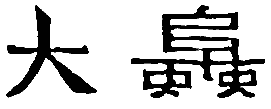
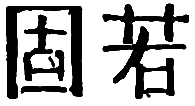
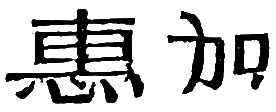
Hung-sin-Tsuen, the originator and head of this rebellion, was born in 1813, in a village near Canton, and while yet in his early youth was, in consequence of his precocity, removed from tending his father's flocks to be a scholar in the village, where he pursued his studies with such zeal, that a year later he took several degrees as a teacher. On one of his visits to Canton, he made the acquaintance of a Protestant missionary, with whom he long corresponded, and from whom he received a variety of tracts translated into Chinese, and books, by way of presents. In the course of a serious illness with which he was assailed about this period, he had numerous visions, and is said in his delirium to have insisted on being hailed Emperor of China. Gradually Hung and his friend and zealous adherent Fung-Yun-San became, through erroneous or wilful misinterpretation of the works of various missionary societies, the founders of a new creed, a sort of free, semi-Christian sect, which, as it could not long subsist without coming into collision with the reigning Government, very speedily assumed a political character. It is an indubitable fact that at first the religious movement was supported by the Protestant missionaries, and the views of its founders forwarded by every means in their power, with the object of using it to prepare the soil for the promulgation of Christianity. When about entering his forty-first year, Hung formed an alliance with American missionaries stationed at Canton, studied their books, after which he returned to the province of Kuang-si, where he published writings descriptive of the alleged manifestations of the Deity, gave himself forth as a poet,[183] and at the same time issued proclamations under the designation of the "Heavenly King." The severity with which the regular Government treated the insurgents, and all who consorted with them, only served to augment their ranks, to which the mysticism of their doctrine contributed in no small degree; for the credulous masses have in all lands the same love of the marvellous and unintelligible. Such a result only increased the courage, the energy, the arrogance of Hung. He no longer was content to announce himself as "the mouth through which God the Father, and Jesus the Elder Brother, declared their will;" he now proclaimed boldly the intention of himself and his followers to overthrow the unworthy Mantchoo dynasty, and raise to the throne a new native dynasty, that of the Tai-ping, or universal peace. Although stigmatized by the official Pekin Gazette as "local banditti," they were nevertheless strong enough in March, 1852, to storm even such a populous city as Nankin, where they set up a provisional government, and have since fortified it as their head-quarters. At the time the Tai-ping rebellion first broke out, Yeh, the then Governor of Canton, thought he would readily be able to suppress it by the summary process of chopping off the heads of all who were supposed to be in correspondence with them, and thus had as many as 800 executed daily.[184] It was no longer quite safe for a native to show himself in the streets of Canton, unless provided with a paper of identification. For this purpose, four-cornered pieces of a sort of white cotton fabric were worn, on which was printed a sign in red. These cotton strips served as countersigns for those friendly to the reigning dynasty, and were worn concealed from view, but so as to admit of being at once shown in case of need. Dr. Pfitzmaier, who has examined this sign, is of opinion that it is simply a union of the three signs which, so far as the two last are concerned, seem to have been compressed together and abbreviated, so that only the initiated could understand its significance. The learned sinologue is of opinion that this hieroglyphic, signifying "to offer hand and heart," or "to offer the original (own) heart," has nevertheless no meaning apart from the centre figure, which, however, is unusually distorted, so that the whole may also mean Kia-hoei, "to yield grace and benevolence," or may be applicable to him who wears it, "one who enjoys the all-embracing Imperial clemency."

The religious direction of the Tai-ping movement, coupled with its apparent Christian tendencies, its results, and, above all, the last hostile proclamation of the Pekin Government against foreigners, roused the sympathies of both Europeans and Americans in favour of the insurgents; and in the English papers of Hong-kong and Shanghai, the policy was vigorously and repeatedly advocated of turning the insurrection to their own advantage; while in a religious point of view it was recommended to avail themselves of the favour shown to the Scriptures by the Christian sect of the Tai-ping, which was also so amicably disposed to foreigners, who at all events were more likely to prove a bulwark and support to English Protestantism than the deceitful, promise-breaking, idol-worshipping Mantchoos. Letters and communications, which from time to time were published on the visit of Protestant missionaries in the insurgent camp, were apt to propound the most favourable ideas about the insurgents and their strivings after religious truth, and to attach to their victories and successes the most glorious hopes with respect to the spreading of Christianity in China. Fortunately the English Government did not suffer its policy to be affected thereby, but continued to observe the strictest neutrality. Only in those cases where, owing to the advance of the rebels, the interests of British subjects or of universal commerce seemed to be endangered, communications were held with the "Heavenly King" or his ministers, or to protest against the injury and limitation of trade with the earnestness and depth of impression which Armstrong guns are apt to impart to diplomatic dispatches. Thus the insurgents were prohibited from approaching within 10 Li of the city of Hang-kow, by this measure protecting not alone their own property, but the entire city from pillage and destruction. During the last war the interests of the insurgents were kept entirely in the background, and during the stay of the Novara at Shanghai, which had likewise been repeatedly threatened by the insurgents, we could gain but little enlightenment as to the nature and direction of the movement.
However, since the Treaty of Pekin has thrown open the navigation of the most important rivers, and thus facilitated communication with the interior, there has been a better opportunity than hitherto for intercourse with the Tai-ping, as also for obtaining a clearer insight into its present condition, as well as the object and inevitable consequences of their tenets. People are beginning to consider it more calmly, and even the missionaries seem gradually abandoning the expectations they had formed, of finding in it a means of helping the cause of Christianity, albeit a former missionary, Rev. J. C. Roberts, who in 1847 had spent several months with Hung, is at the present moment a sort of minister of foreign affairs in the insurgents' camp at Nankin. The latest information respecting the Tai-ping enters so fully into the character of the whole movement, and so clearly develops its tendency, that no apology is needed for laying before the readers of every class a brief sketch of the more important and significant dogmas.
The Tai-ping translations of the Old and New Testament, though in the whole tolerably correct, yet are in certain parts so imperfect that they implanted the most erroneous ideas in the head of the "Celestial King." He conceived his own visions and revelations as far more important, and of far higher authority, than those of Holy Writ. His mission, as he himself states it, is to be followed by a new revelation, accompanied by numerous miracles, and a third book will be given to the world, which is to supersede the Old and New Testaments, and be called the "True Testament." According to Hung, both God and Christ have appeared in the human form. Christ is not equal to the Father, that is solely God; he is also brought into connection with other redeemers, and has a wife and children in heaven.
The Celestial King and his son form with God and Christ a Quaternity in Unity. The corporeal presence of the Celestial King is that of the Godhead, and in the distempered imagination of the Tai-ping the government now existing in Nankin is assuredly that of heaven itself!
The Tai-ping suffer no one to preach against their creed, because that would be to diminish the authority of their chief, and damp the ardour of their hopes. In their various proclamations it is expressly declared that Hung-sin-Tsuen is the brother of the Saviour, the Son of God, without any other distinction than such as must exist between an elder and a younger brother. They maintain that there is a celestial mother as well as Father, a heavenly sister as well as a heavenly Brother, and that the recently defunct King of the West, Fung-yun-san, one of Hung's oldest adherents, is now married to the heavenly sister. They hold to the opinion that not one of such of their revelations as clash with the Old and New Testaments, can be decided by such ancient books of religion. Their revelations being the newest, are on that account the most entitled to belief.
In a letter of greeting addressed by Hung to Roberts[185] the missionary, on the occasion of the arrival of the latter at Nankin, in October, 1860, Hung narrates his heavenly journey in 1837, the repeated miraculous interference of the Father and the Son in his favour, as also the revelations made to the Eastern King. He professes to have seen the Father and Christ, the heavenly mother and the heavenly sister. He is himself "the Way, the Truth, and the Life," just as Christ is. He warns Roberts repeatedly, that implicit belief in this is of the highest importance, as otherwise he can neither be useful in this world nor blest in the next. After such an exposition, Christian missionaries will scarcely be suffered in the insurgent's camp if they dare to preach against such errors, not to say blasphemies.
There are but few religious ceremonies. The Tai-ping, indeed, call one day of the week the day of prayer, and it happens more through oversight than intention to be fixed upon the Saturday, but so far as external sanctity goes there seems to be no special attention paid to it. They buy, and sell, and delve just as on other days. On the previous night about ten o'clock two or three cannon-shot are fired to announce the approach of the hour of prayer, and that the day of worship is at hand. Every family is engaged for an hour in devotion and praise. All strangers who have been in communication with the Tai-ping in Nankin state that, even in the capital where he has been resident for seven years past, that dignitary does not observe the Sabbath in any way, either by preaching, prayer, or expounding of the Scripture; there are no exhortations or pious admonitions; they have neither church nor temple; their sole divine service consists in each one reciting in his own house English hymns, and repeating a few prayers, while divers offerings are made, such as tea, rice, and the flesh of slain animals. They offer their prayers kneeling, after which they close the proceedings by singing a hymn standing. An English missionary, who arrived at Nankin with the conviction that the insurgents were genuine sincere Christians, made, after a short stay, the following severe but just remark concerning them: "I found to my regret no trace of Christianity, but a system of the grossest idolatry substituted for it, and arrogating its name. Their notion of God is so distorted, that it is, if possible, still more erroneous than that entertained of the Supreme Being by other idol-worshipping Chinese. Their conception of the Redeemer, to whom they pay equal honours, is crude, and thoroughly material. Their prayers, far from giving the impression of a true reverence of God, have much more the appearance of an idolatrous mockery of sacred things!"
An English merchant, who accompanied Sir Hope Grant on his reconnoitring excursion up the Yang-tse-Kiang, and spent a week in what used to be called Nankin, now the celestial capital of the Tai-ping, gives the following characteristic sketch of them: "The insurgents take no interest in and do not encourage trade, except in muskets and ammunition. To our representations how unwise it was to lay waste towns and villages, and shut out commerce, they promised, after peace was concluded, to erect schools and other similar institutions, and professed their willingness to promote trade, but 'for the present,' they went on, 'we must, before anything else, make the hills and the rivers subject to our power.' On the whole I found the condition of the rebels far better than I had expected. They are comfortably clothed and well fed. The population of Nankin consists exclusively of officials. No one not connected with the administration of the army is admitted within the gates of the city. The majority of the inhabitants, who number about 20,000, are prisoners and slaves from every part of the empire. Although employed in most arduous work, they get no pay, but are simply clothed and fed. I remarked an extraordinary number of beautiful young women in elegant silken stuffs from Sutschan. There were also prisoners of war from Sutschan and other places, who, however, were by no means inclined to lead a very Christian and moral life in the celestial capital. The city of Nankin, as well as its suburb, the beautiful ancient cemetery of the Ning dynasty, and the far-famed porcelain Pagoda, are all utterly destroyed; instead of the broad well-paved streets of former times the stranger has now to pick his steps through heaps of bricks and rubbish. The palaces of the kings of the Tai-ping dynasty are glaringly conspicuous among all these ruins. They must have been entirely rebuilt, for the old Yamuns and temples, like the whole of the Táu-Tái City, have been demolished utterly.
"The rebel chief inhabits a large palace. His household consists of 300 female attendants. He also, in virtue of his rank, has 68 wives supported for him. No one but the kings (of whom there are 11 or 12, but only two are resident in Nankin) is permitted to approach his sacred person. Probably Hung is little more than a mere puppet in the hands of his ministers. It is he who mainly keeps the rebellion on foot. Discipline is far better maintained among the long-haired insurgents than the imperial troops, and many of the younger soldiers have pleasing manners.
"The kings or Wangs, on the other hand, seem exceedingly lazy and vicious, and when they make their appearance, with a theatrical attempt at assuming a dignified deportment, clad in the yellow costume of a mountebank, and with a tinsel crown upon their heads, they present a most ludicrous aspect. Not one of these so-called kings understands the Mandarin dialect, so widely diffused among the educated classes;—not one, except Hung himself and Kan-wang, has a better education than one of his coolies.[186] They have linguists at their elbow, who do their reading and writing for them.
"The arms of the Tai-ping are very wretched, and the bare fact that they are able to make head against the Imperial troops, speak volumes for the utter helplessness and incapacity of the Imperial Government. I have not the slightest expectation that any advantage will accrue to civilization or Christianity from the religio-political movement of the Tai-ping. No Chinese will have anything to do with them. Their whole activity consists in burning, murdering, and devastating. They are universally detested by the people; even those inhabitants of the city who do not belong to the 'Brotherhood' detest them. For eight years their head-quarters have been at Nankin, which they destroyed, nor have they as yet made the slightest attempt to rebuild it. Trade and industry are forbidden. Their taxes are three times higher than those of the regular Government. They take no measures to staunch the wounds which they have inflicted on the people, nor do they occupy it as though they had any permanent interest in the land. They take no pains to tap those slow but sure springs of revenue, or to increase the resources of the state. They lay themselves out to maintain themselves by plunder. Nothing in their organization gives hope for any amelioration of the present or consolidation of power in the future; there is nothing in the entire history of the Tai-ping to enlist sympathy or compel confidence in a movement which, under the mask of religious reform, conceals the most hateful self-interest and terrorism, and under the pretext of spreading peace amongst men, brandishes the scourge of destruction and desolation among the provinces through which it has passed."[187]
On the 11th of August the Novara quitted her anchorage off Shanghai, and with the steam-tug Meteor[188] fastened to her side availed herself of a spring-tide to make her way into the Yang-tse-Kiang. Off Wusung we awaited the arrival of the post, after receiving which we were on 14th August towed as far as Gutzlaff's Island. Here we had once more to lay to, owing to calms and currents, till at last on the 15th August a fresh breeze sprang up from the S.E., and enabled us to make an offing.
The temperature had materially altered during the last few days. After a cycle of oppressive heat the weather had suddenly changed to severe squalls, with a marked fall in the barometric column. The thermometer, which while we were lying off Shanghai marked from 86° to 93°.2 Fahr., now indicated in the morning only 68° Fahr., and during the day never rose above 77° Fahr. The number of fever cases, which had reached the number of seventy, began gradually to fall off. Several cases of dysentery forthwith began to show symptoms of amendment.
Considering the latitude we were in, and the season of the year, the barometer stood unusually high (30°.100), and although this might be attributable to the constant prevalence of easterly winds, we nevertheless knew we were approaching the period when the monsoon changes, and little reliance was to be placed on the steadiness of that from the S.E. Accordingly on the 17th the wind shifted round to N.E. by E., while our course was due S.E. This however rendered it necessary to tack, if we wished to pass to the northward of the Loo-Choo group, whereas we could run free and with a fair wind through the southern channel. The sun set behind a bank of dense clouds on the horizon. The western sky was tinged a deep red, and the stars shone out with uncommon brilliancy, but with a sort of trembling ray. The barometer fell slowly but steadily; the sea began to heave perceptibly. Our course was now changed to S.E. by S.
The following morning the breeze freshened, and drew somewhat further aft; the sky was covered with clouds massed together, those to the N.E. of a very dark, almost black, colour. Wind and sea were now rising, the sky became more and more obscure, the barometer kept falling—there was every indication of the approach of heavy weather.
The 18th August, the birthday of our Emperor, was duly celebrated far on the open ocean, in the middle of the China Sea. All was prepared for Divine worship, which was to be celebrated at 10 A.M. on the gun-deck, in presence of the staff and the entire crew. The Commodore had invited several gentlemen of the staff to dinner. On land no one thinks of consulting the elements, when such a festival is to be observed, nor do the guests waste many thoughts on wind, rain, and heavy seas, as they assemble in their comfortable chambers. At sea, on the other hand, the conditions are altered. Wind and weather are the masters here, whose behests the sea-farer must attend to. This was our case on this 18th of August.
First, Divine service had to be dispensed with, because the sea became too heavy, rendering it necessary to close the port-holes in the gun-deck, where, as already mentioned, the service was to be performed. As the hour for the festival drew nigh, the elements gave unmistakeable evidence of their determined hostility; there was no room any longer to doubt that we were about to do battle with a regular Typhoon.[189] This species of storm, which is very customary at the change of the monsoons in August, September, and October, when the N.E. trade suddenly veers round and becomes the S.W. monsoon, is, like the tornado of the West Indies, the Pampero of the eastern coast of South America, and the hurricane of the Mauritius, a whirlwind of the most colossal proportions and most tremendous fury, by which the atmosphere is swept in a circle at an astonishing velocity around a central point more or less calm, which does not, however, remain stationary, but is continually progressing, and hence they are usually termed cyclones, or circular storms, to distinguish them from those other storms in which the wind moves in a straight line. It has been reserved for scientific investigation to explain the extraordinary regularity of the laws in obedience to which the masses of air, in the case of such storms occurring in the Southern hemisphere, move in the direction of the hands of a clock, whereas in the Northern hemisphere they are rotated in an opposite direction. In like manner, the direction of the centre round which the cyclone is raging has been definitely ascertained, so that, provided with these data, it is not merely possible for the navigator to hold aloof from the dangerous central point of these circular storms, where the best and stoutest ship that ever floated must almost to a certainty be swallowed up, but even to avail himself of the wind to reach the edge of the cyclone (the breadth of whose path is from 300 to 1000 miles), and thus make a rapid and prosperous passage. By mid-day the wind had increased to such an extent that we had to take in most of our sails, and reef the rest. The sea now rose, and many of its waves came thundering upon our decks. The vessel was tossed to and fro with such violence that everything which had not been made fast, or was attached to the vessel, began to lurch from side to side. Nevertheless, the invited guests sat down to table, made the seats and the table fast, and, such at least whom the violent rocking did not make sea-sick, partook of a pleasant and joyous meal. But even these precautions did not prevent numerous unpleasant accidents. One tremendous lurch of the ship, which took us unawares, suddenly set adrift a number of our mess, who rolled over and over each other upon that unstable floor, amid a hideous chaos of tumblers, bottles, plates, and crockery. Chairs and fauteuils had their legs broken, everything breakable went into irretrievable smash, the convives escaping serious injury only by a marvel. Once more they took their seats at table, where only the bare cloth gave promise of security, and endeavoured to anchor themselves more firmly. When, at the conclusion of the meal, our Commodore gave the usual toast, and his guests emptied their glasses to the health of the reigning monarch, the band attempted to strike up the National Anthem, and a hearty cheer resounded above the groaning of the ship, the howling of the wind, and the sullen roar of the ever-increasing waves, as they lashed against the ship's sides.
The sun went down behind clouds, as we went careering along under close-reefed main sail and storm stay-sail over a confused sea, running mountains high, and with huge heavy grey masses of cloud and mist close overhead; the barometer was still falling, and as night closed in the wind sung mournfully, yet with almost deafening noise, through the masts and rigging. The wind now shifted and sprung up from N.E. by N., which being an additional sign that the centre of the cyclone was receding, we felt assured that we were on the right side to keep clear of it. By midnight the wind came still further round, till it stood steadily at N.E., when it acquired fresh strength, and blew a most violent hurricane. The centre of the cyclone had once more altered its course, and begun to move in our direction.
Our position at noon (27° 25′ N. and 125° 23′ E.) was the most unfavourable possible. We had a N.E. wind, and were in the N.E. section of the typhoon, whose centre, as is customary in these storms, was moving in a N.W. or W. direction, and therefore threatened the more readily to overtake us, that our course lay S.E. through the wide channel, which leads from the Chinese Sea into the open ocean between the Loo-Choo Islands and the Meiaco-sima group. There was now no other egress possible than by steering W. by S. to get away from the advancing centre of the whirlwind, on which course we would have to steer for the N. extremity of the Island of Formosa.
The night of 18th and 19th of August was, in the fullest sense of the word, a night of storms. Towards midnight we once more set double-reefed foresail in order to lie our course of west by south. Had we calculated aright the course of the centre of the cyclone, the wind as we advanced should have drawn ahead, as we were now keeping it on our larboard beam.
Daybreak of the 19th found us beneath a gloomy, angry-looking, cloudy grey canopy on every side, the clouds hanging quite low, till they seemed to brood upon the surface of the sea, now lashed into fury by the violence of the storm. The look-out could scarcely see a cable's length clear of the ship. Deluges of rain, lashes of spray, driven on board by the tremendous violence of the wind, enveloped us in a strange, half-mysterious obscurity. Towards the N.E. a compact bank of bluish grey clouds indicated the centre of the cyclone. The motion of the ship was so violent that one of her quarter-boats got filled with water, which at every lurch was washed upon the frigate's quarter-deck like a small cascade. Sometimes they became so full that they threatened to wrench the davits from their fastenings. The gun-deck was afloat with spray lashed on board with each pitch of the ship, while the foam flew high up upon the mast. The waves crossed each other in every direction, huge conical masses rising suddenly to a height of 25 or 30 feet, as far as one might guess, and then as suddenly subsiding. It was the genuine pyramidal sea of the true cyclone, of which vessels caught in these furious circular storms are even more apprehensive than the fury and strength of the hurricane.
The wind, which now began to draw to the westward, indicated that thus far we had shaped a proper course, and that the course of the cyclone lay towards the N.W. Under these circumstances it was deemed most prudent to make the Marianne Islands, and to avail ourselves even of the hurricane in order to perform a rapid voyage. We accordingly now laid our course to steer S.E. by S., through the centre of the channel south of the Loo-Choo Islands. Considering the width, 120 nautical miles, of this channel, there was reason to hope that, despite the errors in reckoning which were to be expected amid so many manœuvres, and considering the impossibility of getting astronomical observations, and the influence of the sort of currents which those hurricanes usually set in motion for a short period, we might make our way through it in safety.
The wind remained steadily in the N.W., and at first was on our port quarter. Towards noon, however, it came round to N.W. by W., so that we were now running dead before it. We now set double-reefed foresail so as to make quicker progress. Towards 6 P.M. the hurricane woke up to its full strength; squall followed squall, the universal covering of cloud in which the heavens seemed wrapped looked as though it reached to the very waters, and the air was quite filled with spray, till when standing at the ship's stern it was barely possible to distinguish the forecastle. The storm, sweeping along above the seething water, had a singular piercing, almost metallic, note, quite unlike the singing and whistling made among the sails and cordage. Staggering along under close-reefed fore and main sail, and double-reefed top-sail, the frigate pressed on through the thick night, going 14 miles an hour, through the strait between Loo-Choo and Meiaco-sima, out of the China Sea into the Pacific Ocean, whither she was being hurried along with such impetuous, irresistible violence by the wind, that not even the most experienced seaman could make head against it, but had, when passing from one part of the ship to the other, to warp himself along by means of a rope made fast fore and aft.[190] At 4 P.M. the barometer stood at its lowest (29°.302, the temperature at the same period being 66°.02 Fahr.), where it remained without sensible alteration for several hours. At last, towards 9 P.M., it began slowly to rise, the surest indication, and therefore most welcome one, that we were increasing our distance from the central point of the storm. About 11 P.M. the clouds suddenly lifted on S.S.E., the horizon began to widen; there was no longer a doubt that the worst was over.
At dawn on the 20th the masts and cordage showed a thick incrustation of salt, thus giving unmistakable evidence of the great height to which the spray had been driven. The wind was now W.S.W., and the barometer had risen to 29°.5, so that we had now merely an ordinary gale to deal with, and might look upon the cyclone as expended. Science had indicated the method of evading the centre of the circular storm, and even of making the very hurricane subservient to our ends in driving us along our destined course!
At 8 A.M. the sun began to be visible by fits and starts, long enough, however, to permit us to make an occasional observation. According to this we were only one mile out of our position by dead-reckoning. During the 24 hours, inclusive of the period during which we lay to, we had run 218 miles in a general direction of S.E. by E. During the afternoon the sky cleared. The sea was still high, but the atmosphere gradually became clearer and more transparent, till by sundown even the large banks of clouds on the N.E. which continued to mark the centre of the cyclone had entirely disappeared. The Novara during this tremendous storm had proved herself a thorough sea-boat, nor was there any particular damage noticeable on the occasion of the careful inspection to which her sails, masts, and rigging were subjected, immediately that the weather became more favourable. Her masts and sails, which in such a warfare of the elements she might so readily have had carried away, were all found to be uninjured, and only a few plates of her copper sheeting had been loosened by the fury of the waves, while those still clinging to the ship had been rolled up like so much paper, by the tremendous pitching of the good ship. The quarter gallery too, which when the frigate was running before the wind was exposed to considerable danger, had sustained but little damage. Such unfortunately was not the case with a small menagerie of rare birds and monkeys, which had been placed in cages carefully covered with linen in this, ordinarily the most sheltered, part of the vessel. The covering had been torn away by the hurricane, and the wind had so tossed the poor things about, that all their feathers were knocked off, and they presented a most pitiable appearance. The quadrupeds too, whose cries and lowings during the storm had already testified to their misery, were found to have suffered severely. Two oxen and several sheep died on the 19th. All the surviving animals lost flesh terribly during 48 hours, while those that had been the wildest and most untameable were now quite tame and docile.
An analysis of the phenomena observed during the continuation of the cyclone, shows that on the 18th it formed its vortex, being then about opposite the rather lofty and tolerable-sized island of Dkinawasmia of the Loo-Choo group, which must have occasioned an alteration in the direction of the wind. Owing in part to the influence of the N.E. trade, which enters the northern part of the China Sea, and at this season is gradually veering round till it completely displaces the S.W. monsoon, as also during the S.W. monsoon itself, which blows from Formosa on the south, there appears to exist to the northward of the latter-named island, favoured probably by its natural configuration and physical features, a well-defined space within which the barometer is always depressed, and in which the atmosphere in immediate contact with these N.E. and S.W. winds is compelled to assume a sort of whirling motion, like that of the hands of a clock, thus forming the germ as it were of a cyclone.
So long as the S.W. wind was blowing strongly, the centre of the cyclone moved in an easterly direction, or in other words, in the direction of least resistance. But arrested in its advance by the various island groups, as also by the gradually increasing pressure of the S.E. and E. winds, the cyclone must, in consequence of the obstacles opposed to its path, have swung round with a sort of whirl, which once more impressed upon it a N.W. direction to the coasts of China, there to expend itself, apparently in consequence of the ever-increasing pressure of the surrounding atmosphere. During forty-eight hours, namely from 6 P.M. of the 18th to the same hour on the 20th, we were within the range of the typhoon itself, and on the 19th were at the nearest point to its vortex; nevertheless, judging by our lowest barometrical reading, we must have been at least 100 miles distant from the centre. It was the first typhoon that visited Chinese waters in 1858, and had been predicted weeks before in the "North China Herald," while the Thousand Years Almanac of the Chinese calendar assigned its date for the 10th of August.
Our course was now shaped for the Marianne Archipelago. For several days after the typhoon, the weather remained unsettled, and the swell was both heavy and broken, when on 26th August we came in sight of the island of Guam or Guaham, the most southerly of the Marianne group. In twelve days we had run 1860 miles, with the aid of the typhoon it is true, but there was the fact, the distance had been accomplished, and as to the How? Jack gives himself little concern, so long as he reaches his goal swiftly and in safety.
On the morning of the 27th we stood into the Bay of Umáta, although it was very doubtful whether we should find a secure anchorage here, considering the S.W. wind that was blowing full into the roadstead, which is quite un-sheltered in that point of the compass. In fact, as we came nearer the land, we speedily became aware of the impracticability of anchoring here even in the best weather; while, on the other hand, it did not seem very advisable, owing to the difficulty of getting in, to make for the excellent harbour of San Louis de Apra, it being by no means easy, during the prevalence of the S.W. monsoons, for a large ship to beat out, so that they are occasionally detained there for several weeks. The order was accordingly given to luff up, so as to make tacks against the freshening west wind, out of this bay, studded as it is with numerous coral reefs. This proved to be a work of much time and trouble, ere we succeeded, after many hours of anxious care, in weathering the reef.
The island of Guam, with its lofty green mountain-ridges, numberless valleys, and thickly-wooded glades, had a cheerful and friendly aspect, but seems but little cultivated. At Umáta, where we perceived a few houses, the Spanish flag was waving from a small fort adjoining the settlement, which had been hoisted on the approach of the frigate.
On 30th August, in 149° 53′ E., we reached the eastern limit of the S.W. monsoon, and—although not more than four days' sail from the object of our next visit, the island of Puynipet, had we met with favourable winds to waft us a little further—it was 15th September ere we came in sight of that lovely island, for, stormy and boisterous as the beginning of this section of our cruise had proved, not less annoying were the fickle calms, which kept us lying for weeks motionless, our sails idly flapping with the roll of the ship. It is a wretched depressing state of inactivity and discomfort, of which only those can form an idea who have been caught in a calm on the open ocean, on board of a sailing ship,—
"Wenn Welle ruht und jedes Luftgeflüster; Wenn Meer und Himmel schweigend sich umschlingen, Und fromm, fast wie zwei betende Geschwister."
Which may be freely translated as follows:
"When ocean smooths his wrinkled face, And sea and sky in pray'rful silence bend, As when, in mutual fond embrace, Two loving sisters' vows on high ascend!"
The original is by Nicolas Lenau.
FOOTNOTES:
Distant View of the Island of Puynipet.