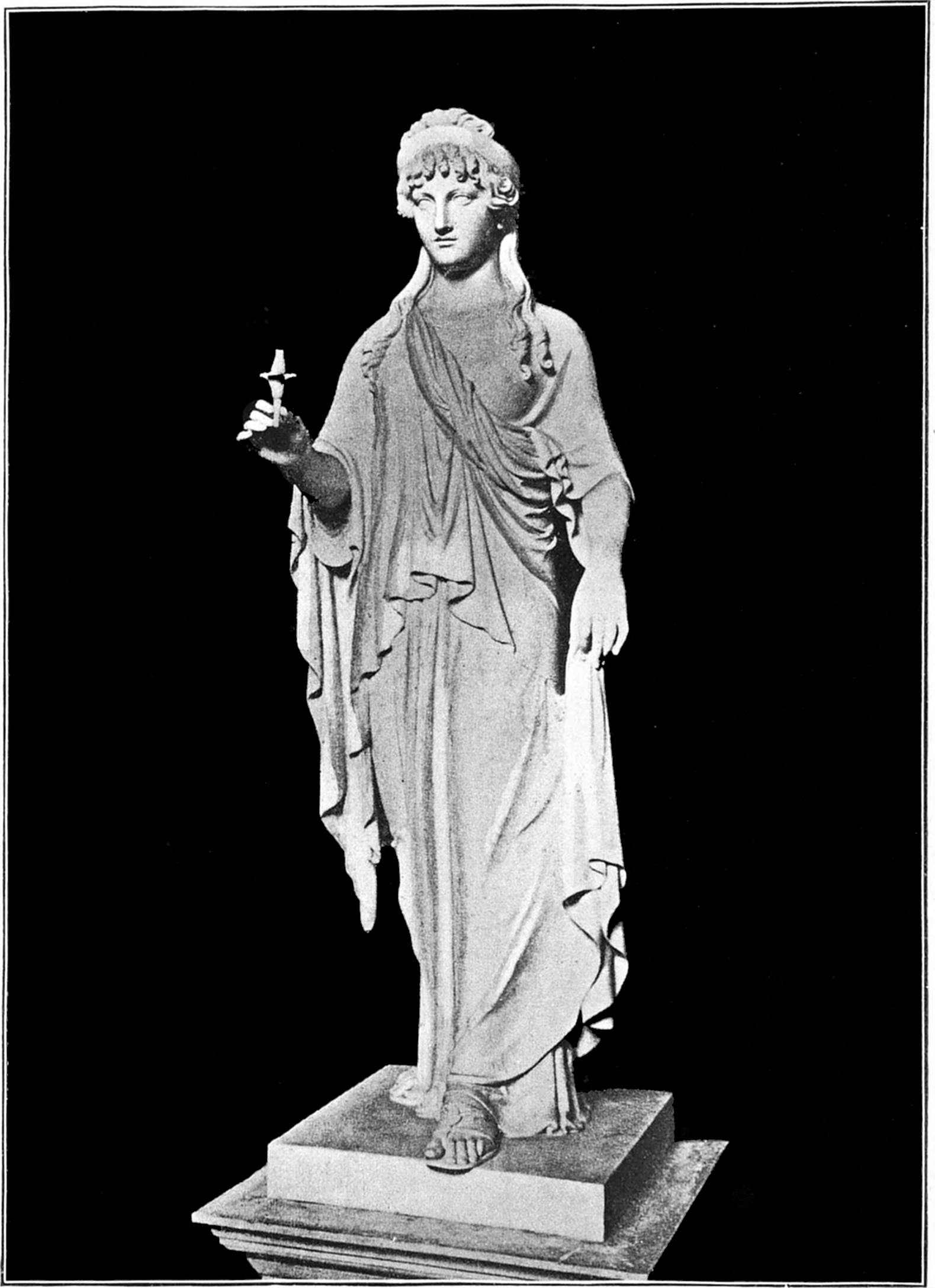
Pan.
Reading edition
“Who weeps the death of Pan? Pan is not dead, But loves the shepherds still; still leads the fauns In merry dances o’er the grassy lawns, To his own pipes; ... Pan cannot die till Nature’s decease! Full oft the reverent worshiper descries His ruddy face and mischief-glancing eyes Beneath the branches of old forest trees That tower remote from steps of worldly men, Or hear his laugh far echoing down the glen.” —J. G. Saxe.
STORY. AN ARCADIAN GOD.
Pan was god of the woods and fields, flocks and shepherds, and his favorite residence was Arcadia. He was fond of music and led the dances of the Hours and Graces.
The story goes that a coy nymph whom he loved and endeavored to gain was changed into a reed which he cut and fashioned into the Syrinx or Pan’s pipe. With this he charmed trees and flowers as well as men and animals.
“Mad with love, and laden With immortal pain, Pan pursued a maiden— Pan, the god, in vain. For when Pan had nearly Touched her wild to plead, She was gone—and clearly In her place a reed! Long the God unwilling Through the valley strayed, Then at last submitting, Cut the reed and made, Deftly fashioned seven Pipes, and poured his pain Unto earth and heaven In a piercing strain.” —Archibald Lampman.
Although Pan had a pleasant, cheerful face, he was curiously formed, having a man’s body and a goat’s legs and feet. He was supposed to delight in inspiring people with sudden and unfounded fears—hence the word panic.
INTERPRETATION.
The character of Pan was symbolic of Nature; the music of his pipes was the gentle, intermittent breeze.
The lower part of his body was that of a goat on account of the rough and rocky nature of his favorite haunts. His leaf-shaped ears—terminating in little peaks like those of some animals—indicate his wild, forest nature.
ART.
The face and figure of Pan as displayed in this statue by Fremiet, in the Luxembourg, give an idea of an easy, amiable creature. It is impossible to gaze long at it without conceiving a kindly sentiment towards it. The nose is almost straight, but curves inward slightly, giving the face a good-humored charm. The mouth seems so nearly to smile outright that one involuntarily smiles in return.