Front matter
Reading edition
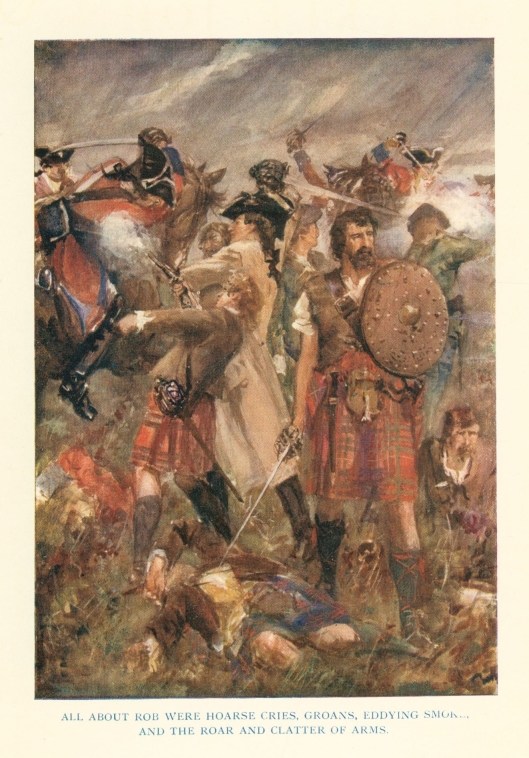
ALL ABOUT ROB WERE HOARSE CRIES, GROANS, EDDYING SMOKE, AND THE ROAR AND CLATTER OF ARMS.
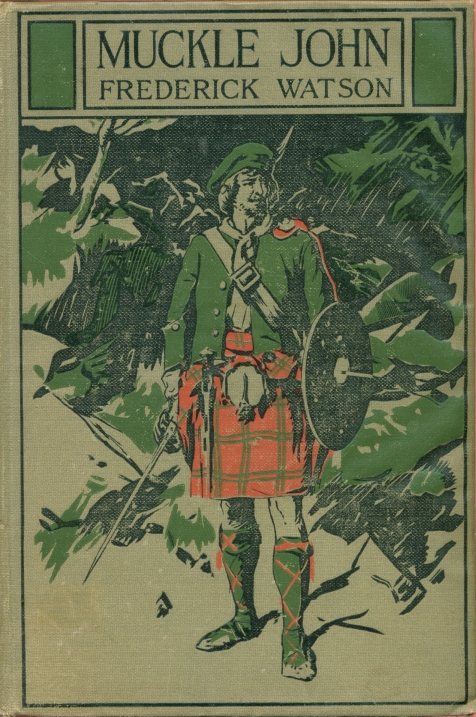
MUCKLE JOHN
BY
FREDERICK WATSON
AUTHOR OF "SHALLOWS"
CONTAINING EIGHT FULL-PAGE ILLUSTRATIONS IN COLOUR BY ALLAN STEWART
LONDON ADAM AND CHARLES BLACK SOHO SQUARE
Published September 1914
TO MRS. STEPHEN WILLIAMSON MY FATHER'S FRIEND AND MINE
CONTENTS
CHAP.
FOREWORD I. HOW PRINCE CHARLIE CAME TO INVERNESS II. THE COMING OF MUCKLE JOHN III. THE END OF THE JACOBITE CAUSE IV. FRENCH GOLD V. LOCH ARKAIG VI. THE WATCHERS BY NIGHT VII. BURIED TREASURE VIII. FLIGHT IX. THE TURN OF THE SCALES X. THE LAST FLICKER XI. A NARROW ESCAPE XII. IN THE HANDS OF THE DUKE XIII. MISS MACPHERSON COMES TO FORT AUGUSTUS XIV. MUCKLE JOHN SHOWS HIS HAND XV. "A MUIR-FOWL SNARED" XVI. THE CAVE IN GLENMORISTON XVII. THE HOLDING OF THE PASS XVIII. THE WHISTLE OF THE BANSHEE XIX. THE DANCE OF THE MACKENZIES XX. AN UNWILLING ACCOMPLICE XXI. THE CAPTURE OF LORD LOVAT XXII. MISS MACPHERSON AND THE DUKE XXIII. THE HOUSE OF THE FOUR MEN XXIV. THE END OF A TALE
LIST OF ILLUSTRATIONS
IN COLOUR
All about Rob were hoarse cries, groans, eddying smoke, and the roar and clatter of arms (see p. 43) Frontispiece
"Madam," said he, "I crave your pardon for this seeming incivility"
"I am the Prince," said the man upon the horse
He peered through the heather upon the beach
The holding of the pass
He was in full highland dress, with a claymore at his side
He watched one of the men unsheath his dirk and make a gesture significant enough
With a great rattle of chains the gibbet's burden dropped with a clatter
FOREWORD
All the world knows the tale of the Rising of 1745. It is a story that each generation cherishes with undiminished affection. Some have called it the last burst of chivalry in modern history, and doubtless for that reason when other more vital aspects are forgotten, the campaign of Prince Charlie will sustain its fascination and its glamour.
In an age peculiarly commonplace and sordid, it carried the spirit of romance well-nigh to the throne itself; in a period almost destitute of loyalty and patriotism it glorified the reckless gallantry and self-sacrifice of devotion.
That Charles Edward Stuart could land with only seven followers and carry all before him into the very heart of England is wonderful enough. But that in the days of his misfortune and flight no one was found to claim the reward for his life is finer still. That poor, unarmed, uneducated men were ready to die in hundreds is a testimony not easily forgotten.
Of those great days when the Jacobite army marched south much has been written, and the facts are familiar to all. But of those grey days following Culloden Moor less is known, and in the last fluttering of the Jacobite Cause there is much that must necessarily baffle and perplex the casual reader.
The Highlands were to a large extent divided in opinion. There were Jacobite clans, and Hanoverian clans, while between the two were men like Major Fraser of our story, anxious to keep clear of both. There were devoted chiefs like Lochiel, scheming chiefs like Lovat, chiefs who wavered and trifled like Macleod, or were downright traitors like Glengarry and Barisdale, and there were the tragi-comedians like poor Murray of Broughton, who was more hated than he deserved.
Finally there were, like poppies in the grain, the adventurers, men with nothing to lose and something to gain (such as Muckle John himself), serving no chief, nor clan, marauders more Jacobite than Hanoverian, like birds of prey hovering for the kill. It is of this side of the '45 that I have principally treated.
Clan jealousies again must not be forgotten, and the universal hatred of the Campbells played, as always, its miserable part. Those who condemn Cumberland and his troops must not forget that in the persecution after Culloden the hunting down of the fugitives was ardently pursued by the Highland militia and the men from Argyllshire.
The story of a campaign is but a lightning flash in the history of a nation. Long after, the thunder rolls into silence. The Rebellion of the '45 was only the fuse that destroyed at a blow the clan system of centuries. From Culloden onwards the transit of the old into the new was swift and tragic in its coming.
FREDERICK WATSON
MUCKLE JOHN