THE APPLE-PIE PARTY.
Reading edition
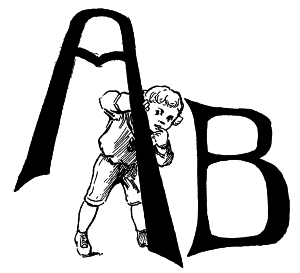

A was an apple-pie, bitten by Tom; French people call an apple “une pomme.”

B was the bite, and I really must say, Tom was sorry that ever he took “la bouchée.”
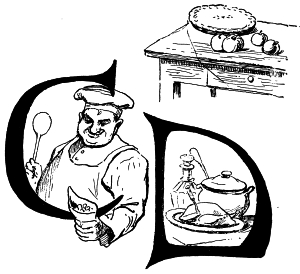

C was the cook; Tom was always quite safe To get goodies and tarts, when he called him “le chéf.”

D was the dinner got ready that day; Dinner in France is called “le dîner.”
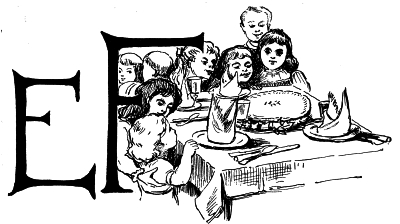

E was the edge (in France called “le bord”) Of that pie trimmed with pastry to imitate cord.

F was the fun the sight gave to all; In words of the Frenchman “la gaiété folle.”
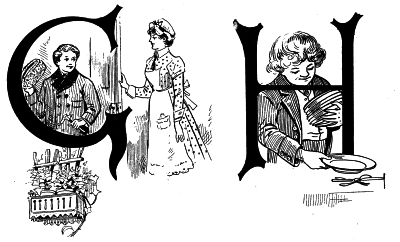

G was the guest Tom was late to receive; He came looking happy—a merry “convive.”

H was for Harry, who served the pie in great glee; In France his name is pronouncéd “Henri.”
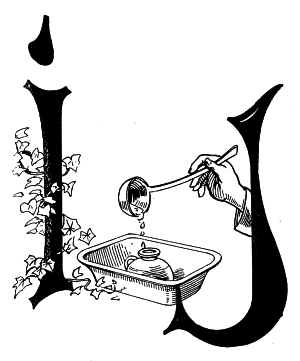

I was the ivy; the pie with great care Was entwined with the creeper the French call “lierre.”

J was the juice, well sweetened by the cook; He flavoured it nicely and called it “le suc.”
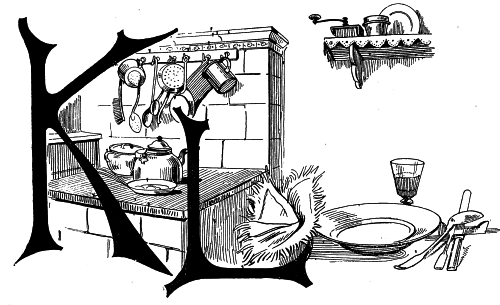

K was the kitchen, so tidy and clean; In France it is always called “la cuisine.”

L was the linen beside each place set, In Anglo, the napkin; in French, “serviette.”
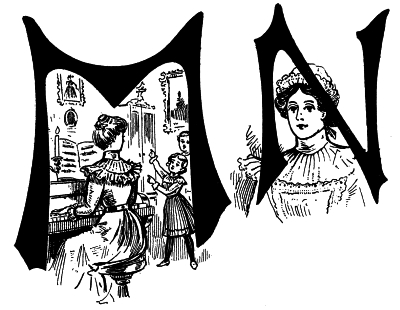

M was the music (in French “la musique”) Aunt played for the game of “lost treasure seek.”

N was the nurse (in France called “la bonne”) Who brought some small cousins to share in the fun.
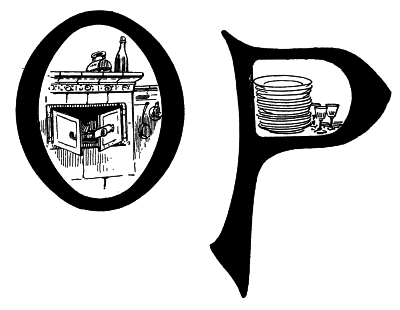

O was the oven (in French called “le four”); At ’Xmas it bakes many pies for the poor.

P for the plates (in French “assiettes”), Kept warm till the table was all nicely set.
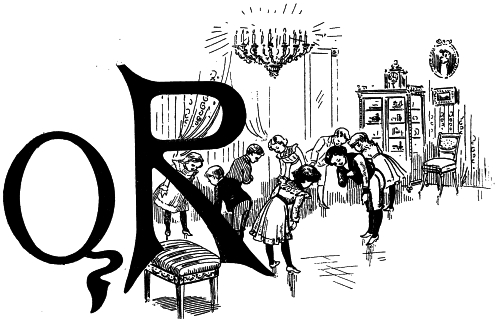

Q the quadrille, which I think came from France; The place where all children learn early to dance.

R was the room where the dancing took place, In French called “le salon,” or else “la pièce.”
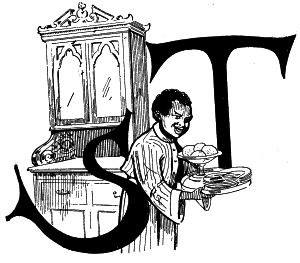

S was the sideboard for things stored away; Cupboard, or sideboard, in French is “buffet.”

T was the tray (in French called “plateau”) All laden with jellies and cream whipped like snow.
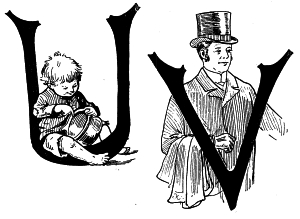

U was the urchin, old cook’s “petite peste”; Of leavings and scraps she was always in quest.

V was the valet; at “dix heures” he came, His very small master and mistress to claim.
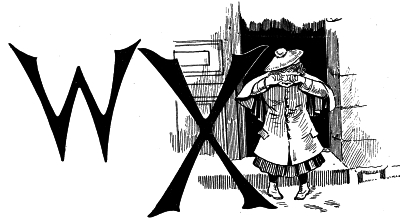

W a wrangler, a horrid “mégère”; Just read the next line, her name will be there.

X Xantippe was not at the party, I’m told; Such people are always left out in the cold.

Y was the year (in French called “l’année”), Which for these happy children had just passed away.

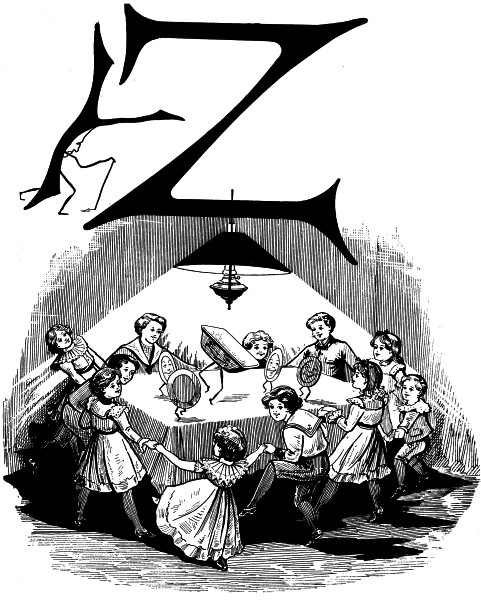
Z was the “zeste” that appetites hearty Unfailingly give to an apple-pie party.