Cheese and milk ...
Reading edition
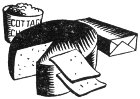
Cheese is one of the most popular alternates for meat. Like meat and eggs, it contains high-quality protein and is an excellent supplement for the protein in bread and such other cereal foods as macaroni, noodles, and spaghetti.
Cheese is not equal in food value to the milk from which it is made. It contains one of the milk proteins but the other is separated out when cheese is made and is left in the whey.
American Cheddar, sometimes called American or “store” cheese, is the cheese most commonly used in cooking in this country. It is sold in natural and processed forms, and varies in flavor from mild to very sharp. Other cheeses are noted for their distinctive flavors and are chiefly used for garnishing, as the grated hard Parmesan, or for eating alone, as the sweet Swiss and Brick or the salty Bleu and Gouda.
You can count on half a pound of Cheddar cheese (2 cups chopped or grated) to give you enough protein for 4 servings of a main dish, or about the same amount of protein as a pound of meat with a moderate amount of bone and fat.
Because Cheddar cheese is a concentrated food, it is generally used in relatively small amounts—less than half a pound for 4 servings. Then other protein-rich foods are added to the meal or included in the cheese dish to increase the protein content, as milk and eggs added to the cheese for a souffle or an omelet.
Cottage cheese is less concentrated than Cheddar cheese, with only four-fifths as much protein per pound. In using cottage cheese as a meat alternate, use about a fourth more by weight than you would of Cheddar cheese. For instance, it would take 10 ounces of cottage cheese (compared with 8 ounces of Cheddar cheese) to alternate for a pound of beef with a moderate amount of fat and bone. Ten ounces of cottage cheese measure about 1¼ cups; a pound measures a little more than 2 cups.
We lean heavily on milk as a source of our day’s protein. But it takes almost 7 cups of fluid milk, or about 2 cups of nonfat dry milk, to provide enough protein for 4 servings of a main dish. So, although we sometimes use a milk soup or chowder as the main dish, we are more likely to spread our milk consumption throughout the day—in beverages, custards, or milk puddings. In many recipes, we can increase the milk value by using fluid and dry milk together.
34
Cheese puff
6 slices bread 1½ cups ground or grated cheese 2 eggs 1½ cups milk ½ teaspoon salt Pepper, paprika, and mustard if desired
Fit 3 slices of bread into the bottom of a greased baking dish. Sprinkle with half the cheese and cover with the rest of the bread.
Beat eggs, add milk and seasonings, pour over bread and cheese, and cover with rest of cheese.
Set baking dish in a pan of hot water and bake at 350° F. (moderate oven) about 40 minutes or until custard is set and bread is puffy.
Serve with lima beans or peas, beets, green salad, fruit cobbler.
Cheese fondue
1½ cups milk 1½ cups soft breadcrumbs 1 cup chopped or grated cheese 1 tablespoon butter or margarine ½ teaspoon salt 3 eggs, separated
Scald milk. Add crumbs, cheese, butter or margarine, and salt.
Beat egg yolks; add milk mixture. Beat egg whites until stiff but not dry; fold into mixture.
Pour into greased baking dish. Bake at 350° F. (moderate oven) 30 minutes or until set.
Serve at once with baked squash, a green vegetable, apple-celery salad with nuts, and cookies.
Baked macaroni and cheese
4 ounces macaroni (1 cup elbow or 1-inch pieces) 1 quart boiling water 1 teaspoon salt 1½ cups water or fluid milk ⅓ cup dry milk, whole or nonfat 1 tablespoon flour ½ teaspoon salt 1 tablespoon butter or margarine 1 cup chopped or grated cheese Crumbs, butter or margarine
Cook the macaroni in the boiling water with the teaspoon of salt for the length of time indicated on the package. Drain.
Put the 1½ cups of water or fluid milk into top of double boiler. Add dry milk, flour, and half teaspoon salt. Beat until smooth.
Cook over boiling water, stirring constantly until thickened. Add butter or margarine and cheese. Stir until they are melted.
Put macaroni into a greased baking dish. Pour on the cheese sauce.
Top with crumbs, dot with butter or margarine. Bake at 375° F. (moderate oven) until crumbs are brown and mixture is hot.
Menu Suggestion
Serve with beet greens, grated raw carrot salad, and cooked dried apricots or fresh fruit cup with cookies for dessert.
For Variety
Add grated onion or chopped green pepper to the sauce.
35
Cheese rabbit (rarebit)
3 tablespoons butter or margarine 3 tablespoons flour 1 tablespoon finely chopped onion ¼ teaspoon salt ¼ teaspoon powdered dry mustard Paprika, if desired 1½ cups milk ⅓ pound cheese, ground or grated (1½ cups) 1 egg, beaten
Melt butter or margarine and blend in flour, onion, and seasonings. Add milk slowly. Cook over low heat until thickened, stirring constantly.
Remove from heat and add cheese.
Pour a little of the sauce into the beaten egg, then pour all back into the sauce. Stir and cook 2 or 3 minutes longer, until cheese is melted.
Serve on toast or crackers.
Menu Suggestion
Serve with lima beans or peas and combination vegetable salad. Have melon or other fresh fruit for dessert.
For Variety
Tomato rabbit.—Use tomato juice or thin tomato soup instead of milk in the recipe for Cheese Rabbit.
To make plain or tomato rabbit a heartier dish, serve over quartered hard-cooked eggs on toast.
Cottage cheese-pickle-peanut sandwich
⅔ cup cottage cheese ⅓ cup peanut butter, coarse grind ⅓ cup diced dill or sweet pickles 8 slices bread 2 tablespoons milk ¼ teaspoon salt 1 egg, beaten Cooking fat or oil
Combine cottage cheese, peanut butter, and chopped pickles.
Spread the mixture generously on 4 bread slices and cover with the other 4 slices.
Add milk and salt to the beaten egg and mix thoroughly.
Dip both sides of sandwiches quickly into the egg mixture. Do not soak the bread. Brown on both sides in hot fat over moderate heat.
Menu Suggestion
Serve with vegetable soup or a large vegetable salad, and fresh fruit.
Cottage Cheese Salads
Season cottage cheese with finely chopped chives and use for stuffing fresh tomatoes. Or, in winter, use to fill the center of a ring mold of tomato aspic jelly.
Moisten cottage cheese with top milk and season with salt and pepper. Heap in the center of cantaloupe rings and top with pitted sweet cherries.
36