Chapter XV · MEDICAL TALISMANS.
Reading edition
It is well at the start to form a definite conception of what a talisman means. It is a species of charm; it differs from an amulet. Both are of the character of fetiches; that is, objects in nature, or of art, believed to possess magical power. If the object be ascribed consciousness and other mental attributes, it is, properly speaking, an idol. Unlike the amulet, the talisman, to be effective, need not be kept about the person. But the main characteristic feature of the talisman is astronomical, or, rather, astrological; it is accorded virtue principally because made when two planets are in conjunction, or when a star has reached its culminating point. As one would expect, it has been customary to have something about the talisman to indicate that it is such; but many engravings found on them have no astronomical import at all.
The talisman[448] has a long history. To know when it came into use one must go back to the time when the study of the stars and their influence, real or supposed, on mundane affairs began. Although it has been asserted[449] that Adam acquired a knowledge of astrology through inspiration, it is safe to hold that the Accadian[450] star-gazers, inhabitants of the hills of Elam, first gave shape to this, in great part, pseudo-philosophy of nature, which was widely believed in by many peoples, and still has numerous sincere adherents everywhere. Mr. Proctor ventures to declare that “the idea that the stars in their course rule the fate of men and nations”[451] is a predominant one of the race.[452] In Babylonia, Assyria, Phœnicia, Egypt, and elsewhere, it received much attention; indeed, it was part and parcel of the prevailing religions, most of the Oriental systems being largely astronomical in origin. And the Chaldean or, rather, Accadian astrologer’s work is obvious enough to this day;[453] it is seen in the division of time into the week of seven days, with the seventh one of rest, the Sabbath,[454] and the mode of regulation of religious times and seasons,[455] to say nothing of the signs of the zodiac, and so on.
It is stated by Vitruvius[456] that astrology[457] was brought from the East to Greece[458] by the Chaldeans, of whom Berosus, the historian, “the first of them,” settled at Cos and opened a school there. However this may be, it is stated in Ptolemy’s remarkable book[459] that medical astrology originated in Egypt.
Hippocrates, who lived a century or so before Berosus, had certainly a knowledge of astrology. Galen wrote a book on it, and, like Hippocrates, gives special prominence to the influence of the moon, dwelling particularly on its production of critical changes in diseases. Many another physician thought it necessary to master it,[460] including Chaucer’s “Doctor of Physick,” who was “grounded in astronomie.”[461]
From the fact that astrology and religion were closely connected, it almost necessarily followed that medical talismans possessed more or less of a religious significance.
Among the talismanic gems pictured in De Wilde’s book[462] is one which has on one side the Greek letters ΙΑΩ, signifying the Creator of the world, or Jehovah; and on the other a representation of an extremely erotic and rather misshapen lion rampant. This, worn in a ring, was said to prevent renal and other diseases. De Wilde observes, in accordance with a belief of ancient date, that in this figure one has health symbolized. Says he: “Leo erectus verum signum sanitatis protendit.”
What has just been said leads me to remark that the phallus, which was a common form of the genius loci, or Agathodæmon, was widely believed to have great power to protect against harm. In it was a sovereign preventive of malign fascination, or the influence of the evil eye. The Roman god, Fascinus,[463] had it as his chief symbol. It is well known that this charm was sometimes placed on houses[464] in Pompeii, with the inscription, hic habitat felicitas. Aubrey says: “In the digging of the ruins and foundations of London, after the great conflagration, there were found several little Priapusses of copper, about an inch long, wᶜʰ the Romans did weare about their necks.”[465]

Fig. 19.—The Divine Name. (As seen on a talismanic gem, copied from De Wilde’s book.)
In regard to the ΙΑΩ, JΑΩ, or JAO, a variation of JAH,[466] the name of the Deity, the demiurge, the Sabaoth of the Phœnicians and others, I may say that it was regarded as possessing in itself irresistible talismanic power. Fort remarks that “as a talisman of medical properties it was carried about the person in tubes, or, more generally, on parchment.”[467] Let me add that the Tetragrammaton—that is, J H V H, or, as it is commonly rendered, Jehovah—was the same thing as the ΙΑΩ. Much could be said about it, as those familiar with Masonic legends and occult literature are aware. Lenormant states, of the wide belief in the power of the hidden “name of the Lord,” that “we now see clearly that it came from Chaldea.”[468] Elsewhere, reference is made to the potent word which Hea bore in his heart.
In this connection I may say a word on the “triliteral monosyllable” of the Brahmin and Buddhist, AUM, to which still, as in the past, great potency is attached. Being a symbol of the Supreme, it is characterized as “that which passes not away.” Dr. Birdwood remarks that it is “the identical formula of every Hindu god. The letter A is the vija-mantra of the male Buddha, the generative power; U, the ditto of the female dharma (law), the type of productive power; and M, the sanga (congregation) or union of the essences of both.”[469]
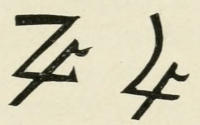
Fig. 20.—Forms of the Prescription Symbol.
The symbol placed at the head of medical prescriptions, and which is usually believed to stand for recipe, may be regarded as a sort of obsolete talisman. The original form of it appears to have been a figure like a Z, with the lower horizontal part crossed with a sceptre-shaped line. This, or a modification of it, has been from time immemorial the symbol of the planet Jupiter. Hence the reason, it has been asserted, for placing it at the head of prescriptions; for the great planet, the bearer of the name of the father of life, was believed in other days to have a favorable influence over diseases. And here I may observe that in another chapter I have spoken of the interesting fact that Marduk[470] of the Babylono-Assyrians stood for Jupiter, and that in him was assimilated the benignant mediator and healer of the Accadio-Sumerians, Silik-mulu-khi.
The symbol is generally described as being simply the initial letter of Zeus, the Greek name of Jupiter. But this leaves part of it out of account, a part which might be taken to be a sceptre, an object which, accompanied by a serpent, as the symbol of life, was prominent in representations of Jupiter. But one might with some reason regard it as made up of the initial and terminal letters of Zadykiel, or Zadakiel, the angel and the spirit of the great planet, according to astrologers and others. And again, by taking it to be composed of an R and an l, one might hold it to be derived from the name of Raphael, the angel of the sun. But, as already stated, it is probable that the body of the original figure was not an R. I may add that Mr. Taylor says that this ideogram “resolves itself into an arm grasping a thunderbolt.”
If the prescription-mark be a thing of astrological origin, it is a remnant of an extensive body of facts and theories, long highly prized. Shakspere makes King Lear, in an interesting passage, characterize the reference of man’s destiny “to the sun, the moon, and the stars,” as “the excellent foppery of the world;”[471] but no doubt innumerable hosts of believers in the system were thoroughly sincere. From the days when the Accadians became distinguished for their observations of the heavens, down to very recent times, medical astrology occupied a position in popular thought and esteem which almost exceeds the power of credence of the modern scientific physician. Not only in administering medicines, but in gathering medicinal herbs, the position of the planets had to be considered; for it was believed that the herbs got their virtues from them. Without the benign influence of the “host of heaven,” no good could be expected from the physician, or his remedies.
The belief in the power of the different constellations of the zodiac over special parts of the body and their diseases is still indicated by the curious figure often seen in almanacs.
Abraxas-stones are largely medical in character—medical talismans.[472] Much might be said of them. Fort remarks: “These gems, endowed with omnipotent curative and talismanic power, quickly acquired a celebrity undiminished for ages, and whose possible interpretation even yet attracts erudite attention.”[473]
Each of these remarkable objects consisted of a piece of glass, paste, or other mineral substance, occasionally a metallic one, on which was usually some figure, often a serpent, or inscription, together with the word “abraxas,” which constituted their distinctive feature.
The Greek letters of the mystical word, “abraxas,” equaled in numerical value 365,[474] the number of days in the year. After speaking of the serpent of evil on one, Sharpe says: “Underneath it is written the magical word Abrasa, hurt me not, an Egyptian word, which the Greeks made use of, as believing that the evil spirits were better acquainted with the Egyptian language than with the Greek.”[475] Not a few, however, believe that the word is not such at all.
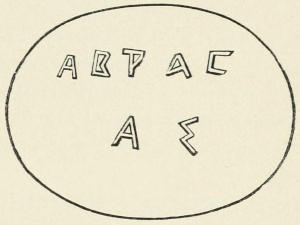
Fig. 21.—Abraxas-stone. (From De Wilde.)
The abraxas-stones are believed to have originated with the Basilidian Gnostics, a sect which Basilides, a Syrian by birth, who lived under Trajan and his successor, in the latter half of the first century, was instrumental in originating. Whether they were intended at first to be simply a means of recognition is an undecided question. Those given to magic adopted them largely. The opinion has been expressed that doubtless the greater part of the stones were made in the middle ages.[476]