CANNES
Reading edition
Recently the most extraordinary and unexpected adventure has befallen me, which I am anxious to preserve in the form of a Short Story.
It concerns a railway accident which occurred while I was travelling through France to the Riviera. I ought to have been on the crashing train and for some strange reason I was not. The reason is really strange and remains to this day unexplained. But I have devised a possible clue to the fantastic or psychical forces which were in play and which prevented me being immolated in the catastrophe. There will appear a climax if I tell my story rightly, but I am still waiting for the dénouement. Roughly, this is the outline. I was summoned to an aunt’s sick-bed at Cannes and had no time to book a berth in advance. I attempted to travel in the restaurant car of an express. Friends left me at the station. Witnesses in Paris knew that I was leaving that night and, if possible, by that train. They read of the train’s crash in the papers the next morning. My name was not in the casualty list simply because I was not travelling in the train. I had deliberately changed trains for a strange reason.
This is too bad for a start, for I have been very carefully trained in the Pelman school of literature, and have subscribed to an expensive course in the Finsbury School of Practical Journalism, and have had several Short Stories corrected by a doddering ex-member of Parliament, by the writer of social snips in a Methodist weekly, and an utterly futile and yellowish novelist whose very decadence has decayed. I should have remembered that it is necessary to give no hint of a Short Story’s end, if the attention of trained readers is to be kept, and that the catastrophe should be concealed till the practised palate of the epicurean magazine-taster is prepared to assimilate it. But now I have revealed the whole skeleton outline of my Story in one nutshell paragraph. It is too bad, for the whole fact and even the mystery, such as it is, leaks out of those first sentences, and I shall have to continue with Pelmanic padding to the obvious end. However, perhaps I shall get this Story into next year’s “Collection of the Worst Stories of the Twelve-month,” which I believe are industrially collected into an annual by two Chicago professors of belles-lettres and added to that invaluable transatlantic series “What Not To Read.”
But I have a Story to tell, and with the help of a little volume entitled “Short Story Writing for Profit,” by Michael Joseph, which has fallen into my hands, I shall essay to tell it. His entertaining little plan informs me that the theory of the Short Story may be likened to the shape of a triangle—a long base, one long side, and a short drop. I must keep this in mind, especially as my story conveys an illusion of the human triangle. Let me at least preserve that triangular form which is essential to the modern Short Story.
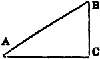
I therefore set out to draw A—C, Base of characters, as per plan, with A—B, Incidents leading to the Catastrophe, and C—B the Climax, with B for Catastrophe. I have a feeling that with such clear indications I cannot fail. My real difficulty is that I have to adapt a true story to the Procrustean bed of fiction. I learn I have got to provide a Title (done), an Opening (I am opening as I write), the Body of the Story, and the Catastrophe upon Climax, and if possible, but this is not essential, a dénouement.
The Opening is in the Gare de Lyon, which I reach about half-past seven on a Sunday night on my way to the Riviera. I am not travelling for pleasure, but in response to a summons to fetch my dear and favourite aunt, who has been very fashionably ill at Cannes in company with some of the best-known names in English Provincial Society. This year anybody who counts in Leeds would cease to count in Leeds had they not been numbered on a Riviera hotel register. The salons of Liverpool, the wit of Glasgow, and the beauty of Hull, Halifax and Huddersfield have been emptied along the Garden of the Riviera like a rich manure. Even poor old London, which since the war has been outmonied and outclassed by the manufacturing cities of the North, contributed its little quota of idle poor. My dear aunt went for her health, and I went because I am in her Will. I had got as far as the Gare de Lyon in my Story.
I do not feel like filling out A—C with characterisations of either my aunt or myself, so I will proceed to A—B (Incidents leading to the Catastrophe). The first incident lies in the fact that I can never pass through the Gare de Lyon without a very vivid thought passing through my mind. Thirty years ago (this dislocation of time is against all the Short Story rules, but it is essential), this aunt of mine stood in the Gare de Lyon and suddenly she saw a man running across the platform, followed by another. He had the misfortune to trip and fall, whereupon, to her horror, the other drew a revolver and shot him not once, but many times, until the police removed him and his victim. It was a crime of passion committed by a jealous husband on his wife’s lover. As everything had been done on all sides of the triangle, nobody had anything to say, and the drama was soon forgotten in the thousand and ten more dramatic incidents of the Paris phantasmagoria. But my aunt never forgot, and years later, when I was a small boy in Paris, she showed me the scene of the murder and recounted the details. It was the only murder she had ever seen, and the only one I had heard at first hand, so it remained in my mind as fresh as blood. Every time I crossed the Gare de Lyon, travelling South, it returned to my memory with renewed force. And though I was in a special hurry, and in a state of real agitation owing to the telegrams I had received from Cannes, I halted at the fatal spot and remembered, as it were throwing myself back in time and out of circumstantial focus. I enjoyed the curious feeling that possibly I was the only person alive who knew exactly what had happened there on that tragic day. It was part of my personal tradition.
This murder is an Incident, not the Catastrophe in my story, which I am still labouring to tell with such sanity and sincerity as my reader will allow me. Friends in Paris sent me in their car to catch the 8.10 Rapide. I had not reserved a sleeping place because the train accommodation was filled for weeks in advance. I gave a voluble porter ten francs, and explained that it was a case of necessity and that I must reach Cannes the next day, as my aunt was ill; that I was prepared to travel in the restaurant car the whole way, or even in the baggage van. I only carried hand luggage, and while the porter was making my arrangements I walked down the platform to loosen my leg joints before what promised to be a night of cramp. The porter rejoined me beaming, and assured me that he had arranged everything by himself, that my bag was in the restaurant and that I would find a seat in the corridor, when I suddenly noticed a passenger on the platform far more hurried and agitated than I was. She walked up the train, peering with quick movements of her neck into every carriage, but in vain. Then she remained standing at one of the wrought-iron pillars that sustain the roof, looking like the veritable picture of despair. The train was late going out (half an hour of delay, the porter told me), so I felt tempted to walk past her, and to my surprise found her large, glassy eyes fixed full upon mine. I continued ten yards and swung round. She was still there, and her eyes were still riveting mine. I passed her not twice but half a dozen times, and each time her eyes fixed, absorbed, hypnotised and terrified me. They were not the eyes of a woman, who queries and accosts men in streets and railway stations, the glittering and questingly plunderous eyes, nor the brilliantly attractive orbs of the adventuress. Nor were they the eyes of the widow and the mourner, those gushing fountains of violet salts and pathetic brine. Tragic they were and haunting, restless and insatiable, searchful and despairing. I felt quite unable to take my place in the train, and continued walking up and down the platform, and each time I received her eyes full into mine. It was naturally not for me to speak, but I gave her every chance, and emboldened by her piercing glance which shot pity, fear, pain, peril, I bent my head towards her until our eyes cannot have been more than six inches apart. Then I heard her saying simply, “Changez! il faut changer de train. Dites lui de changer de train.” I was so troubled that I could make no reply. I passed her once again, and she said again, “Il faut changer de train.” When I looked back she had disappeared, and the signal was being made for the train to start. But her eyes had not gone out of mine, and I could still know them anywhere if ever I saw them again. They were wonderful and wistful eyes, and a little terrible. They never blinked or flinched or flickered. But what struck me most, apart from their undeviating stare of agony and terror, was that they were perfectly dry—the dry stare of the dead. I felt their presence even more after their owner had disappeared into the rush and crush of the station. I no longer felt like a real person, but as though I were watching myself in a dream, and I did the absurd sort of things that one does in dreams. I obeyed her entreaty to change trains without questioning whether it was intended for me. I snatched my bag and threw myself upon my surprised porter. He thought I had decided not to travel at all, and could not understand me when I gave him another ten francs and asked him to find me another train, presumably in the same direction! There was a slow train in the parallel siding already crowded and almost overfilled. Before he had found me a fresh seat, the Rapide was passing out of the station. I turned and watched the slow, soundless egress of the train I should have occupied. I did feel a fool, but again the dream-sense overcame me, and I looked with a curious intense feeling into every face I could sight in the disappearing carriages. One man was looking out of the window. Was he the object of that woman’s wild search and agony? Another was preparing to undress. Groups were settling down for the night. The restaurant car was empty, but the white-capped chef was busy in his tiny kitchen. It all passed through my sense of vision like a phantom. The porter touched me on the shoulder and led me to the slow train. He treated me as one distracted but harmless. He placed me in a tight compartment with six others, and committed me to their charge. I remained sitting bolt upright for eighteen hours, past Dijon and Lyons; past Avignon, where the rose of dawn met us; past Arles to Marseilles, where our engine breasted the breeze of the Mediterranean and snorted with new breath into Toulon and along the Amethyst Coast to Cannes.
At Cannes I felt as though I were awaking from a dream. I struggled towards the hotel, where my convalescent aunt had been hanging irresolute between life and death, and was now sufficiently well to decide between two exquisite hats—one from Paris and another bought in Cannes. Fortunately a friend in need had nursed her through the crisis of pneumonia, and recovery was now a question of days. It was Martha MacArthur, one of the world’s delectables. At my aunt’s bedside I apologised for missing the Rapide and arriving so late. Martha started. “Missed it? Why, the Rapide crashed last night, with great loss of life!” As my aunt had just escaped from the jaws of germigerous death, it was perhaps not the moment to acquaint her with my even more astounding survival, but I felt an overwhelming desire to ask Martha why I was alive. Mr. Joseph, in his “Short Story Writing for Profit” remarks on page 118 that “certain names have a strong suggestion of character about them. Martha suggests the dutiful housewife; Dolly, Betty or Kitty the rather frivolous young lady.” According to the rules I should have never introduced the name of Martha into this Story, especially as Martha presented the very opposite of the dutiful housewife as she slung me in her Rolls-Royce through the narrow streets of Cannes, leaving perilously minute margins between her wheels and trembling human obstacles. But Martha is one of the protected. Her golf is Paradisal, her card play diabolical—I can speak from experience. On our way to the Casino at Cannes—which is the great caravanserai of the loose, losing and lost, I ventured at last to ask her why I was alive. She took it as a reflection on her driving! Before I could tell her my Story, we had entered the great Casino—which seems built of dissected strata of coloured ice-cream; with great plate-windows framing pictures of the Mediterranean, and electric chandeliers hanging over potted palm trees like bunches of horrible glassy dates—and under an enormous Chinese black and white lantern I unfolded my tale. It was so strange, telling a ghostly yarn in that heated atmosphere to Martha, who sat like a frond of Swiss edelweiss, cool and white and natural in that huge orchidaceous hot-house, where monstrous flowers of the Venus Fly Trap variety swayed to and fro in the scented air, seeking whom they might conveniently suck—those flowers to whom champagne and shampoo mean more than the daily dews and brushing breeze of heaven. For a moment I imbibed my surroundings. I felt brought down to the real earth; and a drink-soaked and perfumed earth. There was nothing ghostly or dreamy within those walls. I told my weird yarn against a strongly contrasting background.
Martha said nothing beyond tossing her multiwaved head of newly-hatched canary fluff into the air. I asked her again, at the end as at the beginning of my Story, why I was alive. Martha accepted and considered my story. Then she said that I must have been attuned to see what was probably invisible to others in the station. Had I ever seen the face in the vision before? she asked. No! Did it seek to attract any beside myself? I could not say. Possibly, in spite of the individual fascination it concentrated on myself. Did I look for the face on the train I took? Yes, I searched the train at Marseilles and again at Cannes, but I had seen nothing. Martha’s little oval face became Buddhistic with wisdom, and she said: “There must be a reason. There must be a hidden law. Rhythm is the secret law of life. My golf is rhythm. My dancing is rhythm. That’s why I won’t dance with you. My card play is rhythm. That’s why you can’t play with me. My Rolls-Royce is rhythm.” I shivered at this particular memory. “You must have been in spirit-rhythm with some soul trying to communicate with another passenger, perhaps the wife of one of those killed or injured, or the mother. A psychological communication cord was pulled. That was all.”
I felt that I had been very lucky in noticing that cord being pulled. I grew calmer and less exalted. The tables in the Casino were filling with visitors. All the unmentionable and all the most-mentioned people were crowding and jostling together. An Indian Prince entered with his white wife, followed by her white lover, which looked like one of Buchanan’s artistic “Black and White” Whisky advertisements. A lady suddenly became lit with the vapours of wine, and began clapping a broad-backed English Peer between his startled shoulders. Almost at the next table to Martha was Monsieur Lazarus (of Paris). It was almost a Scriptural touch. All the lights of Leeds and the bloods of Birmingham were marshalling in that delightful atmosphere where baccarat is not a sin and Sin itself is but a baccarat. English people had thrown off their national hypocrisy for once. The doors revolved, and I noticed Mrs. Grundy herself enter in company with a courtesan to whom she had kindly given a lift, and who was gracefully lighting a cigarette for her in return. They were all there—the demi-mondaines, the half-world watching for gentlemen half-seas over to rifle. They were of all sizes, from the Brighton flapper to the Double Dutch. But they gave Leeds and Birmingham something appreciable to see and speak about and even to handle.
We rose and wandered into the inner gambling hall, where the tables were arranged according to prices. At the high table, roped and guarded by attendants, some of the great intellects of Europe played baccarat for huge stakes—thousands and tens of thousands of francs. The shoe of cards was passing. There was an English Marchioness looking like the last rose of last summer as the French bank-notes dropped like faded pink petals from her fingers. There was a gorgeously-dressed pickpocket, who still spied sentimentally for international service and patriotically relieved stray Englishmen of their francs. There was an exiled King playing for his hotel bill. There was a Bond Street jeweller fleecing the clients he overcharged at home. There was a green Egyptian Prince trying furtively to pick up a little cash with one hand and royal honours with the other. He was financed by an American Lady who liked sharing in the pseudo-curtsies he extracted from the gullible. There was a transatlantic widow in hooded black, whose face of suppressed fury when she lost money made the humanitarian glad that there were no husbands left to her reproach. And there was a beautiful Italian Countess, whose favours inclined to the most substantial winner at the tables. She at least must have had a human heart. But it takes women with hearts and men with intellect to play baccarat. One felt sorry that the love and council-chambers of the world were even temporarily deprived of so much. The shoe of cards was passing, and the notes were passing into the maw of the Casino, the little insatiable slit, which takes a tithe on all gains and on all losses. I was fascinated watching the croupiers, men like dead, dissected fish, whisk the cards and bank-notes about with their long, thin shovels of pearwood, which moved as quickly as the dorsal fins of sharks basking on a sea of green baize. And the evening was passing into night, and night into dawn.
Martha continued to explain her Gospel of Rhythm. Luck at the tables was rhythm, she said, and when one was out of luck, it meant that one was simply out of tune or accord with some subtlety of rhythm. My escape from the doomed train had been due to some rhythm into which I had strayed with the receptive note uppermost. Luck and rhythm were the same things. Then she asked me what I had been thinking of when I came to the Gare de Lyon. And I suddenly remembered the murder that always crossed my mind there and there only. I told her the story of the murder that my aunt had once seen, and had passed so vividly into my mind. “Exactly,” said Martha. “That accounts for it all. You must have seen the wife trying to warn her lover that her husband was on his tracks, and the astral reflection of her agony to get him to change trains was projected into your mind rhythmically.”
It sounded a good solution. I could imagine it all: the secret visit and departure; the discovery by the husband of the hour of the lover’s train; his pursuit with a revolver, while the agonised wife made an equally desperate attempt to warn the other first; her failure to warn her lover; the husband’s successful search and then the drama of blood. I suppose I had put myself into the mood to see her unhappy and disembodied soul, which is for ever doomed to scour that platform on a vain quest. Her words had accorded miraculously with my fate. Luck and rhythm, then, were the same. And that’s my Story, though I have not kept the rules of short story telling. What I have written down is true in the essentials. If you want to know how true it is exactly, ask Martha MacArthur!