Suggested Reading
Reading edition
Alexander, Taylor R. and George S. Fichter, Ecology (a Golden guide). Western Publishing Co., Inc., Racine, Wis. 1973.
Alt, David D. and Donald W. Hyndman, Rocks, Ice and Water, the Geology of Waterton-Glacier Park. Mountain Press Publishing Co., Missoula, Mont. 1973.
Baker, William, et. al., Wildlife of the Northern Rocky Mountains. Naturegraph Co., Healdsburg, Calif. 1961.
Borland, Hal, The History of Wildlife in America. National Wildlife Federation, Washington, D.C. 1975.
Brooks, Maurice, The Life of The Mountains. McGraw-Hill, New York. 1967.
Costello, David F., The Mountain World. Thomas Y. Crowell Co., New York. 1975.
Craighead, John J., et. al., A Field Guide to Rocky Mountain Wildflowers. Houghton Mifflin Co., Boston. 1963.
Dobie, J. Frank, The Voice of the Coyote. Little, Brown and Co., Boston. 1950.
Farb, Peter, Face of North America. Harper and Row, New York. 1963.
Gildart, Robert C., Meet the Mammals of Waterton-Glacier. Glacier Natural History Association, Inc. Thomas Printing, Inc., Kalispell, Mont. 1975.
McCormick, Jack, The Life of the Forest. McGraw-Hill, New York. 1966.
Milne, Lorus and Margery Milne, The Balance of Nature. Alfred A. Knopf, Inc., New York. 1960.
Nelson, Alan G., Wildflowers of Glacier National Park. Nelson, Great Falls, Mont. 1970.
Peattie, Donald Culross, A Natural History of Western Trees. Bonanza Books, New York. 1953.
Ruhle, George C., Roads and Trails of Waterton-Glacier Parks. John W. Forney, Minneapolis, Minn. 1972.
Shea, David S., Animal Tracks of Glacier National Park. Special Bulletin No. 11, Glacier Natural History Association, Inc., West Glacier, Mont., 1969.
Storer, John H., The Web of Life. Devin-Adair Co., Old Greenwich, Conn. 1953.
Zwinger, Ann H. and Beatrice E. Willard, Land Above the Trees. Harper and Row, New York. 1972.
135
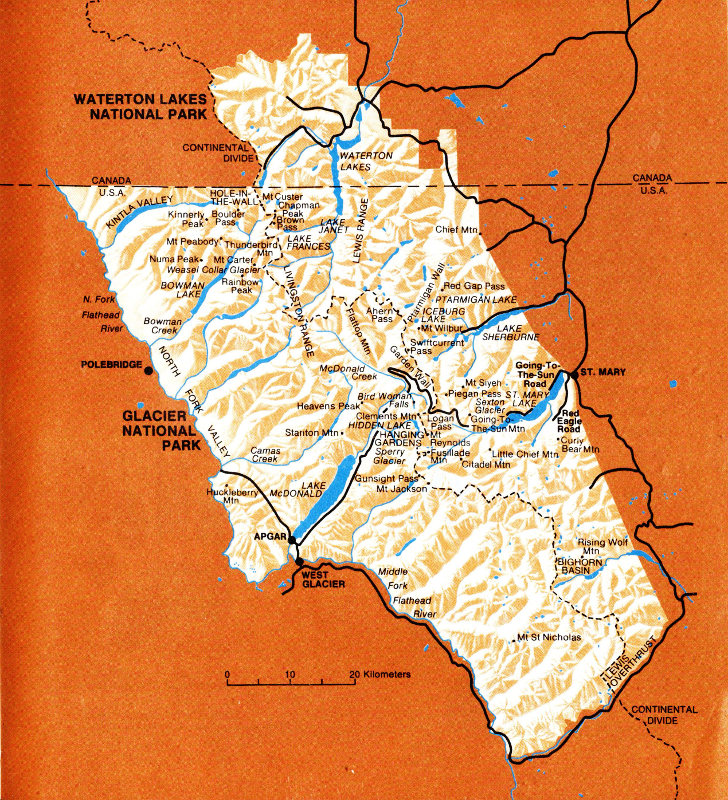
WATERTON LAKES NATIONAL PARK—GLACIER NATIONAL PARK
High-resolution Map
136
Using Metrics
As we go to press with this book, the United States is in the early stages of conversion to the metric system of measurement, and though we urge you to think metric—for most of the world does—we provide this table to help you understand the measurements given in the book.
To convert from to multiply by
Millimeters Sixteenth-inches 0.6301
Centimeters Inches 0.3937
Meters Feet 3.2808
Kilometers Miles 0.6214
Hectares Acres 2.4711
Hectares Square miles 0.00386
Grams Troy Ounces 0.0322
Kilograms Pounds 2.2046
Degrees—Celsius Degrees—Fahrenheit 1.8, and add 32
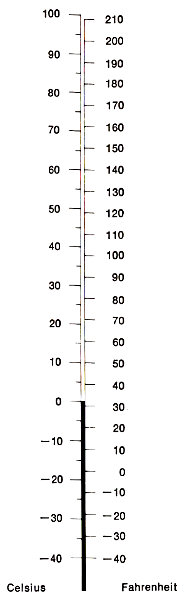
Temperature Conversion Chart

Length Conversion Chart
137
Drawings from David S. Shea, Animal Tracks of Glacier National Park
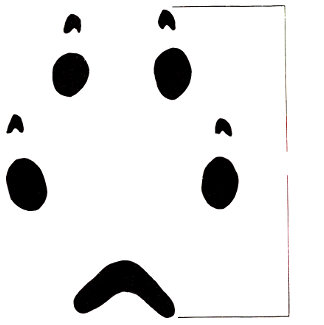
red fox, hind foot, in mud 53 mm.
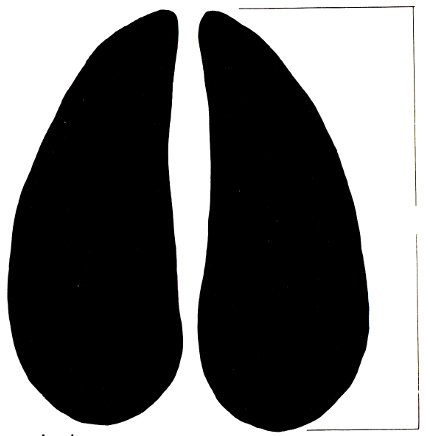
mule deer, adult buck, in snow 72 mm.
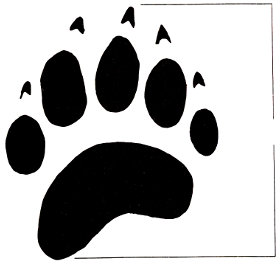
badger, left front foot, in mud 43 mm.
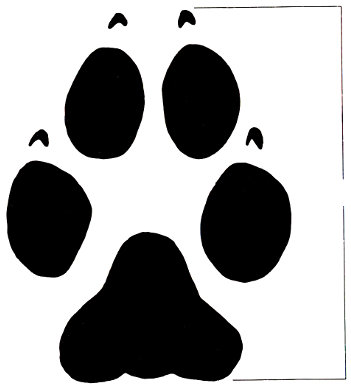
coyote, hind foot, in snow 63 mm.
138
About the Author
Greg Beaumont’s interest in Glacier National Park dates from 1963, when he was a summer employee at Lake McDonald Lodge. In 1966 he and his wife were fire-control lookouts on Numa Ridge in the Bowman Valley. Now a free-lance writer-photographer, he lives with his family in Lincoln, Nebraska.
139
National Park Service U.S. Department of the Interior
As the Nation’s principal conservation agency, the Department of the Interior has responsibility for most of our nationally owned public lands and natural resources. This includes fostering the wisest use of our land and water resources, protecting our fish and wildlife, preserving the environmental and cultural values of our national parks and historical places, and providing for the enjoyment of life through outdoor recreation. The Department assesses our energy and mineral resources and works to assure that their development is in the best interests of all our people. The Department also has a major responsibility for American Indian reservation communities and for people who live in Island Territories under U.S. administration.