Aunt Susanna's Thanksgiving Dinner.ToC
Reading edition
Aunt Susanna's Thanksgiving Dinner.ToC
"Here's Aunt Susanna, girls," said Laura who was sitting by the north window—nothing but north light does for Laura who is the artist of our talented family.
Each of us has a little pet new-fledged talent which we are faithfully cultivating in the hope that it will amount to something and soar highly some day. But it is difficult to cultivate four talents on our tiny income. If Laura wasn't such a good manager we never could do it.
Laura's words were a signal for Kate to hang up her violin and for me to push my pen and portfolio out of sight. Laura had hidden her brushes and water colors as she spoke. Only Margaret continued to bend serenely over her Latin grammar. Aunt Susanna frowns on musical and literary and artistic ambitions but she accords a faint approval to Margaret's desire for an education. A college course, with a tangible diploma at the end, and a sensible pedagogic aspiration is something Aunt Susanna can understand when she tries hard. But she cannot understand messing with paints, fiddling, or scribbling, and she has only unmeasured contempt for messers, fiddlers, and scribblers. Time was when we had paid no attention to Aunt Susanna's views on these points; but ever since she had, on one incautious day when she was in high good humor, dropped a pale, anemic little hint that she might send Margaret to college if she were a good girl we had been bending all our energies towards securing Aunt Susanna's approval. It was not enough that Aunt Susanna should approve of Margaret; she must approve of the whole four of us or she would not help Margaret. That is Aunt Susanna's way. Of late we had been growing a little discouraged. Aunt Susanna had recently read a magazine article which stated that the higher education of women was ruining our country and that a woman who was a B.A. couldn't, in the very nature of things, ever be a housewifely, cookly creature. Consequently, Margaret's chances looked a little foggy; but we hadn't quite given up hope. A very little thing might sway Aunt Susanna one way or the other, so that we walked very softly and tried to mingle serpents' wisdom and doves' harmlessness in practical portions.
When Aunt Susanna came in Laura was crocheting, Kate was sewing, and I was poring over a recipe book. That was not deception at all, since we did all these things frequently—much more frequently, in fact, than we painted or fiddled or wrote. But Aunt Susanna would never believe it. Nor did she believe it now.
She threw back her lovely new sealskin cape, looked around the sitting-room and then smiled—a truly Aunt Susannian smile.
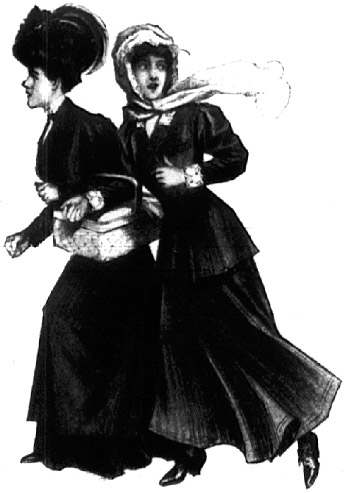
"What a pity you forgot to wipe that smudge of paint off your nose, Laura," she said sarcastically. "You don't seem to get on very fast with your lace. How long is it since you began it? Over three months, isn't it?"
"This is the third piece of the same pattern I've done in three months, Aunt Susanna," said Laura presently. Laura is an old duck. She never gets cross and snaps back. I do; and it's so hard not to with Aunt Susanna sometimes. But I generally manage it for I'd do anything for Margaret. Laura did not tell Aunt Susanna that she sold her lace at the Women's Exchange in town and made enough to buy her new hats. She makes enough out of her water colors to dress herself.
Aunt Susanna took a second breath and started in again.
"I notice your violin hasn't quite as much dust on it as the rest of the things in this room, Kate. It's a pity you stopped playing just as I came in. I don't enjoy fiddling much but I'd prefer it to seeing anyone using a needle who isn't accustomed to it."
Kate is really a most dainty needlewoman and does all the fine sewing in our family. She colored and said nothing—that being the highest pitch of virtue to which our Katie, like myself, can attain.
"And there's Margaret ruining her eyes over books," went on Aunt Susanna severely. "Will you kindly tell me, Margaret Thorne, what good you ever expect Latin to do you?"
"Well, you see, Aunt Susanna," said Margaret gently—Magsie and Laura are birds of a feather—"I want to be a teacher if I can manage to get through, and I shall need Latin for that."
All the girls except me had now got their accustomed rap, but I knew better than to hope I should escape.
"So you're reading a recipe book, Agnes? Well, that's better than poring over a novel. I'm afraid you haven't been at it very long though. People generally don't read recipes upside down—and besides, you didn't quite cover up your portfolio. I see a corner of it sticking out. Was genius burning before I came in? It's too bad if I quenched the flame."
"A cookery book isn't such a novelty to me as you seem to think, Aunt Susanna," I said, as meekly as it was possible for me. "Why I'm a real good cook—'if I do say it as hadn't orter.'"
I am, too.
"Well, I'm glad to hear it," said Aunt Susanna skeptically, "because that has to do with my errand her to-day. I'm in a peck of troubles. Firstly, Miranda Mary's mother has had to go and get sick and Miranda Mary must go home to wait on her. Secondly, I've just had a telegram from my sister-in-law who has been ordered west for her health, and I'll have to leave on to-night's train to see her before she goes. I can't get back until the noon train Thursday, and that is Thanksgiving, and I've invited Mr. and Mrs. Gilbert to dinner that day. They'll come on the same train. I'm dreadfully worried. There doesn't seem to be anything I can do except get on of you girls to go up to the Pinery Thursday morning and cook the dinner for us. Do you think you can manage it?"
We all felt rather dismayed, and nobody volunteered with a rush. But as I had just boasted that I could cook it was plainly my duty to step into the breach, and I did it with fear and trembling.
"I'll go, Aunt Susanna," I said.
"And I'll help you," said Kate.
"Well, I suppose I'll have to try you," said Aunt Susanna with the air of a woman determined to make the best of a bad business. "Here is the key of the kitchen door. You'll find everything in the pantry, turkey and all. The mince pies are all ready made so you'll only have to warm them up. I want dinner sharp at twelve for the train is due at 11:50. Mr. and Mrs. Gilbert are very particular and I do hope you will have things right. Oh, if I could only be home myself! Why will people get sick at such inconvenient times?"
"Don't worry, Aunt Susanna," I said comfortingly. "Kate and I will have your Thanksgiving dinner ready for you in tiptop style."
"Well I'm sure I hope so. Don't get to mooning over a story, Agnes. I'll lock the library up and fortunately there are no fiddles at the Pinery. Above all, don't let any of the McGinnises in. They'll be sure to be prowling around when I'm not home. Don't give that dog of theirs any scraps either. That is Miranda Mary's one fault. She will feed that dog in spite of all I can do and I can't walk out of my own back door without falling over him."
We promise to eschew the McGinnises and all their works, including the dog, and when Aunt Susanna had gone we looked at each other with mingled hope and fear.
"Girls, this is the chance of your lives," said Laura. "If you can only please Aunt Susanna with this dinner it will convince her that you are good cooks in spite of your nefarious bent for music and literature. I consider the illness of Miranda Mary's mother a Providential interposition—that is, if she isn't too sick."
"It's all very well for you to be pleased, Lolla," I said dolefully. "But I don't feel jubilant over the prospect at all. Something will probably go wrong. And then there's our own nice little Thanksgiving celebration we've planned, and pinched and economized for weeks to provide. That is half spoiled now."
"Oh, what is that compared to Margaret's chance of going to college?" exclaimed Kate. "Cheer up, Aggie. You know we can cook. I feel that it is now or never with Aunt Susanna."
I cheered up accordingly. We are not given to pessimism which is fortunate. Ever since father died four years ago we have struggled on here, content to give up a good deal just to keep our home and be together. This little gray house—oh, how we do love it and its apple trees—is ours and we have, as aforesaid, a tiny income and our ambitions; not very big ambitions but big enough to give zest to our lives and hope to the future. We've been very happy as a rule. Aunt Susanna has a big house and lots of money but she isn't as happy as we are. She nags us a good deal—just as she used to nag father—but we don't mind it very much after all. Indeed, I sometimes suspect that we really like Aunt Susanna tremendously if she'd only leave us alone long enough to find it out.
Thursday morning was an ideal Thanksgiving morning—bright, crisp and sparkling. There had been a white frost in the night, and the orchard and the white birch wood behind it looked like fairyland. We were all up early. None of us had slept well, and both Kate and I had had the most fearful dreams of spoiling Aunt Susanna's Thanksgiving dinner.
"Never mind, dreams always go by contraries, you know," said Laura cheerfully. "You'd better go up to the Pinery early and get the fires on, for the house will be cold. Remember the McGinnises and the dog. Weigh the turkey so that you'll know exactly how long to cook it. Put the pies in the oven in time to get piping hot—lukewarm mince pies are an abomination. Be sure—"
"Laura, don't confuse us with any more cautions," I groaned, "or we shall get hopelessly fuddled. Come on, Kate, before she has time to."
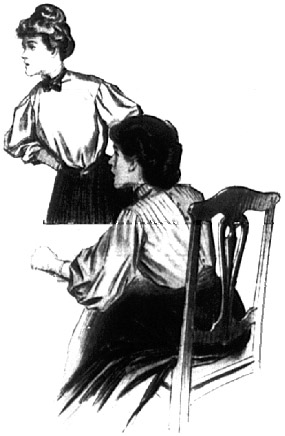
It wasn't very far up to the Pinery—just ten minutes' walk, and such a delightful walk on that delightful morning. We went through the orchard and then through the white birch wood where the loveliness of the frosted boughs awed us. Beyond that there was a lane between ranks of young, balsamy, white-misted firs and then an open pasture field, sere and crispy. Just across it was the Pinery, a lovely old house with dormer windows in the roof, surrounded by pines that were dark and glorious against the silvery morning sky.
The McGinnis dog was sitting on the back-door steps when we arrived. He wagged his tail ingratiatingly, but we ruthlessly pushed him off, went in and shut the door in his face. All the little McGinnises were sitting in a row on their fence, and they whooped derisively. The McGinnis manners are not those which appertain to the caste of Vere de Vere; but we rather like the urchins—there are eight of them—and we would probably have gone over to talk to them if we had not had the fear of Aunt Susanna before our eyes.
We kindled the fires, weighed the turkey, put it in the oven and prepared the vegetables. Then we set the dining-room table and decorated it with Aunt Susanna's potted ferns and dishes of lovely red apples. Everything went so smoothly that we soon forgot to be nervous. When the turkey was done, we took it out, set it on the back of the range to keep warm and put the mince pies in. The potatoes, cabbage and turnips were bubbling away cheerfully, and everything was going as merrily as a marriage bell. Then, all at once, things happened.
In an evil hour we went to the yard window and looked out. We saw a quiet scene. The McGinnis dog was still sitting on his haunches by the steps, just as he had been sitting all the morning. Down in the McGinnis yard everything wore an unusually peaceful aspect. Only one McGinnis was in sight—Tony, aged eight, who was perched up on the edge of the well box, swinging his legs and singing at the top of his melodious Irish voice. All at once, just as we were looking at him, Tony went over backward and apparently tumbled head foremost down his father's well.
Kate and I screamed simultaneously. We tore across the kitchen, flung open the door, plunged down over Aunt Susanna's yard, scrambled over the fence and flew to the well. Just as we reached it, Tony's red head appeared as he climbed serenely out over the box. I don't know whether I felt more relieved or furious. He had merely fallen on the blank guard inside the box: and there are times when I am tempted to think he fell on purpose because he saw Kate and me looking out at the window. At least he didn't seem at all frightened, and grinned most impishly at us.
Kate and I turned on our heels and marched back in as dignified a manner as was possible under the circumstances. Half way up Aunt Susanna's yard we forgot dignity and broke into a run. We had left the door open and the McGinnis dog had disappeared.
Never shall I forget the sight we saw or the smell we smelled when we burst into that kitchen. There on the floor was the McGinnis dog and what was left of Aunt Susanna's Thanksgiving turkey. As for the smell, imagine a commingled odor of scorching turnips and burning mince pies, and you have it.
The dog fled out with a guilty yelp. I groaned and snatched the turnips off. Kate threw open the oven door and dragged out the pies. Pies and turnips were ruined as irretrievably as the turkey.
"Oh, what shall we do?" I cried miserably. I knew Margaret's chance of college was gone forever.
"Do!" Kate was superb. She didn't lose her wits for a second. "We'll go home and borrow the girls' dinner. Quick—there's just ten minutes before train time. Throw those pies and turnips into this basket—the turkey too—we'll carry them with us to hide them."
I might not be able to evolve an idea like that on the spur of the moment, but I can at least act up to it when it is presented. Without a moment's delay we shut the door and ran. As we went I saw the McGinnis dog licking his chops over in their yard. I have been ashamed ever since of my feelings toward that dog. They were murderous. Fortunately I had no time to indulge them.
It is ten minutes walk from the Pinery to our house, but you can run it in five. Kate and I burst into the kitchen just as Laura and Margaret were sitting down to dinner. We had neither time nor breath for explanations. Without a word I grasped the turkey platter and the turnip tureen. Kate caught one hot mince pie from the oven and whisked a cold one out of the pantry.
"We've—got—to have—them," was all she said.
I've always said that Laura and Magsie would rise to any occasion. They saw us carry their Thanksgiving dinner off under their very eyes and they never interfered by word or motion. They didn't even worry us with questions. They realized that something desperate had happened and that the emergency called for deed not words.
"Aggie," gasped Kate behind me as we tore through the birch wood, "the border—of these pies—is crimped—differently—from Aunt Susanna's."
"She—won't know—the difference," I panted. "Miranda—Mary—crimps them."
We got back to the Pinery just as the train whistle blew. We had ten minutes to transfer turkey and turnips to Aunt Susanna's dishes, hide our own, air the kitchen, and get back our breath. We accomplished it. When Aunt Susanna and her guests came we were prepared for them: we were calm—outwardly—and the second mince pie was getting hot in the oven. It was ready by the time it was needed. Fortunately our turkey was the same size as Aunt Susanna's, and Laura had cooked a double supply of turnips, intending to warm them up the next day. Still, all things considered, Kate and I didn't enjoy that dinner much. We kept thinking of poor Laura and Magsie at home, dining off potatoes on Thanksgiving!
But at least Aunt Susanna was satisfied. When Kate and I were washing the dishes she came out quite beamingly.
"Well, my dears, I must admit that you made a very good job of the dinner, indeed. The turkey was done to perfection. As for the mince pies—well, of course Miranda Mary made them, but she must have had extra good luck with them, for they were excellent and heated to just the right degree. You didn't give anything to the McGinnis dog, I hope?"
"No, we didn't give him anything," said Kate.
Aunt Susanna did not notice the emphasis.
When we had finished the dishes we smuggled our platter and tureen out of the house and went home. Laura and Margaret were busy painting and studying and were just as sweet-tempered as if we hadn't robbed them of their dinner. But we had to tell them the whole story before we even took off our hats.
"There is a special Providence for children and idiots," said Laura gently. We didn't ask her whether she meant us or Tony McGinnis or both. There are some things better left in obscurity. I'd have probably said something much sharper than that if anybody had made off with my Thanksgiving turkey so unceremoniously.
Aunt Susanna came down the next day and told Margaret that she would send her to college. Also she commissioned Laura to paint her a water-color for her dining-room and said she'd pay her five dollars for it.
Kate and I were rather left out in the cold in this distribution of favors, but when you come to reflect that Laura and Magsie had really cooked that dinner, it was only just.
Anyway, Aunt Susanna has never since insinuated that we can't cook, and that is as much as we deserve.
By Grace of Julius CaesarToC
Melissa sent word on Monday evening that she thought we had better go round with the subscription list for cushioning the church pews on Tuesday. I sent back word that I thought we had better go on Thursday. I had no particular objection to Tuesday, but Melissa is rather fond of settling things without consulting anyone else, and I don't believe in always letting her have her own way. Melissa is my cousin and we have always been good friends, and I am really very fond of her; but there's no sense in lying down and letting yourself be walked over. We finally compromised on Wednesday.
I always have a feeling of dread when I hear of any new church-project for which money will be needed, because I know perfectly well that Melissa and I will be sent round to collect for it. People say we seem to be able to get more than anybody else; and they appear to think that because Melissa is an unencumbered old maid, and I am an unencumbered widow, we can spare the time without any inconvenience to ourselves. Well, we have been canvassing for building funds, and socials, and suppers for years, but it is needed now; at least, I have had enough of it, and I should think Melissa has, too.
We started out bright and early on Wednesday morning, for Jersey Cove is a big place and we knew we should need the whole day. We had to walk because neither of us owned a horse, and anyway it's more nuisance getting out to open and shut gates than it is worth while. It was a lovely day then, though promising to be hot, and our hearts were as light as could be expected, considering the disagreeable expedition we were on.
I was waiting at my gate for Melissa when she came, and she looked me over with wonder and disapproval. I could see she thought I was a fool to dress up in my second best flowered muslin and my very best hat with the pale pink roses in it to walk about in the heat and dust; but I wasn't. All my experience in canvassing goes to show that the better dressed and better looking you are the more money you'll get—that is, when it's the men you have to tackle, as in this case. If it had been the women, however, I would have put on the oldest and ugliest things, consistent with decency, I had. This was what Melissa had done, as it was, and she did look fearfully prim and dowdy, except for her front hair, which was as soft and fluffy and elaborate as usual. I never could understand how Melissa always got it arranged so beautifully.
Nothing particular happened the first part of the day. Some few growled and wouldn't subscribe anything, but on the whole we did pretty well. If it had been a missionary subscription we should have fared worse; but when it was something touching their own comfort, like cushioning the pews, they came down handsomely. We reached Daniel Wilson's by noon, and had to have dinner there. We didn't eat much, although we were hungry enough—Mary Wilson's cooking is a by-word in Jersey Cove. No wonder Daniel is dyspeptic; but dyspeptic or not, he gave us a big subscription for our cushions and told us we looked younger than ever. Daniel is always very complimentary, and they say Mary is jealous.
When we left the Wilson's Melissa said, with an air of a woman nerving herself to a disagreeable duty:
"I suppose we might as well go to Isaac Appleby's now and get it over."
I agreed with her. I had been dreading that call all day. It isn't a very pleasant thing to go to a man you have recently refused to marry and ask him for money; and Melissa and I were both in that predicament.
Isaac was a well-to-do old bachelor who had never had any notion of getting married until his sister died in the winter. And then, as soon as the spring planting was over, he began to look round for a wife. He came to me first and I said "No" good and hard. I liked Isaac well enough; but I was snug and comfortable, and didn't feel like pulling up my roots and moving into another lot; besides, Isaac's courting seemed to me a shade too business-like. I can't get along without a little romance; it's my nature.
Isaac was disappointed and said so, but intimated that it wasn't crushing and that the next best would do very well. The next best was Melissa, and he proposed to her after the decent interval of a fortnight. Melissa also refused him. I admit I was surprised at this, for I knew Melissa was rather anxious to marry; but she has always been down on Isaac Appleby, from principle, because of a family feud on her mother's side; besides, an old beau of hers, a widower at Kingsbridge, was just beginning to take notice again, and I suspected Melissa had hopes concerning him. Finally, I imagine Melissa did not fancy being second choice.
Whatever her reasons were, she refused poor Isaac, and that finished his matrimonial prospects as far as Jersey Cove was concerned, for there wasn't another eligible woman in it—that is, for a man of Isaac's age. I was the only widow, and the other old maids besides Melissa were all hopelessly old-maiden.
This was all three months ago, and Isaac had been keeping house for himself ever since. Nobody knew much about how he got along, for the Appleby house is half a mile from anywhere, down near the shore at the end of a long lane—the lonesomest place, as I did not fail to remember when I was considering Isaac's offer.
"I heard Jarvis Aldrich say Isaac had got a dog lately," said Melissa, when we finally came in sight of the house—a handsome new one, by the way, put up only ten years ago. "Jarvis said it was an imported breed. I do hope it isn't cross."
I have a mortal horror of dogs, and I followed Melissa into the big farmyard with fear and trembling. We were halfway across the yard when Melissa shrieked:
"Anne, there's the dog!"
There was the dog; and the trouble was that he didn't stay there, but came right down the slope at a steady, business-like trot. He was a bull-dog and big enough to bite a body clean in two, and he was the ugliest thing in dogs I had ever seen.
Melissa and I both lost our heads. We screamed, dropped our parasols, and ran instinctively to the only refuge that was in sight—a ladder leaning against the old Appleby house. I am forty-five and something more than plump, so that climbing ladders is not my favorite form of exercise. But I went up that one with the agility and grace of sixteen. Melissa followed me, and we found ourselves on the roof—fortunately it was a flat one—panting and gasping, but safe, unless that diabolical dog could climb a ladder.
I crept cautiously to the edge and peered over. The beast was sitting on his haunches at the foot of the ladder, and it was quite evident he was not short on time. The gleam in his eye seemed to say:
"I've got you two unprincipled subscription hunters beautifully treed and it's treed you're going to stay. That is what I call satisfying."
I reported the state of the case to Melissa.
"What shall we do?" I asked.
"Do?" said Melissa, snappishly. "Why, stay here till Isaac Appleby comes out and takes that brute away? What else can we do?"
"What if he isn't at home?" I suggested.
"We'll stay here till he comes home. Oh, this is a nice predicament. This is what comes of cushioning churches!"
"It might be worse," I said comfortingly. "Suppose the roof hadn't been flat?"
"Call Isaac," said Melissa shortly.
I didn't fancy calling Isaac, but call him I did, and when that failed to bring him Melissa condescended to call, too; but scream as we might, no Isaac appeared, and that dog sat there and smiled internally.
"It's no use," said Melissa sulkily at last. "Isaac Appleby is dead or away."
Half an hour passed; it seemed as long as a day. The sun just boiled down on that roof and we were nearly melted. We were dreadfully thirsty, and the heat made our heads ache, and I could see my muslin dress fading before my very eyes. As for the roses on my best hat—but that was too harrowing to think about.
Then we saw a welcome sight—Isaac Appleby coming through the yard with a hoe over his shoulder. He had probably been working in his field at the back of the house. I never thought I should have been so glad to see him.
"Isaac, oh, Isaac!" I called joyfully, leaning over as far as I dared.
Isaac looked up in amazement at me and Melissa craning our necks over the edge of the roof. Then he saw the dog and took in the situation. The creature actually grinned.
"Won't you call off your dog and let us get down, Isaac?" I said pleadingly.
Isaac stood and reflected for a moment or two. Then he came slowly forward and, before we realized what he was going to do, he took that ladder down and laid it on the ground.
"Isaac Appleby, what do you mean?" demanded Melissa wrathfully.
Isaac folded his arms and looked up. It would be hard to say which face was the more determined, his or the dog's. But Isaac had the advantage in point of looks, I will say that for him.
"I mean that you two women will stay up on that roof until one of you agrees to marry me," said Isaac solemnly.
I gasped.
"Isaac Appleby, you can't be in earnest?" I cried incredulously. "You couldn't be so mean?"
"I am in earnest. I want a wife, and I am going to have one. You two will stay up there, and Julius Caesar here will watch you until one of you makes up her mind to take me. You can settle it between yourselves, and let me know when you have come to a decision."
And with that Isaac walked jauntily into his new house.
"The man can't mean it!" said Melissa. "He is trying to play a joke on us."
"He does mean it," I said gloomily. "An Appleby never says anything he doesn't mean. He will keep us here until one of us consents to marry him."
"It won't be me, then," said Melissa in a calm sort of rage. "I won't marry him if I have to sit on this roof for the rest of my life. You can take him. It's really you he wants, anyway; he asked you first."
I always knew that rankled with Melissa.
I thought the situation over before I said anything more. We certainly couldn't get off that roof, and if we could, there was Julius Caesar. The place was out of sight of every other house in Jersey Cove, and nobody might come near it for a week. To be sure, when Melissa and I didn't turn up the Covites might get out and search for us; but that wouldn't be for two or three days anyhow.
Melissa had turned her back on me and was sitting with her elbows propped up on her knees, looking gloomily out to sea. I was afraid I couldn't coax her into marrying Isaac. As for me, I hadn't any real objection to marrying him, after all, for if he was short of romance he was good-natured and has a fat bank account; but I hated to be driven into it that way.
"You'd better take him, Melissa," I said entreatingly. "I've had one husband and that is enough."
"More than enough for me, thank you," said Melissa sarcastically.
"Isaac is a fine man and has a lovely house; and you aren't sure the Kingsbridge man really means anything," I went on.
"I would rather," said Melissa, with the same awful calmness, "jump down from this roof and break my neck, or be devoured piecemeal by that fiend down there than marry Isaac Appleby."
It didn't seem worth while to say anything more after that. We sat there in stony silence and the time dragged by. I was hot, hungry, thirsty, cross; and besides, I felt that I was in a ridiculous position, which was worse than all the rest. We could see Isaac sitting in the shade of one of his apple trees in the front orchard comfortably reading a newspaper. I think if he hadn't aggravated me by doing that I'd have given in sooner. But as it was, I was determined to be as stubborn as everybody else. We were four obstinate creatures—Isaac and Melissa and Julius Caesar and I.
At four o'clock Isaac got up and went into the house; in a few minutes he came out again with a basket in one hand and a ball of cord in the other.
"I don't intend to starve you, of course, ladies," he said politely, "I will throw this ball up to you and you can then draw up the basket."
I caught the ball, for Melissa never turned her head. I would have preferred to be scornful, too, and reject the food altogether; but I was so dreadfully thirsty that I put my pride in my pocket and hauled the basket up. Besides, I thought it might enable us to hold out until some loophole of escape presented itself.
Isaac went back into the house and I unpacked the basket. There was a bottle of milk, some bread and butter, and a pie. Melissa wouldn't take a morsel of the food, but she was so thirsty she had to take a drink of milk.
She tried to lift her veil—and something caught; Melissa gave it a savage twitch, and off came veil and hat—and all her front hair!
You never saw such a sight. I'd always suspected Melissa wore a false front, but I'd never had any proof before.
Melissa pinned on her hair again and put on her hat and drank the milk, all without a word; but she was purple. I felt sorry for her.
And I felt sorry for Isaac when I tried to eat that bread. It was sour and dreadful. As for the pie, it was hopeless. I tasted it, and then threw it down to Julius Caesar. Julius Caesar, not being over particular, ate it up. I thought perhaps it would kill him, for anything might come of eating such a concoction. That pie was a strong argument for Isaac. I thought a man who had to live on such cookery did indeed need a wife and might be pardoned for taking desperate measures to get one. I was dreadfully tired of broiling on the roof anyhow.
But it was the thunderstorm that decided me. When I saw it coming up, black and quick, from the northwest, I gave in at once. I had endured a good deal and was prepared to endure more; but I had paid ten dollars for my hat and I was not going to have it ruined by a thunderstorm. I called to Isaac and out he came.
"If you will let us down and promise to dispose of that dog before I come here I will marry you, Isaac," I said, "but I'll make you sorry for it afterwards, though."
"I'll take the risk of that, Anne," he said; "and, of course, I'll sell the dog. I won't need him when I have you."
Isaac meant to be complimentary, though you mightn't have thought so if you had seen the face of that dog.
Isaac ordered Julius Caesar away and put up the ladder, and turned his back, real considerately, while we climbed down. We had to go in his house and stay till the shower was over. I didn't forget the object of our call and I produced our subscription list at once.
"How much have you got?" asked Isaac.
"Seventy dollars and we want a hundred and fifty," I said.
"You may put me down for the remaining eighty, then," said Isaac calmly.
The Applebys are never mean where money is concerned, I must say.
Isaac offered to drive us home when it cleared up, but I said "No." I wanted to settle Melissa before she got a chance to talk.
On the way home I said to her:
"I hope you won't mention this to anyone, Melissa. I don't mind marrying Isaac, but I don't want people to know how it came about."
"Oh, I won't say anything about it," said Melissa, laughing a little disagreeably.
"Because," I said, to clinch the matter, looking significantly at her front hair as I said it, "I have something to tell, too."
Melissa will hold her tongue.
By the Rule of ContraryToC
"Look here, Burton," said old John Ellis in an ominous tone of voice, "I want to know if what that old busybody of a Mary Keane came here today gossiping about is true. If it is—well, I've something to say about the matter! Have you been courting that niece of Susan Oliver's all summer on the sly?"
Burton Ellis's handsome, boyish face flushed darkly crimson to the roots of his curly black hair. Something in the father's tone roused anger and rebellion in the son. He straightened himself up from the turnip row he was hoeing, looked his father squarely in the face, and said quietly,
"Not on the sly, sir, I never do things that way. But I have been going to see Madge Oliver for some time, and we are engaged. We are thinking of being married this fall, and we hope you will not object."
Burton's frankness nearly took away his father's breath. Old John fairly choked with rage.
"You young fool," he spluttered, bringing down his hoe with such energy that he sliced off half a dozen of his finest young turnip plants, "have you gone clean crazy? No, sir, I'll never consent to your marrying an Oliver, and you needn't have any idea that I will."
"Then I'll marry her without your consent," retorted Burton angrily, losing the temper he had been trying to keep.
"Oh, will you indeed! Well, if you do, out you go, and not a cent of my money or a rod of my land do you ever get."
"What have you got against Madge?" asked Burton, forcing himself to speak calmly, for he knew his father too well to doubt for a minute that he meant and would do just what he said.
"She's an Oliver," said old John crustily, "and that's enough." And considering that he had settled the matter, John Ellis threw down his hoe and left the field in a towering rage.
Burton hoed away savagely until his anger had spent itself on the weeds. Give up Madge—dear, sweet little Madge? Not he! Yet if his father remained of the same mind, their marriage was out of the question at present. And Burton knew quite well that his father would remain of the same mind. Old John Ellis had the reputation of being the most contrary man in Greenwood.
When Burton had finished his row he left the turnip field and went straight across lots to see Madge and tell her his dismal story. An hour later Miss Susan Oliver went up the stairs of her little brown house to Madge's room and found her niece lying on the bed, her pretty curls tumbled, her soft cheeks flushed crimson, crying as if her heart would break.
Miss Susan was a tall, grim, angular spinster who looked like the last person in the world to whom a love affair might be confided. But never were appearances more deceptive than in this case. Behind her unprepossessing exterior Miss Susan had a warm, sympathetic heart filled to the brim with kindly affection for her pretty niece. She had seen Burton Ellis going moodily across the fields homeward and guessed that something had gone wrong.
"Now, dearie, what is the matter?" she said, tenderly patting the brown head.
Madge sobbed out the whole story disconsolately. Burton's father would not let him marry her because she was an Oliver. And, oh, what would she do?
"Don't worry, Madge," said Miss Susan comfortingly. "I'll soon settle old John Ellis."
"Why, what can you do?" asked Madge forlornly.
Miss Susan squared her shoulders and looked amused.
"You'll see. I know old John Ellis better than he knows himself. He is the most contrary man the Lord ever made. I went to school with him. I learned how to manage him then, and I haven't forgotten how. I'm going straight up to interview him."
"Are you sure that will do any good?" said Madge doubtfully. "If you go to him and take Burton's and my part, won't it only make him worse?"
"Madge, dear," said Miss Susan, busily twisting her scanty, iron-grey hair up into a hard little knob at the back of her head before Madge's glass, "you just wait. I'm not young, and I'm not pretty, and I'm not in love, but I've more gumption than you and Burton have or ever will have. You keep your eyes open and see if you can learn something. You'll need it if you go up to live with old John Ellis."
Burton had returned to the turnip field, but old John Ellis was taking his ease with a rampant political newspaper on the cool verandah of his house. Looking up from a bitter editorial to chuckle over a cutting sarcasm contained therein, he saw a tall, angular figure coming up the lane with aggressiveness written large in every fold and flutter of shawl and skirt.
"Old Susan Oliver, as sure as a gun," said old John with another chuckle. "She looks mad clean through. I suppose she's coming here to blow me up for refusing to let Burton take that girl of hers. She's been angling and scheming for it for years, but she will find who she has to deal with. Come on, Miss Susan."
John Ellis laid down his paper and stood up with a sarcastic smile.
Miss Susan reached the steps and skimmed undauntedly up them. She did indeed look angry and disturbed. Without any preliminary greeting she burst out into a tirade that simply took away her complacent foe's breath.
"Look here, John Ellis, I want to know what this means. I've discovered that that young upstart of a son of yours, who ought to be in short trousers yet, has been courting my niece, Madge Oliver, all summer. He has had the impudence to tell me that he wants to marry her. I won't have it, I tell you, and you can tell your son so. Marry my niece indeed! A pretty pass the world is coming to! I'll never consent to it."
Perhaps if you had searched Greenwood and all the adjacent districts thoroughly you might have found a man who was more astonished and taken aback than old John Ellis was at that moment, but I doubt it. The wind was completely taken out of his sails and every bit of the Ellis contrariness was roused.
"What have you got to say against my son?" he fairly shouted in his rage. "Isn't he good enough for your girl, Susan Oliver, I'd like to know?"
"No, he isn't," retorted Miss Susan deliberately and unflinchingly. "He's well enough in his place, but you'll please to remember, John Ellis, that my niece is an Oliver, and the Olivers don't marry beneath them."
Old John was furious. "Beneath them indeed! Why, woman, it is condescension in my son to so much as look at your niece—condescension, that is what it is. You are as poor as church mice."
"We come of good family, though," retorted Miss Susan. "You Ellises are nobodies. Your grandfather was a hired man! And yet you have the presumption to think you're fit to marry into an old, respectable family like the Olivers. But talking doesn't signify. I simply won't allow this nonsense to go on. I came here today to tell you so plump and plain. It's your duty to stop it; if you don't I will, that's all."
"Oh, will you?" John Ellis was at a white heat of rage and stubbornness now. "We'll see, Miss Susan, we'll see. My son shall marry whatever girl he pleases, and I'll back him up in it—do you hear that? Come here and tell me my son isn't good enough for your niece indeed! I'll show you he can get her anyway."
"You've heard what I've said," was the answer, "and you'd better go by it, that's all. I shan't stay to bandy words with you, John Ellis. I'm going home to talk to my niece and tell her her duty plain, and what I want her to do, and she'll do it, I haven't a fear."
Miss Susan was halfway down the steps, but John Ellis ran to the railing of the verandah to get the last word.
"I'll send Burton down this evening to talk to her and tell her what he wants her to do, and we'll see whether she'll sooner listen to you than to him," he shouted.
Miss Susan deigned no reply. Old John strode out to the turnip field. Burton saw him coming and looked for another outburst of wrath, but his father's first words almost took away his breath.
"See here, Burt, I take back all I said this afternoon. I want you to marry Madge Oliver now, and the sooner, the better. That old cat of a Susan had the face to come up and tell me you weren't good enough for her niece. I told her a few plain truths. Don't you mind the old crosspatch. I'll back you up."
By this time Burton had begun hoeing vigorously, to hide the amused twinkle of comprehension in his eyes. He admired Miss Susan's tactics, but he did not say so.
"All right, Father," he answered dutifully.
When Miss Susan reached home she told Madge to bathe her eyes and put on her new pink muslin, because she guessed Burton would be down that evening.
"Oh, Auntie, how did you manage it?" cried Madge.
"Madge," said Miss Susan solemnly, but with dancing eyes, "do you know how to drive a pig? Just try to make it go in the opposite direction and it will bolt the way you want it. Remember that, my dear."