INDEX
Reading edition
Abergavenny, 218
Abram man, the, 386
Acheley, R., 42
Acton, Barnard, 389
Africa, trade with, 222
Agas, Ralph, 186, 417
Aldermen, 8, 10, 12, 16, 20, 26, 27, 37, 40, 77, 78, 90, 98, 210, 211, 212, 259, 309, 313, 324, 342, 345, 371, 373, 397
Aldermen, Court of, 27, 28, 40, 220
Aldersgate Street, 58, 246
Aldersgate, Ward of, 76
Aldgate, Ward of, 76
Ale and beer, 292, 293, 300, 302, 334, 337, 368
Aliens, 13, 14, 19, 23, 24, 25, 26, 42, 59, 61, 80, 82, 203, 237, 238, 242, 387, 399
Allen, Cardinal, 72, 73, 119, 143
Allen, J., 376
Almshouses, 375–378
Ambassadors, the French, 23, 24, 26, 39, 351, 389;
the Russian, 63, 234
Amusements—Archery, 193, 343, 354–356, 363;
bear-baiting, 74, 241, 343, 346, 347, 352–354;
bowls, 181, 290, 363;
bucklers, 25;
bull-baiting, 343, 346, 347, 352, 353;
cards, 290, 363;
cock-fighting, 363;
dancing, 20, 153, 182, 325, 343, 363;
dice, 290;
fighting, 183;
hawking, 98;
hunting, 100, 215, 363;
masques, 313;
May-day games, 347;
pigeon-shooting, 153;
quarter-staff, 343, 352, 363;
quintain, 343;
reading, 365;
single-stick, 352;
story-telling, 364, 365;
tennis, 290;
theatres (See Drama, Theatres);
tilting and tournaments, 100, 351, 363;
and women, 272;
wrestling, 183, 343, 352, 363
Anabaptists, 160, 161
Anfrelini, Fausto, 286
Anglers, 385
Anstry, Ralph, 10
Antwerp, 219–220, 232
Apollo Club, 340
Appletree, Thomas, 82, 389–391
Apprentices, 12, 13, 80, 199, 218, 275, 276, 291, 310, 323–332, 387
Apprentice bell, the, 147
Apsley, 246
Ardeley, J., 136
Arden of Faversham, 47
Armour, 318, 319, 322
Arthington, Henry, 158, 159
Arthur, Prince, 9
Artillery Company, 356
Artillery Ground, 16
Arundell, Earl of, 39
Ascham, 248
Ashmole, 165
Askew, Anne, 31
Astrology, 165
Atwater, John, 9
Audley, Lord, 7, 8
Autem Morte, the, 387
Awdeley, 384
Aylmer, Lawrence, 12
Babington Conspiracy, the, 81
Bacon, Lord, 202, 248
Bainbrigg, 150
Bakewell, 150
Bale, John, 129, 130, 257
Ballads, 251, 252, 253
Balthazar, 203
Bankside, 203, 240, 346, 347, 352
Barbican, the, 100
Barges, 39, 86, 211, 259, 351, 389, 417
Barley, W., 246
“Barmesey” Street, 384
Barnard’s Inn, 276, 333
Barnet, 140
Barnstaple, 218
Barrington, Daines, 355
Barton, Elizabeth, 31, 32
Basinghall Street, 201
Basket woman, the, 387
Bassishaw, Ward of, 76
Bath, 217, 376
Bavaria, Duke of, 99, 100
Baynard’s Castle, 12, 35, 181, 203, 417;
Ward of, 76
Beaumont, F., 247, 339
Bedford, 217
Beds, 278, 281, 284, 333
Beggars and rogues, 19, 20, 29, 40, 41, 44, 147, 288, 291, 347, 366–371, 380, 381, 385, 387
Bele, Dr., 24, 25
Bellmen, 63
Bentley, Justice, 150, 151
Bermondsey, 237, 370
Berwick, 218
Betrothal, 311, 312
Bible, the, 45, 46, 70, 121, 127, 144, 178, 197, 227, 285
Billingsgate, Ward of, 76
Bishopsgate Street, 99, 195, 397
Bishopsgate, Ward of, 76, 204
Bishop of London, 30
Black Death, 369
Blackfriars, 128, 148, 203
Blackheath, 7, 26
Black Waggon, the, 26
Blackwall, 191, 390
Blackwell Hall, 43
Bodmin, 218
Boleyn, Anne, 30, 38, 39, 40
Bond, Martin, 77, 78
Bonham, John, 256
Books, sale of, 244, 245, 246, 247, 272, 273
Booksellers and authors, 247
Borough, the, 333
Boswell, 339
Bow, 238
Bowes, Sir J., 392
Bowes, Lady, 150
Boxley, Holy Rood of, 148
Boy-Bishop, the, 46, 356, 364
Boycott, the, 42
Bradford, John, 58
Bread Street, 200, 339, 403
Bread Street, Ward of, 76
Brecknock, 218
Bricks, 276
Bridewell, 185, 315
Bridewell, Palace of, 28, 48, 132, 178
Bridge foot, 53
Bridge House, the, 313
Bridge, J., 246
Bridge Within, Ward of, 76
Bridge Without, Ward of, 48
Bridgewater, 218
Bridgnorth, 217, 377
Bridport, 218
Bristol, 217, 376
Britannia Fields, 356
Brixton, 150
Broad Street, 181, 202, 221, 355
Broad Street, Ward of, 76
Broad Water Worthing, 388
Brockby, Anthony, 129
Broken Wharf, 158
Brome, 340
Bromley, R., 136
Brook, Robert, 49
Browne, John, 259
Browne, Sir T., 248
Buckingham, 217
Buckingham, Duke of, 30
Bucklersbury, 180, 403
Bunhill Fields, 16
Burbage, James, 345, 346
Burby, C., 246
Burgundy, Margaret, Duchess of, 13
Burleigh, 85, 143
Burnell, Anne, 159
Burroughs, 222
Butchers, 151, 152
Butcher Row, 44
Butler, N., 246
Cadman, 246
Caerleon, 218
Caermarthen, 218
Calais, 62
Cambridge, 218, 376
Camden, 240
Campeggio, Cardinal, 28, 39
Campion, Edmund, 72, 81
Candlewick, Ward of, 76
Cannon Street, 44
Canterbury, 140, 191, 217
Canting, 367
Capel, William, 12
Cardiff, 218
Cardmaker, J., 58, 140
Carey, Henry, 389
Carion, 284
Carmillion, Alice, 258, 260
Carpenter, John, 35, 375
Carpets, 277, 278, 281
Carter Lane, 273
Carthusian martyrs, the, 111, 112, 132, 136
Carver, D., 136
Carving, 297, 298
Casaubon, Isaac, 203
Cason, Joan, 163, 164
Caursini, 111
Cavendish, Sir Charles, 150
Cavendish, George, 286, 287
Cavendish, Thomas, 222, 227
Caverley, H., 257
Caxton, 182, 244, 254
Chancellor, Richard, 222, 234
Chancery Lane, 44, 83
Chaplains, domestic, 274
Chapter House, 417
Charing Cross, 155, 387
Charity, 74, 369, 374–378
Charnock Conspiracy, the, 81
Charter House, 67
Chaucer, 247
Cheapside (Cheap, Chepe), 8, 20, 23, 25, 83, 90, 91, 142, 154, 158, 180, 181, 203, 211, 337, 339, 347, 362, 371, 403;
conduit in, 20, 90, 91;
Cross in, 180, 403;
Standard in, 90, 180
Cheap, Ward of, 76
Cheinie, Sir H., 392
Chelsea, 86
Chester, 218, 263
Chicheley, R., 375
Chichester, 217
Child, Sir Josiah, 236
Children of the Chapel, 349, 389
Children of St. Paul’s, 349
Children of the Revels, 349
Children of Westminster, 349
Children of Windsor, 349
Children, treatment of, 274, 285
Chiswell Street, 44
Cholmeley, Ranulph, 91
Christmas, 356–359
Churches, 70, 290;
behaviour in, 152–154, 272;
bells, 147, 148, 171, 172;
burials in, 315;
changes in, 144–146;
Feast of All Fools in, 356;
Lord Mayor’s attendance at, 214;
Mysteries in, 364;
processions in, 148;
ritual, 402;
services in, 144, 145, 148;
sword-stands in, 214;
treatment of, 153;
All Hallows, 176;
St. Andrew’s by the Wardrobe, 201;
St. Antholin’s, 148;
St. Augustine’s, 118;
St. Botolph’s, 192, 194;
St. Bride’s, 140;
St. Catherine Cree, 118;
Chapel Royal, 262;
St. Christopher le Stock, 145, 147, 148;
St. Dunstan’s in the East, 78;
St. Dunstan’s in the West, 94, 273;
St. Ethelburga’s, 150;
St. Giles’s, Cripplegate, 78, 176, 194, 227, 377;
St. Gregory’s, 417;
St. Helen’s, Bishopsgate, 77, 78;
Holy Trinity, 118;
Leadenhall Chapel, 40;
St. Leonard’s, Shoreditch, 192, 193;
St. Magnus, 397;
St. Margaret’s, Lothbury, 147;
St. Margaret Patens, 145;
St. Margaret’s, Westminster, 58, 118, 140, 146;
St. Mary Overies, 164;
St. Mary Spital, 24;
Mercer’s Chapel, 203;
St. Michael’s, Eastcheap, 182, 339;
St. Michael le Querne, 180;
the Papey, 176;
St. Paul’s Cathedral, 5, 9, 16, 40, 46, 47, 53, 98, 140, 150, 157, 158, 177, 178, 180, 194, 212, 272, 358, 365, 407, 408;
St. Peter-le-Poor, 118;
St. Peter’s, Westminster, 194, 401;
St. Thomas Acon, 97, 154;
Westminster Abbey, 12, 20, 67, 96, 118, 387;
Whitechapel, 44, 192
Church ales, 290
Church House, the, 155–157
Cinque Ports, the, 218, 227
Citizens, Musters of, 37, 38, 320–322
City, the—and aliens, 13, 19, 23, 25, 42, 61, 80;
and apprentices, 12, 13;
and Cardinal Wolsey, 23;
and charity, 371;
and the companies, 17;
and country trade, 13;
and the drama, 342–345;
the Earl of Essex, 83;
and the Exchange, 220–222;
and its Fleet, 77;
fortified, 15;
and the freemen, 130;
and the French War, 23, 40, 62;
government of, 209–215, 370;
and the Great Beam, 43;
and Henry VII., 4, 7, 8, 10–13;
and Henry VIII., 16, 18–20, 38;
and Katherine of Aragon, 38;
and the manors, 194, 195;
and the markets, 48;
and the medical profession, 30;
and military service, 75–80;
and the monasteries, 40, 132;
and its offices, 27;
and the priests, 72;
prosperity of, 172;
and Protector Somerset, 49;
and Protestantism, 148, 149;
and Queen Elizabeth, 38, 84;
and Queen Mary, 52, 62;
and Roman Catholicism, 58;
and the Russian Ambassador, 63;
and sanitation, 13, 40, 42;
separation of, from the Court, 272;
and soldiers, 317;
and the Sovereign, 18, 68;
and the Spanish marriage, 57;
state of, at death of Henry VIII., 44;
and supplies of men and money, 42, 62, 75, 78;
and trade, 13, 197;
and vagrants, 370, 371
City Companies, the, 8, 13, 20, 23, 53, 62, 76, 86, 110, 130, 231, 234, 314, 315, 374;
Joint-Stock, 236;
Regulated, 236;
Clothworkers, 377;
Drapers, 232;
Fishmongers, 315;
Grocers, 43;
Leathersellers, 172;
Mercers, 35, 62, 221, 222, 232;
Merchant Adventurers, 231–233, 237, 242;
Merchant Taylors, 13, 35, 376, 377;
Painter-Stainers, 259;
Staplers, 231, 232;
Stationers, 245, 246, 251, 317, 377;
Water-bearers, 397
City Constables, 20
City Courts, 42
City Granary, the, 42
City Offices, 63
City Watch, the, 20
Clare Market, 199
Clarence, Duke of, 181
Cleaton, Ralph, 150
Cleef, Joost van, 260
Clement VII., Pope, 118, 119
Clement’s Inn, 386
Clergy, the, 4, 28, 30, 32, 33, 40, 42, 53, 56, 57, 64, 126, 149–151, 244, 261
Clerks, Company of, 314
Clinton, Lord, his Company, 350
Clochard, the, 180
Cloth, manufacture of, 43
Cloth Market, the, 43
Clough, Richard, 220
Cnihten Gild, 194
Coaches, 198–200
Coat-money, 318
Cockaine, Sir W., 233
Coinage, the, 47
Colchester, 203, 217, 376
Cold Harbour, 181
Coleman Street, 201;
Ward of, 76
Colet, John, 34, 35, 376
Collier, Payne, 251
Commissioners for religion, 68
Common Council, 24, 28, 48, 49, 63, 78, 323, 324, 373
Common lands, 35, 36, 37
Commons, House of, 43, 112, 149, 373
Companies’ Halls, 176, 202, 325;
Grocers’, 180, 209, 210;
Haberdashers’, 201, 210;
Mercers’ 180;
Merchant Taylors’, 26, 209, 351, 355;
Painter-Stainers’, 259;
Sadlers’, 201;
Water-bearers’, 397
Conscience, Court of, 42
Constables, 24
Convocation, 40, 56
Conway, Sir J., 388
Cooke, Sarah, 163, 164
Cooper, Elizabeth, 138
Coppinger, Edmond, 158, 159
Cordwainer Street, Ward of, 63, 76
Corineus, 95, 263–265
Cornelius Agrippa, 165
Cornhill, 16, 20, 148, 220, 273, 337, 358, 362;
Ward of, 35, 76, 214
Cornish Rebellion, the, 7, 15, 47
Corporation, the, 5, 43, 48, 77
Corvus, Johannes, 258
Coryat, Tom, 228
Cosmo, Duke of Tuscany, 292
Council, the King’s, 37, 72
Counterfeit Crank, the, 386
Coventry, 217, 263, 376
Cowbridge, 218
Craftsmen, 18, 42, 49, 136, 300, 301, 309
Cranmer, 46, 53, 142, 146, 162
Crimes, 81, 82, 367, 379–391
Cripplegate, Ward of, 76
Croker, C., 256
Cromwell, Thomas, 30, 40, 219
Crosby Hall, 181
Cucking-stool, the, 388
Cunningham, 217, 218, 238, 239
Dacre, Lord, 155
Dance of Death, the, 47, 180
Danne, M., 376
Dartmouth, 218
Davis, John, 100
Day, John, 246
Dean of St. Paul’s, 30
Dean’s Mews, 346
Debtors, 43, 84, 288
Dee, John, 165, 166
Dekker, 248, 384
Dell, the, 387
Demander for Glymmar, the, 387
Denton, 217
Deptford, 7, 100, 228, 288, 389, 390
Derby, 156, 376
Derby, Earl of, 39;
his Company, 350
Des Periers, Bonaventure, 258
Dialects, 254
Dissent, 144
Distress, 374
Dobbs, Sir R., 48
Doctor’s Commons, 276
Dogs, 40
Dolet, Etienne, 111, 258
Dominican Friars, 28
Dommerar, the, 386
Donkin, Robert, 397
Dorchester, 218
Dorchester Street, 356
Dorset, Marquis of, 39
Dover, 62
Dowgate, Ward of, 76
Doxy, the, 387
Drake, Francis, 77, 100, 181, 197, 222, 227, 228, 240, 288
Drama, the, 248, 342, 343, 344, 347
Draper, Christopher, 63
Drapers’ Gardens, 201
Drayton, Michael, 47
Dress, 37, 38, 51, 53, 77, 102, 103, 104, 197, 198, 270–273, 303–312, 318–320, 324, 325, 329, 338, 347, 362, 363, 377, 387, 392
Dryden, John, 165
Dudley, 12, 20, 30
Dunkirk, 62
Dunstable, 146
Dutch traders, 235
Eastcheap, 203, 302, 338
East India Company, 222, 237
Eastland Company, 236
Education, 34, 35, 48, 221, 222, 260, 261, 274, 377, 398
Edward VI.—state of City at his accession, 47;
and the schools, 48;
last appearance in public, 51, 233, 234;
death and burial, 53
Elizabeth, Queen—Accession, 64, 67;
birth, 38, 65;
at Mary’s entry into London, 52, 53;
dress, 304;
appearance, 65, 66, 103, 104;
learning, 66, 104;
character, 66;
and Mary, 66;
enters London, 67;
and the City, 68, 76, 78, 84;
and religion, 68, 70, 72, 96, 98;
and aliens, 82;
encourages trade, 83;
and growth of London, 83;
and Mary, Queen of Scots, 83, 84;
and debtors, 84;
death, 84;
her progresses, 85;
her palaces, 86, 98, 99;
her coronation, 96;
and sports, 98;
and monopolies, 238;
and Thomas Appletree, 389–391;
and the drama, 343, 349, 351;
and the beggars, 387;
her hospitality, 99, 100;
and Sir F. Drake, 100;
and the Maundy, 100, 101;
her Court at Greenwich, 102–105;
her portraits, 105, 106
Elizabeth, Lady (wife of Henry VII.), 5, 6
Elstow, Convent of, 115
Eltham, 59
Emperor, the, 39
Empson, 12, 20, 30
Epping Forest, 36
Erasmus, 111, 144, 250, 276, 286
Erber, the, 181
Essex, Earl of, 26, 83;
his Company, 350
Evil May Day, 24, 218, 242, 324
Exchange, the Royal, 181, 197, 204, 219–222, 336, 341, 357, 403
Executions, 8, 9, 20, 25, 26, 30, 31, 32, 38, 40, 47, 54, 55, 56, 57, 59, 72, 80, 81, 82, 132–142, 159–161, 164, 326, 367, 372, 379, 387, 414, 415
Execution Dock, 82
Exeter, 217, 376
Exeter, Marquis of, 30
Exmew, 136
Explorers and adventurers, 222, 224–237
Fabyan, Alderman, 8, 9, 284
Family of Love, the, 160
Famines, 216
Fanatics, 158–161
Farringdon Within, Ward of, 27, 76
Farringdon Without, Ward of, 35, 76, 194, 259
Fasting, 127, 151, 152
Fawconer, T., Mayor, 193
Feake, James, 388
Feast of Fools, 356, 364
Feckenham, Abbot, 155
Felton, John, 71
Fenchurch, 86
Fenchurch Street, 20, 63, 362
Ferrar, 58
Ferrers, George, 43, 44
Fetherstone, William, 59
Fetter Lane, 44
Feversham, 217
Field, Richard, 246
Finger-rings, 286
Finsbury, 194, 355
Finsbury archers, 355, 356
Finsbury Fields, 16, 346
Fish Market, 339
Fish Street, 58, 203
Fisher, Bishop, 30, 32, 111, 112,
133, 136
Fitch, Ralph, 222
Fitz Stephen, 354
Flammock, Attorney, 7
Fleet River, 194, 417
Fleet Street, 38, 44, 93, 185, 194, 217, 244, 340, 364
Flemish immigrants, 80, 203, 204, 220, 237, 238, 258, 294, 347
Fletcher, 247
Flick, Gerbud, 258
Flower, William, 58
Fludd, Robert, 165
Food and drink, 42, 43, 63, 77, 180, 181, 212, 292–302, 312, 313, 334, 335, 368, 409–413
Ford, 247
Fore Street, 194
Foreign goods, sale of, 13, 310
Forest, Dr., 133–135
Forks, 294, 295
Forman, Sir W., 320
Former, Simon, 165
Foster, Agnes, 376
Fowler, Sir R., 214
Fox, John, 225, 226
Foxe, John, 138, 246
Frater, the, 386
Fraternity of St. Thomas à Becket, 232
Fratres de Sacca, 132
Freemen, 130, 237, 317, 323, 327
French War of 1557, 62
Freshwater Mariners, the, 386
Fretchvell, Sir Peter, 150
Friars, the, 122–124, 126, 131, 135, 136, 291
Friday Street, 339, 340
Frobisher, Martin, 77, 78, 222, 227, 240, 388, 389
Fulham, 238
Fuller, John, 376
Fuller, Thomas, 340
Funerals, 154, 313–315
Furniture, 277–284, 293, 335
Gardens, 201, 202, 272
Gardiner, Robert, 165
Garret, Sir W., 210
Gates, 8;
Aldersgate, 176, 185, 387;
Aldgate, 20, 38, 42, 44, 52, 160, 172, 181, 192, 362;
Billingsgate, 337, 375, 384;
Bishopsgate, 175, 185, 192;
Cripplegate, 185, 194, 346, 377;
Dowgate, 181, 204, 337;
Ludgate, 176;
Moorgate, 193;
St. George’s Bar, 16;
Temple Bar, 16, 44, 94, 95, 245, 246, 264, 340, 387;
Tower Postern, 171
Geffery, William, 159, 160
Gell, Dr., 165
Gentry, and apprenticeship, 330, 331
George of Paris, 47
Gerard’s Herbal, 202
Giants, 95, 263–265, 363
Gibson, Avice, 376
Gifford, Sir George, 387
Gilbert, Sir Humphrey, 77, 222, 227
Gloucester, 58, 217, 376
Gog and Magog, 95, 263–265
Golden Hind, the, 228
Golden Lane, 346
Goldsmith, 339
Goldsmiths’ Row, 200, 403
Googe, Barnabe, 46, 132, 174
Goswell Road, 387
Goswell Street, 44
Gower, 247
Gracechurch Street, 16, 20, 87, 234, 302
Grafton, R., 4, 5, 23, 26, 36, 39, 246, 248
Grantham, 217
Grasschurch, 362
Grass Market, 339
Gravesend, 241
Gray’s Inn, 202, 276, 333
Gray’s Inn Lane, 44
Great Beam, the, 43
Great Grimsby, 218
Great Liberty Manor, 48
Great Wycombe, 217
Great Yarmouth, 217
Greenland, 389
Green Park, the, 388
Greenwich, 27, 38, 68, 100, 233, 320, 351, 377, 389, 390
Greenwich Palace, 51, 102
Grenville, Sir R., 228
Gresham, Lady, 220, 222
Gresham, Sir J., 48, 49, 220, 363
Gresham, Sir R., 126, 219
Gresham, Sir T., 99, 181, 202, 219–221, 254, 257, 272, 286, 376
Gresham Street, 201
Greville, Lodowick, 388
Grey, Lady Jane, 52–56
Groom of the Salcery, 382
Grub Street, 44
Guildable Manor, 48
Guildford, 217
Guildhall, 16, 24, 42, 49, 53, 71, 210, 212, 264, 265, 326, 345
Guilds, the, 38, 144, 218, 219
Gutter Lane, 159
Hackett, William, 158, 159
Hackney, 40
Haddington, 363
Hadleigh, 58
Hainault, Forest of, 36
Hakluyt, 224–226, 233
Hall, 248
Hall, Bishop, 274
Hamburg Company, the, 233
Hamont, Matthew, 161
Hampstead, 44
Hampstead Heath, 35
Hampton Court, 49, 86, 100, 260
Hanseatic League, 13, 82, 231
Harding, 284
Harman, 384, 385
Harrison, William, 200, 246, 250, 279, 293, 333, 344, 366–368, 372, 379, 384
Harty Island, 391
Hatfield, 67
Haverfordwest, 218
Havre, 76
Hawes, Christopher, 12
Hawes, Lord Mayor, 214
Hawkers and pedlars, 83
Hawkins, Sir John, 77, 78, 227, 240
Hawkwood, J., 257
Hawthorne, Nathaniel, 202
Helston, 218
Henley, orator, 265
Henry VII., 3–16;
and the Earl of Warwick, 4, 6;
enters London after Bosworth Field, 5;
coronation, 5;
and the Lady Elizabeth, 5, 6;
and the City, 7, 8, 10, 11, 12, 13;
and Perkin Warbeck, 9;
and the plague, 9;
builds his chapel, 12;
and the Flemings, 13;
his funeral, 16
Henry VIII.—visits City, 16;
and the City, 18–20, 26, 27, 28, 38, 39, 40, 42;
his coronation, 20;
his character, 21, 22;
his poems, 21;
and aliens, 24, 26;
receives the Emperor, 26, 39;
and Katherine of Aragon, 28, 38, 112;
and Cardinal Wolsey, 28;
and religion, 31, 32, 40;
and the poorhouses, 41, 48;
death 41, 44;
and taxes, 42;
Head of the Church, 112
Henryk, 220
Hentzner, Paul, 98, 99, 102, 191, 228, 277, 350
Heralds, College of, 276
Hereford, 217, 376
Herrick, 359, 362
Hertford, the Earl of, his Company, 350
Hewitt, Sir W., 212, 214
Heywood, 338
Highgate, 36, 63, 234
High Street, 44
High Street, Borough, 186, 346
Hill, Rowland, 43
Hill, Sir T., 5
Hills, R., 376, 377
Hind, the, 227
His Majesty’s servants, 350
Hobbs, 235
Hog Lane, 192
Holbein, 258, 259
Holborn, 44, 194, 246, 337, 363
Holidays, 356
Holinshed, 9, 10, 16, 22, 58, 248, 250, 279, 293, 294, 333
Holywell, Lane, 346
Holy Well Street, 44, 388
Honiton, 237
Hookers, 385
Hooper, Bishop, 46, 58, 140, 250
Hooper, H., 246
Horenbout, Lucas, 258, 260;
Gerard, 258, 260;
Susanna, 258, 260
Horn Alley, 58
Horne, Robert, 68
Hospitality, 155, 369
Hospitals—St. Anthony’s, 34;
St. Augustine Papey, 130;
St. Bartholomew’s, 41, 130, 194, 222, 371, 373;
Bethlehem, 41, 130, 159, 160, 192, 222, 371, 375, 377;
Bridewell, 48, 372;
Charter House, 176;
Christ’s, 176, 222, 373, 376, 377;
Elsing Spital, 41, 130, 375;
St. James’s, 375;
John Lofken’s, 375;
St. Laurence Poultney, 375;
St. Mary Spital, 130, 222, 375;
Stodies Lane, 375;
St. Thomas Acon, 34;
St. Thomas’s, 48, 130, 222, 372, 373, 378;
Tower Hill, 130;
Whittington’s College, 74, 97
Households, management of, 198
Howard, Katherine, 30
Howard, Lord, 54; his Company, 350
Hoxton, 40, 193, 194, 356
Hoxton Fields, 44, 388
Huguenots, 237
Huicke, Doctor, 68
Hull, 217
Hun, Richard, 32–34, 110
Hunsdon, 86
Huntingdon, Earl of, 39
Husbands, R., 63
Hyde Park Corner, 291
Ilchester, 218
Images, sacred, 144
Immigrants, 200, 203, 237, 238
Inns and taverns, 63, 180, 288, 294, 308, 309, 333–341, 343, 347, 384
Ipswich, 118, 217, 376, 388
Irving, Washington, 339
Iseldon. See Islington
Isle of Wight, the, 237
Islington (Iseldon), 176, 193, 194, 291, 310, 356, 387
Jackman, the, 386
Jenkinson, A., 222, 224, 234, 235
Jewel, Bishop, 162
Jews, 204, 238–240
Joan of Kent, 47
Joan, Sister, 114
Johnson, Richard, 254
Jonson, Ben, 151, 163, 228, 247, 272, 294, 296, 297, 303, 307, 338, 339, 340, 388
Jordan, Thomas, 264
Journeymen, 218, 219
Judd, A., 376
Jugglers, 273
Juries, 13, 14, 42, 61, 62
Katherine of Aragon, 9, 38, 134
Keats, 340
Keble, A., 376
Kenilworth, 85
Kent Street, 384
Kentish Town, 416
Kildare, Earl of, 30
Kime, John, 391–393
King John’s Palace, 181
King’s bed, the, 282, 283
King’s Court, punishment in, 382, 384
King’s Evil, the, 164
King’s Lynn, 217
King’s Manor, 48
King’s Mews, the, 205
King’s Wardrobe, the, 181
Kingston on Thames, 375
Kissing, 286, 287, 312
Knight, William, 205
Knights of the Garter, 16
Knoles, Thomas, 375
Kynchen Cove, the, 387
Kynchen Morte, the, 387
Labrador, 389
Lamb’s Conduit, 377
Lambarde, William, 102
Lambe, W., 377
Lambert, 31
Lambert, William, 377
Lambeth, 155
Lambeth Palace, 33
Lancaster, 218
Lane, Sir Robert, his Company, 350
Laneden, T., 136
Langbourne, Ward of, 76
Langdon, Essex, 155
Langland, Bishop, 115
Langton, 284
Large, Sir Robert, 182
Latimer, 21, 46, 133, 140, 371, 372
Launceston, 218
Leadenhall, 42, 83, 358, 362
Leadenhall Market, 43
Leadenhall Street, 20, 43
Leake, W., 246
Leedes, William, 222
Leicester, 218, 376
Leicester, Earl of, 77, 85, 356–358, 391;
his Company, 345, 351
Leigh, Gerard, 356
Lent, 151
Leominster, 388
Levant Company, the, 222, 237
Lever, 371, 372
Lewes, 218
Libraries, 129
Lilly, William, 165
Lilypot Lane, 201
Limehouse, 174, 191
Lime Street, 142
Lime Street, Ward of, 76
Lincoln, 217, 376
Lincoln, the Earl of, 389
Lincoln, John, 24–26
Lincoln’s Inn, 166
Lincoln’s Inn Fields, 291
Ling, 246
Lingard, 143
Liskeard, 218
Litany, the, 145
Literature, 244–258, 284, 285, 384
Liverpool, 218
Lofken, John, 375
Lollardry, 33, 45, 110, 260
Lombard Street, 24, 181, 215, 219, 403
Lombardi, 203, 221
London archers, 355
London, Bishop of, 246
London Bridge, 83, 203, 204, 259, 263, 313, 339, 397
London Cries, 83
London, growth of, 83
London, military state of, 75, 76
London, population of, 76, 77
London, Port of, 240
London Stone, 155, 203, 337
London Wall, 171–176, 188, 193, 201
London Worthies, the, 254–257
Long Lane, 44
Lord Admiral’s Company, the, 350
Lord Chamberlain, the, 16, 39, 327, 328, 329, 345;
his Company, 350
Lord Mayor, the, 5, 10, 12, 13, 16, 24, 26, 27, 37, 38, 39, 40, 41, 43, 44, 46, 49, 52, 53, 61, 62, 74, 78, 83, 86, 91, 98, 100, 151, 152, 209–215, 264, 265, 313, 317, 324, 328, 342, 345, 373, 387, 397
Lord Mayor’s Show, 264, 265
Lord of Misrule, 288
Lostwithiel, 218
Lothbury, 44, 337
Lotteries, 365
Low, Simon, 391–393
Ludgate Hill, 83
Ludlow, 217, 377
Lunebourg Table, the, 103
Lydgate, 247
Lyme, 217
Lynn, 376
Lynn Bishop, 217
Lynne, William, 220
Lyzarde, N., 260
Machyn, Henry, 139, 154, 215, 313, 387
Maidstone, 203, 377
Maitland, 13, 15, 43, 49, 54, 74, 157, 212, 323, 325, 344, 384
Maldon, 218
Maleverer, H., 257
Malpas, Philip, 375
Malt, Isabel, 58
Malt, Timothy, 59
Malyns, 238
Manorial system, the, 194, 216
Maps of London, 185, 194, 417
March, the old English, 317, 318
Marching Watch, the, 49, 362, 363
Margaret, Princess, 10
Marine Insurance, 221
Market gardens, 294
Markets and fairs, 48, 62, 63, 83
Markham, Gervase, 270
Marlborough, 388
Marlowe, 247
Marriages, 311, 312
Marshal, the, 382
Marston, 247, 248, 265
Martin, Sir R., 403
Mary, Queen—and the Act of Succession, 38;
enters London, 52, 53;
and the City, 52, 53, 54, 62;
coronation, 53;
the Spanish match, 53, 54, 59;
and Parliament, 56;
and the French War, 62;
loans, 62, 68;
death, 63;
burial, 67;
and monasteries, 68;
her appetite, 292
Mary, Queen of Scots, 51, 83
Masques, 351, 352
Massam, William, 210
Massinger, 247
Master-cook, the, 382
Maundy, the, 100
May Day, 358–360
Mead, 300
Meat Market, 339
Medicine, profession of, 30
Merchants, 196, 217, 271, 272, 276, 306, 341;
houses, 276
Meteren, E. van, 269
Micklethwaite, T. T., 144
Middlemore, 136
Middleton, William, 246
Midsummer Watch, 360, 363
Milbourne, J., 376
Mile End, 37, 148, 320
Mile End Green, 351
Miles Lane, 339
Millbank, 194
Miller, Simon, 138
Mincing Lane, 78
Miracle plays, 343, 356
Missenden, Abbey of, 116
Misson, 287
Monasteries, the—disrepute of, 110, 123;
dissolution of, 112, 117, 118, 120, 121, 122, 124, 125, 126–132, 143, 144, 148, 155, 200;
wealth of, 112, 113, 119, 123, 172;
morality of, 114, 115, 116, 117;
libraries, 129, 257, 258;
hospitals, 130;
and the poor, 130, 131, 155, 172
Monastic Houses, 28, 30, 68, 369, 370, 374, 375;
Austin Friars, 120, 174, 186;
St. Bartholomew’s, 120, 132, 174, 176, 185, 194;
Bermondsey, 6, 186;
Black Friars, 68, 119, 186;
the Charter House, 119, 185, 194;
the Church House, 174;
Clerkenwell Nunnery, 185, 195;
Cotham Nunnery, 116;
Crutched Friars, 119, 142, 172, 174, 186;
Daventry, 118;
Eastminster, 119, 172, 174, 185;
Elsing Spital, 174;
Elstow, 115;
Fratres de Sacca, 182;
Grey Friars, 37, 119, 132, 171, 174, 176, 186;
St. Helen’s, 119, 122, 172, 174, 186;
Holy Trinity, 119, 130, 172, 174, 186;
Holywell, 120, 174, 192, 346;
St. James’ on the Wall, 174, 377;
Jesus Commons, 122;
St. John’s Priory, 185, 194;
St Katherine’s by the Tower, 172, 191;
Knights Hospitallers, 174, 176;
St. Mary of Bethlehem, 132, 185;
St. Mary Spital, 174, 185, 192, 193;
Minoresses, 120;
Papey, 174;
St. Peter’s, Westminster, 122;
Poor Clares, 172, 174;
Studley, 116;
St. Thomas’s, 132;
White Friars, 120, 174, 185
Money-lending, 238–240, 288
Monks, the ejected, 122
Monkwell Street, 201, 377
Monopolies, 233, 238
Monoux, Sir G., 27, 219, 376
Montague, Lord, 63, 234
Montgomery, 218
Moore, John, 159, 160
Moorfields, 36, 42, 185, 193, 194, 272, 355
Moorgate, 201
More, Bishop, 32
More, Sir T., 30, 111, 112, 133, 136, 152, 186–190, 371
More, Sir W., 284
Morice, Peter, 397
Moro, Antonio, 260
Morris, Thomas, 397
Mortlake, 238
Moryson, Fynes, 228, 333, 335
Mundy, Sir John, 24, 25
Music, 262, 277, 290, 294, 338, 340
Muswell Hill, 36, 40, 44
Nailer, Henry, 391–393
Nash, 248
Nevill, Colonel John, 292
Newbery, John, 222
Newbury, 388
Newcastle, 217, 376
Newdigate, 136
New Fish Street, 337, 360
Newgate Market, 337
Newhall, Essex, 52
New North Road, 356
Newport, 218
New Radnor, 218
New St. Christopher’s Alley, 220
Newton, Sir J., 165
New Year’s gifts, 102
Nichols, J. G., 259
Nicolas, A., 376
Noblemen’s houses, 97
Noble Street, 201
Nonconformists, 59, 144
Nonsuch, 86, 260
Norfolk, Duke of, 26
North, Lord, 58
Northampton, 217, 376
Northumberland, Duke of, 51
Northumberland House, 181
Norton, 246
Norton Folgate, 192
Norwich, 203, 217, 237, 376
Nostradamus, 165
Nottingham, 217
Noyes, J., 137, 138
Nucius, Nicander, 287
Oat Lane, 201
Observant Friars, 135, 136
Offley, H., 351
Old Baily, the, 159
Old Change, 158
Old Fish Street, 337
Old Jewry, 182
Ordeal by battle, 391–393
Order of Communion, the, 144
Ordinaries, 294, 301, 302
Ordish, M., 273
Ormes, Cicely, 138
Ormond, T., 136
Osborne, Richard, 212
Osborne, Sir E., 210, 212
Oxenham, Sir J., 182
Oxford, 6, 118, 142, 217, 376, 388
Oxford, Earl of, 39
Oxford, University of, 261
Pageants, 20, 22, 23, 37–40, 51, 53, 63, 67, 86–96, 183, 211, 212, 263–265, 362, 363, 400, 401
Painting, 258–260
Palls, 315
Paramore, Thomas, 391–393
Pardon Churchyard, 180
Paris Gardens, 74, 203, 346, 347, 352
Parishes, 148;
officers, 373;
All Hallows the Great, 34;
St. Andrew’s, Holborn, 34;
St. Andrew Undershaft, 259;
St. Dunstan’s in the East, 34;
St. Faith’s, 377;
St. Giles’s, Cripplegate, 77;
St. Leonard’s, Shoreditch, 388;
St. Martin’s, 34, 148;
St. Mary le Bow, 34;
St. Paul’s, 34;
St. Peter’s, Cornhill, 34
Parker, Archbishop, 155, 340
Parker, Henry, 260
Parker, Sir H., 281
Parliament, 38, 48, 56
Parrat, Sir John, 90, 93
Parry, William, 81
Parsons, 72
Paternoster Row, 273
Patrick, friar, 9
Paul’s Churchyard, 93
Paul’s Cross, 77, 78, 160, 178, 180, 342
Paul’s Gate, 362
Paul’s Walk, 347
Pawnbroking, 238
Peele, 247, 248, 365
Pembroke, 218
Pembroke, Earl of, 51, 62;
his Company, 350
Penbrooke, Simon, 164
Penni, B., 260
Pepwell, Henry, 246
Perlin, Stephen, 190, 191
Persecution, religious, 31, 33, 34, 47, 58, 112, 133–142, 160, 161
Petty Almaigne, 204
Petty Flanders, 204
Petty France, 44, 204
Philip of Spain, 61
Philpot, Archdeacon, 140
Philpot, John, 375
Philpot, Mayor, 227, 254, 257
Philpot, Somerset Herald, 330
Physicians, 143
Physicians, College of, 30
Picard, Henry, 255
Pickpockets, School of, 384
Pie Powder, Court of, 48
Pilchard, Henry, 255
Pilgrimage of Grace, the, 39
Pillory, the, 20
Pimlico, 310
“Pink,” 259
Pirates, 82, 217, 222, 236, 257
Plague, the, 9, 29, 40, 147, 200, 216, 344, 369, 374
Plants, London, 404, 405
Plate, 283, 284
Players, 97, 349, 350
Plays, ownership of, 350;
price of, 350
Plymouth, 43, 78, 218
Poetry, 175
Poets, Elizabethan, 247, 248
Pole, Cardinal, 58
Polley, M., 136
Ponsonby, 246
Pontefract, 217
Poole, 217
Poole, Sir J., 150, 151
Poor, the, 130, 131, 366–378;
poorhouses, 41, 48;
overseers of, 373;
relief of, 368, 371–375
Pope, the, claims of, 111;
and Queen Elizabeth, 70–72
Population, 200
Portsmouth, 217
Portsoken, Ward of, 76, 172, 194
Portuguese, 203
Poultry, the, 180
Prayer Book, the, 144
Press, censorship of, 245, 246
Presteign, 218
Preston, 218
Printing, 244–246, 272
Prisons—Bridewell, 48, 159, 327, 373, 386, 387;
Clink, 347;
Compters, 25, 43, 63;
Debtors’, 130, 288;
Houses of Correction, 368, 373, 374;
King’s Bench, 48, 222;
Ludgate, 16, 222, 331, 376;
Marshalsea, 12, 48, 59, 159, 160, 222, 388, 390;
St. Martin’s, 25;
Newgate, 24, 25, 28, 44, 71, 80, 133, 134, 140, 142, 160, 176, 222;
Poultry Compter, 25, 222;
the Tower, 6, 8, 25, 38, 44, 136, 388;
Wood Street Compter, 25, 159, 222
Privy Council, the, 373, 374
Protestantism, 98, 121, 127, 133, 136–142, 146, 148
Provost-Marshal, the, 326
Prygger of Prauncers, the, 386
Prynne, 343
Punishments, 147, 155, 159, 160, 161, 273, 274, 325, 367, 368, 370, 371, 372, 373, 379–384, 386, 387, 388, 391
Puritans, 74, 121, 127, 128, 148, 262, 273, 312
Pynson, R., 244, 246
Queenborough, 217
Queen Elizabeth’s Bath, 205
Queenhithe, Ward of, 76
Rabelais, 111, 258
Raleigh, Sir W., 222, 247
Ramsay, M., 376
Randoll, William, 164
Ratcliff, 174, 191, 227, 233, 390
Rawson, R., 376
Reading, 376
Rebellions, 47, 53, 54, 62, 83
Recorder, the, 16, 37, 50, 91, 210, 328, 387
Recusants, 143
Red Cross Street, 77
Redman, Robert, 246
Redriff, 227
Reformation, the, 45, 46, 112
Revenge, the, 228
Rich, Barnaby, 247
Rich, Lord, 388
Richard of Almayn, 116
Richmond, 16
Richmond Palace, 86
Ridley, 46, 48, 133, 140
Riots, 13, 23–26, 37, 41, 57, 58, 243, 326, 387
Rochester, 217
Rochford, Lord, 30
Rochford, Lady, 30
Rogers, Dr. John, 46, 58, 140
Roman Catholics, 70, 143, 144
Roman Catholic emissaries, 71–74, 81
Roman Church, the, 4, 40, 112, 113
Rome, commerce with, 43
Roundels, 293
Rowe, Sir T., 376, 377
Rowlands, 384
Rozmital, Leo von, 286
Rushes, floors covered with, 276
Russia Company, the, 82, 234–236
Russia, trade with, 222
Rutland, Earl of, 39
Sackvile, 247
Sackville, Sir R., 68
St. David’s, 58
St. Donanverdh, 116
St. Erkenwald, 257
St. George’s Fields, 386
St. Giles’, 215
St. Helen’s Place, 201
St. James’s Palace, 86
St. James’s Park, 363
St. John’s Street, 44
St. Katherine’s, 288
St. Katherine’s Precinct, 185
St. Magnus Corner, 203
St. Martin’s-le-Grand, 42
St. Michael’s Churchyard, 338
St. Michael’s Lane, 339
St. Pancras, 194
St. Paul’s Churchyard, 71, 180, 246, 273, 340
St. Peter, Manor of, 194
St. Quentin, 62
St. Thomas à Becket, 232, 254, 257, 375
Salisbury, 7, 217, 263, 376
Salisbury, Lady, 30
Sanctuary, 155
Sanctuary, Westminster, 363
Sands, Dr., 59
Sandwich, 203, 237
Sandys, 153
Sanitation, 13, 29, 30, 40, 42
Saunders, Lawrence, 58
Savage, Mr., 68
Savoy, Duke of, 62
Savoy, Palace of, 48, 181
Savoy, the, 203
Saxe-Weimar, Duke of, 228
Scarborough, 217, 388
Schools, 260, 261, 376–378;
St. Anthony’s, 74, 148;
of London, 35, 222;
Sir Humphrey Gilbert’s, 398;
Grammar Schools, 34, 35;
Gresham College, 181, 182, 221, 222;
Grey Friars, 48;
Merchant Taylors’, 376, 377;
St. Paul’s, 93, 376;
Westminster Abbey, 155;
Whittington College, 74
Seething Lane, 142, 182
Sentree, the, 337
Serjeant-at-Arms, 43
Serjeant of the Ewry, 382
Serjeant Farrier, 382
Serjeant of the Cellar, 382
Serjeant of the Larder, 382
Serjeant of the Pantry, 384
Serjeant of the Poultry, 382
Serjeant of the Woodyard, 382
Sermons, 149, 153, 154, 178, 254
Servants, 271, 273, 275, 276, 309
Sessions of Peace, 42
Sevenoake, W., 256
Seymour, Lady Jane, 126
Seymours, the, 47
Shakespeare, 203, 238, 246, 247, 278, 281, 282, 287, 338, 340, 346, 349, 350
Sharpe, 53, 74, 77
Shaston, 218
Shaw, Sir John, 209
Shene, 8
Shene House, 68
Sheppey, Isle of, 391
Sherborne, 218
Sheriffs, 8, 12, 37, 42–44, 71, 210, 302, 309
Sheriff Hutton Castle, 4, 5
Sherrington’s Library, 180
Shipping, increase of, 240
Shirley, 264
Shoe Lane, 44, 244
Shops, 83, 84, 191, 198, 199, 200, 272, 276, 310, 403
Shop Signs, 273
Shoreditch, 5, 44, 192, 193, 194, 356, 388
Shrewsbury, 217, 376
Shrewsbury, Earl of, 26, 214
Sidney, Sir W., 43
Silk, trade in, 235
Simnel, Lambert, 6
Skelton, 247, 248
Skogan, 248, 365
Smithfield, 34, 44, 47, 58, 59, 68, 134, 139, 140, 142, 160, 176, 185, 191, 203, 355
Smyth, Henry, 246
Soames, Richard, 397
Soldiers, 316–322
Somerset House, 67, 100
Somerset, Protector, 49, 51
Somerton, 218
Southampton, 203, 217, 233, 376
Southwark, 16, 48, 164, 346, 347, 378, 384, 390
Spain, plots from, 80;
immigrants from, 80
Spain, war with, 43
Spaniards in London, 59, 61
Spencer, Gabriel, 388
Spenser, Edmund, 247
Spital sermon, 24
Squirrel, the, 227
Stadlow, George, 49
Stafford, 217
Standish, Dr., 24
Staple Inn, 232, 333
Star Chamber, 32, 62
Steelyard, the, 13, 82, 100, 417
Stocker, Sir W., 5
Stocks, the, 362
Stockwood, John, 342
Stoddart, George, 240
Stodie, Doll, 256
Stone House, the, 181
Storey, Dr. John, 81
Stow, 117, 118, 171–183, 191, 248, 265, 313, 320, 338, 347, 358, 360, 362, 375, 389, 390, 403
Strand, 38, 44, 186, 337
Strange, Lord, his Company, 350
Stratford, 217
Stratford-at-Bow, 140, 142
Streets—state of, 29, 30, 191, 199;
games in, 273; paving of, 44;
performances in, 273;
policing of, 63, 324
Street Cries, 198
Streets (Strettes) Guillim, 260
Strype, 327
Stubbes, Philip, 153, 156, 166, 271, 287, 288, 289, 290, 305, 310, 359, 374, 375
Suburbs, 44, 200
Succession, Act of, of 1534, 38
Suckley, H., 43
Suffolk, Duchess of, 100
Suffolk, Duke of, 26, 39, 48
Sumptuary laws, 310
Sun Street, 397
Sunday, observance of, 154, 273, 289, 343, 344, 345, 352
Superstition, 162–167, 306, 307
Surrey, Earl of, 26, 30
Sussex, Earl of, 39;
his Company, 350
Sutton Valence, 377
Swan Alley, 220
Swansea, 218
Swearing, 285, 286
Sweating sickness, 5, 29, 47
Sword-stands, 214
Sylvester, 247
Symon, Sir R., 6
Syon House, 68
Talismans, 164, 165
Tarleton, 248
Tate, John, 376
Taunton, 218
Tavistock, 218
Taxes, 40, 42, 48, 217, 372, 373
Taylor, John, 240
Taylor, Rowland, 58
Temple, the, 203, 356, 386
Tenby, 218
Terling, Levina, 258, 260
Thames, River, 11, 39, 67, 86, 100, 186, 194, 197, 211, 288, 351, 389, 397
Thames Street, 13, 181, 197, 360
Theatres, 175, 176, 240, 273, 288, 289, 331, 342–365;
interior of, 348, 349;
Curtain, 343, 346;
Fortune, 346;
Globe, 241, 346, 347;
Hope, 347;
Rose, 241, 347;
Swan, 241, 347;
The Theatre, 343, 346;
Whitehall, 349
Theobalds, 85
Thorne, George, 391–393
Thorpe, 246
Throgmorton, Nicholas, 61, 62, 157
Tilbury, 77
Tithes, 28
Tobacco, 181, 285, 348, 354
Tombs, 146
Torture, 31, 72
Tothill Fields, 391
Toto, Antonio, 260
Tottell, Richard, 246, 340
Tottenham Court, 416
Tower, the, 25, 39, 49, 67, 96, 99, 203, 263
Tower Ditch, 42, 194
Tower Hill, 9, 59, 130, 326, 390
Tower Postern, 42
Tower Royal, the, 181, 203
Tower Stairs, 417
Tower Street, 96
Tower Street, Ward of, 76
Towns, dilapidated state of, 217, 218
Trade—revival of in sixteenth century, 18, 197, 219–237;
and the Spanish War, 43;
decay of, 216–219;
restrictions on, 62, 63, 84;
and Queen Elizabeth, 83;
foreign trade, 83, 230–237, 241–243;
and aliens, 237–242;
and monopolies, 233, 238;
money-lending, 238–240, 288;
commercial treaties, 242
Trafalgar Square, 205
Trained Bands, 16, 39, 76–78, 309
Trees, 201
Truro, 218
Tudson, J., 136
Tumblers, 273
Turberville, 8
Turkey Company, 236, 237
Tyburn, 7, 9, 32, 59, 71
Uniformity, Act of, 69
Upright Men, the, 384, 387
Usk, 218
Usury, 238
Uxbridge, 140
Vagrants, 370–373
Venner, 143
Vergil, Polydore, 283
Vestments, 146, 147, 148
Vintry, the, 337
Vintry, Ward of, 76
Volpe, Vincent, 258, 260
Wade, Christopher, 136
Wages and salaries, 244, 259, 260, 296, 369
Walbrook, 140
Walbrook, River, 188, 194
Walbrook, Ward of, 76
Waleys, Mayor, 257
Walking Morte, the, 387
Walsingham, Sir F., 124, 182
Walthamstow, 376
Walworth, William, 255
Wandsworth, 238
Wapping, 227, 288, 370
Warbeck, Perkin, 6–9
Warde, 246
Wardrobe, 201
Warne, J., 136
Warren, J., 136
Warwick, 218, 376, 388
Warwick, the Earl of, 4, 6, 8, 9, 181;
his Company, 350
Watchmen, 374
Water Lane, 44
Watermen, 240, 241, 389
Water-supply, 40, 44, 188, 193, 194, 285, 377, 397
Watling Street, 158
Wats, T., 136
Webbe, Sir W., 254
Weddings, 304, 312, 313
Welford, Sir T., 326
Wellington Square, Hoxton, 356
Wells, river of the, 188
Wentworth, Lord, 97
Westchepe, Cross of, 12
Westchester, 376
Westminster, 38, 43, 44, 53, 58, 63, 67, 100, 211, 363, 368, 387
Westminster, Abbot of, 96
Westminster Hall, 8, 26, 31, 155, 203
Westminster Palace, 60
Weymouth, 218
Whale-fishing, 235
Wheeler, John, 232
Whipjack, 386
Whipping, 59
Whitchurch, 388
White, E., 246
White, Sir Thomas, 256, 376
Whitechapel, 194
White Cross Street, 44, 194
Whitehall, 86, 98, 99, 320
Whitsuntide, 360, 362
Whittington, 176, 182, 254, 257, 375
Wigan, 218
Wilford, Ralph, 9
Willesden, 194
William, Bishop, 98
Williams, the martyr, 136
Willoughby, Sir Hugh, 51, 222, 233
Wiltshire, Earl of, 26, 39
Wimbledon, Lord, 317
Winchelsea, 217
Winchester, 7, 217, 376
Windows, 276
Windsor, 51, 241
Windsor Castle, 86
Wine, 43, 180, 190, 210, 271, 292, 293, 294, 300, 334, 337
Wise, 246
Witchcraft, 82, 163–164
Wither, George, 265
Wolsey, Cardinal, 23, 24, 26, 27, 42, 43, 112, 118, 119, 155, 283, 286
Women—position of wives, 269, 270, 271;
dress, 270, 271;
ostentation of, 272;
amusements, 273;
and smoking, 285
Wood, Anthony à, 156, 261
Wood, Thomas, 403
Wootton Bassett, 388
Worcester, 217, 376
Worcester, Earl of, 39;
his Company, 350
Worsley, 260
Wotton, 384
Wright, Andrew, 259, 260
Wurtemberg, Duke of, 203
Wyatt’s Rebellion, 53, 54, 62
Wych Street, 44
Wyclyf, 4, 123
Wyndham, 388
Wynkyn de Worde, 244
Wythypool, P., 27, 28
Yeoman of the Chandry, 382
Yeoman of the Scullery, 382
Yeomen of the Guard, 5
Yeomen of the Laundry, 100
York, 217
York Castle, 239
York, John, 49
THE END
Printed by R. & R. Clark, Limited, Edinburgh.
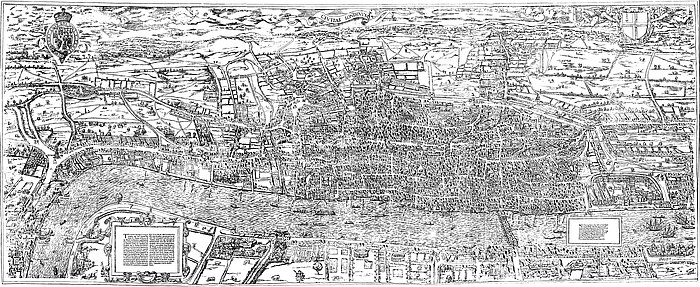
From a facsimile reproduction of the original map by Edward J. Francis, in the possession of John C. Francis.
Lithographed by W. & A. K. Johnston Limited Edinburgh & London
LONDON IN THE TIME OF THE TUDORS. A REPRODUCTION, REDUCED, OF THE MAP BY RALPH AGAS, CIRCA 1560. MAP ACCOMPANYING “LONDON IN THE TIME OF THE TUDORS BY SIR WALTER BESANT, PUBLISHED BY ADAM AND CHARLES BLACK, SOHO SQUARE, LONDON, 1904
Go to transcription of text
[See larger version]
Footnotes:
Transcriptions
Transcription of image page 148
POPISH PLOTS AND TREASONS From the beginning of the Reign of Queen Elizabeth. Illustrated with Emblems and explain’d in Verse.
First are describ’d the Cursed plots they laid. And on the side their wretched ends displayd.
Figure 1.
The Pope aloft on Armed Shoulders Rides, And in vain Hopes the English spoils divides; His Leaden Bull ’gainst good Eliza, roares, And Scatters dire Rebellion round our Shoars. The Priest Blesses the Villians, Chears them on, And promises Heav’ns Crown, when her Crown’s won. But God doth blast their Troops, their Counsels mock And brings bold Traitors to th’ deserved Block.
Figure 2.
Don John, who under Spain did with proud Hand The then unsever’d Neitherlands Command, Contrives for Englands Conquest, and does Hope To Gain it by Donation from the Pope. Yet to Amuse our Queen does still pretend Perpetual peace, and needs will seem a friend; But Heav’n looks through those Juggles and in’s prime, Grief Cuts off Him and’s Hopes All at a time.
Figure 3.
Spains King, and Romes Triple-Crown’d Pelate Joyn, And with them both bold Stukely does Combine Ireland to conquer, And the Pope has sent, For that Blest work, an Holy Regiment; But in their way at Barbary they call, Where at one Blow the Moors destroy them All, See here, what such Ambitious Traitors Gain, The shame of Christians is by Pagans Slain.
Figure 4.
The Priests, with Crosses Ensigne-like displaid, Prompt bloody Desmond to those spoiles he made On Irish Protestants, and from afar Blow Triumphs to Rebellions Holy War; But against Providence all Arts are vain, The Crafty, in their Craft are over-tane; Behold where kill’d the Stubborn Traitor lies, Whilst to the Woods his Ghostly Father flies.
Figure 5.
What trusty Janizaries are Monks to Rome. From their dark Cells the blackest Treasons come. By the Popes License horrid Crimes they Act, And Guild with piety each Treacherous Fact. A seminary Priest, like Comets Blaze, Doth always Blood-shed and Rebellion Raise, But still the fatal Gibbet’s ready fixt For such, where Treason’s with Religion mixt.
Figure 6.
Mad Sommervil, by Cruel Priests inspir’d To do whatever mischiefe they requir’d, Swears that he instantly will be the death Of good and Gracious Queen Elizabeth. Assaults her Guards, but Heav’ns protecting pow’r Defeats his rage makes him a Prisoner: Where to avoid a just, though shameful Death, Self-strangling hands do Stop his loathsome breath.
Figure 7.
Whilst Spains Embassador here Leiger lies, Designs are laid the English to surprize; Two Catalogues his Secretary had Got The better two effect the Hellish Plot. One all our Havens Names, where Foes might Land, To’ther what Papists were to lend an hand. For this base Trick he’s forc’d to pack to Spain Whilst Tyrburn greets confederates that remain.
Figure 8.
View here a Miracle——A Priest Conveys, In divish Bottom o’re the path-less Seas, Close treacherous Notes, whilst a Dutch Ship comes by And streight Engag’d her well-known Enemy; The Conscious Priest his Guilty Papers tears, And over-board the scatter’d fragments bears; But the just winds do force them back o’th’ Decks, And peice-meal all the lurking plot detects.
Return to image
Transcription of image page 148
The Popes bull
In Nomine Domini incipit Omne Malum.
The Rebellion of Northy: & Westm:
The treacherous practice of Don Jo: of Aust:
Stucely encouraged by P: & K: of Sp: rayseth rebell:
Desmonds bloody practice approved
Rebellion the effect of Monastaries
Someruiles hast to Kill the Queene
The Spa: Embas: thrust out of England
Torne Papers blowne into the Ship
Parry not able to Kill the Queene
Davington with his Complices
Stafford clearing himself
the Invincible Armado
Lopas compounding to poyson the Queene
Tyrones false Submission afterwards rebelling
Watson Seducing Noblemen
The Powder Plot
A Thankfull Remembrance of Gods Mercie by G.C.
Return to image
Transcription of image page 148
Figure 9.
The Jesuites vile Doctrines do Convince Parry ’Tis Merit for to kill his Prince. The fatal Dagger he prepares with Art, And means to sheath it in her Royal Heart. Oft he attemps, and is as oft put by, By the Majestick Terrors of her Eye; At last his Cursed Intentions he Confest And So his welcom’d a fit Tyburn Guest;
Figure 10.
Here Babington and all his desperate Band, Ready prepar’d for Royal Murder stand, His Motto seems to glory in the Deed, These my Companions are whom dangers lead. Cowardly Traitors, so many Combine To Cut off one poor Ladies vital Twine; In vain,—Heaven’s her Guard, and as for you; Behold, the Hangman gives you all your due.
Figure 11.
Nor was’t with Spain alone, Great Betty’s Strife; Now France attempts upon her pretious Life; The Guises cause th’ Ambassador to Bribe Moody, and others of the Roman Tribe, To Cut her off. To which they soon Consent But watchful Heav’n does that Guilt prevent. Stafford doth to the Councel All disclose, And Home with shame perfidious Mounsieur goes.
Figure 12.
Spain’s proud Armado, whom the Pope did Bless, Attacques our Isle, Confident of success. But Heav’ns just Blast doth Scatter all their force, They fly and quite round Scotland take their Course: So many taken, burnt, and Sunk i’th’ Main, Scarce one in Ten did e’re get home Again; Thus England like Noahs Ark, amidst the Waves Indulgent providence from Danger saves.
Figure 13.
And now a private horrid Treason veiw Hatcht by the Pope, the Devil, and a Jew Lopez a Doctor must by Poison do What all their Plots have fail’d in hitherto What will you give me then; the Judas Cries Full fifty thousand Crowns, t’other replies, Tis done—but hold, the wretch shall miss his hope, The Treasons known, and his Reward’s the Rope;
Figure 14.
The Great Tyrone that did so oft embrew Ireland with Blood, and Popish Plots Renew. Here vanquisht Swears upon his bended Knee To the Queens Deputy fidelity Yet breaks that vow, and loaded with the Guilt Of perjuries and Blood which he had spilt. Being forc’d at last to fly his Native Land, Carries in’s Breast a sting, a Scourge in’s hand.
Figure 15.
No Sooner James had blest the English Throne, But Traiterous Priests Conspire to pull him down. Watson the poisonous Maximes does Instill, And draws some Nobles to Join in the Ill: But Princes then appear the most divine, When they with unexpected Mercy Shine. Just as the Fatal Ax attempts the Stroke, Pardon steps in and does the Blow Revoke
Figure 16.
In this Curs’d Powder-plot we plainly see The Quintessence of Romish Cruelty King Lords and Commons at one Hellish Blast Had been destroy’d, and half our Land laid wast, See Faux with his dark Lanthorn ready stands To Light the fatal Train with desperate hands, But Heavens All-seeing eye defeats their desire, And saves us as a Brand snatcht from the fire;
And now let us, with chearful Hymns of praise, And Hearts inflamed with love an Altar raise Of Gratitude to God, who doth advance His out-streatcht Arm in our Deliverance, Tis only He, that doth protect his Sheep, Tis he alone doth this poor Island keep from Romish Wolves, which would us soon devour, If not Defended by his mighty power Tis he that doth our Church with freedome Crown, And beats the Popish Superstitions down Under her feet, and may they never rise, Nor in vile Darkness Reinvolve our Eyes; Since Heaven whose mercies ever are most tender Hath both restor’d our faith and Faiths Defender
Let us to both a strict Adherence pay, And for their preservation ever pray. Since thus Truths happy Bark hath reach’d our shore, O may it never, never Leaves us more.
Sold by John Garret at his Shop, at the Exchange-Staires in Cornhill where you may have choice of all Sorts of Large and Small Maps: Drawing Books, Coppy books, and Pictures for Gentlewomens works; and also very good originals of French and Dutch Prints.
Return to image
Transcription of image after page 190
References.
The first ST. GILES CHURCH.
Remains of the Walls, antiently enclosing the Hospital precincts.
Site of the Gallows and afterwards of the Pound.
Way to Uxbridge. now OXFORD ST.
ELDE-STRATE, since called HOG-LANE.
LE-LANE now MONMOUTH ST.
Site of the SEVEN DIALS formerly called COCK and PYE FIELDS.
ELM CLOSE since called LONG-ACRE.
Site of LINCOLNS INN FIELDS formerly called FICKETS-FIELDS.
A View of part of the Northwest Suburbs of London, as they appeared, anno 1570. Including the whole of the parish of ST. Giles in the Fields and its immediate Neighbourhood, its Parochial Churches, erected at different periods &c.
THE PARISH OF St. Giles in the Fields, LONDON.
“The part of the North West Suburbs of London, since called Saint Giles’s, was about the time of the Norman Conquest an un-built tract of country, or but thinly scattered with habitations.—The parish derived its name if not its origin from the ancient Hospital for Lepers, which was built on the site of the present church by MATILDA queen of King Henry I. and dedicated to Saint Giles: before which time there had only been a small Chapel or Oratory on the spot.—It is described in old records, as abounding with gardens and dwellings in the flourishing times of Saint Giles’s Hospital but declined in population and buildings after the suppression of that establishment, and remained but an inconsiderable village till the end of the reign of Elizabeth, after which period it was rapidly built on, and became distinguished for the number and rank of its inhabitants. The great increase of St. Giles’s Parish occasioned the separation of St. George’s Bloomsbury Parish from it anno 1734.—The above view (which is partly supplied by the great Plan of London by Ralph Aggas, and partly from authorities furnished by parochial documents) was taken anno 1570.”
Return to image
Transcription of accompanying map
This antient and famous City of London, was first founded by Brate the Trojan, in the year of the World two thousand, eight hundred thirty & two, and before the Nativity of our Saviour Christ, one thousand, one hundred and 30. So that since the first building, it 2 thousand 6 hundred 60 & 3 years. And afterward was repaired and enlarged by King Lud. but at the present so flourisheth, that it containeth in length from the East to the West about 3. English miles, from the North to the South about 2 English miles. It is also so plentifully peopled, that it is divided into a hundred and 22 Parishes within the Liberties, besides 16 Parishes that are in the suburbs. It is planted on a very good soyle: for on the one side it is compassed with come & pasture ground, on the other side it is inclosed with the river of Thames, which not only aboundeth in all kind of fresh water-fish, but also is so navigable, that it as well bringeth abundance of commodities from all parts of the World, as also conveieth forth such commodities as the plentifulnesse of our Contry doth yield us: which both augments the fame thereof abroad, and also increaseth the riches thereof at hom; so that as it is head and chief City of the whole Realm, so it is likewise head and chief Chamber of the whole Realm, as well for our outward and inward commodities. God prosper it at his pleasure Amen.
New Troy my name: when first my fame begun By Trajan Brute: who then me placed here: On fruitfull soyle, where pleasant Thames doth run Sith Lud my Lord, my King and Lover dear, Encreast my boundes and London (far that rings Through Regions large) he called then my name How famous since (I stately seat of Kings) Have flourish’d aye: let others that proclaim. And let me joy thus happy still to see This vertuous Peer my Soveraign King to be.
Return to image
A Companion Volume to “London in the Time of the Tudors”
LONDON
IN THE TIME OF THE STUARTS
By Sir WALTER BESANT
In One Volume, Demy 4to, Cloth, Gilt Top, 410 pages, containing 115 Illustrations, mostly from Contemporary Prints, and a reproduction of Ogilby and Morgan’s Map of London, 1677.
PRICE 30s. NET
SOME PRESS OPINIONS
‘Most readable and interesting.... It is a mine in which the student alike of topography and of manners and customs may dig and dig again with the certainty of finding something new and interesting.’—The Times.
‘No lover of London can fail to be grateful to the late Sir Walter for his many carefully studied pictures of its ancient life, pictures often quaint and amusing, and bearing always the mark of earnest and minute research.... The general reader will find in this volume a world of interesting suggestion.’—The Daily Chronicle.
‘We are again reminded of the vast debt which London owes to the late Sir Walter Besant by the appearance of this sumptuously printed and beautifully illustrated book, the second volume of his great Survey of London—unquestionably his magnum opus, upon which his fame will chiefly rest.... A book which should be in the library of every one who takes an intelligent interest in the history and development of London.’—The Daily Telegraph.
‘A work of great interest, eminently readable, and full of curious, interesting, and original matter.’—Westminster Gazette.
‘The pen of the ready writer here is fluent; the picture wants nothing in completeness. The records of the city and the kingdom have been ransacked for facts and documents, and they are here marshalled with consummate skill. In surveying the political history of London from James I. to Queen Anne, Sir Walter Besant reveals himself as an unsparing and impartial historian, and in this respect alone the work must command our admiration and our praise. But there is also included the most vivid presentation of the story of the Great Plague and the Great Fire that has ever been brought between the covers of one book.’—The Pall Mall Gazette.
‘It is impossible to speak too highly of this endeavour to say all that is worth saying about London, and to say it in a manner which shall at once satisfy the historical student and attract public attention.’—Yorkshire Post.
‘Much has hitherto been written, both by way of fact and fiction, as well as by a blend of each, to describe London in its grievous trials of pestilence and flame; but Sir Walter Besant has here gathered together by far the most graphic and the most trustworthy accounts that have hitherto been penned.’—The Guardian.
‘The whole work is one of singular interest because the subject is treated with the lightness of touch and descriptive power not always attained by antiquarian writers.’—The Record.
‘This handsome volume furnishes a fascinating record, both pictorial and literary, of seventeenth century London, such as can be found nowhere else. To the student it will be invaluable; to the general reader with antiquarian interests and a taste for social history, a never-failing source of delight.’—The Contemporary Review.
‘There is not a dull page in the book, and the fact that the treatment is somewhat discursive makes the volume more delightful. We can give no idea of its variety and its charm, but every one who wishes to know the London of two hundred and fifty years ago will feel, as he opens this volume, that he has stepped back into that world of great events, and will live again through its civil discord, its Plague, and Fire, and its strange superstitions.’—The London Quarterly Review.
Published by ADAM AND CHARLES BLACK, 4, 5, & 6 SOHO SQUARE, LONDON, W.
A Companion Volume to “London in the Time of the Tudors”
LONDON
IN THE EIGHTEENTH CENTURY
By Sir WALTER BESANT
In One Volume, Demy 4to, Cloth, Gilt Top, 680 pages, containing 104 Illustrations, mostly from Contemporary Prints, and a Map.
PRICE 30s. NET
SOME PRESS OPINIONS
‘Turn where you will in his pages, you get some interesting glimpse which opens up the past and illumines the present.’—The Contemporary Review.
‘A handsome and very interesting book is the result, for which the curious reader and the student will alike be grateful.... Gives an admirable impression of the times.’—The Spectator.
‘It is excellently planned and very ably and agreeably executed.... The chief charm of this work is the pleasantness of the style in which it is written—easy, clear, and individual. To the accuracy of the ideal historian Sir Walter added the picturesqueness of the popular novelist.’—The Globe.
‘It forms a sumptuous volume, and is marked, of course, by minute research and enthusiastic interest. Will be a thoroughly engrossing study for all those—and they are now many—to whom the past of the Empire’s capital is a subject of the keenest fascination.’—St. James’s Gazette.
‘To praise this book were superfluous. Sir Walter was ideally suited for the task which he set himself. He was an antiquarian, but not a Dryasdust; he had the topographical sense, but he spares us measurements; he was pleasantly discursive; if he moralised he was never tedious; he had the novelist’s eye for the romantic. Above all, he loved and reverenced London. Though only a Londoner by adoption, he bestowed upon the capital a more than filial regard. Besant is the nineteenth century Stow, and something more.... This remarkable volume.... It is a monument of faithful and careful research.’—The Daily Telegraph.
‘Will be of the utmost value to every student of the life and history of London.’—The Standard.
‘Altogether this posthumous work of the historian of London is one of the most fascinating books which he ever wrote.’—The Municipal Journal.
‘It is a wonderfully complete history.... Will probably stand to all time as the brightest and most authoritative book on a period which is bound, by its very evils, to have a fascination for the student of customs and manners, and for the student of national development.’—The Liverpool Post.
‘The book is engrossing and its manner delightful.’—The Times.
‘A work of great value and interest; ... profoundly interesting.’—The Westminster Gazette.
‘Of facts and figures such as these this valuable book will be found full to overflowing, and it is calculated, therefore, to interest all kinds of readers, from the student to the dilettante, from the romancer in search of matter to the most voracious student of “Tit-Bits.”’—The Athenæum.
‘Stimulating, edifying, interesting, horrifying, in turns, the book has not a dull moment.... As it is the best, it will surely prove the most prized and popular of modern books on London.’—Notes and Queries.
‘The work is copiously illustrated with reproductions of old prints, and is altogether a delightful and fascinating guide to the Metropolis at an eventful period of its history.’—Pall Mall Gazette.
‘Of the present lordly quarto volume it may be said that it fairly represents that “Survey” which Sir Walter Besant conceived, and which he used to refer to as his magnum opus. It is a worthy literary monument to his deep knowledge and love of London.’—The Academy.
‘Besant’s interesting and valuable book.’—Manchester Guardian.
‘It is assuredly a delightful book to lose oneself in, and so to think one’s way back into a simpler and perhaps, after all, a merrier England.’—The Bookman.
‘A book to be treasured and studied.... The work as a whole is a notable achievement, and will stand as the classical authority on eighteenth century London.’—The Speaker.
Published by ADAM AND CHARLES BLACK, 4, 5, & 6 SOHO SQUARE, LONDON, W.