FOREWORD
Reading edition
This pre-primer is one of three little books based on material prepared by J. B. Enochs, who once taught in the sanitarium school at Kayenta. It deals entirely with typical life experiences among the Navaho, the largest Indian tribe in the United States, numbering approximately 65,000. Nine out of ten Navahos do not speak English, and the tribe has never had a written language.
Missionaries and scientists for many years have had alphabets with which to record this difficult language. But these alphabets have usually included letters not found in English, and have been peppered with diacritical marks to indicate inflection, tonal change and nasalization. Thus they proved too complicated for popular use. Space does not permit mention of many who have worked with the Navaho language. Finally Dr. John Harrington, of the Smithsonian Institution, and Mr. Oliver LaFarge, author and linguist, collaborated to produce a simplified alphabet which might be written with an ordinary typewriter. Mr. Robert W. Young, associate of Dr. Harrington, experimentally recorded a great deal of material in this new alphabet. The Navaho portions of later pamphlets in this bi-lingual series are the joint work of Harrington and Young. Little Man's Family has been expressed in Navaho, using the Harrington-LaFarge alphabet, by Willetto Antonio, a Navaho teacher on the reservation, and Dr. Edward Kennard, formerly a specialist in Indian languages for the Indian Service. Both the recordings and the interpretation in these books have been checked by Chic Sandoval, Howard Gorman, and Adolph Bitanny, Navaho interpreters, and by Robert W. Young. Back pages contain an explanation of the sound values represented by the alphabet, and the indications of tonal change and nasalization which are used.
These bi-lingual texts are an attempt to speed up Indian understanding of modern life. Use of native languages to speed up acquisition of English in Federal schools is a new departure in Indian policy, which has proved very successful.
The type used for these books has been selected because of its similarity in design to the alphabet used for manuscript writing. In the primers, only proper names and the pronoun I have to be capitalized, so as to further minimize the new learnings often encountered by the primary child when faced with several different alphabets at once.
Willard W. Beatty
Revised February 1950
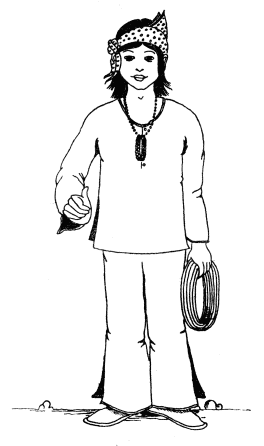
I am a Navaho boy.
diné 'ashkii nishłį́.
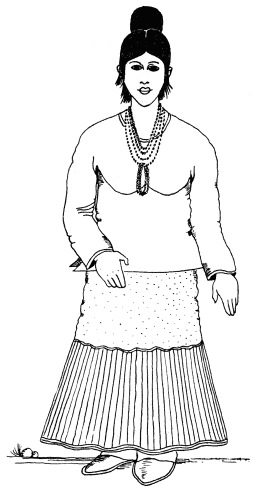
my mother
shimá
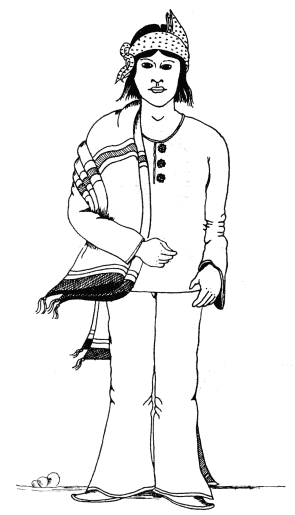
my father
shizhé'é
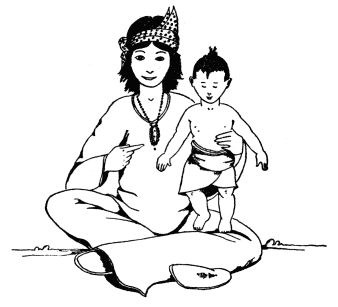
my baby brother
'awéé' sitsilí
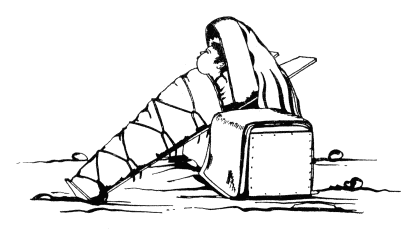
our baby's cradle
nihe'awéé' bits'áál
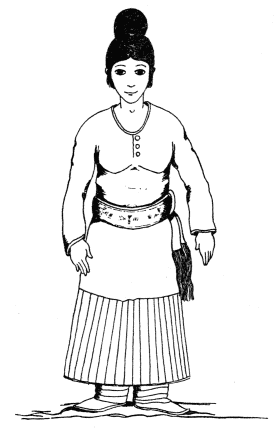
my big sister
shádí
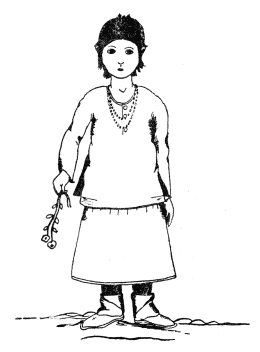
my little sister
shideezhí
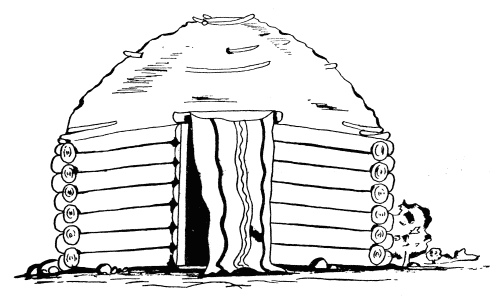
our hogan
nihighan
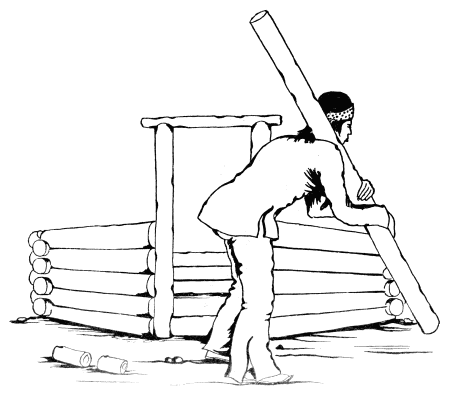
my father made our hogan
shizhé'é nihighan 'áyiilaa.
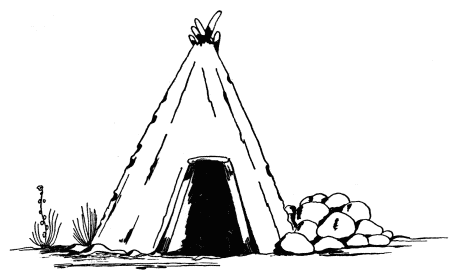
our sweathouse
nihitáchééh
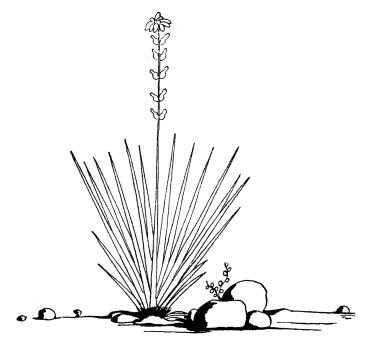
the soapweed plant
tsá'ászi'
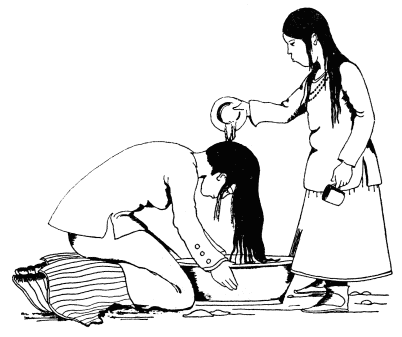
we wash our hair
nihitsii' tanínádeiigis
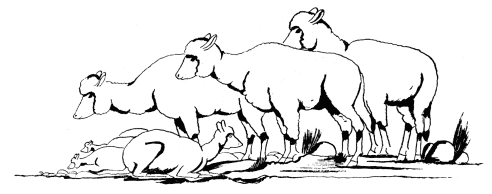
our sheep
nihidibé
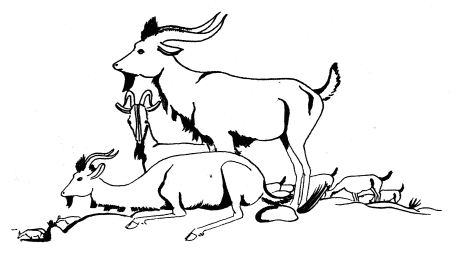
our goats
nihitł'ízí
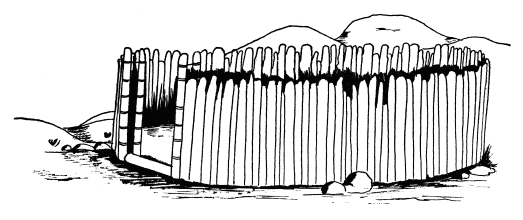
our corral
nihidibé bighan
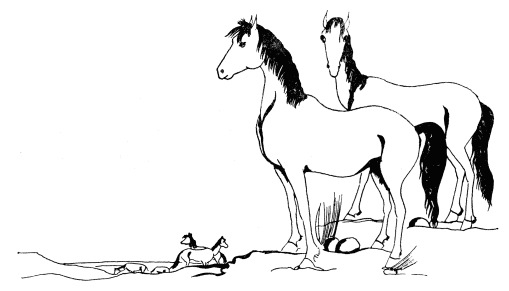
our horses
nihilį́į́'
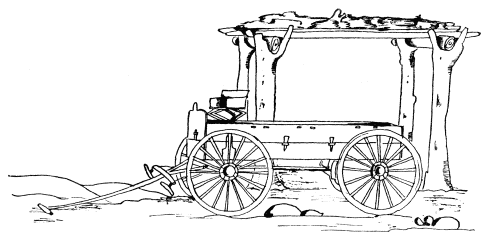
our wagon
nihitsinaabąąs
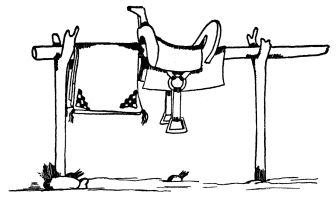
my mother's saddle
shimá bilį́į́' biyéél
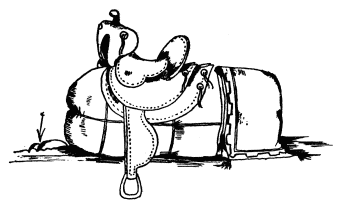
my father's saddle
shizhé'é bilį́į́' biyéél
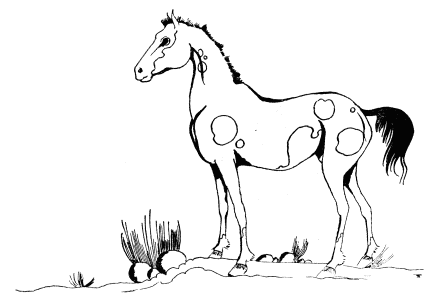
my little spotted pony
shilé'éyázhí łikizh
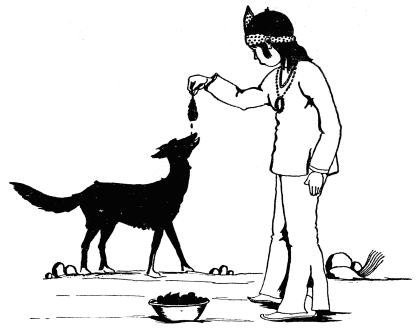
my black dog
shilééchąąshzhiin
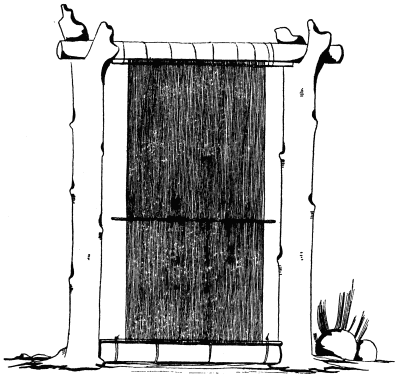
my mother's loom
shimá bidah'iistł'ǫ́
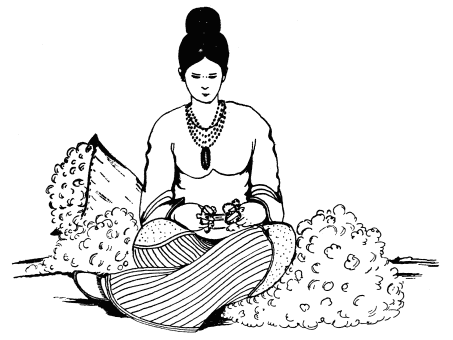
my mother cleans the wool.
shimá 'aghaa' hasht'eilééh
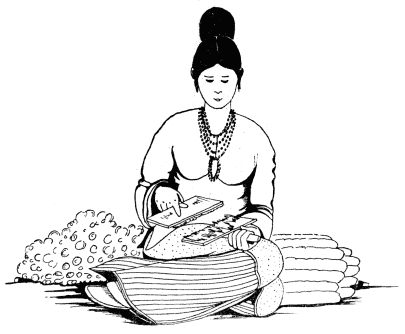
my mother cards the wool.
shimá 'aghaa' hanéiniłcha'.
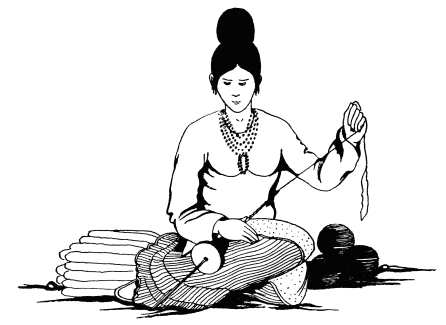
my mother spins the wool
shimá 'aghaa' hanéiniłdis.
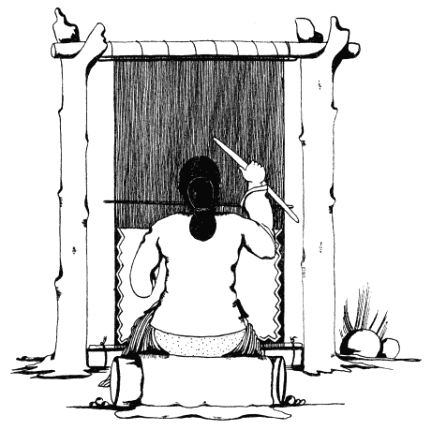
my mother weaves a rug.
shimá diyogí yitł'ó.
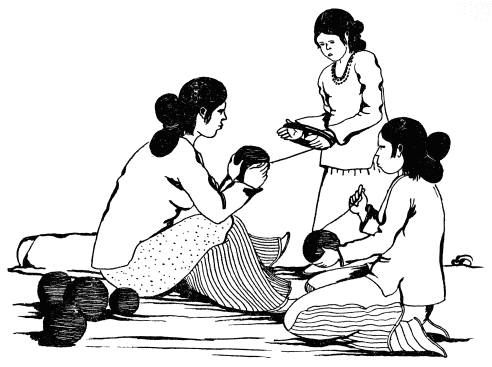
my sisters help my mother.
shádí dóó shideezhí shimá yíká 'anáhi'nilchééh.
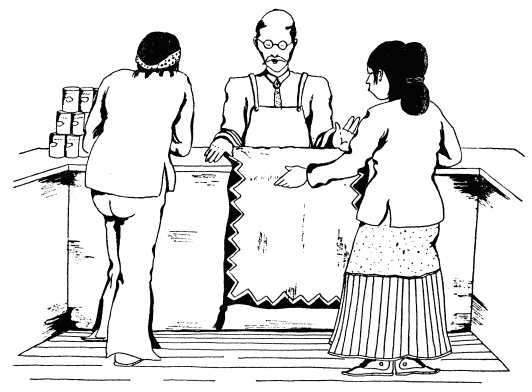
we sell the rug.
diyogí ninádahiilnih.