SELECTIONS FROM THE FAUNA OF BANFFSHIRE, (continued 2)
Reading edition
Anonyx denticulatus.
Anonyx Holbolli.
Anonyx minutus.
Anonyx Plautus. N.S. First taken at Banff as British by T. E.
Anonyx longipes.
Anonyx ampulla. Eyes red.
Callisoma crenata. With eggs in November.
Lepidepecreum carinatum. N.S. First taken at Banff by T. E.
Ampelisca Gaimardii. With eggs in December of a green colour.
Ampelisca Belliana.
Phocus simplex.
Phocus Holbolli. With eggs in December and March.
Phocus plumosus. Two other new species of this genus have been taken at Banff by T. E., but are not yet named.
Westwoodilia cæcula.
Westwoodilia Hyalina.
Œdiceros parvimanus. With eggs, which are of a bright orange colour, in September, October, and November. A sand-burrower.
Œdiceros saginatus. With eggs, which are reddish, in January. First taken at Banff as British by T. E.
Monoculodes longimanus. N.S. First taken at Banff by T. E.
Monoculodes carinatus. N.S. First taken at Banff by T. E.
Monoculodes Stimpsoni.
Kroyera arenaria. With eggs in August and September.
Kroyera altamarina.
Amphilochus manudens.
Darwinia compressa. N.S. First taken at Banff by T. E.
Sulcator arenarius.
Urothoe Bairdii. Eyes black; with eggs in December.
Urothoe marina. With eggs in December.
Urothoe elegans. Burrows in sand.
Liljeborgia Zetlandica.
Phædra antiqua.
Isæa montagui.
Iphimedia obesa.
Iphimedia Eblanæ.
Otus carinatus.
Pereionotus testudo.
Acanthonotus Owenii.
Dexamine spinosa. With eggs, which are of a greenish colour, in April.
Dexamine Bedlomensis. Colour a deep and brilliant orange, occasionally mixed with red and brown. The eyes, which are slightly raised, are round and of a bright crimson. The female, which is similar to the male, has eggs, which are of a pea green, in April and May, and again in October.
Atylus Swammerdamii. With eggs, which are of a brownish colour, in September.
Atylus gibbosus.
Atylus bispinosus.
Phersua bicuspis.
Phersua fucicola.
Calliope læviuscula.
Calliope Ossiani. N.S. First taken at Banff by T. E.
Calliope grandaculis.
Eusirus Helvetiæ. N.S. Taken at Banff by T. E., the first of the genus taken in Britain. A burrower, and very sluggish in its habits.
Leucothoe articulosa.
Leucothoe furina. First taken as British at Banff by T. E.
Hora gracilis.
Stimpsonia chelifera.
Microdeutopus gryllotalpa.
Microdeutopus Websterii.
Microdeutopus anomalus.
Microdeutopus versiculatus.
Protomedeia Hirsutimana. N.S. First taken at Banff by T. E.
Protomedeia Whitei. N.S. First taken at Banff by T. E. With eggs, which are of a very dull green, in November.
Bathyporeia pilosa. Eyes red.
Bathyporeia Robertsoni.
Bathyporeia pelagica. Eyes red.
Melita palmata.
Melita obtusata.
Melita proxima. With eggs, which are of a purplish colour, in December. Eyes brownish.
Melita gladiosa.
Eurystheus Erythrophthalmus
Eurystheus bispinimanus. N.S. First taken at Banff by T. E.
Amathilla Sabini.
Gammarus marinus.
Gammarus Camptolops.
Gammarus locusta.
Gammarus tenuimanus.
Gammarus Edwardsii.
Gammarus pulex.
Megamdera semiserrata.
Megamdera longimana.
Megamdera Othonis.
Megamdera Alderi.
Megamdera brevicaudata.
Eiscladus longicaudatus.
Amphithoe rubricata.
Amphithoe littorina.
Sunamphithoe hamulus.
Podocerus pulchellus.
Podocerus variegatus.
Podocerus capillatus.
Podocerus pelagicus. Eyes black.
Podocerus ocius.
Podocerus falcatus.
Cerapus abditus.
Cerapus difformis.
Dercothoe (Cerapus) punctatus. With eggs in June.
Siphondecetes typicus.
Siphondecetes crassicornis.
Nænia tuberculosa. With eggs in December. The female has the palms of the two first pairs much narrower than the male.
Nænia rimapalmata.
Cratippus tenuipes. N.S. First taken at Banff by T. E.
Corophium longicorne.
Corophium Bonellii.
Vibilia borealis. N.S. First taken at Banff by T. E.
Themisto crassicornis. First taken as British at Banff by T. E. Great hordes of this species occasionally visit this part of the coast, and large numbers are sometimes destroyed in consequence of coming too near the land.
Lestrigonus exulans. Occasionally in vast numbers.
Lestrigonus Kinahani.
Hyperia Galba.
Hyperia oblivia. In great shoals at certain seasons. These are the only species of this family which I have ever found on the Medusæ. I consider Lestrigonus Exulans to be the male of Hyperia Galba, and L. Kinahani the male of H. oblivia.
Hyperia tauriformis. N.S.
Hyperia prehensilis. N.S.
Hyperia cyanea. N.S.
All these three new species were first taken at Banff by T. E.; the males and females of all three being procured. The males differ but little from the females, except that they are somewhat larger.
Dulichia porrecta.
Dulichia falcata.
I look upon these as being male and female of the same species.
Protomedia pedata.
Protomedia Goodsirii.
Protella phasma.
Caprella acanthifera.
Caprella lobata.
Caprella typica.
Tanais vittatus. On tangle roots.
Paratanais forcipatus.
Paratanais rigidus. On tangle roots.
Anceus maxillaris.
Anceus (Praniza) cæruleata.
I consider these two to be male and female of the same species.
Anceus (Praniza) Edwardii. N.S. First taken at Banff by T. E. There is another species of Anceus or Praniza found here which I take to be the male of A. or P. Edwardii. I find them associated, and they have precisely the same habits. (See p. 299.)
Phryxus abdominalis.
Phryxus fusticaudatus. N.S. First found at Banff by T. E. on Pagurus Bernhardus and Cuanensis.
Aega tridens.
Aega psora.
Aega monophthalma.
Cirolana Cranchii.
Cirolana spinipes.
Eurydice pulchra.
Jæra albifrons.
Munna Kroyeri.
Janira maculosa.
Asellus aquaticus.
Limnoria Lignorum.
Arcturus longicornis.
Arcturus gracilis.
Idotea tricuspidata.
Idotea pelagica.
Idotea emarginata.
Idotea linearis.
Sphæroma rugicauda.
Dynamene rubra.
Næsea bidentata.
Campecopea Cranchii.
Ligia oceanica.
Philoscia muscorum.
Philoscia Couchii.
Philougria riparia.
Philougria rosea.
Platyarthrus Hoffmanii.
Oniscus asellus.
Oniscus fossor.
Porcellio scaber.
Porcellio pictus.
Porcellio armadilloides.
Porcellio pruinosus.
Armadillo vulgaris.
ADDENDA.
Cheirocratus mantis.
Helleria coalita.
Nebalia bipes. From deep water. Burrows.
Phoxichilidium coccineum. In rock pools.
Nymphon gracile. }
Nymphon hirtum. } Sea-spiders.
Nymphon grossipes.}
Pallene brevirostris.
Pycnogonum littorale. In rock pools.
Anomalocera Patersonii.
Cetochilus septentrionalis.
Both these are occasionally met with during summer, in millions.
Notodelphys ascidicola. Found in the branchial sac of Ascidia mentula and communis.
Peltidium purpureum. From deep water.
Caligus diaphanus.
Caligus rapax.
Caligus minutus. A variety of the foregoing.
Caligus micropus.
Caligus curtus. All these are found on various fishes.
Caligus isonyx. On the common gurnard. First taken as British at Banff in 1864 by T. E.
Lepeophtheirus pectoralis. On various flounders.
Lepeophtheirus Nordmannii. On the short sun-fish.
Chalimus scombri.
Trebius caudatus. Found on a Ling, Lota malva.
Monima fimbriata, or fimbricata. On the short sun-fish. First taken as British at Banff in 1862, by T. E.
Læmargus muricatus. On the Short Sun-fish.
Cecrops Lattreillii. Attached to the gills of the sun-fish, both short and oblong.
Chondracanthidæ soleæ. On the gills of Platessa vulgaris. First taken as British at Banff, in August 1863, by T. E.
Lernentoma cornuta. On gills of Platessa vulgaris.
Lernentoma asellina. On gills of Trigla gurnardus.
Lerneopoda salmonea. Attached to the gills of the Salmon.
Basanistes salmonea. On the gills of the common trout.
Brachiella bispinosa. On gills of Trigla. N.S. First taken at Banff by T. E. in May 1863.
Anchorella uncinata. Attached to various fishes, such as the cod, haddock, whiting, etc.
Anchorella rugosa.
Lernea branchialis. Attached to the gills of the cod and haddock.
Pennella fibrosa? Found on the short sun-fish.
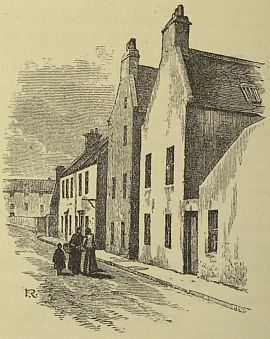
EDWARD’S HOUSE, LOW SHORE, BANFF.
FOOTNOTES:
WORKS BY THE SAME AUTHOR
By the same Author, Post 8vo, 6s.,
SELF-HELP;
WITH ILLUSTRATIONS OF CHARACTER, CONDUCT, AND PERSEVERANCE. ————————
“If I had read this look when I was a young man, my life would have been very different.”—Such was the remark made to me by a friend on returning Smiles’s ‘Self-Help,’ which I had given him to read. I was very much struck by the observation; and while thinking of the immense effect which this incomparable book has produced in England, and of the universally favourable reception which the Italian translation has received in this country, I received a letter from signor G. Barbèra, in which he invited me to write a book similar to the English one, but illustrated by Italian examples. I was much astonished at his thinking me equal to the work: but his valuable suggestion greatly delighted me, and I accepted his proposal with much cordiality.“—Michele Lessona, in Volere è Potere.
“‘Volere è Potere’ (‘Will is power’). Such is the title of a very interesting popular work just issued by the eminent Florentine publisher, G. Barbèra. The history of this production is rather curious. It may not be known that the most remarkable literary success achieved of late years in Italy (where literary successes are the rarest of all events) has fallen to the lot of Mr. Samuel Smiles’s admirable ‘Self-Help,’ an Italian version of which, published some time ago at Milan, has since gone through several editions, and still appears to be in continual demand. The idea of the book was a novelty for Italians, and the moral which it inculcates one so eminently deserving of being enforced upon all classes of the public of Italy, that the question soon arose whether it would not be advisable to extend the sphere of its utility by promoting the publication of a similar book, specially designed for Italian readers, and in which the examples of patient industry and of untiring perseverance in the pursuit of a fixed design should be drawn from home materials. An association founded in Florence with the express object of stimulating the educational movement among the people, offered a prize of 3000f. for the best production of the kind, and all the literary men of Italy were invited to compete. M. Lessona, an agreeable writer upon popular subjects, has already entered the lists, and printed his work (‘Volere è Potere’) without waiting for the award of the committee appointed to decide between the rival competitors.”—Standard.
“Une grande sagesse qu’on pourrait appeler la splendeur du bon sens, comme Platon définissait le beau la splendeur du vrai,—tel est le caractère qui distingue surtout ‘Self-Help.’ Ce livre, si populaire chez nos voisins, répond admirablement aux idées de la famille anglo-saxonne. Recevra-t-il chez nous le même accueil? Je l’espère, mais il aura aussi, je le crains, plus d’un vieux préjugé à combattre. En France, n’a-t-on point trop compté sur les institutions politiques malgré la durée éphémère des gouvernements? L’État peut faire du premier venu un ministre; il ne saurait en faire un grand homme, il même un fonctionnaire intègre et capable. Il est donc bon de chercher à d’autres sources ces énergies morales qui développent et régénèrent les sociétés.”—Revue des Deux Mondes.
“Mr. Smiles’s book is wise beyond the wisdom of any but a very few books that we have read. The chapter on the use and abuse of money we must commend to the reader’s own perusal. It is pregnant with practical wisdom, and contains, besides, some excellent remarks upon the improvidence of the working classes, and upon the evils entailed by the pursuit of vulgar ‘respectability’ among their so-called superiors. ‘Self-Help’ is one of the soundest, wisest, most instructive, and most wholesome works we have opened for a long time.”—Leader.
By the same Author, post 8vo, 6s.,
THRIFT:
A BOOK OF DOMESTIC COUNSEL. ————————
“There is no book among the current literature of the day we would rather see in a young man’s hand than this. Although every person in his daily experience must meet with many instances of the folly of unthrift, especially among the poorer classes, the frequency of the text, and it is to be feared the disposition of the age, render the lesson valueless. Domestic economy as an art and a science is an unstudied subject, and one few writers have deemed worthy of their thoughts. We cannot therefore feel sufficiently thankful that the able writer of ‘Self-Help’ has turned his attention to it, and endeavoured, in language that has not only a literary charm about it, but bears the stamp of philanthropic earnestness, to rouse the interest, and thereby the reflection of the British public, in so important a matter of national welfare. The dignity of labour, the necessity of inducing habits of saving, the wickedness of extravagant living, the dangers of prosperity, and the want of sympathy between employers and employed, are topics on which Mr. Smiles speaks hard, and it may be unpleasant truths, accompanied by a fund of illustration. Perhaps no part of the book is so valuable as the dissipation of the superstitious belief in goad-luck, and the chapter on the art of living. We trust the work will be found in every village and public library, that its principles may be disseminated broadcast among our youth; and we can assure all that they may enjoy in it many an hour’s pleasant and profitable reading.”—Spectator.
“In Mr. Smiles’ latest book he gives us something more than an illustrative treatise on that homely and excellent virtue, Thrift. He deals with some of the leading social questions of the day, such as Co-operation and Association. He sketches the sanitary movement unsparingly, satirises the feminine follies of fashionable circles, and lastly concludes with an admirable essay on what may be called the æsthetics of common life. We all know what a book from Mr. Smiles is sure to be, anecdotical, practical, and abounding in good sense and every-day wisdom,—a book that is sure to entertain the old and instruct the young.”—Academy.
“Mr. Smiles has produced an interesting volume. His pages bristle with sage precepts and with admirable illustrations of the virtue he has undertaken to inculcate on his countrymen. There is no doubt ample room for a judicious homily on Thrift. The wealth of England was never so great as at this time, and the thoughtless improvidence of Englishmen was never so conspicuous. Mr. Smiles complains, as well he may, of the monstrous folly of highly-paid artizans, who spend half their wages in selfish pleasure; and he shows that the large gains of such men are no proof of prosperity, as they do but add to their thriftlessness, and serve to gratify animal indulgences. Money, like political power, in the hands of uncultivated men, is certain to be abused. . . . On the whole, Mr. Smiles’ volume is marked by sound good sense, tersely and vigorously expressed. There are few readers who will not gain from it more than one useful lesson; and to young men it may prove specially serviceable.”—Pall Mall Gazette.
“In writing one more good book, in these days when much that is worthless in literature finds favour with the masses, Mr. Smiles has added permanency to the lustre of a name which has long been a ‘household word’ amongst us, and entitled himself to the renewed thanks of every one who is interested in the prosperity, the happiness, and the well-being of the community. . . . May the lesson he teaches be deeply grafted in the minds of the rising generation, to whom more especially we commend the careful perusal and study of the work now before us.”—Derby Advertiser.
“Mr. Smiles has done something in the concluding pages of this volume to give us the supplement which many people have thought was lacking to his teaching. They are full of the highest thought, replete with generous sentiment, based on the true conception of man as a being who only begins his life here below. . . . The book in several ways supplements the former ones; and it is in one respect, at least, superior to them.”—Nonconformist.
By the same Author, post 8vo, 6s.,
CHARACTER:
A COMPANION VOLUME TO ‘SELF-HELP’ AND ‘THRIFT’. ————————
“This work is so exactly fitted for a gift-book (and indeed a school-boy or a boy leaving school need desire no better one) that we are inclined to mention it here. The value of character above all mere intellectual culture, the blessedness of work, the necessity of courage and self-control, the sense of duty as the guiding star of life—these are some of the topics discussed in ‘Character,’—not, however, as abstract propositions, but with the help of a store of illustrations drawn from the biographies of great men. The book possesses, if we may use the expression, a vital force, and can scarcely fail to stimulate the reader. The chapters headed ‘Companionship of Books,’ and ‘Companionship in Marriage,’ will be read with special interest.”—Pall Mall Gazette.
“To the lovers of a pure and healthy literature, this invigorating and high-toned volume from the pen of the author of ‘Self-Help’ will afford real and genuine enjoyment. In the clear and attractive style which has rendered his previous writings so deservedly popular, Mr. Smiles has here shown to what a height of mental and moral excellence our weak and imperfect nature may attain, and how much true nobility of character it may develop and sustain. . . . The last two chapters, on Companionship in Marriage and the Discipline of Experience, form a fitting conclusion to so excellent a book, and are pregnant with interest and lessons of the highest wisdom. The breadth and soundness of the views enunciated in the former on some delicate but universally important topics are especially commendable, and should be read and pondered over by all who see a much-neglected source of happiness for the people in the elevation of their home-life, and a more extensive cultivation of the domestic virtues.”—Leeds Mercury.
“Uniform in size with the author’s very popular ‘Self-Help,’ this work is of the same tone and cast of thought. Believing that character is a great power in the world, the author treats the various points in which it may be developed, or which call it forth. Hence, we have chapters on Home Power, Companionship, Temper, Marriage, Experience, and abundant citations of examples, so that the work is full of interest. It is difficult indeed to limit the good that may arise from these honest, earnest books, full of right thinking; plain, sensible, and not too full of sentiment.”—Publishers’ Circular.
“Readers of ‘Self-Help’ will need no further inducement to send them in search of the new work by the author of that charming book. . . . It would be difficult to select a book more admirably adapted as a present to a young man or young woman at the outset of life. The charm of the style is irresistible; the moral conveyed altogether unimpeachable.”—Manchester Courier.
“The author of ‘Self-Help’ has produced another little book which will soon run over the face of the land, and help to inspire the rising generation with ennobling sentiments. In our hunger for facts, we must not overlook the value of ideas. While we are striving to give our young people technical information, we must not omit to teach them to be truthful, high-thoughted, noble men and women. We must foster their abilities, but not forget Character. . . . Mr. Smiles, in this very charming volume, has brought together the opinions and sayings of good and wise men of all times, as to the various qualities which go to form character. . . . The result is a valuable book, calculated as well to give delight as to do good.”—Builder.
“Mr. Smiles has been fortunate in the choice of his subject: and, as a work of wise counsel and thoughtful instruction, the new book is quite as successful as any of its author’s previous works. Nor is it any less entertaining. It literally teems with apposite and interesting anecdotes, and the writer’s style is at once so lively and dignified, that on the one hand he never becomes dry however earnestly and seriously he discusses life and duty; and, on the other, he never degenerates into flippancy in his most amusing illustrations.”—Manchester Examiner.
By the same Author, post 8vo, 6s.,
INDUSTRIAL BIOGRAPHY:
IRON-WORKERS AND TOOL-MAKERS. ————————
“Mr. Smiles has hit upon a rich vein of ore, and works it with great success. He has the art of biography, which is by no means so easy of attainment as, judging from the number of persons who attempt this species of composition, one would imagine it to be. Memoirs are countless, but the number of biographies that can be accepted as successful works of art are very few indeed. Mr. Smiles is not only a skilful workman, he has chosen a new field of work. Hitherto the great biographies have been written of soldiers and sailors, and statesmen, poets and artists, and philosophers. It would seem as if these only were the great men of the world, as if these only were the benefactors of mankind, whose deeds are worthy of memory. The suspicion has arisen that, after all, there may be other heroes than those of the pen, the sceptre, and the sword. There are, indeed, men in various walks of life whose footsteps are worthy of being traced; but, surely, considering what England is, and to what we owe most of our material greatness, the lives of our Engineers are peculiarly worthy of being written. ‘The true Epic of our time,’ says Mr. Carlyle, ‘is not Arms and the man, but Tools and the man—an infinitely wider kind of Epic.’ Our machinery has been the making of us; our iron-works have, in spite of the progress of other nations, still kept the balance in our hands. Smith-work in all its branches of engine-making, machine-making, tool-making, cutlery, iron ship-building, and iron-working generally, is our chief glory. England is the mistress of manufactures, and so the queen of the world, because it is the land of smith; and Mr. Smiles’s biographies are a history of the great family of smith. Many of the facts which he places before us are wholly new, and are derived from the most likely sources. Thus, Maudslay’s partner Mr. Joshua Field, and his pupil Mr. Nasmyth, supplied the materials for his biography. Mr. John Penn supplied the chief material for the memoir of Clement, and so of the other memoirs; though they necessarily go over much well-trodden ground, they contain also much original information, expressed with great clearness, and with a practised skill which renders the reader secure of entertainment in every page.”—Times.
“This is not a very large book, but it is astonishing how much individual, conscientious, and thoroughly original search has been required for its composition, and how much interesting matter it contains which we possess in no other form. Mr. Smiles rescues no name, but many histories, from oblivion. His heroes are known and gratefully remembered for the benefits they have conferred on mankind, but our knowledge of our benefactors has hitherto been mostly confined to our knowledge of the benefit. It was reserved for Mr. Smiles to discover in the workshop, heroes as true as ever hurled their battalions across a battle-field, and to present us with much-enduring, much-endeavouring, and brave men, where hitherto we had been content with disembodied, almost meaningless names. The present work is further distinguished, not indeed from its predecessors, but from much of the current literature, by the exquisitely pellucid English, the vigorous but unobtrusive style, in which the narratives are conveyed, the value of the work before us is doubled, and the time required for perusing, and especially for consulting it halved, by the full and minute index in which its contents are tabulated.”—Edinburgh Daily Review.
“This is one of the most delightful books we have ever read. It is at once practical, instructive, and suggestive. Whoever wishes to benefit his young friends will present them every one with a copy of this book. Whatever struggling mechanic who, feeling that there is something beyond what he now knows or can execute, yet hesitates or fears, let him read this book. It is a sovereign panacea for doubt or cowardice. Whoever takes delight in watching the development of knowledge and in ascertaining the sources of the privileges which surround him, let him possess himself of this book, and we can promise him a treat of no ordinary character.”—Sheffield Daily Telegraph.
By the same Author, Crown 8vo, 7s. 6d.,
LIFE OF GEORGE STEPHENSON,
INCLUDING A MEMOIR OF HIS SON ROBERT STEPHENSON. Illustrated with Two Steel Portraits, and numerous Engravings on Wood. ————————
“It is a singular fate that some of the world’s greatest benefactors should pass from the world with their history comparatively unnoticed . . . and we rightly rejoice when the claims of any of them are vindicated—when, from the hidden company of the Brindleys and Watts, men risen from the ranks to do world-wide service, and incidently to be the architects of their country’s later greatness, we can obtain the authentic history of such a creator as George Stephenson. It is not too much to say, that by Mr. Smiles, who has performed this office with eminent success, a considerable void is filled up in the page of modern history. We see the vast proportions of our modern achievements, and the epic story of this age of iron, more than half comprised in the feats of its strongest and most successful worker. The worker himself, with his noble simplicity and energy, his zeal for his kind, his native-born gentleness, and indomitable tenacity, would probably have been eminent in any age or condition of society; but, in virtue of his actual achievements and the obstacles he surmounted, of his struggles and triumphs, we may designate him a hero, and ask, in defence of this arbitrary title, what real conditions of heroism were wanting?”—The Times.
“We have read this book with unmingled satisfaction. We hardly ever remember to have read a biography so thoroughly unaffected. There is no pushing forward of the author himself—he never comes between us and his subject. The book is an artless attempt to set out the character and career of one of the most ingenuous, honest, resolute, homely, and kind-hearted of human beings. We thank Mr. Smiles for having made the man walk before us in a most life-like picture. The entire style of the work is unambitious, lucid, thoroughly manly, and good.”—Saturday Review.
“We should like to see this biography in the hands of all our young men. One breathes a healthy, bracing atmosphere in reading this book. It sets before us a fine instance of success in life attained purely in the exercise of genuine qualities. There was no sham about George Stephenson. . . . He was a great and good man, and we can give the ‘Life’ no higher praise than to say that it is worthy of its subject. Mr. Smiles is so anxious to place the character and career of Stephenson justly before his readers, that he quite forgets himself. . . . We do not know that there ever lived an individual to whom each separate inhabitant of Great Britain owes so much of real tangible advantage.”—Fraser’s Magazine.
“It is the fate of few men, even of those who are the most signal public benefactors, to be known and appreciated by the generation in which they live. The fame of George Stephenson spread slowly, and, great as it has at last become, we cannot question that it will continue to increase with time. Not only is he a surprising example of a labourer raising himself to wealth and eminence without one solitary advantage except what he derived from his own genius; but the direction which that genius took has stamped his name upon the most wonderful achievement of our age. . . . He died, leaving behind him the highest character for simplicity, kindness of heart, and absolute freedom from all sordidness of disposition. His virtues are very beautifully illustrated, and by no means exaggerated, in his Life by Mr. Smiles. . . . There is scarcely a single page of the work which is not suggestive, and on which it would not be profitable to institute inquiry into the results of past experience as compared with present practice. The whole ground is novel, and of the highest interest.”—Quarterly Review.
“The author of the Railway System—already adopted in every civilised country, and everywhere bringing forward vast social changes—is the real hero of the half-century. This instructive and deeply interesting story of his youth will contribute to keep alive the hopes, incite the perseverance, encourage the industry, and form the mind of after generations. It is one of the tales which ‘the world will not willingly let die.’ The realities of Stephenson’s life, which till now have found no biographer, are more astounding than the fancies of even Eastern poets. . . . His life is an admirable model for youth, supplied by one of the working multitude, while his exertions will help to relieve them from the extraordinary difficulties which he had to surmount.”—Economist.
By the same Author, in 5 vols. crown 8vo, with 9 Steel Portraits and 342 Illustrations on Wood,
LIVES OF THE ENGINEERS.
WITH AN ACCOUNT OF THEIR PRINCIPAL WORKS, INCLUDING A History of Inland Communication in Britain, and the Invention and Introduction of the Steam-Engine and Railway Locomotive. A New and Revised Edition.
Vol. I.— Embankments and Canals—Vermuyden, Myddelton, Perry, Brindley.
” II.— Harbours, Lighthouses, and Bridges—Smeaton and Rennie.
” III.—History of Roads—Metcalfe and Telford.
” IV.— The Steam-Engine—Boulton and Watt.
” V.— The Locomotive—George and Robert Stephenson.
⁂ Each volume is complete in itself, and may be had separately. ————————
“A chapter of English history which had to be written, and which, probably, no one could have written so well. Mr. Smiles has obtained a mass of original materials. It is not too much too say that we now have an Engineers’ Pantheon, with a connected narrative of their successive reclamations from sea, bog, and fen; a history of the growth of the inland communication of Great Britain by means of its roads, bridges, canals, and railways; and a survey of the lighthouses, breakwaters, docks, and harbours constructed for the protection and accommodation of our commerce with the world.”—Times.
“We cannot but refer in passing to the captivating and instructive volumes which Mr. Smiles has devoted to the ‘Lives of the Engineers,’ a record not before attempted of the achievements of a race of men who have conferred the highest honour and the most extensive benefits on their country. ‘Who are the great men of the present age?’ said Mr. Bright in the House of Commons,—‘Not your warriors—not your statesmen; they are your Engineers.’”—Edinburgh Review.
“Mr. Smiles has profoundly studied, and has happily delineated in his lucid and instructive biographies, that remarkable succession of gifted minds which has, not by lucky guesses, but by incessant labour and by lifelong thought, gradually erected that noble example of dominion of man over the earth—the science of Engineering; and we are proud to know that there are men yet among us who can wield the arms of the invincible knights of old, and who will leave no meaner memory behind them.”—Quarterly Review.
“Mr. Smiles may fairly claim the merit of having produced one of the most interesting and instructive works. He has discovered almost unbroken ground, and has worked it with so much skill and success, that his readers will recognise in his volumes an illustration of the truth of Lord Macaulay’s saying, that history, personal or national, may, when properly written, be rendered as interesting as any novel.”—London Review.
“In tracing the history of English engineering from the beginning, Mr. Smiles really gives a history of English civilisation. He has produced a kind of philosophical biography, the progress of discovery and industrial conquest having necessarily a general correspondence with the mental development of the great representatives of man’s external action. We think Mr. Smiles has done what was well worth the doing, with skill, with honesty, with purpose, and with taste.”—Westminster Review.
“There may be many here who have made themselves acquainted with a book that cannot be too widely brought into public notice—I mean the recent publication of a popular author, Mr. Smiles, entitled ‘The Lives of the Engineers.’ There may be those here who have read the Life of Brindley, and perused the record of his discouragement in the tardiness of his own mind, as well as in the external circumstances with which he determined to do battle, and over which he achieved his triumph. There may be those who have read the exploits of the blind Metcalfe, who made roads and bridges in England at a time when nobody else had learned to make them. There may be those who have dwelt with interest on the achievements of Smeaton, Rennie, and Telford. In that book we see of what materials Englishmen are made. These men, who have now become famous among us, had no mechanics’ institute, no libraries, no classes, no examinations to cheer them on their way. In the greatest poverty, difficulties, and discouragements, their energies were found sufficient for their work, and they have written their names in a distinguished page of the history of their country.”—The Right Hon. W. E. Gladstone at Manchester.
“I have just been reading a work of great interest, which I recommend to your notice—I mean Smiles’s ‘Lives of the Engineers.’ No more interesting books have been published of late years than those of Mr. Smiles—his ‘Lives of the Engineers,’ his ‘Life of George Stephenson,’ and his admirable little book on ‘Self-Help’—a most valuable manual.”—The Right Hon. Sir Stafford Northcote at Exeter.
“Mr. Smiles has done wisely to link the names of Boulton and Watt together in the volume before us. The more we read of the correspondence between these two great men during the birth of the new motive power, the more we feel convinced that the world has to be thankful for their happy partnership. Boulton seemed by some happy chance to possess all the qualities of mind that were wanting in Watt. . . . From the heaps of dusty ledgers in the counting—house at Soho, the author has drawn the materials for these deeply-interesting lives, and has so handled them as to produce a volume which worthily crowns his efforts in this most interesting, because before untrodden, walk in literature.”—Times.
“Boulton was the complement of Watt’s active intelligence. . . . His is a memory of which the leaders of industry in Great Britain may well be proud. His virtues were the common virtues which render the English character respected throughout the world, but in him they were combined with admirable harmony, and were unsullied by any of those vices which too frequently degrade the reputation of our countrymen. We cannot read of Mr. Boulton’s grand struggle to bring the steam-engine into further use without a feeling of pure admiration. . . . We lay down this volume with a feeling of pride and admiration that England had the honour of producing at the same time two such men, whose labours will continue to benefit mankind to the remotest generation, and with gratitude to the distinguished biographist who preserves for the instruction of the times to come, pictures of them so full of life and reality.”—Daily News.
“That Mr. Smiles’s will be the standard life of the great engineer is simply the necessity of his greater art as an industrial biographer. His skill in weaving together anecdote and description, representations of what was known with a distinct specification of what was contributed by his hero; his dramatic power, in this volume especially, exhibited in the contrast of the two partners,—the sanguine, speculative character of Boulton; the anxious, morbid, cautious temper of Watt,—one full of hope in the very darkest circumstances, the other full of fear in the brightest,—give the volume a wonderful charm. The life of Watt is a great epic of discovery: the narrative of it by Mr. Smiles is an artistic and finished poem.”—British Quarterly Review.
“We venture to think that this, Mr. Smiles’s most recent work, will achieve even a higher popularity than those which have preceded it. We are impressed by this book with the fact that hitherto, however highly public speakers and writers may have lauded Watt and his achievements, the general public have really known little or nothing of this great man’s history, life, and character. These are admirably and graphically depicted in the volume before us; in the preparation of which the author appears to have had access to a vast mass of authentic documents, of which he has made excellent use.”—Observer.
Just Published, by the same Author, in Crown 8vo, 7s. 6d.
THE HUGUENOTS:
THEIR SETTLEMENTS, CHURCHES, AND INDUSTRIES IN ENGLAND AND IRELAND. A NEW EDITION, REVISED AND ENLARGED ————————
“The cunning of Mr. Smiles’s hand never fails him. He has chosen the prosaic side of Huguenot history, and has made it as fascinating as a romance. He has not essayed to depict the religious heroism or the social tragedy of the Huguenot story—he has restricted himself to the economical influence of its migrations, and he has made the statistics and genealogies—of which his work is full—as interesting as Homer’s lists of ships and heroes, or as Milton’s array of the demigods of hell. The process seems very simple and easy, but it can be saved from utter dreariness only by consummate art. Mr. Smiles has pursued his investigations with a laborious minuteness worthy of the Statistical Society and of the Heralds’ College; and yet it is as impossible to skip a page, as in reading his life of Stephenson.”—British Quarterly.
“Avec un rare déssintéressement national et un sentiment de justice qu’on ne saurait trop encourager, un écrivain Anglais vient aujourd’hui rendre aux étrangers ce que la riche et laborieuse Angleterre du xixme siecle doit aux étrangers. M. Smiles est l’historien de la vapeur et de toutes les découvertes utiles; ses héros sont les inventeurs, les artisans célèbres, les ingénieurs, tous ceux, en un mot, qui out dérobé á la nature un secret ou un force pour étendre le règne de l’homme sur la matière. Les conquêtes de l’industrie et du commerce le préoccupent bien autrement que les victoires des armées Anglaises. . . . Par la tournure de ses idées et l’ordre de ses études, M. Smiles était done préparé à traiter cet interessant sujet,—la naissance des arts utiles chez un grand peuple qui, à l’origine, n’avait pas d’industrie.”—Revue des Deux Mondes.
“The work of Mr. Smiles embraces a subject which has never been adequately treated, at least in English literature—the history, namely, of the French and Flemish Protestant refugees in this country, and their descendants.
“Of the powerful influence exercised by this immigration on our industry, commerce, arts, literature, even our usages and modes of thought, few are aware. The subject is by no means a familiar one among ourselves. The whole revolution, so to speak, took place so gradually, the new population amalgamated so readily and thoroughly with the old, that people hardly attached to the phenomena which passed under their eyes their real importance. Mr. Smiles’s account of it is, therefore, admirably calculated to impart, not only new knowledge, but really new ideas, to most of us.
“To readers who love to dwell on heroic vicissitudes rather than on mere details of economical progress, Mr. Smiles’s account of the persecution in France, the sufferings of the many and the marvellous escapes of the few, will prove the most attractive part of his work.
“How this noble army of emigrants for conscience sake—the truest aristocracy, perhaps, which has ever developed itself—gradually and peacefully amalgamated with that mass of the English people which they had done so much to enrich and to instruct, Mr. Smiles has fully shown. He recounts their euthanasia, if such it may be termed, as he does their rise. To one of the great causes of their success, and not in England only, he does ample justice. They were, as a body, extremely well educated; and they jealously transmitted that inheritance, which they had brought from France, to their children. The poorest Huguenot refugee was almost always a cultivated man. Hence their great advantage in the fair race of industry.”—Pall Mall Gazette.
“Mr. Smiles’s book on the ‘Huguenots’ is an improvement on anything he has yet done, and it deserves a success which, by reason of its very merits, we fear it has no chance of attaining. The subject breaks ground that may almost be called fallow. Many chapters of English history, and these not the least interesting or important, are for the first time written, with the care and breadth they deserve, by Mr. Smiles.”—London Review.