CHAPTER EIGHTH.
Reading edition
Mrs. Bloomer gave up her residence in Mount Vernon with sincere regret, but with the earnest hope that it would bring a much-needed rest and improved health. She had mingled freely among the people, and many social courtesies had been extended to her. She had worked faithfully in the temperance cause, through the medium of the Good Templars and in other ways, and enjoyed greatly the fact that the sale of intoxicating drinks had been almost entirely suppressed in the town.
ON HER TRAVELS.
On leaving Mount Vernon she proceeded to Richmond, Indiana, where she transferred the Lily and all belonging to it, type, cases, subscription books and lists, to Mrs. Mary Birdsall, the new editor and proprietor. She spent several days there very pleasantly visiting, among others, the family of Mr. James S. Starr, a resident of Richmond. On its becoming known that Mrs. Bloomer was in the town, an invitation was soon extended to her to deliver her lecture on woman’s wrongs and rights. This she accepted, and was greeted with a large audience. She gave to Mrs. Birdsall all information in her power relative to the new work she had taken upon herself in assuming the publication of the Lily, and promised to write frequently for its columns, a promise which she faithfully discharged so long as the paper continued to be published; but of these productions it is now impossible to obtain a copy—at least the writer hereof has found it so.
The two or three months following were spent in travel and in visiting relatives and friends. She first journeyed to Indianapolis, reaching there on the first day of January, 1855. The city was resonant with the sounds of rejoicing on the advent of the New Year and firecrackers and toy pistols were ablaze on all the streets. On the following evening, she delivered her lecture on woman’s rights in one of the principal public halls of the city to a large audience. Leaving the next day, she passed on to Cincinnati, viewing on the way the point on the Ohio River known as North Bend from which General Harrison had been taken to assume the responsible duties of the presidential office, which he was able to meet only for a single month. In Cincinnati she delivered but one lecture, having been taken dangerously ill and being in consequence confined to the hotel for several days. With the first signs of returning strength, she left for the home of a relative in central Ohio where she remained until her health was partially restored. She was then able to accept invitations to lecture in surrounding towns; among those she visited, was West Jefferson where she met Mrs. Mary Swan and her son, Mr. A. B. Walker, who subsequently became respected and useful residents of Council Bluffs and renewed their acquaintance with Mrs. Bloomer. Leaving Ohio towards the end of the month, she spent the remainder of the winter with relatives in her old home in New York.
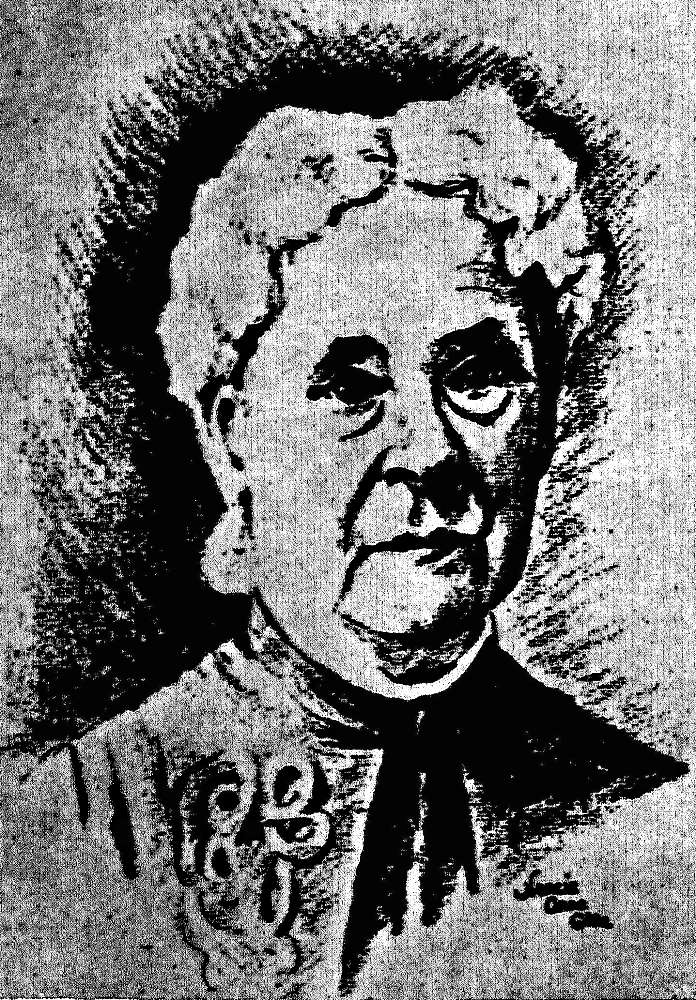
Brothers and sisters both of herself and of her husband were then living, and all were in the prime of life. The journey was made by rail from Cleveland to near the head of Seneca Lake, where some days were passed. Then down the lake to Geneva, at which place and at Buffalo, Canandaigua, Waterloo, and Seneca Falls their relatives mostly resided. Mrs. Bloomer delivered one or more of her lectures during the winter; but this was a season of rest for her, and one she greatly needed. Her long years of work on the Lily had ended, although she still continued to write monthly communications for its columns. The little village of Aurora, the place of her husband’s nativity, was also one of her stopping places. Near it was a Friends’ or Quaker neighborhood, and her sojourn was with some of these kind-hearted people. One of them was Humphrey Howland, a venerable man and an old resident. With these kind hosts Mrs. Bloomer attended a fifth-day morning meeting in their plain frame meeting house, and had an opportunity of witnessing their peculiar customs and their mode of religious service. The building was of the plainest kind and wholly devoid of paint. The people sat on wooden benches, in profound silence, the women on one side, the men on the other with their hats on. After the stillness had lasted nearly half-an-hour a comparatively young woman arose, and after laying aside her bonnet proceeded to deliver a most earnest exhortation to all present to live holy lives. And so Mrs. Bloomer on that day listened to a woman preacher. Then ensued a season of quiet thinking; after which all arose to their feet, handshaking followed all round, and the good people departed to their homes. By special invitation, Mrs. Bloomer delivered one of her lectures in the village. And so the winter passed among relatives and friends rapidly and pleasantly away, and the time drew near when she must leave for her new home in the far distant west.
This had been purchased by her husband while on a visit to Council Bluffs, in the state of Iowa, the previous autumn. It was in those days a long journey to undertake, especially as a large portion of it must be made either in stagecoach or by steamboat, and was therefore looked forward to with a great deal of interest.
STARTS FOR IOWA.
Finally making her adieu to her parents, to brother, sisters and relatives, she started westward about the 20th of March. A few days were spent with Mr. C. A. Bloomer, a brother of her husband, at Little Rock near Buffalo, and several more in the family of Mr. F. V. Chamberlain, in Chicago. That city was just then beginning to put on metropolitan airs and had a population of 40,000 or 50,000. Here Mrs. Bloomer bade good-bye to a niece who had accompanied her thus far, and who took the cars to meet a brother in the central part of the state. Leaving Chicago, the travelers proceeded by railroad to Alton. The country on either side of the road exhibited the vast prairies of the state in an almost unbroken condition for a great part of the way, and it is recollected that from the car windows deer and other game were frequently seen running at large. Springfield, the state capital, was then only a small village. The railroad terminated at Alton, and from thence the passage was by steamboat to St. Louis. At that city, then just beginning to loom up in importance among the great western towns, the halt was first at a hotel; but a call having been made at the hospitable home of Mrs. Frances D. Gage, her house thereafter became the home of the travelers until they embarked on a steamer on the Missouri River for their destination.
We now give Mrs. Bloomer’s reminiscences, written some years later by herself:
“EARLY DAYS IN THE WEST.
“In compliance with the wishes of my old-settler friends, I have called to remembrance and jotted down some of the events connected with the early years of my residence in this western land. I fear they will not prove as interesting to my readers as they were to me at the time of their occurrence and are now as I recall them after a lapse of thirty-eight years.
“One beautiful spring day in the middle of April, 1855, I first set foot on Iowa soil in our neighboring city of Glenwood. We came from our New York home to settle in Council Bluffs. The only public conveyance at that time to this section of the country was the stagecoach across the state from Davenport and the Missouri-river steamer hailing from St. Louis. Preferring the steamer we went to St. Louis to embark for our destination, but learned on reaching there that owing to low water no boat had yet been able to come as far as this city, St. Joseph having been the farthest point reached.
“DELAYED IN ST. LOUIS.
“Encouraged with the hope that by tarrying in St. Louis a week we could come all the way through by steamer we restrained our impatience and spent a week very pleasantly with our old-time friend, Frances D. Gage. She was a noted writer and lecturer of that day, but has since laid down the burden of life and gone to her reward.
“During our stay in St. Louis Mrs. Gage and I together held a woman’s-suffrage meeting in the library hall of that city, which was largely attended and well received by press and people. At the end of a week as there was yet no prospect of a rise in the river we took a packet and came on to St. Joseph. Here we had to wait two days for the stage, which only made tri-weekly trips to Council Bluffs and had left the very morning of our coming to the Missouri town, some hours before we arrived. The hotel at which we were obliged to stop was a very ordinary affair, as was common to western towns at that early day. The waiting was long and tedious. We could not even walk about and view the city because of a high wind that prevailed and sent the dust in clouds into our faces.
“THE MISSOURI RIVER’S RAVAGES.
“Here we first saw the devastations the Missouri River was making in eating its way up into the city and undermining great brick buildings and swallowing them up in its waters. The second day of our arrival it got out that we were at the hotel, and all unknown to us some progressive or curious ones went about and obtained numerous signatures to a paper requesting me to give them a lecture. The first intimation I had of this was after supper, when I was summoned to the parlor to meet two gentlemen who, after introducing themselves, made known the object of their call and presented me with the paper largely signed by the citizens begging me to give them a woman’s-rights lecture before leaving the place. Thanking the gentlemen for their kindness, I informed them of my intended departure in a few hours and that it would be impossible to comply with the request. They replied they were aware of my going and for that reason they wanted the lecture that very evening. There would be time before the stage left at ten o’clock in the evening. ‘This evening, gentlemen!’ said I; ‘how can that be when there has been no notice given?’ One of them looked at his watch and said: ‘It is a little after seven o’clock. We will give you a good house in an hour if you will consent to speak, the lecture to commence at eight o’clock.’
“CONSENTS TO DELIVER A LECTURE.
“Being so urged I reluctantly consented, though with many misgivings, for I could not understand how an audience could be collected in an hour. I had never yet refused to proclaim the new doctrine of woman’s rights when I found people anxious to hear and opportunity offered and I could not go back upon it now.
“My consent obtained the gentlemen left, while I hastened to my room to make known to my husband the extra effort I was to make in the few hours intervening before we started on our homeward journey. And it was an extra effort, for my trunk was packed and strapped and must be opened, for I was not willing to go upon the platform in my traveling dress. I, who had ‘turned the world upside down’ by preaching a new gospel and was being sorely criticised therefor, must make as good an impression as possible with my clothes at least. Immediately after I reached my room we were startled by hearing a great outcry and ringing of bells on the street. Rushing to the window we soon learned the cause. Passing along the sidewalk under our window was a large black man ringing a dinner bell.
“ODD METHOD OF ADVERTISING.
“Every other minute the bell would stop and then come forth the stentorian cry: ‘Mrs. Bloomer will lecture at the courthouse at eight o’clock.’ Then the bell again, and again the cry, and the same cry and ringing of bells off on the other streets, till the town was alive with noise. We were greatly amused over this novel western way of giving a notice and calling a crowd together, and we realized then how fully a notice could be given in the time fixed.
“My preparations were delayed somewhat over this new use to which slaves could be put, for it was in slavery days and the bell-ringers were slaves. However, we were at the courthouse on time, and sure enough the place was filled with an eager and curious crowd that had come to see and listen to that strange woman whose name and doings had startled the world from its old-time peace and sobriety. It was the first time one of the ‘women agitators’ had come so far as St. Joseph, and it was not strange that an anxious audience awaited me.
“OFF IN A STAGECOACH.
“Returning to the hotel after the lecture, I hardly had time to remove my hat when I was again summoned to the parlor, there to meet the gentlemen who had called on me a few hours before. They had come to ask for another lecture, and on my declining urged that if necessary Mr. Bloomer could go on to Council Bluffs by himself and I follow a day or two later. They had heard enough to whet their appetite for more and were very anxious to hear me again. But I was firm in denying their request. I had given them one lecture with considerable inconvenience to myself. I was far from well, was anxious to reach the end of my journey, and could not think of traveling by myself on a stagecoach through a strange land and would not be persuaded to tarry with them longer. At two o’clock on a rainy morning, feeling tired and sick and suffering from a severe cold and want of sleep and rest, we bade adieu to St. Joseph and took the stage for Council Bluffs.
“The coach was filled with passengers, but no women were aboard but myself. There were several young men bound for the newly organized territory of Nebraska, and the famous Kit Carson returning to his home in Nebraska. Having heard much of him we eyed him with a good deal of interest and curiosity, but saw nothing remarkable about him except his clothes, which were of buckskin, fringed around the bottom, wrists and collar, a style entirely new to me. One of the young men had come from the far east, Massachusetts, I think, going to Nebraska to seek his fortune. He had run out of money and found himself without means in a land of strangers.
“BEFRIENDS A STRANGER.
“At one of the stations where they changed horses, he approached Mr. Bloomer and asked for a loan, offering his watch as security. Though an entire stranger Mr. Bloomer concluded to befriend him, so gave him the money he asked and took his watch. But when the time came for him to leave us and cross into Nebraska, Mr. Bloomer gave him back his watch. He felt that he could trust him and that he would need his watch. It was not a misplaced confidence, for in due time the money was returned. All of the passengers left us before we reached Glenwood at some point below to cross a ferry into Nebraska, and from there on to Council Bluffs we were the only passengers. It was a real relief to have the coach to ourselves, after riding two days and a night crowded in with six or eight men, and we saw them leave without regret.
“ARRIVES AT GLENWOOD.
“On the afternoon of April 15, 1855, we reached Glenwood; and here, while our driver tarried to change horses, we left the coach and took a survey of our surroundings. The place was small, the hotel uninviting, but the country beautiful. Being tired with our long cooped-up ride, we strolled on in advance of the stage and soon reached a lovely grove. Here we sat down upon a log to enjoy the scenery and eat a light lunch from our basket. The stage soon came along, and we took our seats inside feeling refreshed by our walk and rejoicing that we were nearing the end of our 1,500-mile journey.
“EARLY HARDSHIPS.
“At about five o’clock the second day out from St. Joseph we drew up in front of the Pacific Hotel in this city, which was then the hotel of Council Bluffs and comprised about half of what has since been known as the Inman House. Here we remained two weeks hoping in vain that a rise in the river would float a boat bringing our household goods up from St. Louis; but finally went to housekeeping with a few things kindly lent us by a friend in a home purchased some months before and in which, with some additions, we have continued to reside for thirty-eight years. We had brought with us from our eastern home a trunk full of choice shrubbery and fruit grafts. It was necessary that these should be planted and cared for; so we went into our home under these discouraging conditions, and only planted out our shrubbery to see it sicken and die under the burning sun for want of water.
“SUFFER FROM DROUTH.
“For weeks there was no rain and no water in the well to give the thirsty plants, which had beautifully sprouted in the trunk, and so we lost them all. One morning a great mystery came to us. We had set out a patch about twelve feet square with apple grafts. These were budded and growing about two feet high, when all at once we discovered that every one had been cut off near the ground with a sloping, smooth cut as with a sharp knife. We could come to but one conclusion, and that was that some one envying us the trees had taken off half of them, thinking to root the tops. But why did they not pull them up and take the whole? was our query. It was to us ‘a nine days’ wonder,’ but was finally solved by our learning that rabbits had been the thieves and had cut them off so smoothly with their teeth.
“FURNITURE WAS SCARCE.
“Our first housekeeping in Council Bluffs was in two rooms with bare floors and bare walls. The furniture consisted of two old wooden chairs, an old table, a bed made on the floor, and three trunks. The bedstead lent us with the bed went together with screws, but as the screws could not be found the bedstead was useless and the bed had to lie on the floor. To these borrowed things, we added an old-fashioned cook stove that we were so fortunate as to find here and a few common dishes. Here, with these surroundings, I received my first calls and made my first acquaintances. If more than two happened to call at the same time the two chairs were utilized as far as they would go and I and the others sat on the trunks. It was sometimes unpleasant and a little mortifying, but I made the best of it, knowing it would not always last.
“DAYS OF HOSPITALITY.
“And really I don’t know as my furniture and surroundings made one bit of difference in my welcome to Council Bluffs society. I afterwards learned that many others were little better off, and that there were no furniture and carpet stores in the city. Nevertheless, I was more than glad when word was brought us, on the morning of July 4th, that a steamer had arrived with our household goods. I was glad to get carpets down and my rooms made more comfortable, for our own sakes. On that Fourth of July the citizens were so patriotic as to have a celebration. The oration was delivered in ‘Hang Hollow,’ so called because an emigrant murderer had been hung there, but by later citizens named Glendale. We attended this celebration and had pointed out to us the tree from a limb of which the man was hung. The reader and orator for the day I do not remember.
“EARLY OMAHA.
“Having joined the people of Council Bluffs in celebrating in the forenoon of this Fourth of July, 1855, we took a carriage and drove over to Omaha about noon, crossing the Missouri on a ferry-boat. This being the first Independence Day in Nebraska since it had become a territory, the people of Omaha showed their patriotism in common with the rest of the country by celebrating. It was the first time, too, that I had stepped foot on Nebraska soil, so the day possessed more than usual interest. We found that an oration had been delivered by Secretary Cuming, then acting governor. This had been followed by the usual reading of the Declaration of Independence. The exercises were over when we reached the Douglass House, then the only hotel in Omaha. Across the road from this place a speaker’s stand had been erected. A dinner table was placed on the east side of the house and covered with boughs cut from trees for shade. Liquor flowed freely.
“Council Bluffs was then a city of 2,000 or 3,000 inhabitants. The buildings were mostly of logs. There were no sidewalks. The streets were not opened, beaten paths through fields of sunflowers answering for thoroughfares in many places. The place was well supplied with hotels. Besides the Pacific House there was the City Hotel, a little low log building on the corner of Broadway and Glen Avenue, kept by Mrs. Dunn; and farther up on Broadway, where the blue barn now stands, the Robinson House kept by G. A. Robinson. This was also an old log building covered with cottonwood boards on the outside and lined with muslin tacked to the logs on the inside.
“PLASTERED HOUSES WERE SCARCE.
“I think there were but two or three plastered houses in the city at that time, and no greater number built of lumber. Nearly all were of logs covered outside on the front with cottonwood boards and on the inside, both walls and ceiling, with unbleached muslin sewed together and nailed on.
“Bancroft Street, now Fourth, where we had made our home, was open but a little way from Willow Avenue, the bright bluffs extending across to Main Street. Besides our house, which was newly built, the frame house adjoining and a log house just below were all the street contained, and from Bancroft to the river there was not a house to obstruct our view. Bluff Street was not opened, and no house of any description was built upon it. It was only a high bluff, which extended down across Bancroft Street to Main Street. Turley’s Glen was the only opening, being a resort for the Indians, who frequently pitched their tents and camped there for days together. The little valley between the bluffs contained Broadway, the only street. No good buildings were on it except a few log structures.
“WORSHIPPED IN LOG CHURCHES.
“Of churches I think there were but two. The Methodists had a small frame building on the side of the hill in rear of where the Ogden House now stands. The Rev. Mr. Shinn was the pastor. The Congregationalists worshipped in a log building on Broadway, west of Atkins’ drugstore. The Rev. George Rice owned this property at that time. He lived with his family in one log house, and held services in the one adjoining. This latter was fitted up for a church with a row of seats around the wall made of slabs with the flat side turned up and sticks put up through the holes bored in the floor for legs. The pulpit was a dry-goods box turned up on end with the open side next the preacher. The congregation was not large and was made up of people from several denominations, many of whom were new arrivals in the city.
“EARLY CHURCH WORK.
“One morning soon after we were settled in our new home, I had a call from the Rev. Mr. Rice, of the Congregational church, inviting me to attend a meeting of the sewing society at his house in the afternoon. I went and found there about half-a-dozen ladles. This was the annual meeting, and officers were to be elected for the ensuing year. This church had commenced the erection of a new edifice on a lot donated by S. S. Bayliss, on Main and Pearl Streets, opposite the park. It was of brick and the walls already up, but they had no money to go further. The object of the ladies was to raise money for flooring and seating the new church, and they evidently wanted to infuse new spirit and aid into their society. I was consequently chosen their president, and Mrs. Sophia Douglass who was also a newcomer was elected first director—thus putting their affairs into the hands of two Episcopalians. Inasmuch as there was no church of our own here and we were attendants upon the Rev. Mr. Rice’s instructions, we took hold of the work with a will and the following winter carried through a very successful fair by which we raised money enough to put the new church in shape.
“DEFENDS WOMAN’S RIGHTS.
“Thanksgiving evening, 1855, by invitation of the Rev. Mr. Rice, I gave a temperance lecture from the pulpit of the new church and a little later, about the last of November, one on ‘Woman’s Enfranchisement’ at the Methodist church, by invitation of the Men’s Literary and Debating Society; and again, by invitation of the same society and the Rev. Mr. Rice, Jan. 18, 1856, I spoke on ‘Female Education’ at the Congregational church. During the following years I gave several lectures on some phase of the woman question.
“At the close of my lecture on ‘Woman Suffrage’ in the Methodist church, in November, 1855, I was approached by Gen. William Larimer, then of Omaha, but recently of Pittsburg, Pa., and a member of the first Nebraska legislature, with a request that I go to Omaha and repeat my lecture before the legislature. A few days later I received a formal invitation from the legislature, signed by twenty-five of its members, to give them a lecture on woman suffrage or such phase of the woman question as I might select.
“Jan. 8, 1856, I made my appearance in the House of Representatives of Nebraska, having accepted the invitation to appear before that body. I was escorted to the platform by Gen. Larimer, who made way for me through a great crowd who had congregated to hear me. Indeed, it was a packed house, men standing up between those who were sitting on benches around the room, and leaning against the wall, and the platform was so packed up to the very desk that I hardly had elbow-room. Gen. Larimer introduced me amidst silence so profound that one could almost hear a pin drop, and I was listened to with the most absorbed interest to the end. Then came great applause and a request that I give the lecture for publication. This latter I declined doing. Omaha was hardly large enough and was without daily papers and, besides, I felt that I might wish to make further use of the lecture and publishing it would prevent its again being brought out.
“THE NEBRASKA LEGISLATURE INTERESTED.
“The papers gave very flattering notices of the lecture, and it caused a great deal of excitement among the members of the legislature; those opposed to the principles it discussed showing opposition, while its friends, who were in the majority, were loud in extolling it. The result of the lecture was the bringing in of a bill in favor of woman suffrage some days later, which passed the lower house, and was read twice by the senate, and only failed of a passage because the session came to an end before it could be reached for a third reading—the last hours being consumed by the wrangling of the members over the fixing of county boundaries and the location of city sites. Men talked to kill time till the last hour expired and the session adjourned sine die. A number of important bills were not reached, the woman-suffrage bill among them. I was assured by Gov. Richardson and others that the bill would undoubtedly have passed had a little more time been allowed them. The session was one of only forty days and it was near its close when the bill was introduced. Other matters engrossed the attention and the speaker’s gavel stopped all further discussion of matters in dispute.
“DANGERS MET IN CROSSING THE MISSOURI.
“In the year following I gave a lecture on ‘Woman’s Education,’ on invitation of the Library Association of Omaha, and for its benefit. I so well remember that trip to Omaha! It was in the winter. The river was breaking up and when I reached it I found the ice floating and no way to get across except on a flatboat, which was poled across. I feared to place myself upon it and came near turning back. But I remembered my engagement and saw a carriage waiting for me on the other shore; so, with many misgivings and assurances from the boatmen, I ventured on board and was landed safely on the other side. The lecture that evening was given in the Presbyterian church to a full house, Dr. Miller presiding and introducing me. But if I ran a risk in crossing to Omaha my heart fairly stood still coming back. A high wind was blowing and when I reached the river I found it filled with great blocks of floating ice that endangered any boat it encountered. The ice was running badly, and there was no conveyance over, except a skiff rowed by two boatmen. The flatboat could not be managed in such a gale. The skiff was in great danger of being swallowed up by the high tossing waves or struck by the great cakes of floating ice and capsized.
“BUFFETS THE ICE IN A SKIFF.
“The boatmen at first positively refused to take me into the skiff. The man waiting could go, they said, but the woman must be left behind. I thought of my danger in embarking and being swallowed up by waves; and I thought of husband and child awaiting me at home, and no one to care for them; then I asked why I could not cross as well as the man. The boatmen said, because women would get frightened and jump and rock the boat and upset it, and there was really great danger. Then I said if I will promise to sit very still and not stir, can I go? The gentleman interceded, and on my promise I was allowed to get into the boat. I sat in the middle of my seat and held on to each side of the boat, and I am sure I never stirred a muscle or winked an eye or hardly breathed while those brave men guided their skiff over the tossing waves, which seemed to engulf us at times and anon bore us on their tossing crests. Soon we were safely over and landed, ready to take stage for home, feeling that we had been mercifully preserved on our two very dangerous trips, and on my part resolved never to incur a like danger again.
“WOMAN’S EQUALITY IN LAW.
“On my previous trip to Omaha, I had gone in an old-fashioned stagecoach and crossed the river on a ferry-boat. But the ferry-boat was laid up at this time on account of the ice, so there was no way of crossing but the skiff and the flatboat while the ice was running. Thanks to enterprise and skill, we at this day know nothing of such inconvenience and danger. And thanks to progress and enlightenment, woman’s cause has so far advanced that there is little need of her making extra effort to bring her claims and the knowledge of her rights to equality in law with man before the people.”
DESCRIBES COUNCIL BLUFFS.
Writing in 1855, soon after her arrival in her new home, Mrs. Bloomer describes it as follows:
“Council Bluffs is located on the east side of the Missouri River, in Iowa, instead of on the west or Nebraska side, where it is placed on most of the maps. It lies about three miles from the river, the level lands or bottoms being about that distance in width; and then commences a chain of high hills, or bluffs, which line the Missouri for thousands of miles and which, at this point, extend eastward in the state some five or six miles. These bluffs are composed of immense piles of yellow marl varying in height from fifty to two hundred and fifty feet and thrown into every conceivable shape and form—rounded, oblong, conical, and peaked. Sometimes we see them covered with trees and bushes, but most commonly with only grass and flowers. They present at this season of the year, robed in their rich carpet of green, a delightful appearance. Among these bluffs are numerous beautiful valleys, some of them sufficiently extensive for large farms, and through which clear and pellucid streams of water flow gurgling down to join the mighty Missouri, forming as they find their way across the bottoms streams which glisten as pure as silver in the sun. It was along one of these valleys, a fourth of a mile in width and extending for upwards of half-a-mile into the bluffs, that the old town of Kanesville was built. Here a log city was constructed, and here for several years dwelt from two to eight thousand of those singular people who have now found a home in the vicinity of Great Salt Lake. These people, or most of them, remained here until 1852 when they took their departure, selling out or surrendering up their claims to the gentiles. Hundreds of the log cabins in which they lived have disappeared, but many are still standing. The gentiles who succeeded the Mormons soon began to build better houses. Several good frame and brick buildings have already been constructed, including a three-story brick hotel and the land office, besides a number of stores and private residences.
“Others are in process of creation and will be carried forward as fast as materials and labor can be obtained. On all sides we see the work of beautifying the town going forward. Gardens are being fenced, trees planted, streets opened and graded, and every preparation made for accommodating the population. The city is extending out on the bottoms towards the river, the bottom lands being here high and dry and in no danger of being overflowed, and the probability is that at no distant day they will be covered with dwellings. These lands are considered very valuable and are held at high prices by their owners. The soil is extremely rich and productive and finely adapted to either farming or gardening.
“Situated as we are three hundred miles west of the railroads connecting the Mississippi with the cities of the East, we of course neither hear the shrill whistle of the locomotive nor see the trains of cars dashing through our streets with a velocity that outstrips the speed of the light-footed deer; but we are living in full expectation of the day when these things will be as familiar to us as they now are to my eastern readers. This city will be the western terminus of the first railroad built across the state, and it is fondly hoped and expected that three years hence we shall be startled by the shrill whistle of the iron horse as he comes to bathe his head in the waters of the Missouri, and from here, or from Omaha, directly opposite, will he set out on his long journey to the most western limit of the continent. Then Council Bluffs will no longer be ‘out of the world,’ but directly in the centre of it, and many who now hesitate about making their home here will regret that their doubts and fears debarred them from uniting their labors with their more enterprising countrymen in building up a great and prosperous community in the very centre of the Union.”
It will be noted that the above was written in 1855; and with what remarkable correctness Mrs. Bloomer prophesied as to the future of the country in which she had just taken up her residence must strike every one, except that it was nearly ten years instead of three before the railroad reached Council Bluffs.
She then goes on to advise people to come West and acquire land (then to be had at government price) and thus secure homes for themselves, and then continues:
“My residence is on a gentle elevation at the foot of one of the highest bluffs in the city, with a western front commanding a fine view of the grass-carpeted bottoms upon which hundreds of cattle are grazing, of Omaha across the river, and of the plains of Nebraska beyond which stretch away in the distance as far as the eye can reach. I love to ascend the bluffs in the rear of our house, and watch the setting sun as it descends below the horizon far off towards the blue and peaceful waters of the Pacific; and as I do so, I contemplate the day when the wild valley before me will be filled with the hum and stir and thronging multitude of a great city, and these bluffs covered with elegant residences and tasteful retreats from the turmoil and activity that will reign below,—for no one here doubts that such is to be the future of Council Bluffs.”
DESCRIBES HER NEW HOME.
Here is also another letter written by Mrs. Bloomer in May, 1855, giving a further description of her home in the west and of its surroundings:
“Council Bluffs, May, 1855.
“My dear Mrs. Vaughan:
“From my far-distant home among the bluffs of the Missouri I send you greeting. We have now been here four weeks, and for two weeks I have been installed as housekeeper in my own house. The business of housekeeping, as you well know, is not new to me; but it is a long time since I have confined myself to that business alone, and it seems a little strange after the many and various duties devolving upon me for the last six or seven years to be relieved of the greater part of them and to settle down in this strange place with nothing to care for save my house and garden.
“Far from the place of my nativity, far from the spot where since childhood all the years of my life have been spent, save one, far from dearly loved kindred and highly cherished friends, far from all the noble spirits with whom I have long labored in the cause of humanity, far from all I have ever best known and loved save him who is my companion in life’s journey, I have commenced life as it were anew. Here, surrounded by lovely flower-decked prairies and nestled down among the hills that overlook the Missouri and the vast plains of Nebraska beyond, we have chosen our future home and shall do what we may by our aid and influence for the upbuilding and prosperity of this infant city.
“Do not imagine us in a wild and uncultivated country, deprived of the comforts of life, and of the enjoyments and advantages of refined society, for it is not so. Neither are we surrounded by hordes of savage Indians and in danger of falling victims to the tomahawk and scalping-knife, as some people in the east imagine. * * * We do not consider ourselves as far out of the world as we are set down by those who realize nothing of the immense emigration into the mighty West, or of the energy and ‘goaheadativeness’ of the people who come hither. We see some Indians occasionally, it is true, but they are only visitors from Nebraska, they do not belong to this state. A party of Pawnees some two weeks ago pitched their tent on the summit of a high bluff near our house where they remained until last Sunday, when they struck their tent, packed it and all other movables on the back of a mule and then took up their line of march to the westward, the men riding on horseback while the ‘squaws’ went on foot. The mule was led by a squaw. Two squaws had papooses on their backs, and another carried a dog in the same manner. I had frequent visits from some of them while they remained here, and on leaving they called to bid us good-bye, in tolerably fair English. There is something interesting to me in these children of nature and I almost regretted their departure.
“The Indians who come here are perfectly harmless and no one pays any attention to them. They come and go at their pleasure. We shall see little of them hereafter, as the government has just paid off its indebtedness to the Omahas and they were then removed to the new quarters assigned them about a hundred miles to the northward, in Nebraska. They were all collected at Omaha City, and from thence started on their journey accompanied by the Indian agent who is to pay them twenty thousand dollars in cash when they reach their destination. The tribe now numbers but eight hundred and five, counting men, women and children, and has but two hundred men capable of bearing arms. Ten years ago they numbered sixteen hundred. Their parting from their old home and the graves of their fathers is said by those who witnessed it to have been exceedingly interesting and pathetic. The women and the aged men wept, and the stout-hearted warriors could ill conceal their emotion of tenderness and affection.
“People are now flocking in here in considerable numbers, either to settle or to make investments in real estate, in the hope and expectation of realizing a fortune by the rise in the value of property. We have dally stages from the east and south, and they generally come loaded inside and out to the extent of their capacity. The land-office is crowded both by settlers and speculators eager to enter the choicest lands remaining unsold. The land directly adjoining the town, and for some five or six miles back, is all taken, and one cannot buy a farm at Uncle Sam’s prices within that distance of the city. Good land can be obtained at second hand for from five dollars to ten dollars per acre.
“By the laws of the state, women can own and hold property, both real and personal, and I am happy to know that many women are availing themselves of these provisions by securing to themselves a share of its broad acres. I do wish that more women would become owners of the soil, and I am especially anxious that you, Mrs. Vaughan, and those women who labored so untiringly with you in the cause of humanity, should come in for a share. I know that such women do not usually carry long purses, and are not very well rewarded for their wearing toil, yet with land at $1.25 per acre it does seem as though they ought to be able to secure at least eighty acres. One woman who is supporting herself by typesetting in your state has secured an interest in this vicinity, and she is now hoarding her wages that she may add a few acres more to those she has already. A few years hence, these lands will be valuable and the owners will realize something from their sale, if they do not wish to retain them.
“This city is the western terminus of railroads to be located across this state, and it is ardently hoped and expected that ere many years the shrill whistle of the iron horse will be heard among the bluffs of the Missouri. There are two newspapers published here and both are well sustained, I am told. There are two church edifices nearly completed, Methodist and Congregational. Each has a settled pastor and services are held regularly on Sundays. The people who settle here are mostly from the east, and are nearly all Americans; consequently we have an intelligent, well-ordered community. Omaha, the capital of Nebraska, is situated directly opposite, on the western bank of the Missouri, and in full view of this city. It now contains about four hundred inhabitants.
“A. B.”
The personal reminiscences of Mrs. Bloomer given above show very fully that, in removing to Council Bluffs, she did not give up any of her wonted zeal in behalf of those reforms to which so much of her life had been devoted. She continued to write for the Lily so long as its publication was kept up, and the productions of her pen frequently appeared in the columns of the city papers, and of other papers in the state and throughout the Union.
LIFE IN COUNCIL BLUFFS.
But the first months of her life in Council Bluffs were quiet ones. They gave her opportunity to gain the much needed rest which years of labor and activity had rendered necessary. She spent many hours in roaming over the bluffs and valleys. Life seemed to have opened a new page for her, and in its daily duties she found sufficient employment. The population of the city was small and social intercourse amongst its members, as in all new western communities, was pleasant and unconventional. Everybody knew everybody else, and all whose characters were clean and untarnished met each other on a footing of perfect equality. All attended the same church and all joined in the same festivities. It was in many respects an ideal state of society; being far away from railroads and the great centres of population, there was great exemption from the cares and anxieties of older communities. Housekeeping was the first duty that fell upon Mrs. Bloomer, and she strove to make her new home pleasant and inviting. It soon became the resort of many new as well as old friends. People coming to the city very often desired to meet her and she always received them kindly, extending to all a generous welcome. With her husband she early joined with others in the organization of a literary club, taking an active part in its proceedings.
AGAINST STRONG DRINK.
Mrs. Bloomer had begun her public life in New York state as an advocate of Temperance. She had opposed at all times the use as a beverage of intoxicating drinks in all their various forms, and in her adopted state she continued the earnest advocate of these ideas and principles. She wrote and spoke when called for in their advocacy and defense. When a lodge of Good Templars was organized in 1856, she became an active member and continued her membership in it so long as it was kept up.
Though the custom of using strong drinks at social gatherings was common in her new home, yet she firmly set her face against it and nothing of the kind was ever found in her dwelling. When societies were organized, plans adopted, money expended in promoting temperance principles she was always found among the most zealous in promoting sobriety in all its forms.
In subsequent years, Mrs. Bloomer became an active worker in the Women’s Christian Temperance Union; and in an address delivered before it in Council Bluffs, some ten years before her death, she referred to her own and others’ labors in the city as follows:
HER EXPERIENCES.
“I have thus given you, as briefly as possible, a sketch of the introduction and early efforts of woman in this cause of temperance. It may not be so interesting to you as to those of us who encountered the opposition, bore the suffering, endured the struggle, who were subject to ridicule, censure and frowns for the cause’s sake and for woman’s sake. It is well that you of this later generation should know something of what has gone before; that you should know that, long before the W. C. T. U. arose, organizations of women did as great and greater work than that large body of women are doing. We had a cause and a purpose, and there was no lack of zeal and enthusiasm. There was no cold-hearted, half-way work with the Washingtonians and those who enlisted under them. I must mention Rev. George G. Rice, of this city, as among the liberal-minded men of early days. On my coming to Council Bluffs, he very soon called upon me and invited me to give a temperance lecture in his church; and later, at his request, I spoke on the education of girls from his pulpit, and also the church was freely given me for woman’s-rights lectures.
“Council Bluffs has always been a hard field for temperance work. Originally a frontier town, it was for many years almost completely in the hands of the gambling and liquor-drinking classes of the community. On my first coming here, in 1855, Sunday was hardly recognized at all as a day of rest or religious observance. It was the carnival day of the pleasure-seeking of every kind. Business was carried on as usual. The saloons were open and games of chance openly carried on along the streets. But even then there were a faithful few. A division of the Sons of Temperance had been organized, and very soon after we came we assisted in the organization of a lodge of Good Templars. These two societies handsomely fitted up and carpeted a large hall in Empire Block, opposite the Pacific House, and held regular meetings on different evenings of each week for several years. But financial troubles coming on, they were unable to meet their expenses, and before 1860 both had ceased to exist. I do not know whether the Sons of Temperance ever renewed their organization, but think they did not. But the Good Templars have at different times started up anew and I am glad to hear are quite prosperous at the present time. I have a strong feeling of sympathy with this organization because I was connected with it in New York, Ohio, and here, in my earlier days, and because it admits women to its membership on a footing of equality with men, and it was through its membership women passed through struggles for recognition. I have frequently assisted in the formation of lodges, and one of my last acts before coming to Council Bluffs was going by myself as deputy grand-chief templar to Indiana to organize two new lodges. Other organizations for promoting temperance work have existed here at different times. The late D. W. Price was president of one of the most effective of these, and really did a good work. Moved by his eloquent and effective pleadings, many votaries of strong drink were reformed and restored to their right minds and still remain sober citizens.
“The women of the city have not been wholly remiss in their duties to this cause, though they have not done all they could and should. In 1874 a society was organized, a constitution adopted, and a committee appointed to canvass the city to obtain memberships, and signatures to a petition to the city council asking that the laws enacted for their protection against liquor selling be enforced, and the license law amended. But their petitions passed unheeded, as those of tens of thousands of women in other sections had done before them. They were laid on the table as unworthy of notice, and when taken up received but one vote in their favor. What cared our city fathers for the petitions of disfranchised women? They had no votes to give to affect them at the next election, while the veriest drunkard had; and so should they not consult their constituents? Temperance workers, either men or women, have never received much help from the constituted authorities either of our city or county. Generally they have looked upon violations of the law with indifference. That is the case at the present time. Although we have a rigid prohibitory law now in force in this state, its provisions are openly violated and whatever effort is made to enforce it comes not from the men sworn to enforce the law but from individuals in private life, who are thus compelled to give their time and money to do that which should be done by officers elected for that purpose.”
Mrs. Bloomer fully believed in the virtue of prohibitory legislation. She rejoiced when this principle was adopted into the laws of Iowa and strove in all suitable ways to secure the advancement of those laws. She wrote frequently and largely in their defense and the columns of the city press bear witness to the zeal with which she advocated her views. She was greatly distressed when her rector came out in his pulpit and preached sermons against the virtues of prohibition, and censured and criticised his position with great force and spirit.
FOR WOMAN’S ENFRANCHISEMENT.
But beyond all other questions, Mrs. Bloomer’s thoughts, hopes and labors were given to Woman’s Enfranchisement. In that cause she was a pioneer. She studied, considered and dwelt upon it in all its various bearings. She believed most sincerely that the Temperance principle of which she was an ardent advocate could never fully triumph until Woman’s voice could be fully and decisively heard in its settlement. This was her position in all her writings and addresses on that subject, and these were continued and frequent so long as her strength lasted. Moreover, she fully believed that the unjust legal enactments coming down from a semi-barbarous age, together with the harsh teachings of legal writers, would have to be completely changed in letter and spirit before woman could occupy the high place for which she was designed by her Creator and become in very deed and truth a helpmeet for man. And finally she insisted that the precious right of suffrage, the high privilege of casting a ballot along with man, should be accorded to woman as her inalienable birthright, and that she should exercise that right as a solemn duty devolving upon her as a responsible human being and as a citizen of a free republic. These were unpopular doctrines when she first commenced to espouse and uphold them in her paper, more than fifty years before her decease; but she never failed to maintain them, in all suitable ways and at all proper times, throughout her subsequent career.
Her house in Council Bluffs was always the welcome resort of those who were engaged in proclaiming these doctrines and urging them upon the favorable consideration of the people of the great West. From time to time, especially in the earlier days, nearly all these prominent advocates were her guests. Among them may be named Miss Susan B. Anthony, Elizabeth Cady Stanton, Mary A. Livermore, Anna Dickinson, Mrs. M. H. Cutler, Frederick Douglass, Phœbe Cozzens, and many others. And frequently when these advocates of her favorite reform visited her she arranged for public meetings for them in church or hall, so that through Mrs. Bloomer’s instrumentality her neighbors and friends were afforded opportunity of listening to some of the most noted lecturers of the day; and it is here no more than strict justice to record that she was, in all her work of promoting temperance and woman’s enfranchisement, aided and sustained by the cordial assistance and support of her husband. No note or word of discord ever arose between them on these subjects (and, indeed, very few on any other); they passed their long lives happily trying to alleviate the sufferings and right the wrongs of their fellow-travelers through the journey of life.
Mrs. Bloomer’s pen was also very busy and she frequently wrote for the newspapers in her own city and in other parts of the country. Whenever an attack was made, either upon her personally or upon her favorite ideas, it was sure to call forth from her a vigorous reply. She did not confine herself to temperance and woman’s rights; but wrote freely and often upon other kindred subjects, also. It would extend this work far beyond its prescribed limits, to republish even a small part of the productions of her pen; but some articles will be given further on. Just here we cannot omit to give one of her replies to the objection that woman should not vote because she could not fight:
VOTING AND FIGHTING.
“My reply to the argument of our opponents that ‘if women vote they must also fight,’ is this: All men have not earned their right to the ballot by the bullet; and, if only those who fight should vote, there are many sickly men, many weak little men, many deformed men, and many strong and able-bodied but cowardly men, who should at once be disfranchised. These all vote but they do not fight, and fighting is not made a condition precedent to the right to the ballot. The law only requires that those of sufficient physical strength and endurance shall take up arms in their country’s defense, and I think not many women can be found to fill the law’s requirement: so they would have to be excused with the weak little men, the big cowardly men, and the men who are physically disqualified. We know there are thousands of voters who never did any fighting and who never will. Why then must woman be denied the right of franchise because she cannot fight? If there are any great strong women who want to fight for their country in its hour of peril, they should be allowed to do so, and men have no right to disarm them and send them home against their will. But as there are other duties to be discharged, other interests to be cared for, in time of war besides fighting, women will find enough to do to look after these in the absence of their fighting men. They may enter the hospitals on the battlefields as nurses, or they may care for the crops or the young soldiers at home. They may also do the voting and look after the affairs of government, the same as do all the weak men, who vote and hold office and do not fight. And, further, as men do not think it right for women to fight, and fear it will be forced upon them with the ballot, they can easily make a law to excuse them, and doubtless with the help of the women will do so. There is great injustice, so long as the ballot is given to all men the weak as well as the strong, without condition, in denying to woman a voice in matters deeply affecting her interest and happiness, and through her the happiness and welfare of mankind because, perchance, there may come a time in the history of our country when we shall be plunged into war and she not be qualified to hold a musket!
“This objection, like many others we hear, is too absurd to emanate from the brains of intelligent men and I cannot think they honestly entertain such views. If they will but give us a voice in the matter, we will not only save ourselves from being sent to the battlefield, but will, if possible, keep them at home with us by averting the threatened danger and difficulties and so compromising matters with other powers that peace shall be maintained and bloodshed avoided.
“A. B.”
PROGRESS.
Mrs. Bloomer was mainly instrumental in organizing a woman’s-suffrage society in Council Bluffs, in 1870, and was its first president. Through her influence woman’s position was greatly enlarged in that community. In 1880, she was enabled to write as follows: “The trustees of the public library of this city are women, the teachers in the public schools, with one or two exceptions, are women, the principal of the high school is a woman, and a large number of the clerks in the dry-goods stores are women.”
The revised Code of Iowa, promulgated in 1873, almost entirely abolished the legal distinction between men and married women as to property rights. As to single women there was, of course, no distinction. That code is still in force, and its liberal provisions in regard to the rights of married women have been still further enlarged. The wife may hold separate property, and may make contracts and incur liabilities as to the same, which may be enforced by or against her as though she were a single woman. So also a married woman may sue or be sued without joining her husband in matters relating to her separate property, and she may maintain an action against her husband in matters relating to her separate property rights. Their rights and interests in each other’s property are identical. They may be witnesses for, but they cannot be against, each other in criminal actions.
It is not claimed that, for bringing about these beneficent changes in the laws of Iowa, Mrs. Bloomer is entitled to the sole credit. There were other efficient workers in the same field; but it is certain that her long residence in the state, and her continued and persistent advocacy of the principles of justice on which they are founded, contributed largely to their adoption by the lawmaking powers.
STATE SUFFRAGE SOCIETY.
The first Iowa Woman’s State Suffrage Society was organized at Mount Pleasant, in 1870. Mrs. Bloomer was present at this gathering of the earnest workers of the state and took an active part in their proceedings. Hon. Henry O’Conner, then attorney-general of the state, was made its first president, and Mrs. Bloomer its first vice-president. On her way home, she stopped over at Des Moines, with Mrs. Anna Savary and with Mrs. H. B. Cutler; addressed in the afternoon a large Temperance gathering on the capitol grounds, and in the evening both ladies spoke on woman’s enfranchisement in the Baptist church. The first annual meeting of the society was held in Des Moines in October, 1871. Mrs. Bloomer presided and was chosen president; she attended its annual meetings in subsequent years so long as she had the strength to do so. She was for years in constant correspondence with its members, and whenever the question of woman suffrage was before the general assembly she did not fail, by petition and otherwise, to do all in her power to promote its success. In 1875 she was an inmate of the Cleveland Sanitorium, and while there delivered to the inmates an address on the subject in which she was so deeply interested. In 1867 she made a long and wearisome journey, while in very poor health, to the city of New York to attend the meeting of the Woman-Suffrage Association, and was elected one of its vice-presidents, a position she continued to hold so long as she lived. She was an interested listener to the proceedings of the Woman’s Council held in Des Moines in 1883, but took no part in them further than a very short address.
HISTORY OF IOWA SUFFRAGE WORK.
Mrs. Bloomer furnished the main portion of the chapter on Iowa in the third volume of the History of Woman Suffrage, published by Mrs. Stanton and Miss Anthony in 1887. In short, the advocacy of woman’s enfranchisement was her life-work from 1851 down to the end of her days. She was in constant written communication with many of its leading advocates not only in Iowa but all over the country. They visited her often in her home, and she was subjected to frequent interviews from newspaper reporters. A volume could be filled with their writings called out by conversations with her. She always treated them with kindness and courtesy, and received many kind notices from the press. She always had a cheerful and pleasant greeting for her many visitors.
Mrs. Bloomer was spared to witness the triumph of many of the reforms she had earnestly advocated. The temperance principle in which her heart was so much absorbed made great progress during her lifetime, and the prohibitive features she so earnestly advocated were engrafted on the laws of her adopted state. She was not spared to see woman accorded a right to the ballot in all the states, but she was cheered by the wonderful progress in that direction that took place all over the world. In Wyoming and Utah women had voted for several years, and only a few weeks before her departure she learned with infinite satisfaction from Mrs. Jennie A. Irvine, a favorite niece residing in Colorado, that the right of suffrage had been granted to women in that state. While therefore she was never herself permitted to exercise that inestimable right, yet she died in the full conviction that only a few years would elapse before it would be accorded to women in all the free countries in the world.
ESSAYS BY MRS. BLOOMER.
In the following pages are given the productions of Mrs. Bloomer’s pen on a variety of subjects. Most of these essays have been printed in newspapers located in different parts of the country, but are here made public again in more durable form. It is believed they will not be devoid of interest to the reader:
“WIFELY DUTIES.
“‘Unto thee shall be his desire, and thou shalt rule over him.’—Gen., iv. 7.
“These words were addressed to Cain by the Creator. They are the same as those used to Eve, except that in the one case they were addressed to the one to be ruled, and in the other to the one who was to rule. The latter is more clearly a command than the former. And if a command, then Cain only obeyed it in ruling over his brother; and, as there was no limit fixed to the rule, was he very much to blame for taking the life of his brother? Did not God command him to rule and was not God responsible for the result?
“And if God foretelling to Eve that her husband should rule over her was a command to which all women were to be subject for all time, does not this command to Cain to rule over his brother follow the seed of Cain for all time, and are not all elder brothers commanded to rule over the younger, and is it not the duty of the younger to submit to such rule?
“Clearly the Scripture quoted was not a command in either case. We cannot throw upon God all the fearful consequences that have grown out of and resulted from the construction so often put upon these words. Read them as prophecy, substitute ‘wilt’ for ‘shalt’—as I am told the original fully warrants—and they become clear enough. In both cases it was a prophetic declaration of what was to follow, and the prophecy as we all know has been fulfilled to the letter.
“But read this Scripture as we may, I do not believe it has any binding force at this day. However much the first Adam may have ruled his wife, other Adams can derive no warrant from his case for ruling their wives, except in the evil nature they have inherited from him. The Adams still abound in the land, and will abound until woman fully asserts her individuality and compels men to acknowledge her equal right with themselves to life, liberty and the pursuit of happiness.
“The passages from the New Testament so frequently quoted have lost their terrors. We all know that in the early days when they were written woman’s position was one of ignorance and subjection. Peter and Paul were imbued with the prevalent sentiment of the times, and wrote of things as they found them. In writing of woman they followed the law and custom of the day in which they lived. They thought woman’s name was ‘submission’ just as many men think now, and wrote of her just as they write now.
“Barnard, in his ‘History and Progress of Education’ tells us that: ‘In India it was a terrible disgrace for a woman to learn to read, and the avowal of that knowledge was sufficient to class her with the most abandoned of her sex. Her duties and attainments were only such as would conduce to the mere physical comfort of her lord and master.’ Again, in writing of the ancient Persians, he says: ‘Female education was utterly neglected. The wife was the slave of the husband, and every morning must kneel at his feet and nine times ask the question, What do you wish that I should do? and, having received his reply, bowing humbly, she must withdraw and obey his commands.’
“Of Greece he says: ‘The female children were not allowed any instruction except such as they might receive at home. The condition of the female sex, except the abandoned portion of it, at Athens was pitiable. Secluded from society and all intellectual improvement, their lives must have been gloomy, dull and hopeless.’
“When we consider the condition of woman in the early ages we cannot be surprised at the injunction laid upon her by the apostles. But would John have her remain in that position? Clearly he would; but not so her Creator. He has called her out of former bondage and pointed out to her a higher mission.
“It is worthy of note that the writers of the New Testament did not give us a ‘Thus saith the Lord’ with any of the injunctions to women, nor did our Saviour enjoin any such rules upon her. So while we admit that the words of the apostles may have been proper at the day and under the circumstances of their utterance, we claim that the condition of woman has been so changed and her mind so educated since that time that they are not applicable to her now. We are told by some that her condition thousands of years ago was her natural condition, that in which God placed her and intended her to remain. If this be so, a great wrong has been done her by taking her out of the condition of ignorance and depravity in which she then existed. An educated mind cannot be kept in slavery. Our system of education is all wrong if God intended her to remain the ignorant slave of man she then was. How comes it that, if that was her natural God-ordained position, we find her condition so different at the present day? Whether right or wrong, that condition has greatly changed ever since the introduction of Christianity. And this work, this change, is not of herself, not of man. We must recognize in her course the direction and guidance of a Higher Power. If this change, this progress, tend to evil (as its opponents predict), then He who rules and overrules is for some wise purpose of His own bringing the evil on the world. But if, as we believe, it is for the good not only of woman but of humanity then, too, we should recognize the Higher Power that so orders it and do what we may to help forward His work. In any case we cannot by opposition, Bible argument, or indifference stay His work and will.
“Woman had a part to play in life that St. Paul never dreamed of, and he who lives in the next generation will see greater changes than the past has produced. As well say that men should be and do as they were and did in the days of Abraham, as to say that women should be kept in the state of bondage in which she existed thousands of years ago. The world moves and woman must move with it. She inherits the same blood, the same spirit of liberty, that descends to her brother and for which her fathers bled and died. To fight against this progression is like fighting against the emancipation of the slaves. As the chains of the latter were broken and the oppressed set free, in spite of opposition and Bible argument, so will the All-Father, in His own good time and way, bring about the emancipation of woman and make her the equal with man in power and dominion that He proclaimed her to be at the creation, that we may have—
“‘everywhere Two heads in council, two beside the hearth, Two in the tangled business of the world, Two in the liberal offices of life.’ “A.B.”
Mrs. Bloomer, in commenting on an article in the Chicago Tribune stating that women should not be called by their husbands’ titles, wrote for the Western Woman’s Journal as follows:
NAMES OF MARRIED WOMEN.
“I am glad the Tribune has spoken out on this question, and had it gone further and included names as well as titles in its criticisms it would have done better. It has become so much the fashion for women to call themselves and to be known by their husbands’ names and titles that a woman’s Christian name is seldom heard or known. Why a woman as soon as she is married is willing to drop the good name of Mary or Elizabeth and take that of John, Thomas or Harry I never could understand. And as to titles, why a woman should be called Mrs. General, Mrs. Colonel, Mrs. Captain or Mrs. Judge I don’t know except it be on the principle that husband and wife are one and that one the husband, and the wife is his appendage and must be known by his title instead of having an individuality of her own.
“So far is this matter of appropriating names and titles carried, that women retain them after the death of the husbands and call themselves Mrs. Colonel or Mrs. Doctor when there is no such doctor or colonel in existence. It would seem as though, the man being dead, his title would die with him and henceforth his wife assume her Christian name.
“Quite recently an inquiry came to me from New York for the Christian name of a woman who had been quite prominent. On looking over letters and papers bearing her name I found that in every instance she had used her husband’s initials, and it was only after sending a postal with the inquiry one hundred and fifty miles that I learned her name and transmitted it to New York. This is but one instance of the many where women use the name of the husband with ‘Mrs.’ prefixed whenever they have occasion to write their names.
“But women are not alone to blame in the matter. The press does its part to keep up what the Tribune calls a vulgar custom. We have an instance at hand. Only a short time ago the daily press announced that ‘Mrs. Colonel C. S. Chase, of Omaha, is very ill.’ And again a short time after it announced ‘the death of Mrs. Colonel Chase,’ thus following the woman to the grave with her husband’s name and title. She was not a colonel, had never been a colonel, and it surely would have been more proper to say Mary, the wife of Col. Chase. Doubtless all have fallen into the custom thoughtlessly.
“Where a woman has earned a title of her own, it is right that she should be called by it, and I see no reason why the prefix of Mrs. should always be attached. It would be quite improper to say Mr. Doctor Green; then why should we say Mrs. Doctor Hilton?
“There are cases where it may be allowable and necessary to use the husband’s initials when naming or addressing his wife, but usually it is best for her to retain and be known by the name her parents gave her. The name or title of her husband gives no additional dignity or character to her, and it sinks her own individuality in him; which no woman should allow.
“Ever since the world began all women of note have been known by their own Christian names. Adam named his wife Eve and we have no account of her ever being called Mrs. Adam. Victoria of England has never called herself Mrs. Albert Saxe-Coburg, nor has Eugénie been known as Mrs. Emperor Louis Napoleon. Go back through all history and all married queens, all members of royal houses, all married women of any distinction such as artists, authors, scholars, teachers, actresses, singers, etc., have ever been known and called by their Christian names. In our own day and country this is the universal custom. Lydia H. Sigourney, Emma Willard, Margaret Fuller Ossoli, Lucretia Mott, Frances D. Gage, Mary A. Livermore, Harriet Beecher Stowe, Paulina W. Davis, Isabella Beecher Hooker, Lucy Stone Blackwell, Elizabeth Cady Stanton, Celia Burleigh, and a host of others of equal or less note never called themselves Mrs. John, Mrs. Tom and Mrs. Henry. Anna Mary Howitt, Dinah Maria Muloch, and Elizabeth Barrett Browning may be given as instances of English writers who have seen fit to drop their own names and adopt the Christian name and title of their husbands. The wife of our first president is known and revered in memory as Martha Washington, instead of Mrs. George or Mrs. General Washington; and Susannah Wesley is far better known than Mrs. Rev. John Wesley.
“In law, women must use their own names and no document is legal unless it bears the Christian name of the woman who signed it. Her appointment to any office is always made in her own name and not that of her husband. And yet many women have gotten the idea that their husbands’ names and titles in some way add to their dignity and importance and so appropriate them to their own use.
“May the day soon come when all this will be done away and women bear honored titles of their own, earned and conferred, but not borrowed!
“A. B.”
IS IT RIGHT FOR WOMEN TO LECTURE?
Mrs. Bloomer answered this question through the press as follows:
“The press has been very severe, in some instances, in its strictures upon a certain woman of this state for leaving home and husband to go before our public as a lecturer, thereby as they claim causing her husband to commit a fearful crime.
“Now supposing, instead of being out lecturing, and home frequently, this woman had gone away on a three months’ visit to friends—as many ladies are in the habit of doing—would the press be as ready to blame her as it now is? Would she be, and are other women, guilty of all the crime and wrongdoing which she or their husbands may commit in their absence? And would it be right, would it be manly, to publicly accuse these women and hold them up to censure? Is not their suffering already sufficient without this added sting? Why, pray, is it a more heinous offense to leave home to lecture than to visit, to travel abroad, or to sojourn for months at fashionable watering places?
“I know nothing of the domestic affairs of the person referred to. She has been to some extent a lecturer on temperance. Whether led into it by pecuniary necessity, or solely from inclination or a desire to do good, I never knew. But be the case as it may she is the first woman lecturer, so far as my knowledge extends, whose husband has ever disgraced both himself and her by such or any similar crime or any crime at all; while the cases are frequent of wives who are keepers at home and faithful guardians of family relations being humbled and disgraced by husbands guilty of all manner of crimes and wickedness. Men claim to be the stronger both mentally and physically. Then why are they ready to shoulder upon women the responsibility of their own wrongdoing? Why make the so-called ‘weaker vessel’ the scapegoat to bear their sins?
“But it was ever thus. The first Adam, the ‘lord of creation,’ tried to shield himself by accusing Eve and putting upon her the punishment of his transgression. And all Adams from that time to this have imitated his weakness and meanness by doing the same thing. Let the strong bear the burdens of the weak, is I believe a Scripture injunction, but men have reversed this and put upon the weak and powerless the burdens they are too cowardly to bear themselves. In these days the Adams abound and, no matter of what crime they may be guilty, some daughter of Eve must be made to sorrow, not only over the fall of a loved one but by seeing herself publicly accused of being in some way accessory to the crime.
“If a man commits suicide, it is forthwith charged to unpleasant domestic relations. If another, in a fit of insanity, takes himself out of the world his wife’s extravagance is the cause. So, too, ‘the extravagance of the wife’ is offered as an excuse for the reckless spendthrift and defaulter. If a man deserts his wife and family and goes after strange women, the wife is in some way to blame for it; and if he gratifies his lust by the ruin of innocent girls, there are enough of his fellows to come to his defense by implicating his wife as the guilty cause of his ruin. And so on to the end of the chapter, the same old story: ‘The woman whom Thou gavest me did it.’ What a pitiful sneaking plea to come from the self-styled ‘lords of creation,’ the boasted superiors of woman!
“I object to this frequent blaming of women for the misdeeds of men and in the name of all womanhood protest against its injustice.
“A. B.”
WOMAN’S RIGHT TO PREACH.
On this subject Mrs. Bloomer wrote as follows:
“The question of woman’s right to preach has been agitated more since the action of the Brooklyn presbytery in arraigning Dr. Cuyler for allowing Miss Smiley to occupy his pulpit than ever before. Instead of this action having the effect of preventing a repetition of the offense, or of convincing the people of its wrong or sinfulness, and silencing women preachers, the discussion has resulted favorably to the women and encouraged them in their good work.
“Two weeks ago Miss Smiley preached on Sunday both in a Methodist and Presbyterian church in Buffalo, N. Y., by invitation of the pastors of the churches, and she has preached in other orthodox churches since the Brooklyn trial, and no one has been called to account for a transgression of the rules.
“In St. Louis, the women of the Union Methodist church lately held a meeting to express their sense of the propriety and need of an ordained ministry for women in the church. The meeting is said to have been spirited and earnest, and embraced many of the leading women of the Methodist church and of other denominations. They offered their own prayers, made their own speeches, and called no man to their aid. The proceedings and speeches are reported at length in the Democrat, and reflect much credit upon the able women engaged in them. The following memorial reported by the committee was unanimously adopted:
“‘To the General Conference of the Methodist Church. Fathers and Brethren: We the undersigned members of the Methodist church respectfully but earnestly petition your venerable body to take such action, at your coming session in Brooklyn, New York, as may be necessary to allow women to be ordained as preachers, subject only to such requirements as are defined in our discipline.’
“In this, as in all other reforms, persecution and opposition strengthen the cause they would crush. The result of the anti-slavery movement should convince all that any God-ordained progressive movement, though it may be stayed for a time, cannot be killed and buried because men will it so.”
PETTICOAT PRESENTATION.
Some ladies of Quincy having presented a petticoat to some obnoxious individual, Mrs. Bloomer wrote as follows:
“It has long been customary for men, when they wish to express great contempt for the action of an individual, or to hold him up to the scorn and ridicule of the world, to present him with a petticoat. No matter whether the action be one of meanness and cowardice, or one of heroism in defense of a good cause, the man so acting must be degraded in the eyes of the world by the offer of a woman’s garment—no other being found sufficiently expressive of the disgust of its contemners. It has always seemed strange to me that men were willing to dishonor the mothers who bore them and the wives they have chosen for life-companions by thus selecting one of their garments as the most fitting badge of cowardice, of meanness, of treachery, of weakness, of littleness of soul; and I have never heard of an instance of the kind but my cheek has tingled with shame and indignation—shame that men could thus unblushingly offer insult to woman, indignation that woman must receive and submit tamely to the insult.
“But if such action on the part of men has been painful to me, much more so is the action of the women of Quincy as given in last week’s Chronotype. It is bad enough for men thus to dishonor and insult us; but when woman imitates them in wrongdoing and desecrates her own garment to so bad a use, it is doubly to be deplored, for it is an admission that we are guilty of all the weakness and meanness they attribute to us and that our garment is chosen to represent. It should rather be woman’s part to frown down all such acts with any part of her costume, and ever stand ready to defend it from dishonor.
“I by no means wish to condemn the ladies of Quincy for showing their contempt of the ‘gallant soldier of Kansas.’ Far from it, I admit their spirit and glory in their womanly courage; for I hold it to be the right and duty of woman to mark the slanderer, to speak out against wrong, to defend the injured and innocent, and to drive out and put down immorality and crime, by the power of her own might if need be. I only differ with them in the manner of punishing the coward and would have counseled a more womanly course. Had they waited upon the ‘slanderer’ and ‘coward,’ expressed in strong terms their scorn and contempt for his actions, and warned him to leave the town, it would have been more creditable to them and to the sex than was the presentation of the ‘red flannel garment’—a woman’s garment—as a badge of all that is most despicable in man. I am too jealous of the good name of woman, and hold in too much respect a woman’s petticoat to see it disgraced by any ‘slanderer,’ ‘coward’ or ‘whipped puppy,’ and I would to the last defend it from such disgrace.
“If that garment is in reality the badge of cowardice and inferiority that men would make it to be, then the sooner it is abandoned by woman and one more appropriate to her true character substituted the better. But it is not so. On the contrary it is honored by having been worn by the good, the great, the noble, the heroic, the virtuous, the honorable, the gifted, the most highly praised and exalted among women; and so long as it continues to be so worn it is entitled to respect from both men and women, and he who dares treat it with disrespect should receive the censures of men and the scorn of women.
“The error of the Quincy women was one of the head and not of the heart. Women are sometimes led into error by unthinkingly imitating the follies and vices of men, or by acting under their direction. In the ‘good time coming,’ when women learn to do their own thinking and to rely more on their own judgments, they will rarely be led into wrong or unwise action. May the day hasten speedily on when woman’s dormant powers shall be so developed by education that she will stand forth before the world in all the nobleness and excellence of her being! Then no longer will men revile her garments or taunt her as they now too often do, directly or indirectly, with cowardice, inferiority and weakness of intellect.
“A. B.”
OBJECTIONS TO WOMAN SUFFRAGE ANSWERED.
While the woman-suffrage amendment was before the general assembly of Iowa, Senator Gaylord, a member of that body, published a list of twenty-one reasons why it should not be adopted. These Mrs. Bloomer, in a letter to the Des Moines Register, answered as follows:
“1. He says ‘it is not in the interest or in the disposition of man to legislate against woman,’ etc. And yet for ages men have legislated against woman and deprived her of all right to her own person, her earnings, her property, and her children. The common law places woman in a position little better than that of slavery. And this law was made by men; and it was not until the agitation of the woman’s-rights question by women, and their exposure of the injustice of the laws and their demands for redress of grievances, that changes were made in their favor. If the senator does not know of this, let him read up the common law on these points and the history of the woman-suffrage question for the last thirty years, and he will find that up to that time it was the ‘disposition of men to legislate against’ every interest of woman.
“2. He says ‘she ought not to be compelled by law to work out a poll-tax in the public highway, nor to learn the art of butchery on the battlefield.’ Most certainly she ought not, but she could hire a substitute to do these things, just as Senator Gaylord does. I venture the assertion, without knowing, that he did not earn his right to the ballot by the bullet or by shoveling dirt on the highways. If only those who do these things were allowed to vote the number of voters would be small indeed.
“3. ‘Because there is no evidence that the most intelligent women ask for the miserable privilege of becoming politicians.’ Does the senator think that it is a miserable privilege to have the right to the ballot, the right to vote for good men and measures, the right to self-protection, the right to sit in the halls of legislation making wise and just laws for the government of his country, which shall tend to the interest and happiness of the whole people? One who prizes these privileges so lightly should be deprived of them and the wonder is that, holding such opinions as he does, we find a ‘miserable politician’ having his seat in the legislative hall of this great state, where he surely ought not to be. The fact that the women and the men who are asking for the enfranchisement of women are among the most intelligent, refined, affectionate and exemplary citizens is too patent to need proof from me.
“4. ‘Because woman is superior to man, and she owes her superiority to the fact that she has never waded in the dirty pool of politics.’ Dear me! how worried this man is about the ‘dirty,’ ‘miserable’ politics! And again how strange, knowing the pool to be so muddy, that he has waded in so deep! and to think of his going home to his family with all this filth upon him! Really, if the place is so muddy it is high time that woman come in, with all the purity and goodness he gives her credit for, and sweep out the dirt that is befouling her husband and sons and make it a more fit place for them. An atmosphere that is too impure for her to breathe cannot but be dangerous to them, and it is her duty to rescue them from the ‘muddy’ pool or so to cleanse it that it will be safe for both.
“5. Senator Gaylord may call himself a wizard if he likes, and we shall not object; but women prefer not to be angels while sojourning here below, but rather good, sensible, practical wives and mothers, prepared to discharge life’s duties in whatever situation they may be placed—in the home, at the ballot-box or in legislative halls, wherever duty, interest and inclination may lead them.
“6. ‘Because a deference is now shown to women, which would be denied,’ etc. Deference shown to women does not make up for deprivation of rights, Mr. Gaylord. Besides, it is not a fact, but on the contrary, that equality of rights, politically or otherwise, leads men to disrespect woman. Give us rights and then, if you must, withhold courtesy: I trust we should have strength to bear it.
“7. ‘Because, if married women should vote against their husbands, there would be war.’ And who would make the war, Mr. Gaylord? No man, except one who wishes to play the tyrant in his family and enslave his wife’s thought and actions, could ever utter so silly a reason for depriving her of rights to which she is as justly entitled as himself. Does he question the right of a man to do his own thinking and vote as he pleases? Why then a woman? The very fact that he thus claims the right to make her action subservient to his wishes, or to make war upon her if she does not submit to his own dictation, is reason sufficient why her individuality and right to self-government should be recognized and secured to her by making her an enfranchised citizen.
“8. ‘Because there are bad women,’ etc. Well, why may not bad women vote as well as bad men? If they had had a vote long ago perhaps they would not be bad now, and perhaps there would not be so many bad men either. I would sooner trust those women to vote right than many men who now disgrace the ballot; and as to any contamination at the polls, we no more fear it than on the streets, at public gatherings, in the stores, and in various places where we meet and brush by them unharmed. We have more to fear from the men who make women bad. But, inasmuch as many women are compelled to associate in the closest relations with these men, and we all have to tolerate them in society, and come in contact with them in business matters, we think no great harm can come to us by dropping a bit of paper in the same box. But if there is really danger from such contact, we can avoid it by having voting places for our own sex away from theirs.
“9. ‘Because, if a woman trains up her children right, they will vote right.’ etc. No, not always. The training of the mother is often counteracted by the influence, authority and example of the father, and the two might differ as to what was right. The mother might teach her son that the ballot is a high and sacred thing, a mighty power to be wielded for the best interests and happiness of humanity, a power for the putting down of evil and for the forming and sustaining just governments; while the father might teach him that the right of the elective franchise is a ‘miserable privilege,’ that it leads to a ‘muddy pool’ into which all must wade, that it is all ‘moonshine and monsoons’ and that the ‘privilege of voting is not to be so much desired as the privilege of being voted for.’ Which training is he to follow? Where lies the danger?