Volume 5 — GEORGE BORROW
Reading edition
(1803-1881)
BY JULIAN HAWTHORNE

eorge Borrow lived eight-and-seventy years and published ten books. In his veins was mingled the blood of Cornwall and of Normandy; but though proud of this strain, he valued still more that personal independence which, together with his love of strange tongues and his passion for outdoor life, molded his career. His nature was mystical and eccentric, and he sometimes approached--though he never crossed--the confines of insanity; yet his instincts were robust and plain, he was an apostle of English ale and a master of the art of self-defense, he was an uncompromising champion of the Church of England and the savage foe of Papistry, he despised "kid-glove gentility" in life and literature, and delighted to make his spear ring against the hollow shield of social convention. A nature so complicated and individual, so outspoken and aggressive, could not slip smoothly along the grooves of civilized existence; he was soundly loved and hated, but seldom, or never understood. And the obstinate pride which gave projection to most of his virtues was also at the bottom of his faults: he better liked to perplex than to open himself to his associates; he willfully repelled where he might have captivated, Some human element was wanting in him: he was strong, masculine, subtle, persistent; of a lofty and austere spirit; too proud even to be personally ambitious; gifted with humor and insight; fearless and faithful;--but no tenderness, no gentleness, no inviting human warmth ever appears in him; and though he could reverence women, and admire them, and appreciate them also from the standpoint of the senses, they had no determining sway over his life or thought. If there be any man in English history whom such a summary of traits as this recalls, it is Dean Swift. Nevertheless Borrow's differences from him are far greater than the resemblances between them. Giant force was in both of them; both were enigmas; but the deeper we penetrate into Borrow, the more we like him; not so with the blue-eyed Dean. Borrow's depths are dark and tortuous, but never miasmic; and as we grope our way through them, we may stumble upon treasures, but never upon rottenness.
George Borrow.
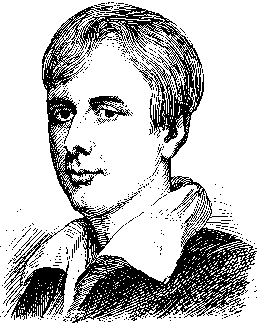
A man who can be assigned to no recognized type--who flocks by himself, as the saying is--cannot easily be portrayed: we lose the main design in our struggle with the details. Indeed, no two portraits of such a man can be alike: they will vary according to the temperament and limitations of the painter. It is safe to assert, however, that insatiable curiosity was at the base both of his character and of his achievements. Instincts he doubtless had in plenty, but no intuitions; everything must be construed to him categorically. But his capacity keeps pace with his curiosity; he promptly assimilates all he learns, and he can forget nothing. Probably this investigating passion had its cause in his own unlikeness to the rest of us: he was as a visitor from another planet, pledged to send home reports of all he saw here. His success in finding strange things is prodigious: his strange eye detects oddities and beauties to which we to the manner born were strange. Adventures attend him everywhere, as the powers of earth and air on Prospero. Here comes the King of the Vipers, the dry stubble crackling beneath his outrageous belly; yonder the foredoomed sailor promptly fulfills his own prediction, falling from the yard-arm into the Bay of Biscay; anon the ghastly visage of Mrs. Herne, of the Hairy Ones, glares for a moment out of the midnight hedge; again, a mysterious infatuation drives the wealthy idler from his bed out into the inclement darkness, and up to the topmost bough of the tree, which he must "touch" ere he can rest; and now, in the gloom of the memorable dingle, the horror of fear falls upon the amateur tinker, the Evil One grapples terribly with his soul, blots of foam fly from his lips, and he is dashed against the trees and stones. An adventure, truly, fit to stand with any of mediæval legend, and compared with which the tremendous combat with Blazing Bosville, the Flaming Tinman, is almost a relief. But in what perilous Faery Land forlorn do all these and a thousand more strange and moving incidents take place?--Why, in the quiet lanes and byways of nineteenth-century England, or perchance in priest-ridden Spain, where the ordinary traveler can for the life of him discover nothing more startling than beef and beer, garlic and crucifixes. Adventures are in the adventurer.
Man and nature were Borrow's study, but England was his love. In him exalted patriotism touches its apogee. How nobly and uncompromisingly is he jealous of her honor, her glory, and her independence! In what eloquent apostrophes does he urge her to be true to her lofty traditions, to trample on base expediency and cleave to the brave and true! In what resounding jeremiads does he denounce woe upon her traitors and seducers! With what savage sarcasm and scorn does he dissect the soul of the "man in black"! No other writing more powerful, picturesque, and idiomatic has been done in this century. He will advocate no policy less austere than purity, courage, and truth. There is in his zeal a narrowness that augments its strength, yet lessens its effect so far as practical issues are concerned. He is an idealist: but surely no young man can read his stern, throbbing pages without a kindling of the soul, and a resolve to be high in deed and aim; and there is no gauging the final influence of such spiritual stimulus. England and mankind must be better for this lonely, indignant voice.
England, and England's religion, and the Bible in its integrity,--these are the controlling strings of Borrow's harp. Yet he had his youthful period of religious doubt and philosophic sophism: has he not told how walls and ceilings rang with the "Hey!" of the man with the face of a lion, when the gray-haired boy intimated his skepticism? But vicissitudes of soul and body, aided by the itinerant Welsh preacher, cleansed him of these errors, and he undertook and carried through the famous crusade recorded in 'The Bible in Spain'--a narrative of adventure and devotion which fascinated and astonished England, and sets its author abreast of the great writers of his time. It is as irresistible to-day as it was fifty years ago: it stands alone; only Trelawny's 'Adventures of a Younger Son' can be compared with it as narrative, and Trelawny's book lacks the grand central feature which gives dignity and unity to Borrow's. Being a story of fact, 'The Bible in Spain' lacks much of the literary art and felicity, as well as the imaginative charm, of 'Lavengro'; but within its own scope it is great, and nothing can supersede it.
Gipsydom in all its aspects, though logically a side-issue with Borrow, was nevertheless the most noticeable thing relating to him: it engaged and colored him on the side of his temperament; and in the picture we form of a man, temperament tells far more than intellect because it is more individual. Later pundits have called in question the academic accuracy of Borrow's researches in the Romany language: but such frettings are beside the mark; Borrow is the only genuine expounder of Gipsyness that ever lived. He laid hold of their vitals, and they of his; his act of brotherhood with Mr. Jasper Petulengro is but a symbol of his mystical alliance with the race. This is not to say that he fathomed the heart of their mystery; the gipsies themselves cannot do that: but he comprehended whatever in them is open to comprehension, and his undying interest in them is due not only to his sympathy with their way of life, but to the fact that his curiosity about them could never be quite satisfied. Other mysteries come and go, but the gipsy mystery stays with us, and was to Borrow a source of endless content. For after sharpening his wits on the ethnological riddle, he could refresh himself with the psychical aspect of the matter, discovering in them the incarnation of one essential human quality, incompletely present in all men. They are the perfect vagabonds; but the germ of vagabondage inheres in mankind at large, and is the source of the changes that have resulted in what we call civilization. Borrow's nature comprised the gipsy, but the gipsy by no means comprised him; he wandered like them, but the object of his wanderings was something more than to tell dukkeripens, poison pigs, mend kettles, or deal in horseflesh. Therefore he puzzled them more than they did him.
'The Gipsies of Spain' (1841) was his first book about them; 'Lavengro' came ten years later, and 'Romany Rye' six years after that. In 1874 he returns to the subject in 'Roman Lavo-lil,' a sort of dictionary and phrase-book of the language, but unlike any other dictionary and phrase-book ever conceived: it is well worth reading as a piece of entertaining literature. His other books are translations of Norse and Welsh poetry, and a book of travels in 'Wild Wales,' published in 1862. All these works are more than readable: the translations, though rugged and unmusical, have about them a frank sensuousness and a primitive force that are amusing and attractive. But after all, Borrow is never thoroughly himself in literature unless the gipsies are close at hand; and of all his gipsy books 'Lavengro' is by far the best. Indeed, it is so much the best and broadest thing that he produced, that the reader who would know Borrow need never go beyond these pages. In 'Lavengro' we get the culmination of both the author and the man; it is his book in the full sense, and may afford profitable study to any competent reader for a lifetime.
'Lavengro,' in fact, is like nothing else in either biography or fiction--and it is both fictitious and biographical. It is the gradual revelation of a strange, unique being. But the revelation does not proceed in an orderly and chronological fashion: it is not begun in the first chapter, and still less is it completed in the last. After a careful perusal of the book, you will admit that though it has fascinated and impressed you, you have quite failed to understand it. Why is the author so whimsical? Wherefore these hinted but unconfessed secrets? Why does he stop short on the brink of an important disclosure, and diverge under cover of a line of asterisks into another subject?--But Borrow in 'Lavengro' is not constructing a book, he is creating one. He has the reserves of a man who respects his own nature, yet he treats the reader fairly. If you are worthy to be his friend, by-and-by you will see his heart,--look again, and yet again! That passage in a former chapter was incomplete; but look ahead a hundred pages and consider a paragraph there: by itself it seems to say little; but gradually you recognize in it a part of the inwoven strand which disappears in one part of the knot and emerges in another. Though you cannot solve the genial riddle to-day, you may to-morrow. The only clue is sympathy. This man hides his heart for him who has the mate to it; and beneath the whimsical, indifferent, proud, and cold exterior, how it heaves and fears and loves and wonders! This is a wild, unprecedented, eloquent, mysterious, artistic yet artless book; it is alive; it tells of an existence apart, yet in contact with the deep things of all human experience. No other man ever lived as Borrow did, and yet his book is an epitome of life. The magic of his personal quality beguiles us on every page; but deeper still lie the large, immutable traits that make all men men, and avouch the unity of mankind.
'Romany Rye' is the continuation of 'Lavengro,' but scarcely repeats its charm; its most remarkable feature is an 'Appendix,' in which Borrow expounds his views upon things in general, including critics and politics. It is a marvelously trenchant piece of writing, and from the literary point of view delightful; but it must have hurt a good many people's feelings at the time it was published, and even now shows the author on his harsh side only. We may agree with all he says, and yet wish he had uttered it in a less rasping tone.
Like nearly all great writers, Borrow, in order to get his best effects, must have room for his imagination. Mere fact would not rouse him fully, and abstract argument still less. In 'Lavengro' he hit upon his right vein, and he worked it in the fresh maturity of his power. The style is Borrow's own, peculiar to him: eloquent, rugged, full of liturgical repetitions, shunning all soft assonances and refinements, and yet with remote sea-like cadences, and unhackneyed felicities that rejoice the jaded soul. Writing with him was spontaneous, but never heedless or unconsidered; it was always the outcome of deep thought and vehement feeling. Other writers and their books may be twain, but Borrow and his books are one. Perhaps they might be improved in art, or arrangement, or subject; but we should no longer care for them then, because they would cease to be Borrow. Borrow may not have been a beauty or a saint; but a man he was; and good or bad, we would not alter a hair of him.
Nothing like an adequate biography of Borrow has ever been published: a few dates, and some more or less intelligent opinions about his character and work, are the sum of what we know of him--outside his own books. Some of the dates are probably guess-work; most of the opinions are incompetent: it is time that some adequate mind assembled all available materials and digested them into a satisfactory book. It is hardly worth while to review the few meagre details. Borrow was born in 1803 and died in 1881; his father, a soldier, failed to make a solicitor of him, and the youth, at his father's death, came up to London to live or die by literature. After much hardship (of which the chapters in 'Lavengro' describing the production of 'Joseph Sell' convey a hint), he set out on a wandering pilgrimage over England, Europe, and the East. As agent for the British and Foreign Bible Society he traversed Spain and Portugal, sending to the Morning Herald letters descriptive of his adventures, which afterwards were made the substance of his books. He married at thirty-seven, and lived at Outton Broad nearly all his life after. His wife died a dozen years before him, in 1869. She left no children.
His first book, a translation of Klinger's 'Faust,' appeared in 1825; his last, 'The Gipsy Dictionary,' in 1874; a volume called 'Penquite and Pentyre,' on Cornwall, was announced in 1857, but seems never to have been published, 'Targum,' a collection of translations from thirty languages and dialects, was a tour de force belonging to the year 1835. On the whole, Borrow was not a voluminous writer; but what he wrote tells.
AT THE HORSE-FAIR
From 'Lavengro'
"What horse is that?" said I to a very old fellow, the counterpart of the old man on the pony, save that the last wore a faded suit of velveteen, and this one was dressed in a white frock.
"The best in mother England," said the very old man, taking a knobbed stick from his mouth, and looking me in the face, at first carelessly, but presently with something like interest; "he is old like myself, but can still trot his twenty miles an hour. You won't live long, my swain; tall and overgrown ones like thee never do: yet, if you should chance to reach my years, you may boast to thy great-grand-boys, thou hast seen Marshland Shales."
Amain I did for the horse what I would neither do for earl or baron, doffed my hat; yes! I doffed my hat to the wondrous horse, the fast trotter, the best in mother England; and I too drew a deep ah! and repeated the words of the old fellows around. "Such a horse as this we shall never see again: a pity that he is so old."
Now, during all this time I had a kind of consciousness that I had been the object of some person's observation; that eyes were fastened upon me from somewhere in the crowd. Sometimes I thought myself watched from before, sometimes from behind; and occasionally methought that if I just turned my head to the right or left, I should meet a peering and inquiring glance; and indeed, once or twice I did turn, expecting to see somebody whom I knew, yet always without success; though it appeared to me that I was but a moment too late, and that some one had just slipped away from the direction to which I turned, like the figure in a magic lantern. Once I was quite sure that there were a pair of eyes glaring over my right shoulder; my attention, however, was so fully occupied with the objects which I have attempted to describe, that I thought very little of this coming and going, this flitting and dodging of I knew not whom or what. It was after all a matter of sheer indifference to me who was looking at me. I could only wish whomsoever it might be to be more profitably employed, so I continued enjoying what I saw; and now there was a change in the scene: the wondrous old horse departed with his aged guardian; other objects of interest are at hand. Two or three men on horseback are hurrying through the crowd; they are widely different in their appearance from the other people of the fair--not so much in dress, for they are clad something after the fashion of rustic jockeys, but in their look: no light-brown hair have they, no ruddy cheeks, no blue quiet glances belong to them; their features are dark, the locks long, black, and shining, and their eyes are wild; they are admirable horsemen, but they do not sit the saddle in the manner of common jockeys, they seem to float or hover upon it like gulls upon the waves; two of them are mere striplings, but the third is a very tall man with a countenance heroically beautiful, but wild, wild, wild. As they rush along, the crowd give way on all sides, and now a kind of ring or circus is formed, within which the strange men exhibit their horsemanship, rushing past each other, in and out, after the manner of a reel, the tall man occasionally balancing himself upon the saddle, and standing erect on one foot. He had just regained his seat after the latter feat, and was about to push his horse to a gallop, when a figure started forward close from beside me, and laying his hand on his neck, and pulling him gently downward, appeared to whisper something into his ear; presently the tall man raised his head, and scanning the crowd for a moment in the direction in which I was standing, fixed his eyes full upon me; and anon the countenance of the whisperer was turned, but only in part, and the side-glance of another pair of wild eyes was directed towards my face; but the entire visage of the big black man, half-stooping as he was, was turned full upon mine.
But now, with a nod to the figure who had stopped him, and with another inquiring glance at myself, the big man once more put his steed into motion, and after riding round the ring a few more times, darted through a lane in the crowd, and followed by his two companions, disappeared; whereupon the figure who had whispered to him, and had subsequently remained in the middle of the space, came towards me, and cracking a whip which he held in his hand so loudly that the report was nearly equal to that of a pocket-pistol, he cried in a strange tone:--
"What! the sap-engro? Lor! the sap-engro upon the hill!"
"I remember that word," said I, "and I almost think I remember you. You can't be--"
"Jasper, your pal! Truth, and no lie, brother."
"It is strange that you should have known me," said I. "I am certain, but for the word you used, I should never have recognized you."
"Not so strange as you may think, brother: there is something in your face which would prevent people from forgetting you, even though they might wish it; and your face is not much altered since the time you wot of, though you are so much grown. I thought it was you, but to make sure I dodged about, inspecting you. I believe you felt me, though I never touched you; a sign, brother, that we are akin, that we are dui palor--two relations. Your blood beat when mine was near, as mine always does at the coming of a brother; and we became brothers in that lane."
"And where are you staying?" said I: "in this town?"
"Not in the town; the like of us don't find it exactly wholesome to stay in towns: we keep abroad. But I have little to do here--come with me, and I'll show you where we stay."
We descended the hill in the direction of the north, and passing along the suburb reached the old Norman bridge, which we crossed; the chalk precipice, with the ruin on its top, was now before us; but turning to the left we walked swiftly along, and presently came to some rising ground, which ascending, we found ourselves upon a wild moor or heath.
"You are one of them," said I, "whom people call--"
"Just so," said Jasper; "but never mind what people call us."
"And that tall handsome man on the hill, whom you whispered: I suppose he's one of ye. What is his name?"
"Tawno Chikno," said Jasper, "which means the small one; we call him such because he is the biggest man of all our nation. You say he is handsome--that is not the word, brother; he's the beauty of the world. Women run wild at the sight of Tawno. An earl's daughter, near London--a fine young lady with diamonds round her neck--fell in love with Tawno. I have seen that lass on a heath, as this may be, kneel down to Tawno, clasp his feet, begging to be his wife--or anything else--if she might go with him. But Tawno would have nothing to do with her: 'I have a wife of my own,' said he, 'a lawful Romany wife, whom I love better than the whole world, jealous though she sometimes be.'"
"And is she very beautiful?" said I.
"Why, you know, brother, beauty is frequently a matter of taste; however, as you ask my opinion, I should say not quite so beautiful as himself."
We had now arrived at a small valley between two hills, or downs, the sides of which were covered with furze; in the midst of this valley were various carts and low tents forming a rude kind of encampment; several dark children were playing about, who took no manner of notice of us. As we passed one of the tents, however, a canvas screen was lifted up, and a woman supported upon a crutch hobbled out. She was about the middle age, and besides being lame, was bitterly ugly; she was very slovenly dressed, and on her swarthy features ill-nature was most visibly stamped. She did not deign me a look, but addressing Jasper in a tongue which I did not understand, appeared to put some eager questions to him.
"He's coming," said Jasper, and passed on. "Poor fellow," said he to me, "he has scarcely been gone an hour, and she is jealous already. Well," he continued, "what do you think of her? you have seen her now, and can judge for yourself--that 'ere woman is Tawno Chikno's wife!"
We went to the farthest of the tents, which stood at a slight distance from the rest, and which exactly resembled the one which I have described on a former occasion; we went in and sat down, one on each side of a small fire which was smoldering on the ground; there was no one else in the tent but a tall tawny woman of middle age, who was busily knitting. "Brother," said Jasper, "I wish to hold some pleasant discourse with you."
"As much as you please," said I, "provided you can find anything pleasant to talk about."
"Never fear," said Jasper; "and first of all we will talk of yourself. Where have you been all this long time?"
"Here and there," said I, "and far and near, going about with the soldiers; but there is no soldiering now, so we have sat down, father and family, in the town there."
"And do you still hunt snakes?" said Jasper.
"No," said I, "I have given up that long ago; I do better now: read books and learn languages."
"Well, I am sorry you have given up your snake-hunting; many's the strange talk I have had with our people about your snake and yourself, and how you frightened my father and mother in the lane."
"And where are your father and mother?"
"Where I shall never see them, brother; at least, I hope so."
"Not dead?"
"No, not dead; they are bitchadey pawdel."
"What's that?"
"Sent across--banished."
"Ah! I understand; I am sorry for them. And so you are here alone?"
"Not quite alone, brother."
"No, not alone; but with the rest--Tawno Chikno takes care of you."
"Takes care of me, brother!"
"Yes, stands to you in the place of a father--keeps you out of harm's way."
"What do you take me for, brother?"
"For about three years older than myself."
"Perhaps; but you are of the gorgios, and I am a Romany Chal. Tawno Chikno take care of Jasper Petulengro!"
"Is that your name?"
"Don't you like it?"
"Very much, I never heard a sweeter; it is something like what you call me."
"The horseshoe master and the snake-fellow--I am the first."
"Who gave you that name?"
"Ask Pharaoh."
"I would if he were here, but I do not see him."
"I am Pharaoh."
"Then you are a king."
"Chachipen Pal."
"I do not understand you."
"Where are your languages? you want two things, brother: mother-sense, and gentle Romany."
"What makes you think that I want sense?"
"That being so old, you can't yet guide yourself!"
"I can read Dante, Jasper."
"Anan, brother."
"I can charm snakes, Jasper."
"I know you can, brother."
"Yes, and horses too; bring me the most vicious in the land, if I whisper he'll be tame."
"Then the more shame for you--a snake-fellow--a horse-witch--and a lil-reader--yet you can't shift for yourself. I laugh at you, brother!"
"Then you can shift for yourself?"
"For myself and for others, brother."
"And what does Chikno?"
"Sells me horses, when I bid him. Those horses on the chong were mine."
"And has he none of his own?"
"Sometimes he has; but he is not so well off as myself. When my father and mother were bitchadey pawdel, which, to tell you the truth, they were for chiving wafodo dloovu, they left me all they had, which was not a little, and I became the head of our family, which was not a small one. I was not older than you when that happened; yet our people said they had never a better krallis to contrive and plan for them, and to keep them in order. And this is so well known, that many Romany Chals, not of our family, come and join themselves to us, living with us for a time, in order to better themselves, more especially those of the poorer sort, who have little of their own. Tawno is one of these."
"Is that fine fellow poor?"
"One of the poorest, brother. Handsome as he is, he has not a horse of his own to ride on. Perhaps we may put it down to his wife, who cannot move about, being a cripple, as you saw."
"And you are what is called a Gipsy King?"
"Ay, ay; a Romany Chal."
"Are there other kings?"
"Those who call themselves so; but the true Pharaoh is Petulengro."
"Did Pharaoh make horse-shoes?"
"The first who ever did, brother."
"Pharaoh lived in Egypt."
"So did we once, brother."
"And you left it?"
"My fathers did, brother."
"And why did they come here?"
"They had their reasons, brother."
"And you are not English?"
"We are not gorgios."
"And you have a language of your own?"
"Avali."
"This is wonderful."
"Ha, ha!" cried the woman who had hitherto sat knitting at the farther end of the tent without saying a word, though not inattentive to our conversation, as I could perceive by certain glances which she occasionally cast upon us both. "Ha, ha!" she screamed, fixing upon me two eyes which shone like burning coals, and which were filled with an expression both of scorn and malignity,--"it is wonderful, is it, that we should have a language of our own? What, you grudge the poor people the speech they talk among themselves? That's just like you gorgios: you would have everybody stupid single-tongued idiots like yourselves. We are taken before the Poknees of the gav, myself and sister, to give an account of ourselves. So I says to my sister's little boy, speaking Romany, I says to the little boy who is with us, 'Run to my son Jasper and the rest, and tell them to be off: there are hawks abroad.' So the Poknees questions us, and lets us go, not being able to make anything of us; but as we are going, he calls us back. 'Good woman,' says the Poknees, 'what was that I heard you say just now to the little boy?' 'I was telling him, your worship, to go and see the time of day, and to save trouble I said it in our language.' 'Where did you get that language?' says the Poknees. ''Tis our own language, sir,' I tells him: 'we did not steal it.' 'Shall I tell you what it is, my good woman?' says the Poknees. 'I would thank you, sir,' says I, 'for 'tis often we are asked about it.' 'Well, then,' says the Poknees, 'it is no language at all, merely a made-up gibberish.' 'Oh, bless your wisdom,' says I with a curtsey, 'you can tell us what our language is without understanding it!' Another time we meet a parson. 'Good woman,' says he, 'what's that you are talking? Is it broken language?' 'Of course, your reverence,' says I, 'we are broken people; give a shilling, your reverence, to the poor broken woman.' Oh, these gorgios! they grudge us our very language!"
"She called you her son, Jasper?"
"I am her son, brother."
"I thought you said your parents were ..."
"Bitchadey pawdel; you thought right, brother. This is my wife's mother."
"Then you are married, Jasper?"
"Ay, truly; I am husband and father, You will see wife and chabó anon."
"Where are they now?"
"In the gav, penning dukkerin."
"We were talking of languages, Jasper."
"True, brother."
"Yours must be a rum one."
"'Tis called Romany."
"I would gladly know it."
"You need it sorely."
"Would you teach it me?"
"None sooner."
"Suppose we begin now?"
"Suppose we do, brother."
"Not whilst I am here," said the woman, flinging her knitting down, and starting upon her feet; "not whilst I am here shall this gorgio learn Romany. A pretty manoeuvre, truly; and what would be the end of it? I goes to the farming ker with my sister, to tell a fortune, and earn a few sixpences for the chabés. I sees a jolly pig in the yard, and I says to my sister, speaking Romany, 'Do so and so,' says I; which the farming man hearing, asks what we are talking about. 'Nothing at all, master,' says I; 'something about the weather,'--when who should start up from behind a pale, where he has been listening, but this ugly gorgio, crying out, 'They are after poisoning your pigs, neighbor,' so that we are glad to run, I and my sister, with perhaps the farm-engro shouting after us. Says my sister to me, when we have got fairly off, 'How came that ugly one to know what you said to me?' Whereupon I answers, 'It all comes of my son Jasper, who brings the gorgio to our fire, and must needs be teaching him.' 'Who was fool there?' says my sister. 'Who indeed but my son Jasper,' I answers. And here should I be a greater fool to sit still and suffer it; which I will not do. I do not like the look of him; he looks over-gorgeous. An ill day to the Romans when he masters Romany; and when I says that, I pens a true dukkerin."
"What do you call God, Jasper?"
"You had better be jawing," said the woman, raising her voice to a terrible scream; "you had better be moving off, my gorgio; hang you for a keen one, sitting there by the fire, and stealing my language before my face. Do you know whom you have to deal with? Do you know that I am dangerous? My name is Herne, and I comes of the Hairy Ones!"
And a hairy one she looked! She wore her hair clubbed upon her head, fastened with many strings and ligatures; but now, tearing these off, her locks, originally jet black, but now partially grizzled with age, fell down on every side of her, covering her face and back as far down as her knees. No she-bear of Lapland ever looked more fierce and hairy than did that woman, as standing in the open part of the tent, with her head bent down and her shoulders drawn up, seemingly about to precipitate herself upon me, she repeated again and again--
"My name is Herne, and I comes of the Hairy Ones!"--
"I call God Duvel, brother."
"It sounds very like Devil."
"It doth, brother, it doth."
"And what do you call divine, I mean godly?"
"Oh! I call that duvelskoe."
"I am thinking of something, Jasper."
"What are you thinking of, brother?"
"Would it not be a rum thing if divine and devilish were originally one and the same word?"
"It would, brother, it would."
From this time I had frequent interviews with Jasper, sometimes in his tent, sometimes on the heath, about which we would roam for hours, discoursing on various matters. Sometimes mounted on one of his horses, of which he had several, I would accompany him to various fairs and markets in the neighborhood, to which he went on his own affairs, or those of his tribe. I soon found that I had become acquainted with a most singular people, whose habits and pursuits awakened within me the highest interest. Of all connected with them, however, their language was doubtless that which exercised the greatest influence over my imagination. I had at first some suspicion that it would prove a mere made-up gibberish; but I was soon undeceived. Broken, corrupted, and half in ruins as it was, it was not long before I found that it was an original speech; far more so indeed than one or two others of high name and celebrity, which up to that time I had been in the habit of regarding with respect and veneration. Indeed, many obscure points connected with the vocabulary of these languages, and to which neither classic nor modern lore afforded any clue, I thought I could now clear up by means of this strange broken tongue, spoken by people who dwelt amongst thickets and furze bushes, in tents as tawny as their faces, and whom the generality of mankind designated, and with much semblance of justice, as thieves and vagabonds. But where did this speech come from, and who were they who spoke it? These were questions which I could not solve, and which Jasper himself, when pressed, confessed his inability to answer. "But whoever we be, brother," said he, "we are an old people, and not what folks in general imagine, broken gorgios; and if we are not Egyptians, we are at any rate Romany Chals!"
A MEETING
From 'The Bible in Spain'
It was at this town of Badajoz, the capital of Estremadura, that I first fell in with those singular people, the Zincali, Gitanos, or Spanish gipsies. It was here I met with the wild Paco, the man with the withered arm, who wielded the cachas with his left hand; his shrewd wife, Antonia, skilled in hokkano baro, or the great trick; the fierce gipsy, Antonio Lopez, their father-in-law; and many other almost equally singular individuals of the Errate, or gipsy blood. It was here that I first preached the gospel to the gipsy people, and commenced that translation of the New Testament in the Spanish gipsy tongue, a portion of which I subsequently printed at Madrid.
After a stay of three weeks at Badajoz, I prepared to depart for Madrid. Late one afternoon, as I was arranging my scanty baggage, the gipsy Antonio entered my apartment, dressed in his zamarra and high-peaked Andalusian hat.
Antonio--Good evening, brother; they tell me that on the callicaste you intend to set out for Madrilati.
Myself--Such is my intention; I can stay here no longer.
Antonio--The way is far to Madrilati; there are, moreover, wars in the land, and many chories walk about; are you not afraid to journey?
Myself--I have no fears; every man must accomplish his destiny: what befalls my body or soul was written in a gabicote a thousand years before the foundation of the world.
Antonio--I have no fears myself, brother: the dark night is the same to me as the fair day, and the wild carrascal as the market-place or the chardi; I have got the bar lachí in my bosom, the precious stone to which sticks the needle.
Myself--You mean the loadstone, I suppose. Do you believe that a lifeless stone can preserve you from the dangers which occasionally threaten your life?
Antonio--Brother, I am fifty years old, and you see me standing before you in life and strength; how could that be unless the bar lachí had power? I have been soldier and contrabandista, and I have likewise slain and robbed the Busné. The bullets of the Gabiné and of the jara canallis have hissed about my ears without injuring me, for I carried the bar lachí. I have twenty times done that which by Busné law should have brought me to the filimicha, yet my neck has never yet been squeezed by the cold garrote. Brother, I trust in the bar lachí like the Caloré of old: were I in the midst of the gulf of Bombardó without a plank to float upon, I should feel no fear; for if I carried the precious stone, it would bring me safe to shore. The bar lachí has power, brother.
Myself--I shall not dispute the matter with you, more especially as I am about to depart from Badajoz: I must speedily bid you farewell, and we shall see each other no more.
Antonio--Brother, do you know what brings me hither?
Myself--I cannot tell, unless it be to wish me a happy journey: I am not gipsy enough to interpret the thoughts of other people.
Antonio--All last night I lay awake, thinking of the affairs of Egypt; and when I arose in the morning I took the bar lachí from my bosom, and scraping it with a knife, swallowed some of the dust in aguardiente, as I am in the habit of doing when I have made up my mind; and I said to myself, I am wanted on the frontiers of Castumba on a certain matter. The strange Caloró is about to proceed to Madrilati; the journey is long, and he may fall into evil hands, peradventure into those of his own blood; for let me tell you, brother, the Calés are leaving their towns and villages, and forming themselves into troops to plunder the Busné, for there is now but little law in the land, and now or never is the time for the Caloré to become once more what they were in former times. So I said, the strange Caloró may fall into the hands of his own blood and be ill-treated by them, which were shame: I will therefore go with him through the Chim del Manró as far as the frontiers of Castumba, and upon the frontiers of Castumba I will leave the London Caloró to find his own way to Madrilati, for there is less danger in Castumba than in the Chim del Manró, and I will then betake me to the affairs of Egypt which call me from hence.
Myself--This is a very hopeful plan of yours, my friend: and in what manner do you propose that we shall travel?
Antonio--I will tell you, brother. I have a gras in the stall, even the one which I purchased at Olivenças, as I told you on a former occasion; it is good and fleet, and cost me, who am a gipsy, fifty chulé: upon that gras you shall ride. As for myself, I will journey upon the macho.
Myself--Before I answer you, I shall wish you to inform me what business it is which renders your presence necessary in Castumba: your son-in-law Paco told me that it was no longer the custom of the gipsies to wander.
Antonio--It is an affair of Egypt, brother, and I shall not acquaint you with it; peradventure it relates to a horse or an ass, or peradventure it relates to a mule or a macho; it does not relate to yourself, therefore I advise you not to inquire about it--Dosta. With respect to my offer, you are free to decline it; there is a drungruje between here and Madrilati, and you call travel it in the birdoche, or with the dromalis; but I tell you, as a brother, that there are chories upon the drun, and some of them are of the Errate.
--Certainly few people in my situation would have accepted the offer of this singular gipsy. It was not, however, without its allurements for me; I was fond of adventure, and what more ready means of gratifying my love of it than by putting myself under the hands of such a guide? There are many who would have been afraid of treachery, but I had no fears on this point, as I did not believe that the fellow harbored the slightest ill-intention towards me; I saw that he was fully convinced that I was one of the Errate, and his affection for his own race, and his hatred for the Busné, were his strongest characteristics. I wished moreover to lay hold of every opportunity of making myself acquainted with the ways of the Spanish gipsies, and an excellent one here presented itself on my first entrance into Spain. In a word, I determined to accompany the gipsy. "I will go with you," I exclaimed; "as for my baggage, I will dispatch it to Madrid by the birdoche." "Do so, brother," he replied, "and the gras will go lighter. Baggage, indeed!--what need of baggage have you? How the Busné on the road would laugh if they saw two Calés with baggage behind them!"
During my stay at Badajoz I had but little intercourse with the Spaniards, my time being chiefly devoted to the gipsies: with whom, from long intercourse with various sections of their race in different parts of the world, I felt myself much more at home than with the silent, reserved men of Spain, with whom a foreigner might mingle for half a century without having half a dozen words addressed to him, unless he himself made the first advances to intimacy, which after all might be rejected with a shrug and a no entiendo; for among the many deeply rooted prejudices of these people is the strange idea that no foreigner can speak their language, an idea to which they will still cling though they hear him conversing with perfect ease; for in that case the utmost that they will concede to his attainments is, "Habla quatro palabras y nada mas." (He can speak four words, and no more.)
Early one morning, before sunrise, I found myself at the house of Antonio; it was a small mean building, situated in a dirty street. The morning was quite dark; the street, however, was partially illumined by a heap of lighted straw, round which two or three men were busily engaged, apparently holding an object over the flames. Presently the gipsy's door opened, and Antonio made his appearance; and casting his eye in the direction of the light, exclaimed, "The swine have killed their brother; would that every Busnó was served as yonder hog is. Come in, brother, and we will eat the heart of that hog." I scarcely understood his words, but following him, he led me into a low room, in which was a brasero, or small pan full of lighted charcoal; beside it was a rude table, spread with a coarse linen cloth, upon which was bread and a large pipkin full of a mess which emitted no disagreeable savor. "The heart of the balichó is in that puchera," said Antonio; "eat, brother." We both sat down and ate--Antonio voraciously. When we had concluded he arose. "Have you got your li?" he demanded. "Here it is," said I, showing him my passport. "Good," said he; "you may want it, I want none: my passport is the bar lachí. Now for a glass of repañi, and then for the road."
We left the room, the door of which he locked, hiding the key beneath a loose brick in a corner of the passage. "Go into the street, brother, whilst I fetch the caballerias from the stable." I obeyed him. The sun had not yet risen, and the air was piercingly cold; the gray light, however, of dawn enabled me to distinguish objects with tolerable accuracy; I soon heard the clattering of the animal's feet, and Antonio presently stepped forth, leading the horse by the bridle; the macho followed behind. I looked at the horse, and shrugged my shoulders. As far as I could scan it, it appeared the most uncouth animal I had ever beheld. It was of a spectral white, short in the body, but with remarkably long legs. I observed that it was particularly high in the cruz, or withers. "You are looking at the grasti," said Antonio: "it is eighteen years old, but it is the very best in the Chim del Manró; I have long had my eye upon it; I bought it for my own use for the affairs of Egypt. Mount, brother, mount, and let us leave the foros--the gate is about being opened."
He locked the door, and deposited the key in his faja. In less than a quarter of an hour we had left the town behind us. "This does not appear to be a very good horse," said I to Antonio, as we proceeded over the plain: "it is with difficulty that I can make him move."
"He is the swiftest horse in the Chim del Manró, brother," said Antonio; "at the gallop and at the speedy trot, there is no one to match him. But he is eighteen years old, and his joints are stiff, especially of a morning; but let him once become heated, and the genio del viejo comes upon him, and there is no holding him in with bit or bridle. I bought that horse for the affairs of Egypt, brother."
About noon we arrived at a small village in the neighborhood of a high lumpy hill. "There is no Caló house in this place," said Antonio: "we will therefore go to the posada of the Busné and refresh ourselves, man and beast." We entered the kitchen and sat down at the board, calling for wine and bread. There were two ill-looking fellows in the kitchen smoking cigars. I said something to Antonio in the Caló language.
"What is that I hear?" said one of the fellows, who was distinguished by an immense pair of mustaches. "What is that I hear? Is it in Caló that you are speaking before me, and I a chalan and national? Accursed gipsy, how dare you enter this posada and speak before me in that speech? Is it not forbidden by the law of the land in which we are, even as it is forbidden for a gipsy to enter the mercado? I tell you what, friend, if I hear another word of Caló come from your mouth, I will cudgel your bones and send you flying over the house-tops with a kick of my foot."
"You would do right," said his companion; "the insolence of these gipsies is no longer to be borne. When I am at Merida or Badajoz I go to the mercado, and there in a corner stand the accursed gipsies, jabbering to each other in a speech which I understand not. 'Gipsy gentleman,' say I to one of them, 'what will you have for that donkey?' 'I will have ten dollars for it, Caballero national,' says the gipsy: 'it is the best donkey in all Spain.' 'I should like to see its paces,' say I. 'That you shall, most valorous!' says the gipsy, and jumping upon its back, he puts it to its paces, first of all whispering something into its ear in Caló; and truly the paces of the donkey are most wonderful, such as I have never seen before. I think it will just suit me; and after looking at it awhile, I take out the money and pay for it. 'I shall go to my house,' says the gipsy; and off he runs. 'I shall go to my village,' say I, and I mount the donkey, 'Vamonos,' say I, but the donkey won't move. I give him a switch, but I don't get on the better for that. What happens then, brother? The wizard no sooner feels the prick than he bucks down, and flings me over his head into the mire. I get up and look about me; there stands the donkey staring at me, and there stand the whole gipsy canaille squinting at me with their filmy eyes. 'Where is the scamp who has sold me this piece of furniture?' I shout. 'He is gone to Granada, valorous,' says one. 'He is gone to see his kindred among the Moors,' says another. 'I just saw him running over the field, in the direction of ----, with the devil close behind him,' says a third. In a word, I am tricked. I wish to dispose of the donkey: no one, however, will buy him; he is a Caló donkey, and every person avoids him. At last the gipsies offer thirty reals for him; and after much chaffering I am glad to get rid of him at two dollars. It is all a trick, however; he returns to his master, and the brotherhood share the spoil amongst them: all which villainy would be prevented, in my opinion, were the Caló language not spoken; for what but the word of Caló could have induced the donkey to behave in such an unaccountable manner?"
Both seemed perfectly satisfied with the justness of this conclusion, and continued smoking till their cigars were burnt to stumps, when they arose, twitched their whiskers, looked at us with fierce disdain, and dashing the tobacco-ends to the ground, strode out of the apartment.
"Those people seem no friends to the gipsies," said I to Antonio, when the two bullies had departed; "nor to the Caló language either."
"May evil glanders seize their nostrils," said Antonio: "they have been jonjabadoed by our people. However, brother, you did wrong to speak to me in Caló, in a posada like this: it is a forbidden language; for, as I have often told you, the king has destroyed the law of the Calés. Let us away, brother, or those juntunes may set the justicia upon us."
Towards evening we drew near to a large town or village. "That is Merida," said Antonio, "formerly, as the Busné say, a mighty city of the Corahai. We shall stay here to-night, and perhaps for a day or two, for I have some business of Egypt to transact in this place. Now, brother, step aside with the horse, and wait for me beneath yonder wall. I must go before and see in what condition matters stand."
I dismounted from the horse, and sat down on a stone beneath the ruined wall to which Antonio had motioned me. The sun went down, and the air was exceedingly keen; I drew close around me an old tattered gipsy cloak with which my companion had provided me, and being somewhat fatigued, fell into a doze which lasted for nearly an hour.
"Is your worship the London Caloró?" said a strange voice close beside me.
I started, and beheld the face of a woman peering under my hat. Notwithstanding the dusk, I could see that the features were hideously ugly and almost black; they belonged, in fact, to a gipsy crone at least seventy years of age, leaning upon a staff.
"Is your worship the London Caloró?" repeated she.
"I am he whom you seek," said I; "where is Antonio?"
"Curelando, curelando; baribustres curelós terela," said the crone. "Come with me, Caloró of my garlochin, come with me to my little ker; he will be there anon."
I followed the crone, who led the way into the town, which was ruinous and seemingly half deserted; we went up the street, from which she turned into a narrow and dark lane, and presently opened the gate of a large dilapidated house. "Come in," said she.
"And the gras?" I demanded.
"Bring the gras in too, my chabó, bring the gras in too; there is room for the gras in my little stable." We entered a large court, across which we proceeded till we came to a wide doorway. "Go in, my child of Egypt," said the hag; "go in, that is my little stable."
"The place is as dark as pitch," said I, "and may be a well for what I know; bring a light, or I will not enter."
"Give me the solabarri," said the hag, "and I will lead your horse in, my chabó of Egypt--yes, and tether him to my little manger."
She led the horse through the doorway, and I heard her busy in the darkness; presently the horse shook himself. "Grasti terelamos," said the hag, who now made her appearance with the bridle in her hand; "the horse has shaken himself, he is not harmed by his day's journey; now let us go in, my Caloró, into my little room."
We entered the house, and found ourselves in a vast room, which would have been quite dark but for a faint glow which appeared at the farther end: it proceeded from a brasero, beside which were squatted two dusky figures.
"These are Callées," said the hag; "one is my daughter and the other is her chabi. Sit down, my London Caloró, and let us hear you speak."
I looked about for a chair, but could see none: at a short distance, however, I perceived the end of a broken pillar lying on the floor; this I rolled to the brasero, and sat down upon it.
"This is a fine house, mother of the gipsies," said I to the hag, willing to gratify the desire she had expressed of hearing me speak; "a fine house is this of yours, rather cold and damp, though; it appears large enough to be a barrack for hundunares."
"Plenty of houses in this foros, plenty of houses in Merida, my London Caloró, some of them just as they were left by the Corahanós. Ah! a fine people are the Corahanós; I often wish myself in their chim once more."
"How is this, mother?" said I; "have you been in the land of the Moors?"
"Twice have I been in their country, my Caloró--twice have I been in the land of the Corahai. The first time is more than fifty years ago; I was then with the Sesé, for my husband was a soldier of the Crallis of Spain, and Oran at that time belonged to Spain."
"You were not then with the real Moors," said I, "but only with the Spaniards who occupied part of their country."
"I have been with the real Moors, my London Caloró. Who knows more of the real Moors than myself? About forty years ago I was with my ro in Ceuta, for he was still a soldier of the king; and he said to me one day, 'I am tired of this place, where there is no bread and less water; I will escape and turn Corahanó; this night I will kill my sergeant, and flee to the camp of the Moor,' 'Do so,' said I, 'my chabó, and as soon as may be I will follow you and become a Corahani.' That same night he killed his sergeant, who five years before had called him Caló and cursed him; then running to the wall he dropped from it, and amidst many shots he escaped to the land of the Corahai. As for myself, I remained in the presidio of Ceuta as a sutler, selling wine and repañí to the soldiers. Two years passed by, and I neither saw nor heard from my ro. One day there came a strange man to my cachimani; he was dressed like a Corahanó, and yet he did not look like one; he looked more like a callardó, and yet he was not a callardó either, though he was almost black; and as I looked upon him, I thought he looked something like the Errate; and he said to me, 'Zincali, chachipé!' and then he whispered to me in queer language, which I could scarcely understand, 'Your ro is waiting; come with me, my little sister, and I will take you unto him.' 'Where is he?' said I, and he pointed to the west, to the land of the Corahai, and said, 'He is yonder away; come with me, little sister, the ro is waiting.' For a moment I was afraid, but I bethought me of my husband, and I wished to be amongst the Corahai; so I took the little parné I had, and locking up the cachimani, went with the strange man. The sentinel challenged us at the gate, but I gave him repañí, and he let us pass; in a moment we were in the land of the Corahai. About a league from the town, beneath a hill, we found four people, men and women, all very black like the strange man, and we joined ourselves with them, and they all saluted me, 'little sister.' That was all I understood of their discourse, which was very crabbed; and they took away my dress and gave me other clothes, and I looked like a Corahani; and away we marched for many days amidst deserts and small villages, and more than once it seemed to me that I was amongst the Errate, for their ways were the same. The men would hokkawar with mules and asses, and the women told baji, and after many days we came before a large town, and the black man said, 'Go in there, little sister, and there you will find your ro;' and I went to the gate, and an armed Corahanó stood within the gate, and I looked in his face, and lo! it was my ro.
"Oh, what a strange town it was that I found myself in, full of people who had once been Candoré, but had renegaded and become Corahai! There were Sesé and Laloré, and men of other nations, and amongst them were some of the Errate from my own country; all were now soldiers of the Crallis of the Corahai, and followed him to his wars; and in that town I remained with my ro a long time, occasionally going out to him to the wars; and I often asked him about the black men who had brought me thither, and he told me that he had had dealings with them, and that he believed them to be of the Errate. Well, brother, to be short, my ro was killed in the wars, before a town to which the king of the Corahai laid siege, and I became a piuli, and I returned to the village of the renegades, as it was called, and supported myself as well as I could; and one day, as I was sitting weeping, the black man, whom I had never seen since the day he brought me to my ro, again stood before me, and he said, 'Come with me, little sister, come with me; the ro is at hand;' and I went with him, and beyond the gate in the desert was the same party of black men and women which I had seen before. 'Where is my ro?' said I. 'Here he is, little sister,' said the black man, 'here he is; from this day I am the ro and you are the romi. Come, let us go, for there is business to be done.'
"And I went with him, and he was my ro, and we lived amongst the deserts, and hokkawar'd and choried and told baji; and I said to myself, 'This is good; sure, I am amongst the Errate in a better chim than my own.' And I often said that they were of the Errate, and then they would laugh and say that it might be so, and that they were not Corahai, but they could give no account of themselves.
"Well, things went on in this way for years, and I had three chai by the black man; two of them died, but the youngest, who is the Calli who sits by the brasero, was spared. So we roamed about and choried and told baji; and it came to pass that once in the winter time our company attempted to pass a wide and deep river, of which there are many in the Chim del Corahai, and the boat overset with the rapidity of the current, and all our people were drowned, all but myself and my chabi, whom I bore in my bosom. I had no friends amongst the Corahai, and I wandered about the despoblados howling and lamenting till I became half lili, and in this manner I found my way to the coast, where I made friends with the captain of a ship, and returned to this land of Spain. And now I am here, I often wish myself back again amongst the Corahai."
Here she commenced laughing loud and long; and when she had ceased, her daughter and grandchild took up the laugh, which they continued so long that I concluded they were all lunatics.
Hour succeeded hour, and still we sat crouching over the brasero, from which, by this time, all warmth had departed; the glow had long since disappeared, and only a few dying sparks were to be distinguished. The room or hall was now involved in utter darkness; the women were motionless and still; I shivered and began to feel uneasy. "Will Antonio be here to-night?" at length I demanded.
"No tenga usted cuidado, my London Caloró," said the gipsy mother in an unearthly tone; "Pepindorio has been here some time."
I was about to rise from my seat and attempt to escape from the house, when I felt a hand laid upon my shoulder, and in a moment I heard the voice of Antonio:--
"Be not afraid; 'tis I, brother. We will have a light anon, and then supper."
The supper was rude enough, consisting of bread, cheese, and olives; Antonio, however, produced a leathern bottle of excellent wine. We dispatched these viands by the light of an earthen lamp, which was placed upon the floor.
"Now," said Antonio to the youngest female, "bring me the pajandi, and I will sing a gachapla."
The girl brought the guitar, which with some difficulty the gipsy tuned, and then, strumming it vigorously, he sang:--
"I stole a plump and bonny fowl, But ere I well had dined, The master came with scowl and growl, And me would captive bind. "My hat and mantle off I threw, And scoured across the lea; Then cried the beng with loud halloo, 'Where does the gipsy flee?'"
He continued playing and singing for a considerable time, the two younger females dancing in the meanwhile with unwearied diligence, whilst the aged mother occasionally snapped her fingers or beat time on the ground with her stick. At last Antonio suddenly laid down the instrument, exclaiming:--
"I see the London Caloró is weary; enough, enough, to-morrow more thereof. We will now to the charipé."
"With all my heart," said I: "where are we to sleep?"
"In the stable," said he, "in the manger; however cold the stable may be, we shall be warm enough in the bufa."
We remained three days at the gipsies' house, Antonio departing early every morning on his mule, and returning late at night. The house was large and ruinous, the only habitable part of it with the exception of the stable being the hall, where we had supped; and there the gipsy females slept at night, on some mats and mattresses in a corner.
"A strange house is this," said I to Antonio, one morning as he was on the point of saddling his mule, and departing, as I supposed, on the affairs of Egypt; "a strange house and strange people. That gipsy grandmother has all the appearance of a sowanee."
"All the appearance of one!" said Antonio; "and is she not really one? She knows more crabbed things and crabbed words than all the Errate betwixt here and Catalonia. She has been amongst the wild Moors, and can make more draos, poisons, and philtres than any one alive. She once made a kind of paste, and persuaded me to taste, and shortly after I had done so my soul departed from my body, and wandered through horrid forests and mountains, amidst monsters and duendes, during one entire night. She learned many things amidst the Corahai which I should be glad to know."
"Have you been long acquainted with her?" said I. "You appear to be quite at home in this house."
"Acquainted with her!" said Antonio. "Did not my own brother marry the black Calli, her daughter, who bore him the chabí, sixteen years ago, just before he was hanged by the Busné?"
In the afternoon I was seated with the gipsy mother in the hall; the two Callées were absent telling fortunes about the town and neighborhood, which was their principal occupation.
"Are you married, my London Caloró?" said the old woman to me. "Are you a ro?"
Myself--Wherefore do you ask, O Dai de los Calés?
Gipsy Mother--It is high time that the lacha of the chabi were taken from her, and that she had a ro. You can do no better than take her for romi, my London Caloró.
Myself--I am a stranger in this land, O mother of the gipsies, and scarcely know how to provide for myself, much less for a romi.
Gipsy Mother--She wants no one to provide for her, my London Caloró: she can at any time provide for herself and her ro. She can hokkawar, tell baji, and there are few to equal her at stealing à pastesas. Were she once at Madrilati, where they tell me you are going, she would make much treasure; therefore take her thither, for in this foros she is nahi, as it were, for there is nothing to be gained: but in the foros baro it would be another matter; she would go dressed in lachipé and sonacai, whilst you would ride about on your black-tailed gra; and when you had got much treasure, you might return hither and live like a Crallis, and all the Errate of the Chim del Manró should bow down their heads to you. What say you, my London Caloró; what say you to my plan?
Myself--Your plan is a plausible one, mother, or at least some people would think so; but I am, as you are aware, of another chim, and have no inclination to pass my life in this country.
Gipsy Mother--Then return to your own country, my Caloró; the chabí can cross the paní. Would she not do business in London with the rest of the Caloré? Or why not go to the land of the Corahai? In which case I would accompany you; I and my daughter, the mother of the chabí.
Myself--And what should we do in the land of the Corahai? It is a poor and wild country, I believe.
Gipsy Mother--The London Caloró asks me what we could do in the land of the Corahai! Aromali! I almost think that I am speaking to a lilipendi. Are there not horses to chore? Yes, I trow there are, and better ones than in this land, and asses, and mules. In the land of the Corahai you must hokkawar and chore even as you must here, or in your own country, or else you are no Caloró. Can you not join yourselves with the black people who live in the despoblados? Yes, surely; and glad they would be to have among them the Errate from Spain and London. I am seventy years of age, but I wish not to die in this chim, but yonder, far away, where both my roms are sleeping. Take the chabí, therefore, and go to Madrilati to win the parné; and when you have got it, return, and we will give a banquet to all the Busné in Merida, and in their food I will mix drao, and they shall eat and burst like poisoned sheep.... And when they have eaten we will leave them, and away to the land of the Moor, my London Caloró.
During the whole time that I remained at Merida I stirred not once from the house; following the advice of Antonio, who informed me that it would not be convenient. My time lay rather heavily on my hands, my only source of amusement consisting in the conversation of the women, and in that of Antonio when he made his appearance at night. In these tertulias the grandmother was the principal spokeswoman, and astonished my ears with wonderful tales of the land of the Moors, prison escapes, thievish feats, and one or two poisoning adventures, in which she had been engaged, as she informed me, in her early youth.
There was occasionally something very wild in her gestures, and demeanor; more than once I observed her, in the midst of much declamation, to stop short, stare in vacancy, and thrust out her palms as if endeavoring to push away some invisible substance; she goggled frightfully with her eyes, and once sank back in convulsions, of which her children took no further notice than observing that she was only lili, and would soon come to herself.