Front matter
Reading edition

Oh, well the world is dreaming Under the April moon, Her soul in love with beauty, Her senses all a-swoon!
Pure hangs the silver crescent Above the twilight wood, And pure the silver music Wakes from the marshy flood.
O Earth, with all thy transport, How comes it life should seem A shadow in the moonlight, A murmur in a dream?
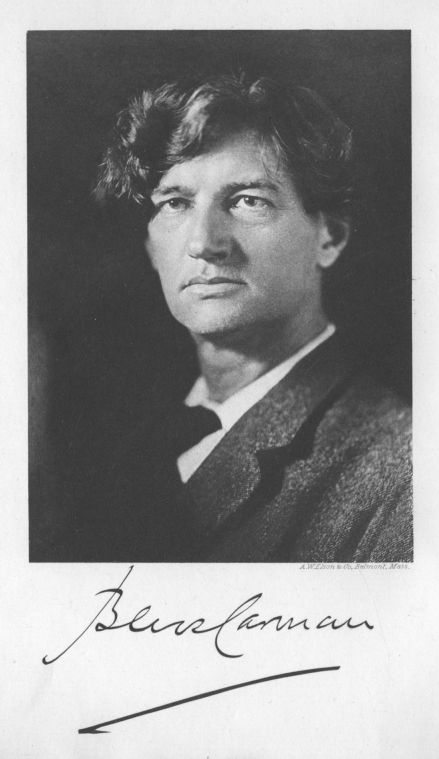
Bliss Carman
LATER POEMS
BY BLISS CARMAN
WITH AN APPRECIATION BY R. H. HATHAWAY
And decorations by J. E. H. MacDonald A.R.C.A
MCCLELLAND & STEWART PUBLISHERS — TORONTO
Copyright, Canada, 1921 By MCCLELLAND & STEWART, Limited, TORONTO
First Printing 1921 Second " 1922 Third " 1922 Fourth " 1923
Printed in Canada
Publisher's Note
The present volume is made up of poems from Mr. Carman's three latest books, The Rough Rider, Echoes from Vagabondia, and April Airs, together with a number of more recent poems which have not before been issued in book form.
Bliss Carman: An Appreciation
How many Canadians--how many even among the few who seek to keep themselves informed of the best in contemporary literature, who are ever on the alert for the new voices—realise, or even suspect, that this Northern land of theirs has produced a poet of whom it may be affirmed with confidence and assurance that he is of the great succession of English poets? Yet such—strange and unbelievable though it may seem—is in very truth the case, that poet being (to give him his full name) William Bliss Carman. Canada has full right to be proud of her poets, a small body though they are; but not only does Mr. Carman stand high and clear above them all—his place (and time cannot but confirm and justify the assertion) is among those men whose poetry is the shining glory of that great English literature which is our common heritage.
If any should ask why, if what has been just said is so, there has been—as must be admitted—no general recognition of the fact in the poet's home land, I would answer that there are various and plausible, if not good, reasons for it.
First of all, the poet, as thousands more of our young men of ambition and confidence have done, went early to the United States, and until recently, except for rare and brief visits to his old home down by the sea, has never returned to Canada—though for all that, I am able to state, on his own authority, he is still a Canadian citizen. Then all his books have had their original publication in the United States, and while a few of them have subsequently carried the imprints of Canadian publishers, none of these can be said ever to have made any special effort to push their sale. Another reason for the fact above mentioned is that Mr. Carman has always scorned to advertise himself, while his work has never been the subject of the log-rolling and booming which the work of many another poet has had—to his ultimate loss. A further reason is that he follows a rule of his own in preparing his books for publication. Most poets publish a volume of their work as soon as, through their industry and perseverance, they have material enough on hand to make publication desirable in their eyes. Not so with Mr. Carman, however, his rule being not to publish until he has done sufficient work of a certain general character or key to make a volume. As a result, you cannot fully know or estimate his work by one book, or two books, or even half a dozen; you must possess or be familiar with every one of the score and more volumes which contain his output of poetry before you can realise how great and how many-sided is his genius.
It is a common remark on the part of those who respond readily to the vigorous work of Kipling, or Masefield, even our own Service, that Bliss Carman's poetry has no relation to or concern with ordinary, everyday life. One would suppose that most persons who cared for poetry at all turned to it as a relief from or counter to the burdens and vexations of the daily round; but in any event, the remark referred to seems to me to indicate either the most casual acquaintance with Mr. Carman's work, or a complete misunderstanding and misapprehension of the meaning of it. I grant that you will find little or nothing in it all to remind you of the grim realities and vexing social problems of this modern existence of ours; but to say or to suggest that these things do not exist for Mr. Carman is to say or to suggest something which is the reverse of true. The truth is, he is aware of them as only one with the sensitive organism of a poet can be; but he does not feel that he has a call or mission to remedy them, and still less to sing of them. He therefore leaves the immediate problems of the day to those who choose, or are led, to occupy themselves therewith, and turns resolutely away to dwell upon those things which for him possess infinitely greater importance.
"What are they?" one who knows Mr. Carman only as, say, a lyrist of spring or as a singer of the delights of vagabondia probably will ask in some wonder. Well, the things which concern him above all, I would answer, are first, and naturally, the beauty and wonder of this world of ours, and next the mystery of the earthly pilgrimage of the human soul out of eternity and back into it again.
The poems in the present volume—which, by the way, can boast the high honor of being the very first regular Canadian edition of his work—will be evidence ample and conclusive to every reader, I am sure, of the place which
The perennial enchanted Lovely world and all its lore
occupy in the heart and soul of Bliss Carman, as well as of the magical power with which he is able to convey the deep and unfailing satisfaction and delight which they possess for him. They, however, represent his latest period (he has had three well-defined periods), comprising selections from three of his last published volumes: The Rough Rider, Echoes from Vagabondia, and April Airs, together with a number of new poems, and do not show, except here and there and by hints and flashes, how great is his preoccupation with the problem of man's existence—
the hidden import Of man's eternal plight.
This is manifest most in certain of his earlier books, for in these he turns and returns to the greatest of all the problems of man almost constantly, probing, with consummate and almost unrivalled use of the art of expression, for the secret which surely, he clearly feels, lies hidden somewhere, to be discovered if one could but pierce deeply enough. Pick up Behind the Arras, and as you turn over page after page you cannot but observe how incessantly the poet's mind—like the minds of his two great masters, Browning and Whitman—works at this problem. In "Behind the Arras," the title poem; "In the Wings," "The Crimson House," "The Lodger," "Beyond the Gamut," "The Juggler"—yes, in every poem in the book—he takes up and handles the strange thing we know as, or call, life, turning it now this way, now that, in an effort to find out its meaning and purpose. He comes but little nearer success in this than do most of the rest of men, of course; but the magical and ever-fresh beauty of his expression, the haunting melody of his lines, the variety of his images and figures and the depth and range of his thought, put his searchings and ponderings in a class by themselves.
Lengthy quotation from Mr. Carman's books is not permitted here, and I must guide myself accordingly, though with reluctance, because I believe that in a study such as this the subject should be allowed to speak for himself as much as possible. In "Behind the Arras" the poet describes the passage from life to death as
A cadence dying down unto its source In music's course,
and goes on to speak of death as
the broken rhythm of thought and man, The sweep and span Of memory and hope About the orbit where they still must grope For wider scope,
To be through thousand springs restored, renewed, With love imbrued, With increments of will Made strong, perceiving unattainment still From each new skill.
Now follow some verses from "Behind the Gamut," to my mind the poet's greatest single achievement;
As fine sand spread on a disc of silver, At some chord which bids the motes combine, Heeding the hidden and reverberant impulse, Shifts and dances into curve and line,
The round earth, too, haply, like a dust-mote, Was set whirling her assigned sure way, Round this little orb of her ecliptic To some harmony she must obey.
And what of man?
Linked to all his half-accomplished fellows, Through unfrontiered provinces to range— Man is but the morning dream of nature, Roused to some wild cadence weird and strange.
Here, now, are some verses from "Pulvis et Umbra," which is to be found in Mr. Carman's first book, Low Tide on Grand Pré, and in which the poet addresses a moth which a storm has blown into his window:
For man walks the world with mourning Down to death and leaves no trace, With the dust upon his forehead, And the shadow on his face.
Pillared dust and fleeing shadow As the roadside wind goes by, And the fourscore years that vanish In the twinkling of an eye.
"Pillared dust and fleeing shadow." Where in all our English literature will one find the life history of man summed up more briefly and, at the same time, more beautifully, than in that wonderful line? Now follows a companion verse to those just quoted, taken from "Lord of My Heart's Elation," which stands in the forefront of From the Green Book of the Bards. It may be remarked here that while the poet recurs again and again to some favorite thought or idea, it is never in the same words. His expression is always new and fresh, showing how deep and true is his inspiration. Again it is man who is pictured:
A fleet and shadowy column Of dust and mountain rain, To walk the earth a moment And be dissolved again.
But while Mr. Carman's speculations upon life's meaning and the mystery of the future cannot but appeal to the thoughtful-minded, it is as an interpreter of nature that he makes his widest appeal. Bliss Carman, I must say here, and emphatically, is no mere landscape-painter; he never, or scarcely ever, paints a picture of nature for its own sake. He goes beyond the outward aspect of things and interprets or translates for us with less keen senses as only a poet whose feeling for nature is of the deepest and profoundest, who has gone to her whole-heartedly and been taken close to her warm bosom, can do. Is this not evident from these verses from "The Great Return"—originally called "The Pagan's Prayer," and for some inscrutable reason to be found only in the limited Collected Poems, issued in two stately volumes in 1905 (1904)?
When I have lifted up my heart to thee, Thou hast ever hearkened and drawn near, And bowed thy shining face close over me, Till I could hear thee as the hill-flowers hear.
When I have cried to thee in lonely need, Being but a child of thine bereft and wrung, Then all the rivers in the hills gave heed; And the great hill-winds in thy holy tongue—
That ancient incommunicable speech— The April stars and autumn sunsets know— Soothed me and calmed with solace beyond reach Of human ken, mysterious and low.
Who can read or listen to those moving lines without feeling that Mr. Carman is in very truth a poet of nature—nay, Nature's own poet? But how could he be other when, in "The Breath of the Reed" (From the Green Book of the Bards), he makes the appeal?
Make me thy priest, O Mother, And prophet of thy mood, With all the forest wonder Enraptured and imbued.
As becomes such a poet, and particularly a poet whose birth-month is April, Mr. Carman sings much of the early spring. Again and again he takes up his woodland pipe, and lo! Pan himself and all his train troop joyously before us. Yet the singer's notes for all his singing never become wearied or strident; his airs are ever new and fresh; his latest songs are no less spontaneous and winning than were his first, written how many years ago, while at the same time they have gained in beauty and melody. What heart will not stir to the vibrant music of his immortal "Spring Song," which was originally published in the first Songs from Vagabondia, and the opening verses of which follow?
Make me over, mother April, When the sap begins to stir! When thy flowery hand delivers All the mountain-prisoned rivers, And thy great heart beats and quivers To revive the days that were, Make me over, mother April, When the sap begins to stir!
Take my dust and all my dreaming, Count my heart-beats one by one, Send them where the winters perish; Then some golden noon recherish And restore them in the sun, Flower and scent and dust and dreaming, With their heart-beats every one!
That poem is sufficient in itself to prove that Bliss Carman has full right and title to be called Spring's own lyrist, though it may be remarked here that not all his spring poems are so unfeignedly joyous. Many of them indeed, have a touch, or more than a touch, of wistfulness, for the poet knows well that sorrow lurks under all joy, deep and well hidden though it may be.
Mr. Carman sings equally finely, though perhaps not so frequently, of summer and the other seasons; but as he has other claims upon our attention, I shall forbear to labor the fact, particularly as the following collection demonstrates it sufficiently. One of those other claims is as a writer of sea poetry. Few poets, it may be said, have pictured the majesty and the mystery, the beauty and the terror of the sea, better than he. His Ballads of Lost Haven is a veritable treasure-house for those whose spirits find kinship in wide expanses of moving waters. One of the best known poems in this volume is "The Gravedigger," which opens thus:
Oh, the shambling sea is a sexton old, And well his work is done. With an equal grave for lord and knave, He buries them every one.
Then hoy and rip, with a rolling hip, He makes for the nearest shore; And God, who sent him a thousand ship, Will send him a thousand more; But some he'll save for a bleaching grave, And shoulder them in to shore— Shoulder them in, shoulder them in, Shoulder them in to shore.
In "The City of the Sea" (Last Songs from Vagabondia) Mr. Carman speaks of the seabells sounding
The eternal cadence of sea sorrow For Man's lot and immemorial wrong— The lost strains that haunt the human dwelling With the ghost of song.
Elsewhere he speaks of
The great sea, mystic and musical.
And here from another poem is a striking picture:
... the old sea Seems to whimper and deplore Mourning like a childless crone With her sorrow left alone— The eternal human cry To the heedless passer-by.
I have said above that Mr. Carman has had three distinct periods, and intimated that the poems in the following collection are of his third period. The first period may be said to be represented by the Low Tide and Behind the Arras volumes, while the second is displayed in the three volumes of Songs from Vagabondia, which he published in association with his friend Richard Hovey. Bliss Carman was from the first too original and individual a poet to be directly influenced by anyone else; but there can be no doubt that his friendship with Hovey helped to turn him from over-preoccupation with mysteries which, for all their greatness, are not for man to solve, to an intenser realisation of the beauty and loveliness of the world about him and of the joys of human fellowship. The result is seen in such poems as "Spring Song," quoted in part above, and his perhaps equally well-known "The Joys of the Road," which appeared in the same volume with that poem, and a few verses from which follow:
Now the joys of the road are chiefly these: A crimson touch on the hardwood trees;
A vagrant's morning wide and blue, In early fall, when the wind walks, too;
A shadowy highway cool and brown, Alluring up and enticing down
From rippled waters and dappled swamp, From purple glory to scarlet pomp;
The outward eye, the quiet will, And the striding heart from hill to hill.
Some of the finest of Mr. Carman's work is contained in his elegiac or memorial poems, in which he commemorates Keats, Shelley, William Blake, Lincoln, Stevenson, and other men for whom he has a kindred feeling, and also friends whom he has loved and lost. Listen to these moving lines from "Non Omnis Moriar," written in memory of Gleeson White, and to be found in Last Songs from Vagabondia:
There is a part of me that knows, Beneath incertitude and fear, I shall not perish when I pass Beyond mortality's frontier;
But greatly having joyed and grieved, Greatly content, shall hear the sigh Of the strange wind across the lone Bright lands of taciturnity.
In patience therefore I await My friend's unchanged benign regard,— Some April when I too shall be Spilt water from a broken shard.
In "The White Gull," written for the centenary of the birth of Shelley in 1892, and included in By the Aurelian Wall, he thus apostrophizes that clear and shining spirit:
O captain of the rebel host, Lead forth and far! Thy toiling troopers of the night Press on the unavailing fight; The sombre field is not yet lost, With thee for star.
Thy lips have set the hail and haste Of clarions free To bugle down the wintry verge Of time forever, where the surge Thunders and trembles on a waste And open sea.
In "A Seamark," a threnody for Robert Louis Stevenson, which appears in the same volume, the poet hails "R.L.S." (of whose tribe he may be said to be truly one) as
The master of the roving kind,
and goes on:
O all you hearts about the world In whom the truant gypsy blood, Under the frost of this pale time, Sleeps like the daring sap and flood That dreams of April and reprieve! You whom the haunted vision drives, Incredulous of home and ease. Perfection's lovers all your lives!
You whom the wander-spirit loves To lead by some forgotten clue Forever vanishing beyond Horizon brinks forever new; Our restless loved adventurer, On secret orders come to him, Has slipped his cable, cleared the reef, And melted on the white sea-rim.
"Perfection's lovers all your lives." Of these, it may be said without qualification, is Bliss Carman himself.
No summary of Mr. Carman's work, however cursory, would be worthy of the name if it omitted mention of his ventures in the realm of Greek myth. From the Book of Myths is made up of work of that sort, every poem in it being full of the beauty of phrase and melody of which Mr. Carman alone has the secret. The finest poems in the book, barring the opening one, "Overlord," are "Daphne," "The Dead Faun," "Hylas," and "At Phædra's Tomb," but I can do no more here than name them, for extracts would fail to reveal their full beauty. And beauty, after all is said, is the first and last thing with Mr. Carman. As he says himself somewhere:
The joy of the hand that hews for beauty Is the dearest solace under the sun.
And again
The eternal slaves of beauty Are the masters of the world.
A slave—a happy, willing slave—to beauty is the poet himself, and the world can never repay him for the message of beauty which he has brought it.
Kindred to From the Book of Myths, but much more important, is Sappho: One Hundred Lyrics, one of the most successful of the numerous attempts which have been made to recapture the poems by that high priestess of song which remain to us only in fragments. Mr. Carman, as Charles G. D. Roberts points out in an introduction to the volume, has made no attempt here at translation or paraphrasing; his venture has been "the most perilous and most alluring in the whole field of poetry"—that of imaginative and, at the same time, interpretive construction. Brief quotation again would fail to convey an adequate idea of the exquisiteness of the work, and all I can do, therefore, is to urge all lovers of real poetry to possess themselves of Sappho: One Hundred Lyrics, for it is literally a storehouse of lyric beauty.
I must not fail here to speak of From the Book of Valentines, which contains some lovely things, notably "At the Great Release." This is not only one of the finest of all Mr. Carman's poems, but it is also one of the finest poems of our time. It is a love poem, and no one possessing any real feeling for poetry can read it without experiencing that strange thrill of the spirit which only the highest form of poetry can communicate. "Morning and Evening," "In an Iris Meadow," and "A letter from Lesbos" must be also mentioned. In the last named poem, Sappho is represented as writing to Gorgo, and expresses herself in these moving words:
If the high gods in that triumphant time Have calendared no day for thee to come Light-hearted to this doorway as of old, Unmoved I shall behold their pomps go by— The painted seasons in their pageantry, The silvery progressions of the moon, And all their infinite ardors unsubdued, Pass with the wind replenishing the earth
Incredulous forever I must live And, once thy lover, without joy behold, The gradual uncounted years go by, Sharing the bitterness of all things made.
Mention must be now made of Songs of the Sea Children, which can be described only as a collection of the sweetest and tenderest love lyrics written in our time—
the lyric songs The earthborn children sing, When wild-wood laughter throngs The shy bird-throats of spring; When there's not a joy of the heart But flies like a flag unfurled, And the swelling buds bring back The April of the world.
So perfect and complete are these lyrics that it would be almost sacrilege to quote any of them unless entire. Listen however, to these verses:
The day is lost without thee, The night has not a star. Thy going is an empty room Whose door is left ajar.
Depart: it is the footfall Of twilight on the hills. Return: and every rood of ground Breaks into daffodils.
There are those who will have it that Bliss Carman has been away from Canada so long that he has ceased to be, in a real sense, a Canadian. Such assume rather than know, for a very little study of his work would show them that it is shot through and through with the poet's feeling for the land of his birth. Memories of his childhood and youthful years down by the sea are still fresh in Mr. Carman's mind, and inspire him again and again in his writing. "A Remembrance," at the beginning of the present collection, may be pointed to as a striking instance of this, but proof positive is the volume, Songs from a Northern Garden, for it could have been written only by a Canadian, born and bred, one whose heart and soul thrill to the thought of Canada. I would single out from this volume for special mention as being "Canadian" in the fullest sense "In a Grand Pré Garden," "The Keeper's Silence," "At Home and Abroad," "Killoleet," and "Above the Gaspereau," but have no space to quote from them.
But Mr. Carman is not only a Canadian, he is also a Briton; and evidence of this is his Ode on the Coronation, written on the occasion of the crowning of King Edward VII in 1902. This poem—the very existence of which is hardly known among us—ought to be put in the hands of every child and youth who speaks the English tongue, for no other, I dare maintain—nothing by Kipling, or Newbolt, or any other of our so-called "Imperial singers"—expresses more truly and more movingly the deep feeling of love and reverence which the very thought of England evokes in every son of hers, even though it may never have been his to see her white cliffs rise or to tread her storied ground:
O England, little mother by the sleepless Northern tide, Having bred so many nations to devotion, trust, and pride, Very tenderly we turn With welling hearts that yearn Still to love you and defend you,—let the sons of men discern Wherein your right and title, might and majesty, reside.
In concluding this, I greatly fear, lamentably inadequate study, I come to the collection which follows, and which, as intimated above, represents the work of Mr. Carman's latest period. I must say at once that, while I yield to no one in admiration for Low Tide and the other books of that period, or for the work of the second period, as represented by the Songs from Vagabondia volumes, I have no hesitation in declaring that I regard the poet's work of the past few years with even higher admiration. It may not possess the force and vigor of the work which preceded it; but anything seemingly missing in that respect is more than made up for me by increased beauty and clarity of expression. The mysticism—verging, or more than verging, at times on symbolism—which marked his earlier poems, and which hung, as it were, as a veil between them and the reader, has gone, and the poet's thought or theme now lies clearly before us as in a mirror. What—to take a verse from the following pages at random—could be more pellucid, more crystal clear in expression—what indeed, could come closer to that achieving of the impossible at which every real poet must aim—than this from "In Gold Lacquer" (page 12)?
Gold are the great trees overhead, And gold the leaf-strewn grass, As though a cloth of gold were spread To let a seraph pass. And where the pageant should go by, Meadow and wood and stream, The world is all of lacquered gold, Expectant as a dream.
The poet, happily, has fully recovered from the serious illness which laid him low some two years ago, and which for a time caused his friends and admirers the gravest concern, and so we may look forward hopefully to seeing further volumes of verse come from the press to make certain his name and fame. But if, for any reason, this should not be—which the gods forfend!—Later Poems, I dare affirm, must and will be regarded as the fine flower and crowning achievement of the genius and art of Bliss Carman.
R. H. HATHAWAY. Toronto, 1921.
THE BOOKS OF BLISS CARMAN: POETRY AND PROSE
LOW TIDE ON GRAND PRÉ: A BOOK OF LYRICS . . . . . . . . . . . . 1893 SONGS FROM VAGABONDIA (WITH RICHARD HOVEY) . . . . . . . . . . . 1894 BEHIND THE ARRAS: A BOOK OF THE UNSEEN . . . . . . . . . . . . . 1895 A SEAMARK: A THRENODY FOR ROBERT LOUIS STEVENSON . . . . . . . . 1895 MORE SONGS FROM VAGABONDIA (WITH HOVEY) . . . . . . . . . . . . 1896 BALLADS OF LOST HAVEN: A BOOK OF THE SEA . . . . . . . . . . . . 1897 BY THE AURELIAN WALL, AND OTHER ELEGIES . . . . . . . . . . . . 1898 A WINTER HOLIDAY . . . . . . . . . . . . . . . . . . . . . . . . 1899 LAST SONGS FROM VAGABONDIA (WITH HOVEY) . . . . . . . . . . . . 1901 BALLADS AND LYRICS (A SELECTION) . . . . . . . . . . . . . . . . 1902 ODE ON THE CORONATION OF KING EDWARD . . . . . . . . . . . . . . 1902 FROM THE BOOK OF MYTHS ("PIPES OF PAN," No. I.) . . . . . . . . 1902 FROM THE GREEN BOOK OF THE BARDS ("PIPES OF PAN," No. II.) . . . 1903 THE KINSHIP OF NATURE (ESSAYS) . . . . . . . . . . . . . . . . . 1904 SONGS OF THE SEA CHILDREN ("PIPES OF PAN," No. III.) . . . . . . 1904 SONGS FROM A NORTHERN GARDEN ("PIPES OF PAN," No. IV.) . . . . . 1904 THE FRIENDSHIP OF ART (ESSAYS) . . . . . . . . . . . . . . . . . 1904 SAPPHO: ONE HUNDRED LYRICS (500 COPIES) . . . . . . . . . . . . 1905 FROM THE BOOK OF VALENTINES ("PIPES OF PAN," No. V.) . . . . . . 1905 THE POETRY OF LIFE (ESSAYS) . . . . . . . . . . . . . . . . . . 1905 COLLECTED POEMS, 2 VOLS. (500 COPIES) . . . . . . . . . 1905 (1904) THE PIPES OF PAN (DEFINITIVE EDITION) . . . . . . . . . . . . . 1906 THE MAKING OF PERSONALITY (ESSAYS) . . . . . . . . . . . . . . . 1908 THE ROUGH RIDER, AND OTHER POEMS . . . . . . . . . . . . . . . . 1909 ECHOES FROM VAGABONDIA . . . . . . . . . . . . . . . . . . . . . 1912 DAUGHTERS OF DAWN: A LYRICAL PAGEANT (WITH MARY PERRY KING) . . 1913 EARTH DEITIES, AND OTHER RYTHMIC MASQUES (WITH MARY PERRY KING) 1914 APRIL AIRS: A BOOK OF NEW ENGLAND LYRICS . . . . . . . . . . . . 1916
Contents
BLISS CARMAN: AN APPRECIATION VESTIGIA A REMEMBRANCE THE SHIPS OF YULE THE SHIPS OF SAINT JOHN THE GARDEN OF DREAMS GARDEN MAGIC IN GOLD LACQUER APRILIAN GARDEN SHADOWS IN THE DAY OF BATTLE TREES THE GIVERS OF LIFE A FIRESIDE VISION A WATER COLOR THRENODY FOR A POET DUST OF THE STREET TO A YOUNG LADY ON HER BIRTHDAY THE GIFT THE CRY OF THE HILLBORN A MOUNTAIN GATEWAY MORNING IN THE HILLS A WOODPATH WEATHER OF THE SOUL HERE AND NOW THE ANGEL OF JOY THE HOMESTEAD "THE STARRY MIDNIGHT WHISPERS" A LYRIC "APRIL NOW IN MORNING CLAD" NIKE THE ENCHANTED TRAVELLER SPRING'S SARABAND TRIUMPHALIS "NOW THE LENGTHENING TWILIGHTS HOLD" THE SOUL OF APRIL AN APRIL MORNING EARTH VOICES RESURGAM EASTER EVE NOW IS THE TIME OF YEAR THE REDWING THE RAINBIRD LAMENT UNDER THE APRIL MOON THE FLUTE OF SPRING SPRING NIGHT BLOODROOT DAFFODIL'S RETURN NOW THE LILAC TREE'S IN BUD WHITE IRIS THE TREE OF HEAVEN PEONY THE URBAN PAN THE SAILING OF THE FLEETS "'TIS MAY NOW IN NEW ENGLAND" IN EARLY MAY FIREFLIES THE PATH TO SANKOTY OFF MONOMOY IN ST GERMAIN STREET PAN IN THE CATSKILLS A NEW ENGLAND JUNE THE TENT OF NOON CHILDREN OF DREAM ROADSIDE FLOWERS THE GARDEN OF SAINT ROSE THE WORLD VOICE SONGS OF THE GRASS THE CHORISTERS THE WEED'S COUNSEL THE BLUE HERON WOODLAND RAIN SUMMER STORM DANCE OF THE SUNBEAMS THE CAMPFIRE OF THE SUN SUMMER STREAMS THE GOD OF THE WOODS AT SUNRISE AT TWILIGHT MOONRISE THE QUEEN OF NIGHT NIGHT LYRIC THE HEART OF NIGHT PEACE THE OLD GRAY WALL TE DEUM IN OCTOBER BY STILL WATERS LINES FOR A PICTURE THE DESERTED PASTURE AUTUMN NOVEMBER TWILIGHT THE GHOSTYARD OF THE GOLDENROD BEFORE THE SNOW WINTER A WINTER PIECE WINTER STREAMS WINTER TWILIGHT THE TWELFTH NIGHT STAR A CHRISTMAS EVE CHORAL CHRISTMAS SONG THE WISE MEN FROM THE EAST THE SENDING OF THE MAGI THE ANGELS OF MAN AT THE MAKING OF MAN ST. MICHAEL'S STAR THE DREAMERS EL DORADO ON THE PLAZA A PAINTER'S HOLIDAY MIRAGE THE WINGED VICTORY THE GATE OF PEACE
Later Poems
Vestigia.
I took a day to search for God, And found Him not. But as I trod By rocky ledge, through woods untamed, Just where one scarlet lily flamed, I saw His footprint in the sod.
Then suddenly, all unaware, Far off in the deep shadows, where A solitary hermit thrush Sang through the holy twilight hush— I heard His voice upon the air.
And even as I marvelled how God gives us Heaven here and now, In a stir of wind that hardly shook The poplar leaves beside the brook— His hand was light upon my brow.
At last with evening as I turned Homeward, and thought what I had learned And all that there was still to probe— I caught the glory of His robe Where the last fires of sunset burned.
Back to the world with quickening start I looked and longed for any part In making saving Beauty be.... And from that kindling ecstasy I knew God dwelt within my heart.
A Remembrance.
Here in lovely New England When summer is come, a sea-turn Flutters a page of remembrance In the volume of long ago.
Soft is the wind over Grand Pré, Stirring the heads of the grasses, Sweet is the breath of the orchards White with their apple-blow.
There at their infinite business Of measuring time forever, Murmuring songs of the sea, The great tides come and go.
Over the dikes and the uplands Wander the great cloud shadows, Strange as the passing of sorrow, Beautiful, solemn, and slow.
For, spreading her old enchantment Of tender ineffable wonder, Summer is there in the Northland! How should my heart not know?
The Ships of Yule
When I was just a little boy, Before I went to school, I had a fleet of forty sail I called the Ships of Yule;
Of every rig, from rakish brig And gallant barkentine, To little Fundy fishing boats With gunwales painted green.
They used to go on trading trips Around the world for me, For though I had to stay on shore My heart was on the sea.
They stopped at every port to call From Babylon to Rome, To load with all the lovely things We never had at home;
With elephants and ivory Bought from the King of Tyre, And shells and silk and sandal-wood That sailor men admire;
With figs and dates from Samarcand, And squatty ginger-jars, And scented silver amulets From Indian bazaars;
With sugar-cane from Port of Spain, And monkeys from Ceylon, And paper lanterns from Pekin With painted dragons on;
With cocoanuts from Zanzibar, And pines from Singapore; And when they had unloaded these They could go back for more.
And even after I was big And had to go to school, My mind was often far away Aboard the Ships of Yule.
The Ships of Saint John
Where are the ships I used to know, That came to port on the Fundy tide Half a century ago, In beauty and stately pride?
In they would come past the beacon light, With the sun on gleaming sail and spar, Folding their wings like birds in flight From countries strange and far.
Schooner and brig and barkentine, I watched them slow as the sails were furled, And wondered what cities they must have seen On the other side of the world.
Frenchman and Britisher and Dane, Yankee, Spaniard and Portugee, And many a home ship back again With her stories of the sea.
Calm and victorious, at rest From the relentless, rough sea-play, The wild duck on the river's breast Was not more sure than they.
The creatures of a passing race, The dark spruce forests made them strong, The sea's lore gave them magic grace, The great winds taught them song.
And God endowed them each with life— His blessing on the craftsman's skill— To meet the blind unreasoned strife And dare the risk of ill.
Not mere insensate wood and paint Obedient to the helm's command, But often restive as a saint Beneath the Heavenly hand.
All the beauty and mystery Of life were there, adventure bold, Youth, and the glamour of the sea And all its sorrows old.
And many a time I saw them go Out on the flood at morning brave, As the little tugs had them in tow, And the sunlight danced on the wave.
There all day long you could hear the sound Of the caulking iron, the ship's bronze bell, And the clank of the capstan going round As the great tides rose and fell.
The sailors' songs, the Captain's shout, The boatswain's whistle piping shrill, And the roar as the anchor chain runs out,— I often hear them still.
I can see them still, the sun on their gear, The shining streak as the hulls careen, And the flag at the peak unfurling,—clear As a picture on a screen.
The fog still hangs on the long tide-rips, The gulls go wavering to and fro, But where are all the beautiful ships I knew so long ago?
The Garden of Dreams
My heart is a garden of dreams Where you walk when day is done, Fair as the royal flowers, Calm as the lingering sun.
Never a drouth comes there, Nor any frost that mars, Only the wind of love Under the early stars,—
The living breath that moves Whispering to and fro, Like the voice of God in the dusk Of the garden long ago.
Garden Magic
Within my stone-walled garden (I see her standing now, Uplifted in the twilight, With glory on her brow!)
I love to walk at evening And watch, when winds are low, The new moon in the tree-tops, Because she loved it so!
And there entranced I listen, While flowers and winds confer, And all their conversation Is redolent of her.
I love the trees that guard it, Upstanding and serene, So noble, so undaunted, Because that was her mien.
I love the brook that bounds it, Because its silver voice Is like her bubbling laughter That made the world rejoice.
I love the golden jonquils, Because she used to say, If soul could choose a color It would be clothed as they.
I love the blue-gray iris, Because her eyes were blue, Sea-deep and heaven-tender In meaning and in hue.
I love the small wild roses, Because she used to stand Adoringly above them And bless them with her hand.
These were her boon companions. But more than all the rest I love the April lilac, Because she loved it best.
Soul of undying rapture! How love's enchantment clings, With sorcery and fragrance, About familiar things!
In Gold Lacquer
Gold are the great trees overhead, And gold the leaf-strewn grass, As though a cloth of gold were spread To let a seraph pass. And where the pageant should go by, Meadow and wood and stream, The world is all of lacquered gold, Expectant as a dream.
Against the sunset's burning gold, Etched in dark monotone Behind its alley of grey trees And gateposts of grey stone, Stands the Old Manse, about whose eaves An air of mystery clings, Abandoned to the lonely peace Of bygone ghostly things.
In molten gold the river winds With languid sweep and turn, Beside the red-gold wooded hill Yellowed with ash and fern. The streets are tiled with gold-green shade And arched with fretted gold, Ecstatic aisles that richly thread This minster grim and old.
The air is flecked with filtered gold,— The shimmer of romance Whose ageless glamour still must hold The world as in a trance, Pouring o'er every time and place Light of an amber sea, The spell of all the gladsome things That have been or shall be.
Aprilian
When April came with sunshine And showers and lilac bloom, My heart with sudden gladness Was like a fragrant room.
Her eyes were heaven's own azure, As deep as God's own truth. Her soul was made of rapture And mystery and youth.
She knew the sorry burden Of all the ancient years, Yet could not dwell with sadness And memory and tears.
With her there was no shadow Of failure nor despair, But only loving joyance. O Heart, how glad we were!
Garden Shadows
When the dawn winds whisper To the standing corn, And the rose of morning From the dark is born, All my shadowy garden Seems to grow aware Of a fragrant presence, Half expected there.
In the golden shimmer Of the burning noon, When the birds are silent And the poppies swoon, Once more I behold her Smile and turn her face, With its infinite regard, Its immortal grace.
When the twilight silvers Every nodding flower, And the new moon hallows The first evening hour, Is it not her footfall Down the garden walks, Where the drowsy blossoms Slumber on their stalks?
In the starry quiet, When the soul is free, And a vernal message Stirs the lilac tree, Surely I have felt her Pass and brush my cheek, With the eloquence of love That does not need to speak!
In The Day of Battle
In the day of battle, In the night of dread, Let one hymn be lifted, Let one prayer be said.
Not for pride of conquest, Not for vengeance wrought, Nor for peace and safety With dishonour bought!
Praise for faith in freedom, Our fighting fathers' stay, Born of dreams and daring, Bred above dismay.
Prayer for cloudless vision, And the valiant hand, That the right may triumph To the last demand.
Trees
In the Garden of Eden, planted by God, There were goodly trees in the springing sod,—
Trees of beauty and height and grace, To stand in splendor before His face.
Apple and hickory, ash and pear, Oak and beech and the tulip rare,
The trembling aspen, the noble pine, The sweeping elm by the river line;
Trees for the birds to build and sing, And the lilac tree for a joy in spring;
Trees to turn at the frosty call And carpet the ground for their Lord's footfall;
Trees for fruitage and fire and shade, Trees for the cunning builder's trade;
Wood for the bow, the spear, and the flail, The keel and the mast of the daring sail;
He made them of every grain and girth For the use of man in the Garden of Earth.
Then lest the soul should not lift her eyes From the gift to the Giver of Paradise,
On the crown of a hill, for all to see, God planted a scarlet maple tree.
The Givers of Life
I
Who called us forth out of darkness and gave us the gift of life, Who set our hands to the toiling, our feet in the field of strife?
Darkly they mused, predestined to knowledge of viewless things, Sowing the seed of wisdom, guarding the living springs.
Little they reckoned privation, hunger or hardship or cold, If only the life might prosper, and the joy that grows not old.
With sorceries subtler than music, with knowledge older than speech, Gentle as wind in the wheat-field, strong as the tide on the beach,
Out of their beauty and longing, out of their raptures and tears, In patience and pride they bore us, to war with the warring years.
II
Who looked on the world before them, and summoned and chose our sires, Subduing the wayward impulse to the will of their deep desires?
Sovereigns of ultimate issues under the greater laws, Theirs was the mystic mission of the eternal cause;
Confident, tender, courageous, leaving the low for the higher, Lifting the feet of the nations out of the dust and the mire; Luring civilization on to the fair and new, Given God's bidding to follow, having God's business to do.
III
Who strengthened our souls with courage, and taught us the ways of Earth? Who gave us our patterns of beauty, our standards of flawless worth?
Mothers, unmilitant, lovely, moulding our manhood then, Walked in their woman's glory, swaying the might of men.
They schooled us to service and honor, modest and clean and fair,— The code of their worth of living, taught with the sanction of prayer. They were our sharers of sorrow, they were our makers of joy, Lighting the lamp of manhood in the heart of the lonely boy.
Haloed with love and with wonder, in sheltered ways they trod, Seers of sublime divination, keeping the truce of God.
IV
Who called us from youth and dreaming, and set ambition alight, And made us fit for the contest,—men, by their tender rite?
Sweethearts above our merit, charming our strength and skill To be the pride of their loving, to be the means of their will.
If we be the builders of beauty, if we be the masters of art, Theirs were the gleaming ideals, theirs the uplift of the heart.
Truly they measure the lightness of trappings and ease and fame, For the teeming desire of their yearning is ever and ever the same:
To crown their lovers with gladness, to clothe their sons with delight, And see the men of their making lords in the best man's right.
Lavish of joy and labor, broken only by wrong, These are the guardians of being, spirited, sentient and strong.
Theirs is the starry vision, theirs the inspiriting hope, Since Night, the brooding enchantress, promised that day should ope.
V
Lo, we have built and invented, reasoned, discovered and planned, To rear us a palace of splendor, and make us a heaven by hand.
We are shaken with dark misgiving, as kingdoms rise and fall; But the women who went to found them are never counted at all.
Versed in the soul's traditions, skilled in humanity's lore, They wait for their crown of rapture, and weep for the sins of war.
And behold they turn from our triumphs, as it was in the first of days, For a little heaven of ardor and a little heartening of praise.
These are the rulers of kingdoms beyond the domains of state, Martyrs of all men's folly, over-rulers of fate. These we will love and honor, these we will serve and defend, Fulfilling the pride of nature, till nature shall have an end.
VI
This is the code unwritten, this is the creed we hold, Guarding the little and lonely, gladdening the helpless and old,—
Apart from the brunt of the battle our wondrous women shall bide, For the sake of a tranquil wisdom and the need of a spirit's guide.
Come they into assembly, or keep they another door, Our makers of life shall lighten the days as the years of yore.
The lure of their laughter shall lead us, the lilt of their words shall sway. Though life and death should defeat us, their solace shall be our stay.
Veiled in mysterious beauty, vested in magical grace, They have walked with angels at twilight and looked upon glory's face.
Life we will give for their safety, care for their fruitful ease, Though we break at the toiling benches or go down in the smoky seas.
This is the gospel appointed to govern a world of men. Till love has died, and the echoes have whispered the last Amen.
A Fireside Vision
Once I walked the world enchanted Through the scented woods of spring, Hand in hand with Love, in rapture Just to hear a bluebird sing.
Now the lonely winds of autumn Moan about my gusty eaves, As I sit beside the fire Listening to the flying leaves.
As the dying embers settle And the twilight falls apace, Through the gloom I see a vision Full of ardor, full of grace.
When the Architect of Beauty Breathed the lyric soul in man, Lo, the being that he fashioned Was of such a mould and plan!
Bravely through the deepening shadows Moves that figure half divine, With its tenderness of bearing, With its dignity of line.
Eyes more wonderful than evening With the new moon on the hill, Mouth with traces of God's humor In its corners lurking still.
Ah, she smiles, in recollection; Lays a hand upon my brow; Rests this head upon Love's bosom! Surely it is April now!
A Water Color
There's a picture in my room Lightens many an hour of gloom,—
Cheers me under fortune's frown And the drudgery of town.
Many and many a winter day When my soul sees all things gray,
Here is veritable June, Heart's content and spirit's boon.
It is scarce a hand-breadth wide, Not a span from side to side,
Yet it is an open door Looking back to joy once more,
Where the level marshes lie, A quiet journey of the eye,
And the unsubstantial blue Makes the fine illusion true.
So I forth and travel there In the blessed light and air,
Miles of green tranquillity Down the river to the sea.
Here the sea-birds roam at will, And the sea-wind on the hill
Brings the hollow pebbly roar From the dim and rosy shore,
With the very scent and draft Of the old sea's mighty craft.
I am standing on the dunes, By some charm that must be June's,
When the magic of her hand Lays a sea-spell on the land.
And the old enchantment falls On the blue-gray orchard walls
And the purple high-top boles, While the orange orioles
Flame and whistle through the green Of that paradisal scene.
Strolling idly for an hour Where the elder is in flower,
I can hear the bob-white call Down beyond the pasture wall.
Musing in the scented heat, Where the bayberry is sweet,
I can see the shadows run Up the cliff-side in the sun.
Or I cross the bridge and reach The mossers' houses on the beach,
Where the bathers on the sand Lie sea-freshened and sun-tanned.
Thus I pass the gates of time And the boundaries of clime,
Change the ugly man-made street For God's country green and sweet.
Fag of body, irk of mind, In a moment left behind,
Once more I possess my soul With the poise and self-control
Beauty gives the free of heart Through the sorcery of art.
Threnody for a Poet
Not in the ancient abbey, Nor in the city ground, Not in the lonely mountains, Nor in the blue profound, Lay him to rest when his time is come And the smiling mortal lips are dumb;
But here in the decent quiet Under the whispering pines, Where the dogwood breaks in blossom And the peaceful sunlight shines, Where wild birds sing and ferns unfold, When spring comes back in her green and gold.
And when that mortal likeness Has been dissolved by fire, Say not above the ashes, "Here ends a man's desire." For every year when the bluebirds sing, He shall be part of the lyric spring.
Then dreamful-hearted lovers Shall hear in wind and rain The cadence of his music, The rhythm of his refrain, For he was a blade of the April sod That bowed and blew with the whisper of God.
Dust of the Street
This cosmic dust beneath our feet Rising to hurry down the street,
Borne by the wind and blown astray In its erratic, senseless way,
Is the same stuff as you and I— With knowledge and desire put by.
Thousands of times since time began It has been used for making man,
Freighted like us with every sense Of spirit and intelligence,
To walk the world and know the fine Large consciousness of things divine.
These wandering atoms in their day Perhaps have passed this very way,
With eager step and flowerlike face, With lovely ardor, poise, and grace,
On what delightful errands bent, Passionate, generous, and intent,—
An angel still, though veiled and gloved, Made to love us and to be loved.
Friends, when the summons comes for me To turn my back (reluctantly)
On this delightful play, I claim Only one thing in friendship's name;
And you will not decline a task So slight, when it is all I ask:
Scatter my ashes in the street Where avenue and crossway meet.
I beg you of your charity, No granite and cement for me,
To needlessly perpetuate An unimportant name and date.
Others may wish to lay them down On some fair hillside far from town,
Where slim white birches wave and gleam Beside a shadowy woodland stream,
Or in luxurious beds of fern, But I would have my dust return
To the one place it loved the best In days when it was happiest.
To a Young Lady on Her Birthday
The marching years go by And brush your garment's hem. The bandits by and by Will bid you go with them.
Trust not that caravan! Old vagabonds are they; They'll rob you if they can, And make believe it's play.
Make the old robbers give Of all the spoils they bear,— Their truth, to help you live,— Their joy, to keep you fair.
Ask not for gauds nor gold, Nor fame that falsely rings; The foolish world grows old Caring for all these things.
Make all your sweet demands For happiness alone, And the years will fill your hands With treasures rarely known.
The Gift
I said to Life, "How comes it, With all this wealth in store, Of beauty, joy, and knowledge, Thy cry is still for more?
"Count all the years of striving To make thy burden less,— The things designed and fashioned To gladden thy success!
"The treasures sought and gathered Thy lightest whim to please,— The loot of all the ages, The spoil of all the seas!
"Is there no end of labor, No limit to thy need? Must man go bowed forever In bondage to thy greed?"
With tears of pride and passion She answered, "God above! I only wait the asking, To spend it all for love!"
The Cry of the Hillborn
I am homesick for the mountains— My heroic mother hills— And the longing that is on me No solace ever stills.
I would climb to brooding summits With their old untarnished dreams, Cool my heart in forest shadows To the lull of falling streams;
Hear the innocence of aspens That babble in the breeze, And the fragrant sudden showers That patter on the trees.
I am lonely for my thrushes In their hermitage withdrawn, Toning the quiet transports Of twilight and of dawn.
I need the pure, strong mornings, When the soul of day is still, With the touch of frost that kindles The scarlet on the hill;
Lone trails and winding woodroads To outlooks wild and high, And the pale moon waiting sundown Where ledges cut the sky.
I dream of upland clearings Where cones of sumac burn, And gaunt and gray-mossed boulders Lie deep in beds of fern;
The gray and mottled beeches, The birches' satin sheen, The majesty of hemlocks Crowning the blue ravine.
My eyes dim for the skyline Where purple peaks aspire, And the forges of the sunset Flare up in golden fire.
There crests look down unheeding And see the great winds blow, Tossing the huddled tree-tops In gorges far below;
Where cloud-mists from the warm earth Roll up about their knees, And hang their filmy tatters Like prayers upon the trees.
I cry for night-blue shadows On plain and hill and dome,— The spell of old enchantments, The sorcery of home.
A Mountain Gateway
I know a vale where I would go one day, When June comes back and all the world once more Is glad with summer. Deep in shade it lies A mighty cleft between the bosoming hills, A cool dim gateway to the mountains' heart.
On either side the wooded slopes come down, Hemlock and beech and chestnut. Here and there Through the deep forest laurel spreads and gleams, Pink-white as Daphne in her loveliness. Among the sunlit shadows I can see That still perfection from the world withdrawn, As if the wood-gods had arrested there Immortal beauty in her breathless flight.
The road winds in from the broad river-lands, Luring the happy traveller turn by turn Up to the lofty mountains of the sky. And as he marches with uplifted face, Far overhead against the arching blue Gray ledges overhang from dizzy heights, Scarred by a thousand winters and untamed.
And where the road runs in the valley's foot, Through the dark woods a mountain stream comes down, Singing and dancing all its youth away Among the boulders and the shallow runs, Where sunbeams pierce and mossy tree trunks hang Drenched all day long with murmuring sound and spray.
There light of heart and footfree, I would go Up to my home among the lasting hills. Nearing the day's end, I would leave the road, Turn to the left and take the steeper trail That climbs among the hemlocks, and at last In my own cabin doorway sit me down, Companioned in that leafy solitude By the wood ghosts of twilight and of peace, While evening passes to absolve the day And leave the tranquil mountains to the stars.
And in that sweet seclusion I should hear, Among the cool-leafed beeches in the dusk, The calm-voiced thrushes at their twilight hymn. So undistraught, so rapturous, so pure, They well might be, in wisdom and in joy, The seraphs singing at the birth of time The unworn ritual of eternal things.
Morning in the Hills
How quiet is the morning in the hills! The stealthy shadows of the summer clouds Trail through the cañon, and the mountain stream Sounds his sonorous music far below In the deep-wooded wind-enchanted cove.
Hemlock and aspen, chestnut, beech, and fir Go tiering down from storm-worn crest and ledge, While in the hollows of the dark ravine See the red road emerge, then disappear Towards the wide plain and fertile valley lands.
My forest cabin half-way up the glen Is solitary, save for one wise thrush, The sound of falling water, and the wind Mysteriously conversing with the leaves.
Here I abide unvisited by doubt, Dreaming of far-off turmoil and despair, The race of men and love and fleeting time, What life may be, or beauty, caught and held For a brief moment at eternal poise.
What impulse now shall quicken and make live This outward semblance and this inward self? One breath of being fills the bubble world, Colored and frail, with fleeting change on change.
Surely some God contrived so fair a thing In a vast leisure of uncounted days, And touched it with the breath of living joy, Wondrous and fair and wise! It must be so.
A Wood-path
At evening and at morning By an enchanted way I walk the world in wonder, And have no word to say.
It is the path we traversed One twilight, thou and I; Thy beauty all a rapture, My spirit all a cry.
The red leaves fall upon it, The moon and mist and rain, But not the magic footfall That made its meaning plain.
Weather of the Soul
There is a world of being We range from pole to pole, Through seasons of the spirit And weather of the soul.
It has its new-born Aprils, With gladness in the air, Its golden Junes of rapture, Its winters of despair.
And in its tranquil autumns We halt to re-enforce Our tattered scarlet pennons With valor and resource.
From undiscovered regions Only the angels know, Great winds of aspiration Perpetually blow,
To free the sap of impulse From torpor of distrust, And into flowers of joyance Quicken the sentient dust.
From nowhere of a sudden Loom sudden clouds of fault, With thunders of oppression And lightnings of revolt.
With hush of apprehension And quaking of the heart, There breed the storms of anger, And floods of sorrow start.
And there shall fall,—how gently!— To make them fertile yet, The rain of absolution On acres of regret.
Till snows of mercy cover The dream that shall come true, When time makes all things wondrous, And life makes all things new.
Here and Now
Where is Heaven? Is it not Just a friendly garden plot, Walled with stone and roofed with sun, Where the days pass one by one, Not too fast and not too slow, Looking backward as they go At the beauties left behind To transport the pensive mind!
Is it not a greening ground With a river for its bound, And a wood-thrush to prolong Fragrant twilights with his song, When the peonies in June Wait the rising of the moon, And the music of the stream Voices its immortal dream!
There each morning will renew The miracle of light and dew, And the soul may joy to praise The Lord of roses and of days; There the caravan of noon Halts to hear the cricket's tune, Fifing there for all who pass The anthem of the summer grass!
Does not Heaven begin that day When the eager heart can say, Surely God is in this place, I have seen Him face to face In the loveliness of flowers, In the service of the showers, And His voice has talked to me In the sunlit apple tree.
I can feel Him in my heart, When the tears of knowledge start For another's joy or woe, Where the lonely soul must go. Yea, I learned His very look, When we walked beside the brook, And you smiled and touched my hand. God is love... I understand.
The Angel of Joy
There is no grief for me Nor sadness any more; For since I first knew thee Great Joy has kept my door.
That angel of the calm All-comprehending smile, No menace can dismay, No falsity beguile.
Out of the house of life Before him fled away Languor, regret, and strife And sorrow on that day.
Grim fear, unmanly doubt, And impotent despair Went at his bidding forth Among the things that were,—
Leaving a place all clean, Resounding of the sea And decked with forest green, To be a home for thee.
The Homestead.
Here we came when love was young. Now that love is old, Shall we leave the floor unswept And the hearth acold?
Here the hill-wind in the dusk. Wandering to and fro, Moves the moonflowers, like a ghost Of the long ago.
Here from every doorway looks A remembered face, Every sill and panel wears A familiar grace.
Let the windows smile again To the morning light, And the door stand open wide When the moon is bright.
Let the breeze of twilight blow Through the silent hall, And the dreaming rafters hear How the thrushes call.
Oh, be merciful and fond To the house that gave All its best to shelter love, Built when love was brave!
Here we came when love was young, Now that love is old, Never let its day be lone, Nor its heart acold!
"The Starry Midnight Whispers"
The starry midnight whispers, As I muse before the fire On the ashes of ambition And the embers of desire,
"Life has no other logic, And time no other creed, Than: 'I for joy will follow. Where thou for love dost lead!'"
A Lyric
Oh, once I could not understand The sob within the throat of spring,— The shrilling of the frogs, nor why The birds so passionately sing.
That was before your beauty came And stooped to teach my soul desire, When on these mortal lips you laid The magic and immortal fire.
I wondered why the sea should seem So gray, so lonely, and so old; The sigh of level-driving snows In winter so forlornly cold.
I wondered what it was could give The scarlet autumn pomps their pride. And paint with colors not of earth The glory of the mountainside.
I could not tell why youth should dream And worship at the evening star, And yet must go with eager feet Where danger and where splendor are.
I could not guess why men at times, Beholding beauty, should go mad With joy or sorrow or despair Or some unknown delight they had.
I wondered what they had received From Time's inexorable hand So full of loveliness and doom. But now, ah, now I understand!
"April now in Morning Clad"
April now in morning clad Like a gleaming oread, With the south wind in her voice, Comes to bid the world rejoice.
With the sunlight on her brow, Through her veil of silver showers, April o'er New England now Trails her robe of woodland flowers,—
Violet and anemone; While along the misty sea, Pipe at lip, she seems to blow Haunting airs of long ago.
Nike
What do men give thanks for? I give thanks for one, Lovelier than morning, Dearer than the sun.
Such a head the victors Must have praised and known, With that breast and bearing, Nike's very own—
As superb, untrammeled, Rhythmed and poised and free As the strong pure sea-wind Walking on the sea;
Such a hand as Beauty Uses with full heart, Seeking for her freedom In new shapes of art;
Soft as rain in April, Quiet as the days Of the purple asters And the autumn haze;
With a soul more subtle Than the light of stars, Frailer than a moth's wing To the touch that mars;
Wise with all the silence Of the waiting hills, When the gracious twilight Wakes in them and thrills;
With a voice more tender Than the early moon Hears among the thrushes In the woods of June;
Delicate as grasses When they lift and stir— One sweet lyric woman— I give thanks for her.
The Enchanted Traveller
We travelled empty-handed With hearts all fear above, For we ate the bread of friendship, We drank the wine of love.
Through many a wondrous autumn, Through many a magic spring, We hailed the scarlet banners, We heard the blue-bird sing.
We looked on life and nature With the eager eyes of youth, And all we asked or cared for Was beauty, joy, and truth.
We found no other wisdom, We learned no other way, Than the gladness of the morning, The glory of the day.
So all our earthly treasure Shall go with us, my dears, Aboard the Shadow Liner, Across the sea of years.
Spring's Saraband
Over the hills of April With soft winds hand in hand, Impassionate and dreamy-eyed, Spring leads her saraband. Her garments float and gather And swirl along the plain, Her headgear is the golden sun, Her cloak the silver rain.
With color and with music, With perfumes and with pomp, By meadowland and upland, Through pasture, wood, and swamp, With promise and enchantment Leading her mystic mime, She comes to lure the world anew With joy as old as time.
Quick lifts the marshy chorus To transport, trill on trill; There's not a rod of stony ground Unanswering on the hill. The brooks and little rivers Dance down their wild ravines, And children in the city squares Keep time, to tambourines.
The bluebird in the orchard Is lyrical for her, The blackbird with his meadow pipe Sets all the wood astir, The hooded white spring-beauties Are curtsying in the breeze, The blue hepaticas are out Under the chestnut trees.
The maple buds make glamor, Viburnum waves its bloom, The daffodils and tulips Are risen from the tomb. The lances of Narcissus Have pierced the wintry mold; The commonplace seems paradise Through veils of greening gold.
O heart, hear thou the summons, Put every grief away, When all the motley masques of earth Are glad upon a day. Alack, that any mortal Should less than gladness bring Into the choral joy that sounds The saraband of spring!
Triumphalis
Soul, art thou sad again With the old sadness? Thou shalt be glad again With a new gladness, When April sun and rain Mount to the teeming brain With the earth madness.
When from the mould again, Spurning disaster, Spring shoots unfold again, Follow thou faster Out of the drear domain Of dark, defeat, and pain, Praising the Master.
Hope for thy guide again, Ample and splendid; Love at thy side again, All doubting ended; (Ah, by the dragon slain, For nothing small or vain Michael contended!)
Thou shalt take heart again, No more despairing; Play thy great part again, Loving and caring. Hark, how the gold refrain Runs through the iron strain, Splendidly daring!
Thou shalt grow strong again, Confident, tender,— Battle with wrong again, Be truth's defender,— Of the immortal train, Born to attempt, attain, Never surrender!
"Now the Lengthening Twilights Hold"
Now the lengthening twilights hold Tints of lavender and gold, And the marshy places ring With the pipers of the spring.
Now the solitary star Lays a path on meadow streams, And I know it is not far To the open door of dreams.
Lord of April, in my hour May the dogwood be in flower, And my angel through the dome Of spring twilight lead me home.
The Soul of April
Over the wintry threshold Who comes with joy to-day, So frail, yet so enduring, To triumph o'er dismay?
Ah, quick her tears are springing, And quickly they are dried, For sorrow walks before her, But gladness walks beside.
She comes with gusts of laughter,— The music as of rills; With tenderness and sweetness,— The wisdom of the hills.
Her hands are strong to comfort, Her heart is quick to heed. She knows the signs of sadness, She knows the voice of need.
There is no living creature, However poor or small, But she will know its trouble, And hasten to its call.
Oh, well they fare forever, By mighty dreams possessed, Whose hearts have lain a moment On that eternal breast.
An April Morning
Once more in misted April The world is growing green. Along the winding river The plumey willows lean.
Beyond the sweeping meadows The looming mountains rise, Like battlements of dreamland Against the brooding skies.
In every wooded valley The buds are breaking through, As though the heart of all things No languor ever knew.
The golden-wings and bluebirds Call to their heavenly choirs. The pines are blued and drifted With smoke of brushwood fires.
And in my sister's garden Where little breezes run, The golden daffodillies Are blowing in the sun.
Earth Voices
I
I heard the spring wind whisper Above the brushwood fire, "The world is made forever Of transport and desire.
I am the breath of being, The primal urge of things; I am the whirl of star dust, I am the lift of wings.
"I am the splendid impulse That comes before the thought, The joy and exaltation Wherein the life is caught.
"Across the sleeping furrows I call the buried seed, And blade and bud and blossom Awaken at my need.
"Within the dying ashes I blow the sacred spark, And make the hearts of lovers To leap against the dark."
II
I heard the spring light whisper Above the dancing stream, "The world is made forever In likeness of a dream.
"I am the law of planets, I am the guide of man; The evening and the morning Are fashioned to my plan.
"I tint the dawn with crimson, I tinge the sea with blue; My track is in the desert, My trail is in the dew.
"I paint the hills with color, And in my magic dome I light the star of evening To steer the traveller home.
"Within the house of being, I feed the lamp of truth With tales of ancient wisdom And prophecies of youth."
III
I heard the spring rain murmur Above the roadside flower, "The world is made forever In melody and power.
"I keep the rhythmic measure That marks the steps of time, And all my toil is fashioned To symmetry and rhyme.
"I plow the untilled upland, I ripe the seeding grass, And fill the leafy forest With music as I pass.
"I hew the raw, rough granite To loveliness of line, And when my work is finished, Behold, it is divine!
"I am the master-builder In whom the ages trust. I lift the lost perfection To blossom from the dust."
IV
Then Earth to them made answer, As with a slow refrain Born of the blended voices Of wind and sun and rain,
"This is the law of being That links the threefold chain: The life we give to beauty Returns to us again."
Resurgam
Lo, now comes the April pageant And the Easter of the year. Now the tulip lifts her chalice, And the hyacinth his spear; All the daffodils and jonquils With their hearts of gold are here. Child of the immortal vision, What hast thou to do with fear?
When the summons wakes the impulse, And the blood beats in the vein, Let no grief thy dream encumber, No regret thy thought detain. Through the scented bloom-hung valleys, Over tillage, wood and plain, Comes the soothing south wind laden With the sweet impartial rain.
All along the roofs and pavements Pass the volleying silver showers, To unfold the hearts of humans And the frail unanxious flowers. Breeding fast in sunlit places, Teeming life puts forth her powers, And the migrant wings come northward On the trail of golden hours.
Over intervale and upland Sounds the robin's interlude From his tree-top spire at evening Where no unbeliefs intrude. Every follower of beauty Finds in the spring solitude Sanctuary and persuasion Where the mysteries still brood.
Now the bluebird in the orchard, A warm sighing at the door, And the soft haze on the hillside, Lure the houseling to explore The perennial enchanted Lovely world and all its lore; While the early tender twilight Breathes of those who come no more.
By full brimming river margins Where the scents of brush fires blow, Through the faint green mist of springtime, Dreaming glad-eyed lovers go, Touched with such immortal madness Not a thing they care to know More than those who caught life's secret Countless centuries ago.
In old Egypt for Osiris, Putting on the green attire, With soft hymns and choric dancing They went forth to greet the fire Of the vernal sun, whose ardor His earth children could inspire; And the ivory flutes would lead them To the slake of their desire.
In remembrance of Adonis Did the Dorian maidens sing Linus songs of joy and sorrow For the coming back of spring,— Sorrow for the wintry death Of each irrevocable thing, Joy for all the pangs of beauty The returning year could bring.
Now the priests and holy women With sweet incense, chant and prayer, Keep His death and resurrection Whose new love bade all men share Immortality of kindness, Living to make life more fair. Wakened to such wealth of being, Who would not arise and dare?
Seeing how each new fulfilment Issues at the call of need From infinitudes of purpose In the core of soul and seed, Who shall set the bounds of puissance Or the formulas of creed? Truth awaits the test of beauty, Good is proven in the deed.
Therefore, give thy spring renascence,— Freshened ardor, dreams and mirth,— To make perfect and replenish All the sorry fault and dearth Of the life from whose enrichment Thine aspiring will had birth; Take thy part in the redemption Of thy kind from bonds of earth.
So shalt thou, absorbed in beauty, Even in this mortal clime Share the life that is eternal, Brother to the lords of time,— Virgil, Raphael, Gautama,— Builders of the world sublime. Yesterday was not earth's evening Every morning is our prime.
All that can be worth the rescue From oblivion and decay,— Joy and loveliness and wisdom,— In thyself, without dismay Thou shalt save and make enduring Through each word and act, to sway The hereafter to a likeness Of thyself in other clay.
Still remains the peradventure, Soul pursues an orbit here Like those unreturning comets, Sweeping on a vast career, By an infinite directrix, Focussed to a finite sphere,— Nurtured in an earthly April, In what realm to reappear?
Easter Eve
If I should tell you I saw Pan lately down by the shallows of Silvermine, Blowing an air on his pipe of willow, just as the moon began to shine; Or say that, coming from town on Wednesday, I met Christ walking in Ponus Street; You might remark, "Our friend is flighty! Visions, for want of enough red meat!"
Then let me ask you. Last December, when there was skating on Wampanaw, Among the weeds and sticks and grasses under the hard black ice I saw An old mud-turtle poking about, as if he were putting his house to rights, Stiff with the cold perhaps, yet knowing enough to prepare for the winter nights.
And here he is on a log this morning, sunning himself as calm as you please. But I want to know, when the lock of winter was sprung of a sudden, who kept the keys? Who told old nibbler to go to sleep safe and sound with the lily roots, And then in the first warm days of April—out to the sun with the greening shoots?
By night a flock of geese went over, honking north on the trails of air, The spring express—but who despatched it, equipped with speed and cunning care? Hark to our bluebird down in the orchard trolling his chant of the happy heart, As full of light as a theme of Mozart's—but where did he learn that more than art?
Where the river winds through grassy meadows, as sure as the south wind brings the rain, Sounding his reedy note in the alders, the redwing comes back to his nest again. Are these not miracles? Prompt you answer: "Merely the prose of natural fact; Nothing but instinct plain and patent, born in the creatures, that bids them act."
Well, I have an instinct as fine and valid, surely, as that of the beasts and birds, Concerning death and the life immortal, too deep for logic, too vague for words. No trace of beauty can pass or perish, but other beauty is somewhere born; No seed of truth or good be planted, but the yield must grow as the growing corn.
Therefore this ardent mind and spirit I give to the glowing days of earth. To be wrought by the Lord of life to something of lasting import and lovely worth. If the toil I give be without self-seeking, bestowed to the limit of will and power, To fashion after some form ideal the instant task and the waiting hour,
It matters not though defeat undo me, though faults betray me and sorrows scar, Already I share the life eternal with the April buds and the evening star. The slim new moon is my sister now; the rain, my brother; the wind, my friend. Is it not well with these forever? Can the soul of man fare ill in the end?
Now is the Time of Year
Now is the time of year When all the flutes begin,— The redwing bold and clear, The rainbird far and thin.
In all the waking lands There's not a wilding thing But knows and understands The burden of the spring.
Now every voice alive By rocky wood and stream Is lifted to revive The ecstasy, the dream.
For Nature, never old, But busy as of yore, From sun and rain and mould Is making spring once more.
She sounds her magic note By river-marge and hill, And every woodland throat Re-echoes with a thrill.
O mother of our days, Hearing thy music call. Teach us to know thy ways And fear no more at all!
The Redwing
I hear you, Brother, I hear you, Down in the alder swamp, Springing your woodland whistle To herald the April pomp!
First of the moving vanguard, In front of the spring you come, Where flooded waters sparkle And streams in the twilight hum.
You sound the note of the chorus By meadow and woodland pond, Till, one after one up-piping, A myriad throats respond.
I see you, Brother, I see you, With scarlet under your wing, Flash through the ruddy maples, Leading the pageant of spring.
Earth has put off her raiment Wintry and worn and old, For the robe of a fair young sibyl. Dancing in green and gold.
I heed you, Brother. To-morrow I, too, in the great employ, Will shed my old coat of sorrow For a brand-new garment of joy.
The Rainbird
I hear a rainbird singing Far off. How fine and clear His plaintive voice comes ringing With rapture to the ear!
Over the misty wood-lots, Across the first spring heat, Comes the enchanted cadence, So clear, so solemn-sweet.
How often I have hearkened To that high pealing strain Across wild cedar barrens, Under the soft gray rain!
How often I have wondered, And longed in vain to know The source of that enchantment, That touch of human woe!
O brother, who first taught thee To haunt the teeming spring With that sad mortal wisdom Which only age can bring?
Lament
When you hear the white-throat pealing From a tree-top far away, And the hills are touched with purple At the borders of the day;
When the redwing sounds his whistle At the coming on of spring, And the joyous April pipers Make the alder marshes ring;
When the wild new breath of being Whispers to the world once more, And before the shrine of beauty Every spirit must adore;
When long thoughts come back with twilight, And a tender deepened mood Shows the eyes of the beloved Like the hepaticas in the wood;
Ah, remember, when to nothing Save to love your heart gives heed, And spring takes you to her bosom,— So it was with Golden Weed!
Under the April Moon
Oh, well the world is dreaming Under the April moon, Her soul in love with beauty, Her senses all a-swoon!
Pure hangs the silver crescent Above the twilight wood, And pure the silver music Wakes from the marshy flood.
O Earth, with all thy transport, How comes it life should seem A shadow in the moonlight, A murmur in a dream?
The Flute of Spring
I know a shining meadow stream That winds beneath an Eastern hill, And all year long in sun or gloom Its murmuring voice is never still.
The summer dies more gently there, The April flowers are earlier,— The first warm rain-wind from the Sound Sets all their eager hearts astir.
And there when lengthening twilights fall As softly as a wild bird's wing, Across the valley in the dusk I hear the silver flute of spring.
Spring Night
In the wondrous star-sown night, In the first sweet warmth of spring, I lie awake and listen To hear the glad earth sing.
I hear the brook in the wood Murmuring, as it goes, The song of the happy journey Only the wise heart knows.
I hear the trilling note Of the tree-frog under the hill, And the clear and watery treble Of his brother, silvery shrill.
And then I wander away Through the mighty forest of Sleep, To follow the fairy music To the shore of an endless deep.
Bloodroot
When April winds arrive And the soft rains are here, Some morning by the roadside These Fairy folk appear.
We never see their coming, However sharp our eyes; Each year as if by magic They take us by surprise.
Along the ragged woodside And by the green spring-run, Their small white heads are nodding And twinkling in the sun.
They crowd across the meadow In innocence and mirth, As if there were no sorrow In all this wondrous earth.
So frail, so unregarded, And yet about them clings A sorcery of welcome,— The joy of common things.
Perhaps their trail of beauty Across the pasture sod In jubilant procession Is where an angel trod.
Daffodil's Return
What matter if the sun be lost? What matter though the sky be gray? There's joy enough about the house, For Daffodil comes home to-day.
There's news of swallows on the air, There's word of April on the way, They're calling flowers within the street, And Daffodil comes home to-day.
O who would care what fate may bring, Or what the years may take away! There's life enough within the hour, For Daffodil comes home to-day.
Now the Lilac Tree's in Bud
Now the lilac tree's in bud, And the morning birds are loud. Now a stirring in the blood Moves the heart of every crowd.
Word has gone abroad somewhere Of a great impending change. There's a message in the air Of an import glad and strange.
Not an idler in the street, But is better off to-day. Not a traveller you meet, But has something wise to say.
Now there's not a road too long, Not a day that is not good, Not a mile but hears a song Lifted from the misty wood.
Down along the Silvermine That's the blackbird's cheerful note! You can see him flash and shine With the scarlet on his coat.
Now the winds are soft with rain, And the twilight has a spell, Who from gladness could refrain Or with olden sorrows dwell?
White Iris
White Iris was a princess In a kingdom long ago, Mysterious as moonlight And silent as the snow.
She drew the world in wonder And swayed it with desire, Ere Babylon was builded Or a stone laid in Tyre.
Yet here within my garden Her loveliness appears, Undimmed by any sorrow Of all the tragic years.
How kind that earth should treasure So beautiful a thing— All mystical enchantment, To stir our hearts in spring!
The Tree of Heaven
Young foreign-born Ailanthus, Because he grew so fast, We scorned his easy daring And doubted it would last.
But lo, when autumn gathers And all the woods are old, He stands in green and salmon, A glory to behold!
Among the ancient monarchs His airy tent is spread. His robe of coronation Is tasseled rosy red.
With something strange and Eastern, His height and grace proclaim His lineage and title Is that celestial name.
This is the Tree of Heaven, Which seems to say to us, "Behold how rife is beauty, And how victorious!"
Peony
"Pionia virtutem habet occultam." Arnoldus Villanova—1235-1313.
Arnoldus Villanova Six hundred years ago Said Peonies have magic, And I believe it so. There stands his learned dictum Which any boy may read, But he who learns the secret Will be made wise indeed.
Astrologer and doctor In the science of his day, Have we so far outstripped him? What more is there to say? His medieval Latin Records the truth for us, Which I translate—virtutem Habet occultam—thus:
She hath a deep-hid virtue No other flower hath. When summer comes rejoicing A-down my garden path, In opulence of color, In robe of satin sheen, She casts o'er all the hours Her sorcery serene.
A subtile, heartening fragrance Comes piercing the warm hush, And from the greening woodland I hear the first wild thrush. They move my heart to pity For all the vanished years, With ecstasy of longing And tenderness of tears.
By many names we call her,— Pale exquisite Aurore, Luxuriant Gismonda Or sunny Couronne D'Or. What matter,—Grandiflora, A queen in some proud book, Or sweet familiar Piny With her old-fashioned look?
The crowding Apple blossoms Above the orchard wall; The Moonflower in August When eerie nights befall; Chrysanthemum in autumn, Whose pageantries appear With mystery and silence To deck the dying year;
And many a mystic flower Of the wildwood I have known, But Pionia Arnoldi Hath a transport all her own. For Peony, my Peony, Hath strength to make me whole,— She gives her heart of beauty For the healing of my soul.
Arnoldus Villanova, Though earth is growing old, As long as life has longing Your guess at truth will hold. Still works the hidden power After a thousand springs,— The medicine for heartache That lurks in lovely things.
The Urban Pan
Once more the magic days are come With stronger sun and milder air; The shops are full of daffodils; There's golden leisure everywhere. I heard my Lou this morning shout: "Here comes the hurdy-gurdy man!" And through the open window caught The piping of the urban Pan.
I laid my wintry task aside, And took a day to follow joy: The trail of beauty and the call That lured me when I was a boy. I looked, and there looked up at me A smiling, swarthy, hairy man With kindling eye—and well I knew The piping of the urban Pan.
He caught my mood; his hat was off; I tossed the ungrudged silver down. The cunning vagrant, every year He casts his spell upon the town! And we must fling him, old and young, Our dimes or coppers, as we can; And every heart must leap to hear The piping of the urban Pan.
The music swells and fades again, And I in dreams am far away, Where a bright river sparkles down To meet a blue Aegean bay. There, in the springtime of the world, Are dancing fauns, and in their van, Is one who pipes a deathless tune— The earth-born and the urban Pan.
And so he follows down the block, A troop of children in his train, The light-foot dancers of the street Enamored of the reedy strain. I hear their laughter rise and ring Above the noise of truck and van, As down the mellow wind fades out The piping of the urban Pan.
The Sailing of the Fleets
Now the spring is in the town, Now the wind is in the tree, And the wintered keels go down To the calling of the sea.
Out from mooring, dock, and slip, Through the harbor buoys they glide, Drawing seaward till they dip To the swirling of the tide.
One by one and two by two, Down the channel turns they go, Steering for the open blue Where the salty great airs blow;
Craft of many a build and trim, Every stitch of sail unfurled, Till they hang upon the rim Of the azure ocean world.
Who has ever, man or boy, Seen the sea all flecked with gold, And not longed to go with joy Forth upon adventures bold?
Who could bear to stay indoor, Now the wind is in the street, For the creaking of the oar And the tugging of the sheet!
Now the spring is in the town, Who would not a rover be, When the wintered keels go down To the calling of the sea?
'Tis May now in New England
'Tis May now in New England And through the open door I see the creamy breakers, I hear the hollow roar.
Back to the golden marshes Comes summer at full tide, But not the golden comrade Who was the summer's pride.
In Early May
O my dear, the world to-day Is more lovely than a dream! Magic hints from far away Haunt the woodland, and the stream Murmurs in his rocky bed Things that never can be said.
Starry dogwood is in flower, Gleaming through the mystic woods. It is beauty's perfect hour In the wild spring solitudes. Now the orchards in full blow Shed their petals white as snow.
All the air is honey-sweet With the lilacs white and red, Where the blossoming branches meet In an arbor overhead. And the laden cherry trees Murmur with the hum of bees.
All the earth is fairy green, And the sunlight filmy gold, Full of ecstasies unseen, Full of mysteries untold. Who would not be out-of-door, Now the spring is here once more!
Fireflies
The fireflies across the dusk Are flashing signals through the gloom— Courageous messengers of light That dare immensities of doom.
About the seeding meadow-grass, Like busy watchmen in the street, They come and go, they turn and pass, Lighting the way for Beauty's feet.
Or up they float on viewless wings To twinkle high among the trees, And rival with soft glimmerings The shining of the Pleiades.
The stars that wheel above the hill Are not more wonderful to see, Nor the great tasks that they fulfill More needed in eternity.
The Path to Sankoty
It winds along the headlands Above the open sea— The lonely moorland footpath That leads to Sankoty.
The crooning sea spreads sailless And gray to the world's rim, Where hang the reeking fog-banks Primordial and dim.
There fret the ceaseless currents, And the eternal tide Chafes over hidden shallows Where the white horses ride.
The wistful fragrant moorlands Whose smile bids panic cease, Lie treeless and cloud-shadowed In grave and lonely peace.
Across their flowering bosom, From the far end of day Blow clean the great soft moor-winds All sweet with rose and bay.
A world as large and simple As first emerged for man, Cleared for the human drama, Before the play began.
O well the soul must treasure The calm that sets it free— The vast and tender skyline, The sea-turn's wizardry,
Solace of swaying grasses, The friendship of sweet-fern— And in the world's confusion Remembering, must yearn
To tread the moorland footpath That leads to Sankoty, Hearing the field-larks shrilling Beside the sailless sea.
Off Monomoy
Have you sailed Nantucket Sound By lightship, buoy, and bell, And lain becalmed at noon On an oily summer swell?
Lazily drooped the sail, Moveless the pennant hung, Sagging over the rail Idle the main boom swung;
The sea, one mirror of shine A single breath would destroy, Save for the far low line Of treacherous Monomoy.
Yet eastward there toward Spain, What castled cities rise From the Atlantic plain, To our enchanted eyes!
Turret and spire and roof Looming out of the sea, Where the prosy chart gives proof No cape nor isle can be!
Can a vision shine so clear Wherein no substance dwells? One almost harks to hear The sound of the city's bells.
And yet no pealing notes Within those belfries be, Save echoes from the throats Of ship-bells lost at sea.
For none shall anchor there Save those who long of yore, When tide and wind were fair, Sailed and came back no more.
And none shall climb the stairs Within those ghostly towers, Save those for whom sad prayers Went up through fateful hours.
O image of the world, O mirage of the sea, Cloud-built and foam-impearled. What sorcery fashioned thee?
What architect of dream, What painter of desire, Conceived that fairy scheme Touched with fantastic fire?
Even so our city of hope We mortal dreamers rear Upon the perilous slope Above the deep of fear;
Leaving half-known the good Our kindly earth bestows, For the feigned beatitude Of a future no man knows.