KOREAN BUDDHISM: HISTORY
Reading edition
Since 1911 it has been my privilege to make four journeys into Korea, so long known as “The Hermit Kingdom.” To-day Korea has ceased to be an independent nation; she has been completely absorbed by Japan and forms part of the Japanese Empire. I found much of interest in the country. I studied the people and their daily life; I visited many of the famous points of interest and beauty; I have studied somewhat into Korean history. Nothing, however, has more interested me than the study of Korean religions, particularly Buddhism. When asked to give some public lectures this summer, I consented gladly to speak for three evenings on the subject of Korean Buddhism. My three lectures will deal with History—Condition—Art.
2
The history of Korea falls into three sharply marked periods. The first is known as the era of the Three Kingdoms—it ended with the year 918, a year easy to remember because exactly one thousand years ago. The second is the period of the Koryu Dynasty; it began with the year 918 and ended in 1392, a date easy for us to remember because precisely a century before the discovery of America by Columbus. The third period, known as the period of the Yi Dynasty, began with 1392 and continued until 1910, when the independent history of Korea ended with its absorption by Japan.
The history of Buddhism in Korea is divided into the same three periods, as the things which caused breaks in the national history were related to the religion. We shall then speak of the Buddhism of the Three Kingdoms, of the Koryu Dynasty and of the Yi Dynasty.
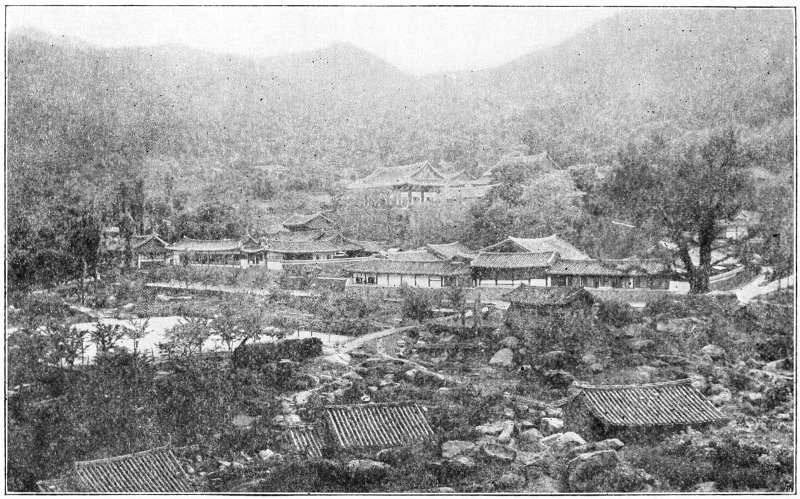
PLATE II General view: Pomo-sa [Page 31]
3
The early period is called the era of the Three Kingdoms because at that time the peninsula was occupied by three different nations. The largest, in the north, was called Koguryu. Japanese pronounce the name as Koma. It occupied more than half of the peninsula. Its capital city was P’yeng-Yang, still a city of importance. The second kingdom was smaller; in the southwest of the peninsula, it was known by the name of Pakche, which is pronounced by the Japanese Kudara. The third kingdom occupied the southeastern section of the peninsula. It was larger than Pakche, but smaller than Koguryu, and was called Silla, Japanese, Shiragi. Such then, were the three kingdoms which existed through a period of hundreds of years.
Unfortunately all names in Korea have several pronunciations. They are usually spelled with Chinese characters. If a Chinese pronounces the name, he will pronounce it in a certain way, dependent upon what part of China he comes from; a Korean will pronounce the same characters quite differently; a Japanese has still a different pronunciation. It is for this reason that the Korean and Japanese names of these kingdoms differ; the same characters are pronounced Koguryu by the 4 Koreans and Koma by the Japanese; Pakche on the Korean tongue becomes Kudara with the Japanese; and where the Korean says Silla, the Japanese says Shiragi.
Such then was the condition of the peninsula preceding 918. It was divided into three kingdoms, each with its own ruler. Buddhism, a religion which began in India, came to Korea by way of China. It naturally first reached the northern kingdom. It was introduced in 369 A.D. and its introduction was the result of foreign missionary effort. In those days there was an Empire of China, but there were also various small Chinese kingdoms along the northern border of the Korean peninsula. Buddhism came to Koguryu from one of these little Chinese kingdoms, the king of which sent its message by the hands of a priest named Sundo, who brought idols and sacred texts. He was well received on his appearance in P’yeng-Yang. The king of the country placed the crown prince in his care for education. In a few years the new religion had made great headway. It had brought with it art and education, and the kingdom of Koguryu became a center of culture and advancement.
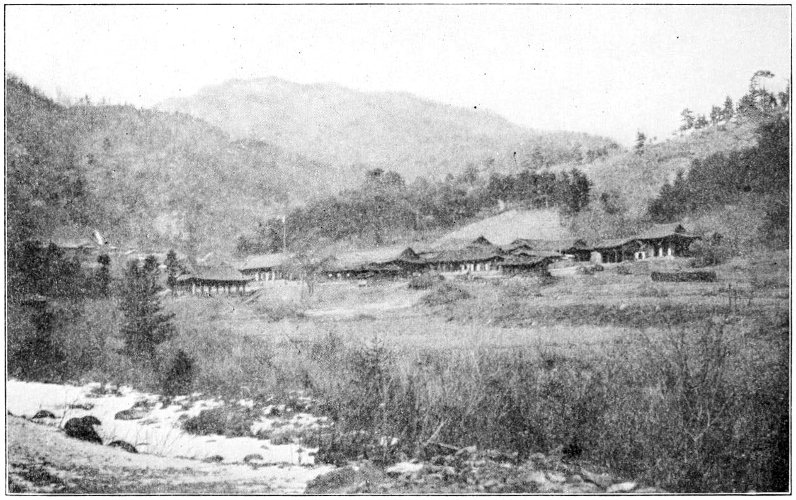
PLATE III General view: Yuchom-sa, Diamond Mountains [Page 35]
5
Five years later, in 374, another priest named Ado was sent from the same Chinese kingdom. His coming added impetus to the religion and two great monasteries were founded near P’yeng-Yang, over one of which Ado was placed, while Sundo had charge of the other. These two monasteries were not only centers of religion, they were full-fledged universities according to the ideas of the universities in those days.
After they were founded Buddhism continued to spread rapidly so that in 392 it became the official religion of the kingdom.
We are told that in the year 378, as the result of the coming of these foreign priests, the city of P’yeng-Yang was laid out as a great ship. To us this sounds strange. It is not easy for us to realize that a city was really regarded as a great ship and that a mast was erected in its midst, apparently in order that the sails of prosperity might waft the ship to good fortune and success. 6 Outside the city were stone posts to which the ship was to be tied up, and for many years it was forbidden to dig wells in the city because it was feared that if a well were dug, the boat would spring a leak and the whole place would be foundered. Such was science in the fourth century. It seems strange to us now, but ideas of that kind were rife in those days; in fact they have not yet disappeared from popular thought in Korea. I am not sure whether such ideas are connected with Buddhism, or whether they only form a part of that old geomantic philosophy which has so greatly influenced China, Korea and Japan through centuries. We find geomantic survivals of many kinds in many places. Old masts are scattered all over Korea, here and there, sometimes in quite inaccessible places; built of wood, they rise to a great height, and are sheathed with metal, which may bear an inscription and date. Many other places than P’yeng-Yang were thought of as great ships—temples, cities, entire valleys. (Plate VII.)
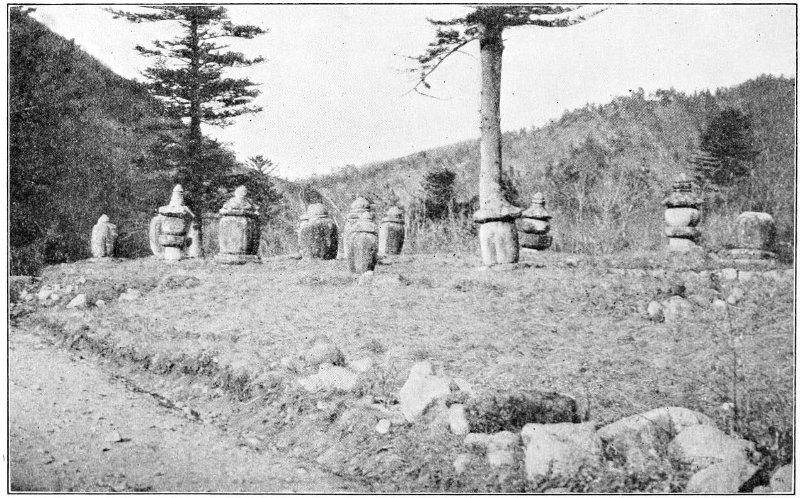
PLATE IV Sari monuments: Yuchom-sa [Page 55]
7
At Tongdo-sa, a great monastery in the south of Korea, my attention was called to an iron ring fastened to a rock near the trail. They told me that it was for the tethering of a great ox, that all the mound of earth and rock near there is considered to be a great ox lying down; a hole about a foot in diameter in the rock, close by the trail, is said to be the nostril of the creature, and a knoll of earth near by formed its head, while the great body stretched out far beyond.
At Riri my attention was called to a mountain ridge and I was told that it was a running horse; two stone pillars stood on the level ground near by—they were intended to prevent the horse from damaging the fields. It seems that many years ago it was realized that a running horse was likely to do damage to growing crops; the wise men of the district were called together and consulted; they determined that they would destroy the danger by erecting these pillars of stone, beyond which the horse cannot go.
Perhaps ideas like these were taught in those old universities in 375 A.D. Perhaps 8 they were then, as now, individual and professional knowledge, not to be learned in schools.
The new religion next entered the little kingdom of Pakche. This was in the year 384. This time it was not sent unsolicited by some little Chinese kingdom, but came by request from China proper. The people of Pakche knew what Buddhism had done for Koguryu and they asked the Emperor of China to send them a famous priest named Marananda. It seems that he was a Hindu, who had a great reputation for learning. He brought with him images and texts and all the paraphernalia necessary for the gorgeous ceremonials of his religion. He was received with great respect by the king and was lodged in the palace. Soon after ten other priests came from China and the religion made rapid headway through Pakche. It was from Pakche in the year 552 that Buddhism was sent for the first time into Japan. The king of Pakche sent images and texts and a letter to the Emperor, Kimmei, saying that it was a good religion, 9 and that he hoped the Japanese would accept it.
Last of the three kingdoms to receive Buddhism was Silla, to which it came about 424. It is reported to have come from the capital city of Koguryu, P’yeng-Yang, and the priest who brought it was named Mukocha. He appears to have gone down the Taidong River to the sea and then around the peninsula and up the east coast in order to reach Silla. He is always spoken of as a black man, or negro; perhaps he was actually an African. There seems to have been some mystery about his arrival; it may be that the people did not like his color, or were afraid of his strange appearance. He hired himself out as a plowman to a farmer named Morei. His employer concealed him in a cave. It is said that when he was hidden in this cave it frequently shone with glory. Outside the cave there was a peach tree, which burst into bloom with flowers of five different colors, and in the winter, when there was snow on the mountains outside, irises and other flowers of wondrous fragrance are 10 said to have broken their way up through the snow. The black monk is said to have worn a red cap and a crimson kesa. It would seem that the whole neighborhood must have known about these wonders.
About this time it is said that an ambassador from China came to the king of Silla at his capital city of Kyong Ju. The messenger brought various gifts, among them a substance which no one knew; it had never been seen before in Silla. It seems strange that the ambassador should not have known what he brought, but it is asserted that he was ignorant in the matter, and so the king sent to the cave—only ten miles away—and ordered the black monk to come to Kyong Ju to identify the gift. He had no trouble in recognizing it, because it was incense, common enough in Chinese Buddhism, but before unseen in Silla. He told them that when burned before an idol with prayers of faith, the god was sure to answer petitions. It happened at the moment that the king’s daughter was ill, and he begged the black monk to try the efficacy of incense and prayer. Seven days he spent in prayer before the idol and a cure was wrought. Soon afterwards Mukocha begged the king to send to China and the West for artists to come and cut figures in the rock walls of his cave, as he desired to make a chapel to the gods. The request was sent, the artists came, and it is said that they spent forty years in carving the wonderful figures which to this day adorn the walls of the little circular chapel in the mountain cave. It would require a separate lecture for me to tell you of my visit to that remarkable shrine, with its genuine treasures of art. (Plates VIII, IX.)
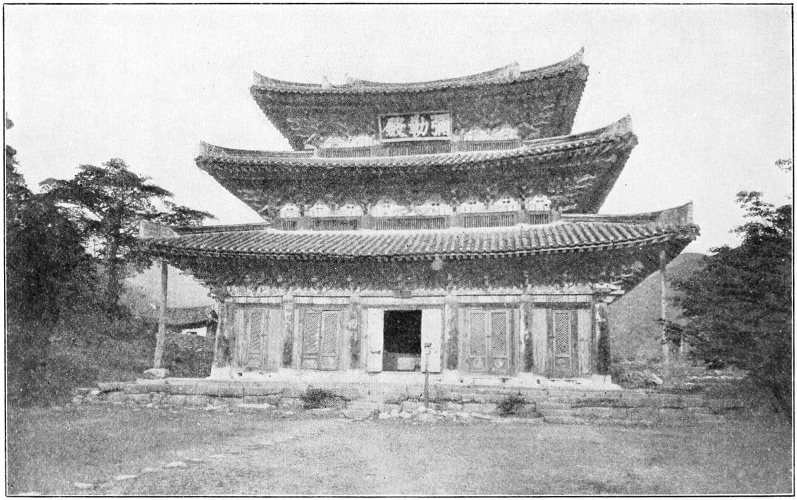
PLATE V Main Temple: Kumsan-sa [Page 72]
11
I must, however, say something about the old capital city of Kyong Ju. It had its period of glory, and its ruins are still impressive. Almost fifteen hundred years have passed since the black monk brought in the new religion. To-day there remains only a little town, but all the country around is sprinkled with the relics of the past. Here is the splendid grave of General Kim, twelve hundred years old. It is faced around with stone slabs, set firmly in place, twelve of them being carved with the animals of the 12 Eastern Zodiac. Here are the ruins of an ice-house, perhaps nine hundred years old; cunningly built of stone, under a mound of earth, with true arch-vaulting, it sheltered ice for the chilling of food and the cooling of drink a thousand years ago. There remains here a portion of a beautiful pagoda; much of it was destroyed in the sixteenth century, when Hideyoshi’s army of invasion came from Japan and wrought havoc and destruction in Korea; built in the seventh century, it was a beautiful structure of splendid, thoroughly-baked black bricks and stone; stone doors below, moving on stone pivots set in stone sockets were decorated with carved work. To-day only the three lower stories remain, but they serve to show that the people were true artists. Here, too, one sees an astronomical observatory, built of stone, a sort of tower of circular form, seventeen feet through; it was intended for the observation of heavenly bodies; nearly thirteen hundred years of age, it is perhaps the oldest existing building constructed for such purposes in the world.
13
In those fine days, Kyong Ju was a center of trade and industry. Chinese, Koreans and Japanese were there; we are certain that Tibetans, Indians and Persians came thither, and it is claimed that merchants from Arabia used to stand in its market place. Of course we all know of the antiquity of culture around the Mediterranean Sea; we appreciate its achievements, and love to think of its glories; but we are apt to think of the Far East as being eternally stagnant and it surprises us to learn of a busy mart of trade in Kyong Ju, Silla.
And it had its scholars also. There was Ch’oe Chuen. He was a poet and essayist; he was a skilled calligrapher, writing the beautiful Chinese characters famously; he was reckoned as one of the great sages and learned men of his day in China proper, than which there was no higher honor.
During the period of the Three Kingdoms, Buddhism thus penetrated to every part of the peninsula. It prospered. Splendid temples were built, great monasteries constructed, magnificent bells cast, beautiful pagodas erected, figures carved by 14 thousands. Religions that prosper too greatly become corrupt. State religions tend to become curses. Religious endowments tie up money which the people need. The dead hand may hold under restraint property which should be at work, helping the world. All this happened with Buddhism in Korea. In the last days of the Three Kingdoms Korean Buddhism was refined and artistic, impressive and beautiful, but was corrupt and harmful rather than helpful.
We may, perhaps, take the date 685 A.D. as marking the greatest glory of Silla. At that time she was gaining power over the neighboring kingdoms and before her glory ended she ruled the whole peninsula.
In 876 the king of Silla was named Chung—also called Hongang. During his rule the country was rapidly declining. He was followed by his brother, who in turn was succeeded by his sister, who became queen of Silla in 888. Her name was Man. The only reason why we mention these three rulers is that we wish to introduce the man who led up to the second 15 period of Korean history. His name was Kun-ye. He was the son of king Chung, by a concubine, but never became king of Silla. When his aunt, queen Man, was ruling, he became a disturbing element, heading an insurrection. The glory of Silla was really past and the old kingdom was rapidly declining. Kun-ye was fortunate in having an excellent general, named Wang-on, and made headway with his rebellion; founding a new kingdom in central Korea, he gradually extended his rule, through the skilful leadership of Wang-on, until much of the middle part of the peninsula was under his control. But the man was mad, religiously mad. He was not only a Buddhist; he called himself a Buddha. Under the cloak of religion he did all kinds of wild and wicked things, and indulged in the most absurd extravagances. Finally the burden of his tyranny and his religious claims became so heavy that his officials plotted against him and begged his general, Wang-on, to dethrone him and seize the power. Ultimately that very thing happened, and 16 in the year 918, one thousand years ago, Wang-on became the first king of a new dynasty, that of Koryu.
Before we leave the period of the Three Kingdoms, however, let us notice two interesting matters. You remember that Buddhism was brought to the Three Kingdoms by three priests—Sundo, Marananda, Mukocha. Sundo was a man from Tibet; I suppose he represented the great Mongolian race, that he was a yellow man; Marananda, who brought religion to Pakche was a Hindu; presumably he represented the Caucasic peoples; he may have been dark, but our courts would probably have to call him a white man; Mukocha was called a black man, a negro, and probably really represented the Ethiopian race. Is it not interesting that the peninsula of Korea should have received its first generally spread religion through representatives of the three great races of the world, the yellow, white and black? Buddhism, the first universal religion that the world ever saw, early made an appeal to all men, regardless of color and of race.
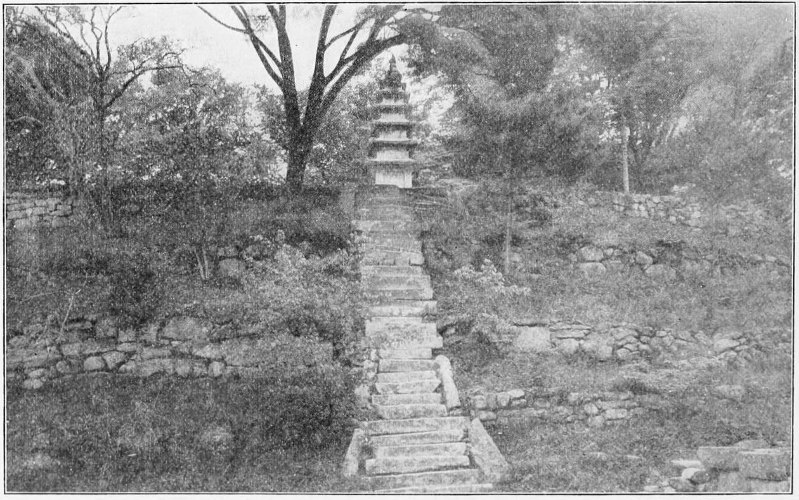
PLATE VI Sari monument pyramid, Kumsan-sa (A relic of Buddha is supposed to be enshrined here) [Page 72]
17
Two famous men, Chinese, lived during this period. Their names were Fa-hien and Hiouen-Tsiang. In 399 A.D. Fa-hien started on foot from China, to visit India, to learn of Buddhism and Buddha in the old home. He travelled many thousands of miles of weary pilgrimage in order to bring back with him fresh idols and correct texts and new inspiration from the cradle of the great religion. It was more than two hundred years later, in 629, that Hiouen-Tsiang made the same journey. Think of the danger these men passed through! They crossed deserts, which even to-day are almost impassable; they climbed difficult mountains and crossed broad rivers; they journeyed through countries of hostile peoples; they had to travel without artificial means of transportation through districts of foreign speech; they did all just to visit the old home of the Great Teacher, and to get his religion at first hand. We have the record of their travels. Their simple diaries have been translated into various languages of Asia and into English, French and other European 18 tongues. Fa-hien was fifteen years upon his pilgrimage, Hiouen-Tsiang sixteen years. Both lived to come back to their homes to the great advantage of their co-religionists.
We have no diaries written by old Korean pilgrims, but we know that during the glow of early convertship many from the peninsula made the same journey to the West.[1] Between 638 A.D. and 650 seven at least went from Korea to India to study the new religion in its old home. Most of them died there, never returning to their native land.
We now come to the second division of Korean history and its Buddhism, that of the Koryu Dynasty. You remember that General Wang-on, when his royal master went crazy and the officials revolted, seized the kingly power. He removed the capital to Songdo. Silla quickly went to its final fall and the new kingdom controlled the whole peninsula. Wang-on realized perfectly that the abuse of Buddhism had been the chief trouble with Kung-ye. His coming into power was largely due to an anti-Buddhistic movement. Still, he himself was Buddhist and while he did much to check the abuses of the religion he continued to practise it on a more modest scale. At his new capital he ended the first year of his rule, 918, with a famous festival of which we have a description.
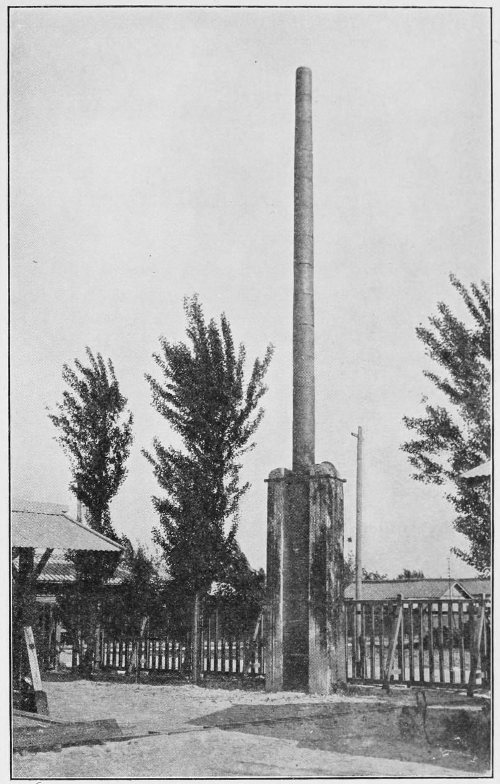
PLATE VII Geomantic Mast: Chung-ju [Page 6]
19
There was an enormous lantern, hung about with hundreds of others under a tent made of a network of silken cords. Music was an important element. There were also representations of dragons, birds, elephants, horses, carts and boats. Dancing was prominent and there were in all a hundred forms of entertainment. Each official wore the long, flowing sleeves, and each carried the ivory memorandum tablets. The king sat on a high platform and watched the entertainment. (Hulbert.)
You see he was very far from cutting loose from Buddhism. In reality, the religion flourished over the whole peninsula. When Wang-on died in 942, he left a written message for his son and successor. It contained ten rules of conduct for his guidance as king, which were numbered from one to ten. Three had to do with religion, and, of course, that religion was 20 Buddhism. In the first rule he advised his son to continue to recognize Buddhism as the state religion. The second rule was that he should build no more monasteries. While it was a good thing to continue Buddhism, it was a bad thing to build more monasteries, as too much money had already been expended upon them. The sixth of the rules was for the establishment of an annual Buddhist festival of the same nature as the one he had celebrated at the end of his first year. So Wang-on did not destroy Buddhism but continued it.
In course of time the old religion regained much of its harmful and destructive influence. From history we may cull a few events that illustrate its power. About the beginning of the eleventh century there came from China a fuller development of Confucianism than had before existed. About 1026 this influence became very strong; the official class, as was natural, was Confucianist; it organized and directed governmental action; between the officials, Confucianists, and the priests, Buddhists, there grew up a deadly conflict 21 which lasted on through all the centuries. In 1036 the king was devoutly Buddhistic. He “decreed that if a man had four sons one of them must become a monk; because of the Buddhist canon against the spilling of blood, the death penalty was changed to banishment; another great annual festival was instituted. The king also encouraged the custom of having boys go about the streets with Buddhistic books on their backs from which the monks read aloud as they went along, to secure blessings for the people.” (Hulbert.)
In 1046 it is said the king fed and lodged ten thousand monks in his palace. In 1056 or thereabouts one son out of three was compelled to become a monk. In 1136 it is said that thirty thousand monks were present at a single ceremony.
Under such circumstances, what would happen? When a religion had such a hold on the community—building splendid monasteries, erecting great temples, making idols into whose construction gilt of pure gold entered in quantity, making bells of metal that might have been better 22 used for practical ends, draining the people of wealth by giving enormous properties eternally into the possession of religious establishments—a crash was bound to come. It came in Korea. The country had been drained; the people had been heavily burdened; the men who as monks and priests should have led in instruction and good living were notorious examples of profligacy and corruption.
At last, in 1392, a man arose who fought against the king. The excuse for his fighting was the fact that the government was given over to a corrupt religion. Just as before it was the successful general who became the founder of a new dynasty; in this case also he had been loyal at first to the deposed king. The man’s name was Yi, and his title Tajo, and he is commonly known in Korea as Yi-Tajo. He is revered as the founder of the dynasty which has just ended. In 1392 the old kingdom of Korai disappeared and with it the dynasty of Koryu, and in their place came the modern Chosen and the Yi Dynasty. Seoul became the new capital.
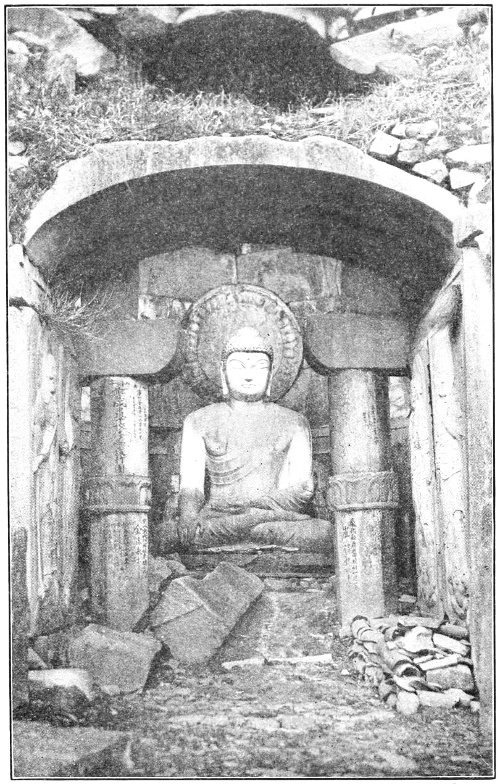
PLATE VIII The Buddha: cave temple, Sukkul-am [Page 11]
23
Before we leave this period let me say something about miriok and printing-blocks. The word miriok has given me considerable trouble; I cannot learn whether it is a Korean or a Japanese word, or what was its first meaning, or whether it has anything to do with the word Miroku, the name of “the coming Buddha.” Anyway the name miriok is applied in Korea to a stone that is worshipped; it is sometimes a natural stone and sometimes artificially shaped to more or less of the form of a Buddha. There are thousands of them in Korea. There are big miriok and little. My belief is that they were at first simple, natural stones, with something about their shape which was suggestive. They might be natural pinnacles, or rounded forms. Probably the old Koreans, long before the days of Buddhism, worshipped such stones and chiefly in order that the family might be increased. It was probably barren women and childless men who went to miriok and prayed for children. Then came Buddhism and took over the stone-worship of the olden time. Later 24 those miriok which were artificially shaped to human form—Buddha-like—came into being. Were there time, we would speak of various of the larger miriok in Korea, like the great pair at Paju and the couple at Ansung. Of the largest, however, that at Eunjin,[2] we will say something. There are many strange stories connected with it. It is apparently a natural pinnacle of rock, which has been carved into the shape of a Buddha; it is more than fifty feet high and can be seen from a great distance; it is more than nine hundred years old; in its present form it is even to-day worshipped by thousands of people; in the past there have been times when tens of thousands gathered at once to worship it. (Plate X.)
It is said that the stone suddenly appeared, pushing up from the ground and that it cried out with the voice of a boy; it was seen by a woman who was gathering ferns for eating; when she reported the miracle it was confirmed by an official inspection after which orders were given that it should be carved to its present form.
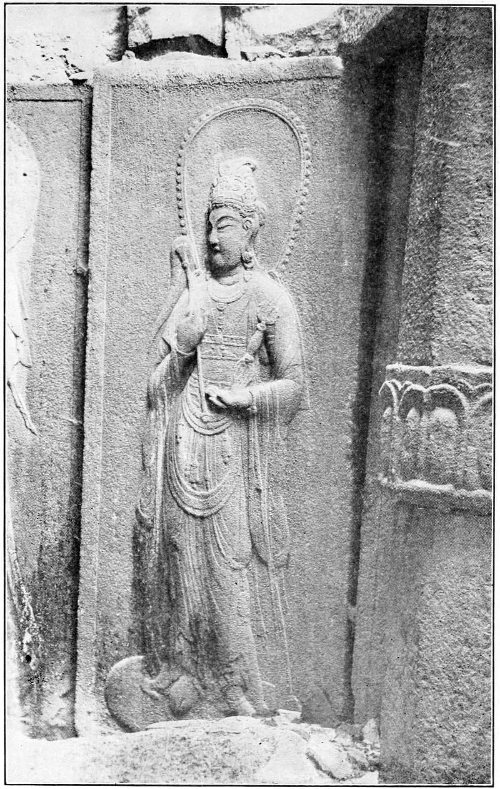
PLATE IX Bodhisattva figure, Sukkul-am [Page 11]
25
No land surpasses Korea in its abundance of local tales. Every hill, valley, conspicuous rock, stream and pool of water has its story. Every miriok of prominence in the country has traditions associated with it. The one most commonly told of this great miriok runs as follows: A country man who had been to the capital, returning to his home passed this great stone figure. He noticed a pear tree growing from the head, which bore several fine pears. The thought occurred to him to carry one of these to his village as a present for the magistrate. With infinite difficulty he climbed up the smooth surface of the figure,—the magnitude of the achievement will be evident from an inspection of the picture. When he reached the face and climbed over the lips he hesitated as to whether to pass up through the nostril,—a foolish procedure as it was a blind passage,—or climb around the nose. He decided upon the former method and proceeded to worm his way into the opening. He experienced a mighty shock and, when he came to himself, 26 found that he was lying on the ground. His presence in the nostril had irritated the figure which had sneezed, thus throwing him to the earth. Ruefully rubbing his bruises, he looked upward at the figure regretful for his lost effort. But he had after all been fortunate and the same sneeze which had dislodged him had shaken one of the pears from the tree and it had fallen on the grass near by. Picking it up he hastened on his way rejoicing.
The second item connected with this period to which I wish to refer is the cutting of wood-blocks for printing the entire Buddhist scriptures. The set of blocks is still preserved in the ancient monastery of Hain-sa. They were made during the reign of King Kojong and are seven hundred years old. There are eighty-one thousand of these blocks and each of them prints an entire page of a Buddhist text. Altogether they print six thousand eight hundred and five volumes, one thousand five hundred and eleven different works. A special building is devoted to their preservation and they have been taken over by the Japanese government as National Treasure. (Plates XII, XIII.) The blocks are said to represent the work of monks through fifteen years and the set is reputed the best in the world. Several years ago Count General Terauchi ordered several copies of the Tripitaka printed from these blocks. One of these copies was presented to the Emperor and a second is preserved in the temple, Senyu-ji, Kyoto.
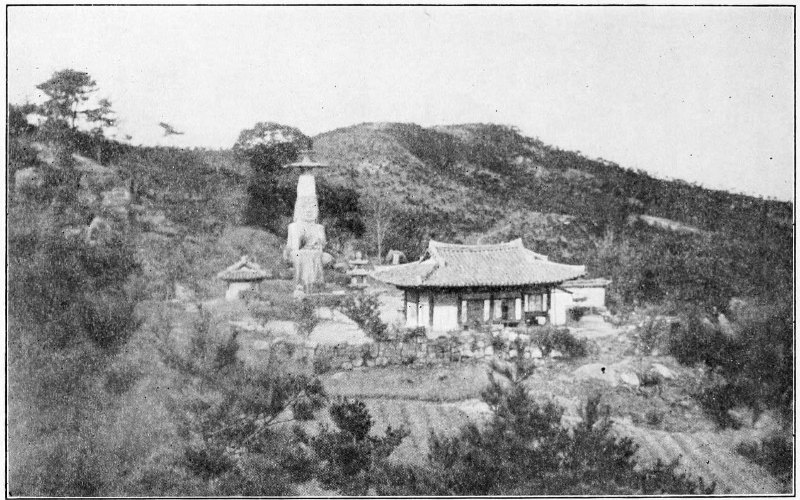
PLATE X Great Miriok: Eunjin. General view [Page 24]
27
Yi-Tajo came to power through an anti-Buddhist movement. Yet on the whole he dealt leniently with the religion. He crippled it but did not destroy it. Through the greater part of the Yi Dynasty, however, Buddhism was at serious disadvantage. Only for a short time under the king Seijo did it have a momentary revival. He ruled from 1456 to 1468. During his reign a splendid temple was built in Seoul of which we have an interesting contemporary description;[3] no sign of it remains to-day, but the beautiful pagoda erected at the same time, and the turtle-borne monumental stone recording the occasion of its construction are in existence in Pagoda 28 Park at the center of the city.[4] This pious king was succeeded in 1469 by his young son, Chasan. His mother, the late king’s widow, was at first his regent but in 1472 he took the actual reins of power and almost his first act was to drive Buddhism out of Seoul. He not only abolished all the monasteries and temples in the capital city, but in every city and town throughout the kingdom. The priests took refuge in the mountains and from that time down until these latter days there have been no Buddhist temples in Korean cities. There have only been monasteries in the mountains, often in inaccessible places.
Those were drastic measures and under them Korean Buddhism suffered and sank to lowest ebb. It passed through hard times during four hundred years and more of exile. Still the religion was not dead, and during this period of test it even showed some signs of worth.
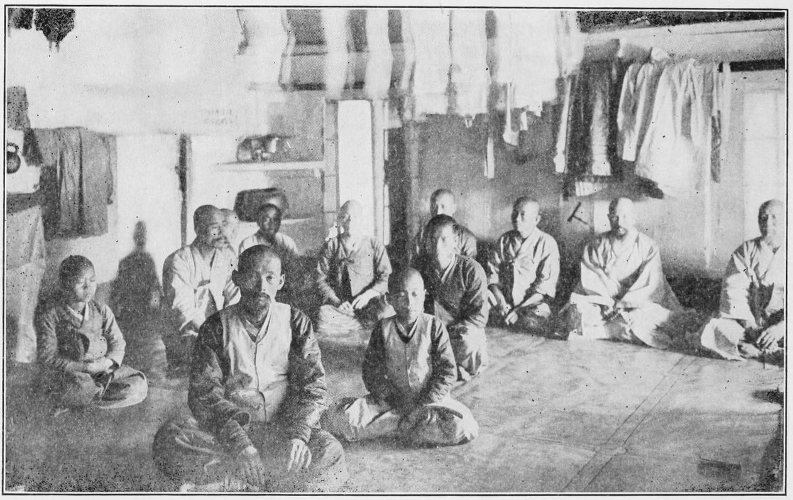
PLATE XI Group at Fukoan, branch of Sinkei-sa; Diamond Mountains [Page 47]
29
In 1592, Hideyoshi sent his great army from Japan to conquer Korea. It was under two generals, one a Christian and the other a Buddhist. The invaders wrought great destruction in the unfortunate peninsula. Many of the temples and monasteries in the mountains were destroyed, altars were stripped of treasures, monks and priests driven from their sanctuaries. During this invasion some of the priests showed themselves loyal, thus Hulbert tells us:
Hyu-Chung, known throughout the Eight Provinces as the great teacher of Sosan, was a man of great natural ability as well as of great learning. His pupils were numbered by thousands and were found in every province. He called together two thousand of them and appeared before the king at Euiju and said: “We are of the common people, but we are all the king’s servants and two thousand of us have come to die for Your Majesty.” The king was much pleased by this demonstration of loyalty and made Hyu-Chung a Priest-General and told him to go into camp at Pop-Heung Monastery. He did so, and from that point sent out a call to all the monasteries in the land. In Chulla province was a warrior-monk, Ch’oe-Yung and at Diamond Mountain another named Yu-Chung. These came with over a thousand followers and went into camp a few miles to the East of P’yeng-Yang. They had no intention 30 of engaging in actual battle, but they acted as spies, took charge of the commissariat and made themselves generally useful. During battle they stood behind the troops and shouted encouragement. Yu-Chung, trusting to his priestly garb, went into P’yeng-Yang to see the Japanese generals.
Thus we see, that notwithstanding the condition of poverty, ignorance and unimportance to which the Buddhist monks had sunk there were still among them teachers of great learning with crowds of students, who were ready to serve their king in his hour of trial.
In 1660 a curious condition had arisen. With these mountain monasteries open to all who came, they had become a refuge for the disaffected. Suppose a man had trouble with his family, he would become religious and retire to a monastery as a monk; if a man failed in business, he might find refuge there; for one reason or another it was easy for a man who was vicious or a failure or unhappy to seek escape in the mountain monasteries. Thousands flocked to them until the government became disturbed 31 and about 1660 the king issued an edict “that no more men with family ties should desert them in this way and that all monks who had families living should doff their religious garb and come back to the world and support their families like honest men.”
Notwithstanding neglect, poverty, and limitations the monasteries showed remarkable recuperative power after the destruction wrought by Hideyoshi’s armies. Thus, Pawpchu-sa was practically destroyed and the great mass of fine buildings now there has been constructed since. Some of the great monasteries farther south also suffered severely; yet the damage has been fully repaired. (Plate II.)
Nor did scholarship completely disappear in these later years. When Dr. Legge translated Fa-hien’s diary into English, he had four editions of the work at hand—two Chinese, one Japanese and one Korean; the latter, which bears the date 1726, was the most satisfactory and was superior as a piece of book-making.
32