THE NINTH NIGHT
Reading edition
Dolly was sitting up in bed when Impty came purring in the next evening. She looked very happy, and she called out gayly to the black kitten: “Oh, Impty! Mother is coming home to-morrow! Miss Jane told me so when she was undressing me.”
“I know,” answered Impty, curling up comfortably. “The cook was talking about it to Eliza when I was eating my supper in the kitchen. Yes, this is our last night together, and because it’s the very last time I shall ever talk to you, I’m going to tell you the finest cat-tale in the whole world. It’s ‘Puss-In-Boots.’”
PUSS-IN-BOOTS
Once upon a time, long, long ago, in a little country village, there lived a miller and his three sons. He was poor, but he had been able to bring them up respectably, and let them live well enough; though, when he died, his sons found that all he had left them was his mill, his donkey, and his cat.
The oldest son took the mill, the second the donkey, and for the youngest there was left only the pet cat. He was sad indeed when he thought of his inheritance. “What shall I live on now?” he asked himself. “My brothers can go into partnership, and so always earn their living; but when I have eaten my cat, and made myself a muff out of his fur, all that will be left for me is beggary.”
While he was thus thinking aloud, the cat came and rubbed up against his legs, purring, and then, to his great surprise, spoke.
“Master,” said Puss, “you haven’t fared so badly as you seem to think. Just have a pair of boots made for me, and get me a sack, and you’ll see fine things!”
The young man hardly knew whether to believe he was awake or asleep. He had never even heard of a cat talking before, but he remembered how clever Puss had always been about catching mice and rats, hiding in the grain and playing dead; and he thought it would do no harm to try what luck his cat would bring him.
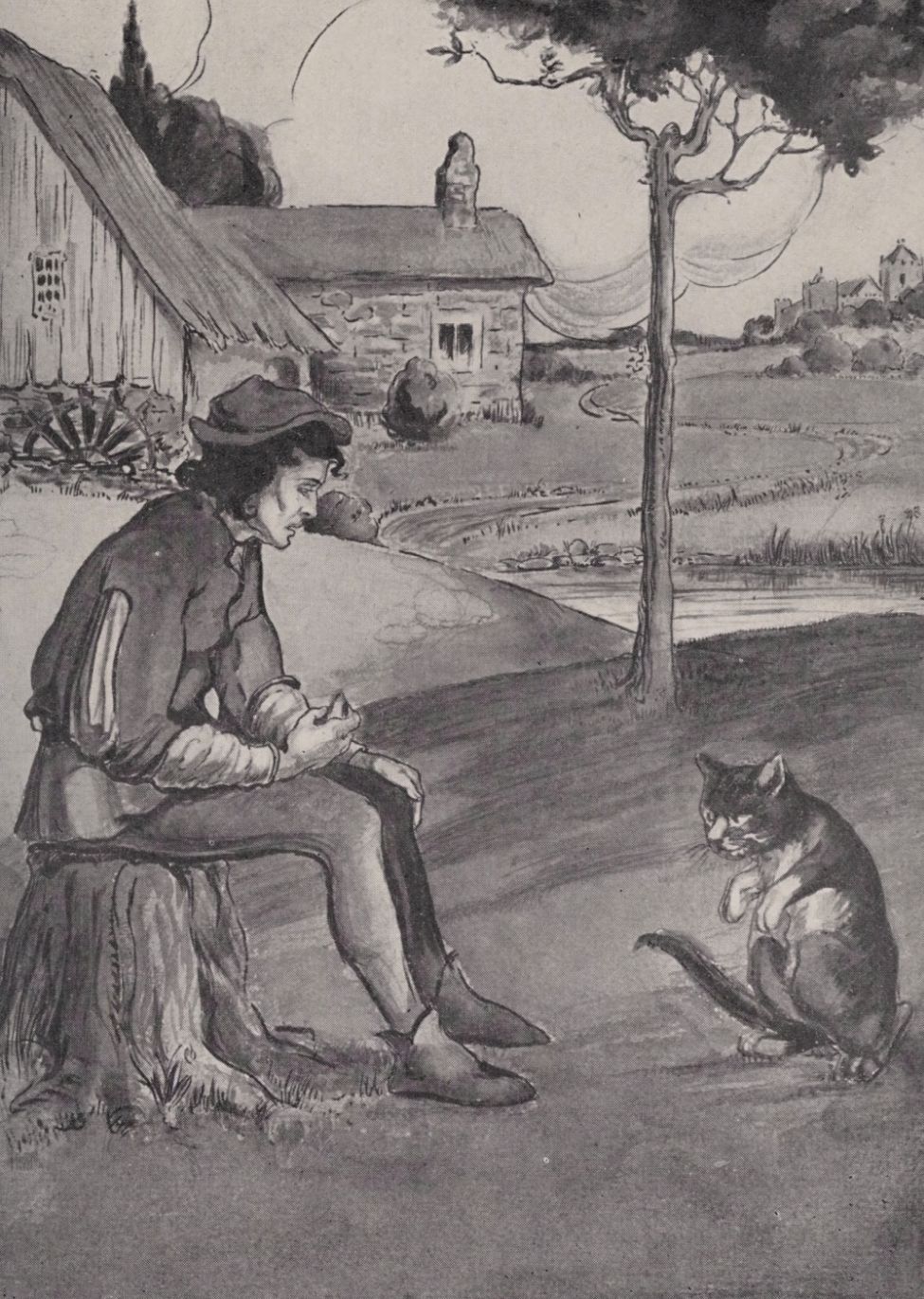
“Master,” said Puss, “you haven’t fared so badly as you seem to think.”
—
Page
220
.
So a fine pair of high, yellow leather boots was made for the cat, and when Puss had slipped them on, and slung the sack over his shoulder, his master began to have faith in his good-fortune at once.
The cat hurried straight to the warren, where hundreds of rabbits were nibbling grass and clover leaves, and lying down, he opened his sack wide and scattered bran at its mouth. Soon, a silly little rabbit, who knew nothing of tricks and traps, came and entered the sack the better to eat the bran. Quick as a flash Puss drew the strings and killed him without mercy.
Very proud of his prey, he went to the palace of the King, where all the court wondered at seeing a booted cat who could talk. He was shown at once into the throne room, and there, after he had made a low bow, he laid the rabbit at the King’s feet, saying, “Here, Sire, is a present from my master, the Marquis of Carabas,” for so he had chosen to call the miller’s son. The King was very much pleased. “Thank the Marquis, my good fellow,” he said, “for sending me such fine game, and here’s a piece of gold for you.”
Soon after, Puss caught a brace of partridges, and these, too, he carried to the palace. The King was as gracious as before; again he thanked the Marquis, and gave the cat a handsome present. So things went on; from time to time Puss carried game to the King, who always showed him the greatest favor. At last, one day, when the cat had learned that the King and his daughter, the loveliest princess in the whole world, were to drive through their village that afternoon, he ran to his master, and cried: “Quick! Quick! Do as I tell you, and your fortune is made forever. Take off your clothes, jump into the river, and leave the rest to me.” So saying, he took the young man’s workaday clothes and hid them under a large rock. Then, as he heard the rumble of chariot wheels on the high road, he began to cry at the top of his voice: “Help! Help! My master, the Marquis of Carabas, is drowning!”
The King, hearing these shouts, popped his head out of the coach window, and seeing the cat who had so many times brought him presents of game, he commanded his guards to go to the rescue of the Marquis.
“Alas, your Majesty!” cried Puss, “my master’s clothes have been stolen. While he was bathing, robbers came and carried them away, and although I cried, ‘Stop, thief! Stop, thief!’ I could not prevent them from doing this wicked deed. And now he cannot appear before your Majesty.”
“I will send the groom of my wardrobe for one of my finest suits,” said the King; and when the suit was brought, and the Marquis of Carabas had put it on, every one marvelled to see how handsome he was. The King invited him to get into the coach and drive with them, and, as for his daughter, the pretty Princess, she fell head over heels in love with him.
All this time Puss had been busy, too. He ran quickly ahead of the coach, and, stopping at a fine field, he cried aloud to the peasants who were mowing it: “Good people! If you do not tell the King, when he rides by, that this field belongs to the Marquis of Carabas, I will chop you into mince-meat!”
The peasants were very much frightened at this threat, and, when the King passed by, and asked them who owned the field, they cried with one voice, “It belongs to the Marquis of Carabas.”
Puss, who was keeping ahead of the coach, had already come to the next field, a rich meadow which the laborers were reaping. “Good people,” he said to them, “when the King rides by, if you do not tell him that this meadow belongs to the Marquis of Carabas, I will make mince-meat of you!”
Terrified, the peasants promised, and when the King asked them whose meadow they were reaping, they answered as one man, “Sire, it belongs to the Marquis of Carabas.”
“You have some very fine property, Marquis,” said the King, pleased to find the young man as wealthy as he was handsome. And the Marquis seemed to grow richer, for Puss had stopped at each field, and the peasants declared that all the land there-abouts belonged to the Marquis of Carabas.
At last Puss stopped before the drawbridge of a mighty castle owned by the richest and most powerful ogre in the whole country-side. The cat begged that the warder would announce him to the Ogre as one who had heard so much of his magnificence that he could not pass by without seeing it. The Ogre, who was very vain, was pleased by this compliment, and received Puss with the greatest kindness. After a while, the cat said: “They tell me that you can change yourself into any shape you please; that, in a moment, you can become a lion or a tiger, or any tremendous thing you wish to be.”
“So I can,” said the Ogre, “and just to show you, I’ll turn into a lion.” In the wink of an eye there he was, roaring away, and poor Puss was so frightened that he ran up to the top of the house, slipping at each step, for his fine, shiny boots were never made to climb roofs.
“Come down,” cried the Ogre, changing back into his real shape. “I won’t hurt you! Come down!”
Very much scared, Puss clambered down, and, as soon as his voice came back to him, he said, “They say, too,—but this I cannot believe,—that you can take the shape of the tiniest animal, a mouse, for instance.”
“Of course I can,” said the Ogre, proudly. “Just watch me.” He at once became a little mouse scampering over the floor, and Puss, like a flash, sprang on him and ate him up!
By this time the coach had drawn up to the gate-ways of the castle, and Puss, seeing it stop, ran to throw open the doors, crying: “Welcome, your Majesty! Welcome to the castle of the Marquis of Carabas!”
“Is this yours also, my dear Marquis,” cried the King. “What splendid battlements, and what a noble gate-way! Come, let us enter, and see if the interior is as fine, too.”
As he spoke, he walked into the castle, and the Marquis gave his hand to the pretty Princess, and led her in.
Puss flung wide the doors of the banqueting-hall and showed a long table covered with a fine repast, for the Ogre had invited friends to dinner that day, and this feast was prepared for them.
The King, the Marquis, and the pretty Princess ate it in their stead; and at the close his Majesty said, in great good humor, to the young man, “It all depends upon you, Marquis, whether or not you’re my son-in-law.”
The Marquis, who was in love with the Princess quite as much as she was with him, gladly consented, and that very evening the wedding was celebrated.
So the poor miller’s son became the heir of a mighty king, and, as for Puss, who had brought him all this good-fortune, he became a great lord, and caught rats and mice only for his own amusement.
The last Kitty-Cat Tale was finished.
“Now, good-by, little Mistress; go to sleep,” purred Impty, as he rubbed up against Dolly’s arm. “I can never, never talk to you again this way, for once, only, does our King permit a cat to talk to a mortal. But, sometimes, when you are petting me, please remember the stories I used to tell you. Now, I’m going to curl up on your pillow, just because it’s the last time. How surprised Miss Jane will be when she sees me to-morrow morning! But it won’t make any difference, for we’ve had our nights, nine of them just like a cat’s lives; and I don’t mind if she shuts me out now. Good-by! I’m going to Cat-Land again. They’re having a wedding there to-night.”
“Couldn’t I really ever go to Cat-Land? If you were king, couldn’t I?” begged Dolly, wistfully. “I’d truly be good, truly, Impty. And how would I get there?”
“Why,” the black kitten answered, “Cat-Land lies East of the Sun and West of the Moon, and the road runs all along the edge of Wonder-World. But it doesn’t take me any time to go because I’m one of the Royal Family. I just close my eyes, and whisk my tail nine times, and I’m there. But I promise, by the whiskers and ears of his Majesty, the King of the Cats, that I’ll take you there if ever I get the chance.” He held out his paw solemnly, and Dolly shook it just as gravely. “Now, mind! It’s a bargain,” he said, snuggling down beside her.
“All right! Good-by!” answered the little girl, sleepily, and when the moon looked in soon after, Impty was off in his dreams to Cat-Land, and Dolly had gone to the Land of Nod.
The Dorothy Dainty Series
Dorothy Dainty at School
By Amy Brooks
By AMY BROOKS
Large 12mo Cloth Illustrated by the Author Price $1.00 Each
Dorothy Dainty Dorothy’s Playmates Dorothy Dainty at School Dorothy Dainty at the Shore Dorothy Dainty in the City Dorothy Dainty at Home
“Little Dorothy Dainty is one of the most generous-hearted of children. Selfishness is not at all a trait of hers, and she knows the value of making sunshine, not alone in her own heart, but for her neighborhood and friends.”—Boston Courier.
“Dorothy Dainty, a little girl, the only child of wealthy parents, is an exceedingly interesting character, and her earnest and interesting life is full of action and suitable adventure.”—Pittsburg Christian Advocate.
Dainty Dorothy at the Shore
By Amy Brooks
“No finer little lady than Dorothy Dainty was ever placed in a book for children.”—Teachers’ Journal, Pittsburg.
“Miss Brooks is a popular writer for the very little folks who can read. She has an immense sympathy for the children, and her stories never fail to be amusing.”—Rochester (N. Y.) Herald.
LOTHROP, LEE & SHEPARD CO., BOSTON
LITTLE BETTY BLEW
ANNIE M. BARNES
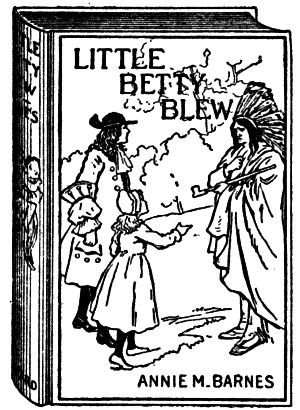
LITTLE BETTY BLEW
Her Strange Experiences and Adventures in Indian Land BY ANNIE M. BARNES
Illustrated by Frank T. Merrill 12mo Cloth with gold and colors 300 pages Price $1.25
One of the very best books with which to satisfy a young reader’s natural desire for an “Indian story” is this one of little Betty Blew and what she saw and experienced when her family removed from Dorchester, Mass., two hundred years ago, to their home on the Ashley River above Charleston, South Carolina. Although Betty is but a small maid she is so wise and true that she charms all, and there are a number of characters who will interest boys as well as girls, and old as well as young.
There are many Indians who figure most importantly in many exciting scenes, but the book, though a splendid “Indian story,” is far more than that. It is an unusually entertaining tale of the making of a portion of our country, with plenty of information as well as incident to commend it, and the account of a delightful family life in the brave old times. It is good to notice that this story is to be the first of a colonial series, which will surely be a favorite with children and their parents. Mr. Merrill’s illustrations are of unusual excellence, even for that gifted artist, and the binding is rich and beautiful.
For sale by all booksellers, or sent prepaid on receipt of price by the publishers
Lothrop, Lee & Shepard Co., Boston
ONLY DOLLIE
NINA RHOADES
Only Dollie
By Nina Rhoades Illustrated by Bertha Davidson Square 12mo Cloth $1.00
This is a brightly written story of a girl of twelve, who, when the mystery of her birth is solved, like Cinderella, passes from drudgery to better circumstances. There is nothing strained or unnatural at any point. All descriptions or portrayals of character are life-like, and the book has an indescribable appealing quality which wins sympathy and secures success.
“It is delightful reading at all times.”—Cedar Rapids (Ia.) Republican.
“It is well written, the story runs smoothly, the idea is good, and it is handled with ability.”—Chicago Journal.
The Little Girl Next Door
By Nina Rhoades Large 12mo Cloth Illustrated by Bertha Davidson $1.00
A delightful story of true and genuine friendship between an impulsive little girl in a fine New York home and a little blind girl in an apartment next door. The little girl’s determination to cultivate the acquaintance, begun out of the window during a rainy day, triumphs over the barriers of caste, and the little blind girl proves to be in every way a worthy companion. Later a mystery of birth is cleared up, and the little blind girl proves to be of gentle birth as well as of gentle manners.
Winifred’s Neighbors
NINA RHOADES
Winifred’s Neighbors
By Nina Rhoades Illustrated by Bertha G. Davidson Large 12mo Cloth $1.00
Little Winifred’s efforts to find some children of whom she reads in a book lead to the acquaintance of a neighbor of the same name, and this acquaintance proves of the greatest importance to Winifred’s own family. Through it all she is just such a little girl as other girls ought to know, and the story will hold the interest of all ages.
For sale by all booksellers, or sent postpaid on receipt of price by the publishers
LOTHROP, LEE & SHEPARD CO., BOSTON
THE CHILDREN ON THE TOP FLOOR
NINA RHOADES
The Children on the Top Floor
By Nina Rhoades Large 12mo Cloth Illustrated by Bertha Davidson $1.00
In this book little Winifred Hamilton, the child heroine of “Winifred’s Neighbors,” reappears, living in the second of the four stories of a New York apartment house. On the top floor are two very interesting children, Betty, a little older than Winifred, who is now ten, and Jack, a brave little cripple, who is a year younger. In the end comes a glad reunion, and also other good-fortune for crippled Jack, and Winifred’s kind little heart has once more indirectly caused great happiness to others.
How Barbara Kept Her Promise
By Nina Rhoades Large 12mo Cloth Illustrated by Bertha Davidson $1.00
Two orphan sisters, Barbara, aged twelve, and little Hazel, who is “only eight,” are sent from their early home in London to their mother’s family in New York. Faithful Barbara has promised her father that she will take care of pretty, petted, mischievous Hazel, and how she tries to do this, even in the face of great difficulties, forms the story which has the happy ending which Miss Rhoades wisely gives to all her stories.
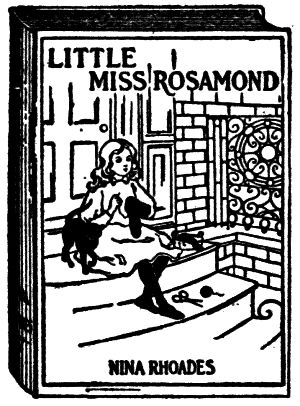
LITTLE MISS ROSAMOND
NINA RHOADES
Little Miss Rosamond
By Nina Rhoades Illustrated by Bertha G. Davidson Large 12mo Cloth $1.00
Rosamond lives in Richmond, Va., with her big brother, who cannot give her all the comfort that she needs in the trying hot weather, and she goes to the seaside cottage of an uncle whose home is in New York. Here she meets Gladys and Joy, so well known in a previous book, “The Little Girl Next Door,” and after some complications are straightened out, bringing Rosamond’s honesty and kindness of heart into prominence, all are made very happy.
For sale by all booksellers or sent postpaid on receipt of price by the publishers
LOTHROP, LEE & SHEPARD CO., BOSTON
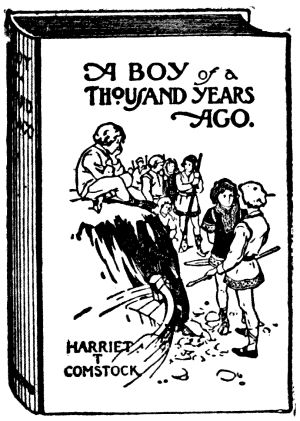
A BOY of a THOUSAND YEARS AGO.
HARRIET T. COMSTOCK
A Boy of a Thousand Years Ago
By Harriet T. Comstock Large 12mo Profusely illustrated with full-page drawings and chapter headings by George Varian $1.00
It will at once be understood that the “boy” of the story is Alfred the Great in his youth, but it cannot be understood how delightful a story this is until it is seen and read. The splendid pictures of George Varian make this book superior among juveniles.
“Not a boy lives who will not enjoy this book thoroughly. There is a good deal of first-class historical information woven into the story, but the best part of it is the splendid impression of times and manners it gives in old England a thousand years ago.”—Louisville Courier-Journal.
“Mrs. Comstock writes very appreciatively of Little Alfred, who was afterward the Great, and from mighty meagre materials creates a story that hangs together well. The illustrations for this volume are especially beautiful.”—Boston Home Journal.
The Story of Joan of Arc FOR BOYS AND GIRLS
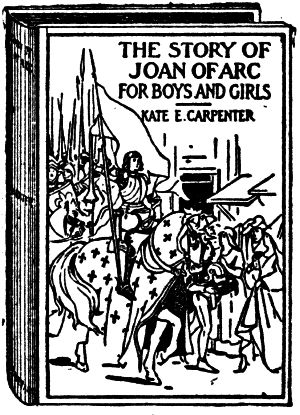
THE STORY OF
JOAN OF ARC
FOR BOYS AND GIRLS
KATE E. CARPENTER
By Kate E. Carpenter Illustrated by Amy Brooks, also from paintings, and with map Large 12mo Cloth $1.00
The favorite story of Joan of Arc is here treated in a uniquely attractive way. “Aunt Kate” tells the story of Joan of Arc to Master Harold, aged 11, and to Misses Bessie and Marjorie, aged 10 and 8, respectively, to their intense delight. They look up places on the map, and have a fine time while hearing the thrilling story, told in such simple language that they can readily understand it all. Parents and teachers will also be greatly interested in this book from an educational point of view.
“The tale is well told and the children will delight in it.”—Chicago Post.
“Told so simply and clearly that young readers cannot fail to be entertained and instructed.”—Congregationalist, Boston.
For sale by all booksellers or sent postpaid on receipt of price by the publishers
LOTHROP, LEE & SHEPARD CO., BOSTON
CHILDREN OF OTHER LANDS SERIES
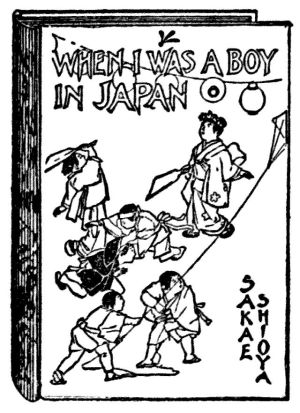
WHEN I WAS A BOY IN JAPAN
SAKAE SHIOYA
When I Was a Boy in Japan
By Sakae Shioya Illustrated from photographs 12 mo Cloth $.75
The author was born fifty miles from Tokio, and at the age of twelve began the study of English at a Methodist school. Later he studied Natural Science in the First Imperial College at Tokio, after which he taught English and Mathematics. He came to America in 1901, received the degree of Master of Arts at the University of Chicago, and took a two years’ post-graduate course at Yale before returning to Japan. No one could be better qualified to introduce the Japanese to those in America, and he has done it in a way that will delight both children and parents.
When I Was a Girl in Italy
By Marietta Ambrosi 12mo Cloth Illustrated $.75
The author, Marietta Ambrosi, was born in Tyrol, having an American-born mother of Italian descent, and a Veronese father. Her entire girlhood was spent in Brescia and other cities of Northern Italy, and in early womanhood she came with her family to America. Her story gives a most graphic account of the industries, social customs, dress, pleasures, and religious observances of the Italian common people.
When I Was a Boy in China
By Yan Phou Lee 12mo Cloth Illustrated from photographs $.75
New York Independent says: “Yan Phou Lee was one of the young men sent to this country to be educated here, and finally matriculated at Yale, where he graduated with honor. ‘When I was a Boy in China’ embodies his recollections of his native country. It is certainly attractive, with more room for nature to operate and play in freely than is generally attributed to Chinese life.”
For sale by all booksellers, or sent postpaid on receipt of price by the publishers
LOTHROP, LEE & SHEPARD CO., BOSTON
THE FROLICSOME FOUR
by EDITH L. and ARIADNE GILBERT
Illustrated by JOSEPHINE BRUCE Large 12mo Price $1.00
THE FROLICSOME
FOUR
EDITH L. GILBERT
AND ARIADNE GILBERT
The story of two brothers and two sisters who are as noble in character as they are enthusiastic in play. The authors have drawn wholesome child-life with remarkable effect, and this book will win a conspicuous place for that reason. Everyone will be interested in the fine scholarship of Larry, the jolly spirits of Gwen, and the tenderness of little Polly. And when finally Billy, well-meaning and awkward Billy, actually wins a prize in a most unexpected way, the charm of the story is complete. Miss Bruce has well caught the spirit of the story in her illustrations, and with its merry-looking cover, large, clear print, good paper and broad margins, this is exactly the book to choose for young boys and girls.
“The authors have woven a clever juvenile tale, portraying child-life with that truth that will appeal to the young reader.”—Providence News.
“The story is happily told, and presents a pretty picture of vigorous and wholesome American child-life.”—Indianapolis Sentinel.
“The story is a charming one, and the whole ‘get up’ of the book suits the contents.”—Episcopal Recorder, Philadelphia.
“The adventures of two brothers and two sisters are happily told. They are funny, pathetic, and always lead the child reader or hearer to think of the real happiness of the dutiful and unselfish traits of character.”—New York Observer.
“The book is natural and wholesome, and its attractive appearance in pictures and type will make it a favorite with children.”—Portland Express.
For sale by all booksellers, or sent postpaid on receipt of price by the publishers.
Lothrop, Lee & Shepard Co., Boston
Cordelia’s Pathway Out
By Edna A. Foster Editor of Children’s Page in the “Youth’s Companion” Illustrated by Clara E. Atwood 12mo Cloth $1.00
CORDELIA’S PATHWAY OUT
EDNA A FOSTER
In “Cordelia’s Pathway Out” the writer has carried along the brilliant little Hortense and many of the characters of that story, but has brought into prominence the quiet Cordelia, whose admiration and love for Hortense act as an incentive to study and cultivate a desire for growth. Early in the story she is transplanted from the village in which we first find her, and comes into larger living and the bestowal of modest “advantages.” She is a shy country-bred child, but she observes, imitates and applies the best of her own life and the exercise of loving and homely qualities brings her to a desirable plane.
“It is a perfect book for children from ten to fifteen years of age, or even older.”—Universalist Leader, Boston.
“The book is a good one for growing girls. Would to Heaven there were more of which one might say the same. It is quite above the level of the ordinary book of its kind.”—Cincinnati Times Star.
Hortense
By Edna A. Foster Illustrated by Mary Ayer 12mo Cloth $1.00
HORTENSE
EDNA A. FOSTER
Miss Foster has here a book of unusual excellence, whether viewed as a tale of entertainment for a child’s reading or a valuable and suggestive study for the education of those who have to do with children. The impulsive little Hortense wins the reader’s sympathy at once, and the experiences of the well-meaning young lady relative who attempts to train her up according to set rules for well-regulated children are very interesting.
“We would strongly advise all mothers of growing boys and girls to hasten to procure a copy of this delightful book for the home library—and, above all, to make a point of reading it carefully themselves before turning it over to the juveniles.”—Designer, New York, N. Y.
“It is a truthful and discerning study of a gifted child, and should be read by all who have children under their care. It is probably the best new girl’s book of the year.”—Springfield (Mass.) Republican.
For sale at all booksellers or sent postpaid on receipt of price by the publishers
LOTHROP, LEE, & SHEPARD CO., BOSTON
THE
FAMOUS PEPPER BOOKS
By Margaret Sidney
IN ORDER OF PUBLICATION
Five Little Peppers and How they Grew. Cloth, 12mo, illustrated, $1.50, postpaid.
This was an instantaneous success; it has become a genuine child classic.
Five Little Peppers Midway. Cloth, 12mo, illustrated, $1.50, postpaid.
“A perfect Cheeryble of a book.”—Boston Herald.
Five Little Peppers Grown Up. Cloth, 12mo, illustrated, $1.50, postpaid.
This shows the Five Little Peppers as “grown up,” with all the struggles and successes of young manhood and womanhood.
Phronsie Pepper. Cloth, 12mo, illustrated, $1.50, postpaid.
It is the story of Phronsie, the youngest and dearest of all the Peppers.
The Stories Polly Pepper Told. Cloth, 12mo. Illustrated by Jessie McDermott and Etheldred B. Barry. $1.50, postpaid.
Wherever there exists a child or a “grown-up,” there will be a welcome for these charming and delightful “Stories Polly Pepper Told.”
The Adventures of Joel Pepper. Cloth, 12mo. Illustrated by Sears Gallagher. $1.50, postpaid.
As bright and just as certain to be a child’s favorite as the others in the famous series. Harum-scarum “Joey” is lovable.
Five Little Peppers Abroad. Cloth, 12mo. Illustrated by Fanny Y. Cory. $1.50, postpaid.
The “Peppers Abroad” adds another most delightful book to this famous series.
Five Little Peppers at School. Cloth, 12mo. Illustrated by Hermann Heyer. Price, $1.50; postpaid.
Of all the fascinating adventures and experiences of the “Peppers,” none will surpass those contained in this volume.
Five Little Peppers and Their Friends. Illustrated by Eugenie M. Wireman. Cloth, 12mo, $1.50; postpaid.
The friends of the Peppers are legion, and the number will be further increased by this book.
Ben Pepper. Illustrated by Eugenie M. Wireman. Cloth, 12mo, $1.50.
This story centres about Ben, “the quiet, steady-as-a-rock boy,” while the rest of the Peppers help to make it as bright and pleasing as its predecessors.
LOTHROP, LEE AND SHEPARD COMPANY
SOPHIE MAY’S “LITTLE-FOLKS” BOOKS
LITTLE PRUDY
“I have been wanting to say a word about a book for children, perfect of its kind,—I mean ‘Little Prudy.’ It seems to me the greatest book of the season for children. The authoress has a genius for story-telling. Prudy’s letter to Mr. ’Gustus Somebody must be genuine; if an invention, it shows a genius akin to that of the great masters. It is a positive kindness to the little ones to remind their parents that there is such a book as ‘Little Prudy.’”—Springfield Republican.
LITTLE PRUDY’S SISTER SUSIE
“Every little girl and boy who has made the acquaintance of that funny ‘Little Prudy’ will be eager to read this book, in which she figures quite as largely as her bigger sister, though the joys and troubles of poor Susie make a very interesting story.”—Portland Transcript.
“Certainly one of the most cunning, natural, and witty little books we ever read.”—Hartford Press.
LITTLE PRUDY’S CAPTAIN HORACE
“These are such as none but Sophie May can write, and we know not where to look for two more choice and beautiful volumes—‘Susie’ for girls and ‘Horace’ for boys. They are not only amusing and wonderfully entertaining, but teach most effective lessons of patience, kindness, and truthfulness. Our readers will find a good deal in them about Prudy, for so many things are always happening to her that the author finds it impossible to keep her out.”
LITTLE PRUDY’S STORY BOOK
“This story book is a great favorite with the little folks, for it contains just such stories as they like to hear their aunt and older sister tell; and learn them by heart and tell them over to one another as they set out the best infant tea-set, or piece a baby quilt, or dress dolls, or roll marbles. A book to put on the book-shelf in the play-room where ‘Susie’ and ‘Prudy,’ ‘Captain Horace,’ ‘Cousin Grace,’ and all the rest of the ‘Little Prudy’ folks are kept.”—Vermont Record.
LITTLE PRUDY’S COUSIN GRACE
“An exquisite picture of little-girl life at school and at home, and gives an entertaining account of a secret society which originated in the fertile brain of Grace, passed some comical resolutions at first, but was finally converted into a Soldiers’ Aid Society. Full of life, and fire, and good advice; the latter sugar-coated, of course, to suit the taste of little folks.”—Press.
LITTLE PRUDY’S DOTTY DIMPLE
“Dotty Dimple is the plague of Prudy’s life, and yet she loves her dearly. Both are rare articles in juvenile literature, as real as Eva and Topsy of ‘Uncle Tom’ fame. Witty and wise, full of sport and study, sometimes mixing the two in a confusing way, they run bubbling through many volumes, and make everybody wish they could never grow up or change, they are so bright and cute.”
DOTTY DIMPLE AT HER GRANDMOTHER’S
“Sophie May’s excellent pen has perhaps never written anything more pleasing to children, especially little girls, than ‘Dotty Dimple.’ If the little reader follows Dotty through these dozen chapters—from her visit to her grandmother to the swing under the trees—he or she will say: ‘It has been a treat to read about Dotty Dimple, she’s so cunning.’”—Herald of Gospel Liberty.
DOTTY DIMPLE OUT WEST
“Dotty’s trip was jolly. In the cars, where she saw so many people that she thought there’d be nobody left in any of the houses, she offers to hold somebody’s baby, and when it begins to cry she stuffs pop-corn into its mouth, nearly choking it to death. Afterwards, in pulling a man’s hair, she is horrified at seeing his wig come off, and gasps out, ‘Oh, dear, dear, dear, I didn’t know your hair was so tender!’ Altogether, she is the cunningest chick that ever lived.”—Oxford Press.
DOTTY DIMPLE AT HOME
“This little book is as full of spice as any of its predecessors, and well sustains the author’s reputation as the very cleverest of all writers of this species of children’s books. Were there any doubt on this point, the matter might be easily tested by inquiry in half the households in the city, where the book is being revelled over.”—Boston Home Journal.
DOTTY DIMPLE AT SCHOOL
“Miss Dotty is a peremptory little body, with a great deal of human nature in her, who wins our hearts by her comic speeches and funny ways. She complains of being bewitched by people, and the wind ‘blows her out,’ and she thinks if her comrade dies in the snow-storm she will be ‘dreadfully ’shamed of it,’ and has rather a lively time with all her trials in going to school.”—New York Citizen.
DOTTY DIMPLE AT PLAY
“‘Charming Dotty Dimple,’ as she is so universally styled, has become decidedly a favorite with young and old, who are alike pleased with her funny sayings and doings. ‘Dotty at Play’ will be found very attractive, and the children, especially the girls, will be delighted with her adventures.”—Boston Express.
DOTTY DIMPLE’S FLYAWAY
“This is the final volume of the ‘Dotty Dimple Series.’ It relates how little Flyaway provisioned herself with cookies and spectacles and got lost on a little hill while seeking to mount to heaven, and what a precious alarm there was until she was found, and the subsequent joy at her recovery, with lots of quaint speeches and funny incidents.”—North American.
“A Little Red Riding-Hoodish story, sprightly and takingly told.”—American Farmer.