LINNEAN SOCIETY OF LONDON. (continued 5)
Reading edition
Female. Length 5 lines. Black, slightly shining; head globose, red and sprinkled with white hairs, and delicately striated transversely. Thorax sprinkled with white pubescence above, the sides more thickly clothed with the same; above, the thorax is transversely rugose, on the metathorax becoming more regularly striate; the metathorax has a central longitudinal carina and also one on each side; the legs sprinkled with erect white hairs; the tarsi pale rufo-testaceous with the claw-joint black; wings subhyaline, with a broad light-fuscous stain along the centre of the anterior pair; a hyaline streak crosses them at the base of the stigma. Abdomen: the petiole as long as the thorax, narrowest at the base of the abdomen; it is rugose at the base; the ovipositor pale testaceous.
Hab. Aru.
Fam. ICHNEUMONIDÆ, Leach.
Gen. Ichneumon.
1. Ichneumon insularis. I. niger; capite thoraceque albo variegatis; abdominis segmentorum primo, secundo tertioque albo maculatis.
Length 7½ lines. Black; the orbits of the eyes, the face before the antennæ, the mandibles and palpi yellowish-white; the flagellum with the joints from the 14th to 25th white. Thorax: a line on each side before the tegulæ, a spot beneath the wings, two at the sides of the pectus, the anterior coxæ in front, and a narrow line on each side of the scutellum yellowish-white; the anterior and intermediate legs and a spot beneath the posterior tibiæ rufo-testaceous; the wings hyaline, the nervures black. Abdomen: a minute spot at the lateral apical margins of the three basal segments, and a large central one on the two apical segments, white.
Hab. Key Island.
Gen. Cryptus, Fabr.
1. Cryptus scutellatus. C. ferrugineus; tibiis posticis tarsisque albo annulatis; scutello tuberculato.
Female. Length 5 lines. Ferruginous; the face testaceous-yellow, an elongate black spot on the vertex enclosing the ocelli and extending to the insertion of the antennæ; the latter black, with the scape ferruginous in front. Thorax: the scutellum elevated, forming a compressed tubercle, its side view wedge-shaped; the wings hyaline the nervures black, the base of the wings yellowish; the apical joints of the intermediate tarsi, the tips of the posterior femora, the extreme base of the tibiæ, their apical half, and the tarsi black; the intermediate portion of the tibiæ yellow; the apical segment of the abdomen black.
Hab. Aru.
Gen. Mesostenus, Grav.
1. Mesostenus pictus. M. niger; capite thoraceque flavo striatis et punctatis; pedibus flavis nigro et ferrugineo lavatis; segmentis abdominalibus flavo marginatis; alis hyalinis.
Female. Length 8 lines. Black; a large ovate spot on the cheeks touching the mandibles, the labrum, palpi, inner orbits of the eyes, and from the 7th to the 10th joints of the antennæ yellowish-white. Thorax: an ovate spot in the middle of the disk of the mesothorax, the tegulæ, a spot beneath them, two larger spots beneath the wings, the scutellum, a spot on the postscutellum uniting with another at the base of the metathorax, a trilobed spot at its apex, and a subovate one on each side yellowish-white; the coxæ white with black stains on the intermediate and posterior pairs; the femora white beneath, the anterior and intermediate pairs with a black line above, the posterior pair ferruginous above; the tibiæ and tarsi whitish beneath, stained more or less fusco-ferruginous above; wings hyaline. Abdomen: all the segments with yellowish-white fasciæ on their apical margins, the fasciæ continued beneath; the ovipositor about the length of the abdomen, the valves broadest at their apex.
Hab. Aru.
2. Mesostenus agilis. M. niger; antennis medio albis; thorace pedibusque albo variegatis; abdominis marginibus fasciis albis.
Female. Length 5 lines. Black; the joints of the antennæ, from the 6th to 13th, white, the vertex also white. Thorax: a spot in the middle of the disk of the mesothorax, the scutellum, a spot on the postscutellum, two beneath the wings, the apex of the metathorax, and a spot on each side white; the legs white, the anterior pair slightly fuscous above; the intermediate femora and tibiæ beneath, and the tarsi above, black; the posterior femora above and beneath the tibiæ, except their extreme base and the base and apex of the tarsi, black; wings hyaline, the nervures black. Abdomen: the apical margins of the segments, excepting the fourth and fifth, with white fasciæ, the second and third fasciæ attenuated in the middle.
Hab. Aru.
3. Mesostenus albopictus. M. niger, albo varius; alis hyalinis.
Female. Length 7 lines. Black; the clypeus, mandibles, palpi, the joints of the antennæ from the sixth to the thirteenth, and a broad stripe at the inner orbits of the eyes white. Thorax: an ovate spot on each side of the prothorax above, a similar spot in the middle of the mesothorax, the tegulæ, scutellum and postscutellum, a T-shaped spot reversed on the metathorax, a large quadrate one on its sides, three irregular-shaped maculæ beneath the wings, and the anterior and intermediate legs white, the legs with a black line above; the posterior legs have a large spot on the coxæ behind, the trochanters, the tibiæ, and tarsi white, the tibiæ black at their apex, and the femora palish at their base outside; the wings hyaline and iridescent, with the nervures black. The abdomen beneath, and the apical margins of the segments above, white.
Male. Rather smaller than the female, but only differs otherwise in the colour of the legs, the anterior and intermediate pairs being entirely yellowish-white, excepting the intermediate tibiæ and tarsi, which are slightly fuscous above; the posterior femora are ferruginous, the tibiæ and tarsi white, with the base and apex of the two former black as well as the apical joint of the tarsi.
Hab. Key Island.
Gen. Pimpla, Fabr.
1. Pimpla ochracea. P. ochracea; antennis ferrugineis; facie luteâ; alis hyalinis, apice fuscis.
Female. Length 5 lines. Entirely ochraceous, with the face and scape in front yellow; the body beneath is pale ochraceous; the antennæ ferruginous, above dusky; the eyes emarginate within; the tarsi have the tips of the claws black; the wings flavo-hyaline, with the apex of the anterior pair fuscous, the nervures black, becoming yellow at the base of the wings. The head, thorax, legs and base of the abdomen smooth and shining; the abdomen, except at the base, finely punctured; a transverse impressed row of punctures a little before the apical margin of each segment, and the space between impunctate.
Hab. Aru.
2. Pimpla braconoides. P. rufo-flava; antennis tarsisque et abdominis dimidio posteriori nigris; alis fuscis, dimidio basali flavis.
Female. Length 6 lines. Ferruginous; the posterior tarsi and the fourth and following segments of the abdomen black; the head is reddish yellow, the eyes brown; the scape and two or three of the basal joints of the flagellum ferruginous, the rest fuscous; the basal half of the wings flavo-hyaline, the apical half fuscous; the stigma yellow, with a subhyaline macula beneath, and two other similar irregular-shaped spots. The abdomen with two longitudinal carinæ on the basal segment, and a transverse curved impressed line on the other segments.
Hab. Key Island.
This species might at first sight be mistaken for a species of the genus Bracon. The male only differs from the female in having the abdomen black, with only the basal segment yellow; the wings are only very slightly yellow at their base; it is also rather smaller.
3. Pimpla penetrans. P. flavo-ferruginea; flagello fusco; alis flavo-hyalinis, apice fuscis.
Female. Length 4¼ lines. Reddish yellow, smooth, and shining; the face testaceous, with slight fuscous stains; the scape and two or three of the basal joints of the flagellum yellow in front; the wings hyaline, with a yellowish tinge; the nervures black, except the costal nervure, which is ferruginous towards the base, the apex of the wings slightly clouded; the posterior tibiæ fuscous above. Abdomen: the segments with slightly impressed oblique depressions, the ovipositor shorter than the abdomen, and black.
The Male only differs in having the abdomen rather more slender.
Hab. Aru.
4. Pimpla ferruginea. P. flavo-ferruginea; antennis supra fuscis; alis hyalinis.
Female. Length 5½ lines. Ferruginous, with the head and thorax beneath yellow-testaceous; the coxæ also are of the same colour; the flagellum slightly fuscous above; the wings flavo-hyaline, the nervures black; the two basal segments of the abdomen shining, the third and the following segments subopake; the ovipositor as long as the abdomen.
Hab. Key Island.
5. Pimpla plagiata. P. flavo-rufa; antennis strigisque tribus mesothoracis nigris; alis hyalinis, apice cellulæ marginalis fusco unimaculato.
Female. Length 5½ lines. Yellow, the legs with ferruginous stains; the antennæ black, with the scape yellow in front; the head with a large ovate black spot behind the ocelli. Thorax finely punctured on the disk of metathorax, which has three longitudinal broad black stripes, a narrow black line on the posterior margin of both the scutellum and postscutellum; wings hyaline, the nervures black, with a dark fuscous spot at the apex of the marginal cell. Abdomen reddish-yellow, with the apical margins of the segments yellow; the ovipositor black, and shorter than the abdomen.
Hab. Aru.
Gen. Rhyssa, Grav.
1. Rhyssa maculipennis. R. rufescenti-flava; antennis et vertice nigris; alis hyalinis, plaga nigro-fusca.
Male. Length 9 lines. Ferruginous; the head of a yellow testaceous, with the vertex and antennæ black; the scape ferruginous in front; the mandibles black. Thorax: the mesothorax and scutellum transversely rugose, the former with two deeply impressed lines in front, which converge inwards, and meet in the middle of the disk; wings hyaline, with a yellow tinge on the anterior pair, the nervures black; a black stripe crosses the middle of the marginal cell, and terminates at the inferior margin of the discoidal cell; the legs ferruginous, with the posterior tarsi black. Abdomen smooth, shining, ferruginous.
Hab. Aru.
2. Rhyssa vestigator. R. ferruginea; antennis, mesothorace, metathoracisque basi nigris; abdomine lineari, nitido et lævi; alis hyalinis, apice subfuscato.
Male. Length 9 lines. Head testaceous-yellow, with the vertex ferruginous; the antennæ fusco-ferruginous. Thorax black, with the prothorax, a large oblique spot beneath the wings, the scutellum, and metathorax yellow, the base of the latter black; the mesothorax and scutellum rugose; the metathorax smooth and shining; the legs ferruginous, with the anterior coxæ in front and the posterior pair behind yellow; the posterior coxæ black beneath; wings hyaline, faintly clouded at their apical margins. Abdomen elongate, linear, glossy, smooth, and shining, ferruginous, with the base and lateral margins blackish.
Hab. Aru.
Gen. Bracon, Fabr.
1. Bracon basalis. B. capite, thorace, pedibus anticis et intermediis, femoribus posticis ferrugineis; tibiis tarsisque et abdomine nigris, segmento basali flavo; alis fusco-hyalinis.
Female. Length 4¼ lines. The head, scape in front, thorax, anterior and intermediate legs, the posterior coxæ, trochanters, and femora, and the first segment of the abdomen, and a semicircular spot in the middle of the base of the second, yellow-ferruginous; the antennæ, the posterior tibiæ and tarsi, fuscous; abdomen shining black; the thorax smooth and shining; the wings fusco-hyaline. The basal segment of the abdomen with a longitudinal impressed line on each side, the second segment with an oblique depression, the third with an impressed line, curved forwards and extending to the lateral margins; the base of the segment has a row of short, deeply impressed striæ; the ovipositor shorter than the abdomen.
Hab. Aru.
2. Bracon albo-marginatus. B. capite, thorace pedibusque ferrugineis; abdomine nigris annulis albo-marginatis; alis fusco-hyalinis.
Female. Length 4½ lines. Head, thorax, and legs ferruginous, smooth, and shining; antennæ and abdomen black, the latter smooth and shining, the posterior margins of the third and following segments with a narrow bluish-white fascia; the posterior tarsi slightly fuscous; the wings fusco-hyaline; the ovipositor a little longer than the abdomen.
Hab. Aru.
3. Bracon nigripennis. B. thorace, pedibus anticis et intermediis, femoribusque posticis ferrugineis; tibiis tarsisque posticis et abdomine nigris; alis nigro-fuscis; capite luteo-testaceo.
Female. Length 9 lines. Head testaceous, the antennæ black. Thorax, anterior and intermediate legs, the posterior coxæ, trochanters and femora, the tegulæ, extreme base of the wings, and the base of the stigma ferruginous; the thorax smooth and shining; the wings brown-black, with a small hyaline spot in the first submarginal cell. Abdomen longitudinally aciculate, a central carina at the base of the first segment, the second segment with an oblique impressed line running from the lateral angles of its basal margin, and meeting in the centre of its posterior margin; the margins of all the segments constricted; the ovipositor shorter than the abdomen.
Hab. Aru.
4. Bracon exoletus. B. niger; capite, thorace, pedibus anterioribus et intermediis ferrugineis; alis subhyalinis.
Female. Length 5 lines. Head, scape of the antennæ, thorax, anterior and intermediate legs, ferruginous; flagellum and tips of the mandibles black. Thorax smooth and shining; wings fusco-hyaline, the nervures dark brown; the posterior legs fusco-ferruginous. Abdomen rugose and subopake; the basal segment black in the middle, with the base and lateral margins ferruginous, the sides deeply channeled; the second segment with an arrow-headed shining space in the middle of its base; the ovipositor shorter than the abdomen.
Hab. Aru.
5. Bracon abdominalis. B. rufo-flavus; antennis fuscis; alis subhyalinis; abdomine ovato.
Female. Length 3 lines. Reddish yellow; head and thorax smooth and shining; the head narrower than the thorax; wings fusco-hyaline; abdomen ovate, broader than the thorax, the first and second segments rugose, with deep sculptured impressions; the second segment has an ovate shining space in the middle at its basal margin; the third segment is deeply depressed and sculptured at the base, leaving a transverse arched space at its apex, the width of the entire segment; the following segments have their margins very deeply depressed.
Hab. Aru.
6. Bracon nitidus. B. niger; capite, thorace pedibusque et abdominis segmento primo ferrugineis, totis nitidissimis.
Female. Length 4 lines. Ferruginous, with the flagellum, second and following segments shining black; the thorax smooth and shining, with the scutellum prominent; the wings subhyaline, their apical margins clouded, their extreme base yellowish, the nervures dark brown, the stigma black. Abdomen: the second and third segments with deeply impressed oblique lines on each side, and the basal margins of the following segments depressed.
Hab. Aru.
7. Bracon pallifrons. B. niger; thorace pedibusque anticis et intermediis ferrugineis; alis fuscis.
Female. Length 6 lines. Head obscure, testaceous yellow; the eyes brown; the antennæ black. Thorax and the anterior and intermediate legs ferruginous; an ovate black spot on the metathorax; and the posterior legs black, with the articulations obscurely ferruginous; wings dark fuscous, with the nervures and stigma black, the base of the latter yellowish, and a hyaline streak beneath it, which crosses the first submarginal cell. Abdomen black and shining; the first segment with some coarse striae at the apex; the second with a central forked carina and an oblique one on each side running inwards to the apex of the segment; between the carinæ are a number of deep grooves; the lateral margins of the three basal segments carinated; the third segment has a row of short deep striæ at its base; the ovipositor longer than the body.
Hab. Aru.
8. Bracon intrudens. B. niger; thorace, pedibus anticis intermediisque et abdominis segmento basali ferrugineis; alis hyalinis.
Female. Length 5 lines. Black; the thorax, anterior and intermediate legs, the articulations of the posterior pair, and the base of the abdomen ferruginous, entirely smooth and shining; the wings subhyaline, the nervures fusco-ferruginous, an irregular fuscous stain at the base of the first submarginal cell, extending beyond it. Abdomen: the basal segment margined at the sides; the second segment with an oblique deeply impressed line running inwards, not quite meeting or extending to the apical margin.
Hab. Aru.
Gen. Agathis, Latr.
1. Agathis fumipennis. A. ferruginea; capite, abdominis apice tarsisque posticis nigris; alis obscurè fuscis.
Female. Length 4 lines. Reddish-yellow; the head, apical joint of the intermediate tarsi, the apex of the posterior tibiæ, and the third and following segments of the abdomen black; the thorax and legs with a thin, short, pale fulvous pubescence; the head and abdomen smooth and shining; the head produced before the eyes into a kind of beak, rufo-piceous anteriorly. Thorax narrowed before the wings, which are dark fuscous, with a hyaline irregular mark below the stigma, crossing the submarginal cell; the anterior margin of the anterior wings pubescent; the metathorax broad, margined laterally, with a central forked carina, and a crooked one on each side; the posterior legs incrassate. Abdomen with the sides of the upper surface carinated.
Hab. Aru.
Fam. CHRYSIDIDÆ, Leach.
Gen. Stilbum, Spin.
1. Stilbum splendidum, Fabr. Syst. Piez. p. 170. 1.
Hab. Aru; Senegal; Java; Bengal.
2. Stilbum amethystinum, Fabr. Syst. Piez. p. 176. 32.
Hab. Aru; Australia.
Fabricius includes this insect in the genus Chrysis; the typical specimen, however, proves that it belongs to the more modern genus Stilbum: it is very distinct from S. splendidum, being much more strongly and coarsely punctured; and the teeth which arm the apical segment are differently disposed on the margin.
Fam. TENTHREDINIDÆ, Leach.
Gen. Oryssus, Fabr.
1. Oryssus maculipennis. O. niger, punctatus; pedibus ferrugineis; alis fuscis fasciâ hyalinâ ante cellulam marginalem sitâ.
Female. Length 5½ lines. Black; the head rugose, the front coarsely so, with a row of transverse tubercles running from the vertex along the inner orbits of the eyes, and crossing the front at half their length; the cheeks with a cinereous down, and a line of silvery-white pubescence or down, along the outer orbits of the eyes. Thorax coarsely punctured; the mesothorax with a central longitudinal smooth elevation; wings fuscous, with a broad transverse hyaline fascia before the base of the marginal cell, the tips of the wings hyaline; the legs ferruginous, with the coxæ and trochanters black; the posterior tibiæ with a double row of serrations outside. Abdomen shining and closely punctured; the base and apex coarsely so.
Hab. Aru.
Gen. Xyphidria, Latr.
1. Xyphidria rufipes. X. nigra; mandibulis, antennarum scapo, pedibusque ferrugineis; alis hyalinis et iridescentibus.
Female. Length 4 lines. Black and shining; the vertex highly polished; the front from the posterior ocelli forwards closely punctured and opake; the mandibles, scape, and basal joint of the flagellum ferruginous. The thorax anteriorly punctured and opake, posteriorly shining, and with a few punctures at the base of the scutellum; wings hyaline and iridescent, the nervures black, the extreme base of the wings and the tegulæ pale testaceous; the legs pale ferruginous, with the claws of the tarsi darker. Abdomen: the base of the segments depressed and very delicately and closely punctured, subopake; the apical half highly polished and shining; beneath obscurely rufo-piceous.
Hab. Aru.
Gen. Tremex, Jurine.
1. Tremex insignis. T. nigro-purpureus; abdominis fasciis basalibus albis; alis nigris cupreo nitentibus.
Female. Length 11 lines. Obscure steel-blue, with shades of green, purple and violet; the head and thorax punctured; the prothorax with an oblique smooth shining space on each side; the wings very dark brown, with a brilliant coppery effulgence. The base of the abdomen opake, velvety, purple-black; the first segment with a transverse cream-coloured fascia in the middle, the second very slightly whitish at its base; the rest of the abdomen is highly polished, and has a scattered, short, black pubescence.
Hab. Aru.
[Read December 16th, 1858.]
In the month of June last, my friend Professor Guibourt, of Paris, laid before the Académie des Sciences[G] some account of a remarkable substance called Tréhala, the cocoon of a Curculionidous insect found in Persia, where, as well as in other parts of the East, it enjoys some celebrity as the basis of a mucilaginous drink administered to the sick.
Specimens of this substance, as well as of another insect-product of Persia, together with the insects themselves, were presented a few years ago to the British Museum by W. K. Loftus, Esq., who obtained them while engaged by the British Government on the question of the Turco-Persian boundaries.
The precise determination of the species of these insects being a matter of doubt, they have at my request been lately examined by M. Jekel, of Paris, an entomologist with whom the family of Curculionidæ has long been an especial study. One of these insects M. Jekel has identified with a species of wide distribution; the other proving undescribed, he has drawn up a description of it, which, accompanied by a figure, I have the honour to lay before the Linnean Society. To this, I venture to add a few observations upon the productions to which I have alluded.
The first of these is Tréhala or Tricala, under which name it formed part of the Collection of Materia Medica sent by M. Della Sudda, of Constantinople, to the Paris Exhibition of 1855, and since deposited in the Ecole de Pharmacie in Paris.
Tréhala (fig. 2) consists of cocoons of an ovoid or globular form, about ¾ of an inch in length; their inner surface is composed of a smooth, hard, dusky layer, external to which is a thick, rough, tuberculated coating of a greyish-white colour and earthy appearance. Some of the cocoons have attached to them the remains of the tomentose stalk of the plant upon which they were formed; others have portions of a tomentose spiny leaf built into them; and, more rarely, one finds portions of the flowering heads of the plant, a species of Echinops, similarly enclosed. Many of the cocoons are open at one end and empty; others have a longitudinal aperture, originally closed by the stalk of the plant, and still contain the insect; a few are entirely closed. Specimens of this insect, extracted from the cocoons sent to Paris, were examined in 1856 by my friend Mr. W. Wilson Saunders, who pronounced them to be Larinus maculatus of Faldermann,—a determination also arrived at by M. Jekel from specimens presented by Mr. Loftus to the British Museum. Respecting these latter, one of which is represented in fig. 1, M. Jekel makes the following remarks:—
"Larinus maculatus, Faldermann, Faun. Transcauc. ii. p. 228, 449, tab. 6. f. 10, et iii. p. 198.—Schönh. Gen. et Sp. Curcul. iii. p. 112 et vii. 2. p. 7.—Hochhuth, Bull. Moscou, 1847, No. 2. p. 538 (var. γ).
"Var. γ. Larin. Onopordinis, Sch. loc. cit. iii. p. 111 (excl. synon.).
"Of this species, Mr. Loftus captured several specimens, all of small size: from some of them the pollinosity had been rubbed off, as is represented in the figure by Mr. Ford (vide fig. 1), which shows only a part of the inferior layer of tomentum and the greyish ground of the dorsal and lateral maculæ; the latter, being the most densely coloured in fresh specimens, are always the most persistent. These belong to Schönherr's var. γ, which that author formerly regarded as the Larinus Onopordinis, Fabr. Others of Mr. Loftus's specimens, which are very fresh, belong to var. β; none to the typical variety, which is often larger in size.
"This species has a very extended habitat: I have received it from European Turkey (Frivaldski), Beyrouth, Caucasus, Persia (Dupont), &c. &c.; and it is recorded by Schönherr as also found in Barbary and Portugal.
"This is the insect which proceeds from the rough chalky-looking nidus figured by Mr. Ford. (Vide fig. 2.)"
The entomological question being so far disposed of, I may be permitted a few remarks upon the properties which have obtained for Tréhala a place among drugs and dietetic substances.
The first author who gives any account of the substance is Father Ange, who, in his 'Pharmacopœa Persica[H],' describes it in the following terms:—"Est autem istud medicamentum veluti tragea ex nucleo pistacii integro confecta; nam revera saccharum istud exterius corrugatum et agglomeratum adhæret cuidam nucleo, in quo non fructus, sed vermiculus quidam nigricans Persice C-hezoukek bombycis instar reconditur et moritur."
Father Ange also states that the substance is called in Persian Schakar tigal , literally Sugar of nests; but his Arabic names, Schakar el ma-ascher and Saccar el aschaar, apply to an entirely different substance, namely to a saccharine matter exuded, after the punctures of an insect, from the stems of Calotropis procera, R. Br.[I], of which plant he gives a quaint but tolerably characteristic description.

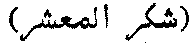
Mr. Loftus, who obtained the specimens which he presented to the British Museum, at Kirrind in Persia, in September, 1851, gives as the Persian name of the cocoons Shek roukeh—a term, probably, the same as the "C-hezoukek" (a misprint?) of Father Ange, but the signification of which I have not been able to discover.
Another notice of the same substance, with a figure, is briefly given in Dr. Honigberger's 'Thirty-five Years in the East' (Lond. 1852, vol. ii. pp. 305-6), where we read that Manna teeghul or Shukure teeghal, which are certain insect-nests of a hard texture, rough on the outside, smooth within, about half an inch in length, and of a whitish colour, are imported into Lahore from Hindostan.
M. Bourlier published in 1857 an interesting note on the same substance[J], which has been followed by M. Guibourt's communication to the Académie des Sciences, and still later by a memoir on the chemical history of Tréhala, by M. Marcellin Berthelot, also presented to the Academy[K].
From the investigations of M. Guibourt, it appears that the cocoons are composed of a large proportion of starch (identical with that found in the stem of the Echinops, upon which the insect forms its nest), of gum, a peculiar saccharine matter, a bitter principle, besides earthy and alkaline salts.
The saccharine principle, which has been especially examined by M. Berthelot, and named by him Tréhalose, is a body analogous to cane-sugar, but possessing distinctive properties, which separate it from that and all other varieties of sugar.
M. Bourlier states that Tréhala, which is abundant in the shops of the Jew drug-dealers of Constantinople, is frequently used by the Arab and Turkish physicians in the form of a decoction, which is regarded by them as of peculiar efficacy in diseases of the respiratory organs.
The second insect-product to which I would draw attention, is a saccharine substance resembling dark honey. Mr. Loftus, who obtained it near Kirrind, 13th July, 1851, and whose specimen is in the British Museum, states that it is exuded from a species of thistle when pierced by a Rhynchophorous insect; but he fails to inform us for what purposes it is used by the inhabitants.
Mr. Loftus having also presented the Museum with excellent specimens both of the plant and insect, I am able to state that the former is Echinops persicus, Fisch., and the latter a new species of Larinus, to which M. Jekel has applied the name Larinus mellificus, and of which he has drawn up the following description:—
"Larinus mellificus, Jekel (fig. 3). Breviter ovatus, convexus, niger, nitidus; infra subtiliter, lateribus thoracis margineque elytrorum intus medio versus angulariter ampliata, apicem occupante griseo-cinerascenti tomentosis; rostro leviter punctato, basi utrinque bicanaliculato cum elevatione media lata subcariniformi; thorace subconico antice tubulato, supra confertim sat rude punctato, lateribus subrugoso; elytris striato-punctatis, interstitiis latis, planis, transversim subtilissime rugulosis, cum abdomine tenuissime alutaceis, punctis majoribus remotioribus impressis; pectore, lateribus, pedibusque rugoso-punctatis, femoribus infra fortiter oblique costato-rugosis; tibiis intus, anticis fortius crenulatis. Long. (rostr. excl.) 16-18, lat. elytr. 8-9 mill.
"Patria—Persia, prope Kirrind, ubi Echinopsidis speciem frequentat, cujus plantæ caules ab hoc insecto puncti materiam quamdam saccharinam sudant." W. K. Loftus, Mus. Brit.
Fig. 1. Larinus maculatus, Falderm.
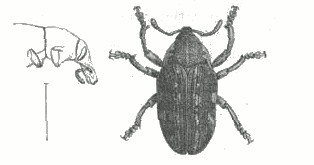
Fig. 2. The cocoons of Larinus maculatus, called in Turkish Tréhala.
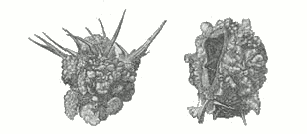
Fig. 3. Larinus mellificus, Jekel.
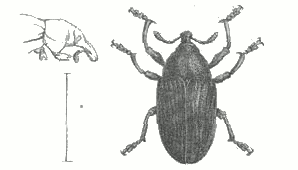
Very similar to L. Onopordinis, but proportionably more elongate and less convex; rostrum and thorax longer; pilosity of the body underneath much thinner and shorter; thighs thicker, more clavate, the anterior evidently costate-rugose underneath; without whitish marks on the elytra, and without that layer of light-brown earth-like pollinose transudation which is often wanting in rubbed specimens of Larinus Onopordinis. The freshest specimens have the griseous margin of the elytra, which parts from the base under the shoulder, obliquely and angularly ampliate interiorly towards the middle, where it reaches the second stria. This griseous pilosity fills all the tips of the elytra, leaving bare only the sutures, an angular notch behind the middle (which forms with that apical part of the suture a kind of hook on each elytron), and two round spots, one submarginal fronting the tip of the notch, the other larger, discoidal, behind the foot of the notch, much above the tip.
FOOTNOTES:
Catalogue of the Heterocerous Lepidoptera collected at Singapore by Mr. A. R. Wallace, with Descriptions of New Species. By Francis Walker, Esq., F.L.S.
[Read Feb. 17, 1859.]
Fam. URANIIDÆ, Westwood.
Gen. Nyctalemon, Dalman.
1. Nyctalemon Hector, White, Walk. Cat. Lep. Het. vii. 1771.
Inhabits also Borneo.
Fam. AGARISTIDÆ, Swainson.
Gen. Eusemia, Dalman.
2. Eusemia maculatrix, Westwood, Cat. Orient. Ent. 67, pl. 33. f. 1.
Inhabits also Hindostan and Java.
3. Eusemia mollis, Walk. Cat. Lep. Het. vii. 1774.
Inhabits also Hindostan.
Fam. ZYGÆNIDÆ, Leach.
Gen. Syntomis, Illiger.
4. Syntomis annosa, n. s. Fœm. Cinereo-fusca; capite, antennis apice, humeris abdominisque maculis lateralibus albis; alis maculis quatuor vitreis.
Female. Cinereous brown. Head white. Antennæ serrated, white towards the tips. Thorax with a large white spot on each side in front. Abdomen somewhat compressed towards the base, with white spots along each side. Wings long, with the discal areolets from the base to beyond the middle mostly vitreous, but having the veins bordered with brown. Length of the body 9 lines; of the wings 22 lines.
5. Syntomis chloroleuca, n. s. Fœm. Nigro-viridis; fronte, antennis apice, humeris abdominisque fasciis duabus dorsalibus fasciisque ventralibus albis; alis purpureo-nigris, anticis maculis quatuor vitreis, posticis macula una vitrea.
Female. Blackish-green. Front, antennæ towards the tips, and two humeral spots white. Antennæ simple. Abdomen with a white band at the base, and with another on the fifth segment, and with white ventral bands. Wings purplish-black; fore wings with four vitreous spots; the fore one of the interior pair not one-third of the size of the hind one, which is very long; the fore one of the exterior pair much narrower than the hind one, and accompanied at its inner end by an elongated vitreous point; hind wings with an elongated vitreous spot. Length of the body 4½ lines; of the wings 12 lines.
6. Syntomis xanthomela, n. s. Mas. Nigra; fronte, thoracis margine antico abdominisque fasciis ochraceis; antennis apice albis, abdominis fasciculo pallide cinereo; alis anticis maculis quinque vitreis, posticis maculis duabus vitreis.
Male. Black. Front, fore borders of the thorax and hind borders of the abdominal segments ochraceous; dorsal tuft pale cinereous, rather large. Antennæ simple, white towards the tips. Fore wings with five vitreous spots, of which the basal one is small and round, and the other four large and elongated; the exterior pair intersected by the black veins. Hind wings with two vitreous spots, of which one is basal and the other discal. Length of the body 4 lines; of the wings 9 lines.
Fam. LITHOSIIDÆ.
Gen. Nyctemera, Hübner.
7. Nyctemera mundipicta, n. s. Mas et Fœm. Fusca; capite thoraceque albo vittatis; abdomine albo guttis dorsalibus fuscis; alis anticis basi albo venosis, fascia exteriore obliqua postice abbreviata alba, posticis albis fusco marginatis. Fœm. Thorace fascia postica lutea, abdomine fusco fasciis albis; alis anticis fascia latiore vix abbreviata.
Male. Brown. Head and thorax with white lines. Antennæ moderately pectinated. Pectus with black spots, luteous on each side. Abdomen white, with brown dorsal dots; tip luteous. Legs white. Fore wings with white veins towards the base, and with an exterior oblique white band, which is narrower hindward, and ends at some distance from the interior border. Hind wings white, with a broad brown border. Female? Larger. Antennæ slightly pectinated. Thorax with a slight luteous band in front, and another hindward. Abdomen brown, with a white band on the hind border of each segment; under side white, with brown spots along each side. Fore wings with the band much broader, hardly straightened hindward, and ending very near the interior border. Length of the body 5-6 lines; of the wings 16-20 lines.
Gen. Cyclosia, Hübner.
8. Cyclosia submaculans, n. s. Mas. Nigra, velutina, squamis nonnullis cyaneis, subtus albo cyaneoque fasciata; alis anticis purpureo-nigris, punctis paucis exterioribus, alis posticis fuscis, punctis submarginalibus albis; alis quatuor subtus fuscis, guttis exterioribus et submarginalibus albis.
Male. Black, with a few metallic blue specks, and with metallic bluish-white pectoral spots and ventral bands. Antennæ slightly pectinated. Wings velvety, rather long, brown beneath, with an exterior and a submarginal row of white dots; fore wings purplish-black, with a few exterior and submarginal white points; hind wings brown, with submargiual white points. Length of the body 9 lines; of the wings 28 lines.
9. Cyclosia nivipetens, n. s. Mas. Cinereo-nigra; antennis cyaneo-nigris subpectinatis; alis anticis fascia lata submarginali alba.
Male. Cinereous-black. Antennæ bluish-black. Fore wings with a broad, submarginal, upright, white band, which is much narrower hindward, and is intersected by the black veins. Length of the body 7 lines; of the wings 22 lines.
Gen. Pidorus, Walk.
10. Pidorus constrictus, n. s. Mas. Cyaneo-niger, subtus testaceus; antennis pectinatis corpore vix brevioribus; thoracis margine antico coccineo; alis angustis, anticis fascia exteriore subrecta subobliqua flavo-alba, posticis cinereo-nigris.
Male. Bluish-black, testaceous beneath. Antennæ moderately pectinated, hardly shorter than the body. Thorax crimson along the fore border. Wings narrow, somewhat testaceous beneath towards the base; fore wings with a slightly oblique, hardly curved, yellowish-white exterior band; hind wings cinereous-black. Length of the body 5 lines; of the wings 16 lines.
Gen. Hypsa, Hübner.
11. Hypsa silvandra, Cram. Pap. Exot. iv. 155, pl. 369. f. D (Phalæna).
Inhabits also Hindostan, China, and Australia.
12. Hypsa egens, Walk. Cat. Lep. Het. 11. 453. 12.
Inhabits also Hindostan and Java.
Gen. Setina, Schranck.
13. Setina bipunctata, n. s. Mas. Flava; alis anticis punctis duobus basalibus guttaque discali nigris.
Male. Yellow, closely allied to S. apicalis (Cat. Lep. Het. 521). Fore wings black along the costa towards the base, where there are two black points; a small black dot at the tip of the discal areolet. Hind wings a little paler than the fore wings. Length of the body 3 lines; of the wings 8 lines.
Gen. Bizone, Walk.
14. Bizone hamata, Walk. Cat. Lep. Het. 88. 5493.
Inhabits also China.
Gen. Deiopeia, Stephens.
15. Deiopeia detracta, n. s. Fœm. Pallide lutea; thorace guttis nigris; alis sat angustis nigro guttatis, fimbria pallida nitente; alis anticis nigro transverse quadristrigatis.
Female. Pale luteous. Thorax with six black dots. Wings narrower than in the other species of this genus, with black dots, of which the most part are towards the exterior border, where they form two irregular lines, and are somewhat confluent on the under side; fringe whitish, shining. Fore wings with four short transverse various black streaks, of which the first and the second form an interrupted line. Length of the body 5 lines; of the wings 14 lines.
Gen. Darantasia, n. g.
Fœm. Corpus sat robustum. Proboscis distincta. Palpi porrecti, breves, caput non superantes; articulus tertius longiconicus, acutus, secundi dimidio non longior. Antennæ setaceæ, simplices, gracillimæ. Abdomen subconicum, alas posticas superans; sexualia sat magna. Pedes breves, nudi, sat validi, calcaribus robustis sat longis. Alæ breviusculæ, sat angustæ; anticæ apud costam convexæ, apice rotundatæ, margine exteriore perobliquo.
Allied to Lemyra (Cat. Lep. Het. vii. 1690).
Female. Body rather stout. Proboscis moderately long. Palpi porrect, short, not extending beyond the head; third joint elongate-conical, acute, about half the length of the second. Antennæ setaceous, simple, very slender, full half the length of the body. Abdomen nearly conical, extending somewhat beyond the hind wings; anal appendages rather large. Legs short, bare, rather stout; spurs stout, rather long. Wings rather short and narrow; fore wings convex along the costa, rounded at the tips, extremely oblique along the exterior border.
16. Darantasia cuneiplena, n. s. Mas. Nigra; corpore subtus, capite, thoracis fasciis duabus anticis maculaque postica abdominisque fasciis posticis luteis; pedibus luteis, tibiis supra nigris; alis anticis luteo octo-strigatis, posticis luteo strigatis.
Male. Black, mostly luteous beneath. Head luteous. Thorax with two luteous bands in front, and with a luteous spot hindward. Abdomen with luteous bands hindward. Legs luteous; tibiæ black above. Fore wings with eight wedge-shaped luteous streaks, of which three are near the base, two subcostal, two hindward, and one submarginal and transverse. Hind wings with three luteous streaks, of which the first and second are connected exteriorly, and the third is short, broad, and submarginal. Length of the body 3½ lines; of the wings 8 lines.
Fam. LIPARIDÆ, Boisduval.
Gen. Artaxa, Walk.
17. Artaxa varians, Walk. Cat. Lep. Het. iv. 796.
Inhabits also West Africa, Hindostan, and China.
Gen. Pantana, Walk.
18. Pantana bicolor, Walk. Cat. Lep. Het. iv. 820.
Note.—P. dispar, a native of Hindostan, and P. ampla, a native of China, may be varieties of this species.
Fam. NOTODONTIDÆ, Stephens.
Gen. Darabitta, n. g.
Fœm. Corpus vix robustum. Proboscis brevis. Palpi longiusculi, oblique ascendentes, non pilosi. Antennæ validæ, subcompressæ, breviusculæ, simplices. Abdomen conicum, alas posticas non superans. Pedes squamosi, læves, brevinusculi, sat graciles, calcaribus longis. Alæ latiusculæ, non longæ; anticæ apud costam rectæ, apice subrotundatæ, margine exteriore vix convexo.
This genus hardly belongs to the Notodontidæ; but its precise situation seems to be uncertain. Female. Body hardly stout. Proboscis short. Palpi rather long and slender, not pilose, obliquely ascending, rising a little higher than the vertex; third joint elongate-conical, less than half the length of the second. Antennæ stout, bare, slightly compressed, little longer than the thorax; joints few. Abdomen conical, not extending beyond the hind wings. Legs squamous, smooth, rather short and slender; spurs long. Wings rather broad, not long; fore wings straight along the costa, slightly rounded at the tips; exterior border hardly convex, very slightly oblique.
19. Darabitta strigicosta, n. s. Fœm. Rufa, vix cinerascens; alis anticis linea submarginali e punctis nigris, lineolis tribus costalibus obliquis albis, prima angulata, secunda tertiaque connexis.
Female. Red, with a slight cinereous tinge, more cinereous beneath. Antennæ pale. Fore wings with three white oblique costal streaks; first streak forming an outward angle; second connected in the disk with the third, which is oblique in the contrary direction; a row of submarginal black points. Length of the body 3 lines; of the wings 8 lines.
Fam. LIMACODIDÆ, Duponchel.
Gen. Miresa, Walk.
20. Miresa curvifera, n. s. Mas. Rufa, crassa, brevis; antennis late pectinatis; alis anticis linea exteriore arcuata nivea, spatio contiguo exteriore obscuriore.
Male. Red, thick, short. Palpi porrect, extending a little beyond the head. Antennæ shorter than the thorax, broadly pectinated except towards the tips. Abdomen short, obtuse, not extending beyond the hind wings. Legs short. Wings not broad. Fore wings straight along the costa, rounded at the tips, darker on the exterior side of a curved transverse bright white line, which is somewhat beyond the middle; exterior border rather oblique. Hind wings a little paler than the fore wings. Length of the body 4½ lines; of the wings 12 lines.
Fam. SATURNIIDÆ, Walk.
Gen. Attacus, Linn.
21. Attacus Atlas, Linn. Syst. Nat. 808.
Inhabits also Hindostan, Ceylon, China, and Borneo.
Fam. BOMBYCIDÆ.
Gen. Bombyx, Linn.
22. Bombyx subnotata. Mas. Ferruginea, crassa; antennis late pectinatis; abdominis apice laminis lateralibus fimbriatis; alis anticis margine exteriore subundulato subexciso, macula subtus costali subapicali flava.
Male. Ferruginous, thick, pilose. Mouth obsolete. Antennæ broadly pectinated. Abdomen much more slender than the thorax, not extending beyond the hind wings; anal lateral appendages fringed. Legs short, stout. Fore wings rounded at the tips, extremely oblique along the exterior border, which is slightly angular in the middle and slightly excavated on each side; under side with a yellow costal spot near the tip. Hind wings with the interior border densely fringed towards the tip. Length of the body 7 lines; of the wings 16 lines.
Fam. LEUCANIDÆ, Guénée.
Gen. Mythimna, Hübner.
23. Mythimna inducens, n. s. Fœm. Lateritio-rufa, subtus albida; palporum articulo tertio brevissimo; abdomine rufescenti-cano; alarum anticarum puncto discali nigro, lineis duabus nigricantibus subarcuatis indistinctis, alis posticis rufescenti-canis.
Female. Brick-red colour, mostly whitish beneath. Palpi obliquely ascending, not rising to the height of the vertex; third joint extremely small, less than one-sixth of the length of the second. Abdomen reddish-hoary, extending but little beyond the hind wings. Legs stout, squamous; spurs moderately long. Fore wings very slightly convex along the costa, rectangular at the tips; exterior border slightly oblique, nearly straight; two slender, indistinct, slightly curved, blackish lines, having between them a more distinct black discal point. Hind wings reddish-hoary, the reddish tinge most prevalent towards the exterior border. Length of the body 7 lines; of the wings 18 lines.
Fam. GONOPTERIDÆ, Guénée.
Gen. Anomis, Hübner.
24. Anomis mutilata, n. s. Mas. Rufa, robusta, subtus rufescenti-cinerea; palpis longis subascendentibus; abdomine latiusculo; alarum anticarum lineis tribus indistinctis angulosis nigricantibus, orbiculari alba punctiformi, margine exteriore postico perobliquo subexcavato.
Male. Red, stout, reddish cinereous beneath. Palpi long, obliquely ascending; third joint slender, linear, obtuse at the tip, a little shorter than the second. Antennæ stout, with extremely short setæ. Abdomen rather broad, extending a little beyond the hind wings. Fore wings with three blackish, indistinct, slightly diffuse, zigzag lines, which are slightly bordered hindward with pale yellow; orbicular mark white, punctiform; exterior border slightly angular, hardly oblique, and slightly truncated on the fore half, extremely oblique and with two slight excavations on the hind half; fringe partly white. Hind wings not paler than the fore wings. Length of the body 7 lines; of the wings 18 lines.
Gen. Thalatta, Walk.
25. Thalatta aurigutta, Walk. Cat. Lep. Het. xv. 1793.
Fam. HYPOGRAMMIDÆ, Guénée.
Gen. Briarda, Walk.
26. Briarda plagifera, n. s. Mas. Ferrugineo-cinerea; capite thoraceque antico nigricantibus; tibiis ciliatis; alis sat angustis subdenticulatis, anticarum fascia basali, macula discali maculaque costali exteriore nigricantibus, lineis exteriore et submarginali fuscis duplicatis denticulatis subnebulosis; alis posticis pallide cinereis, semihyalinis, fusco latissime marginatis.
Male. Cinereous, tinged with ferruginous. Head and fore part of the thorax blackish. Palpi obliquely ascending; third joint linear, conical at the tip, about half the length of the second. Antennæ hardly setose. Abdomen extending a little beyond the hind wings. Legs rather stout; tibiæ fringed; spurs very long. Wings rather narrow, slightly denticulated. Fore wings slightly rounded at the tips, very oblique along the exterior border; a blackish band near the base, abbreviated hindward; a large blackish spot on the reniform mark, and a diffuse blackish spot near the tip of the costa; exterior and submarginal lines brown, double, denticulated, with the space along their borders somewhat clouded. Hind wings pale cinereous, semihyaline, with very broad brown borders. Length of the body 9 lines; of the wings 22 lines.
Fam. CATEPHIDÆ, Guénée.
Gen. Steiria, Walk.
27. Steiria phryganeoides, n. s. Mas. Pallide cinerea, rufescente conspersa; palpis longis vix ascendentibus; alis sat angustis denticulatis; alarum anticarum squamis nonnullis nigris fuscisque, marginibus exteriore et interiore non conspersis, reniformi magna; alis posticis pallide cinereis, fusco late marginatis.
Male. Pale cinereous, thickly speckled with ferruginous red. Palpi long, hardly ascending, almost straight; third joint linear, obtuse at the tip, rather shorter than the second. Antennæ bare. Abdomen conical, extending rather beyond the hind wings; apical tuft small. Legs rather long and slender, almost bare; spurs very long. Wings rather narrow; exterior border denticulated. Fore wings with the speckles mostly confluent in the disk, mostly wanting along the interior and exterior borders; several black and brown speckles, some of which border the large reniform mark. Hind wings pale cinereous, with a broad brown border. Length of the body 8 lines; of the wings 20 lines.
Fam. OPHIDERIDÆ, Guénée.
Gen. Ophideres, Boisduval.
28. Ophideres Salaminia, Cram. Pap. Exot. 71. 117, pl. 174. fig. A.
Inhabits also Hindostan, Ceylon, Java, and China.
29. Ophideres discrepans, Walk. Cat. Lep. Het. xiii. 1227.
30. Ophideres smaragdipicta, Walk. Cat. Lep. Het. xiii. 1229.
Fam. PHYLLODIDÆ, Guénée.
Gen. Lygniodes, Guénée.
31. Lygniodes endoleuca, Guén. Noct. iii. 124.
Inhabits also Java.
Fam. EREBIDÆ, Guénée.
Gen. Sypna, Guénée.
32. Sypna subsignata, Walk. Cat. Lep. Het. xiv. 1261.
Fam. OMMATOPHORIDÆ, Guénée.
Gen. Patula, Guénée.
33. Patula macrops, Linn. Syst. Nat. 225 (Noctua).
Inhabits also West and South Africa, Madagascar, Hindostan, and Ceylon.
Gen. Argiva, Hübner.
34. Argiva hieroglyphica, Drury, Ins. Exot. 11. 3, pl. 2. f. 1 (Noctua).
Inhabits also Madagascar, Hindostan, and Ceylon.
Fam. OPHIUSIDÆ, Guénée.
Gen. Cæcila, Walk.
35. Cæcila complexa, Walk. Cat. Lep. Het. xv. 1825.
Gen. Ophisma, Guénée.
36. Ophisma Umminia, Cram. Pap. Exot. 111. 137, pl. 267. f. 7 (Noctua).
Inhabits also Java and Sumatra.
Gen. Achæa, Hübner.
37. Achæa mercatoria, Fabr. Ent. Syst. 111. 2, 62. 175. (Noctua).
Inhabits also Hindostan and Java.
Fam. THERMESIDÆ, Guénée.
Gen. Thermesia, Hübner.
38. Thermesia? recusata, n. s. Mas. Rufescenti-cinerea, robusta, nigricante conspersa, capite thoraceque antico fuscis; palpis longissimis ascendentibus subarcuatis; antennis subsetosis, alis linea exteriore recta obliqua nigricante extus diffusa, linea interiore tenui subarcuata nigricante, linea submarginali e punctis lineaque marginali nigris.
Male. Reddish cinereous, stout, with blackish speckles. Head and fore part of the thorax brown. Frontal tuft acute. Palpi very long, slightly curved, nearly vertical; third joint linear, acute, shorter than the second. Antennæ slightly setose. Abdomen hardly extending beyond the hind wings. Wings with the speckles here and there confluent; lines blackish; interior line slender, slightly curved; exterior line straight, oblique, diffuse on the outer side, extending almost to the tips of the fore wings; submarginal line represented by points; marginal line slightly undulating. Fore wings rectangular at the tips; exterior border slightly bent; its fore part not oblique; orbicular and reniform marks indistinct. Length of the body 6 lines; of the wings 16 lines.
Gen. Hypernaria, Guénée.
39. Hypernaria diffundens, n. s. Fœm. Cinerea, robusta, fusco conspersa; palporum articulo secundo extus fusco, tertio aciculari longissimo, alarum lineis interiore et exteriore vagis dentatis lineaque media recta sat obliqua squamis fuscis, punctis marginalibus atris, alis anticis acutis, orbiculari punctiformi atra, litura reniformi angusta fusco marginata extus excavata.
Female. Cinereous, stout, speckled with brown. Palpi very slightly curved; second joint brown on the outer side; third acicular, a little shorter than the second. Antennæ minutely setose. Abdomen not extending beyond the hind wings. Wings with the interior and exterior lines angulose, diffuse, composed of brown speckles; middle line more oblique, straight, slender, double, obsolete towards the costa of the fore wings, bordered with diffuse angular streaks of brown speckles; marginal points deep black. Fore wings acute; orbicular mark black, punctiform; reniform narrow, brown, bordered, excavated on the outer side; exterior border slightly convex. Length of the body 10 lines; of the wings 22 lines.
Gen. Ugia, Walk.
40. Ugia disjungens, Walk. Cat. Lep. Het. xv. 1860.
Fam. PLATYDIDÆ, Guénée.
Gen. Masca, Walk.
41. Masca abactalis, Walk. Cat. Lep. Het. xvi. 9.
Fam. HYPENIDÆ, Herr.-Schæffer.
Gen. Hypena, Schranck.
42. Hypena ruralis, Walk. Cat. Lep. Het. xvi. 65.
Inhabits also Ceylon.
Gen. Macna, Walk.
43. Macna pomalis, Walk. Cat. Lep. Het. xvi. 78.
Fam. MARGARODIDÆ, Guénée.
Gen. Margarodes, Guénée.
44. Margarodes Amphitritalis, Guén. Delt. et Pyral. 307, 327.
Inhabits also Hindostan.
Gen. Neurina, Guénée.
45. Neurina Procopialis, Cram. Pap. Exot. iv. 152, pl. 368. f. E. (Phalæna Pyralis Procopia.)
Inhabits also Hindostan and Java.
Fam. ENNOMIDÆ, Guénée.
Gen. Bulonga, n. g.
Corpus gracile. Proboscis brevissima. Palpi breves, porrecti, angulati. Antennæ simplices. Abdomen conicum. Pedes graciles, nudi, calcaribus non longis, tibiis anticis brevissimis. Alæ sat latæ; anticæ acutæ, margine exteriore sat obliquo; posticæ abdomen superantes.
Body slender. Proboscis very short. Palpi as long as the breadth of the head; second joint obliquely ascending; third porrect, rather shorter than the second, with which it forms an obtuse angle. Antennæ simply filiform. Abdomen conical. Legs slender, bare; spurs rather short; fore tibiæ very short. Wings rather broad; fore wings rectangular at the tips; costa hardly convex; exterior border rather oblique. Hind wings with the interior angle prominent, acute.
46. Bulonga schistacearia, n. s. Fœm. Glauco-cinerea, alis nitentibus, linea marginali nigra fimbria interlineata, anticis fusco quadrilineatis, posticis trilineatis.
Female. Glaucous-cinereous, paler beneath. Head and palpi reddish. Wings shining; marginal line black; fringe pale cinereous, including a darker line. Fore wings with four straight oblique brown lines; second line broader than the first, apparent also on the hind wings; third narrower and darker than the others, blackish, and still more distinct on the hind wings, where it is bordered with whitish on the outer side; fourth more indistinct than the others, still more indistinct on the hind wings. Length of the body 6 lines; of the wings 16 lines.
Fam. AMPHIDASYDÆ, Guénée.
Gen. Daristane, n. g.
Mas. Corpus robustum. Proboscis brevissima. Palpi validi, breves obtusi, oblique ascendentes; articulus tertius minimus. Antennæ setaceæ, simplices. Abdomen conicum, alas posticas non superans. Pedes validi, breviusculi; tibiæ anticæ brevissimæ, posteriores latissimae, calcaribus longis. Alæ breviusculæ, sat latæ; anticæ acutæ.
Male. Body robust. Proboscis very short. Palpi short, stout, obtuse, obliquely ascending; third joint very small. Antennæ setaceous, simple. Abdomen conical, not extending beyond the hind wings. Legs stout, rather short; tibiæ pilose; fore tibiæ very short; posterior tibiæ very broad, especially the middle pair. Wings rather short, moderately broad. Fore wings straight along the costa, acutely rectangular at the tips; exterior border rather oblique.
47. Daristane tibiaria, n. s. Mas. Cinerea, nitens, alis nigro conspersis, fascia media rufescente non bene determinata, anticis costa albida nigro punctata.
Male. Cinereous, shining, a little paler beneath. Wings speckled with black; an indistinct oblique reddish middle band; costa of the fore wings whitish, with black points. Length of the body 5 lines; of the wings 12 lines.
Fam. PALYADÆ, Guénée.
Gen. Eumelea, Duncan.
48. Eumelea Rosaliata, Cram. Pap. Exot. iv. 152, pl. 368. f. F. (Phalæna Geometra Rosalia.)
Inhabits also Amboyna.
Fam. EPHYRIDÆ, Guénée.
Gen. Ephyra, Duponchel.
49. Ephyra quadristriaria, n. s. Fœm. Rufescens, subtus flava, alis flavis rufescente conspersis, fascia exteriore perobliqua rufescente, anticis acutis, lituris duabus costalibus obliquis fuscis.
Female. Reddish, yellow beneath. Proboscis short. Palpi short, slightly ascending; third joint linear, obtuse, a little shorter than the second. Antennæ short, stout, setaceous. Abdomen not extending beyond the hind wings. Legs bare, rather long and slender; spurs long. Wings yellow, with reddish speckles, and with a straight reddish band, which extends from beyond the middle of the interior border of the hind wings to the tips of the fore wings. Fore wings acute, with two oblique brown costal marks; exterior border rather oblique. Length of the body 4 lines; of the wings 12 lines.
Gen. Anisodes, Guénée.
50. Anisodes expunctaria, n. s. Fœm. Luteo-cervina, palpis longis angulatis, antennis breviusculis, alis ferrugineo subconspersis, linea media fusca undulata valde indistincta, lineis interiore et exteriore e punctis nigris, punctis marginalibus nigris.
Female. Pale luteous fawn colour. Proboscis short. Palpi long, slightly decumbent; third joint a little shorter than the second, with which it forms an obtuse angle. Antennæ simple, short. Wings minutely and indistinctly sprinkled with ferruginous; a brown, diffuse, undulating, very indistinct middle line, which is obsolete in the hind wings; interior and exterior lines indicated by widely separated black points; marginal points black. Fore wings rectangular at the tips; exterior border slightly oblique. Length of the body 6 lines; of the wings 8 lines.
Fam. ACIDALIDÆ, Guénée.
Gen. Synegia, Guénée.
51. Synegia botydaria, Guén. Uran. et Phal. i. 423. 694.
Inhabits also Borneo.
Gen. Drapetodes, Guénée.
52. Drapetodes mitaria, Guén. Uran. et Phal. i. 424. 695.
Inhabits also Hindostan.
Gen. Timandra, Duponchel.
53. Timandra ajaia, n. s. Mas. Glaucescenti-cinerea; antennis setosis, alis linea perobliqua fusca antice abbreviata, linea marginali nigra, anticis valde acutis, reniformi tenui fusca.
Male. Cinereous, with a glaucous tinge. Proboscis short. Palpi very short, obliquely ascending; third joint extremely small. Antennæ setose, somewhat shorter than the body. Wings with a straight, very oblique, brown line, which extends from the middle of the interior border of the hind wings towards the tip of the fore wings, on approaching which it is obsolete; marginal line black. Fore wings very acute; exterior border extremely oblique; reniform mark brown, very slender. Hind wings extending beyond the abdomen. Length of the body 6 lines; of the wings 17 lines.
Gen. Zanclopteryx, Herr.-Schæffer.
54. Zanclopteryx saponaria, Herr.-Schæffer, Guén. Uran. et Phal. 11. 16, 915.
Inhabits also Ceylon.
Fam. MICRONIDÆ, Guénée.
Gen. Micronia, Guénée.
55. Micronia rectinervata, Guén. Uran. et Phal. 11. 27, 933.
Fam. ZERENIDÆ.
Gen. Stalagmia, Guénée.
56. Stalagmia guttaria, Guér. Icon. Regn. Anim. Ins. pl. 90 (Phalæna).
Catalogue of the Heterocerous Lepidopterous Insects collected at Malacca by Mr. A. R. Wallace, with Descriptions of New Species. By Francis Walker.
Fam. SPHINGIDÆ, Leach.
Gen. Macroglossa, Ochsenheimer.
1. Macroglossa Passalus, Drury, Exot. Ins. ii. 52, pl. 29. f. 2 (Sphinx).
Inhabits also Hindostan and Java.
2. Macroglossa corythus, Boisd. MSS.; Walk. Cat. Lep. Het. viii. 92. 14.
Inhabits also Hindostan, Ceylon, and Java.
Fam. AGARISTIDÆ, Swainson.
Gen. Eusemia, Dalman.
3. Eusemia maculatrix, Westw. (See Singapore Sp. No. 2.)
4. Eusemia mollis, Walk. (See Singapore Sp. No. 3.)
5. Eusemia subdives, n. s. Mas. Atra, antennis subpectinatis, abdomine fasciis luteis, alis anticis fascia exteriore recta non obliqua testacea; posticis ochraceis atro marginatis.
Male. Deep black. Antennæ slightly pectinated, slightly hooked at the tips. Abdomen with a luteous band on the hind border of each segment. Fore wings with an upright, straight, testaceous exterior band, which does not extend to the interior border. Hind wings bright ochraceous, with a deep black border, which is irregular on the inner side and is joined in front to a black spot, the latter, on the under side, containing a white curved line. Length of the body 9 lines; of the wings 28 lines.
Fam. LITHOSIIDÆ, Stephens.
Gen. Nyctemera, Hübner.
6. Nyctemera tripunctaria, Linn. Syst. Nat. 864. 226 (Geometra).
Inhabits also Hindostan and China.
Gen. Euschema, Hübner.
7. Euschema subrepleta, Walk. Cat. Lep. Het. xi. 406. 3.
Inhabits also Ceylon and Borneo.
Fam. LIPARIDÆ, Boisduval.
Gen. Pantana.
8. Pantana bicolor, Walk. (See Singapore Sp. No. 17.)
Fam. ORTHOSIDÆ, Guénée.
Gen. Carea, Walk.
9. Carea varipes, Walk. Cat. Lep. Het. x. 475.
Fam. HYBLÆIDÆ, Guénée.
Gen. Hyblæa, Fabr.
10. Hyblæa tortricoides, Guén. Noct. ii. 391.
Inhabits also Borneo.
11. Hyblæa erycinoides, Walk. Cat. Lep. Het. xv. 1792.
Fam. PHYLLODIDÆ, Guénée.
Gen. Lygniodes, Guénée.
12. Lygniodes endoleuca, Guén. (See Singapore Sp. No. 30.)
Fam. OPHIUSIDÆ, Guénée.
Gen. Ophiusa, Ochsenheimer.
13. Ophiusa fulvotænia, Guén. Noct. iii. 272. 1710.
Inhabits also Hindostan, Ceylon, Java, and Sumatra.
Fam. THERMESIDÆ, Guénée.
Gen. Cotuza, Walk.
14. Cotuza confirmata, n. s. Mas. Cinereo-ferruginea, robusta, dense vestita, subtus alba; palpis latis compressis oblique ascendentibus; articulo tertio minimo, antennis plus dimidio basali subpectinatis, alis linea, media recta perobliqua nigro-fusca antice angulosa et retracta, linea exteriore e denticulis nigro-fuscis albido terminatis, fimbria apice alba, alis anticis subhamatis, linea interiore nigro-fusca undulata orbiculari nigra punctiformi, reniformi et litura costali albis nigro marginatis.
Male. Cinereous-ferruginous, stout, densely pilose, white beneath. Palpi broad, compressed, obliquely ascending, not rising higher than the head; third joint obtuse, extremely short. Antennæ slightly pectinated to nearly two-thirds of the length, bare from thence to the tips. Abdomen not extending beyond the hind wings. Legs white; tibiæ ferruginous above. Wings ample; a blackish brown, straight, very oblique line, which is zigzag, and retracted towards the costa of the fore wings; exterior line composed of blackish-brown, very acute, whitish-pointed angles; fringe white exteriorly. Fore wings slightly hooked, with an interior undulating blackish-brown line; orbicular mark black, punctiform; reniform white, black-bordered, forming a triangular spot and an anterior point; a small exterior white costa, with mark. Length of the body 11 lines; of the wings 28 lines.
Fam. ACIDALIDÆ, Guénée.
Gen. Zanclopteryx, Herr.-Schæff.
15. Zanclopteryx saponaria, Herr.-Schæff. (See Singapore Species, No. 54.)