SELECTED POEMS
Reading edition
36
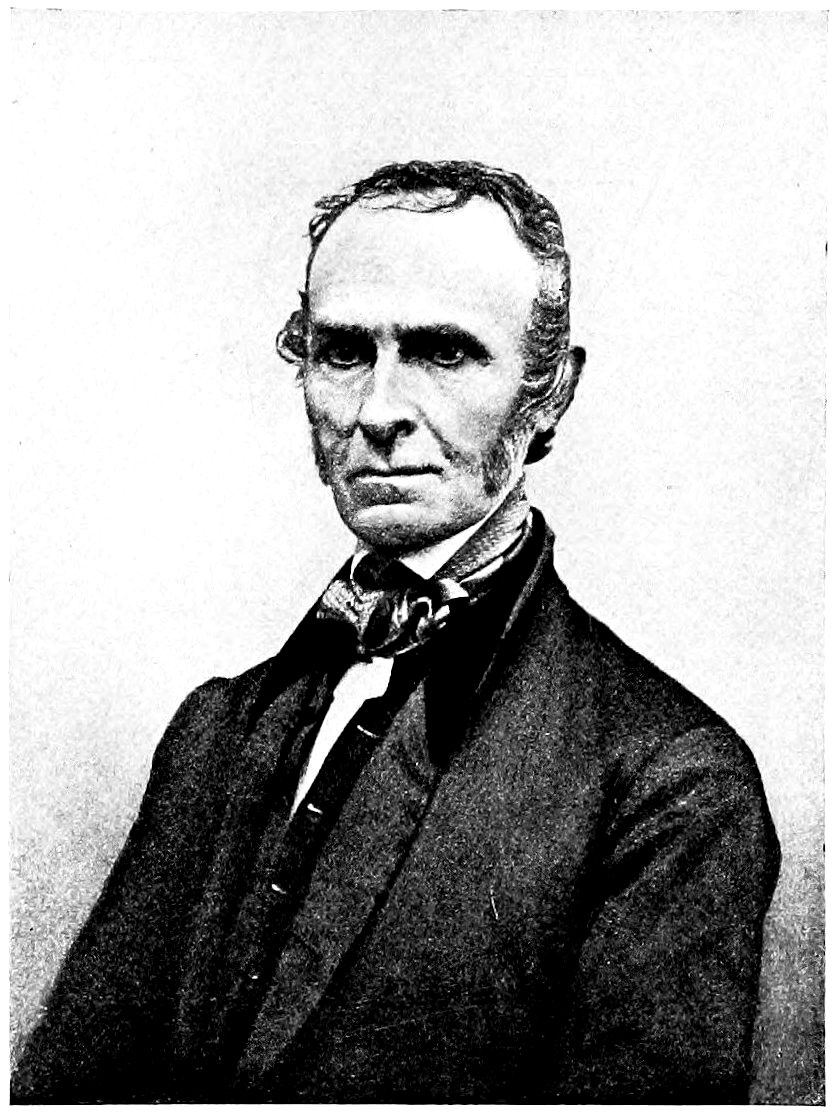
JOHN GREENLEAF WHITTIER From an ambrotype about 1857
37
THE BAREFOOT BOY
Blessings on thee, little man,
Barefoot boy, with cheek of tan!
With thy turned-up pantaloons,
And thy merry whistled tunes;
With thy red lip, redder still
Kissed by strawberries on the hill;
With the sunshine on thy face,
Through thy torn brim’s jaunty grace;
From my heart I give thee joy,—
I was once a barefoot boy!
Prince thou art,—the grown-up man
Only is republican.
Let the million-dollared ride!
Barefoot, trudging at his side,
Thou hast more than he can buy
In the reach of ear and eye,—
Outward sunshine, inward joy:
Blessings on thee, barefoot boy!
Oh for boyhood’s painless play,
Sleep that wakes in laughing day,
Health that mocks the doctor’s rules,
Knowledge never learned of schools,
Of the wild bee’s morning chase,
Of the wild-flower’s time and place,
38Flight of fowl and habitude
Of the tenants of the wood;
How the tortoise bears his shell,
How the woodchuck digs his cell,
And the ground-mole sinks his well;
How the robin feeds her young,
How the oriole’s nest is hung;
Where the whitest lilies blow,
Where the freshest berries grow,
Where the ground-nut trails its vine,
Where the wood-grape’s clusters shine;
Of the black wasp’s cunning way,
Mason of his walls of clay,
And the architectural plans
Of gray hornet artisans!
For, eschewing books and tasks,
Nature answers all he asks;
Hand in hand with her he walks,
Face to face with her he talks,
Part and parcel of her joy,—
Blessings on the barefoot boy!
Oh for boyhood’s time of June,
Crowding years in one brief moon,
When all things I heard or saw,
Me, their master, waited for.
I was rich in flowers and trees,
Humming-birds and honey-bees;
For my sport the squirrel played,
Plied the snouted mole his spade;
39For my taste the blackberry cone
Purpled over hedge and stone;
Laughed the brook for my delight
Through the day and through the night,
Whispering at the garden wall,
Talked with me from fall to fall;
Mine the sand-rimmed pickerel pond,
Mine the walnut slopes beyond,
Mine, on bending orchard trees,
Apples of Hesperides!
Still as my horizon grew,
Larger grew my riches too;
All the world I saw or knew
Seemed a complex Chinese toy,
Fashioned for a barefoot boy!
Oh for festal dainties spread,
Like my bowl of milk and bread;
Pewter spoon and bowl of wood,
On the door-stone, gray and rude!
O’er me, like a regal tent,
Cloudy-ribbed, the sunset bent,
Purple-curtained, fringed with gold,
Looped in many a wind-swung fold;
While for music came the play
Of the pied frogs’ orchestra;
And, to light the noisy choir,
Lit the fly his lamp of fire.
I was monarch: pomp and joy
Waited on the barefoot boy!
40Cheerily, then, my little man,
Live and laugh, as boyhood can!
Though the flinty slopes be hard,
Stubble-speared the new-mown sward,
Every morn shall lead thee through
Fresh baptisms of the dew;
Every evening from thy feet
Shall the cool wind kiss the heat:
All too soon these feet must hide
In the prison cells of pride,
Lose the freedom of the sod,
Like a colt’s for work be shod,
Made to tread the mills of toil,
Up and down in ceaseless moil:
Happy if their track be found
Never on forbidden ground;
Happy if they sink not in
Quick and treacherous sands of sin.
Ah! that thou couldst know thy joy,
Ere it passes, barefoot boy!
IN SCHOOL-DAYS
Still sits the school-house by the road,
A ragged beggar sleeping;
Around it still the sumachs grow,
And blackberry-vines are creeping.
Within, the master’s desk is seen,
Deep scarred by raps official;
41The warping floor, the battered seats,
The jack-knife’s carved initial;
The charcoal frescos on its wall;
Its door’s worn sill, betraying
The feet that, creeping slow to school,
Went storming out to playing!
Long years ago a winter sun
Shone over it at setting;
Lit up its western window-panes,
And low eaves’ icy fretting.
It touched the tangled golden curls,
And brown eyes full of grieving,
Of one who still her steps delayed
When all the school were leaving.
For near her stood the little boy
Her childish favor singled:
His cap pulled low upon a face
Where pride and shame were mingled.
Pushing with restless feet the snow
To right and left, he lingered;—
As restlessly her tiny hands
The blue-checked apron fingered.
He saw her lift her eyes; he felt
The soft hand’s light caressing,
42And heard the tremble of her voice,
As if a fault confessing.
“I’m sorry that I spelt the word:
I hate to go above you,
Because,”—the brown eyes lower fell,
“Because, you see, I love you!”
Still memory to a gray-haired man
That sweet child-face is showing.
Dear girl! the grasses on her grave
Have forty years been growing!
He lives to learn, in life’s hard school,
How few who pass above him
Lament their triumph and his loss,
Like her,—because they love him.
THE WHITTIER FAMILY
(FROM “SNOW-BOUND”[3])
All day the gusty north-wind bore
The loosening drift its breath before;
Low circling round its southern zone,
The sun through dazzling snow-mist shone.
43No church-bell lent its Christian tone
To the savage air, no social smoke
Curled over woods of snow-hung oak.
A solitude made more intense
By dreary-voicèd elements,
The shrieking of the mindless wind,
The moaning tree-boughs swaying blind,
And on the glass the unmeaning beat
Of ghostly finger-tips of sleet.
Beyond the circle of our hearth
No welcome sound of toil or mirth
Unbound the spell, and testified
Of human life and thought outside.
We minded that the sharpest ear
The buried brooklet could not hear,
The music of whose liquid lip
Had been to us companionship,
And, in our lonely life, had grown
To have an almost human tone.
As night drew on, and, from the crest
Of wooded knolls that ridged the west,
The sun, a snow-blown traveller, sank
From sight beneath the smothering bank,
We piled, with care, our nightly stack
Of wood against the chimney-back,—
The oaken log, green, huge, and thick,
And on its top the stout back-stick;
The knotty forestick laid apart,
And filled between with curious art
44The ragged brush; then, hovering near,
We watched the first red blaze appear,
Heard the sharp crackle, caught the gleam
On whitewashed wall and sagging beam,
Until the old, rude-furnished room
Burst, flower-like, into rosy bloom;
While radiant with a mimic flame
Outside the sparkling drift became,
And through the bare-boughed lilac-tree
Our own warm hearth seemed blazing free.
The crane and pendent trammels showed,
The Turks’ heads on the andirons glowed;
While childish fancy, prompt to tell
The meaning of the miracle,
Whispered the old rhyme: “Under the tree,
When fire outdoors burns merrily,
There the witches are making tea.”
The moon above the eastern wood
Shone at its full; the hill-range stood
Transfigured in the silver flood,
Its blown snows flashing cold and keen,
Dead white, save where some sharp ravine
Took shadow, or the sombre green
Of hemlocks turned to pitchy black
Against the whiteness at their back.
For such a world and such a night
Most fitting that unwarming light,
Which only seemed where’er it fell
To make the coldness visible.
45Shut in from all the world without,
We sat the clean-winged hearth about,
Content to let the north-wind roar
In baffled rage at pane and door,
While the red logs before us beat
The frost-line back with tropic heat;
And ever, when a louder blast
Shook beam and rafter as it passed,
The merrier up its roaring draught
The great throat of the chimney laughed;
The house-dog on his paws outspread
Laid to the fire his drowsy head,
The cat’s dark silhouette on the wall
A couchant tiger’s seemed to fall;
And, for the winter fireside meet,
Between the andirons’ straddling feet,
The mug of cider simmered slow,
The apples sputtered in a row,
And, close at hand, the basket stood
With nuts from brown October’s wood.
What matter how the night behaved?
What matter how the north-wind raved?
Blow high, blow low, not all its snow
Could quench our hearth-fire’s ruddy glow.
O Time and Change!—with hair as gray
As was my sire’s that winter day,
How strange it seems, with so much gone
Of life and love, to still live on!
Ah, brother! only I and thou
46Are left of all that circle now,—
The dear home faces whereupon
That fitful firelight paled and shone.
Henceforward, listen as we will,
The voices of that hearth are still;
Look where we may, the wide earth o’er,
Those lighted faces smile no more.
We tread the paths their feet have worn,
We sit beneath their orchard trees,
We hear, like them, the hum of bees
And rustle of the bladed corn;
We turn the pages that they read,
Their written words we linger o’er,
But in the sun they cast no shade,
No voice is heard, no sign is made,
No step is on the conscious floor!
Yet Love will dream, and Faith will trust,
(Since He who knows our need is just,)
That somehow, somewhere, meet we must.
Alas for him who never sees
The stars shine through his cypress-trees!
Who, hopeless, lays his dead away,
Nor looks to see the breaking day
Across the mournful marbles play!
Who hath not learned, in hours of faith,
The truth to flesh and sense unknown,
That Life is ever lord of Death,
And Love can never lose its own!
47We sped the time with stories old,
Wrought puzzles out, and riddles told,
Or stammered from our school-book lore
“The Chief of Gambia’s golden shore.”
How often since, when all the land
Was clay in Slavery’s shaping hand,
As if a far-blown trumpet stirred
The languorous sin-sick air, I heard:
“Does not the voice of reason cry,
Claim the first right which Nature gave,
From the red scourge of bondage fly,
Nor deign to live a burdened slave!”
Our father rode again his ride
On Memphremagog’s wooded side;
Sat down again to moose and samp
In trapper’s hut and Indian camp;
Lived o’er the old idyllic ease
Beneath St. François’ hemlock-trees;
Again for him the moonlight shone
On Norman cap and bodiced zone;
Again he heard the violin play
Which led the village dance away,
And mingled in its merry whirl
The grandam and the laughing girl.
Or, nearer home, our steps he led
Where Salisbury’s level marshes spread
Mile-wide as flies the laden bee;
Where merry mowers, hale and strong,
Swept, scythe on scythe, their swaths along
The low green prairies of the sea.
48We shared the fishing off Boar’s Head,
And round the rocky Isles of Shoals
The hake-broil on the drift-wood coals;
The chowder on the sand-beach made,
Dipped by the hungry, steaming hot,
With spoons of clam-shell from the pot.
We heard the tales of witchcraft old,
And dream and sign and marvel told
To sleepy listeners as they lay
Stretched idly on the salted hay,
Adrift along the winding shores,
When favoring breezes deigned to blow
The square sail of the gundelow
And idle lay the useless oars.
Our mother, while she turned her wheel
Or run the new-knit stocking-heel,
Told how the Indian hordes came down
At midnight on Cocheco town,
And how her own great-uncle bore
His cruel scalp-mark to fourscore.
Recalling, in her fitting phrase,
So rich and picturesque and free,
(The common unrhymed poetry
Of simple life and country ways,)
The story of her early days,—
She made us welcome to her home;
Old hearths grew wide to give us room;
We stole with her a frightened look
At the gray wizard’s conjuring-book,
49The fame whereof went far and wide
Through all the simple country side;
We heard the hawks at twilight play,
The boat-horn on Piscataqua,
The loon’s weird laughter far away;
We fished her little trout-brook, knew
What flowers in wood and meadow grew,
What sunny hillsides autumn-brown
She climbed to shake the ripe nuts down,
Saw where in sheltered cove and bay
The ducks’ black squadron anchored lay,
And heard the wild-geese calling loud
Beneath the gray November cloud.
Then, haply, with a look more grave,
And soberer tone, some tale she gave
From painful Sewel’s ancient tome,
Beloved in every Quaker home,
Of faith fire-winged by martyrdom,
Or Chalkley’s Journal, old and quaint,—
Gentlest of skippers, rare sea-saint!—
Who, when the dreary calms prevailed,
And water-butt and bread-cask failed,
And cruel, hungry eyes pursued
His portly presence mad for food,
With dark hints muttered under breath
Of casting lots for life or death,
Offered, if Heaven withheld supplies,
To be himself the sacrifice.
Then, suddenly, as if to save
50The good man from his living grave,
A ripple on the water grew,
A school of porpoise flashed in view.
“Take, eat,” he said, “and be content;
These fishes in my stead are sent
By Him who gave the tangled ram
To spare the child of Abraham.”
Our uncle, innocent of books,
Was rich in lore of fields and brooks,
The ancient teachers never dumb
Of Nature’s unhoused lyceum.
In moons and tides and weather wise,
He read the clouds as prophecies,
And foul or fair could well divine,
By many an occult hint and sign,
Holding the cunning-warded keys
To all the woodcraft mysteries;
Himself to Nature’s heart so near
That all her voices in his ear
Of beast or bird had meanings clear,
Like Apollonius of old,
Who knew the tales the sparrows told,
Or Hermes who interpreted
What the sage cranes of Nilus said;
A simple, guileless, childlike man,
Content to live where life began;
Strong only on his native grounds,
The little world of sights and sounds
Whose girdle was the parish bounds,
51Whereof his fondly partial pride
The common features magnified,
As Surrey hills to mountains grew
In White of Selborne’s loving view,—
He told how teal and loon he shot,
And how the eagle’s eggs he got,
The feats on pond and river done,
The prodigies of rod and gun;
Till, warming with the tales he told,
Forgotten was the outside cold,
The bitter wind unheeded blew,
From ripening corn the pigeons flew,
The partridge drummed i’ the wood, the mink
Went fishing down the river-brink.
In fields with bean or clover gay,
The woodchuck, like a hermit gray,
Peered from the doorway of his cell;
The muskrat plied the mason’s trade,
And tier by tier his mud-walls laid;
And from the shagbark overhead
The grizzled squirrel dropped his shell.
Next, the dear aunt, whose smile of cheer
And voice in dreams I see and hear,—
The sweetest woman ever Fate
Perverse denied a household mate,
Who, lonely, homeless, not the less
Found peace in love’s unselfishness,
And welcome wheresoe’er she went,
A calm and gracious element,
52Whose presence seemed the sweet income
And womanly atmosphere of home,—
Called up her girlhood memories,
The huskings and the apple-bees,
The sleigh-rides and the summer sails,
Weaving through all the poor details
And homespun warp of circumstance
A golden woof-thread of romance.
For well she kept her genial mood
And simple faith of maidenhood;
Before her still a cloud-land lay,
The mirage loomed across her way;
The morning dew, that dries so soon
With others, glistened at her noon;
Through years of toil and soil and care,
From glossy tress to thin gray hair,
All unprofaned she held apart
The virgin fancies of the heart.
Be shame to him of woman born
Who hath for such but thought of scorn.
There, too, our elder sister plied
Her evening task the stand beside;
A full, rich nature, free to trust,
Truthful and almost sternly just,
Impulsive, earnest, prompt to act,
And make her generous thought a fact,
Keeping with many a light disguise
The secret of self-sacrifice.
O heart sore-tried! thou hast the best
53That Heaven itself could give thee,—rest,
Rest from all bitter thoughts and things!
How many a poor one’s blessing went
With thee beneath the low green tent
Whose curtain never outward swings!
As one who held herself a part
Of all she saw, and let her heart
Against the household bosom lean,
Upon the motley-braided mat
Our youngest and our dearest sat,
Lifting her large, sweet, asking eyes,
Now bathed in the unfading green
And holy peace of Paradise.
Oh, looking from some heavenly hill,
Or from the shade of saintly palms,
Or silver reach of river calms,
Do those large eyes behold me still?
With me one little year ago:—
The chill weight of the winter snow
For months upon her grave has lain;
And now, when summer south-winds blow
And brier and harebell bloom again,
I tread the pleasant paths we trod,
I see the violet-sprinkled sod
Whereon she leaned, too frail and weak
The hillside flowers she loved to seek,
Yet following me where’er I went
With dark eyes full of love’s content.
The birds are glad; the brier-rose fills
54The air with sweetness; all the hills
Stretch green to June’s unclouded sky;
But still I wait with ear and eye
For something gone which should be nigh,
A loss in all familiar things,
In flower that blooms, and bird that sings.
And yet, dear heart! remembering thee,
Am I not richer than of old?
Safe in thy immortality,
What change can reach the wealth I hold?
What chance can mar the pearl and gold
Thy love hath left in trust with me?
And while in life’s late afternoon,
Where cool and long the shadows grow,
I walk to meet the night that soon
Shall shape and shadow overflow,
I cannot feel that thou art far,
Since near at need the angels are;
And when the sunset gates unbar,
Shall I not see thee waiting stand,
And, white against the evening star,
The welcome of thy beckoning hand?
MY PLAYMATE[4]
The pines were dark on Ramoth hill,
Their song was soft and low;
55The blossoms in the sweet May wind
Were falling like the snow.
The blossoms drifted at our feet,
The orchard birds sang clear;
The sweetest and the saddest day
It seemed of all the year.
For, more to me than birds or flowers,
My playmate left her home,
And took with her the laughing spring,
The music and the bloom.
She kissed the lips of kith and kin,
She laid her hand in mine:
What more could ask the bashful boy
Who fed her father’s kine?
She left us in the bloom of May:
The constant years told o’er
Their seasons with as sweet May morns,
But she came back no more.
I walk, with noiseless feet, the round
Of uneventful years;
Still o’er and o’er I sow the spring
And reap the autumn ears.
She lives where all the golden year
Her summer roses blow;
56The dusky children of the sun
Before her come and go.
There haply with her jewelled hands
She smooths her silken gown,—
No more the homespun lap wherein
I shook the walnuts down.
The wild grapes wait us by the brook,
The brown nuts on the hill,
And still the May-day flowers make sweet
The woods of Follymill.
The lilies blossom in the pond,
The bird builds in the tree,
The dark pines sing on Ramoth hill
The slow song of the sea.
I wonder if she thinks of them,
And how the old time seems,—
If ever the pines of Ramoth wood
Are sounding in her dreams.
I see her face, I hear her voice;
Does she remember mine?
And what to her is now the boy
Who fed her father’s kine?
What cares she that the orioles build
For other eyes than ours,—
57That other hands with nuts are filled,
And other laps with flowers?
O playmate in the golden time!
Our mossy seat is green,
Its fringing violets blossom yet,
The old trees o’er it lean.
The winds so sweet with birch and fern
A sweeter memory blow;
And there in spring the veeries sing
The song of long ago.
And still the pines of Ramoth wood
Are moaning like the sea,—
The moaning of the sea of change
Between myself and thee!
TELLING THE BEES[5]
Here is the place; right over the hill
Runs the path I took;
You can see the gap in the old wall still,
And the stepping-stones in the shallow brook.
58There is the house, with the gate red-barred,
And the poplars tall;
And the barn’s brown length, and the cattle-yard,
And the white horns tossing above the wall.
There are the beehives ranged in the sun;
And down by the brink
Of the brook are her poor flowers, weed-o’errun,
Pansy and daffodil, rose and pink.
A year has gone, as the tortoise goes,
Heavy and slow;
And the same rose blows, and the same sun glows,
And the same brook sings of a year ago.
There’s the same sweet clover-smell in the breeze;
And the June sun warm
Tangles his wings of fire in the trees,
Setting, as then, over Fernside farm.
I mind me how with a lover’s care
From my Sunday coat
I brushed off the burrs, and smoothed my hair,
And cooled at the brookside my brow and throat.
Since we parted, a month had passed,—
To love, a year;
Down through the beeches I looked at last
On the little red gate and the well-sweep near.
59I can see it all now,—the slantwise rain
Of light through the leaves,
The sundown’s blaze on her window-pane,
The bloom of her roses under the eaves.
Just the same as a month before,—
The house and the trees,
The barn’s brown gable, the vine by the door,—
Nothing changed but the hives of bees.
Before them, under the garden wall,
Forward and back,
Went drearily singing the chore-girl small,
Draping each hive with a shred of black.
Trembling, I listened: the summer sun
Had the chill of snow;
For I knew she was telling the bees of one
Gone on the journey we all must go!
Then I said to myself, “My Mary weeps
For the dead to-day:
Haply her blind old grandsire sleeps
The fret and the pain of his age away.”
But her dog whined low; on the doorway sill,
With his cane to his chin,
The old man sat; and the chore-girl still
Sung to the bees stealing out and in.
60And the song she was singing ever since
In my ear sounds on:—
“Stay at home, pretty bees, fly not hence!
Mistress Mary is dead and gone!”
BURNS[6] ON RECEIVING A SPRIG OF HEATHER IN BLOSSOM
No more these simple flowers belong
To Scottish maid and lover;
Sown in the common soil of song,
They bloom the wide world over.
In smiles and tears, in sun and showers,
The minstrel and the heather,
The deathless singer and the flowers
He sang of live together.
Wild heather-bells and Robert Burns!
The moorland flower and peasant!
How, at their mention, memory turns
Her pages old and pleasant!
The gray sky wears again its gold
And purple of adorning,
And manhood’s noonday shadows hold
The dews of boyhood’s morning:
61The dews that washed the dust and soil
From off the wings of pleasure,
The sky that flecked the ground of toil
With golden threads of leisure.
I call to mind the summer day,
The early harvest mowing,
The sky with sun and clouds at play,
And flowers with breezes blowing.
I hear the blackbird in the corn,
The locust in the haying;
And, like the fabled hunter’s horn,
Old tunes my heart is playing.
How oft that day, with fond delay,
I sought the maple’s shadow,
And sang with Burns the hours away,
Forgetful of the meadow!
Bees hummed, birds twittered, overhead
I heard the squirrels leaping,
The good dog listened while I read,
And wagged his tail in keeping.
I watched him while in sportive mood
I read “The Twa Dogs’” story,
And half believed he understood
The poet’s allegory.
62Sweet day, sweet songs! The golden hours
Grew brighter for that singing,
From brook and bird and meadow flowers
A dearer welcome bringing.
New light on home-seen Nature beamed,
New glory over Woman;
And daily life and duty seemed
No longer poor and common.
I woke to find the simple truth
Of fact and feeling better
Than all the dreams that held my youth
A still repining debtor:
That Nature gives her handmaid, Art,
The themes of sweet discoursing;
The tender idyls of the heart
In every tongue rehearsing.
Why dream of lands of gold and pearl,
Of loving knight and lady,
When farmer boy and barefoot girl
Were wandering there already?
I saw through all familiar things
The romance underlying;
The joys and griefs that plume the wings
Of Fancy skyward flying.
63I saw the same blithe day return,
The same sweet fall of even,
That rose on wooded Craigie-burn,
And sank on crystal Devon.
I matched with Scotland’s heathery hills
The sweetbrier and the clover;
With Ayr and Doon, my native rills,
Their wood hymns chanting over.
O’er rank and pomp, as he had seen,
I saw the Man uprising;
No longer common or unclean,
The child of God’s baptizing!
With clearer eyes I saw the worth
Of life among the lowly;
The Bible at his Cotter’s hearth
Had made my own more holy.
And if at times an evil strain,
To lawless love appealing,
Broke in upon the sweet refrain
Of pure and healthful feeling,
It died upon the eye and ear,
No inward answer gaining;
No heart had I to see or hear
The discord and the staining.
64Let those who never erred forget
His worth, in vain bewailings;
Sweet Soul of Song! I own my debt
Uncancelled by his failings!
Lament who will the ribald line
Which tells his lapse from duty,
How kissed the maddening lips of wine
Or wanton ones of beauty;
But think, while falls that shade between
The erring one and Heaven,
That he who loved like Magdalen,
Like her may be forgiven.
Not his the song whose thunderous chime
Eternal echoes render;
The mournful Tuscan’s haunted rhyme,
And Milton’s starry splendor!
But who his human heart has laid
To Nature’s bosom nearer?
Who sweetened toil like him, or paid
To love a tribute dearer?
Through all his tuneful art, how strong
The human feeling gushes!
The very moonlight of his song
Is warm with smiles and blushes!
65Give lettered pomp to teeth of Time,
So “Bonnie Doon” but tarry;
Blot out the Epic’s stately rhyme,
But spare his Highland Mary!
THE SHIP-BUILDERS
The sky is ruddy in the east,
The earth is gray below,
And, spectral in the river-mist,
The ship’s white timbers show.
Then let the sounds of measured stroke
And grating saw begin;
The broad-axe to the gnarlèd oak,
The mallet to the pin!
Hark! roars the bellows, blast on blast,
The sooty smithy jars,
And fire-sparks, rising far and fast,
Are fading with the stars.
All day for us the smith shall stand
Beside that flashing forge;
All day for us his heavy hand
The groaning anvil scourge.
From far-off hills, the panting team
For us is toiling near;
For us the raftsmen down the stream
Their island barges steer.
66Rings out for us the axe-man’s stroke
In forests old and still;
For us the century-circled oak
Falls crashing down his hill.
Up! up! in nobler toil than ours
No craftsmen bear a part:
We make of Nature’s giant powers
The slaves of human Art.
Lay rib to rib and beam to beam,
And drive the treenails free;
Nor faithless joint nor yawning seam
Shall tempt the searching sea!
Where’er the keel of our good ship
The sea’s rough field shall plough;
Where’er her tossing spars shall drip
With salt-spray caught below;
That ship must heed her master’s beck,
Her helm obey his hand,
And seamen tread her reeling deck
As if they trod the land.
Her oaken ribs the vulture-beak
Of Northern ice may peel;
The sunken rock and coral peak
May grate along her keel;
And know we well the painted shell
We give to wind and wave,
Must float, the sailor’s citadel,
Or sink, the sailor’s grave!
67Ho! strike away the bars and blocks,
And set the good ship free!
Why lingers on these dusty rocks
The young bride of the sea?
Look! how she moves adown the grooves,
In graceful beauty now!
How lowly on the breast she loves
Sinks down her virgin prow!
God bless her! wheresoe’er the breeze
Her snowy wing shall fan,
Aside the frozen Hebrides,
Or sultry Hindostan!
Where’er, in mart or on the main,
With peaceful flag unfurled,
She helps to wind the silken chain
Of commerce round the world!
Speed on the ship! But let her bear
No merchandise of sin,
No groaning cargo of despair
Her roomy hold within;
No Lethean drug for Eastern lands,
Nor poison-draught for ours;
But honest fruits of toiling hands
And Nature’s sun and showers.
Be hers the Prairie’s golden grain,
The Desert’s golden sand,
The clustered fruits of sunny Spain,
The spice of Morning-land!
68Her pathway on the open main
May blessings follow free,
And glad hearts welcome back again
Her white sails from the sea!
SKIPPER IRESON’S RIDE[7]
Of all the rides since the birth of time,
Told in story or sung in rhyme,—
On Apuleius’s Golden Ass,
Or one-eyed Calender’s horse of brass,
69Witch astride of a human back,
Islam’s prophet on Al-Borák,—
The strangest ride that ever was sped
Was Ireson’s, out from Marblehead!
Old Floyd Ireson, for his hard heart,
Tarred and feathered and carried in a cart
By the women of Marblehead!
Body of turkey, head of owl,
Wings a-droop like a rained-on fowl,
Feathered and ruffled in every part,
Skipper Ireson stood in the cart.
Scores of women, old and young,
Strong of muscle, and glib of tongue,
Pushed and pulled up the rocky lane,
Shouting and singing the shrill refrain:
“Here’s Flud Oirson, fur his horrd horrt,
Torr’d an’ futherr’d an’ corr’d in a corrt
By the women o’ Morble’ead!”
Wrinkled scolds with hands on hips,
Girls in bloom of cheek and lips,
Wild-eyed, free-limbed, such as chase
Bacchus round some antique vase,
Brief of skirt, with ankles bare,
Loose of kerchief and loose of hair,
With conch-shells blowing and fish-horns’ twang,
Over and over the Mænads sang:
“Here’s Flud Oirson, fur his horrd horrt,
Torr’d an’ futherr’d an’ corr’d in a corrt
By the women o’ Morble’ead!”
70Small pity for him!—He sailed away
From a leaking ship in Chaleur Bay,—
Sailed away from a sinking wreck,
With his own town’s-people on her deck!
“Lay by! lay by!” they called to him.
Back he answered, “Sink or swim!
Brag of your catch of fish again!”
And off he sailed through the fog and rain!
Old Floyd Ireson, for his hard heart,
Tarred and feathered and carried in a cart
By the women of Marblehead!
Fathoms deep in dark Chaleur
That wreck shall lie forevermore.
Mother and sister, wife and maid,
Looked from the rocks of Marblehead
Over the moaning and rainy sea,—
Looked for the coming that might not be!
What did the winds and the sea-birds say
Of the cruel captain who sailed away?—
Old Floyd Ireson, for his hard heart,
Tarred and feathered and carried in a cart
By the women of Marblehead!
Through the street, on either side,
Up flew windows, doors swung wide;
Sharp-tongued spinsters, old wives gray,
Treble lent the fish-horn’s bray.
Sea-worn grandsires, cripple-bound,
Hulks of old sailors run aground,
71Shook head, and fist, and hat, and cane,
And cracked with curses the hoarse refrain:
“Here’s Flud Oirson, fur his horrd horrt,
Torr’d an’ futherr’d an’ corr’d in a corrt
By the women o’ Morble’ead!”
Sweetly along the Salem road
Bloom of orchard and lilac showed.
Little the wicked skipper knew
Of the fields so green and the sky so blue.
Riding there in his sorry trim,
Like an Indian idol glum and grim,
Scarcely he seemed the sound to hear
Of voices shouting, far and near:
“Here’s Flud Oirson, fur his horrd horrt,
Torr’d an’ futherr’d an’ corr’d in a corrt
By the women o’ Morble’ead!”
“Hear me, neighbors!” at last he cried,—
“What to me is this noisy ride?
What is the shame that clothes the skin
To the nameless horror that lives within?
Waking or sleeping, I see a wreck,
And hear a cry from a reeling deck!
Hate me and curse me,—I only dread
The hand of God and the face of the dead!”
Said old Floyd Ireson, for his hard heart,
Tarred and feathered and carried in a cart
By the women of Marblehead!
72Then the wife of the skipper lost at sea
Said, “God has touched him! why should we!”
Said an old wife mourning her only son,
“Cut the rogue’s tether and let him run!”
So with soft relentings and rude excuse,
Half scorn, half pity, they cut him loose,
And gave him a cloak to hide him in,
And left him alone with his shame and sin.
Poor Floyd Ireson, for his hard heart,
Tarred and feathered and carried in a cart
By the women of Marblehead!
MAUD MULLER[8]
Maud Muller on a summer’s day
Raked the meadow sweet with hay.
Beneath her torn hat glowed the wealth
Of simple beauty and rustic health.
73Singing, she wrought, and her merry glee
The mock-bird echoed from his tree.
But when she glanced to the far-off town,
White from its hill-slope looking down,
The sweet song died, and a vague unrest
And a nameless longing filled her breast,—
A wish that she hardly dared to own,
For something better than she had known.
The Judge rode slowly down the lane,
Smoothing his horse’s chestnut mane.
He drew his bridle in the shade
Of the apple-trees, to greet the maid,
And asked a draught from the spring that flowed
Through the meadow across the road.
She stooped where the cool spring bubbled up,
And filled for him her small tin cup,
And blushed as she gave it, looking down
On her feet so bare, and her tattered gown.
“Thanks!” said the Judge; “a sweeter draught
From a fairer hand was never quaffed.”
74He spoke of the grass and flowers and trees,
Of the singing birds and the humming bees;
Then talked of the haying, and wondered whether
The cloud in the west would bring foul weather.
And Maud forgot her brier-torn gown,
And her graceful ankles bare and brown;
And listened, while a pleased surprise
Looked from her long-lashed hazel eyes.
At last, like one who for delay
Seeks a vain excuse, he rode away.
Maud Muller looked and sighed: “Ah me!
That I the Judge’s bride might be!
“He would dress me up in silks so fine,
And praise and toast me at his wine.
“My father should wear a broadcloth coat;
My brother should sail a painted boat.
“I’d dress my mother so grand and gay,
And the baby should have a new toy each day.
“And I’d feed the hungry and clothe the poor,
And all should bless me who left our door.”
75The Judge looked back as he climbed the hill,
And saw Maud Muller standing still.
“A form more fair, a face more sweet,
Ne’er hath it been my lot to meet.
“And her modest answer and graceful air
Show her wise and good as she is fair.
“Would she were mine, and I to-day,
Like her, a harvester of hay;
“No doubtful balance of rights and wrongs,
Nor weary lawyers with endless tongues,
“But low of cattle and song of birds,
And health and quiet and loving words.”
But he thought of his sisters, proud and cold,
And his mother, vain of her rank and gold.
So, closing his heart, the Judge rode on,
And Maud was left in the field alone.
But the lawyers smiled that afternoon,
When he hummed in court an old love-tune;
And the young girl mused beside the well
Till the rain on the unraked clover fell.
76He wedded a wife of richest dower,
Who lived for fashion, as he for power.
Yet oft, in his marble hearth’s bright glow,
He watched a picture come and go;
And sweet Maud Muller’s hazel eyes
Looked out in their innocent surprise.
Oft, when the wine in his glass was red,
He longed for the wayside well instead;
And closed his eyes on his garnished rooms
To dream of meadows and clover-blooms.
And the proud man sighed, with a secret pain,
“Ah, that I were free again!
“Free as when I rode that day,
Where the barefoot maiden raked her hay.”
She wedded a man unlearned and poor,
And many children played round her door.
But care and sorrow, and childbirth pain,
Left their traces on heart and brain.
And oft, when the summer sun shone hot
On the new-mown hay in the meadow lot,
77And she heard the little spring brook fall
Over the roadside, through the wall,
In the shade of the apple-tree again
She saw a rider draw his rein;
And, gazing down with timid grace,
She felt his pleased eyes read her face.
Sometimes her narrow kitchen walls
Stretched away into stately halls;
The weary wheel to a spinnet turned,
The tallow candle an astral burned,
And for him who sat by the chimney lug,
Dozing and grumbling o’er pipe and mug,
A manly form at her side she saw,
And joy was duty and love was law.
Then she took up her burden of life again,
Saying only, “It might have been.”
Alas for maiden, alas for Judge,
For rich repiner and household drudge!
God pity them both! and pity us all,
Who vainly the dreams of youth recall.
78For of all sad words of tongue or pen,
The saddest are these: “It might have been!”
Ah, well! for us all some sweet hope lies
Deeply buried from human eyes;
And, in the hereafter, angels may
Roll the stone from its grave away!
RANDOLPH OF ROANOKE[9]
O Mother Earth! upon thy lap
Thy weary ones receiving,
And o’er them, silent as a dream,
Thy grassy mantle weaving,
Fold softly in thy long embrace
That heart so worn and broken,
And cool its pulse of fire beneath
Thy shadows old and oaken.
Shut out from him the bitter word
And serpent hiss of scorning;
Nor let the storms of yesterday
Disturb his quiet morning.
79Breathe over him forgetfulness
Of all save deeds of kindness,
And, save to smiles of grateful eyes,
Press down his lids in blindness.
There, where with living ear and eye
He heard Potomac’s flowing,
And, through his tall ancestral trees,
Saw autumn’s sunset glowing,
He sleeps, still looking to the west,
Beneath the dark wood shadow,
As if he still would see the sun
Sink down on wave and meadow.
Bard, Sage, and Tribune! in himself
All moods of mind contrasting,—
The tenderest wail of human woe,
The scorn like lightning blasting;
The pathos which from rival eyes
Unwilling tears could summon,
The stinging taunt, the fiery burst
Of hatred scarcely human!
Mirth, sparkling like a diamond shower,
From lips of life-long sadness;
Clear picturings of majestic thought
Upon a ground of madness;
And over all Romance and Song
A classic beauty throwing,
And laurelled Clio at his side
Her storied pages showing.
80All parties feared him: each in turn
Beheld its schemes disjointed,
As right or left his fatal glance
And spectral finger pointed.
Sworn foe of Cant, he smote it down
With trenchant wit unsparing,
And, mocking, rent with ruthless hand
The robe Pretence was wearing.
Too honest or too proud to feign
A love he never cherished,
Beyond Virginia’s border line
His patriotism perished.
While others hailed in distant skies
Our eagle’s dusky pinion,
He only saw the mountain bird
Stoop o’er his Old Dominion!
Still through each change of fortune strange,
Racked nerve, and brain all burning,
His loving faith in Mother-land
Knew never shade of turning;
By Britain’s lakes, by Neva’s tide,
Whatever sky was o’er him,
He heard her rivers’ rushing sound,
Her blue peaks rose before him.
He held his slaves, yet made withal
No false and vain pretences,
Nor paid a lying priest to seek
For Scriptural defences.
81His harshest words of proud rebuke,
His bitterest taunt and scorning,
Fell fire-like on the Northern brow
That bent to him in fawning.
He held his slaves; yet kept the while
His reverence for the Human;
In the dark vassals of his will
He saw but Man and Woman!
No hunter of God’s outraged poor
His Roanoke valley entered;
No trader in the souls of men
Across his threshold ventured.
And when the old and wearied man
Lay down for his last sleeping,
And at his side, a slave no more,
His brother-man stood weeping,
His latest thought, his latest breath,
To Freedom’s duty giving,
With failing tongue and trembling hand
The dying blest the living.
Oh, never bore his ancient State
A truer son or braver!
None trampling with a calmer scorn
On foreign hate or favor.
He knew her faults, yet never stooped
His proud and manly feeling
To poor excuses of the wrong
Or meanness of concealing.
82But none beheld with clearer eye
The plague-spot o’er her spreading,
None heard more sure the steps of Doom
Along her future treading.
For her as for himself he spake,
When, his gaunt frame upbracing,
He traced with dying hand “Remorse!”
And perished in the tracing.
As from the grave where Henry sleeps,
From Vernon’s weeping willow,
And from the grassy pall which hides
The Sage of Monticello,
So from the leaf-strewn burial-stone
Of Randolph’s lowly dwelling,
Virginia! o’er thy land of slaves
A warning voice is swelling!
And hark! from thy deserted fields
Are sadder warnings spoken,
From quenched hearths, where thy exiled sons
Their household gods have broken.
The curse is on thee,—wolves for men,
And briers for corn-sheaves giving!
Oh, more than all thy dead renown
Were now one hero living!
83
MASSACHUSETTS TO VIRGINIA[10]
The blast from Freedom’s Northern hills, upon its Southern way,
Bears greeting to Virginia from Massachusetts Bay:
No word of haughty challenging, nor battle bugle’s peal,
Nor steady tread of marching files, nor clang of horsemen’s steel.
No trains of deep-mouthed cannon along our highways go;
Around our silent arsenals untrodden lies the snow;
And to the land-breeze of our ports, upon their errands far,
A thousand sails of commerce swell, but none are spread for war.
· · · · ·
What means the Old Dominion? Hath she forgot the day
When o’er her conquered valleys swept the Briton’s steel array?
84How side by side, with sons of hers, the Massachusetts men
Encountered Tarleton’s charge of fire, and stout Cornwallis, then?
Forgets she how the Bay State, in answer to the call
Of her old House of Burgesses, spoke out from Faneuil Hall?
When, echoing back her Henry’s cry, came pulsing on each breath
Of Northern winds the thrilling sounds of “Liberty or Death!”
What asks the Old Dominion? If now her sons have proved
False to their fathers’ memory, false to the faith they loved;
If she can scoff at Freedom, and its great charter spurn,
Must we of Massachusetts from truth and duty turn?
· · · · ·
A voice from lips whereon the coal from Freedom’s shrine hath been,
Thrilled, as but yesterday, the hearts of Berkshire’s mountain men:
The echoes of that solemn voice are sadly lingering still
In all our sunny valleys, on every wind-swept hill.
And when the prowling man-thief came hunting for his prey
Beneath the very shadow of Bunker’s shaft of gray,
85How, through the free lips of the son, the father’s warning spoke;
How, from its bonds of trade and sect, the Pilgrim city broke!
A hundred thousand right arms were lifted up on high,
A hundred thousand voices sent back their loud reply;
Through the thronged towns of Essex the startling summons rang,
And up from bench and loom and wheel her young mechanics sprang!
The voice of free, broad Middlesex, of thousands as of one,
The shaft of Bunker calling to that of Lexington;
From Norfolk’s ancient villages, from Plymouth’s rocky bound
To where Nantucket feels the arms of ocean close her round;
From rich and rural Worcester, where through the calm repose
Of cultured vales and fringing woods the gentle Nashua flows,
To where Wachuset’s wintry blasts the mountain larches stir,
Swelled up to Heaven the thrilling cry of “God save Latimer!”
86And sandy Barnstable rose up, wet with the salt sea spray;
And Bristol sent her answering shout down Narragansett Bay!
Along the broad Connecticut old Hampden felt the thrill,
And the cheer of Hampshire’s woodmen swept down from Holyoke Hill.
The voice of Massachusetts! Of her free sons and daughters,
Deep calling unto deep aloud, the sound of many waters!
Against the burden of that voice what tyrant power shall stand?
No fetters in the Bay State! No slave upon her land!
Look to it well, Virginians! In calmness we have borne,
In answer to our faith and trust, your insult and your scorn;
You’ve spurned our kindest counsels; you’ve hunted for our lives;
And shaken round our hearths and homes your manacles and gyves!
We wage no war, we lift no arm, we fling no torch within
The fire-damps of the quaking mine beneath your soil of sin;
87We leave ye with your bondmen, to wrestle, while ye can,
With the strong upward tendencies and godlike soul of man!
But for us and for our children, the vow which we have given
For freedom and humanity is registered in heaven;
No slave-hunt in our borders,—no pirate on our strand!
No fetters in the Bay State,—no slave upon our land!
THE PINE-TREE[11]
Lift again the stately emblem on the Bay State’s rusted shield,
Give to our Northern winds the Pine-Tree on our banner’s tattered field.
Sons of men who sat in council with their Bibles round the board,
Answering England’s royal missive with a firm, “Thus saith the Lord!”
Rise again for home and freedom! set the battle in array!
What the fathers did of old time we their sons must do to-day.
88Tell us not of banks and tariffs, cease your paltry pedler cries;
Shall the good State sink her honor that your gambling stocks may rise?
Would ye barter man for cotton? That your gains may sum up higher,
Must we kiss the feet of Moloch, pass our children through the fire?
Is the dollar only real? God and truth and right a dream?
Weighed against your lying ledgers must our manhood kick the beam?
O my God! for that free spirit, which of old in Boston town
Smote the Province House with terror, struck the crest of Andros down!
For another strong-voiced Adams in the city’s streets to cry,
“Up for God and Massachusetts! Set your feet on Mammon’s lie!
Perish banks and perish traffic, spin your cotton’s latest pound,
But in Heaven’s name keep your honor, keep the heart o’ the Bay State sound!”
Where’s the man for Massachusetts? Where’s the voice to speak her free?
Where’s the hand to light up bonfires from her mountains to the sea?
89Beats her Pilgrim pulse no longer? Sits she dumb in her despair?
Has she none to break the silence? Has she none to do and dare?
O my God! for one right worthy to lift up her rusted shield,
And to plant again the Pine-Tree in her banner’s tattered field!
ICHABOD[12]
So fallen! so lost! the light withdrawn
Which once he wore!
The glory from his gray hairs gone
Forevermore!
90Revile him not, the Tempter hath
A snare for all;
And pitying tears, not scorn and wrath,
Befit his fall!
Oh, dumb be passion’s stormy rage,
When he who might
Have lighted up and led his age,
Falls back in night.
Scorn! would the angels laugh, to mark
A bright soul driven,
Fiend-goaded, down the endless dark,
From hope and heaven!
Let not the land once proud of him
Insult him now,
Nor brand with deeper shame his dim,
Dishonored brow.
But let its humbled sons, instead,
From sea to lake,
A long lament, as for the dead,
In sadness make.
Of all we loved and honored, naught
Save power remains;
A fallen angel’s pride of thought,
Still strong in chains.
91All else is gone; from those great eyes
The soul has fled:
When faith is lost, when honor dies,
The man is dead!
Then, pay the reverence of old days
To his dead fame;
Walk backward, with averted gaze,
And hide the shame!
THE LOST OCCASION[13]
Some die too late and some too soon,
At early morning, heat of noon,
Or the chill evening twilight. Thou,
Whom the rich heavens did so endow
With eyes of power and Jove’s own brow,
With all the massive strength that fills
Thy home-horizon’s granite hills,
With rarest gifts of heart and head
From manliest stock inherited,
New England’s stateliest type of man,
In port and speech Olympian;
Whom no one met, at first, but took
A second awed and wondering look
(As, turned, perchance, the eyes of Greece
On Phidias’ unveiled masterpiece);
Whose words in simplest homespun clad,
The Saxon strength of Cædmon’s had,
92With power reserved at need to reach
The Roman forum’s loftiest speech,
Sweet with persuasion, eloquent
In passion, cool in argument,
Or, ponderous, falling on thy foes
As fell the Norse god’s hammer blows,
Crushing as if with Talus’ flail
Through Error’s logic-woven mail,
And failing only when they tried
The adamant of the righteous side,—
Thou, foiled in aim and hope, bereaved
Of old friends, by the new deceived,
Too soon for us, too soon for thee,
Beside thy lonely Northern sea,
Where long and low the marsh-lands spread,
Laid wearily down thy august head.
Thou shouldst have lived to feel below
Thy feet Disunion’s fierce upthrow;
The late-sprung mine that underlaid
Thy sad concessions vainly made.
Thou shouldst have seen from Sumter’s wall
The star-flag of the Union fall,
And armed rebellion pressing on
The broken lines of Washington!
No stronger voice than thine had then
Called out the utmost might of men,
To make the Union’s charter free
And strengthen law by liberty.
How had that stern arbitrament
93To thy gray age youth’s vigor lent,
Shaming ambition’s paltry prize
Before thy disillusioned eyes;
Breaking the spell about thee wound
Like the green withes that Samson bound;
Redeeming in one effort grand,
Thyself and thy imperilled land!
Ah, cruel fate, that closed to thee,
O sleeper by the Northern sea,
The gates of opportunity!
God fills the gaps of human need,
Each crisis brings its word and deed.
Wise men and strong we did not lack;
But still, with memory turning back,
In the dark hours we thought of thee,
And thy lone grave beside the sea.
Above that grave the east winds blow,
And from the marsh-lands drifting slow
The sea-fog comes, with evermore
The wave-wash of a lonely shore,
And sea-bird’s melancholy cry,
As Nature fain would typify
The sadness of a closing scene,
The loss of that which should have been.
But, where thy native mountains bare
Their foreheads to diviner air,
Fit emblem of enduring fame,
One lofty summit keeps thy name.
For thee the cosmic forces did
94The rearing of that pyramid,
The prescient ages shaping with
Fire, flood, and frost thy monolith.
Sunrise and sunset lay thereon
With hands of light their benison,
The stars of midnight pause to set
Their jewels in its coronet.
And evermore that mountain mass
Seems climbing from the shadowy pass
To light, as if to manifest
Thy nobler self, thy life at best!
BARBARA FRIETCHIE[14]
Up from the meadows rich with corn,
Clear in the cool September morn,
The clustered spires of Frederick stand
Green-walled by the hills of Maryland.
95Round about them orchards sweep,
Apple and peach tree fruited deep,
Fair as the garden of the Lord
To the eyes of the famished rebel horde,
On that pleasant morn of the early fall
When Lee marched over the mountain-wall;
Over the mountains winding down,
Horse and foot, into Frederick town.
Forty flags with their silver stars,
Forty flags with their crimson bars,
Flapped in the morning wind: the sun
Of noon looked down, and saw not one.
Up rose old Barbara Frietchie then,
Bowed with her fourscore years and ten;
Bravest of all in Frederick town,
She took up the flag the men hauled down;
In her attic window the staff she set,
To show that one heart was loyal yet.
Up the street came the rebel tread,
Stonewall Jackson riding ahead.
96Under his slouched hat left and right
He glanced; the old flag met his sight.
“Halt!”—the dust-brown ranks stood fast.
“Fire!”—out blazed the rifle-blast.
It shivered the window, pane and sash:
It rent the banner with seam and gash.
Quick, as it fell, from the broken staff
Dame Barbara snatched the silken scarf.
She leaned far out on the window-sill,
And shook it forth with a royal will.
“Shoot, if you must, this old gray head,
But spare your country’s flag,” she said.
A shade of sadness, a blush of shame,
Over the face of the leader came;
The nobler nature within him stirred
To life at that woman’s deed and word;
“Who touches a hair of yon gray head
Dies like a dog! March on!” he said.
All day long through Frederick street
Sounded the tread of marching feet:
97All day long that free flag tost
Over the heads of the rebel host.
Ever its torn folds rose and fell
On the loyal winds that loved it well;
And through the hill-gaps sunset light
Shone over it with a warm good-night.
Barbara Frietchie’s work is o’er,
And the Rebel rides on his raids no more.
Honor to her! and let a tear
Fall, for her sake, on Stonewall’s bier.
Over Barbara Frietchie’s grave,
Flag of Freedom and Union, wave!
Peace and order and beauty draw
Round thy symbol of light and law;
And ever the stars above look down
On thy stars below in Frederick town!
98
LAUS DEO![15]
It is done!
Clang of bell and roar of gun
Send the tidings up and down.
How the belfries rock and reel!
How the great guns, peal on peal,
Fling the joy from town to town!
Ring, O bells!
Every stroke exulting tells
Of the burial hour of crime.
Loud and long, that all may hear,
Ring for every listening ear
Of Eternity and Time!
Let us kneel:
God’s own voice is in that peal,
And this spot is holy ground.
Lord, forgive us! What are we,
That our eyes this glory see,
That our ears have heard the sound!
99For the Lord
On the whirlwind is abroad;
In the earthquake He has spoken;
He has smitten with His thunder
The iron walls asunder,
And the gates of brass are broken!
Loud and long
Lift the old exulting song;
Sing with Miriam by the sea,
He has cast the mighty down;
Horse and rider sink and drown;
“He hath triumphed gloriously!”
Did we dare,
In our agony of prayer,
Ask for more than He has done?
When was ever His right hand
Over any time or land
Stretched as now beneath the sun?
How they pale,
Ancient myth and song and tale,
In this wonder of our days,
When the cruel rod of war
Blossoms white with righteous law,
And the wrath of man is praise!
Blotted out!
All within and all about
Shall a fresher life begin;
100Freer breathe the universe
As it rolls its heavy curse
On the dead and buried sin!
It is done!
In the circuit of the sun
Shall the sound thereof go forth.
It shall bid the sad rejoice,
It shall give the dumb a voice,
It shall belt with joy the earth!
Ring and swing,
Bells of joy! On morning’s wing
Send the song of praise abroad!
With a sound of broken chains
Tell the nations that he reigns,
Who alone is Lord and God!
ON RECEIVING AN EAGLE’S QUILL FROM LAKE SUPERIOR
All day the darkness and the cold
Upon my heart have lain,
Like shadows on the winter sky,
Like frost upon the pane;
But now my torpid fancy wakes,
And, on thy Eagle’s plume,
Rides forth, like Sindbad on his bird,
Or witch upon her broom!
101Below me roar the rocking pines,
Before me spreads the lake
Whose long and solemn-sounding waves
Against the sunset break.
I hear the wild Rice-Eater thresh
The grain he has not sown;
I see, with flashing scythe of fire,
The prairie harvest mown!
I hear the far-off voyager’s horn;
I see the Yankee’s trail,—
His foot on every mountain-pass,
On every stream his sail.
By forest, lake, and waterfall,
I see his pedler show;
The mighty mingling with the mean,
The lofty with the low.
He’s whittling by St. Mary’s Falls,
Upon his loaded wain;
He’s measuring o’er the Pictured Rocks,
With eager eyes of gain.
I hear the mattock in the mine,
The axe-stroke in the dell,
The clamor from the Indian lodge,
The Jesuit chapel bell!
102I see the swarthy trappers come
From Mississippi’s springs;
And war-chiefs with their painted brows,
And crests of eagle wings.
Behind the scared squaw’s birch canoe,
The steamer smokes and raves;
And city lots are staked for sale
Above old Indian graves.
I hear the tread of pioneers
Of nations yet to be;
The first low wash of waves, where soon
Shall roll a human sea.
The rudiments of empire here
Are plastic yet and warm;
The chaos of a mighty world
Is rounding into form!
Each rude and jostling fragment soon
Its fitting place shall find,—
The raw material of a State,
Its muscle and its mind!
And, westering still, the star which leads
The New World in its train
Has tipped with fire the icy spears
Of many a mountain chain.
103The snowy cones of Oregon
Are kindling on its way;
And California’s golden sands
Gleam brighter in its ray!
Then blessings on thy eagle quill,
As, wandering far and wide,
I thank thee for this twilight dream
And Fancy’s airy ride!
Yet, welcomer than regal plumes,
Which Western trappers find,
Thy free and pleasant thoughts, chance sown,
Like feathers on the wind.
Thy symbol be the mountain-bird,
Whose glistening quill I hold;
Thy home the ample air of hope,
And memory’s sunset gold!
In thee, let joy with duty join,
And strength unite with love,
The eagle’s pinions folding round
The warm heart of the dove!
So, when in darkness sleeps the vale
Where still the blind bird clings,
The sunshine of the upper sky
Shall glitter on thy wings!
104
MY PSALM
I mourn no more my vanished years:
Beneath a tender rain,
An April rain of smiles and tears,
My heart is young again.
The west-winds blow, and, singing low,
I hear the glad streams run;
The windows of my soul I throw
Wide open to the sun.
No longer forward nor behind
I look in hope or fear;
But, grateful, take the good I find,
The best of now and here.
I plough no more a desert land,
To harvest weed and tare;
The manna dropping from God’s hand
Rebukes my painful care.
I break my pilgrim staff, I lay
Aside the toiling oar;
The angel sought so far away
I welcome at my door.
The airs of spring may never play
Among the ripening corn,
105Nor freshness of the flowers of May
Blow through the autumn morn;
Yet shall the blue-eyed gentian look
Through fringèd lids to heaven,
And the pale aster in the brook
Shall see its image given;—
The woods shall wear their robes of praise,
The south-wind softly sigh,
And sweet, calm days in golden haze
Melt down the amber sky.
Not less shall manly deed and word
Rebuke an age of wrong;
The graven flowers that wreathe the sword
Make not the blade less strong.
But smiting hands shall learn to heal—
To build as to destroy;
Nor less my heart for others feel
That I the more enjoy.
All as God wills, who wisely heeds
To give or to withhold,
And knoweth more of all my needs
Than all my prayers have told!
Enough that blessings undeserved
Have marked my erring track;
106That wheresoe’er my feet have swerved,
His chastening turned me back;
That more and more a Providence
Of love is understood,
Making the springs of time and sense
Sweet with eternal good;—
That death seems but a covered way
Which opens into light,
Wherein no blinded child can stray
Beyond the Father’s sight;
That care and trial seem at last,
Through Memory’s sunset air,
Like mountain-ranges overpast,
In purple distance fair;
That all the jarring notes of life
Seem blending in a psalm,
And all the angles of its strife
Slow rounding into calm.
And so the shadows fall apart,
And so the west-winds play;
And all the windows of my heart
I open to the day.
107
THE ETERNAL GOODNESS
O friends! with whom my feet have trod
The quiet aisles of prayer,
Glad witness to your zeal for God
And love of man I bear.
I trace your lines of argument;
Your logic linked and strong
I weigh as one who dreads dissent,
And fears a doubt as wrong.
But still my human hands are weak
To hold your iron creeds:
Against the words ye bid me speak
My heart within me pleads.
Who fathoms the Eternal Thought?
Who talks of scheme and plan?
The Lord is God! He needeth not
The poor device of man.
I walk with bare, hushed feet the ground
Ye tread with boldness shod;
I dare not fix with mete and bound
The love and power of God.
Ye praise His justice; even such
His pitying love I deem:
108Ye seek a king; I fain would touch
The robe that hath no seam.
Ye see the curse which overbroods
A world of pain and loss;
I hear our Lord’s beatitudes
And prayer upon the cross.
More than your schoolmen teach, within
Myself, alas! I know:
Too dark ye cannot paint the sin,
Too small the merit show.
I bow my forehead to the dust,
I veil mine eyes for shame,
And urge, in trembling self-distrust,
A prayer without a claim.
I see the wrong that round me lies,
I feel the guilt within;
I hear, with groan and travail-cries,
The world confess its sin.
Yet, in the maddening maze of things,
And tossed by storm and flood,
To one fixed trust my spirit clings;
I know that God is good!
Not mine to look where cherubim
And seraphs may not see,
109But nothing can be good in Him
Which evil is in me.
The wrong that pains my soul below
I dare not throne above,
I know not of His hate,—I know
His goodness and His love.
I dimly guess from blessings known
Of greater out of sight,
And, with the chastened Psalmist, own
His judgments too are right.
I long for household voices gone,
For vanished smiles I long,
But God hath led my dear ones on,
And He can do no wrong.
I know not what the future hath
Of marvel or surprise,
Assured alone that life and death
His mercy underlies.
And if my heart and flesh are weak
To bear an untried pain,
The bruised reed He will not break,
But strengthen and sustain.
No offering of my own I have,
Nor works my faith to prove;
110I can but give the gifts He gave,
And plead His love for love.
And so beside the Silent Sea
I wait the muffled oar;
No harm from Him can come to me
On ocean or on shore.
I know not where His islands lift
Their fronded palms in air;
I only know I cannot drift
Beyond His love and care.
O brothers! if my faith is vain,
If hopes like these betray,
Pray for me that my feet may gain
The sure and safer way.
And Thou, O Lord! by whom are seen
Thy creatures as they be,
Forgive me if too close I lean
My human heart on Thee!
AT LAST[16]
When on my day of life the night is falling,
And, in the winds from unsunned spaces blown,
I hear far voices out of darkness calling
My feet to paths unknown,
111Thou who hast made my home of life so pleasant,
Leave not its tenant when its walls decay;
O Love Divine, O Helper ever present,
Be Thou my strength and stay!
Be near me when all else is from me drifting;
Earth, sky, home’s pictures, days of shade and shine,
And kindly faces to my own uplifting
The love which answers mine.
I have but Thee, my Father! let Thy spirit
Be with me then to comfort and uphold;
No gate of pearl, no branch of palm I merit,
Nor street of shining gold.
Suffice it if—my good and ill unreckoned,
And both forgiven through Thy abounding grace—
I find myself by hands familiar beckoned
Unto my fitting place.
Some humble door among Thy many mansions,
Some sheltering shade where sin and striving cease,
And flows forever through heaven’s green expansions
The river of Thy peace.
There, from the music round about me stealing,
I fain would learn the new and holy song,
And find at last, beneath Thy trees of healing,
The life for which I long.
The Riverside Press
CAMBRIDGE · MASSACHUSETTS
U · S · A
TRANSCRIBER’S NOTES
P. 71, changed "Like an Indian idol glum and trim" to "Like an Indian idol glum and grim".
Silently corrected obvious typographical errors and variations in spelling.
Retained archaic, non-standard, and uncertain spellings as printed.
Re-indexed footnotes using numbers and collected together at the end of the last chapter.