Book 3 — The Shepherds.
Reading edition
"His place of birth a solemn angel tells To simple shepherds keeping watch by night."
Milton.
ON OATEN PIPES.
As I rode out this enderes night, Of three ioli sheppardes I saw a sight, And all abowte there fold a star shone bright; They sang, terli, terlow; So mereli the sheppardes their pipes can blow. Doune from heaven, from heaven so hie, Of angeles ther came a great companie, With mirthe, and joy, and great solemnitye, The sange, terly, terlow; So mereli the sheppardes their pipes can blow.
Coventry Mysteries.
PIPE-PLAYING.
Tyrle, Tyrle, so Merrily the Shepherds began to Blow.
About the field they piped full right, Even about the midst of the night; Adown from heaven they saw come a light, Tyrle, tyrle. Of angels there came a company With merry songs and melody, The shepherds anon gan them espy, Tyrle, tyrle. Gloria in excelsis the angels sung, And said how peace was present among, To every man that to the faith would 'long, Tyrle, tyrle. The shepherds hied them to Bethlehem To see that blessed sun's beam; And there they found that glorious stream, Tyrle, tyrle. Now pray we to that meek Child, And to his mother that is so mild, The which was never defiled, Tyrle, tyrle. That we may come unto his bliss, Where joy shall never miss; That we may sing in Paradise, Tyrle, tyrle. I pray you all that be here For to sing and make good cheer, In the worship of God this year, Tyrle, tyrle.
Wright's Songs and Carols.
THE FIRST CAROL.
The first Nowell the Angel did say Was to three poor Shepherds in the fields as they lay; In fields where they lay keeping their sheep, In a cold winter's night that was so deep. Nowell, Nowell, Nowell, Nowell, Born is the King of Israel. They looked up and saw a Star Shining in the East beyond them far; And to the earth it gave great light, And so it continued both day and night. Nowell, Nowell, Nowell, Nowell, Born is the King of Israel. And by the light of that same Star Three Wise Men came from country far; To seek for a King was their intent, And to follow the Star wherever it went. Nowell, Nowell, Nowell, Nowell, Born is the King of Israel. The Star drew nigh to the northwest, O'er Bethlehem it took its rest, And there it did both stop and stay Right over the place where Jesus lay. Nowell, Nowell, Nowell, Nowell, Born is the King of Israel. Then did they know assuredly Within that house the King did lie: One enter'd in then for to see, And found the Babe in poverty. Nowell, Nowell, Nowell, Nowell, Born is the King of Israel. Then enter'd in those Wise Men three Most reverently upon their knee, And offer'd there in his presence Both gold, and myrrh, and frankincense. Nowell, Nowell, Nowell, Nowell, Born is the King of Israel. Between an ox-stall and an ass This Child truly there born he was; For want of clothing they did him lay All in the manger among the hay. Nowell, Nowell, Nowell, Nowell, Born is the King of Israel. Then let us all with one accord Sing praises to our Heavenly Lord, That hath made heaven and earth of naught, And with his blood mankind hath bought. Nowell, Nowell, Nowell, Nowell, Born is the King of Israel. If we in our time shall do well, We shall be free from death and hell; For God hath prepared for us all A resting-place in general. Nowell, Nowell, Nowell, Nowell, Born is the King of Israel.
IN BETHLEHEM.
In Bethlehem, that noble place, As by the Prophet said it was, Of the Virgin Mary, filled with grace. Salvator mundi natus est. Be we merry in this feast, In quo Salvator natus est. On Christmas night an Angel told The shepherds watching by their fold, In Bethlehem, full nigh the wold, "Salvator mundi natus est." Be we merry in this feast, In quo Salvator natus est. The shepherds were encompassed right, About them shone a glorious light, "Dread ye naught," said the Angel bright, "Salvator mundi natus est." Be we merry in this feast, In quo Salvator natus est. "No cause have ye to be afraid, For why? this day is Jesus laid On Mary's lap, that gentle maid: Salvator mundi natus est. Be we merry in this feast, In quo Salvator natus est. "And thus in faith find him ye shall Laid poorly in an ox's stall." The shepherds then lauded God all, Quia Salvator natus est. Be we merry in this feast, In quo Salvator natus est.
Christmas Carolles, A.D. 1550.
A CAROL IN THE PASTURES.
Sweet music, sweeter far Than any song is sweet: Sweet music, heavenly rare, Mine ears, O peers, doth greet. You gentle flocks, whose fleeces, pearled with dew, Resemble heaven, whom golden drops make bright, Listen, O listen, now, O not to you Our pipes make sport to shorten weary night; But voices most divine Make blissful harmony: Voices that seem to shine, For what else clears the sky? Tunes can we hear, but not the singers see, The tunes divine, and so the singers be. Lo, how the firmament Within an azure fold The flock of stars hath pent, That we might them behold; Yet from their beams proceedeth not this light, Nor can their crystals such reflection give. What then doth make the element so bright? The heavens are come down upon earth to live. But hearken to the song, Glory to glory's king, And peace all men among, These quiristers do sing. Angels they are, as also (Shepherds) he Whom in our fear we do admire to see. Let not amazement blind Your souls, said he, annoy: To you and all mankind My message bringeth joy. For lo, the world's great Shepherd now is born A blessed babe, an infant full of power: After long night uprisen is the morn, Renowning Bethl'em in the Saviour. Sprung is the perfect day, By prophets seen afar: Sprung is the mirthful May, Which winter cannot mar. In David's city doth this sun appear Clouded in flesh, yet, shepherds, sit we here?
Edward Bolton.
A Shepherd
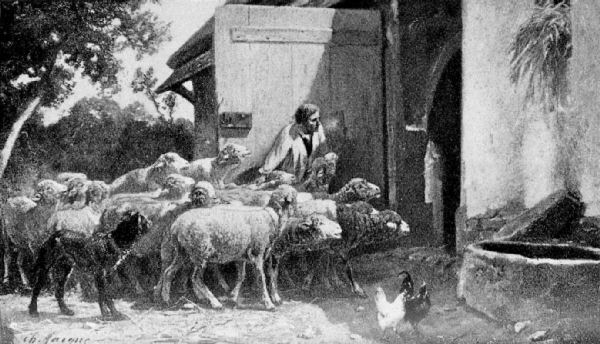
THE SHEPHERDS.
Sweet, harmless livers! on whose holy leisure Waits innocence and pleasure; Whose leaders to those pastures and clear springs Were patriarchs, saints, and kings; How happened it that in the dead of night You only saw true light, While Palestine was fast asleep and lay Without one thought of day? Was it because those first and blesséd swains Were pilgrims on those plains When they received the promise, for which now 'Twas there first shown to you? 'Tis true he loves that dust whereon they go That serve him here below, And therefore might for memory of those His love then first disclose; But wretched Salem, once his love, must now No voice nor vision know; Her stately piles with all their height and pride Now languishéd and died, And Bethl'em's humble cots above them stept While all her seers slept; Her cedar fir, hewed stones, and gold were all Polluted through their fall; And those once sacred mansions were now Mere emptiness and show. This made the angel call at reeds and thatch, Yet where the shepherds watch, And God's own lodging, though he could not lack, To be a common rack. No costly pride, no soft-clothed luxury In those thin cells could lie; Each stirring wind and storm blew through their cots, Which never harbored plots; Only content and love and humble joys Lived there without all noise; Perhaps some harmless cares for the next day Did in their bosoms play: As where to lead their sheep, what silent nook, What springs or shades to look; But that was all; and now with gladsome care They for the town prepare; They leave their flock, and in a busy talk All towards Bethl'em walk, To seek their soul's great Shepherd who was come To bring all stragglers home; Where now they find him out, and, taught before, The Lamb of God adore, That Lamb, whose days great kings and prophets wished And longed to see, but missed. The first light they beheld was bright and gay, And turned their night to day; But to this later light they saw in him, Their day was dark and dim.
Henry Vaughan.
ON SHEPHERDS' PIPES.
O than the fairest day, thrice fairer night! Night to blest days in which a sun doth rise Of which that golden age which clears the skies Is but a sparkling ray, a shadow-light! And blessed ye, in silly pastors' sight, Mild creatures, in whose warm crib now lies That heaven-sent youngling, holy-maid-born wight: Midst, end, beginning of our prophecies! Blest cottage that hath flowers in winter spread, Though withered—blessed grass that hath the grace To deck and be a carpet to that place! Thus sang, unto the sounds, of oaten reed, Before the Babe, the shepherds bowed on knees; And springs ran nectar, honey dropped from trees.
William Drummond.
ANGEL TIDINGS.
Run, shepherds, run where Bethlehem blest appears. We bring the best of news; be not dismayed; A Saviour there is born more old than years, Amidst heaven's rolling height this earth who stayed. In a poor cottage inned, a virgin maid A weakling did him bear, who all upbears; There is he poorly swaddled, in manger laid, To whom too narrow swaddlings are our spheres: Run, shepherds, run, and solemnize his birth. This is that night—no, day, grown great with bliss, In which the power of Satan broken is: In Heaven be glory, peace unto the earth! Thus singing, through the air the angels swam, And cope of stars re-echoéd the same.
William Drummond.
THE NEWS-BEARERS.
The shepherds went their hasty way, And found the lowly stable-shed Where the Virgin-Mother lay; And now they checked their eager tread, For to the Babe that at her bosom clung, A mother's song the Virgin-Mother sung. They told her how a glorious light, Streaming from a heavenly throng, Around them shone, suspending night! While sweeter than a mother's song, Blest angels heralded the Saviour's birth, Glory to God on high! and peace on earth! She listened to the tale divine, And closer still the Babe she prest; And while she cried, the Babe is mine! The milk rushed faster to her breast; Joy rose within her like a summer's morn; Peace, peace on earth! the Prince of peace is born. Thou Mother of the Prince of peace, Poor, simple, and of low estate! That strife should vanish, battle cease, O why should this thy soul elate? Sweet music's loudest note, the poet's story,— Didst thou ne'er love to hear of fame and glory? And is not war a youthful king, A stately hero clad in mail? Beneath his footsteps laurels spring; Him earth's majestic monarchs hail Their friend, their playmate! and his bold bright eye Compels the maiden's love-confessing sigh. "Tell this in some more courtly scene, To maids and youths in robes of state! I am a woman poor and mean, And therefore is my soul elate; War is a ruffian all with guilt defiled, That from the aged father tears his child. "A murderous fiend by fiends adored, He kills the sire and starves the son; The husband kills and from her board Steals all his widow's toil had won; Plunders God's world of beauty; rends away All safety from the night, all comfort from the day. "Then wisely is my soul elate That strife should vanish, battle cease; I'm poor and of a low estate, The Mother of the Prince of peace, Joy rises in me, like a summer's morn: Peace, peace on earth! the Prince of peace is born!"
Samuel Taylor Coleridge.
HYMN FOR CHRISTMAS-DAY.
(BEING A DIALOGUE BETWEEN THREE SHEPHERDS.)
Where is this blessed Babe That hath made All the world so full of joy And expectation; That glorious boy That crowns each nation With a triumphant wreath of blessedness? Where should he be but in the throng, And among His angel ministers, that sing And take wing Just as may echo to his voice, And rejoice, When wing and tongue and all May so procure their happiness? But he hath other waiters now: A poor cow, An ox and mule, stand and behold, And wonder That a stable should enfold Him that can thunder. O what a gracious God have we, How good! how great! even as our misery.
Jeremy Taylor.
A HYMN OF THE NATIVITY.
(SUNG AS BY THE SHEPHERDS.)
Come we shepherds whose blest sight Hath met Love's noon in Nature's night; Come, lift we up our loftier song, And wake the sun that lies too long. To all our world of well-stol'n joy, He slept and dreamt of no such thing, While we found out heaven's fairer eye And kist the cradle of our King; Tell him he rises now too late To show us aught worth looking at. Tell him we now can show him more Then e'er he showed to mortal sight, Than he himself e'er saw before, Which to be seen needs not his light. Tell him, Tityrus, where th' hast been, Tell him, Thyrsis, what th' hast seen. Tityrus. Gloomy night embraced the place Where the noble Infant lay, The Babe looked up and showed his face; In spite of darkness it was day: It was thy day, Sweet, and did rise Not from the East, but from thine eyes. Chorus.—It was thy day, Sweet, etc. Thyrsis. Winter chid aloud and sent The angry North to wage his wars; The North forgot his fierce intent, And left perfumes instead of scars; By those sweet eyes' persuasive powers, Where he meant frost he scattered flowers. Chorus.—By those sweet eyes, etc. Both. We saw thee in thy balmy nest, Bright dawn of our eternal day! We saw thine eyes break from their East And chase the trembling shades away; We saw thee, and we blest the sight, We saw thee by thine own sweet light. Tityrus. Poor world (said I), what wilt thou do To entertain this starry stranger? Is this the best thou canst bestow, A cold and not too cleanly manger. Contend, ye powers of heaven and earth, To fit a bed for this huge birth. Chorus.—Contend, ye powers, etc. Thyrsis. Proud world (said I), cease your contest, And let the mighty Babe alone; The Phœnix builds the Phœnix nest, Love's architecture is all one. The Babe whose birth embraves this morn Made his own bed ere he was born. Chorus.—The Babe whose birth, etc. Tityrus. I saw the curl'd drops, soft and slow, Come hovering o'er the place's head, Offering their whitest sheets of snow To furnish the fair Infant's bed: Forbear (said I), be not too bold; Your fleece is white, but 'tis too cold. Chorus.—Forbear (said I), etc. Thyrsis. I saw the obsequious seraphins Their rosy fleece of fire bestow; For well they now can spare their wings, Since heaven itself lies here below: Well done (said I), but are you sure Your down so warm will pass for pure. Chorus.—Well done (said I), etc. Tityrus. No, no, your king's not yet to seek Where to repose his royal head; See, see, how soon his new-bloom'd cheek Twixt's mother's breasts is gone to bed: Sweet choice (said I), no way but so, Not to lie cold, yet sleep in snow. Chorus.—Sweet choice (said I), etc. Both. We saw thee in thy balmy nest, Bright dawn of our eternal day! We saw thine eyes break from their East And chase the trembling shades away; We saw thee, and we blest the sight, We saw thee by thine own sweet light. Chorus.—We saw thee, etc. Full Chorus. Welcome, all wonder in one sight, Eternity shut in a span, Summer in winter, day in night, Heaven in earth and God in man! Great little One! whose all-embracing birth Lifts earth to heaven, stoops heaven to earth. Welcome, though not to gold nor silk, To more than Cæsar's birthright is, Two Sister Seas of Virgin milk With many a rarely-tempered kiss, That breathes at once both Maid and Mother, Warms in the one and cools in the other. She sings thy tears asleep, and dips Her kisses in thy weeping eye; She spreads the red leaves of thy lips That in their buds yet blushing lie: She 'gainst those mother-diamonds tries The points of her young eagle's eyes. Welcome, though not to those gay flies Gilded i' the beams of earthly kings, Slippery souls in smiling eyes, But to poor shepherds' homespun things; Whose wealth's their flock, whose wit to be Well read in their simplicity. Yet when young April's husband-showers Shall bless the fruitful Maia's bed, We'll bring the first-born of her flowers To kiss thy feet and crown thy head: To thee, dread Lamb, whose love must keep The shepherds more than they their sheep. To thee, meek Majesty! soft King Of simple graces and sweet loves, Each of us his lamb will bring, Each his pair of silver doves, Till burnt at last in fire of thy fair eyes Ourselves become our own best sacrifice.
Richard Crashaw.
SUNG BY THE SHEPHERD.
The New Year is begun, Good-morrow, my masters all! The cheerful rising sun Now shining in this hall, Brings mirth and joy To man and boy. With all that here doth dwell; Whom Jesus bless With love's increase, So all things shall prosper well. A New-Year's gift I bring Unto my master here, Which is a welcome thing Of mirth and merry cheer. A New-Year's lamb Come from thy dam An hour before daybreak, Your noted ewe Doth this bestow, Good master, for your sake. And to my dame so kind This New-Year's gift I bring; I'll bear an honest mind Unto her whilst I live. Your white-woolled sheep I'll safely keep From harm of bush or brere, That garments gay For your array May clothe you the next New Year. And to your children all, These New-Year's gifts I bring; And though the price be small, They're fit for queen or king: Fair pippins red Kept in my bed A-mellowing since last year, Whose beauty bright So clear of sight Their hearts will glad and cheer. And to your maids and men I bring both points and pins; Come bid me welcome then, The good New Year begins: And for my love Let me approve The friendship of your Maid, Whose nappy ale, So good and stale, Will make my wits afraid. I dare not with it deal But in a sober diet: If I, poor shepherd, steal A draught to be unquiet, And lose my way This New-Year's day As I go to my fold, You'll surely think My love of drink This following year will hold. Here stands my bottle and hook, Good kitchen-maid, draw near, Thou art an honest cook, And canst brew ale and beer; Thy office show, Before I go, My bottle and bag come fill, And for thy sake I'll merry make Upon the next green hill.
New Christmas Carols.
FROM "THE LIGHT OF THE WORLD."
AT BETHLEHEM.
So many hills arising, green and gray, On Earth's large round, and that one hill to say: "I was his bearing-place!" On Earth's wide breast So many maids! and she—of all most blest— Heavily mounting Bethlehem, to be His Mother!—Holy Maid of Galilee! Hill, with the olives, and the little town! If rivers from their crystal founts flow down, If 'twas the dawn which did day's gold unbar, Ye were beginnings of the best we are, The most we see, the highest that we know, The lifting heavenward of man's life below. Therefore, though better lips ye shall not lack, Suffer if one of modern mood steals back— Weary and wayworn from the desert-road Of barren thought; from Hope's Dead Sea, which glowed With Love's fair mirage; from the poet's haunt, The scholar's lamp, the statesman's scheme, the vaunt, The failure, of all fond philosophies,— Back unto Thee, back to thy olive-trees, Thy people, and thy story, and thy Son, Mary of Nazareth! So long agone Bearing us Him who made our christendom, And came to save the earth, from heav'n, His home. So many hill-sides, crowned with rugged rocks! So many simple shepherds keeping flocks In many moonlit fields! but, only they— So lone, so long ago, so far away— On that one winter's night, at Bethlehem, To have white angels singing lauds for them! They only—hinds wrapped in the he-goat's skin— To hear heaven's music, bidding peace begin! Only for those, of countless watching eyes, The "Glory of the Lord" glad to arise; The skies to blaze with gold and silver light Of seraphs by strong joy flashed into sight; The wind, for them, with that strange song to swell,— By too much happiness incredible— That tender anthem of good times to be, Then at their dawn—not daylight yet, ah me! "Peace upon earth! Good-will!" sung to the strings Of lutes celestial. Nay, if these things Too blessëd to believe have seemed, or seem, Not ours the fault, dear angels! Prove the dream Waking and true! sing once again, and make Moonlight and starlight sweet for earth's sad sake! Or, if heaven bids ye lock in silence still Conquest of peace, and coming of good-will, Till times to be, then—oh, you placid sheep! Ah, thrice-blest shepherds! suffer if we creep Back through the tangled thicket of the years To graze in your fair flock, to strain our ears With listening herdsmen, if, perchance, one note Of such high singing in the fine air float; If any rock thrills yet with that great strain We did not hear, and shall not hear, again; If any olive-leaf at Bethlehem Lisps still one syllable vouchsafed to them; If some stream, conscious still—some breeze—be stirred With echo of th' immortal words ye heard. What was it that ye heard? the wind of night Playing in cheating tones, with touches light, Amid the palm-plumes? or, one stop outblown Of planetary music, so far flown Earthwards, that to those innocent ears 'twas brought Which bent the mighty measure to their thought? Or, haply, from breast-shaped Beth-Haccarem, The hill of Herod, some waft sent to them Of storming drums and trumps, at festival Held in the Idumæan's purple hall? Or, it may be, some Aramaic song Of country lovers, after partings long Meeting anew, with much "good will" indeed, Blown by some swain upon his Jordan reed? Nay, nay! your abbas back ye did not fling, From each astonished ear, for swains to sing Their village-verses clear; for sounds well-known Of wandering breeze, or whispering trees, or tone Of Herod's trumpets. And ye did not gaze Heart-startled on the stars (albeit the rays Of that lone orb shot, sparkling, from the east Unseen before), for these, largest and least, Were fold-lamps, lighted nightly: and ye knew Far differing glory in the night's dark blue Suddenly lit with rose, and pierced with spike Of golden spear-beam. Oh, a dream, belike! Some far-fetched vision, new to peasant's sleep, Of paradise stripped bare!—But, why thus keep Secrets for them? This bar, which doth enclose Better and nobler souls, why burst for those Who supped on the parched pulse, and lapped the stream, And each, at the same hour, dreams the same dream! Or, easier still, they lied! Yet, wherefore, then "Rise, and go up to Bethlehem," and unpen To wolf and jackal all their hapless fold So they might "see these things which had been told In heaven's own voice"? And heaven, whate'er betide, Spreads surely somewhere, on death's farther side! And, truly, if joy's music once hath rung Prom lips of bands invisible, if any— (Be they the dead, or of the deathless many)— Love and serve man, angelical befrienders, Glad of his weal, and from his woe defenders,— If such, in heaven, have pity on our tears, Forever falling with the unmending years, High cause had they, at Bethlehem, that night, To lift the curtain of hope's hidden light, To break decree of silence with love's cry, Foreseeing how this Babe, born lowlily, Should—past dispute, since now achieved is this— Bring earth great gifts of blessing and of bliss; Date, from that crib, the dynasty of love; Strip his misusëd thunderbolts from Jove; Bend to their knee Rome's Cæsars, break the chain From the slave's neck; set sick hearts free again Bitterly bound by priests, and scribes, and scrolls; And heal, with balm of pardon, sinking souls: Should mercy to her vacant throne restore, Teach right to kings, and patience to the poor; Should, from that bearing-cave, outside the khan, Amid the kneeling cattle, rise, and be Light of all lands, and splendor of each sea, The sun-burst of a new morn come to earth, Not yet, alas! broad day, but day's white birth Which promiseth; and blesseth, promising. These from that night! What cause of wondering If that one silence of all silences Brake into music? if, for hopes like these Angels, who love us, sang that song, and show Of time's far purpose made the "great light" glow? Wherefore, let whosoever will drink dry His cup of faith; and think that, verily, Not in a vision, no way otherwise Than those poor shepherds told, there did arise This portent. Being amidst their sheep and goats, Lapped careless in their pasture-keeping coats, Blind as their drowsy beasts to what drew nigh, (Such the lulled ear, and such th' unbusied eye Which ofttimes hears and sees hid things!) there spread The "Glory of the Lord" around each head: Broke, be it deemed, o'er hill and over hollow, On the inner seeing, the sense concealed, unknown, Of those plain hinds—glad, humble, and alone— Flooding their minds, filling their hearts; around, Above, below, disclosing grove and ground, The rocks, the hill, the town, the solitude, The wondering flocks,—agaze with grass half-chewed,— The palm-crowns, and the path to Bethlehem, As sight angelic spies. And, came to them The "Angel of the Lord," visible, sure, Known for the angel by his presence pure Whereon was written love, and peace, and grace, With beauty passing mortal mien and face. So when the Angels were no more to see, Re-entering those gates of space,—whose key Love keeps on that side, and on this side death— Each shepherd to the other whispering saith, Lest he should miss some lingering symphonies Of that departing music, "Let us rise And go even now to Bethlehem, and spy This which is come to pass, shewed graciously By the Lord's angels." Therewith hasted they By olive-yards, and old walls mossed and gray Where, in close chinks, the lizard and the snake, Thinking the sunlight come, stirred, half-awake: Across the terraced levels of the vines, Under the pillared palms, along the lines Of lance-leaved oleanders, scented sweet, Through the pomegranate-gardens sped their feet; Over the causeway, up the slope, they spring, Breast the steep path, with steps not slackening; Past David's well, past the town-wall they ran, Unto the House of Chimham, to the khan, Where mark them peering in, the posts between, Questioning—all out of breath—if birth hath been This night, in any guest-room, high or low? The drowsy porter at the gate saith, "No!"— Shooting the bars; while the packed camels shake Their bells to listen, and the sleepers wake, And to their feet the ponderous steers slow rise, Lifting from trampled fodder large mild eyes;— "Nay! Brothers! no such thing! yet there is gone Yonder, one nigh her time, a gentle one! With him that seemed her spouse—of Galilee; They toiled at sundown to our doors—but, see! No nook was here! Seek at the cave instead; We shook some barley-straw to make their bed." Then to the cave they wended, and there spied That which was more, if truth be testified, Than all the pomp seen thro' proud Herod's porch Ablaze with brass, and silk, and scented torch, High on Beth-Haccarem; more to behold, If men had known, than all the glory told Of splendid Cæsar in his marbled home On the white Isle; or audience-hall at Rome With trembling princes thronged. A clay lamp swings By twisted camel-cords, from blackened rings, Shewing with flickering gleams, a Child new-born Wrapped in a cloth, laid where the beasts at morn Will champ their bean-straw: in the lamp-ray dim A fresh-made Mother by Him, fostering Him With face and mien to worship, speaking naught; Close at hand Joseph, and the ass, hath brought That precious twofold burden to the gate; With goats, sheep, oxen, driven to shelter late: No mightier sight! Yet all sufficeth it— If we will deem things be beyond our wit— To prove heaven's music true, and show heaven's way, How, not by famous kings, nor with array Of brazen letters on the boastful stone, But "by the mouth of babes," quiet, alone, Little beginnings planning for large ends, With other purpose than fond man attends, Wisdom and love, in secret fellowship Guide our world's wandering with a finger-tip; And how, that night, as these did darkly see, They sealed the first scrolls of earth's history, And opened what shall run till death be dead. Which babe they reverenced, bending low the head, First of all worshippers; and told the things Done in the plain, and played on angel's strings. Then those around wondered and worshipped, too, And Mary heard—but wondered not—anew Hiding this in her heart, the heart which beat With blood of Jesus Christ, holy and sweet. Also, not marvelling, albeit they heard, Stood certain by—those three swart ones—appeared From climes unknown; yet, surely, on high quest Of what that star proclaimed, bright on the breast First of the Ram, afterwards glittering thence Into the watery Trigon, where, intense, It lit the Crab, and burned the Fishes pale. Three Signiors, owning many a costly bale; Three travelled masters, by their bearing lords Of lands and slaves. The Indian silk affords, With many a folded braid of white and gold, Shade to their brows; rich goat-hair shawls did fold Their gowns of flow'r'd white muslin, midway tied; And ruby, turkis, emerald—stones of pride— Blazed on their thumb-rings; and a pearl gleamed white In every ear; and silver belts, clasped tight, Held ink-box, reeds, and knives, in scabbards gemmed; Curled shoes of goat-skin dyed, with seed-pearls hemmed, Shod their brown feet; hair shorn; lids low, to think— Eyes deep and wistful, as of those who drink Waters of hidden wisdom, night and day, And live twain lives, conforming as they may, In diligence, and due observances To ways of men; yet, not at one with these; But ever straining past the things that seem To that which is—the truth behind the dream. Three princely wanderers of the Asian blood Perchance, by Indus dwellers; or some flood, That feeds her from Himâla's icy dome; Or, haply, to those Syrian palm-trees come From Gunga's banks, or mounts of Malabar Which lift the Deccan to its sun, and far— Rampart-like—fringe the blue Arabian Sea. True followers of the Buddh they seemed to be, The better arm and shoulder showing bare With each; and on the neck of each, draped fair A scarf of saffron, patched; and, 'twixt the eyes, In saffron stamped, the Name of mysteries OM; and the Swastika, with secrets rife How man may 'scape the dire deceits of life. These three stood by, as who would entrance make; And heard the shepherd's tale; and, hearing, spake Strange Indian words one to another; then sent Command. Their serving-men, obedient, Cast loose from off the camels, kneeling nigh, Nettings and mats, and made the fastenings fly From belly-band, and crupper-rope, and tail; And broke the knots, and let each dusty bale Slide from the saddle-horns, and give to see Long-hoarded treasure of great jewelry, And fragrant secrets of the Indian grove, And splendors of the Indian looms, inwove With gold and silver flowers: "for, now," said they, "Our eyes have seen this thing sought day by day; By the all-conscious, silent sky well-known, And, specially, of yon white star fore-shown Which, bursting magically on the sight, Beckoned us from our homes, shining aright, The silver beacon to this holy hill: Mark if it sparkles not, aware and still, Over the place: The astral houses, see! Spake truth: Our feet were guided faithfully. 'Tis the Star-Child, who was to rise, and wear A crown than Suleiman's more royal and rare, 'King of the Jews!' Grant an approach to us Who crave to worship Him." Now, it fell thus That these first to Jerusalem had passed, And sojourned there, observing feast and fast In the thronged city; oft of townsmen seen In market and bazaar; and, by their mien Noted for lordliest of all strangers there, Much whispered of, in sooth, as who saw clear Shadows of times to come, and secrets bright Writ in the jewelled cipher of the night. So that the voice of this to Herod went Feastful and fearful; ever ill-content Mid plots and perils; girt with singing boys, And dancing girls of Tyre, and armored noise Of Cæsar's legionaries. Long and near, In audience hall, each dusky wayfarer Questioned he of their knowledge, and the star, What message flashed it? Whether near or far Would rise this portent of a Babe to reign King of the Jews, and bring a crown again To weeping Zion, and cast forth from them The Roman scourge? And if at Bethlehem, As, with one voice, priests, elders, scribes aver, Then, let them thither wend, and spy the stir, And find this Babe, and come anew to him, Declaring where the wonder. "'Twas his whim" Quotha "to be of fashion with the stars, (Weary, like them, of gazing upon wars) To shine upon this suckling, bending knee Save unto Cæsar uncrooked latterly." Thence came it those three stood at entering Before the door; and their rich gifts did bring, Red gold from the Indian rocks, cunningly beat To plate and chalice, with old fables sweet Of Buddh's compassion, and dark Mara's powers Round the brims glittering; and a riot of flowers Done on the gold, with gold script to proclaim The Noble Truths, and Threefold mystic Name OM, and the Swastika, and how man wins Blessed Nirvana's rest, being quit of sins, And, day and night, reciting, "Oh, the Gem! Upon the Lotus! Oh, the Lotus-stem!" Also, more precious than much gold, they poured Rare spices forth, unknitting cord on cord; And, one by one, unwinding cloths, as though The merchantmen had sought to shut in so The breath of those distillings: in such kind As when Nile's black embalming slaves would bind Sindon o'er sindon, cere-cloth, cinglets, bands Roll after roll, on head, breast, feet, and hands, Round some dead king, whose cold and withered palm Had dropped the sceptre; drenched with musk and balm, And natron, and what keeps from perishing; So they might save—after long wandering— The body for the spirit, and hold fast Life's likeness, till the dead man lived at last. Thus, from their coats involved of leaves and silk, Slowly they freed the odorous thorn-tree's milk, The gray myrrh, and the cassia, and the spice, Filling the wind with frankincense past price, With hearts of blossoms from a hundred glens And essence of a thousand rose-gardens, Till the night's gloom like a royal curtain hung Jewelled with stars, and rich with fragrance flung Athwart the arch; and, in the cavern there The air around was as the breathing-air Of a queen's chamber, when she comes to bed, And all that glad earth owns gives goodlihead. Witness them entering,—these three from afar— Who knew the skies, and had the strange white star To light their nightly lamp, thro' deserts wide Of Bactria, and the Persic wastes, and tide Of Tigris and Euphrates; past the snow Of Ararat, and where the sand-winds blow O'er Ituræa; and the crimson peaks Of Moab, and the fierce, bright, barren reeks From Asphaltities; to this hill—to thee Bethlehem-Ephrata! Witness these three Gaze, hand in hand, with faces grave and mild, Where, 'mid the gear and goats, Mother and Child Make state and splendor for their eyes. Then lay Each stranger on the earth, in the Indian way, Paying the "eight prostrations;" and was heard Saying softly, in the Indian tongue, that word Wherewith a Prince is honored. Humbly ran, On this, the people of their caravan And fetch the gold, and—laid on gold—the spice, Frankincense, myrrh: and next, with reverence nice, Foreheads in dust, they spread the precious things At Mary's feet, and worship Him who clings To Mary's bosom drinking soft life so Who shall be life and light to all below. "For, now we see," say they, departing: "plain The star's word comes to pass! The Buddh again Appeareth, or some Bôddhisat of might Arising for the west, who shall set right, And serve and reconcile; and, maybe, teach Knowledge to those who know. We, brothers, each, Have heard yon shepherds babbling: if the sky Speaketh with such, heaven's mercy is drawn nigh! Well did we counsel, journeying to this place! Yon hour-old Babe, milking that breast of grace, The world will praise and worship, well-content." Then, fearing Herod, to their homes they went Musing along the road. But he alway Angered and troubled, bade his soldiers slay Whatever man-child sucked in Bethlehem. Lord! had'st Thou been all God, as pleaseth them Who poorly see Thy godlike self, and take True glory from Thee for false glory's sake: Co-equal power, as these—too bold—blaspheme, Ruler of what Thou camest to redeem; Not Babe Divine, feeling with touch of silk For fountains of a mortal Mother's milk With sweet mouth buried in the warm feast thus, And dear heart growing great to beat for us, And soft feet waiting till the way was spread Whereby what was true God in Thee should tread Triumphant over woe and death to bliss,— Thou, from Thy cradle would'st have stayed in this Those butchers! With one angel's swift decree, Out of the silver cohorts lackeying Thee, Thou had'st thrust down the bitter prince who killed Thine innocents! Would'st Thou not? Was't not willed? Alas! "Peace and good-will" in agony Found first fruits! Rama heard that woful cry Of Rachel weeping for the children; lone, Uncomforted, because her babes are gone. Herod the King! hast thou heard Rachel's wail Where restitution is? Did aught avail Somewhere? at last? past life? after long stress Of heavy shame to bring forgetfulness? If such grace be, no hopeless sin is wrought; Thy bloody blade missed what its vile edge sought; Mother, and Child, and Joseph—safe from thee— Journey to Egypt, while the eastern Three Wind homewards, lightened of their spice and gold; And those great days, that were to be, unfold In the fair fields beside the shining sea Which rolls, 'mid palms and rocks, in Galilee.
Sir Edwin Arnold.