Species Described and Illustrated
Reading edition
10
Mockernut Hickory Carya tomentosa Nutt.
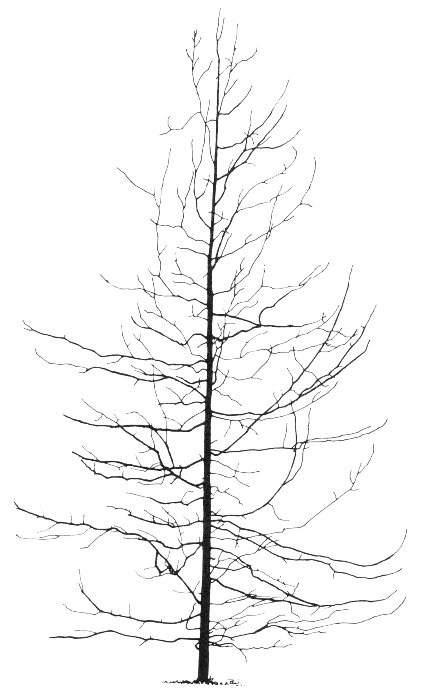
Bark grayish, tight, marked with distinct diamond-shaped ridges and furrows. Branches stout, drooping to spreading and ascending. Twigs 10 to 12 mm in diameter, conspicuous leaf scars. Buds (terminal) 10 to 15 mm long, 5 to 8 mm in diameter, scales imbricate. Leaves alternate, deciduous, odd-pinnately compound, 20 to 40 cm long with 5 to 7 drooping leaflets; yellow hairs and glandular hairs on lower leaflet surface, apex acuminate, margin finely serrate, base obtuse, on very short petiolules. Flowers unisexual, appearing in spring with developing leaves, staminate in 3-parted drooping catkins, pistillate terminal on new growth. Fruit subglobose to obovate, 3 to 5 cm in diameter, husk 1 cm thick, slow to open, shell of nut thick and hard, meat sweet.
11
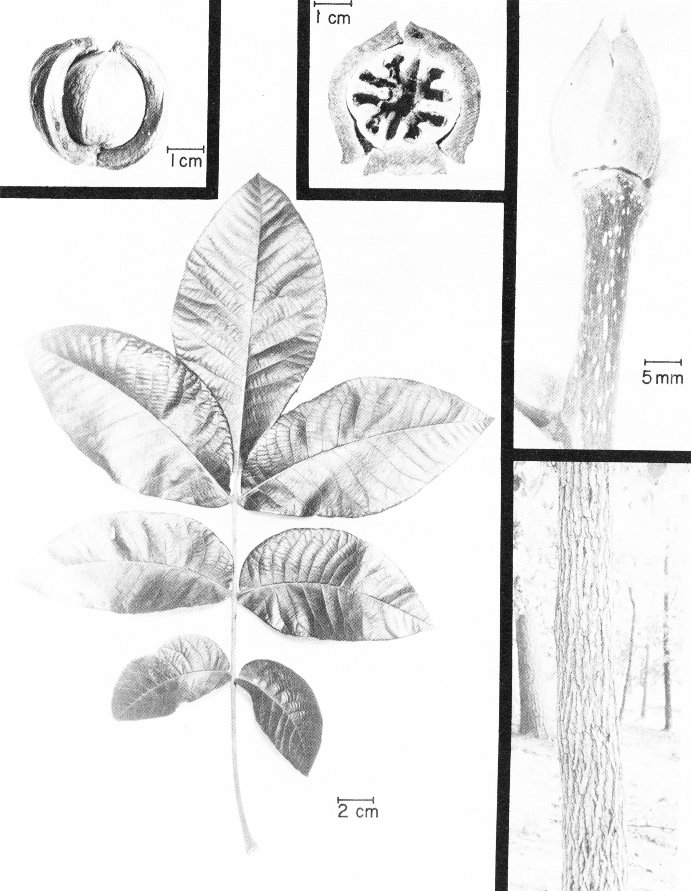
Mockernut Hickory/Carya tomentosa
12
Pignut Hickory Carya glabra (Mill.) Sweet
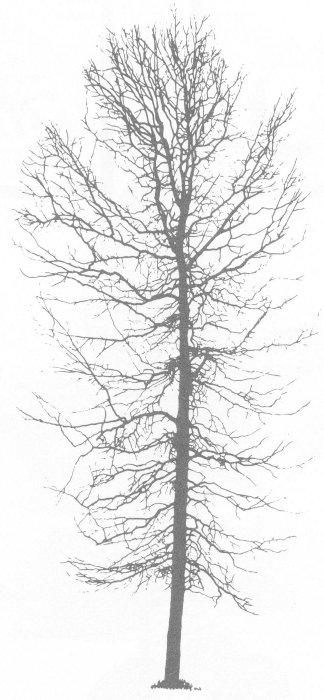
Bark light to dark gray, often blackish, rough and deeply furrowed. Branches stout, drooping to spreading. Twigs 3 to 5 mm in diameter, reddish brown, smooth. Buds ovoid, acute, glabrous, 8 to 12 mm long, scales imbricate. Leaves alternate, deciduous, odd-pinnately compound, 20 to 40 cm long, usually with 7 leaflets; upper pair and terminal largest, 10 to 15 cm long by 4 to 6 cm wide, broadly oval to slightly obovate. Flowers unisexual, staminate in 3-branched catkins appearing about the time of leaf maturity; pistillate terminal on new growth. Fruit oblong to obovoid to obpyriform, 30 mm in diameter by 35 mm long, husk about 3 mm thick, tardily dehiscent, shell of nut thick, meat sweet.
13
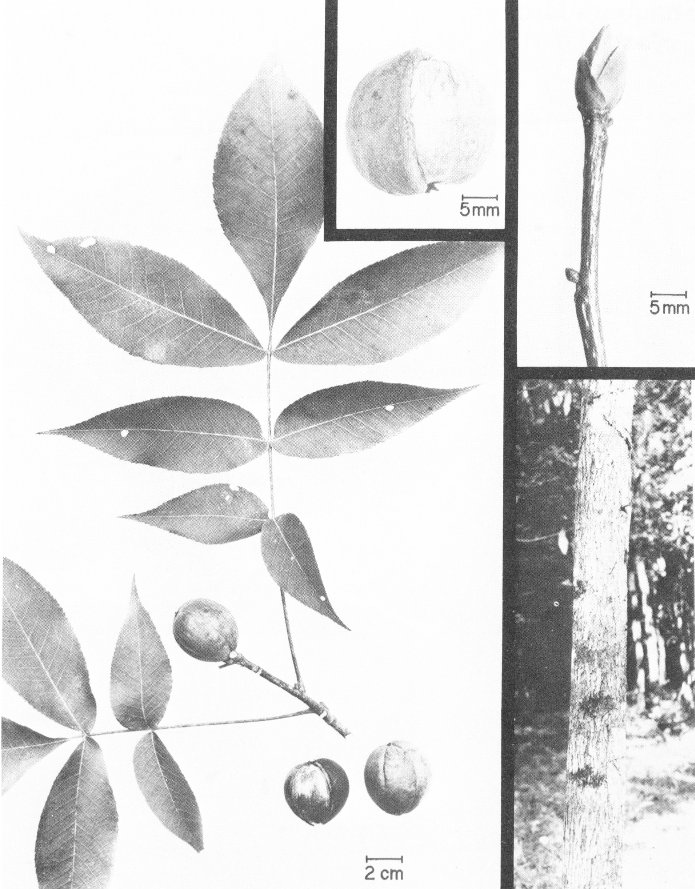
Pignut Hickory/Carya glabra
14
Shagbark Hickory Carya ovata (Mill.) K. Koch
Bark smooth at first, then breaking into long, flat, irregular gray strips, to 5 mm thick, usually attached at the apex, free at the base. Branches stout, smooth, spreading to ascending. Twigs stout, orange-brown, leaf scars large. Buds (terminal), 10 to 20 mm long, 6 to 8 mm in diameter, scales imbricate. Leaves alternate, deciduous, odd-pinnately compound with 5 to 7 leaflets, usually 5 to 18 cm wide and 20 to 35 cm long; lateral leaflets ovate to ovate-lanceolate, terminal leaflet usually obovate, apices acute to acuminate, margins finely serrate, bases wedge-shaped, more or less yellow, pubescent below, gradually becoming glabrous with age. Flowers unisexual, appearing in spring with the developing leaves, staminate in 3-lobed catkins, pistillate on new growth. Fruits subglobose, 2.5 to 6 cm in diameter, husk 3 to 5 mm thick, shell of nut hard and moderately thin, meat sweet.
15
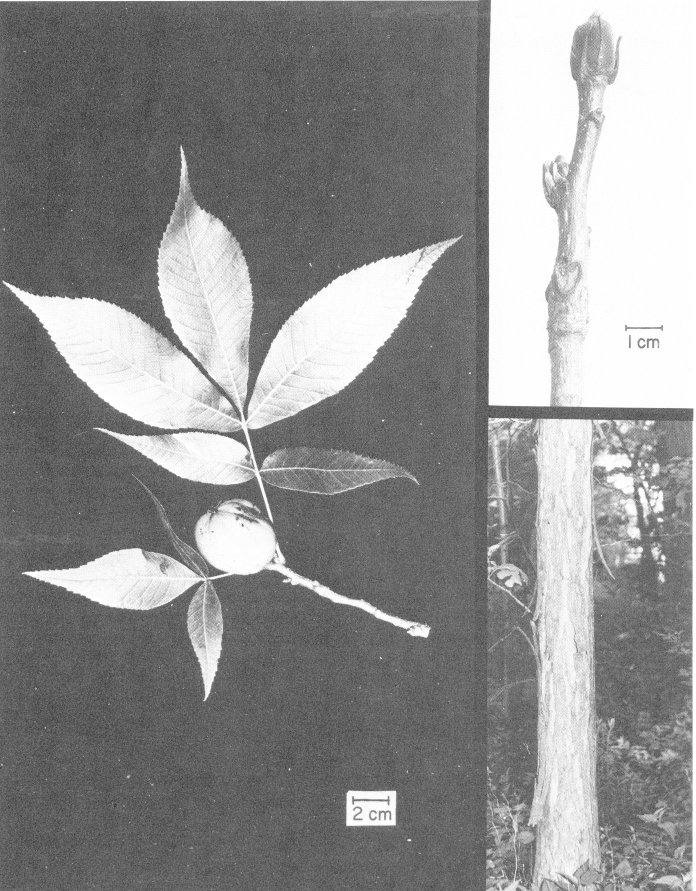
Shagbark Hickory/Carya ovata
16
Bitternut Hickory Carya cordiformis (Wangenh.) K. Koch
Bark brown to slate gray, smooth to lightly furrowed or with strongly interlaced ridges. Branches stiff, ascending, spreading. Twigs slender, glossy, often with yellow glands early in the season. Buds compressed, ovoid, 6 to 10 mm long, covered with yellow, valvate glandular scales. Leaves alternate, deciduous, odd-pinnately compound, 15 to 25 cm long with 7 to 9 leaflets, 7 to 15 cm long and 3 to 6 cm wide; lateral leaflets narrowly to broadly elliptic, terminal leaflet largest and usually obovate, apex acuminate, margin finely serrate, base wedge-shaped, with yellow glands on undersurfaces and on rachis. Flowers unisexual, staminate in 3-branched catkins appearing after leaves; pistillate terminal on new growth. Fruit ovate to subglobose, 2 to 3 cm in diameter, often slightly compressed, 4-winged on sutures from apex to middle of husk, husk thin, covered with yellow glandular scales, shell of nut thin, meat very bitter.
17
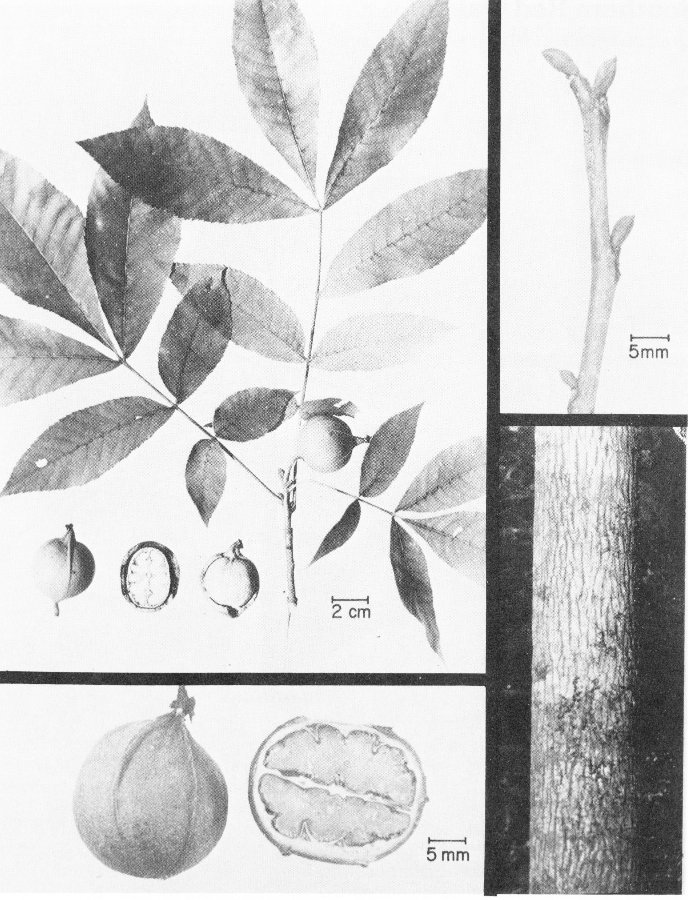
Bitternut Hickory/Carya cordiformis
18
Southern Red Oak Quercus falcata Michx.
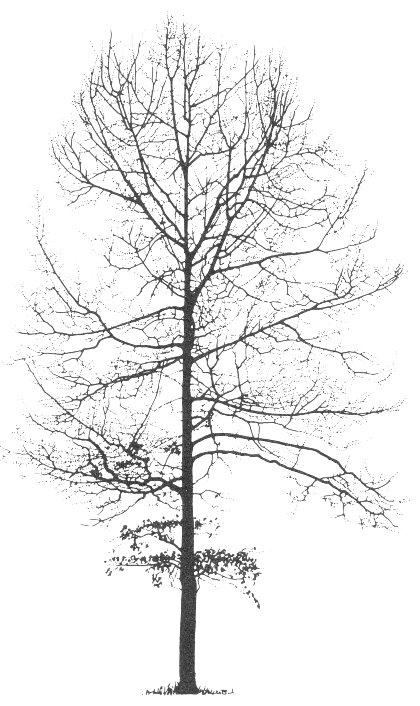
Bark dark brown to grayish black, divided by shallow, irregular fissures into broad ridges. Branches stout, spreading to ascending. Twigs 2 to 5 mm in diameter, dull reddish brown. Buds ovoid, angulate 8 to 13 mm long, apex acute. Leaves alternate, deciduous, simple, many remaining as dead foliage until spring, ovate to obovate with bell-shaped base, 10 to 28 cm long, 7 to 30 cm wide; with 3 to 9 lobes and margins with deep rounded sinuses; when 3-lobed, central lobe strap-shaped and toothed near the apex and side lobes acute to acuminate, somewhat falcate; permanently pubescent below, white at first, turning rust. Flowers unisexual, staminate in tomentose catkins as leaves unfold; pistillate in leaf axils on twigs. Fruit an acorn, small, spherical to hemispherical; cup 12 to 15 mm wide, shallow saucer-shaped, enclosing about one-fourth to one-half of the nut; nut 8 to 12 mm long.
19
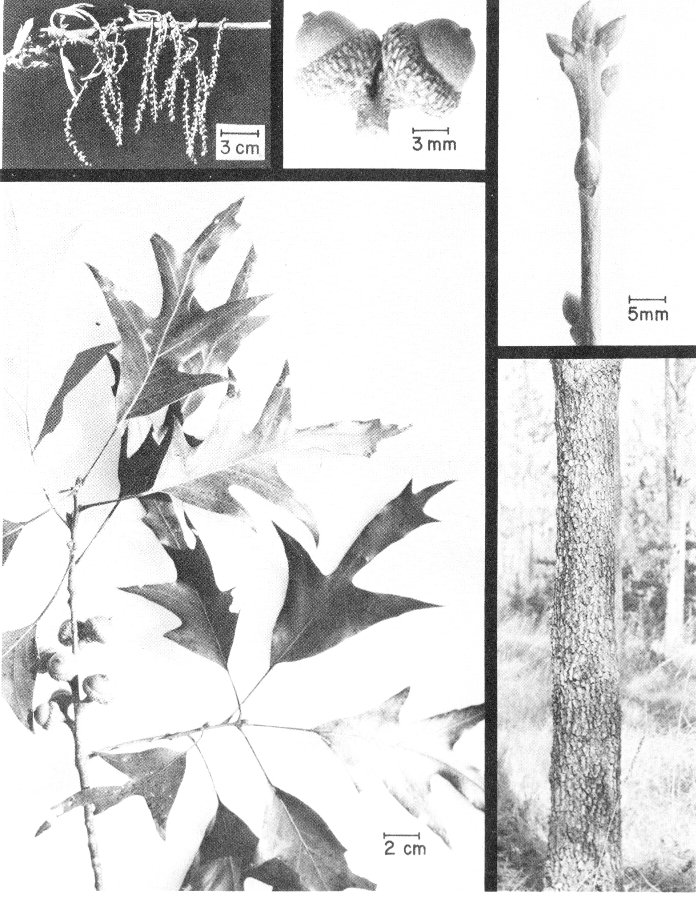
Southern Red Oak/Quercus falcata
20
Cherrybark Oak Quercus falcata var. pagodaefolia Ell.
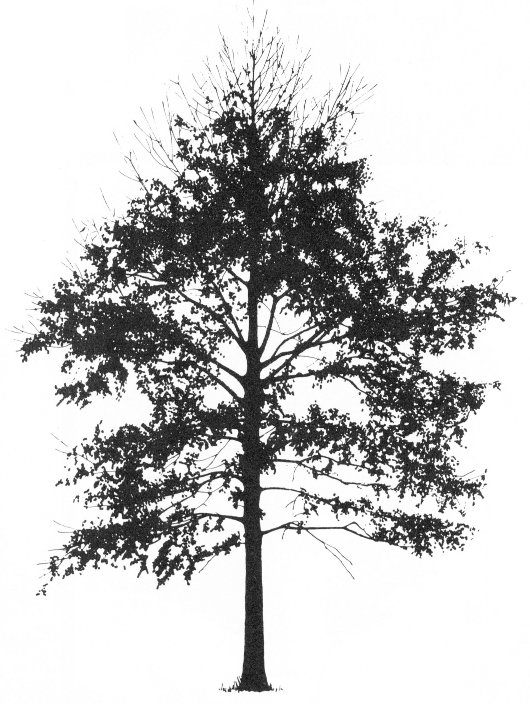
Bark dark gray to gray-black consisting of appressed scales in narrow flat ridges with shallow furrows. Branches stout, spreading to ascending. Twigs 2 to 4 mm in diameter, reddish, lightly fluted. Buds ovoid, 10 to 15 mm long, angled, scales pubescent with dark margins. Leaves alternate, tardily deciduous, persisting into December, simple, oval to oblong, 12 to 20 cm long, 7 to 8 cm wide; with 5 to 11 lobes, major lobes opposite each other, large rounded sinuses extending nearly to the midrib, margin entire with occasional bristle-tipped teeth near the apex of the lobes, dark green above, permanently pubescent below, sometimes thinly so, varying from white to rust color, especially on drying. Flowers as in Q. falcata. Fruit an acorn broader than tall; cups 12 to 15 mm wide; nut about 8 to 10 mm long, subglobose, flattened at base, rounded at apex.
21
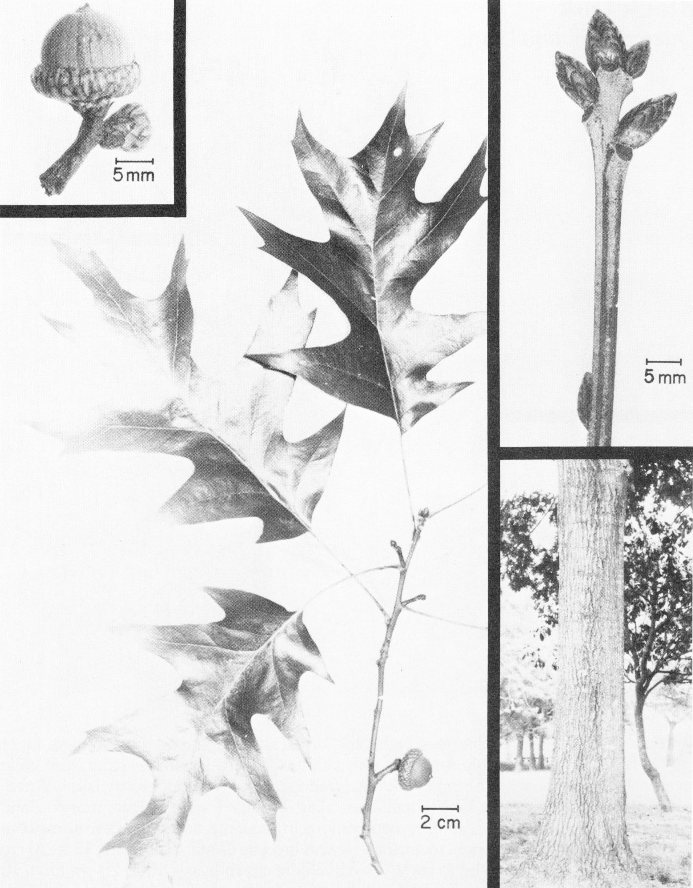
Cherrybark Oak/Quercus falcata var. pagodaefolia
22
Black Oak Quercus velutina Lam.
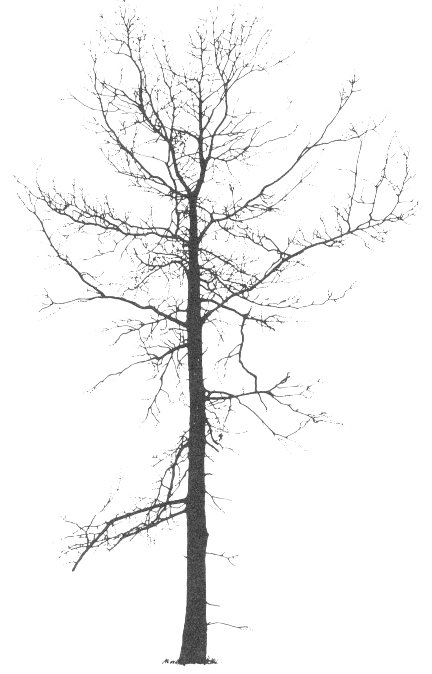
Bark brownish-black on older trees, with thick, broad scaly ridges and deep furrows; inner bark yellow-orange—the only American oak with this feature. Branches stout, spreading to ascending. Twigs about 5 mm in diameter, reddish brown to dark brown, lightly fluted. Buds ovoid, 10 to 15 mm long, lateral buds sharply angled, scales ciliate, margin dark. Leaves alternate, deciduous, simple; membranous in seedlings and saplings to somewhat leathery in the middle to upper crown; lower leaves broadly elliptic to obovate, 15 to 30 cm long, 10 to 15 cm wide, entire to faintly lobed; middle-crown leaves 10 to 20 cm long, 10 to 15 cm wide, distinctly 5 to 9 lobed with broad rounded sinuses with apical bristles on each lobe; upper-crown leaves oblong to obovate, 8 to 20 cm long, 8 to 15 cm wide; dark shiny green above, yellow scurfy pubescence on young leaves of middle and upper crown, petioles 4 to 6 cm long, yellow to reddish. Flowers unisexual; staminate catkins 7 to 15 cm long; pistillate on short tomentose peduncles. Fruit an oval to obovoid acorn 10 to 25 mm long; cup cup-shaped to conical enclosing about one-half of the nut.
23
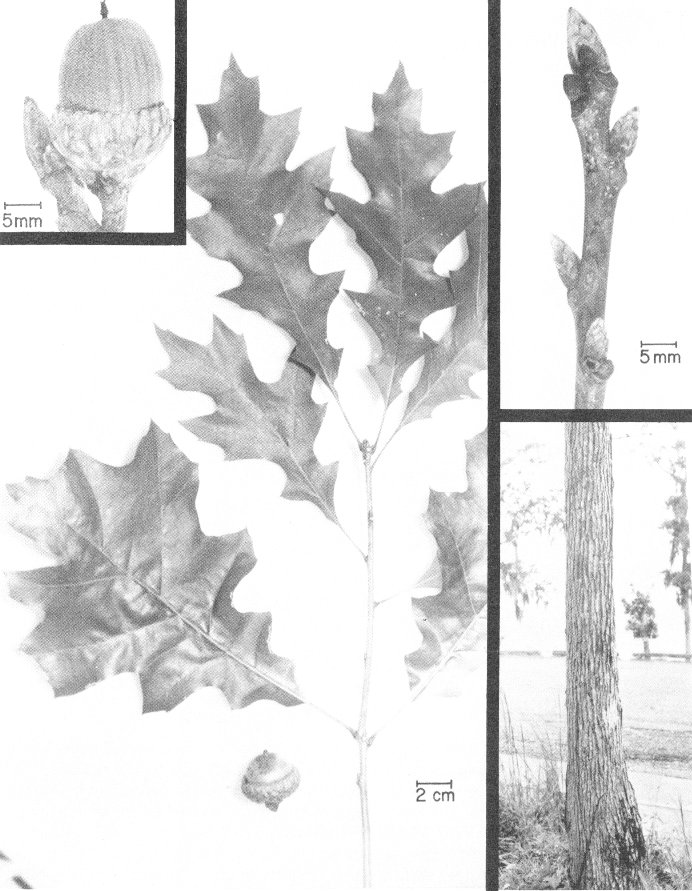
Black Oak/Quercus velutina
24
Scarlet Oak Quercus coccinea Muenchh.
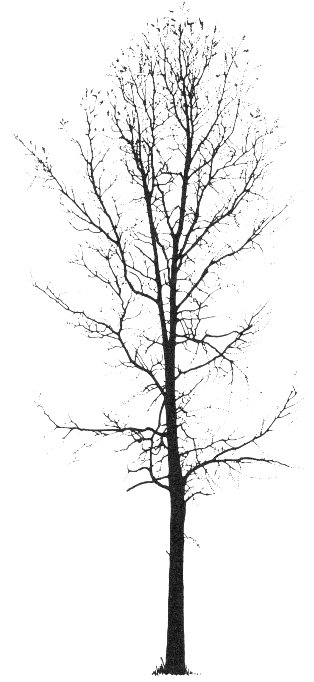
Bark dark grayish-black, divided into irregular fissures and scaly ridges. Branches stout, spreading to ascending. Twigs 3 to 4 mm in diameter, reddish, turning a dull red. Buds ovoid, acute, 5 to 7 mm long, covered with rounded, lightly pubescent scales. Leaves alternate, deciduous, simple; glabrous, except in axils of main veins on underside, oval to slightly obovate, 8 to 17 cm long, 5 to 13 cm wide, with 5 to 9 deep lobes often terminated by secondary lobes with bristle tips, sinuses usually deep, round, and wider than lobes; both surfaces pale green, upper surface shiny, bright scarlet in autumn, petioles about 4 cm long. Flowers unisexual; staminate in catkins with developing leaves; pistillate on pubescent peduncles. Fruit an acorn; cup 15 to 30 mm wide, covered with brown scales enclosing about one-third to one-half of the nut; nut ovoid, 10 to 20 mm long, occasionally with ring grooves near apical point at maturity.
25
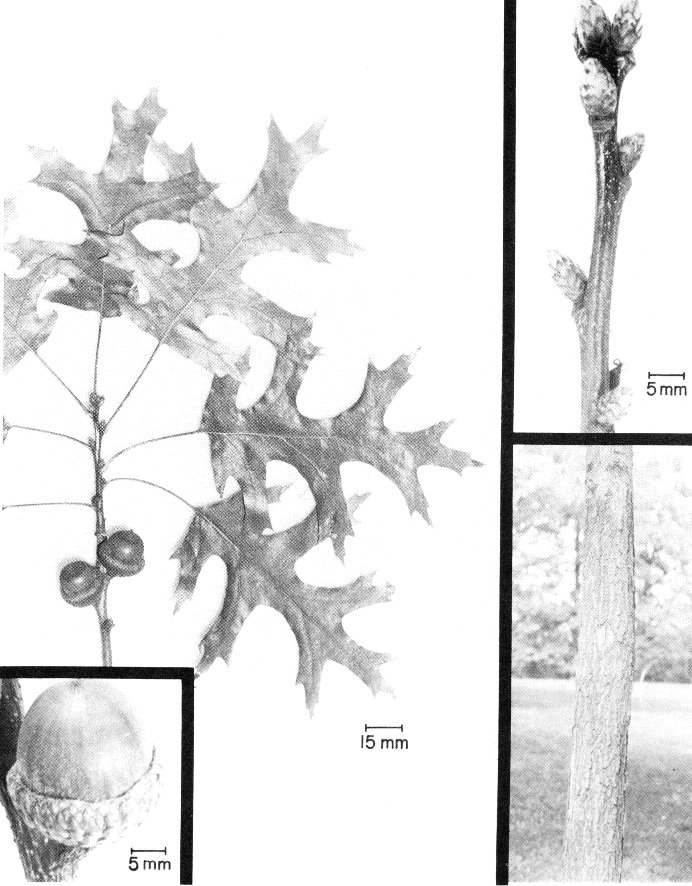
Scarlet Oak/Quercus coccinea
26
Northern Red Oak Quercus rubra L.
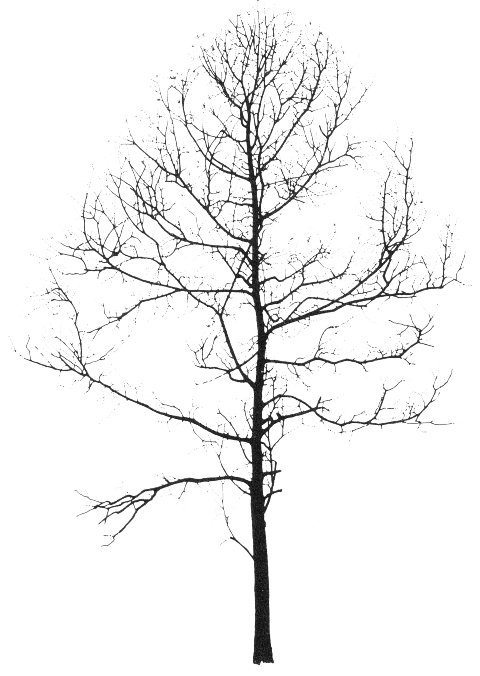
Bark dark brown, thick, divided by shallow furrows into long, flat-topped scaly ridges. Branches stout, spreading and ascending to form a round-topped crown. Twigs slender, reddish-brown to dark red. Buds ovate, acute, light brown, 8 to 10 mm long. Leaves alternate, deciduous, simple, oblong to oval to obovate, 12 to 22 cm long, 10 to 15 cm wide; 7 to 11 short lobes, lobes 3-toothed, bristle-tipped; upper surface dull green. Flowers unisexual; staminate in slender catkins appearing with the developing leaves, pistillate inconspicuous on last year’s wood. Fruit an acorn, 15 to 30 mm long; cup saucer-shaped, enclosing about one-fourth of the nut.
27
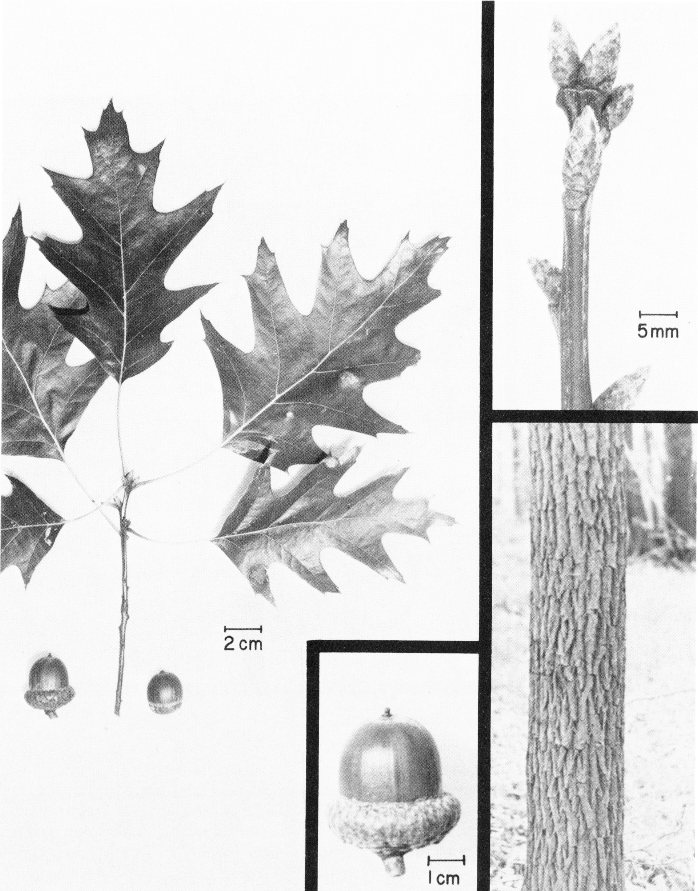
Northern Red Oak/Quercus rubra
28
Shumard Oak Quercus shumardii Buckl.
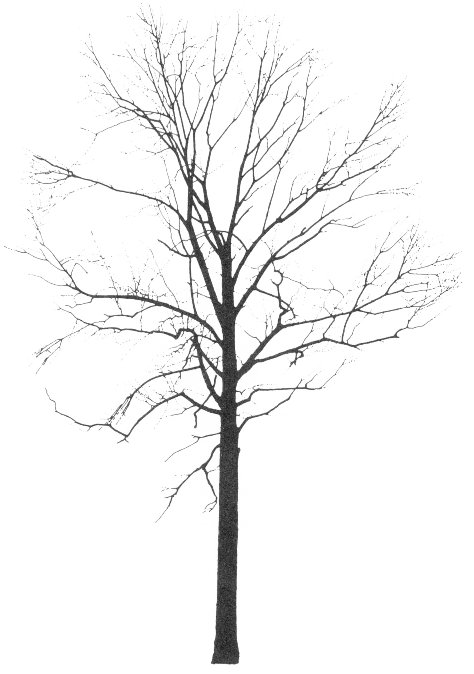
Bark dark gray to blackish, relatively smooth at first, then breaking into scaly ridges. Branches spreading to ascending. Twigs about 5 mm in diameter, olive green then turning dark reddish. Buds clustered at apex 5 to 7 mm long, sharp pointed, strongly angled. Leaves alternate, deciduous, simple; oval to slightly obovate, 10 to 20 cm long, 6 to 15 cm wide; with 7 to 10 bristle-tipped lobes, lobes on upper crown leaves narrower to slightly wider than sinuses, lobes on lower crown leaves wider than sinuses; dark green above, paler below, glabrous except for vein axils on lower surface; petiole about 5 cm long. Flowers unisexual; staminate in yellow catkins appearing with the unfolding leaves; pistillate on pubescent peduncles. Fruit an acorn; cup 20 to 31 mm across, enclosing about one-fourth of the nut; nut about 25 mm long, 15 mm in diameter.
29
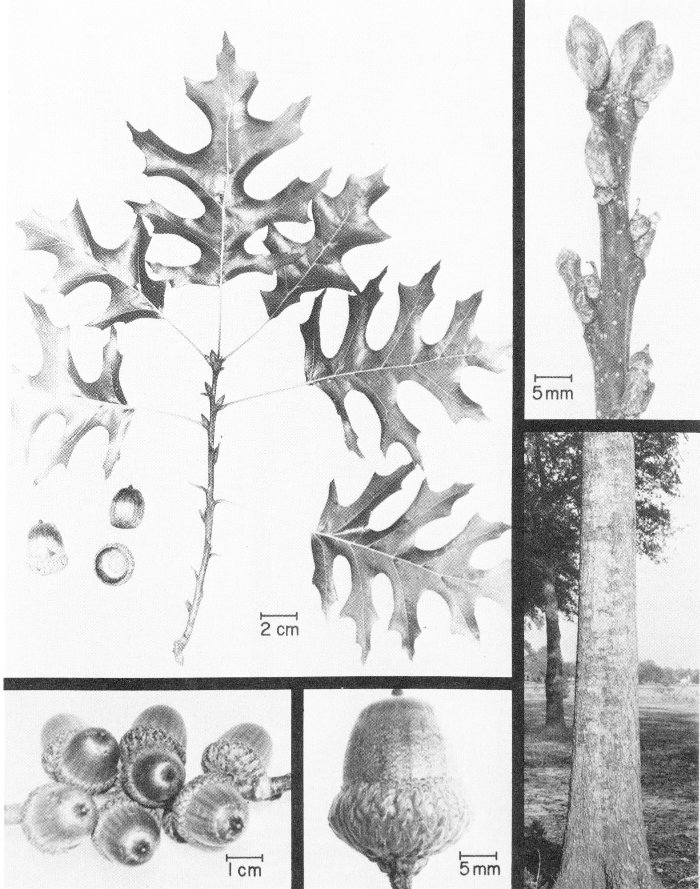
Shumard Oak/Quercus shumardii
30
Blackjack Oak Quercus marilandica Muenchh.
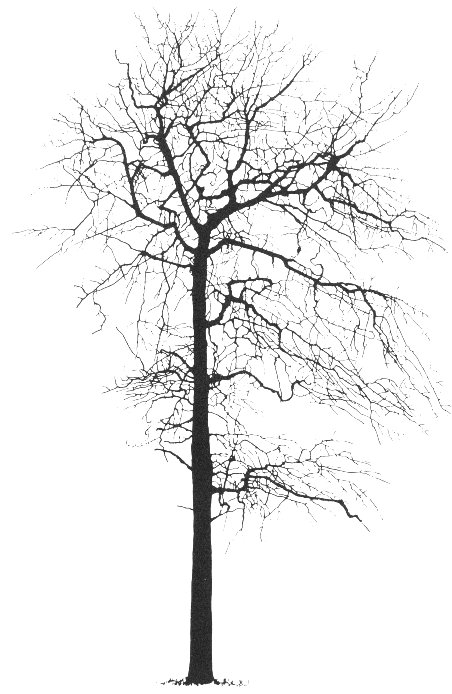
Bark black, very rough, consisting of thick blocky plates. Branches stout, spreading to drooping. Twigs stout, about 5 mm in diameter. Buds with rusty brown hairs, about 4 to 8 mm long. Leaves alternate, tardily deciduous, simple, 7 to 25 cm long, broadly obovate at apex (bear-paw shape) tapering to a narrow base, margin entire or with 3 bristle-tipped apical lobes, upper surface dark green, rusty pubescent on undersurfaces. Flowers unisexual; staminate in catkins, appearing with the leaves; pistillate solitary or paired. Fruit an acorn, cup enclosing one-half to two-thirds of the nut; nut nearly ovoid, 20 to 25 mm long by 15 to 20 mm in diameter.
31
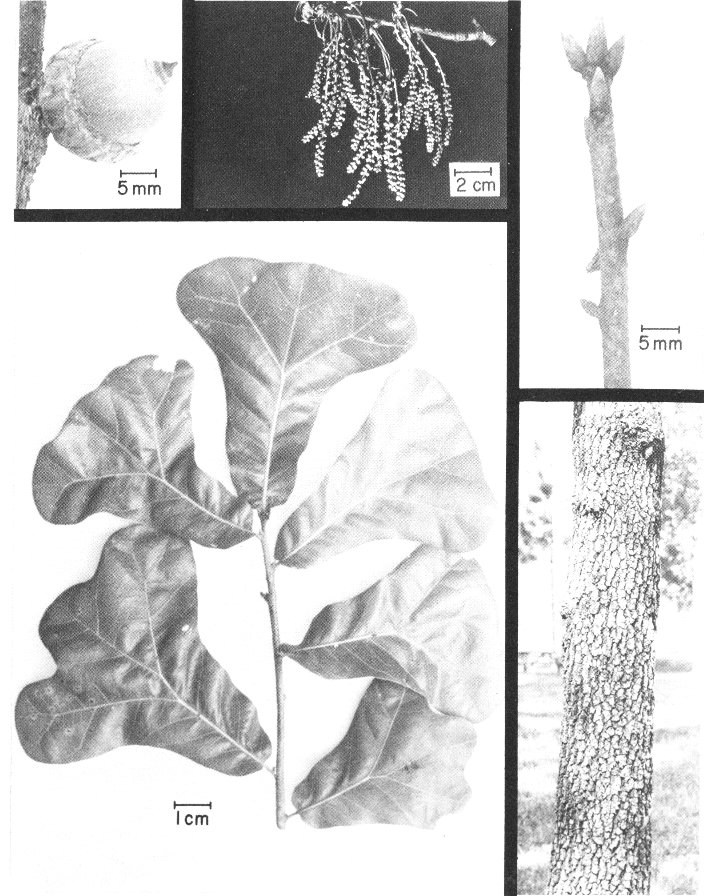
Blackjack Oak/Quercus marilandica
32
Laurel Oak Quercus laurifolia Michx.
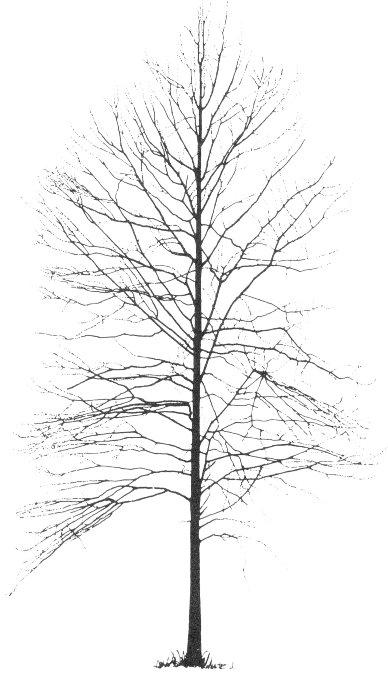
Bark nearly black, divided into broad flat ridges by deep fissures. Twigs 2 to 3 mm in diameter, usually reddish brown. Buds ovoid, reddish brown, 2 to 4 mm long. Leaves alternate, semi-deciduous, simple, a few shed in fall, a few persisting until spring; elliptic to spatulate, 7 to 15 cm long, 2 to 4 cm wide; apex acute or obtuse, margin entire, base cuneate; shiny green above, paler below; petioles 3 to 5 mm long, midrib conspicuous on underside. Flowers unisexual; staminate in catkins as leaves unfold; pistillate on twigs at leaf scars. Fruit an acorn, sessile to subsessile, cup 15 to 20 mm wide, enclosing about one-fourth of nut; nut hemispheric, rounded at apex and flattened at bottom, 15 mm long.
33
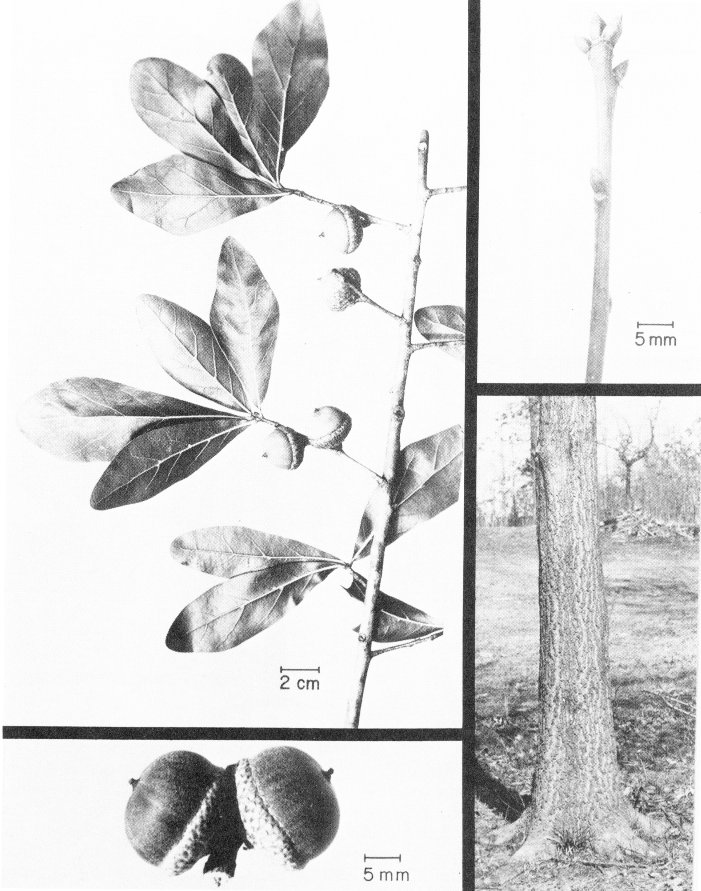
Laurel Oak/Quercus laurifolia
34
Water Oak Quercus nigra L.
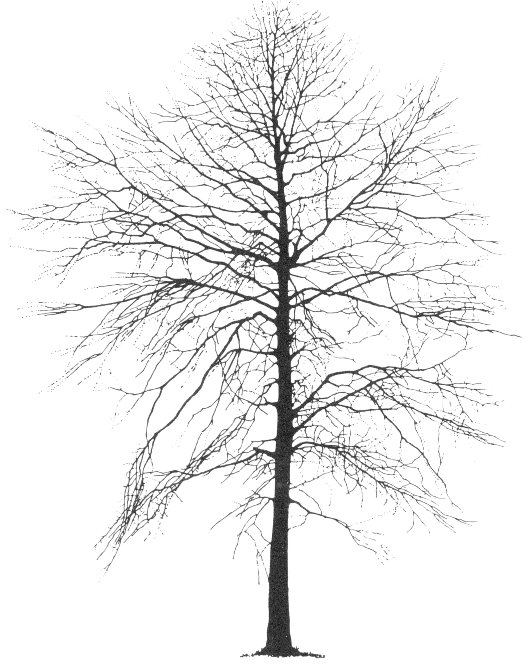
Bark smooth, grayish black, becoming scaly with age. Branches spreading to ascending, forming a round-topped crown in the open. Twigs 3 to 5 mm in diameter, gray. Buds ovoid, acute, reddish brown, 3 to 7 mm long. Leaves alternate, deciduous, simple; variable in shape and size, obovate to spatulate, 5 to 10 cm long, 2 to 5 cm wide; margin entire, wavy to distinctly lobed in juvenile specimens; sessile or with petiole to 1 cm long. Flowers unisexual; staminate catkins 5 to 8 cm long, pistillate catkins short-peduncled. Fruit an acorn about 15 mm wide, 10 mm high; cup thin, enclosing about one-fifth to one-third of the nut.
35
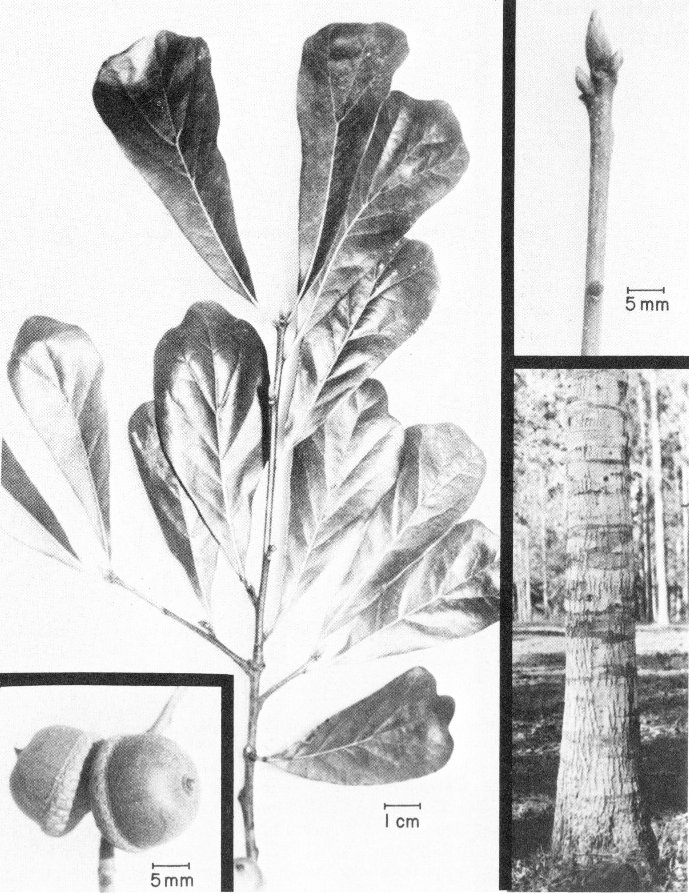
Water Oak/Quercus nigra
36
White Oak Quercus alba L.
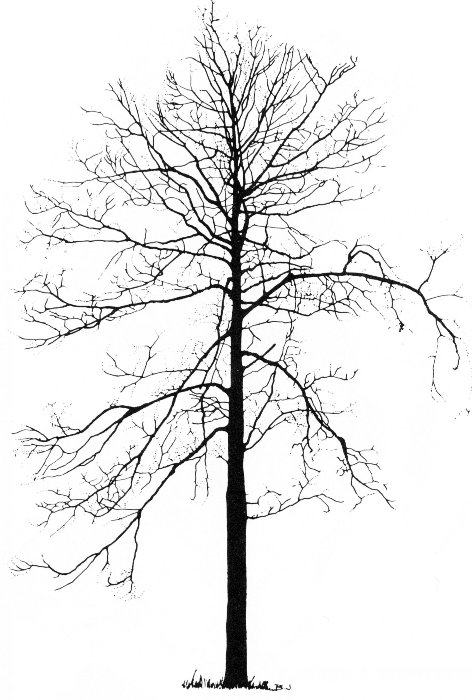
Bark light gray, separated by shallow furrows into flat ridges with loose appressed scales. Branches stout, drooping, spreading to ascending. Twigs 2 to 3 mm in diameter, reddish. Buds globose to ovoid, angulate, apex acute to obtuse, 3 to 5 mm. Leaves alternate, deciduous, simple, oblong to obovate, 7 to 20 cm long, 4 to 10 cm wide, with 7 to 11 uneven, rounded lobes and deep sinuses. Flowers unisexual, in catkins, preceding leaf expansion. Fruit an acorn, 15 to 35 mm long, 20 to 25 mm in diameter, cup 1.5 to 3 cm wide, usually cup-shaped, conspicuous with thickened scales, enclosing one-fourth to one-third of the nut.
37
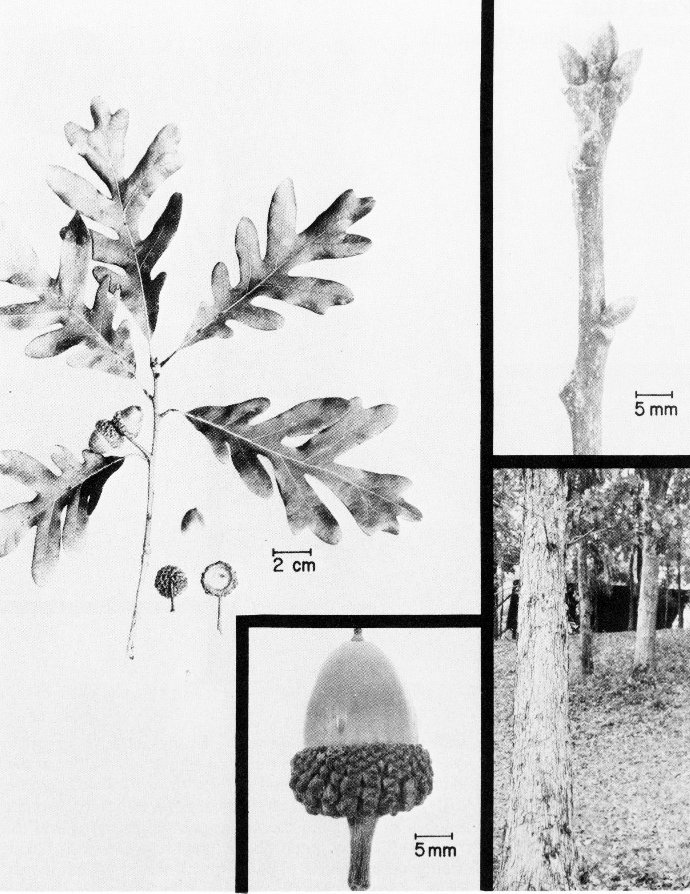
White Oak/Quercus alba
38
Post Oak Quercus stellata Wangenh.
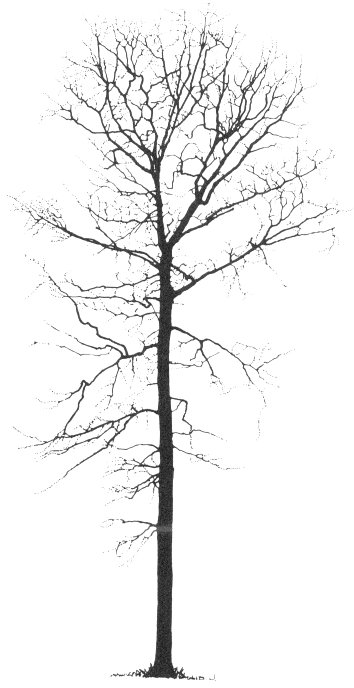
Bark medium to dark gray, with deep furrows, scaly ridges. Branches stout, irregular, drooping to horizontal and ascending. Twigs 3 to 5 mm in diameter, gray to brownish. Buds broadly ovate, blunt to acute, 5 mm long, clustered at apex of twig. Leaves alternate, deciduous, simple; obovate, to 18 cm long, 5 to 10 cm wide; divided into 5 to 7 sinuate rounded lobes, the two lower lobes smaller than the upper pair, upper lobes and the terminal lobe resembling a cross, dark, shiny green above, grayish to brownish below, leathery. Flowers unisexual; staminate in catkins appearing with the unfolding leaves; pistillate on last year’s wood. Fruit an acorn, 13 to 25 mm long, 6 to 20 mm in diameter; cup hemispherical, enclosing about one-half of the nut, cup scales rusty-pubescent; nut ovate to ovate-oblong, about 15 mm long.
39
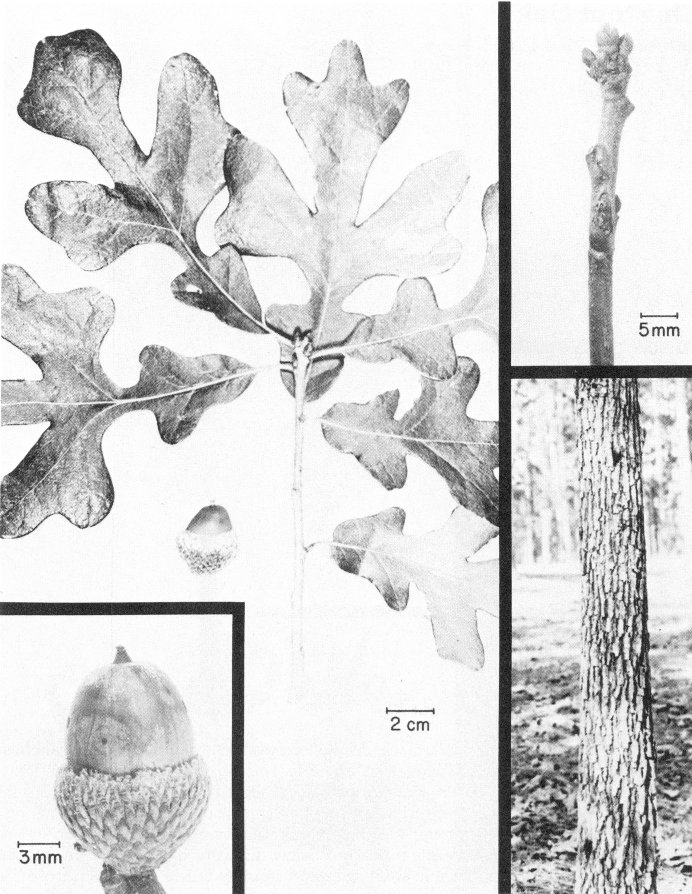
Post Oak/Quercus stellata
40
Chestnut Oak Quercus prinus L.
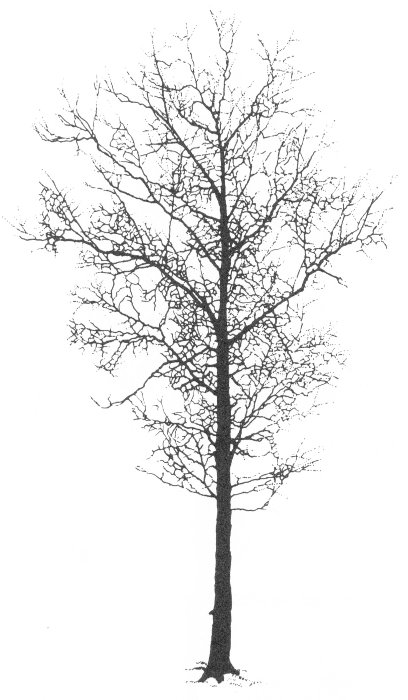
Bark dark reddish brown to nearly black, deeply furrowed with narrow ridges. Branches stout, spreading to ascending. Twigs stout, angulate, smooth, purplish-green when new, turning orange or reddish-brown. Buds ovate-conical, somewhat angulate, 8 to 12 mm long, silky hairy. Leaves alternate, deciduous, simple; elliptic to obovate, 10 to 30 cm long, 3 to 8 cm wide; somewhat leathery, margin crenate with a vein ending in each rounded tooth, smooth green above, stellate-pubescent below. Flowers unisexual; staminate in catkins 5 to 10 cm long; pistillate in short spikes on stout peduncles. Fruit an acorn 25 to 35 mm long, 15 to 25 mm in diameter; cup vase-shaped, thin, rough with thickened scales, covering one-third to one-half of the nut.
41
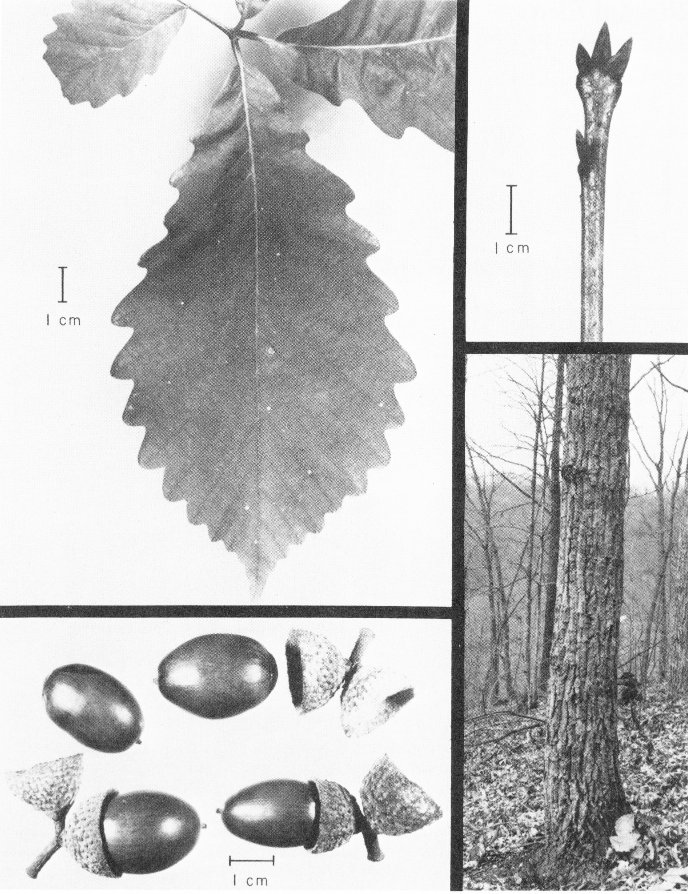
Chestnut Oak/Quercus prinus
42
Winged Elm Ulmus alata Michx.
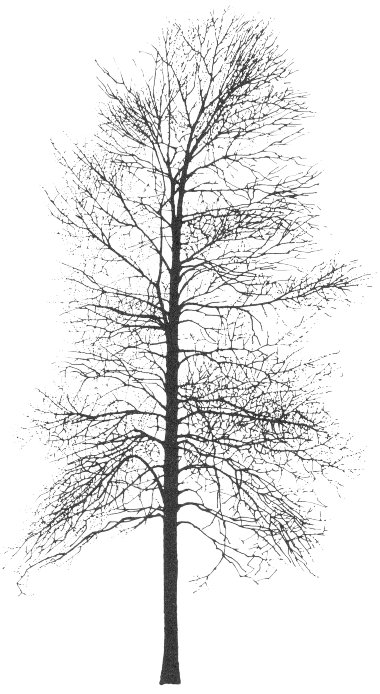
Bark dark, smooth at first becoming deeply furrowed on larger trees. Branches slender, ascending to spreading, corky ridges or wings on branches 3 years or older. Twigs about 2 mm in diameter, light green tinged with red. Buds sharp-pointed, divergent from twig 3 to 4 mm long. Leaves alternate, deciduous, simple; broadly ovate to elliptic, 4 to 8 cm long, 2 to 4 cm wide; apex acute to short-acuminate, margin doubly to triply serrate, base rounded; dull green above, lighter green below with prominent pinnate veins. Flowers perfect, abundant, tiny, opening just before leaves unfold, several in a cluster at a leaf scar, blooming late January into February. Fruit a samara, flat and elliptic, 6 to 8 mm long, margin ciliate.
43
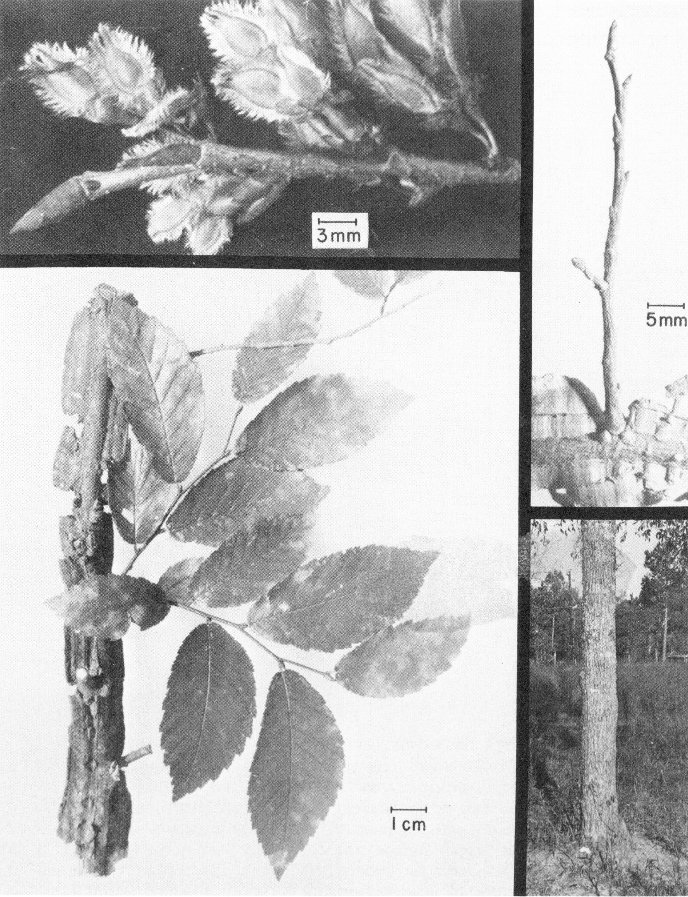
Winged Elm/Ulmus alata
44
American Elm Ulmus americana L.
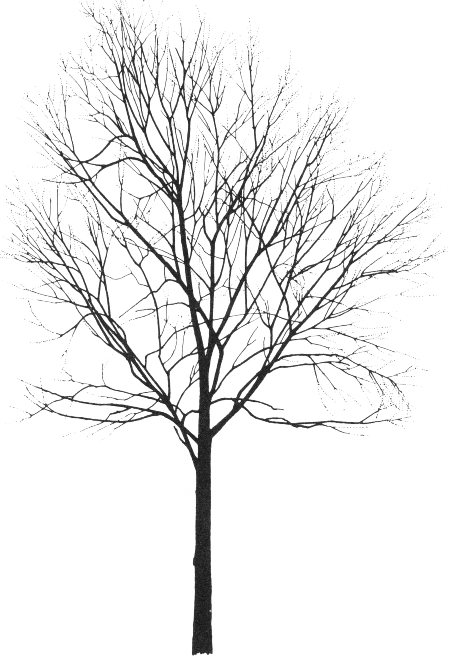
Bark gray to blackish, thick, divided into flat ridges by deep furrows. Branches ascending, arching, and spreading; open-grown trees vase-shaped in outline. Twigs 2 to 3 mm in diameter with 5 to 7 leaves which increase in size from basal to apical leaf, red-brown. Buds (leaf) brown, small, scaly, acute. Leaves alternate, deciduous, simple; broadly ovate, 5 to 15 cm long, 4 to 6 cm wide; apex acuminate, margin usually doubly serrate, base oblique on short petiole; upper surface smooth, marked with sunken veins pinnately arranged; veins more prominent on underside. Flowers perfect, buds greatly enlarge before opening; with very small flowers abundant in clusters; opening before the leaves expand, blooming from late December into February. Fruit a samara, oval to circular with wing surrounding the seed, about 10 mm in diameter, margin ciliate.
45
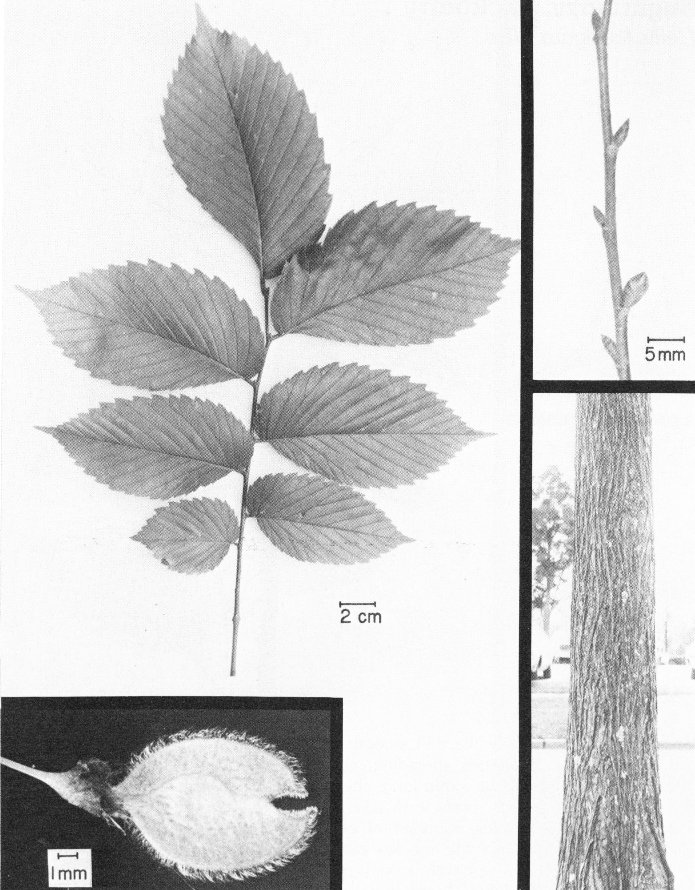
American Elm/Ulmus americana
46
Sugarberry; hackberry Celtis laevigata Willd.
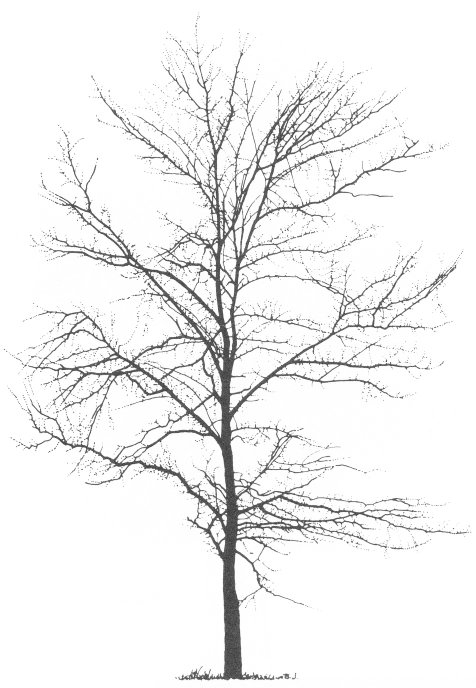
Bark light gray to almost white, thin, smooth, usually more or less studded with irregular corky outgrowths. Branches spreading, slender. Twigs about 3 mm in diameter, reddish-brown. Buds about 3 mm long, alternate. Leaves alternate, deciduous, simple; narrowly elliptic to broadly ovate, 6 to 10 cm long, 2 to 4 cm wide; apex acute, margin usually entire, base broadly rounded or oblique. Flowers unisexual or perfect, tiny, inconspicuous, many staminate and few pistillate appearing on the new growth as the leaves unfold. Fruit a drupe with a bony reticulated nutlet, about 5 mm in diameter, orange-red on a pedicel often shorter than the petiole of the subtending leaf.
47
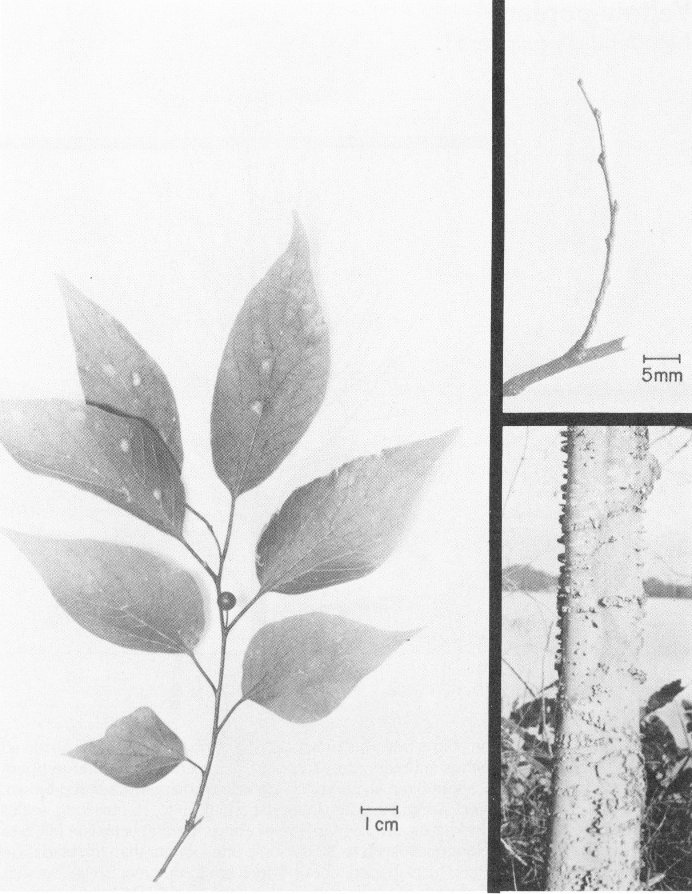
Sugarberry; hackberry/Celtis laevigata
48
Yellow-poplar Liriodendron tulipifera L.
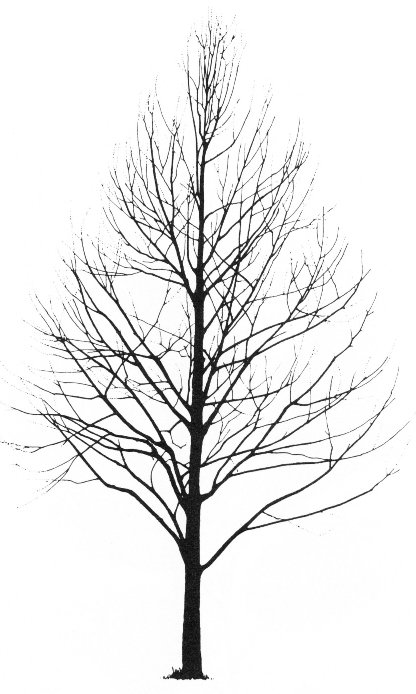
Bark thin and dark green on young trees, becoming ash-gray and conspicuously furrowed and ridged with age. Branches spreading to ascending, often drooping on large open-grown trees. Twigs smooth, about 5 mm in diameter, encircled by stipule scars, red-brown. Buds (terminal) grayish green, turning red in winter, flat about 10 to 16 mm long, scales valvate. Leaves alternate, deciduous, simple; dark green above, turning yellow in fall; 6 to 20 cm long and as wide as long; petioles 5 to 20 cm long, often longer than the blades on low branches. Flowers perfect, tulip-shaped, about 4 to 6 cm long, greenish-yellow with orange to reddish markings at base of petals, color intensifies with age. Fruit an aggregate cone, 5 to 8 cm long, gradually shattering into one-seeded, winged samaras.
49
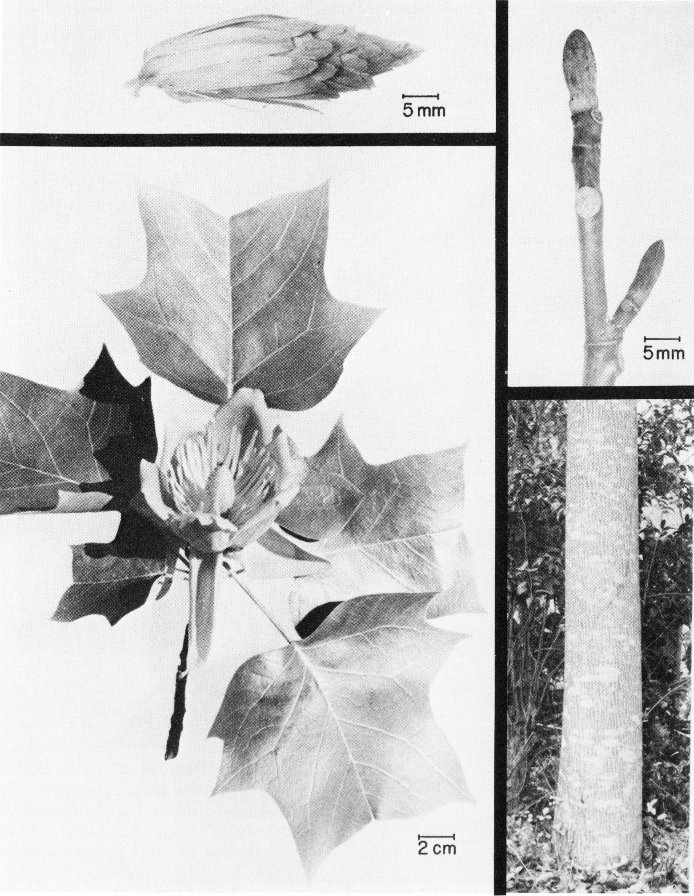
Yellow-poplar/Liriodendron tulipifera
50
Sweetbay Magnolia virginiana L.
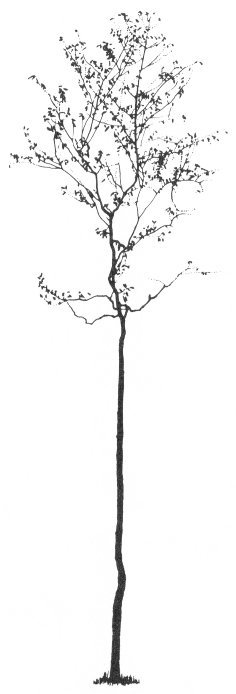
Bark dark gray, usually smooth, thin, in shady areas often encrusted with mosses, liverworts, and lichens. Branches stout, spreading to ascending. Twigs about 5 to 7 mm in diameter, encircled by stipule scars, green. Buds (terminal), silvery gray, pubescent, 15 mm long; smaller lateral buds often subtended by persistent petiole base. Leaves alternate, evergreen in South, deciduous in northern part of range, simple; elliptic to oblong, 10 to 15 cm long, 4 to 6 cm wide; margin entire, dark green above, silvery pubescent below. Flowers perfect, white, sweet-scented, 5 to 8 cm in diameter, appearing May to September. Fruit an aggregate of follicles which open and shed red seeds, irregular in shape, ovoid to ellipsoid, smooth, about 5 cm long.
51
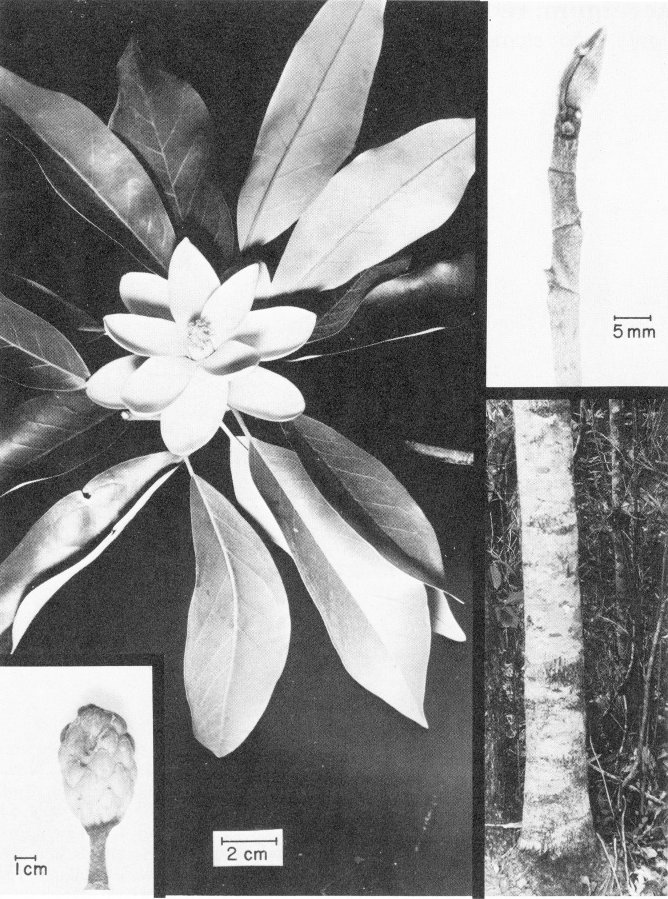
Sweetbay/Magnolia virginiana
52
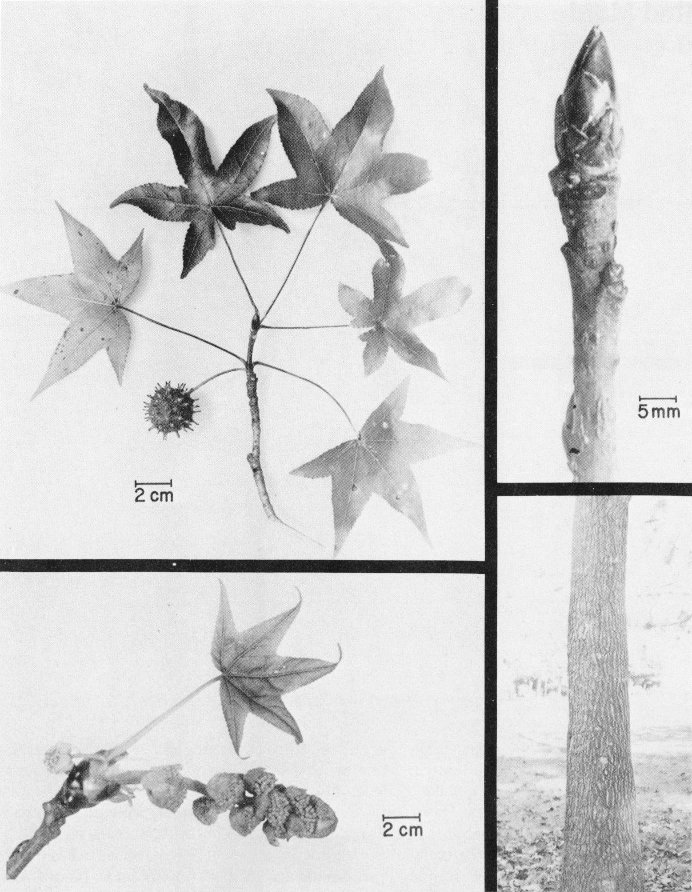
Sweetgum; redgum Liquidambar styraciflua L.
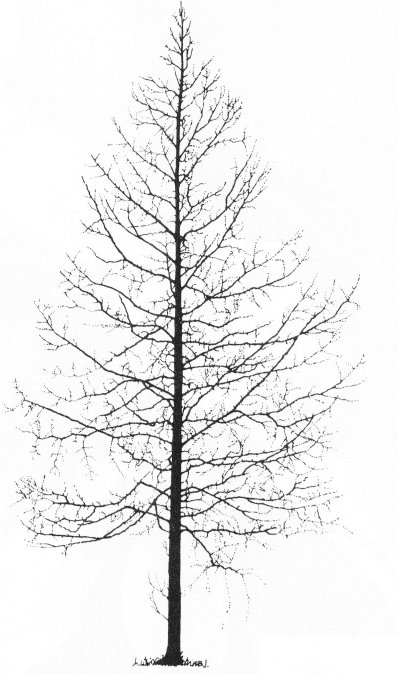
Bark dark gray, divided by deep furrows into narrow, rounded ridges. Branches stout, often with corky wings or outgrowths. Twigs about 4 to 6 mm in diameter, gray-brown. Buds (terminal) broadly egg-shaped, about 10 to 15 mm long, scales overlapping, slightly sticky. Leaves alternate, deciduous, simple; palmately 5- to 7-lobed; 8 to 20 cm wide, 6 to 15 cm long, often longer than broad; margin finely serrate; petioles 4 to 13 cm long. Flowers unisexual (plants monoecious), appearing as the leaves unfold; staminate clustered in terminal racemes; pistillate in small drooping spherical heads. Fruit in stalked spherical heads covered with small spine-like projections; seed cavity at base of each spine.
53
Sweetgum; redgum/Liquidambar styraciflua
54
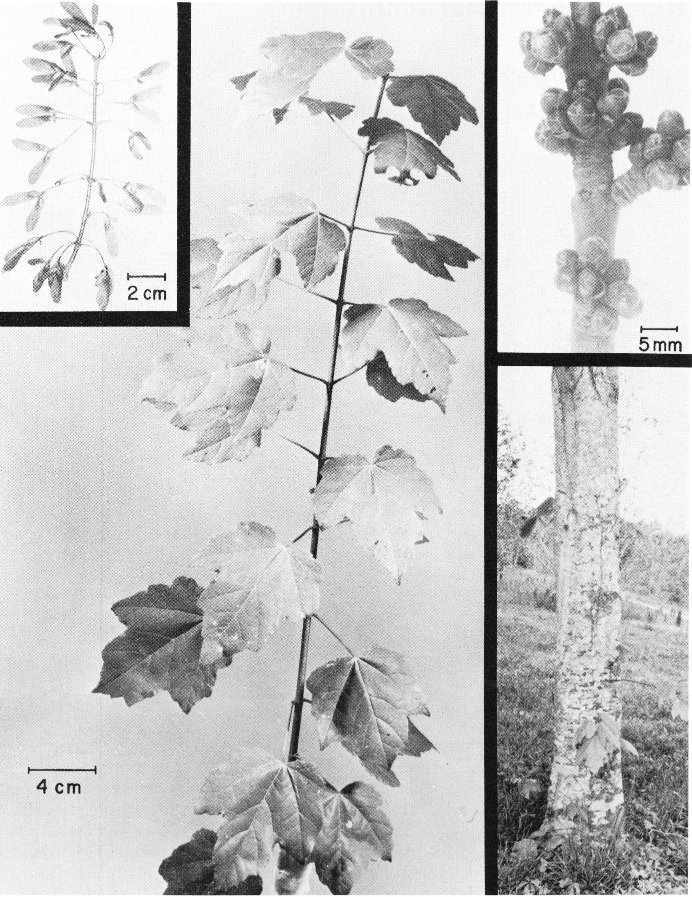
Red Maple Acer rubrum L.
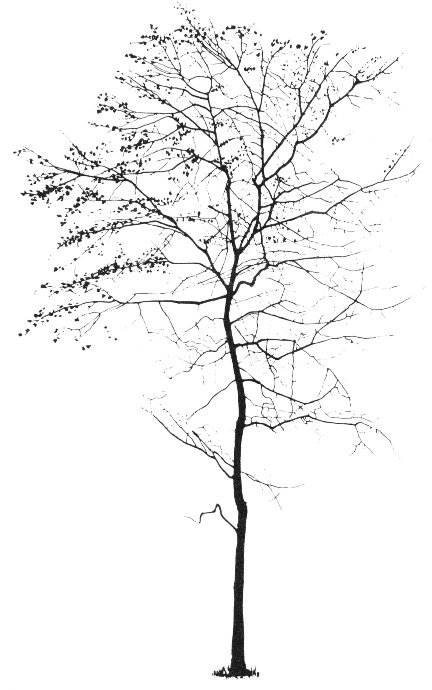
Bark gray, divided into scaly ridges by narrow furrows. Branches slender, spreading and ascending. Twigs about 3 mm in diameter, reddish. Buds spherical, reddish, clustered at apex of twig, scales with white ciliate margins. Leaves opposite, deciduous, simple; ovate to almost circular, 4 to 9 cm long, 2.5 to 7 cm wide, usually longer than broad; 3-lobed near the apex, margin finely serrate; dark green above, glaucous and lightly pubescent below, pubescence usually shed. Flowers typically polygamous, occasionally with perfect flowers, small, forming dense clusters from separate buds before leaf expansion, conspicuous because of the red to orange coloration. Fruit twin samaras 10 to 20 mm long.
Var. drummondii: Leaves larger than typical red maple, usually broader than long; 3 to 5 lobes or occasionally scarcely lobed, margins coarsely toothed, conspicuously glaucous below, usually permanently tomentose. Fruit samaras 4 to 5 cm long.
55
Red Maple/Acer rubrum
56
Black Tupelo; blackgum Nyssa sylvatica Marsh.
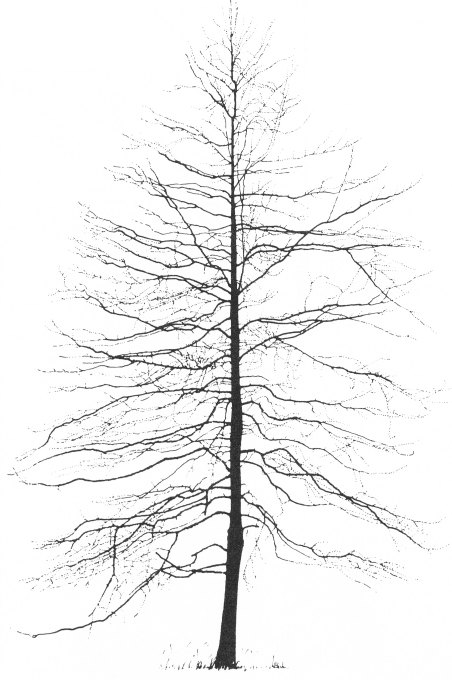
Bark black, marked with furrows and cross-cracks that divide the ridges into squarish plates. Branches slender, spreading to horizontal, often drooping in open-grown specimens. Twigs 2 to 3 mm in diameter, gray to reddish. Buds obtuse, of overlapping yellow-brown scales, terminal buds 6 mm long. Leaves alternate, early deciduous, simple; marked with irregular black spots and purple coloration from midsummer on; elliptic to broadly oval to obovate, 5 to 15 cm long, 3 to 8 cm wide; apex acute to broadly rounded, margin entire, base wedge-shaped. Flowers unisexual, less than 4 mm in diameter, appearing in April before leaf expansion. Fruit a black drupe 8 to 10 mm long, 1 to 3 on pedicels 3 to 5 cm long, stone faintly ribbed.
57
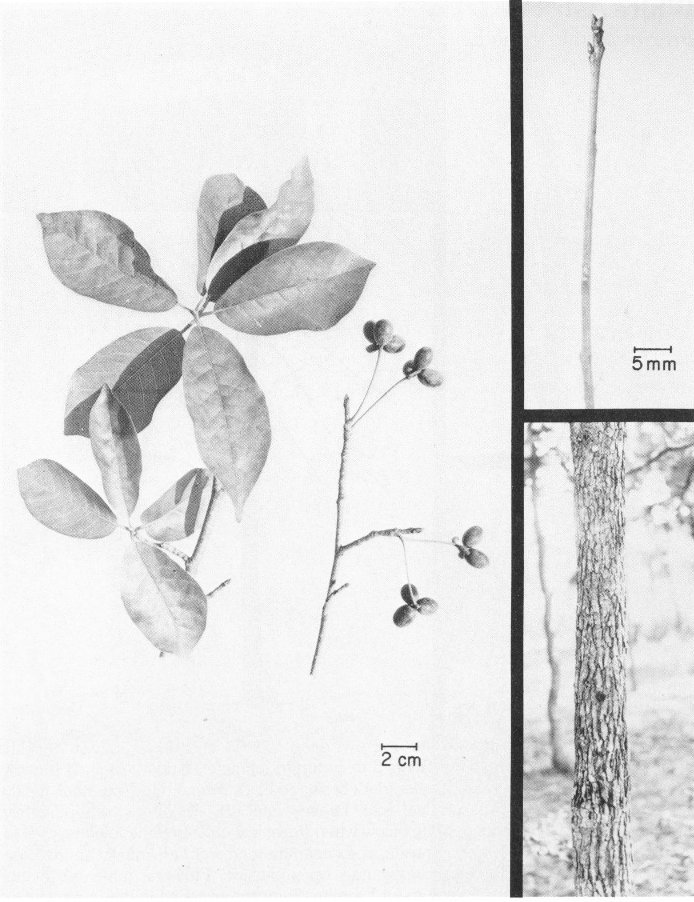
Black Tupelo; blackgum/Nyssa sylvatica
58
White Ash Fraxinus americana L.
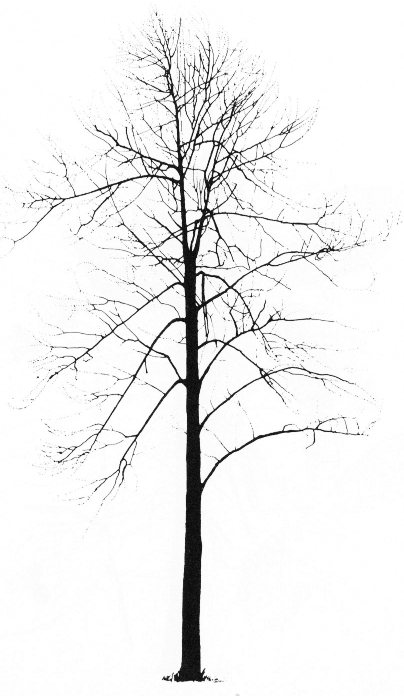
Bark gray to brownish, divided into narrow, deep furrows and ridges of equal width. Branches stout, wide-spreading. Twigs 3 to 6 mm in diameter. Buds (terminal) broadly ovoid consisting of 4 appressed scales, dark brown to black; lateral buds spherical, tightly appressed to a crescent-shaped leaf scar. Leaves opposite, deciduous, odd-pinnately compound; 20 to 30 cm long, white below when fresh; leaflets 7 to 9, petiolulate, oval to ovate, 5 to 15 cm long, 3 to 5 cm wide, apex acuminate, margin essentially entire, base broadly rounded, pinnate veins conspicuous on underside. Flowers unisexual (plants dioecious); pistillate inconspicuous about 1 mm in diameter, arranged in dense paniculate clusters; staminate conspicuous in mass. Fruit a samara, 25 to 60 mm long, wing terminal on the thickened seed.
59
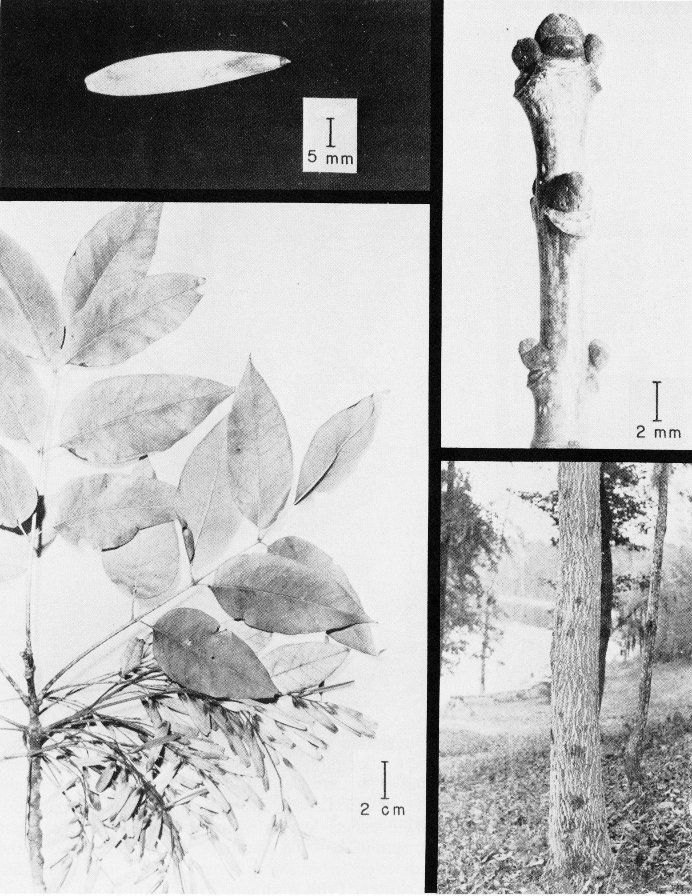
White Ash/Fraxinus americana
60
Green Ash Fraxinus pennsylvanica Marsh.
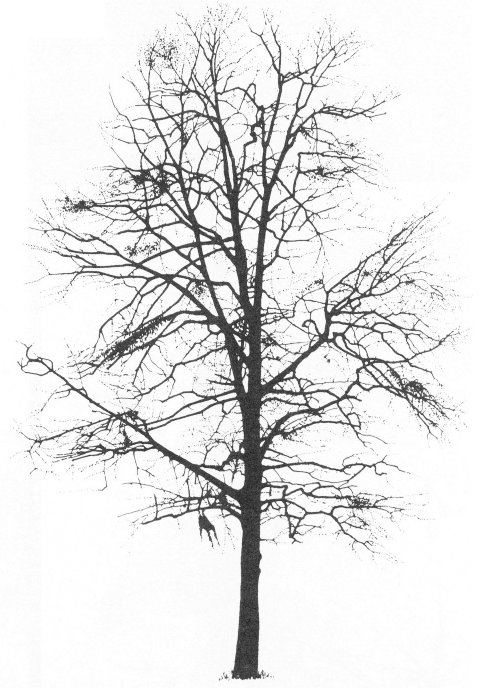
Bark brownish, smooth when young, then breaking into narrow ridges with shallow narrow furrows. Branches drooping to spreading and ascending. Twigs stout, 4 to 6 mm in diameter, olive green. Buds terminal black; smaller lateral buds tightly appressed to the generally straight upper edge of the leaf scar. Leaves opposite, deciduous, odd-pinnately compound with 5 to 7, occasionally 9, leaflets; leaflets narrowly to broadly elliptical, apex acuminate, margin entire to finely serrate, base wedge-shaped, hairy below along the veins. Flowers unisexual (plants dioecious); pistillate inconspicuous in open panicles; staminate in compact conspicuous clusters. Fruit a samara 25 to 50 mm long, seed end conspicuously slender and extending about half the length of the samara, wing decurrent on seed end.
61
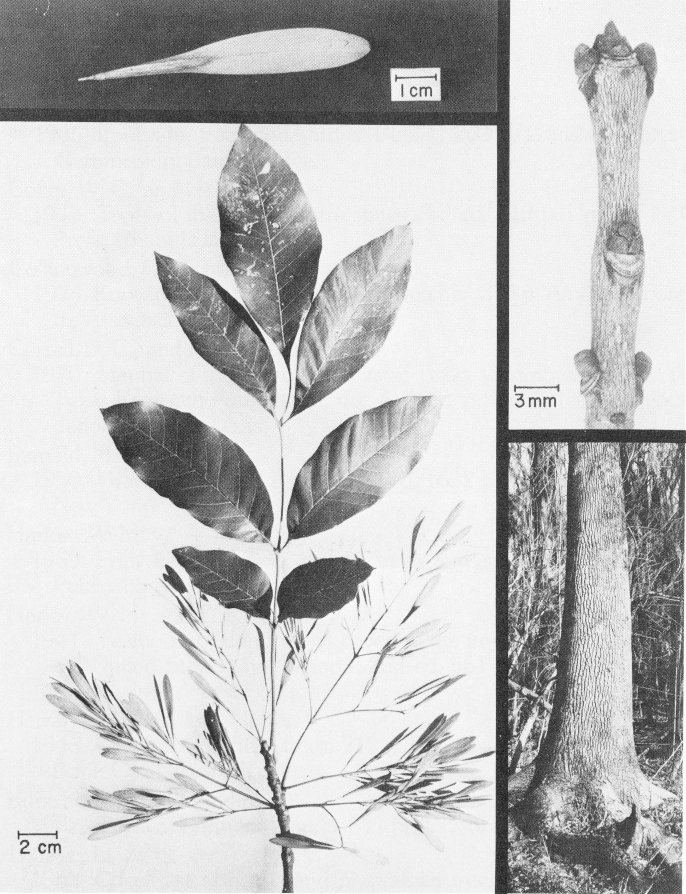
Green Ash/Fraxinus pennsylvanica
63