Volume 10 — TWO YEARS' RESIDENCE, &c. &c. (continued 2)
Reading edition
This day we made about twenty-six miles, according to the "Pittsburg Navigator,"111 also by our pilot's account; but I believe the Ohio has never been surveyed or measured, except that on the Ohio side the land has been surveyed and laid out into sections, from the upper part of the State of Ohio to the mouth of the Ohio river. But the lines running north and south, and east and west, make many small fractions on the edge of the river that have never been measured very correctly, so as to know the exact length of it. We often went in a very circular direction; much more so than the banks; and as the river is full half a mile wide, we sometimes stood nearly right across it, as an ark is difficult to keep out of the current, should it get too near it when the draught is strong. Thus the measurement of the {93} banks of this river cannot be accurate, in the distance it takes to navigate it.
20th. Passed the Manchester Islands;112 and a little below a town of the same name, a small place of about thirty houses. Two of our company landed, opposite the islands, on the Kentucky side. A woman, where they went for milk, gave them some peaches, nearly ripe; she told them they had only apples and peaches for their pigs, a hundred and forty in number. She said they did not get fat on this diet, nor did they expect them to thrive much till the beech-masts fell. Beech the prevailing timber, except on the banks of the river; there mostly sycamore, water-maple, and willows. In the afternoon we reached the town of Maysville, in Kentucky;113 it is frequently called Limestones, from a small creek of that name that here empties itself into the Ohio. Maysville is a considerable place, and enjoys a good trade with the back country. It lies high; but part of it is subject to floods from the {94} creek. Much good building going forward. A large ferry-boat, worked by horses, plies between Maysville and a small town opposite; it takes over passengers, horses, carriages, and stock; as a road on the opposite side takes most of the land-travellers through the state of Ohio,114 that cross so low down as this place. We sent a letter from here, that reached Godalming, in Surrey, in fifty-seven days; but letters from England are usually three months in reaching the Prairies, and sometimes much longer. This day twenty miles: the weather sultry, with much thunder, but no rain. The river falling very fast.
21st. Passed Ripley, a new town of Ohio: it seems likely to thrive.115 A gentleman who had joined us at Maysville, and my eldest son, went on shore near this place. My son purchased two quarts of milk, for which they charged him 25 cents: he demanded his money again, and offered to return the milk; this they refused; {95} he then gave them, as he called it, a good blowing up, and came on board in a very bad humour, not being at all pleased with his bargain.
We afterwards passed a small place, on the Ohio side, of only seven or eight houses, although laid out before Ripley. In the afternoon we passed the town of Augusta in Kentucky; it appears a flourishing place.116 It was built to rival Maysville in the back-country trade, and it is likely to come in for a full share of it, as the roads are said to be much better than in the rear of Maysville. A considerable deal of land brought into cultivation in its neighbourhood: some round hills cleared quite to their tops, and planted with Indian corn, the growth of which seemed to bespeak a good soil. These hills have a fine appearance from the river. In the evening we passed the town of Mechanicsburg (Ohio), a small place, mostly of log-houses. At dark we anchored on {96} the Kentucky side; our progress twenty-five or six miles.
22d. Much rain during the night; and as the ark was far from being weather-proof, we got very wet in our beds. At noon we anchored near the towns of Richmond117 and Susanna (Ohio); they are rising places, containing several taverns and stores. A great deal of land round these towns laid down in grass: the soil rich. But few gardens, and these much neglected; the weeds seven or eight feet high, and completely concealed the vegetables. This day we only made thirteen or fourteen miles, and anchored on the Kentucky side. The weather much colder. After we got to bed, two men and a boy came close to us, and began fishing, by torch-light, striking the fish with a gig, or grig, like a dung-prong, with barbed points: I believe they had also some hooks and lines over the sides of their canoe. After fishing about two hours, they anchored, and hung their fish over the {97} side of their canoe, and went on shore and made a fire to dry themselves; then spreading some small boughs under a tree, they laid down till daylight.
23d. At dawn the fishers offered us some cat-fish, of between thirty and forty pounds weight each, for 25 cents a piece, but as we had a store of provisions we did not purchase any. They then started for Cincinnatti with their fish. At sun-rise we also proceeded, the wind much against us. After going four miles we passed a large steam-boat a-ground, and had been for some time, and must so remain till the water should rise three or four feet; this did not occur till after Christmas. Soon after we passed a new town, of a few houses, its name I did not learn. We then went over some sand-bars where the water was very shallow; the wind rising, we put in close to the Kentucky side, where the water was deeper, and most of us going on shore, we hauled our boat along, with a towing line, for about two miles. We passed the town {98} of Columbus, at the mouth of the Little Miami.118 This river crosses the state of Ohio, from the north, and is sometimes upwards of 100 yards wide. Columbus is a small old place, with but few good buildings. Late in the afternoon we reached the city of Cincinnatti; and, with great difficulty, anchored close to four steam-boats that were laid up, the water being too shallow for them to go up and down the river. We had about 14,000 lbs. weight of store goods, on board the ark, to be left at this place. Cincinnatti is the capital of the state of Ohio,119 and is situated in the richest part of the state, seven miles below the Little Miami, and twenty miles above the Great Miami. Much of the country, between these rivers, brought into culture for a considerable distance from the Ohio; and land sells very high, from five to a 100 dollars per acre. The city is extensive and the buildings are increasing. It is a noble looking town, by far the best I have seen in the western country. It is built on {99} ground rising to a great height from the river. The streets cross each other at right angles. It has several large woollen and cotton manufactories; some glass and iron-works, also a steam-mill, built on a limestone rock, close to the water; the walls of this noble mill are of stone; it contains nine stories, and is upwards of a 100 feet high. The machinery is said to be good, and will manufacture 700 barrels of flour weekly, that is, upwards of 500 sacks. It is represented to have cost 120,000 dollars, or 27,000l. sterling in erecting.
The streets of Cincinnatti are very wide; and the stores well stocked with European, East and West Indian, and American merchandize, but in general dear. Articles of dress are much dearer than at Baltimore; yet the principal inhabitants are very gay in their appearance, particularly the ladies, who are equally so with those of London. But the females of the middle and lower orders, though gaily dressed, often go without shoes and stockings; indeed, most of the {100} females in the western country go without them, at least in the summer, and some of the English women, of the lower class, follow their example.
Trade very dull and paper credit extremely low, the banks issue notes as low as 6¼ cents, less than 3½d.; but these notes are far from being current with strangers, nor were the large ones in good credit, being much below the value of state notes or specie. No copper money to be seen here. There are two large market houses, one in the upper, and one in the lower part of the town; there is a daily market held alternately at one of them. It was the upper market day when we were there; it was well supplied, and most articles were good and cheap, but the tradesmen perfect Jews in their dealings. Meat from 6 to 10 cents per pound; bacon from 8 to 12½ cents a pound; flour from 4 to 5 dollars per barrel, of 196 lbs., average less than 6s. a bushel; very fine peaches for 6¾d. per peck; melons in vast quantities, both sweet and {101} water, the latter of immense size, weighing from ten to twenty pounds each, for 6¾d. Poultry and eggs very reasonable.
The number of inhabitants supposed to be upwards of 12,000, from every part of the Union, and from most of the countries of Europe. Many English, Irish, and Scotch amongst them. I heard of some being there, that I knew, but I did not see any of them. There is a ferry-boat, worked by horses, between Cincinnatti and the towns of Newport and Coverly;120 these towns, in Kentucky, lie opposite to Cincinnatti, and are separated from each other by the mouth of the Licking; a considerable stream, of Kentucky, during the winter, but very low in dry weather. The streets of these towns are laid out to correspond with those of Cincinnatti, so that at the upper part of the city you see the streets of Newport and Coverly, without perceiving the river between them, and thus the whole appears but one town.
There is a fort at Newport, with an {102} arsenal of arms, and a magazine for gun-powder; and a garrison of the states' troops are kept here in case of a war with the Indians, as the Indian territories are within 100 miles to the north. We saw some of these troops, they were good looking; their uniform blue.
Newport contains some good houses, and near it there is a large building, in the castle style, belonging to General Taylor, the proprietor of the town.
Coverly is newly laid out, the building but just begun: these two towns may contain about 100 houses.
24th. In the afternoon, having laid in a few provisions for our voyage, we prepared to go off, but found some honest person had made free with the oars belonging to our skiff, and also with a skiff belonging to some person of Cincinnatti. We saw two men go off, about 10 o'clock the night before, with a skiff, but supposed it belonged to them, nor did we know they had borrowed our oars; but this did not detain us {103} long, as we made some more with some boards we had on board. We went about eight miles, and then anchored on the Ohio side of the river. I found myself troubled with very bad boils, that continued for several days; in other respects I was in perfect health, as was the whole of our party. The gentleman, who joined us at Maysville, left us at Cincinnatti.
25th. We passed the mouth of the Big Miami, a considerable stream of Ohio, the boundary between that state and Indiana, at least at its mouth; as a meridian line runs from the middle of the mouth of this river north, to a parallel line, from the south end of Lake Michigan. This river is 200 yards wide at its mouth, and is navigable for a considerable distance up the country. We saw a waggon with four horses, also six or seven men and women fording it, the water up to their middles, and the current so strong they could hardly stand against it. We passed Petersburg,121 a small place in Kentucky, and also a little {104} town of Indiana, its name unknown to us. We only made 20 miles. Mr. C. shot two turkey-buzzards at one shoot. These birds are of great utility in a warm climate, as they live on carrion; and should you see several of these birds hovering about, you may be certain something is dead near. I understand, that on the Mississippi river, people are liable to a fine of several dollars for killing one of them. Nor is there any temptation to destroy them, having so strong a scent as scarcely to be bearable, and any thing only just touching them retains a very strong smell for some time. The quills of their wings are larger than those of a goose, and too hard to write with.
The hills on the river lower with round tops. Some tobacco on the Kentucky side, but none on the other; it is never cultivated on an extensive scale except in the slave states. In the free states cotton and tobacco are only raised for home consumption.
{105} 26th. We passed Lories Island, and afterwards a small town of Kentucky; its name we did not learn. The river banks much lower, and the bottoms much wider, as the hills were further back. Not many houses on the banks. We saw some wild ducks, woodpeckers, and snipes. We advanced twenty-two miles; weather warm.
27th. The country less cultivated. About noon we landed at Fredericksburg, in Kentucky, a place of about forty log-houses; we purchased some butter at eighteen cents per pound. At dusk we passed the Kentucky, a river of the state of the same name, and navigable some distance up the country. After dark we passed Vevay and New Switzerland,122 and soon after got stuck on a sand bank; some of us got into the water and turned the ark round, and then we floated off again, and about midnight anchored. This day, twenty-five miles. I regretted passing Vevay after it was dark, as I much wished to land to inspect the vineyards belonging to a Swiss colony settled {106} there, who cultivate the vine on a considerable scale, in the manner of their native country. In the twilight we had a glimpse of their vineyards, but too far off to see much of them. I have since learnt that a few Swiss emigrants settled at New Switzerland in 1805, and in 1810 they had eight acres planted with vines, and in full bearing, and from which they made two thousand four hundred gallons of wine, then said to be very good. Since that time their vineyards are considerably extended, but their wine of an inferior quality. They also cultivate wheat, Indian corn, hemp, and flax. They are represented to be a sober, industrious people, and much respected in the country. They speak the French language, most of them having come from the frontiers adjoining France.
28th. We landed at Port William,123 Kentucky, a small place, and procured some very excellent bread. As we proceeded slowly I landed on the Indiana side, and went to two or three cottages; at one of {107} them I got a peck of fine peaches, for which the inhabitants would not take any money. They were hardly ripe, but made very good puddings; as the settlements were new, none of the trees were six years old. At one cabin a man showed me a tree on which there was then growing at least a bushel of peaches; he had planted the stone from which this tree sprung in the spring of 1816. We landed at a cabin in Indiana, where there were a few vines cultivated after the Swiss method; viz. in rows about six feet each way, and tied up to a stick four or five feet high. I was told their appearance promised a productive crop, but a heavy shower of rain prevented my examining them. The soil was rich, but very broken. Only made sixteen miles; the weather showery, and much colder.
29th. Early in the morning we reached the town of Madison in Indiana,124 capital of the county of Jefferson, of sixty or seventy houses, a mixture of brick, frame, and log; {108} it has a steam-mill, &c. The country less settled, and on the banks a much less number of horses, cows, sheep, pigs, geese, &c. to be seen. This day we made thirty miles or upwards.
30th. Both sides of the river more hilly, and but little land brought into culture. In the forenoon we passed an island eighteen or twenty miles above Louisville; the river much wider, the banks lower, with but little space between them and the hills. We passed another island twelve miles above Louisville, and, after sun-set, anchored opposite a small town of Indiana.
Many new places are continually springing up on the bank, and numbers of them soon go to decay, having nothing to recommend them except the opinion of the proprietors. These are often a set of speculators, who purchase land and attempt to puff it off as one of the best spots in the western country; in short, in the whole world. A speculator like those is a nuisance wherever he sets his foot.
{109} 31st. Passed six mile islands; keeping between them we got sight of Louisville, which at that distance had a fine appearance. We could see far beyond it, as the country below the falls is very flat for many miles. The wind rising, we anchored four miles above it, and some of us went to it by land. Louisville is a considerable town of Kentucky, at the head of the Falls of the Ohio.125 Many boats unload here for the back country, others stop here to get a pilot to take them over the Falls, and sometimes at low water to get part of their lading carried by land to below the Falls. It possesses some manufactories, and is a place of considerable trade, and with the exception of Cincinnatti, is by far the best town I have seen in the western country. It is seven hundred and six miles by water from Pittsburg, and by the course of the river near fourteen hundred miles from New Orleans. The river, opposite Louisville, is a mile wide, being bent back by an island and a chain of rocks that runs {110} through the river. These rocks are the cause of the Falls, as they pen back the water about twenty-two feet above the level of the flat country below. The town of Jeffersonville lies opposite,126 on the Indiana side, and many boats stop there for a pilot. We did not visit it, but we were informed it was an elegant place, of a hundred and forty houses.
The best boat channel to pass the Falls is on the Indiana side, it is called the Indian shoot; the next is called the middle, and the other the Kentuckian shoot; the last was dry when we were there. In high water they may all be passed without danger, but in a dry season, as when we passed, it requires a skilful pilot, and even then is attended with some danger. Some English from Puttenham in Surrey, near Godalming, passed these Falls during the night in a small skiff, without perceiving any of them, the water being then very high. In the morning they enquired how far they had to the Falls, and could hardly {111} be persuaded they had passed them. There is an opposition between the towns of Louisville and Jeffersonville, as to making a canal for vessels to pass the Falls by the means of locks, each wanting it on their side, as most of the traffic would of course be on that side where the canal was.
As we returned to our boat, we passed the stump of a sycamore, lately cut, that three feet from the ground measured eleven feet one way and ten feet the other; the tree was gone, so we could not ascertain the length of it, but the trees on the banks were of an immense size. In the evening we anchored within a mile of Louisville. Made only seven miles; weather very warm.
Sept. 1st. Early in the morning we anchored at the mouth of Bear Grass Creek, that joins the Ohio on the upper side of Louisville. The store goods were here unloaded, to the amount of ten thousand pounds weight. I purchased the ark of Mr. Ferris for twenty-five dollars, and {112} hired two men for eighteen dollars and their board, to take us to Shawnestown, in Illinois, a distance of near three hundred miles. One man was an Englishman, the other a Scotchman. Having trimmed our boat, we expected to go over the Falls in the evening, but the pilot having another boat to take over first, he did not return till too late for us to go over, so we remained at Louisville all night. We purchased a few articles for our voyage, but we should have done better, if we had bought more at Cincinnatti, instead of afterwards doing it at Shawnestown; but the difference was not very material. The heat very oppressive, and in the evening, for the first time, we were annoyed by mosquitoes. We saw great quantities of rats; the quay where we lay was much infested with them. They were most likely brought from Europe, as they are the same as the English rat. I have not seen one at the Prairies, but there being plenty on the Ohio; and I suppose on the Wabash, {113} most likely we shall soon receive a visit from them.
2d. Soon after sun-rise our boat proceeded to go over the Falls. Mr. Ferris was so kind as to go with it; Mr. C. and my eldest son also went. We hired two more men, besides the two going to Shawneetown, as our boat drew twelve inches of water, and there were only fifteen or sixteen inches for some distance over the Falls in the middle, and less, if ever so little on either side. The rest of us walked to below the Falls. They rowed the ark some distance up the stream on the Kentucky side, and they then crossed into the middle shoot, and proceeded to Shippingport, a small town of Kentucky, at the end of the Falls.127 They passed them with perfect safety, except that the rocks cut the rope of the skiff by which it was tied to the ark, and it was lost on them. We breakfasted at Shippingport, in company with Mr. Ferris, with whom we settled all accompts; he then took leave of us, and {114} returned to Louisville on foot, purposing to walk to Wheeling. It is but justice to Mr. Ferris to say, he was very obliging during the time he was with us, and most attentive to the care of the boat and the store goods committed to his charge.
We started, and soon passed an island where we got a hard rap on some rocks; we now found we had lost our pilot with Mr. Ferris; both our new men were much intoxicated, and this they most times continued to be afterwards, whenever they could get liquor; Thomas, the Englishman, in particular. We landed at New Albany,128 a small town of Indiana, and procured a few provisions which were short at Louisville and Shippingport, and at every other place we touched at till we reached Shawneetown, most of the bacon, pork, &c. having been sent off to New Orleans in the spring. We came thirteen or fourteen miles. In the evening the mosquitoes were very troublesome.
3d. We found our ark had sprung {115} a leak from hitting on the rocks yesterday, so that we were obliged to be frequently pumping. The country below New Albany less settled than above, but most on the Indiana side.129 At noon we passed Salt river; it crosses Kentucky from north to south, and in a wet season, at least, it is navigable a good distance. We afterwards passed Otter creek, and found the country more cultivated; and at dusk, Doe creek; our progress thirty miles. We purchased at Louisville "The Pittsburg Navigator," to serve instead of a pilot. We found much difference, in regard to distances, between the book and the accounts we received on the river; but the directions respecting sand-banks and islands we found pretty correct; and these were of some use to us.
4th. At ten o'clock, we reached the town of Northampton, in Indiana; a place of twenty-five or thirty log-houses. We landed for some whiskey; for our men would do nothing without, and but little with too {116} much of it. The river narrower than above Louisville, and the current brisker; this was generally the case where the river was narrow, as by islands, sand-banks, &c. In the evening we passed Little Blue river and two islands. Thirty miles this day.
5th. At nine o'clock we passed the Big Blue river, sixty or seventy yards wide; it rises in the north of Indiana, and runs south and south east, till it enters the Ohio, eighty-seven miles below Louisville. The country much resembles that below Wheeling, rocky, and the hills close to the river, first on one side then on the other. We landed at several cabins to procure provisions, but found them very scarce, most of the settlements being new. We met a keel-boat, the people on board greatly in want of provisions; they applied to us, but our stock was too low to supply them with any. At dark we passed Flint island, without any difficulty; this is said to be a bad place. We made about thirty miles.
6th. At nine o'clock we reached Rome, {117} the capital of Perry county,130 a town of Indiana, laid out in 1818; about twenty houses built, and building; a stone jail begun, the second floor laid with solid logs, ten or twelve inches thick, the roof not put on. We purchased sixteen pounds of very lean beef for a dollar; it was killed the evening before, and salted immediately, yet such was the heat of the weather it was scarcely eatable. No bacon, pork, or vegetables to be procured. A garden is the last thing that is thought of by the generality of the Americans. We landed at several cabins and procured a few small potatoes, and some ears of green Indian corn, (here called roasting ears,) but we boiled them; they ate something like green peas, but not quite so good. We bought an old skiff for a dollar, to supply the place of the one we lost on the Falls. Our progress nearly seventeen miles.
7th. We started at sun-rise, as we generally did, but the wind was so much against us we were obliged to anchor at eight {118} o'clock, at Clover creek. We landed in Indiana, and got near a bushel of peaches for ten-pence. Here we saw some children setting off to school; one boy came to the cabin to light his segar, that he might take a whiff going along to school. The men smoke segars, and many of the women (at least the married ones) pipes; we frequently saw women nursing their children with pipes in their mouths. And we often saw them washing on the banks of the rivers, as there is plenty of drift-wood. It saves the trouble of carrying fuel and water; and it is colder on the banks of rivers than near their cabins. Most of the women were surrounded by a number of young children; indeed, the first thing that strikes a traveller on the Ohio is the immense number of children, many of them almost naked. They do not appear healthy; but they look happy, rolling in the water and dirt. We often saw very little boys swimming in the river, sometimes leading others that could not walk: thus {119} the dread of water wears off while they are very young: I never heard of any of these children being drowned.
At ten o'clock we again set forward till two o'clock, when we passed Doe creek; the wind still getting higher, we anchored till near sun-set, when we again floated on. We found it was often the case for the wind to rise or sink with the sun; and that it was almost always from the south, south west, or west; and very seldom from the north, or east; and as the Ohio runs towards the south west, it was but seldom in our favour. And from what I have heard and read, the wind is generally the same as we found it; and this is the reason why vessels are so long descending the Ohio and Mississippi rivers, at least in low water. At high water they descend much more rapidly, as the current is then a great deal swifter, and the wind makes but little difference. But vessels with sails, often proceed as quickly up the Ohio as those do that float down; so that the advantage that is lost one way is {120} gained the other. This day only seven miles.
8th. At day light we grounded on a sand bar for a few minutes; and at eight o'clock reached Troy, a small town of Indiana; and afterwards passed Anderson's river, from fifty to sixty yards wide.131 The wind rising, obliged us to anchor a short distance below. I landed on the Indiana side, and walked three or four miles down the bank. I found a little cabin, situated on a small plantation, surrounded on all sides with high rocks, except against the river. The soil was so rich that the Indian corn was the largest I have ever seen; the owner said, it was eighteen feet high, but I think he made the most of it. I picked up a stick about six feet long, and, by measuring it with that and my own height, I should judge the highest of it was from fourteen to sixteen feet. There were great quantities of beans, pompions, and melons, running on and between the corn, all very luxuriant; in short, much larger than I ever {121} saw before or since. I then went to the next cabin; most of the way very rocky, but there the country more open; the owner was winnowing wheat, by the wind without any fan. The wheat was very coarse; it was sown in the spring; he said the land on the river was too rich for wheat, and subject to floods in the winter and spring; and when sown in the spring subject to rust or blight. But Indian corn came to high perfection. I saw a bear skin hanging up to dry; he informed me the country some distance back was rough and unsettled, and abounded with bears, wolves, deer, racoons, opossums, polecats, and other wild animals; and that they had frequently hunting parties. I asked him if a wounded bear was not a dangerous animal; he said he had frequently wounded them, and never saw one attempt to turn. He had, during the course of his life, killed more than a hundred. In their hunting parties they have always some stout dogs with them; but, he said, it was common for one man to {122} go alone, but never without dogs. Here I tasted the ripe fruit of the pawpaw or papaw, an extremely rich fruit, in flavour something like a pine-apple. I did not relish it; this they told me was often the case at first tasting it, but when accustomed to it people were fond of it. We did not see any more of these trees on the Ohio, but my son and Mr. C. saw a great many of them on the Wabash, in their voyage up that river. From this cabin I walked two miles, mostly through woods, to another; no provisions to be procured here, the people being newly settled. In this walk I passed fourteen or fifteen wild turkeys, in a field. As they only gently walked into the woods, I did not suspect they were wild ones; but mentioning them at the cabin, I was told there were no tame turkeys for many miles, but plenty of wild ones.
We returned to our ark, but, the wind continuing high, we could not proceed. At sunset we had a heavy tempest; the storm increased after we were a-bed. The {123} thunder and lightning, and the wind equally strong, and afterwards the rain poured down in torrents; and, driven on by the winds, came into our ark in every direction; so that most of us got completely wet in our beds. It continued for an hour, and was, by far, the most awful storm I ever knew. It made our ark shake very much, as we lay in shallow water, the wind driving us against the sand; but we were in no danger of being driven on shore, as the water shallowed very gradually, and we were a considerable distance from the bank. We had no large trees near us; and indeed it is advisable to avoid anchoring, during a thunder storm, near heavy timbers, as old trees frequently then fall.
9th. In the morning we set forward; afterwards some of us landed in Kentucky, and went about a mile to a horse-mill, where we procured some flour and vegetables. We continued on the river banks for near five miles; the country mostly in a state of nature. In the afternoon we {124} went to a cabin, and purchased some provisions; here we saw a small piece of land planted with cotton, just beginning to ripen. The person who belonged to it was from South Carolina; he said this cotton was as good, if not better, than that in Carolina. But most I have heard speak on the subject, say that the southern cotton is much better than that on the Ohio; and that it will not pay for raising in Kentucky, Indiana, and Illinois, except a little for home use. In the evening we passed some very high rocks named "The Lady Washington," and near them the small town of Rockport, in Indiana.132 We met with a bad sand-bar, that took us two hours strong exertion to get over. This day twenty-five miles. Weather warm and pleasant; mosquitoes a little troublesome.
10th. Soon after day-light we passed Yellow Banks, but we did not see the town. We afterwards passed an island, called in the "Pittsburg Navigator," number seventy. In the evening the men landed, at a small place {125} in Indiana, to get some whiskey, but none to be had, to the great disappointment of our two men, who did not stay to learn the name of the place, but came away in a great rage because there was no whiskey to be had. This was pleasing intelligence to us, as they had been very troublesome when in liquor, especially Thomas. About thirty miles this day.
11th. We had a little rap from a log sunk in the river, and twice we got a-ground before sun-rise. Very early in the morning we passed Green river, 200 yards wide, navigable for many miles; it rises far up in Kentucky; it runs west and south west. At sun-rise we passed Green island, and at eight o'clock reached Evansville,133 Indiana; it is the county town of Vanderburg; it is not three years old. It is situated near Pigeon creek, a middling size stream in winter, but nearly dry in summer. There is a settlement of English emigrants eight or ten miles back from Evansville, called Saundersville.134 Several of our fellow-passengers {126} in the Resolution had reached it about a week before, and are now settled there. This morning I first noticed cane growing on the banks; it is an evergreen, and much sought after by cattle in the winter. In the afternoon we reached the town of Hendersonville, or Red Banks, capital of Henderson county, Kentucky.135 There are about 100 houses, a jail, a court-house, some large tobacco warehouses, and a steam-mill, &c. &c. Here we procured some bread, but no meat to be had. It is situated on a high bank, above high-water mark. The size of the apple-trees showed it had been settled some years. There is much tobacco cultivated in the country to the back of it, and sent to distant markets; but I saw none on the banks of the river. This day 26 miles by water, but very few by land, the river making nearly a circle. The weather extremely hot at night, and much tormented with sand-flies and mosquitoes; the stings of the latter made some of my family swell, and produced great {127} itching, which, if rubbed, occasioned small sores, and made them much worse.
12th. At ten o'clock the wind obliged us to anchor a little above Diamond island. We landed in Indiana, but found no cabins. The woods mostly oak, sugar-maple, hiccory, with but little underwood; a few hazels without nuts; we had seen but few hazels on the river or any where else, except once near the mountains. Near mid-night, one of the men and myself being up, we discovered something near us, which we took for a log, and began pulling from it, when we found our mistake; it was a bear swimming in the river; he came close to that part of the boat where I was standing, and then made off up the river in great haste. We could hear him blow in the water longer than we could see him. Made this day 16 or 17 miles. We continued floating till near two o'clock, when we stuck on the top of a fallen tree, and we were obliged to cut off a bough before we could extricate the ark.
{128} 13th. Passed Straight island, and afterwards Slim island; near it we saw a large flock of pelicans, perhaps near eighty; they were on a sand bar; they were larger than a swan, and of a heavy appearance. Some of us went on shore, in Indiana, and purchased some peaches, pompions, and three fowls for 2s. 6d., which were paid for in English silver, with which they seemed much pleased, saying they should keep it for a curiosity. They said two little boys, a short time before, killed a large bear in the river, with the paddles of their canoe, having first almost drowned him by rowing round him. At seven o'clock we grounded close to the Wabash island, one mile above the mouth of the Wabash, after coming about 24 miles.
14th. At day-light we got off the sand-bar and passed the mouth of the Wabash, a large river that separates the states of Indiana and Illinois for many miles.136 Having passed this river, we had Kentucky on the left, and Illinois on the right. When we {129} reached Browns' Island, five miles from the Wabash, and four from Shawneetown; the wind obliged us to anchor on the left side, close to three large flat boats, loaded with flour, bacon, whiskey, tobacco, horses, and pine and cherry planks, for the Orleans' market. They had been 24 days from the falls of Louisville to this place, owing to the state of the water. This day we only came nine miles.
15th. In the morning we moved opposite to Shawneetown, and anchored close to some rocks, amongst keel-boats, arks, &c., some of them for sale. Many disembark here to go by land to Kaskaskia, and St. Louis, on the Mississippi river; and some for the English settlement at the Prairies. It is subject to floods, and that retards its growth. It is the nearest inhabited spot below the mouth of the Wabash, and in the neighbourhood of the United States Saline works, where about 300,000 bushels of salt are made annually. It is the county town of Gallittin, and has a land office for the {130} sale of the government lands, situated in the south east part of the state of the Illinois; extending 80 or 90 miles from the Ohio river towards the north; these united causes draw many to it, and make it a brisk place. There is a bank called the "Bank of Illinois," in good repute, many stores, and several taverns; the principal one, the Steam-boat Hotel, kept by Mr. Hobson from the north of England. There are about 80 houses, mostly of wood, and a wooden jail. The situation of the town is handsome; but being surrounded by low land, that is liable to be inundated, it is rather unhealthy, at least it was so when we were there. We paid off our two men, who soon hired themselves to go with a keel-boat to Nashville, in Tennessee, 200 miles up the Cumberland.
16th. We still remained in our ark, but landed to get some beef, but were too late except for the head and tongue, for which they charged 1s. 1½d.; they killed three beasts the evening before, but all the beef {131} was gone by seven o'clock in the morning; price from three to four and a half cents a pound: the beasts young but not half fat.
Having thus completed our second voyage in safety, we set out to look for a conveyance to the English Prairie, but could not hear of any. I forgot to mention, that, on the ninth of September, whilst I was on shore, those in the ark were offered peaches at 25 cents per bushel, or if they would take five bushels they should have them for a dollar.
17th. In the morning we agreed with Captain Hagan, master of a keel-boat belonging to Vincennes, to take our luggage to the mouth of the Bonpas, about 11 miles from the English Prairie; for the sum of 37½ cents per hundred weight. He agreed to take it at 6000 lbs. without weighing, which came to 5l. 1s. 3d. We could not agree for a waggon to convey us to the Prairies, as I thought they demanded too much.
We took a walk, and just above the town {132} saw a cypress swamp. The cypress is a singular tree, having a great many conical knobs growing round it, at some distance from the stem; they are called cypress knees, and are sometimes used for pails and bee-hives. This tree, at a distance, resembles the yew, but it is not an evergreen. The country round not much settled.
18th. We purchased a few articles to take with us, as we understood they were difficult to be procured at the Prairies; they consisted of an iron oven, some articles of grocery, &c. Many of the store-keepers were very obliging, but the boatmen the very reverse; a rough set of men, much given to drinking whiskey, fighting, and gouging, that is, they fight up and down, trying to put out each others eyes with their fingers and thumbs, and sometimes biting off each others noses or ears. A man, who resides near me, had the top of his nose bitten off, in one of these brutal frays, some years since. This is their common manner of fighting; but it is said that the neighbourhood {133} is improving in buildings and manners.
19th. This was the Sabbath, but not much observed at Shawneetown, there being no place of public worship. The Methodists sometimes hold meetings in a private house, but they are not well attended. There was much drinking and fighting, nor was work wholly laid aside, as we saw several teams out.
20th. I sold our ark for 14 dollars, but gave our skiff in the bargain; the purchaser was going to New Orleans, with fruit and vegetables.
21st. We removed our luggage from the ark, to Mr. Hagan's keel-boat. Captain Hagan had been waiting for some salt from the Saline, but as it did not arrive he would not wait any longer for it; as the water kept falling, he was afraid he should not get up the Wabash if he staid much longer. They went off at three o'clock with our luggage, and a small quantity of salt. Mr. C. and my second son went {134} with them. They took some provisions with them. The rest of us took our dinner and supper at Mr. Hobson's hotel, and slept there. The next day we intended to commence our journey on foot towards the Prairies, although the news just received from thence was unfavourable, that of three deaths, the wife of an Irish gentleman, and two Englishmen. Report said, much sickness prevailed at the Prairies, but this we had heard all the way from Wheeling, of most of the places in advance of us; but, except at Shippingport and Shawneetown, we found none at any place we called at. We, therefore, concluded this might be the case at the Prairies; and, even should the report be correct, we should be no better off by remaining where we were, as many of the inhabitants at Shawneetown were ill.
22d. Having procured some directions from Mr. Hobson concerning our road, at ten o'clock we commenced our journey; we first went through some low rich land, {135} mostly woods. The country not much settled; after walking 10 miles, we stopped at a cabin, and procured some water to make us some tea; this we had brought with us. From this cabin the soil not so good, and but few habitations. On the right of the road there was a marsh; this, most probably, had formerly been the bed of the Wabash. The heat being very great, and the road close, my daughters were greatly fatigued, and their feet being very sore they nearly gave out. In the evening we reached Robinson's or Boon's Mill, otherwise Newhaven, 18 miles from Shawneetown. We found the people at the tavern too ill to take in travellers, but we procured a lodging at the mill. The master and mistress from home on account of ill health; some servants were left at home to take care of the house and business; however, we fared pretty well. Newhaven is situated on the Little, and three miles from the Great Wabash. There is a grist and saw mill, and another large one building, {136} but for what purpose I did not learn; a tavern, and three or four other houses, comprise the whole of the town. The situation is unhealthy, owing to the mills penning back the water so much as to make it stagnant, the land being low between Newhaven and the Great Wabash.
23d. We passed the Little Wabash on the mill dam, it was only a few inches wide on the top, but slanting two or three feet to the water on the upper side, and ten feet or more on the lower side to the water. The water was low, and I did not much like crossing a river, near 100 yards wide, on so narrow a bridge; besides, some of the top was broken away, and there we had to crawl on the slanting timber. But most of my family did not appear to be alarmed. We proceeded slowly, my daughters' feet being very tender. At noon we stopped at the Rev. Samuel Slacum's to dinner; here we met four English and Scotch gentlemen, who had left Shawneetown the afternoon before. After dinner {137} we proceeded with them to the Big Prairies, 12 miles from Newhaven. At the entrance of the Prairies we separated, there being too many of us to hope to be accommodated at one tavern; we procured a lodging at the house of Mr. Hamilton, in the middle of the Prairie. The Big Prairie is a fine-looking place; and as we had been travelling generally surrounded by woods, it looked pleasant to see an open plain, of several miles extent in each direction. Just as we reached Mr. Hamilton's, I found a small land tortoise of about five inches over; the shell was strong, and beautifully clouded. I had never seen one before, or heard there were any in America; but I have seen several since.
Mr. Hamilton had only Indian corn bread, and as we had not been accustomed to it, we did not relish it; but he gave us some good fresh pork, and we had every reason to speak well of our treatment. Mr. Hamilton did not keep a tavern or boarding-house, but only occasionally lodged {138} travellers. It is customary, when travelling in America, to get a lodging at the first house we come to in an evening, for which a charge, (generally a reasonable one,) is made. Mr. Hamilton informed me, this Prairie had been settled eight or nine years; that the soil was very fertile but unhealthy, being surrounded by ponds and swamps. Warm, but no musquetoes.
24th. We arose before day-light, intending to go some distance to breakfast, and to travel leisurely in the middle of the day. We went two miles, through the Prairie, and joined the company we had parted with the preceding evening, and proceeded to the house of Captain Phillips, eight miles to breakfast. Our road was chiefly through woods, and part of it lay through the Hurricane-track, that is where a strong wind, some years back, opened a passage through the woods for a mile in breadth, and some hundred of miles in length; I have heard, from the upper part of the state of Ohio, to the Mississippi river, or {139} beyond it. This Hurricane-track is a great harbour for wild animals and game, as it keeps a large tract of country unoccupied. But as the hunters generally set fire to the weeds, &c. in the autumn, many of the trees are burnt; but, in other places, they lie on each other, and mostly in one direction. Mr. Phillips is a native of Ireland, an officer in the American service, a distiller of whiskey, a farmer, and a cattle dealer. After breakfast our road lay through woods, the country not much cultivated, to Mr. Paine's tavern at Bonpas, a place of six or seven houses, a quarter of a mile from the Big Wabash. The land fertile, and the timber extremely fine near the Bonpas; but much of the land we had passed this day was of very middling quality. Walked 17 miles, the weather not so warm, and no mosquetoes. Here we were informed, that the three deaths we had heard of at the Prairies all proceeded from different causes, and not from any prevalent disorder raging there.
{140} The town of Bonpas not likely to thrive, at least at present, as Oxford is laid out about a mile from it, at the mouth of the Bonpas, on the banks of the Big Wabash; and thus it is better situated for the trade of the Wabash, and equally so for that of the country; for should the Prairies ever be fully settled, their spare produce must find a market by this river, and one of these towns is the only place they can get to it.
25th. After breakfast we went on towards the Prairies; after walking two miles we took the wrong road, being deceived by the marks on the trees, viz. three notches, the road to Palmyra being marked the same. We afterwards inquired and got into the right road; passing through the woods we found many dwarf hazles, with vast quantities of nuts on them; and we soon loaded ourselves with them. We called at a cabin, and there found the gentlemen who had been our companions for the last two days, but we left them there. Two {141} of them are since settled in the English Prairie. About half a mile from the cabin we passed a small Prairie, and soon entered the woods again, and then some barrens. A barren is land nearly destitute of timber, but much overrun with scrubby underwood. A great deal of the land we had passed from Bonpas was good, and some of the timber very fine: I thought these barrens a poor sample of the country. After passing these barrens for more than a mile, we got sight of the Prairies. We first entered the long Prairie, and crossed one corner of it; then passed a small strip of timber, and then entered the English Prairie towards the east corner. Here we had a fine view towards the south-west and north-west, and it was extremely pleasant to see so much open land, with a few trees scattered over it. As we advanced, we saw some men making hay for Mr. Flowers, of Albion; the grass was coarse, and very ripe. We saw some large hay-ricks made in the English manner. Mr. Flowers's {142} flock, of more than 200 hundred sheep, were feeding near the road. I went and looked at them; they were poor and coarse, of different sorts, having been collected from the several places, and on the whole an indifferent flock. We saw the houses of Mr. Flowers and Mr. Birkbeck, and we entered the enclosures of the latter, about a mile from his house. There was a good deal of his land fenced in, but a piece of fallow, of upwards of 20 acres, was all I saw of cultivation. It was towards evening when we reached Mr. Birkbeck's house; we met with a friendly reception from him and his family; we supped with them, and slept at a cabin near.
Having arrived at the end of our journey, I have ceased to keep a regular journal.
On reviewing a journey of this length, we find we have much to thank the Almighty for, in conducting us in safety to the end of it, and in preserving us in health through such changes of climate and difference {143} of diet. As we did not leave England till the 9th of May, it was late in the season for crossing the Atlantic ocean; our ship sailed badly too, and the wind, as is usual in the summer, was from the south and west; and thus it took us 58 days to reach Baltimore from Cowes. Yet, with the exception of sea-sickness, we were all in perfect health. At Baltimore, we remained 16 days; here most of us had a slight bowel-complaint, but we left it perfectly recovered; yet at Fell's Point, where we resided, a very malignant fever broke out while we were there, or, at least, very shortly after we left it. In our journey, of 16 days, from Baltimore to Wheeling, 280 miles, we met with no accident of any kind, and our health continued equally good. In 38 days, from Wheeling to Shawneetown, 906 miles, we had no accident or sickness of any kind, although, from Louisville to Shawneetown, we had two very drunken and troublesome boatmen {144} to deal with. At the latter place we staid seven days, and still continued well, though many of the inhabitants were ill. Four days more took us to the Prairies, where we had the satisfaction of arriving well, and of finding the settlement was healthy, there being only two or three people unwell with agues. In our journey, if we asked the road, we received the best information in the power of the person of whom we inquired to give us. The Custom-house officers, who did not neglect their duty, behaved with great civility. Mr. Macgan, a native of Ireland, of whom we took a house in Baltimore, behaved in a most friendly manner, as did his wife also. The men who drove our waggons I have before spoken highly of, but not more so than they deserved. The same is due to Mr. Ferris, and his employer, Mr. Pemberton. The tavern-keepers were very civil, but not so polite as in England, but I must not forget Mr. Dent and Mr. Vannosdeln; {145} in short, we met with as good treatment as we should in a tour through England; but the manners of the Americans are more rough than those of Englishmen.
For several days I looked over the surrounding land with the intention of purchasing some. I found there were several quarter-sections belonging to the Congress, (as the public land is here called,) but these quarters were not in very good situations; and I had the offer of some entered land, some on which there were a few improvements, and some in its natural state. The first I had offered was at Birks' Prairie, four miles south-west of Wanborough. It belonged to Mr. Jeremiah Birks, the first settler in that prairie, and named after him.137 Mr. Birks was from home, and his father-in-law, Hugh Collins, Esq. showed me the land; there were upwards of twenty acres of Indian corn, the rest all wood-land, except two or three acres of prairie; the land rich, but rather wet. Mr. Collins, who lived near, also offered me his land; it was a {146} quarter-section, that is, a hundred and sixty acres. Fifteen or sixteen acres were fenced in, fifty acres prairie, the rest wood-land; this land drier than the other, but not so well timbered; that enclosed was partly wood-land and partly prairie, with some dead trees on it. He also offered me his crop and stock, and on the 30th of September I purchased it for nine hundred and forty dollars—two hundred and eleven pounds ten shillings; he received seven hundred of the dollars, and two hundred and forty were due at the land-office. My purchase included on the land two cabins, a stable, a well partly dug, nine acres of Indian corn, from which I had upwards of four hundred bushels; more than three hundred bushels of pompions; a small quantity of cotton; some shalots, and some small beans, much like French beans.138 The live stock consisted of three cows, three calves, three sheep, upwards of thirty pigs, and a considerable deal of poultry: I afterwards bought of him a heifer for four dollars.
{147} Mr. C. and my son arrived on the first of October with our luggage, in three waggons, from the mouth of the Bonpas river, or rather creek; for in a dry time it hardly runs, but in the winter it is a tolerably large stream. By their account they had rather a rough trip up the Wabash. The day they left Shawneetown they did not reach the Wabash, but entered it the next day; the water was so low they proceeded very slowly. The crew of the keel-boat were mostly Canadian Frenchmen from Vincennes; they soon consumed their own provisions, likewise those belonging to Mr. C. and my son; and as there were but few habitations on the river banks, they were forced to land and hunt for a living; they killed a few geese and some turkeys; these they were obliged to eat without bread, but once they procured a few potatoes at a cabin. In four or five days they reached Harmonie in Indiana, and procured a fresh supply of provisions and some whiskey, of which the crew made pretty free till it was {148} gone. Two days from Harmonie took them to the Bonpas, and in two more they arrived at the prairies, in health, and the luggage in good order. They described the Frenchmen as much the same as those of Europe, merry, good-natured, and thoughtless, enjoying the present moment, with but little thought for to-morrow. They lived on their provisions till they were gone, and then, in a manner perfectly good-natured, gave part of that they procured in hunting to their companions.
On the second of October, there was a game of cricket played at Wanborough by the young men of the settlement; this they called keeping Catherine Hill fair,139 many of the players being from the neighbourhood of Godalming and Guildford, &c.
On the third of October, I set out to walk to Shawneetown; I lost my way in the course of the day, by taking the road to {149} Carmi,140 this road being marked the same as the other; and went about four miles wrong before I discovered my mistake, but by inquiring I got directed right. Before sunset I reached the house of Mr. Slocum, thirty-four miles from Wanborough, where I slept. Very early in the morning I reached the Little Wabash, and forded it below the mill, the water nowhere higher than my knees. I arrived at Mr. Hobson's at two o'clock, twenty-four miles from Mr. Slocum's. On the following morning I settled with Mr. Collins, and also with the land-office, by paying up the remainder of the money due on the land. As Mr. Sloo, the register of the land-office, was from home, Mr. Collins was forced to sign the transfer of the land to me before a justice, (here called an esquire,) and also to get the county clerk's signature, and the county seal put to it, signifying the magistrate is a regular one for that county. But its being done before the register of the land-office saves all this trouble and expense. I returned {150} to Newhaven to sleep. The next morning I bought of my landlord a horse for seventy dollars; I applied to a store for a saddle and bridle, but neither was to be procured; at length the landlord found the bit of an old bridle, and we made a rein with some tow; so I mounted and set forward. Towards evening it began to rain very fast, and I stopped at the house of Mr. M., sixteen miles from Wanborough. He was one of the first settlers in this part of the country; he had lived nine or ten years in the Illinois; most part of the time where he now resides; but he had been driven off three times by the Indians. He was once shot through the thigh by a rifle-ball, as he was in a house one evening with seven or eight others. One of his companions was killed: the Indians fired through the holes between the logs; they soon put out their light, and the Indians did not enter the house, of which, he said, they were very glad, as they were not well armed to receive them; having only three rifles and as {151} many axes. The reason why so many of them were together was, they had sent off their wives and children, and they were met to shell some corn to take with them, intending to remove the next day. These back-woodsmen have a strong dislike to the Indians, and having been brought up with sentiments of antipathy towards them from their childhood, many of them declare they should not mind shooting an Indian more than a wild cat or racoon. Some of the back-woodsmen have been following the Indians from the frontiers of Virginia, North and South Carolina, and Georgia, through the States of Kentucky, Tennessee, Ohio, Indiana, and Illinois, without being much more settled than the Indians themselves. Mr. M. said, the Indians had not disturbed him for some years, and he did not think he should go again to molest them.
About a week afterwards I made a purchase of 162 acres, of Mr. Samuel Anderson, for 480 dollars, 108l. sterling. This {152} land was also at Birks' prairie, one mile north from the other; it was all prairie, except 40 or 50 acres of wood-land. It lies well to cultivate, and by some is called as good a quarter section as any on the prairie; but I prefer my first purchase, and think it was much cheaper. On the 13th I settled at the land-office at Shawneetown, but not having the transfer signed by the county clerk of Edwards county, I could not send the certificate on to Washington for the President's signature. A certificate, with the land-office receipt, being sent to Washington, a patent is made out, and signed by the President of the United States, which is a complete title. I sent the transfer from Mr. Anderson to me to Palmyra,141 the county town of Edwards county, and got the county clerk's signature; for this I paid 75 cents, 3s. 4½d. And on the 30th I again visited Shawneetown, and lodged my two certificates at the land-office, to be sent on to Washington for the President's signature. On my return {153} I had a most disagreeable journey, owing to the fires in the woods, that filled the air so full of smoke, that the sun could scarcely be seen through it. In the autumn, (here called the fall,) the hunters always set fire to the grass and weeds, for the benefit of hunting. These fires do much damage to the woods, and sometimes to the plantations; but clear the country of weeds, and destroy much of the harbour for wild beasts.
Thus having purchased all the land I intend to buy at present, and having taken the cabin we lodged in on our arrival at Wanborough, I purpose to remain here at least for some time, and to take in a few boarders, as such a house is much wanted. But part of my family have removed to Birks' prairie.
I shall now take a short survey of the state of Illinois, and the country round the prairies; with some account of its animal and vegetable productions, agriculture, &c. &c.
The state of Illinois, where I have {154} pitched my tent, is one of the youngest of the states, as it has been a state only about two years. But some parts of it have been settled upwards of 100 years; near Vincennes, the town of Kaskaskia, and a few other places near the Mississippi river. These settlements were formed by the French, from Upper Canada.142
In 1783 it was settled this part of the country belonged to the United States; from that time till within a very few years, the Americans made but few settlements in Illinois, but of late many have been formed. And the inhabitants amounting to more than 60,000, it was raised into a state; and admitted into the union, as the 21st state. Three others have since been admitted, viz. Missouri, Alabama, and Main, so that the union now consists of 24 states, whereof 13 were the original ones, and two formed from them, Vermont and Main; and nine new ones, namely, Kentucky, Tennessee, Alabama, Mississippi, Louisiana, {155} Missouri, Ohio, Indiana, and Illinois; also a large tract of country equal in extent to all the 24 states, under the names of Michigan, North Western, Mississippi, and Missouri territories. These immense territories extend from the gulf of Mexico towards the Spanish territories; and north and westward to the rocky mountains and the Pacific Ocean; north eastward towards Canada and the Lakes.
The state of Illinois had its boundaries established by an act of congress. The Ohio river washes its southern border for 160 miles, from the mouth of the Wabash to the junction of the Ohio and Mississippi rivers, and separates it from the state of Kentucky. The Mississippi river bounds its western side to the rocky hills, in latitude 41 deg. 50 min. north, a distance, by the river, of 600 miles; and separates it from the state of Missouri. The Wabash washes its eastern border, from its mouth to near Fort Harrison,143 where the division line leaves the river, and runs due north till {156} it reaches 41 deg. 50 min. north, and separates it from Indiana. An imaginary line, from east to west, in latitude 41 deg. 50 min. north, divides it from the north western territory. The length of the Illinois state, from north to south, is more than 300 miles; and its mean breadth upwards of 200 miles. Its southern point, the mouth of the Ohio river, is in latitude 36 deg. 57 min. north. It is calculated to contain 52,000 square miles, or 33,280,000 acres, which is nearly as large as England and Wales. Its present population is estimated at 70,000, but it is fast increasing. It is well situated as to navigation, the Wabash running on its eastern side 240 miles. The Ohio, on its southern, 160; and the Mississippi, on its western side, upwards of 600 miles. The noble river, the Illinois, runs through the state upwards of 300 miles, and the Kaskaskia 150; besides many other considerable streams, as the Mine, Sagamond, Demi Quain, Seseme Quain, Fox River, Plein, and Theakiki; these two last {157} form the Illinois river.144 The rest of these rivers, with some others, fall into the Illinois, which river runs into the Mississippi 200 miles above the mouth of the Ohio, and 20 above the Missouri river. Au Vase, or muddy river, and Wood river, also fall into the Mississippi; as does Rocky river, 300 yards wide: this is the largest river on the western side of Illinois, except the Illinois river, which is more than 400 yards wide. The rivers emptying into the Ohio are but few and small, but the Saline is much noted for its salt-works; it enters the Ohio about 15 miles below Shawneetown. On the eastern side of the state are several rivers that run into the Big Wabash, and are of considerable note; such as Rejoicing, Duchat, Mascoutin, Embarres, Little Wabash, and some others.145 The Big Wabash is 300 yards wide at its entrance into the Ohio, in latitude 37 deg. 20 min. north. There are some small lakes towards the north part of the state; and the northern boundary-line is supposed to touch the {158} south end of Lake Michigan; but this line has not yet been run, so that it is not certain.
This state contains more prairie land (prairie means meadow-land) than any, if not as much as all the other states east of the Mississippi, but very little, if compared with the west side of that river. The land on the Missouri being mostly prairie for many hundred miles. The prairies of Illinois vary in size from a few acres, to one called the Grand Prairie, which is upwards of 200 miles in length, and from 20 to 30 in breadth. I have been informed, by a person who lives in the Long Prairie, an arm of the grand one, that he has been 25 miles along his own prairie, but had never seen the Grand Prairie; but understood he was near it. The arm comes within 10 miles of the English prairie, but on the other side of the Little Wabash, to the north-west of the English prairie. The English prairie was first called Boltinghouse prairie, from a young man of that name, who was killed by the Indians a few {159} years ago. It is situated towards the east side of the state, about 45 miles, almost due north, from the mouth of the Big Wabash; so that it lies about 38 deg. 26 min. north latitude; and about five miles east of the Little Wabash, and about 10 miles north-west, from the nearest point of the Big Wabash, which is at the mouth of the Bonpas. It may, I suppose, be five miles by four, but of a very irregular figure, and may contain 16 square miles, that is, about 10,000 acres. It is one of the largest prairies near which the English are settled, but there are some in many others, namely, Village, Long, Bonpas, Burnt, Bushy, French Creek, and some others, and Birks: this last is long and narrow, with several arms to it, and, I suppose, it may contain nearly 4000 acres. The irregular form of the prairies makes it difficult to ascertain accurately their size; but the prairies enumerated above, take one with another, are, I suppose, as large as Birks. Long Prairie, here mentioned, is not the arm of {160} the Grand Prairie noticed before. All these prairies are situated between the Bonpas to the east, and the Little Wabash to the west, and are separated from each other by woods; but in many places are nearly contiguous, and some of them, I believe, do join. They are destitute of timber, except a few strips on the water-courses, and a few groves in them. They produce a coarse grass, which although full of weeds, and the stalks of many large flowers, the cattle seem fond of it: it is made into hay, and eaten by them during the winter.
Mr. Birkbeck's settlement, called Wanborough, is situated at the north-west corner of the English Prairie, and contains 25 cabins, a tavern, a store or two, and several lodging houses; and several carpenters, bricklayers, brick-makers, smiths, wheelwrights, and sawyers; also a taylor and butcher.
A horse or ox mill is building, a malt-house planned out, and a new brick building for a tavern, and several new houses {161} began. As water is scarce, there are some more wells digging. Mr. Birkbeck, in July, found a tolerable good spring, by digging only six feet, about 300 yards from his house; but several of the wells lately dug have but little water in them.
Mr. Birkbeck's house is situated south of the village, a frame and log building of good size; it stands pleasantly, and commands a fine view of the prairie.
The building lots, at Wanborough, are some of five, and others of two and a half acres, laid out, like most of the American towns, in streets that cross each other at right angles, running north and south; the cross ones east and west. The lots are in the woods, but a considerable quantity of the wood is now cleared.
Albion, Mr. Flower's settlement, lies two miles east of Wanborough; it is also situated in the woods, a little north of the English Prairie. It has about 20 cabins, a place of worship, a market-house, two taverns, two stores, a surgeon, several carpenters, brick-makers, {162} bricklayers, wheelwrights, smiths, sawyers, and a shoemaker. Several wells have lately been dug in and near it, but water is still scarce.
Mr. Flower's house is to the south-east of Albion, a large log-building, well placed to enjoy the prospect of the prairie.
Many cabins are built round the prairies, but mostly just in the woods. The English that do not reside in the two villages, are scattered round the different prairies, mostly in single cabins.
About four miles to the east of Albion, at Bonpas-bridge, there is a saw-mill lately built, but it is not yet got to work, having had the mill-dam carried away by a flood in February. I believe it is a place very short of water; it is the property of Messrs. Le Serre and Grutt, late of Jersey or Guernsey, I do not know which: it has a tavern and store also.
The country round us is not well watered but very healthy. The creeks in the woods and prairies dry up in a dry season, {163} except a few deep holes that are shaded by trees; nor are there many of the wells that possess good springs. As the weather has been very dry ever since the first of April, water is now (August the sixth) extremely low in most of the wells and creeks; but there are some wells that still afford a good supply; and some of the large holes in the creeks have plenty of water in them. The soil found in digging wells, is, first, a vegetable mould, next loamy clay, then sand-stone, and lastly clay-slate, through which no one has yet penetrated, though some have dug 50 or 60 feet without finding water. Many are of an opinion, that, if the clay-slate was once dug through, water would be found in great abundance underneath; others, that pit-coal lies below the clay-slate. I am rather of the latter opinion, and my reason for so thinking is, that very thin veins of coal have frequently been found in the clay-slate; and on the bank of the Little Wabash, where the country is considerably lower, there are {164} large mines of coal. The water that is found in the wells, mostly rises between the sand-stone rocks, but often in too small quantities to be of much service for domestic uses. I have dug two; one at Wanborough, the other at Birks' Prairie; the first is 11 feet deep, it has but little water: the latter is quite without, though 23 feet down to the slate-rock. As most of the wells dug out in Birks' Prairie have produced water, I have begun another, at some distance from the cabin, that promises to afford a good supply: the two I have finished cost me about 15 pounds. I have stopped a creek at Wanborough that has supplied us with water for many uses. Our well, though very short of water, has been very convenient; we let meat down in the bucket, it prevents the flies getting at it, and keeps it much better than any safe in this hot climate.
The clay-slate lies from 5 to 30 feet below the surface of the earth. No lime-stone near us; a little free and soap {165} stone; but sand-stone is the prevailing stone for many miles round us. A well at Birks' Prairie is strongly tinctured with glauber salts, and another with sulphur. And there are several salt-licks: a salt-lick is a place where the earth is strongly impregnated with salt; horses, cattle, and pigs often frequent them, and the earth is worn away in a great degree by their licking it. It is supposed by some, that salt-water might be obtained by digging at these places, from which salt might be made, but no one has yet attempted it. These places were first used by the buffaloes, that some years ago used to frequent the prairies: a man, who resides at Birks' Prairie, informed me, that eight or nine years since, he often visited the Prairies, as he was then employed, with many others, during a war with the Indians, to be on the look-out for them, and then he often saw both elks and buffaloes, but they were not numerous. As the country became settled, they moved off to the large prairies, to the {166} north and west. Deer at that time were in vast quantities, and in these expeditions they lived mostly on venison; sometimes for a fortnight or three weeks at a time without any bread. And I have been told, by the first English settlers, that deer were much more numerous in 1818, than they now are 1820.
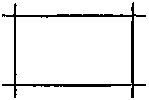
The buildings round us being chiefly of logs, I will give the best description in my power of a log-cabin; as I could form no idea of it till I saw one, that was at all like it. They are of various widths, lengths, and heights, but generally only one story high. The usual shape a long square, some are made of round, and others of hewn logs. In building a cabin, suppose 30 feet long and 20 wide; first, two logs, 30 feet long, are placed on the ground on a level, and about 18 feet from each other, these two logs are then notched in, near their ends, for a few inches; and then two more logs of 20 feet long, having their undersides also notched, are laid on the two first, forming {167} a long square of the following figure, about 26 feet long, and 16 feet wide on the inside. One square being thus formed, they next proceed to place on two more of the longest logs on the sides, notched as before, and then two of the shortest, as before; this they continue till the building is nine or ten logs high on each side, when the two last cross-logs are laid on three or four feet longer than the other cross ones; this is to form a sort of eaves to drip the logs; two more of the longest logs are then laid on, and this completes the upright of the building. Two cross-logs, cut slanting at the ends, are next placed on, just the length of the width of the building, and then two more of the side-logs on the cross-logs, but not to the end of them by some distance; then two more, cut slanting at the ends, are placed just to reach to the last side-logs; thus drawing in the sides, till the side-logs meet in a point at the top of the building. {168} A cleft piece of a tree is next placed on the outer end of the long cross-logs, and pegged on to prevent the cleft boards from sliding off, this is done on each side of the building. The whole is then covered with cleft-boards, (here called clap-boards;) they are about four feet long and six inches wide, laid on nearly double, so as to cover the joints; the boards at the top of the cabin on one side come a little over those on the other. When the roof is thus covered, some poles are laid along the building to keep the boards on; these poles are kept at about three feet distance from each other, by some short pieces of wood placed on the boards, to keep up the weight-poles as they are called. When they have done thus far, they call the cabin "raised." But no door-place, window, fire-place, floor, or ceiling is yet made, nor is the house very close on the sides, but looks something like a bird-cage. Next a door-place, of the usual size, is cut through the logs, and two pieces of wood are nailed or pegged up to the ends of the sawed logs, to keep them in {169} their places, and to serve for door-posts; frequently two doors are made opposite to each other. The windows are made in the same manner as the door-places. The chimney is generally placed at the end of the building, and is made as follows: first, four or five logs are cut out the same as for a door-place, of what width people chuse, and then some logs are cleft and placed in the following form on the outside, so that the ends of them are let in between the ends of the end-logs of the cabin that were sawed. The cleft-logs are thus continued, till they rise as high as the logs that were sawed out. The chimney is then carried up thus, exactly in the form of the cabin, but of much smaller logs, till it rises above the roof of the building; it is drawn in and made smaller from the bottom to the top. It is then chunked, that is, cleft pieces of wood are driven in between the logs, to fill up the open places. The next thing to be done, is to mud the cabin on the outside {170} between the logs; that is, it is plastered with loam or clay: this is sometimes done on the inside also, but more frequently cleft boards are pegged on to cover the joints on the inside. A few pieces of timber are next laid to lay the floor on, which is most commonly made of cleft-logs, hewn smooth on one side, and notched a little on the under side to lie level on the sleepers or joists. A ceiling is then made; some small saplings are cut and put in between the side-logs of the building, just under the roof, about three feet apart; and these ceiling joists are then covered with cleft boards, beginning at one end of the cabin, and laying a line across the end on the two joists, and then another row with their ends just resting on the first; and this is continued till the whole is covered. Most times the chimney is walled up several feet on the inside, the stones are laid in loam or clay instead of mortar; and above the wall it is plastered on the inside, and sometimes on the outside to the top of the chimney. The hearth is {171} made of stone or clay. The doors are generally made of cleft boards, nailed or pegged on some ledges, with wooden hinges, made in the following manner. A piece in the back part of the door is left longer than the door, and enters a hole in the sill; and at the top of the door a piece is also left to rest against the top of the door-place, which is covered with a piece of wood, either nailed or pegged over it. The windows are always sash ones; the usual size of the glass is eight inches by ten; the windows are sometimes made to open with hinges, and others to slide backwards and forwards, while others take out and in. When the doors are made of sawed boards they have eight or ten panes of glass in them, and then it is seldom there is any other window in the cabin. A porch is often made before the cabin, the whole length of it, and covered with cleft boards; which cost seventy-five cents a hundred, cutting the trees and cleaving out; they are always made from large trees, mostly the black {172} oak. Cabins are frequently made double; that is, two are built from 10 to 20 feet a-part, with a roof laid over the space between them. A shelter like this is very convenient, and, in the summer, it is more comfortable than a close room in so warm a country.


Many cabins, belonging to the Americans, have no ceiling nor windows, and some of them have no floor, nothing but the bare earth; and some are not mudded, but open on all sides. Locks to doors are nearly unknown, but wooden bolts are common with the English: many of the American houses have only a latch, and some have not even that.
A double cabin, with a 20-feet porch between, with floor and ceiling, finished as above described, may be built for the sum of 150 dollars, 33l. 15s., or something less. But with ceiling, floor, and doors, made of sawed boards, will come, I suppose, to near 50l. Sawing comes very high, being 9s. per hundred feet; but the sawyers cut {173} down the trees and go with the horses that draw them to the pit.
The cabin I inhabit first consisted of a double one, with a porch 20 feet wide between them: this I have since converted into two rooms; the end rooms are of logs, the centre ones of frame and board, with a brick chimney. At the back of the cabin I have added a cellar, &c. Smoke-houses are very common, and built much as dwelling-houses, only slighter, and not often mudded. Some cross-pieces are put on the joists to hang the bacon on. I have built one; it cost 23 dollars; it is about eighteen feet square and nine feet high. We are obliged to cut our flitches asunder, as we have not sufficient height above the fire. Old wood, nearly rotten, is best for drying bacon, as it makes much smoke and but little strong fire. The fires are kept burning a considerable length of time, as bacon, in this warm climate, requires to be well dried, to keep. The Americans, do not, in general, I think, allow sufficient {174} salt. The average price of salt near three pence per pound; bacon from eight to twelve and a half cents per pound; in summer it is sometimes rather higher; now (August) from ten to twelve and a half cents.
Farm-buildings are not yet numerous. Corn-cribs are built the same as cabins, except that they are placed on logs, so as to stand hollow for some distance from the earth; the bottom is made of cleft pieces, laid pretty close. They are built of different lengths and widths, but about six feet on the inside is deemed wide enough, as corn will dry in them better than if wider. The roof is only drawn in on one side, which two lengths of boards will cover. As they lay the top pretty flat, they most times take off the greater part, or the whole of the boards, when filling them with Indian corn ears, as they only gather the ears. When full, or the whole growth of the year is put in, the boards are put on, and the weight poles again laid on. Should a heavy {175} shower, or even a set rain, come on whilst the corn-crib is filling, as the bottom and sides are not close, not being mudded, it will soon dry out again without damaging the corn. I had one built, for 15 dollars, that will hold upwards of 600 bushels of corn in the ear. I suppose, it would hold near 1000 bushels of cleared corn. The Americans never shell theirs till it is wanted for use or market; but most of what is sold, is in the cob or ear. They measure it by barrels; that is, they fill an old flour-barrel, then shell and measure it, and from the produce of it they calculate on the whole number of barrels sold.
Cow and pig pens, with cart and waggon lodges, are yet scarce. When pigs are shut up for fatting, it is common to make a fence for them of rails, in the same manner as for fields; sometimes one corner is covered over for a lodging place for them, but it is more common for them to be left to the mercy of the winds and weather. But as they are hardy animals, and accustomed {176} to hard living and lodging, it does not appear to hurt them. There are but few cattle-yards and sheds; and the cattle are mostly left abroad in winter, with no shelter but what the leafless trees afford. I have seen no barn in any part of the English settlement, although several of our American neighbours grew some wheat last year. A person at Birks' Prairie has built a threshing-floor, to which he purposes adding a barn. Mr. Birkbeck, Mr. Flower, and other wheat-growers of this year, have put up their wheat, in the fields where it grew, in very small stacks, with little or no covering; this I think hazardous to the wheat, but the Americans say no: but they do not stand on trifles; however, time will show.
I have seen barns at a distance from the English settlement, that would hold, perhaps, six loads of wheat, (forty bushels to the load,) in the straw, supposing it to yield tolerably well; with a large threshing-floor, for threshing or treading out the {177} grain with horses. One similar to these might be built for a hundred dollars (twenty-two pounds ten shillings).
There are no granaries or store-houses except corn-cribs, a few poultry-houses, mostly built the same as the cabins; as are stables also, but they are sometimes carried higher, to allow room for a hay-loft; some have a rack, but this is not common among the Americans, as, generally, they only have a manger, which is frequently made out of a hollow tree, the ends being stopped with wood or clay.
I shall now proceed to give a short description of the domestic and wild animals. Most of the horses are of Spanish origin; they are light and clean, but not very handsome; their coats are fine, when kept up and well cleaned, but this is seldom the case; active, but not good in the collar, being too light for heavy draught. I have bought three since my arrival, for two hundred and ten dollars (forty-seven pounds five shillings): the first {178} was six years old, for which I gave seventy dollars; the second eight years, sixty dollars; and the last four years old, eighty dollars. The first and the last very good bargains, but the other a very indifferent one, as she has given me much trouble, for she will leap any rail-fence like a greyhound dog. Times being dull, horses are getting cheaper; but still they are much dearer than any other kind of stock. Oxen and cows are now more plentiful, but hitherto they have been fetched from the states of Indiana and Kentucky. They are of various sorts, but on the whole pretty good; some of them are handsome, and with a little care and expense an excellent breed might be raised. The price of beef from four to six cents a pound; it is now selling at five cents, but expected to be soon cheaper. Calves are not often killed. Cows are generally suffered to run in the woods, and return to their calves mornings and evenings, when they are partly milked, and the calves have the remainder of the milk. If {179} calves are killed or die, the cows often go dry for the remainder of the season, as it is very difficult to get the cows to come home to be milked; and as many of them take a long range, it is troublesome to find them. The price of veal nearly the same as beef. A good cow and calf may be had for from sixteen to twenty dollars.
Besides the cows and calves I bought of Mr. Collins, I purchased nine beasts of a drover from Kentucky, for eighty-four dollars and a half (2l. 2s. 3d. each); my stock now consists of sixteen beasts, of different ages, and three calves. I shall not increase my number till we get water in the fall, as new cattle are apt to stray for want of it. We often give them salt; a handful will do for twelve or fifteen. If given twice a-week, it is said to be wholesome for stock of all kinds, and I concur in this opinion. The reason I have heard why stock require salt in this country, is, that being at so great a distance from the ocean, there is no salt in the air, as in countries nearer the sea. I {180} believe they give their beasts salt on the shores of the Atlantic; and as it is there said to be serviceable to them, perhaps salt is beneficial to cattle in all situations, at least in hot climates. Beasts are much lighter here than in England, as their flesh is not so firm as in a colder country; the difference, perhaps, one-sixth or one-seventh part, in two beasts of the same size.
No great quantity of butter, and but little cheese, has been made in this settlement. Mr. Birkbeck has lately begun a dairy of twenty cows; he intends to make cheese; the dairy is managed by a woman from the New England States. He has weaned fourteen or sixteen of his calves, and his cows appear to keep well together. As Mr. Birkbeck has much land under fence, and some of it sown with timothy grass, and several good wells, and some creeks running through his enclosures, I hope he will soon establish a good cheese-dairy. The present price of butter is twelve cents and a half; but during the {181} winter it was twenty-five cents, and difficult to be procured. Cheese is now sixteen cents.
Beasts, sheep, and pigs are all marked in their ears, by cutting and notching them, in all possible directions and forms, to the great disfigurement of many of them; yet these marks are absolutely necessary in this wild country, where every person's stock run at large; and they are not sometimes seen by their owners for several months, so that without some lasting mark it would be utterly impossible to know them again. Most people enter their marks with the clerk of the county in which they reside, and no person is then allowed to use the same marks, if living in the same county, and within five miles of the person who has previously entered the same marks. The county clerk's fee for entering a mark is twelve cents and a half. And no person is allowed to dispute his marks with another of the same marks, unless his are also entered at some county office.