Front matter
Reading edition
STATE OF ILLINOIS DEPARTMENT OF REGISTRATION AND EDUCATION
HOW TO COLLECT AND PRESERVE INSECTS
H. H. ROSS

Printed by Authority of the State of Illinois NATURAL HISTORY SURVEY DIVISION George Sprugel, Jr., Chief
Circular 39 Urbana November, 1966 (Eighth Printing)
i
STATE OF ILLINOIS DEPARTMENT OF REGISTRATION AND EDUCATION BOARD OF NATURAL RESOURCES AND CONSERVATION
John C. Watson, Chairman; Thomas Park, Ph.D., Biology; L. L. Sloss, Ph.D., Geology; Roger Adams, Ph.D., D.Sc., Chemistry; Robert H. Anderson, B.S.C.E., Engineering; Charles E. Olmsted, Ph.D., Forestry; W. L. Everitt, E.E., Ph.D., Representing the President of the University of Illinois; Delyte W. Morris, Ph.D., President of Southern Illinois University.
NATURAL HISTORY SURVEY DIVISION, Urbana, Illinois SCIENTIFIC AND TECHNICAL STAFF George Sprugel, Jr., Ph.D., Chief Herbert H. Ross, Ph.D., Assistant Chief Robert O. Watson, B.S., Assistant to the Chief
Section of Economic Entomology
William H. Luckmann, Ph.D., Entomologist and Head
Willis N. Bruce, Ph.D., Entomologist
Ronald H. Meyer, Ph.D., Associate Entomologist
James E. Appleby, Ph.D., Associate Entomologist
Robert D. Pausch, Ph.D., Assistant Entomologist
Ralph E. Sechriest, Ph.D., Assistant Entomologist
Delmar Broersma, Ph.D., Assistant Entomologist
Joseph V. Maddox, Ph.D., Assistant Entomologist
Edward J. Armbrust, Ph.D., Assistant Entomologist
Dannel McCollum, B.A., Technical Assistant
Gregory P. Marsh, B.S., Technical Assistant
Sue E. Watkins, Junior Scientific Assistant
H. B. Petty, Ph.D., Entomologist in Extension[1]
Stevenson Moore, III, Ph.D., Entomologist in Extension[1]
Roscoe Randell, M.S., Technical Assistant in Extension[1]
Clarence E. White, B.S., Technical Assistant in Extension[1]
Stanley Rachesky, M.S., Technical Assistant in Extension[1]
D. E. Kuhlman, M.S., Technical Assistant in Extension[1]
Amal C. Banerjee, Ph.D., Research Associate[1]
Jean G. Wilson, B.A., Research Associate[1]
Ranu Banerjee, B.A., Research Assistant[1]
Ayten Hatidoglu, B.S., Research Assistant[1]
Keun S. Park, M.S., Research Assistant[1]
Keturah Reinbold, M.S., Research Assistant[1]
Section of Faunistic Surveys and Insect Identification
H. H. Ross, Ph.D., Assistant Chief and Head
Milton W. Sanderson, Ph.D., Taxonomist
Lewis J. Stannard, Jr., Ph.D., Taxonomist
Philip W. Smith, Ph.D., Taxonomist
Leonora K. Gloyd, M.S., Associate Taxonomist
Wallace E. LaBerge, Ph.D., Associate Taxonomist
Robert T. Allen, M.S., Technical Assistant
Bernice Sweeney, Technical Assistant
Bess White, A.B., Technical Assistant
John D. Unzicker, Ph.D., Research Assistant[1]
Section of Aquatic Biology
George W. Bennett, Ph.D., Aquatic Biologist and Head
William C. Starrett, Ph.D., Aquatic Biologist
R. W. Larimore, Ph.D., Aquatic Biologist
David H. Buck, Ph.D., Associate Aquatic Biologist
Robert C. Hiltibran, Ph.D., Associate Biochemist
Donald F. Hansen, Ph.D., Associate Aquatic Biologist
William F. Childers, Ph.D., Assistant Aquatic Biologist
David L. Thomas, B.S., Research Assistant
Maryfran Martin, Technical Assistant
Claude Russell Rose, Field Assistant
Dennis Dooley, Field Assistant
Charles F. Thoits, III, B.A., Research Associate[1]
David Krulac, Project Assistant[1]
Section of Applied Botany and Plant Pathology
J. Cedric Carter, Ph.D., Plant Pathologist and Head
J. L. Forsberg, Ph.D., Plant Pathologist
Robert A. Evers, Ph.D., Botanist
Robert Dan Neely, Ph.D., Plant Pathologist
E. B. Himelick, Ph.D., Plant Pathologist
Walter Hartstirn, Ph.D., Assistant Plant Pathologist
D. F. Schoeneweiss, Ph.D., Assistant Plant Pathologist
David Russell Vance, Technical Assistant
Robert J. Slattery, B.S., Technical Assistant
Robert S. Perry, B.S., Technical Assistant
Betty S. Nelson, Technical Assistant
Sylvia P. Brockstein, M.S., Technical Assistant
Section of Wildlife Research
Glen C. Sanderson, Ph.D., Wildlife Specialist and Head
F. C. Bellrose, B.S., Wildlife Specialist
H. C. Hanson, Ph.D., Wildlife Specialist
Richard R. Graber, Ph.D., Wildlife Specialist
Ronald F. Labisky, M.S., Associate Wildlife Specialist
William R. Edwards, M.S., Associate Wildlife Specialist
William W. Cochran, JR., Assistant Wildlife Specialist
Robert E. Greenberg, M.S., Research Assistant
Helen C. Schultz, M.A., Technical Assistant
Lucinda Janis, Technical Assistant
Robert D. Crompton, Field Assistant
Ronald Duzan, Laboratory Assistant
Mary Ann Johnson, Laboratory Assistant
William J. Francis, Ph.D., Research Associate[1]
Jack A. Ellis, M.S., Research Associate[1]
James A. Bailey, Ph.D., Research Associate[1]
Gerald G. Montgomery, M.S., Research Associate[1]
William L. Anderson, M.A., Research Associate[1]
George B. Joselyn, M.S., Research Associate[1]
Gerald L. Storm, M.S., Field Ecologist[1]
Ronald L. Westemeier, B.S., Research Associate[1]
Stanley L. Etter, M.S., Research Assistant[1]
Robert E. Hawkins, B.S., Research Assistant[1]
Jeffrey C. Hanson, M.S., Research Assistant[1]
Keith T. Dauphin, Project Assistant[1]
Section of Publications and Public Relations
Owen F. Glissendorf, M.S., Technical Editor and Head
Robert M. Zewadski, M.S., Associate Technical Editor
Nancy K. Ginzel, B.S., Assistant Technical Editor
Wilmer D. Zehr, Technical Photographer
William L. Taylor, Technical Assistant
Technical Library
Doris F. Dodds, B.A., M.S.L.S., Technical Librarian
Patricia F. Stenstrom, B.A., M.S.L.S., Assistant Technical Librarian
CONSULTANTS: Herpetology, Hobart M. Smith, Ph.D., Professor of Zoology, University of Illinois; Parasitology, Norman D. Levine, Ph.D., Professor of Veterinary Parasitology and Veterinary Research, University of Illinois; Wildlife Research, Willard D. Klimstra, Ph.D., Professor of Zoology and Director of Cooperative Wildlife Research, Southern Illinois University; Statistics, Horace W. Norton, Ph.D., Professor of Statistical Design and Analysis, University of Illinois.
This paper is a contribution from the Section of Faunistic Surveys and Insect Identification. (33711—10M—10-66)30
ii
Where to Collect 1
What to Use 2
Nets 3
Killing Bottles 6
Aspirators or Suckers 9
Sifter 12
Berlese Funnel 12
Equipment for Collecting Aquatic Insects 16
How to Handle Unmounted Specimens 17
Temporary Cases 17
Relaxing Boxes and Jars 19
How to Mount and Preserve Specimens 20
Preservation by Pinning 20
Spreading Board for Moths and Butterflies 24
Preservation in Fluid 26
How to Label the Specimens 26
Housing the Collection Permanently 27
Insect Boxes 27
Precaution Against Pests 27
The Insect World 28
How to Identify Specimens 34
Synopsis of Illinois Insect Orders 35
Primitive Wingless Insects 35
Diplura 36
Protura 36
Collembola 36
Microcoryphia 36
Thysanura 38
Primitive Winged Insects 38
Ephemeroptera 38
Odonata 38
Folding-Wing Insects 40
Cursoria 42
Isoptera 43
Orthoptera 43
Dermaptera 44
Plecoptera 45
Zoraptera 45
Corrodentia 45
Phthiraptera 45
Mallophaga 47
Anoplura 47
Thysanoptera 47
Hemiptera 48
Megaloptera 52
Neuroptera 52
Coleoptera 53
Hymenoptera 54
Mecoptera 55
Trichoptera 57
Lepidoptera 58
Diptera 60
Siphonaptera 61
Relatives of Insects 62
Isopoda 62
Amphipoda 62
Scorpionida 64
Pseudoscorpionida 64
Phalangida 64
Araneida 65
Acarina 65
Diplopoda 66
Chilopoda 67
The State Insect Collection 67
Reports on Illinois Insects 69
Useful Books 70
How to Ship Specimens 70
Where to Buy Supplies 71
Printed by Authority of the State of Illinois, Ch. 127. IRS, Par. 58.22.
iii
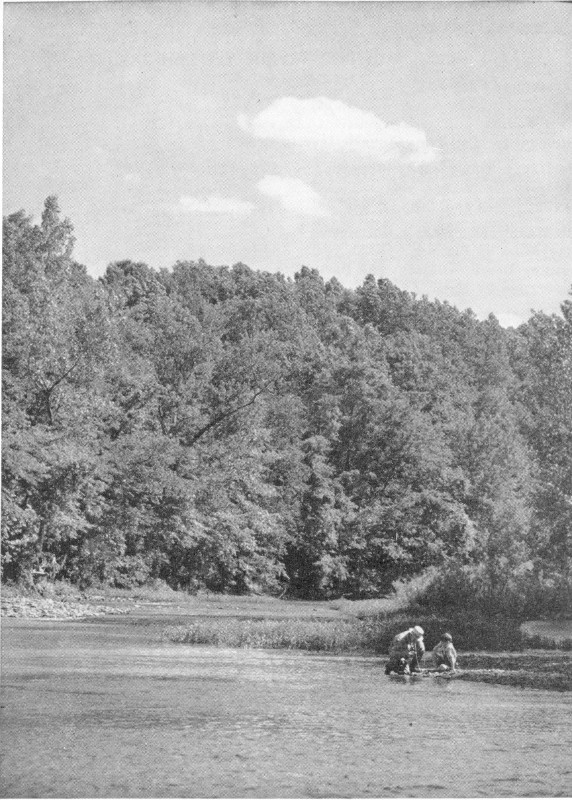
Illinois streams are a source of many insects of interest to the amateur collector. Shown here is the Salt Fork River, south of Oakwood.
1
HOW TO COLLECT AND PRESERVE INSECTS
H. H. ROSS
With rather simple equipment, the amateur as well as the trained entomologist can make a worthwhile collection of insects.
The making of such a collection may have educational and recreational as well as scientific values. Developing this hobby is one of the finest ways for students, especially those in agricultural districts, to become acquainted with the large number of injurious and beneficial insects that they encounter about the home and in the fields. High school classes in biology find excellent laboratory material in the many insects available for rearing and study. Both old and young collectors find a great deal of pleasure in working with the showy and beautiful insects, such as beetles, moths, and butterflies; the satisfaction derived comes both from having relaxation from the day’s work and from making real contributions to scientific knowledge. Many entomological museums welcome the opportunity to examine carefully prepared and labeled collections. These collections supply distribution records for insect species, in addition to other information of value to technical entomologists. Also, the amateur collector profits from his contact with specialists who can help him identify his specimens and advise him at any stage of his work.
It is hoped that this circular will show how easy it is to make a start in insect collecting and will give the student helpful ideas on how and where to begin.